
From concept to product
From prototyping to production, our production sites can handle all your manufacturing projects.
What is the SOMI Partner Network?
The short answer
The SOMI Partner Network is a vetted group of specialised manufacturing factories in China, coordinated through one point of contact. Buyers get CNC machining, sheet metal fabrication, metal stamping, die casting, injection molding and 3D printing from one programme, with one engineering review, one quality route and one quotation, instead of managing a separate supplier for every process.
What the network actually is
It is not a single factory and it is not a marketplace. It is a managed supplier group: a set of factories that each specialise in one or two processes, sitting behind a single commercial and engineering interface. SOMI states that it has built this group over more than ten years of manufacturing and service work and has supplied precision parts to more than 1,200 customers. The point of the structure is that the factory doing the work is chosen for the job rather than for convenience. A thin-wall injection moulding part and a five-axis machined bracket are genuinely different businesses, and a buyer who wants both is usually better served by one programme that can route each part to a capable plant than by one plant that claims to be excellent at everything.
The six processes and six industries it covers
The network is organised around six production capabilities and six end markets, which is what makes it possible to keep a multi-part programme in one place.
| Capability | What it covers | Typical output |
|---|---|---|
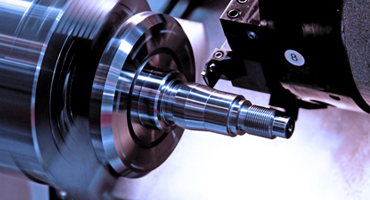
| CNC machining | Turning and 3, 4 and 5 axis milling | Precision metal and plastic parts, prototypes to production |
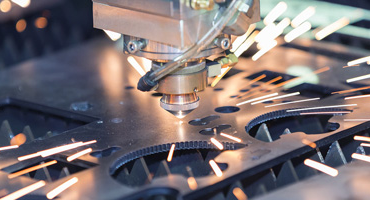
| Sheet metal fabrication | Laser cutting, bending, welding, finishing | Enclosures, brackets, panels and frames |
| Metal stamping | Progressive and single-die stamping | High-volume formed parts and contacts |
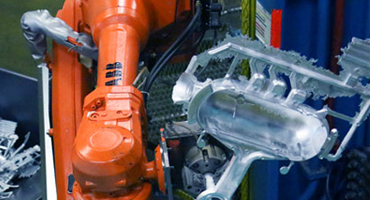
| Die casting | Aluminium and zinc alloys | Housings, covers and structural castings |
| Injection molding | Plastic, two-shot and insert molding | Housings, enclosures and consumer parts |
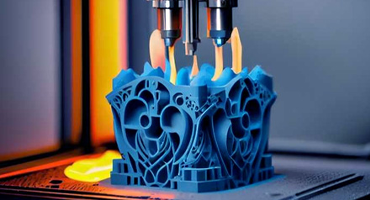
| 3D printing | FDM, SLA, SLS and MJF | Prototypes, jigs and low-volume functional parts |
The industries served are consumer electronics, automotive, medical, aerospace and aviation, robotics and automation, and industrial machinery. Those are demanding sectors on tolerance, traceability and documentation, and they are the reason the network puts engineering review in front of the quotation rather than behind it.

How a factory gets onto the network
The value of a supplier group is entirely determined by what it refuses to accept. SOMI publishes a six-stage selection and onboarding process, and the stages are worth reading as a buyer because they tell you what has already been checked before your drawing arrives.
- Preliminary assessment. The factory environment, production equipment, capacity and quality standards are established on site.
- In-depth evaluation. The quality management system and environmental and social compliance are reviewed in detail against the network's eligibility criteria.
- Legal due diligence. The supplier has to hold the correct registrations and licences, and the company behind it is background-checked.
- Technical requirement. Process capability and engineering depth are assessed, including whether the factory can optimise a design and produce CAD or 3D drawings rather than only cut to a drawing.
- Trial order. A sample order and then a small batch confirm that the factory can hold the quality standard in production, not just on the first part.
- Ongoing assurance. Partners are audited periodically and reviewed on delivery, quality and communication, with continuous improvement expected.
Alongside those stages, partners have to meet standing requirements: at least one production capability, at least five years of production experience, after-sales technical support, documented quality-management evidence and the registrations that apply to their process, in-house design capability, contract compliance and adherence to the network's intellectual property policy. Where a customer programme requires a specific quality-system certification, that requirement is verified against the actual factory doing the work before the order is released rather than assumed from a network-level statement.

How a project runs once it is on the network
The buyer-side flow is deliberately short. You upload the CAD and 3D files, and they are treated as confidential. Engineering checks and confirms the sample specification, dimensions and surface treatment. If you have no drawings, the technical team produces them; if you have them, they are reviewed for manufacturability before quoting. A quotation follows, then a sample order so you can approve the physical part, then mass production, then quality control against the agreed specification, then delivery with tracking through the logistics partner. The single most important step in that sequence is the design review before the quotation, because most of the cost of a part is fixed by the wall thickness, material and tolerance decisions that are already on the drawing when it arrives. Catching a moulded rib that will sink, or a machined internal corner that cannot be reached, before the tool is cut is worth more than any discount negotiated afterwards.
Why one coordinated network beats five direct suppliers
Buying each process from the cheapest specialist looks like the low-cost route and usually is not. The quoted price is only part of the cost: every additional supplier adds purchase orders and invoices, a separate quality visit, inbound inspection, rework when two vendors interpret a tolerance differently, and freight between vendors. Manufacturer case data published by integrated suppliers puts the hidden cost of a fragmented supplier base at roughly 20 percent or more above the quoted price, and reports total landed cost premiums of around 18 to 28 percent on a three-supplier arrangement against 0 to 7 percent when the work is consolidated, annual defect rates of 3.2 to 6.8 percent across separate vendors against under 0.4 percent consolidated, and lead times of 45 to 62 days against 21 to 35 days. The lead time effect is largely queue time: five vendors can add three to four weeks of pure waiting, with parts sitting between the cutter, the welder and the coater rather than being worked on. Treat those figures as planning ranges from supplier case studies rather than universal constants, but the direction is consistent and it is the reason consolidated sourcing keeps growing.

What the network does not do
- It is not a single factory. Coordination has to be paid for. If a program is one process, one material and very high volume, a dedicated plant that owns the whole line can still be the better answer, and we will say so.
- It does not transfer design responsibility. Engineering review reduces risk; it does not make the buyer's functional requirements our problem. The specification, the load case and the acceptance criteria stay with you, and the first article approval is yours.
- Certification is program-specific, not network-wide. Regulated markets ask for particular quality systems and particular records. Those have to be confirmed for the factory and the program in question before production, not inferred from a website.
- Tooling and intellectual property need written terms. Who owns the mould, where it is stored, what happens if the program ends and how a design change is priced all belong in the agreement. The network's intellectual property policy is a starting point, not a contract.
- Capacity priority is commercial. A network can route work to whichever partner has the right capability and the free capacity, but a rush job competes with other customers' work and should be planned rather than assumed.
- Logistics and terms are still your project. Incoterms, shipping method, customs documentation and lead time across the destination border sit outside the manufacturing steps, and they have to be agreed up front.
How to start
Send the CAD or 3D files with the drawing, or the physical sample if no drawing exists, together with the annual volume, the target lead time, the critical tolerances and the surfaces you care about. If the program spans several processes, say so at the start: that is exactly the case the network is built for, and routing the parts to the right factories before quoting is what keeps the total cost visible. See plastic injection molding for the moulded side of the network, metal stamping for high-volume formed parts and sheet metal fabrication for enclosures and frames.
Scope and sources. Network structure, capability list, partner requirements and the six onboarding stages were taken in 2026 from the SOMI Custom Parts partner programme page and from the company service and industry overview, which states six production capabilities, six served industries, more than ten years of manufacturing and service experience and more than 1,200 customers. Consolidated-sourcing effects are drawn from supplier case data published by a full-service sheet metal fabricator, a review of vendor-consolidation economics citing procurement studies and consolidation case data for injection molding orders. Those consolidation percentages and lead times are commercial case results, not audited benchmarks, and should be treated as planning ranges rather than promises. Quality-system, certification, tooling-ownership and intellectual property terms are agreed per program and per factory; confirm them in writing before releasing production.
Are you looking for a reliable manufacturer of down home textile products?
We can quickly provide customers with market analysis, technical support and customized services.From concept to product
From prototyping to production, our production sites can handle all your manufacturing projects.
subscription