
From concept to product
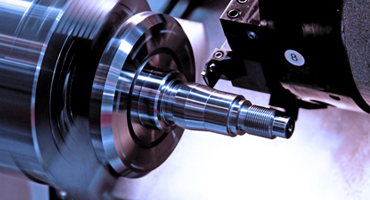
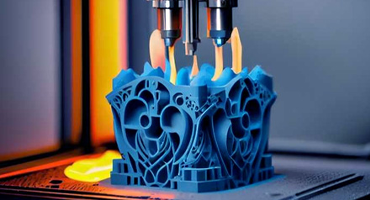
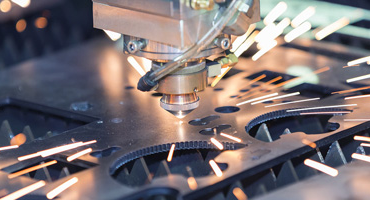
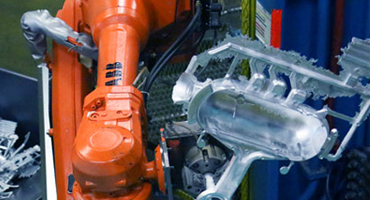
From prototyping to production, our production sites can handle all your manufacturing projects.
What does it cost to join the SOMI Partner Network?
The short answer
Nothing, in either direction. A manufacturing partner pays no joining fee, no listing fee and no annual subscription, and a buyer pays nothing to use the network - only for the parts actually ordered. What does cost money is the work: samples, tooling, third-party testing, freight, and any audit you ask us to run.
What free to join covers, and what it does not
Free means access, not manufacturing. There is no membership tier to buy, no paid placement inside the network and no charge for the first engineering pass on a drawing. Every item that costs real money is either a physical thing, such as a die or a first-off sample, or an outside service, such as a laboratory test or a freight booking. Each of those appears on the quotation as its own line, which is the point: a cost you can see can be challenged, and a cost buried in a membership cannot.

| Item | Who bears the cost | Typical range |
|---|---|---|
| Membership, listing and subscription | Nobody | Zero, no annual fee |
| DFM review and quotation | SOMI | Included at the enquiry stage |
| Samples and first article inspection | Buyer | Charged at the quoted sample price |
| Tooling, dies and moulds | Buyer | USD 400 to 20,000 and up, by complexity |
| Third-party testing | Buyer | At the laboratory or agency rate |
| Freight, duty and customs clearance | Buyer | At the carrier rate |
| On-site factory audit you request | Buyer | One day on site plus travel |
What a factory actually pays to be in the network
The entry price for a manufacturing partner is time and paperwork rather than money, and the size of that bill depends on how ready the factory's records already are. Qualification covers the legal entity and its scope, the equipment list and capacity, gauge calibration, material traceability and the quality system that is actually in use rather than the one on the wall. Published onboarding timelines for custom parts put supplier qualification and quality-system review at about two to four weeks, with the first-article and production-part approval stage adding another two to six weeks after tooling is ready. For a new factory building a new die or mould, that is eight to fourteen weeks between first contact and an approved production part.
The mix of that work changes with complexity. Straightforward stamped or moulded parts can be documented in three to four weeks once the tooling exists. Medium-complexity housings and assemblies that need multi-stage processing, third-party performance testing and measurement-system analysis run six to eight weeks. Safety-critical parts with full dimensional reports, capability studies and a capacity verification run ten to sixteen weeks, and the wait is usually for evidence rather than for metal.
The expensive outcome is not a fee, it is a repeat audit. Reports from automotive supplier onboarding put the share of Chinese factories that fail their first on-site process audit at around 40 percent, and the findings repeat because they are administrative rather than technical: gauges without current calibration certificates, a quarantine or material review area that is not controlled, incomplete training records for key operators, and sub-tier suppliers such as plating or heat treatment sitting outside the factory's own quality system. Fixing those costs weeks. Not having them costs nothing.
What a buyer pays, and what sits outside the part price
A quoted unit price for a machined, stamped, moulded or cast part normally carries material, machine time, the standard surface finish and the standard inspection. It does not carry tooling, which is a one-off charge, and it does not carry anything the part has to be told to do later. The lines that sit outside it are predictable: samples and first-article inspection, the die or mould itself, any third-party test that a regulator or your own customer requires, freight, duty and customs clearance, and expedite premiums when a date moves. A buyer who compares two quotations without checking which of those lines are included is comparing two different scopes, not two prices.
Where a free route can cost more than a fee
Most sourcing routes in this market are not free and the fee models are published, so they can be compared line by line. A commission agent takes a percentage of order value, a flat-fee agent takes a fixed amount per order, a retainer buys monthly availability, and a full-service provider charges a higher percentage for handling compliance and logistics as well. A route that advertises itself as free is normally earning somewhere else in the transaction.

| Model | How it is charged | Typical market range |
|---|---|---|
| Commission agent | Percent of order value | 3 to 10 percent of FOB value |
| Flat fee per order | Fixed amount each order | USD 200 to 1,500 per order |
| Monthly retainer | Fixed monthly payment | USD 500 to 3,000 per month |
| Hourly consulting | Per hour worked | USD 30 to 80 per hour |
| Full-service provider | Percent plus project work | 8 to 12 percent of order value |
| SOMI Partner Network | Inside the quoted part price | No separate fee line |
The fee that looks cheapest is the one to examine first. A commission below three percent is usually recovered somewhere else, most often in freight or inspection margin, and the example that circulates in this market is an agent quoting four percent while quoting USD 1,180 for freight that the carrier priced at USD 760 - the six-point discount on commission erased several times over. The discipline is simple: ask for the carrier invoice, ask in writing whether the agent receives any rebate from the factory, and normalise every offer to a landed cost per part before comparing it.
Where the money goes on a fifty thousand dollar order
Arithmetic on the published ranges makes the difference concrete. An order of USD 50,000 carried by a five percent commission agent adds about USD 2,500 in fees before freight is counted, and the fee scales with the order rather than with the work done. A flat fee of USD 200 to 1,500 is cheap on that order and expensive on a repeat order of USD 5,000. A retainer of USD 500 to 3,000 per month only amortises if you place enough work through it. And a free listing that earns its money in freight margin is not free at all, it is a different invoice.

Where the service cost sits inside the quoted part price, the comparison becomes part price against part price, which is the only comparison a buyer can actually act on. Ask for the quotation broken into material, machine time, finishing and inspection, and the same arithmetic can be run on real numbers instead of on a market range.
Limits: what no fee does not mean
- It is not a price guarantee. Free to join says nothing about the price of a part. A free network with a slow quotation process can cost more in engineering time than a paid one with a fast one.
- It does not include tooling. Dies, moulds and fixtures are paid for by the buyer, from roughly USD 400 to 1,000 for a simple solid extrusion or stamping die up to USD 2,000 to 20,000 and beyond for complex hollow profiles and multi-station progressive dies.
- It does not include regulation. Flame, food-contact, medical and automotive approvals are grade-level and record-level work. Sampling, documentation and third-party testing are charged and they are not optional.
- It does not buy priority. Rush work competes with other customers' schedules. Expedition is a commercial decision with a price attached, not a membership benefit.
- It does not remove the commercial terms. Minimum order quantity, payment terms, tooling ownership and storage, and the exit arrangements when a programme ends all still have to be agreed in writing before production.
- It does not make our margin invisible. Our cost sits inside the part price. If you want to see it, ask, and the material, machine time, finishing and inspection lines can be separated on the quotation.
- It says nothing about certification. Whether a particular factory holds a particular quality system certificate is confirmed per programme and per factory, in writing, before an order is released.
How to get a costed answer instead of a range
Send the 3D model, the 2D drawing with tolerances, the annual volume and the delivery destination, and the first pass - geometry review, process route and quotation - is at no charge and no commitment. If the programme spans more than one process, say so at the start, because routing the parts before quoting them is what keeps the total cost visible. See how the partner network works, plastic injection molding for moulded parts and metal stamping for high-volume formed parts.
Scope and sources. Fee models, commission bands, flat fees, retainers and the freight-margin example were compiled in 2026 from published sourcing-fee guides by HiSourcing, Statrys, WooSourcing and Feisourcing, which report commission at 3 to 10 percent of FOB value, flat fees of USD 200 to 1,500 per order and retainers of USD 500 to 3,000 per month. Qualification and approval durations come from a published stamping supplier onboarding timeline (qualification two to four weeks, production-part approval two to six weeks after tooling, eight to fourteen weeks end to end) and from a PPAP cycle-time breakdown giving three to four weeks of preparation for simple stamped or moulded parts, six to eight weeks for medium complexity and ten to sixteen weeks for safety-critical parts. The first-audit failure rate and the recurring findings come from an automotive supply chain certification guide. These are market ranges and planning figures, not quotations for any specific part. Nothing on this page states or implies a certification held by any factory; quality systems are confirmed per programme and per factory in writing before production.
Are you looking for a reliable manufacturer of down home textile products?
We can quickly provide customers with market analysis, technical support and customized services.From concept to product
From prototyping to production, our production sites can handle all your manufacturing projects.
subscription