
From concept to product
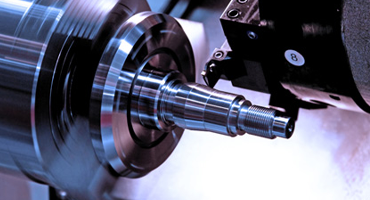
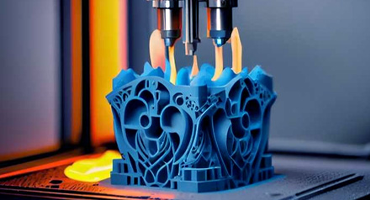
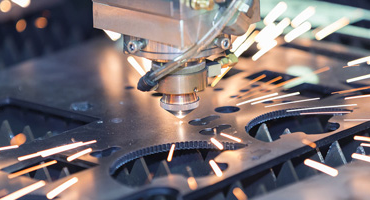
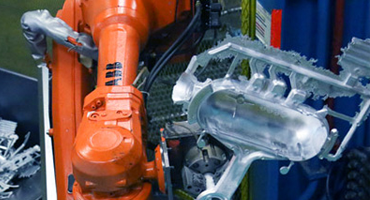
From prototyping to production, our production sites can handle all your manufacturing projects.
3D Printing Materials

Home / Printing Materials
Materials
3D Printing Optional Materials
SOMI is able to provide a variety of raw material processing and customization services according to the specific needs of customers. We offer flexible and efficient solutions for both small and large-scale production. Understanding the raw materials we can process can help you better choose the right materials for your project. If the following are not the materials you need, please comment when submitting the inquiry information.
- Plastic materials 3D Printing
- Metal materials 3D Printing
Plastic materials 3D Printing

ABS M30
Introduce:
ABS M30 is a high impact resistant and tough material. It is ideal for concept models and moderate requirement parts including functional prototypes, jigs, fixtures, manufacturing tools and production parts.
Nylon PA 12 Glass-Filled (SLS) PA12GB
Introduce:
This is a whitish polyamide 12 powder that is glass filled. Its stiffness is excellent and it has good elongation at break.High dimensional accuracy
Nylon PA 12 (SLS) Polyamide 12
Introduce:
Standard PA 12 has all-around great mechanical properties and chemical resistance and is ideal for functional parts and prototypes.
PP
Introduce:
PP(polypropylene) has excellent moisture and chemical resistance, impressive impact strength and good elasticity.
PEEK
Introduce:
PEEK is used in the production of components such as tubes, bearings, seals, valves, electric insulation and even medical implants. Hard • Stiff • Resistant to chemicals and fatigue
PC
Introduce:
PC – Polycarbonate is a naturally transparent plastic with high strength and durability on impact. It is shatter resistant and heat resistant.

POM
Introduce:
High stiffness, low friction, excellent dimensional stability, good wear resistance, ideal for precision parts.
PLA
Introduce:
PLA is derived from renewable sources and is biodegradable. It can easily be melted and shaped without losing its mechanical properties.
PC-ABS
Introduce:
PC – ABS Polycarbonate blends the ease of processing of ABS with the high strength and mechanical properties of PC.

ASA
Introduce:
ASA (Acrylonitrile Styrene Acrylate) is an amorphous thermoplastic with improved weather resistance. It is widely used in prototyping in 3D printing. Excellent mechanical properties • Resistant to UV light and chemicals
PEI
Introduce:
Engineering plastic, high performance applications, flame retardant.
Metal Materials 3D Printing

Aluminium 1706
Features:
Aluminium 1706 has excellent strength at elevated temperatures (about 200°C). It has good resistance to corrosion and can be polished easily.
Stainless Steel 1.4404 316L | X2CrNiMo17-12-2
Features:
The addition of molybdenum results in improved corrosion resistance with good stability against chloric and non oxidizing acid.
Tool Steel MS1
Features:
Tool Steel MS1 is a high wear resistant material with ultra-high strength and is easily machinable. It has enhanced ductility.
Titanium Tc4
Features:
It has good comprehensive mechanical properties. High specific strength and low thermal conductivity of titanium alloy
FAQ
Frequently Asked Questions
If you have any further questions, please contact us. We look forward to working with you.
- Is nylon suitable for 3D printing?Yes. Nylon is the leading engineering polymer for functional printed parts: PA12 on SLS or MJF gives about 48 MPa tensile and heat deflection near 170 C with near-isotropic strength, PA6 on FDM reaches 70 MPa and carbon-filled grades 110 MPa. Its limits are moisture uptake, ultraviolet light, cost and the anisotropy of filament printing.
- Where can I find 3D printing materials?3D printing material reaches you through four channels: retail spools, industrial distributors, factory-direct orders and the qualified stock held by a manufacturing partner. Match the feed form first, because filament, resin, powder and pellet are separate markets. Filament starts near USD 15 per kg at retail and USD 6 ex-works; PA12 powder near USD 23.
- Are there safety concerns with 3D printing materials and how do I manage them?Yes. Every FDM material releases ultrafine particles and some VOCs; ABS and ASA add styrene, nylon adds caprolactam, polycarbonate adds bisphenol-class compounds and uncured resin is a skin sensitiser. PLA is the lowest of the common filaments and resin the highest. Match ventilation to the material, keep resin off skin and seal food-contact parts.
- How do I choose the right material for my 3D printing project?Work from the failure you cannot accept, then answer four questions in order: service temperature, load and its direction, detail and finish, and finally quantity and cost. FDM is cheapest for directional loads, SLS and MJF nylon give isotropic strength, SLA gives the finest detail, and SLM metal works above 300 °C.
More Optional Materials for Custom Parts


Contact SOMI
Need Help?
We receive your drawings or design requirements, and the technical team reviews and quotes you as soon as possible.
Upload a CAD to start (STEP, STP, IGES, IGS, SLDPRT, 3DM, SAT or X_T).
If there is no drawing, please provide the product design requirements information, we will model and draw drawings for you tpo confirm.
Price updates in real-time as you change materials, lead times, and other order specifications.
We have the right to know the use of your products, to avoid products involving some sensitive issues.
We are committed to providing full-process services from prototyping to mass production. We provide rapid prototyping services to ensure that your design can be realized accurately and efficiently.
We hope to discuss potential cooperation opportunities with you and ask you to provide quotation information for your project. Looking forward to your reply and working with you to promote the success of your project!
- *Name
- *Phone
- *Title
- *Content
From concept to product
From prototyping to production, our production sites can handle all your manufacturing projects.
subscription