
From concept to product
From prototyping to production, our production sites can handle all your manufacturing projects.
Home / Industry Material Solutions
SOMI Manufacture
Metalworking Material Solutions

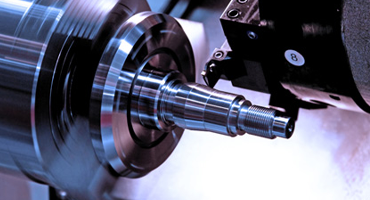
CNC Machining Materials
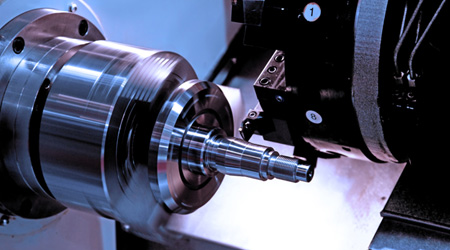
CNC machining and automated processes that produce precision, complex aluminum CNC machined parts with high dimensional tolerances.
Learn More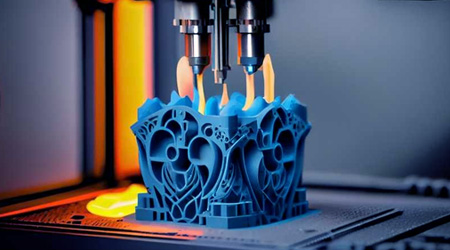

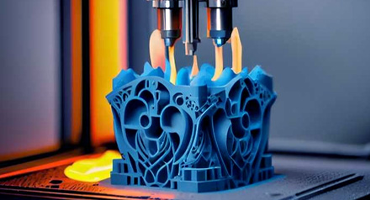
3D Printing Optional Materials
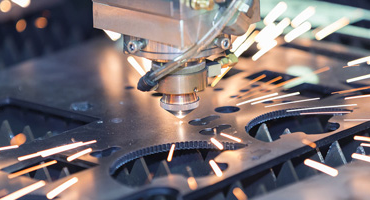
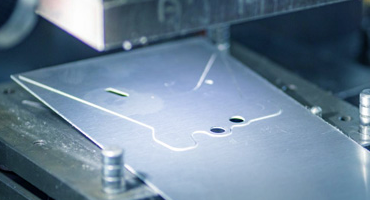
Laser cutting, plasma cutting, water jet cutting, and bending. Six materials including aluminum, stainless steel, and brass.
Learn More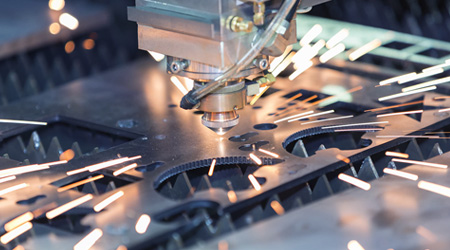

Sheet Metal Fabrication Materials
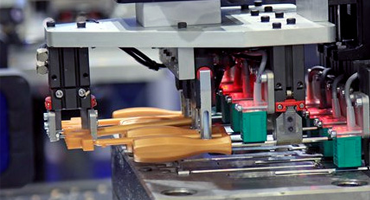
Injection molding for plastic parts with intricate geometries, using a range of thermoplastics and thermosetting plastics.
Learn More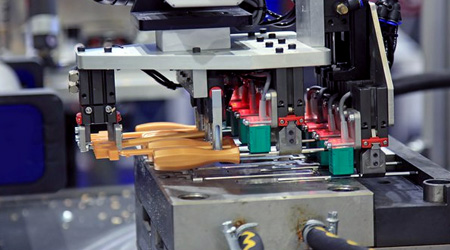

Injection Molding Materials
Additive technologies include metal 3D printing, SLA, SLS, FDM, and more. 30 plastic and metal materials in a range of finishes.
Learn More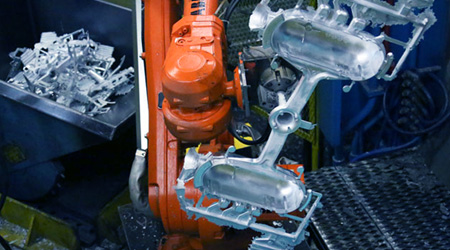

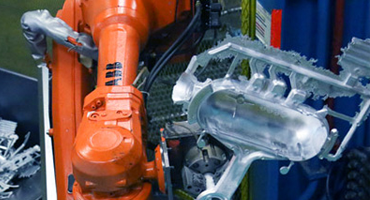
Die Casting Materials
High-pressure die casting for aluminum, zinc, and magnesium alloys, ensuring excellent surface finish and stability.
Learn MoreFAQ
Frequently Asked Questions
If you have any further questions, please contact us. We look forward to working with you.
- What materials are commonly used in die casting?Four alloy families cover almost all die casting: aluminium such as ADC12 and A380, which is over 70 percent of die-cast parts; zinc such as Zamak 3 and 5 for thin-wall precision; magnesium such as AZ91D where weight matters; and copper alloys such as C36000 for conduction and wear. Selection balances density, strength, casting temperature and cost.
- Can recycled materials be used in injection molding?Yes, and for packaging and automotive work it is increasingly compulsory. In-house regrind can be fed back at high ratios with little loss. Post-consumer recyclate is normally blended at 10 to 35 percent and needs tighter inspection, because molecular weight, colour and odour vary by batch and impact strength can drop by a quarter or more.
- How does moisture content affect injection molding materials?Water in the pellet turns to steam at melt temperature and breaks polymer chains, so wet resin produces silver streaks, bubbles, a dull surface and measurably weaker parts. Hygroscopic resins such as PA, PC, PBT and PET must be dried to a stated limit of about 0.01 to 0.10 percent before moulding, usually in a desiccant dryer at a dew point of -30 C or lower.
- How do I choose the right material for my injection molded part?Choose the material from the part's duty, not from a price list. Fix the operating temperature range and the peak excursion first, then chemical, UV and moisture exposure, then load, impact and creep, then appearance, flame and food compliance, and only then cost. Polypropylene, ABS, PC, POM and glass-filled PA66 cover most commercial parts, and the resin choice fixes shrinkage, drying and tool steel at the same time.
- How do I choose the right material for my metal fabrication project?Choose by environment first, then load. Cold-rolled steel is the default when the part will be painted; galvanised steel replaces it outdoors for about 10 to 20 percent more. Stainless 304 costs roughly four times cold-rolled steel and needs no coating, 316 about five times, and aluminium 5052 is a third of the weight at around three times the price per kilogram.
- How do I choose the right material for my 3D printing project?Work from the failure you cannot accept, then answer four questions in order: service temperature, load and its direction, detail and finish, and finally quantity and cost. FDM is cheapest for directional loads, SLS and MJF nylon give isotropic strength, SLA gives the finest detail, and SLM metal works above 300 °C.
- What materials are commonly used in sheet metal fabrication?The workhorses are cold-rolled low-carbon steel (SPCC, DC01), galvanised steel (SECC, SGCC), austenitic stainless 304 and 316, aluminium 5052 and 6061-T6, and copper C1100 with brass C260. Steel covers strength and cost, stainless covers corrosion, aluminium covers weight, and copper or brass cover conductivity.
- Can I mix different materials in 3D printing?Yes, in three ways: multi-material printing with a second extruder or a material unit, soluble or breakaway support pairs, and rigid-plus-flexible combinations. The limit is the interface, not the printer: paired materials must share a nozzle and bed temperature window. PLA with PVA, PETG with BVOH and ABS with HIPS work; PLA with ABS does not.
- Which steel, stainless and aluminium grades are used in sheet metal fabrication?Common sheet metal grades are cold-rolled SPCC or Q235 carbon steel, SGCC galvanised steel, 304 and 316 stainless, 5052-H32 and 6061-T6 aluminium, and copper or brass. Thickness runs about 0.5 to 6 mm. Specify the decimal thickness rather than the gauge, because 16 gauge is 1.29 mm in aluminium and 1.59 mm in stainless, and choose the grade on corrosion, formability, weight and weldability.
- What are the most common types of 3D printing materials?PLA, PETG, ABS or ASA, TPU and Nylon PA12 cover most printed parts. PLA is cheapest and easiest but softens near 50 to 60 degrees Celsius; PETG is the functional default at 70 to 80 degrees; ABS and ASA reach 80 to 105 degrees, with ASA for outdoor service; TPU bends and seals; Nylon PA12 carries load and heat.
From concept to product
From prototyping to production, our production sites can handle all your manufacturing projects.
subscription