
From concept to product
From prototyping to production, our production sites can handle all your manufacturing projects.
CNC Machining
Home / CNC Machining
SOMI Capability
SOMI CNC Machining Capability
Discover the unparalleled precision and quality of CNC (Computer Numerical Control) machining services. From prototyping to full-scale production, SOMI ensure superior results for all your engineering needs with state-of-the-art technology and expert craftsmanship.
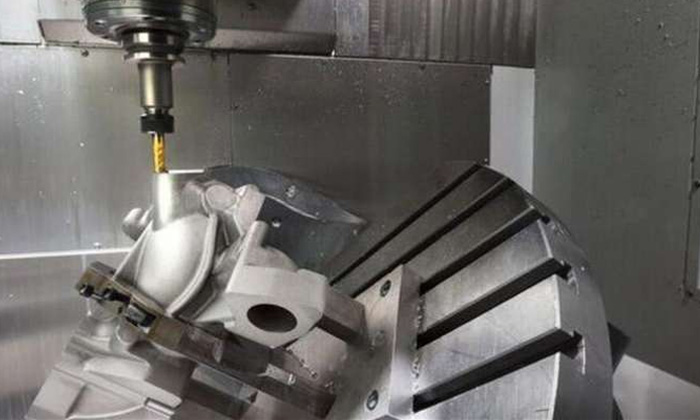
3,4,5 Axis CNC Milling
We have different types of CNC milling centers, including 3-axis, 4-axis and 5-axis milling centers. Custom parts from simple to complex structures, metal or plastic materials, can be solved.
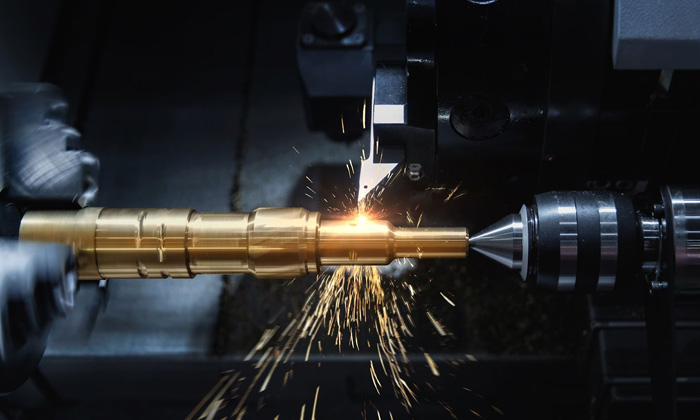
CNC Turning
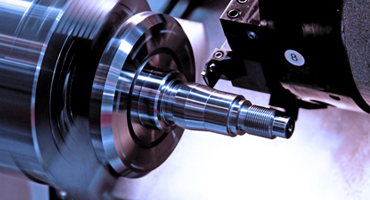
SOMI uses CNC lathes and turning centers (including local brand or imported brand machines) to process metal parts, mainly focusing on cylindrical parts. Ensure components achieve consistent size and finish.
CNC Machining
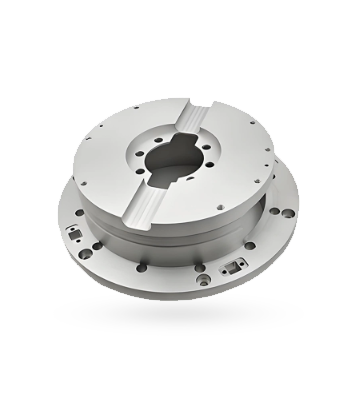
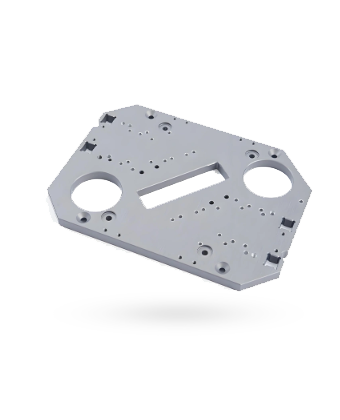
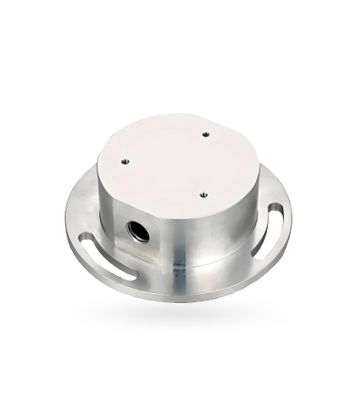
Show Custom Parts Machined by SOMI
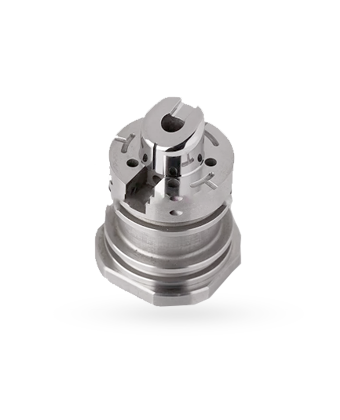
CNC Machining
CNC Machining Materials
We offer a wide selection of materials for custom parts to complete prototypes and production runs of custom parts. The materials we process are very broad and include metals, plastics, and some composites. Metal
Metal
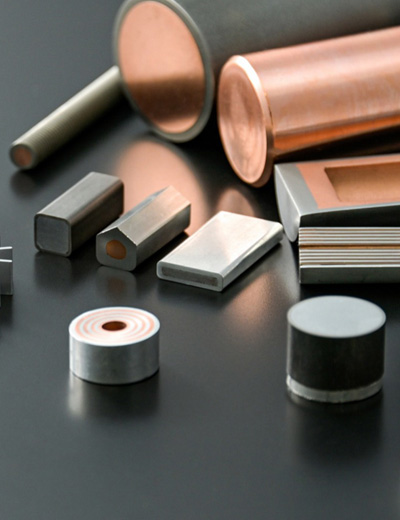

- Aluminum
Aluminum has a good strength-to-weight ratio, high thermal and electrical conductivity, low density and natural corrosion resistance. It is a highly malleable metal, making it easy to machining, can be anodized.
Type:1050,1060,2011,2024,5052,5051, 6061, 6063, 7075,7050

- Brass
Aluminum has a good strength-to-weight ratio, high thermal and electrical conductivity, low density and natural corrosion resistance. It is a highly malleable metal, making it easy to machining, can be anodized.
Type:1050,1060,2011,2024,5052,5051, 6061, 6063, 7075,7050

- Stainless steel
Aluminum has a good strength-to-weight ratio, high thermal and electrical conductivity, low density and natural corrosion resistance. It is a highly malleable metal, making it easy to machining, can be anodized.
Type:1050,1060,2011,2024,5052,5051, 6061, 6063, 7075,7050

- Copper
Aluminum has a good strength-to-weight ratio, high thermal and electrical conductivity, low density and natural corrosion resistance. It is a highly malleable metal, making it easy to machining, can be anodized.
Type:1050,1060,2011,2024,5052,5051, 6061, 6063, 7075,7050

- Mild Steel
Aluminum has a good strength-to-weight ratio, high thermal and electrical conductivity, low density and natural corrosion resistance. It is a highly malleable metal, making it easy to machining, can be anodized.
Type:1050,1060,2011,2024,5052,5051, 6061, 6063, 7075,7050

- Beryllium bronze
Aluminum has a good strength-to-weight ratio, high thermal and electrical conductivity, low density and natural corrosion resistance. It is a highly malleable metal, making it easy to machining, can be anodized.
Type:1050,1060,2011,2024,5052,5051, 6061, 6063, 7075,7050

- Alloy steel
Aluminum has a good strength-to-weight ratio, high thermal and electrical conductivity, low density and natural corrosion resistance. It is a highly malleable metal, making it easy to machining, can be anodized.
Type:1050,1060,2011,2024,5052,5051, 6061, 6063, 7075,7050

- Titanium
Aluminum has a good strength-to-weight ratio, high thermal and electrical conductivity, low density and natural corrosion resistance. It is a highly malleable metal, making it easy to machining, can be anodized.
Type:1050,1060,2011,2024,5052,5051, 6061, 6063, 7075,7050

- Tool steel
Aluminum has a good strength-to-weight ratio, high thermal and electrical conductivity, low density and natural corrosion resistance. It is a highly malleable metal, making it easy to machining, can be anodized.
Type:1050,1060,2011,2024,5052,5051, 6061, 6063, 7075,7050
 Plastic
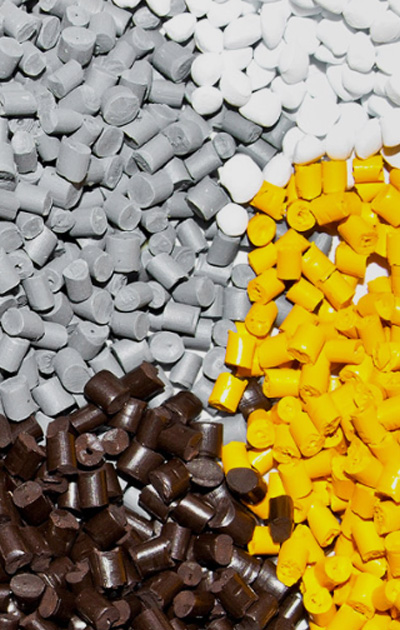

- ABS
It is a thermoplastic polymer material with high strength, good toughness, corrosion resistance, high temperature resistance.

- PVC
It is a thermoplastic polymer material with high strength, good toughness, corrosion resistance, high temperature resistance.

- POM
It is a thermoplastic polymer material with high strength, good toughness, corrosion resistance, high temperature resistance.

- Polypropylene(PP)
It is a thermoplastic polymer material with high strength, good toughness, corrosion resistance, high temperature resistance.

- Nylon
It is a thermoplastic polymer material with high strength, good toughness, corrosion resistance, high temperature resistance.

- PET
It is a thermoplastic polymer material with high strength, good toughness, corrosion resistance, high temperature resistance.

- PTFE(Teflon)
It is a thermoplastic polymer material with high strength, good toughness, corrosion resistance, high temperature resistance.

- FR-4
It is a thermoplastic polymer material with high strength, good toughness, corrosion resistance, high temperature resistance.

- Polycarbonate(PC)
It is a thermoplastic polymer material with high strength, good toughness, corrosion resistance, high temperature resistance.

- PMMA
It is a thermoplastic polymer material with high strength, good toughness, corrosion resistance, high temperature resistance.

- Polyethylene(PE)
It is a thermoplastic polymer material with high strength, good toughness, corrosion resistance, high temperature resistance.

- PEEK
It is a thermoplastic polymer material with high strength, good toughness, corrosion resistance, high temperature resistance.
CNC Machining
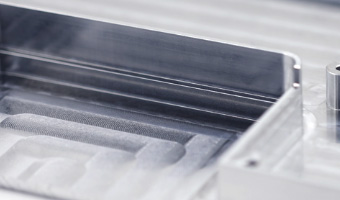
CNC Machining Surface Finishes
SOMI offers a diverse range of surface finishes, each tailored to meet the specific needs of your projects. Here’s a closer look at some of the options
As-machined
The standard finish of our parts, the "machined" finish, has a surface roughness of 3.2 μm (126 μin), which removes sharp edges and cleanly removes burrs from the part.
Machining Texture:There are slight scratches on the visible surface.
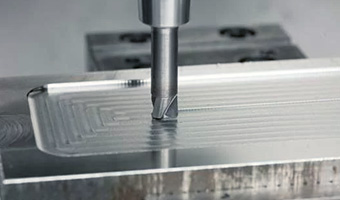
Smooth machining
A finishing CNC machining operation can be applied to the part to reduce its surface roughness. The standard smoothing surface roughness is Ra 1.6 μm (64 μin). Light surface scratches are visible.
Machining Texture:Visible, light surface scratches.
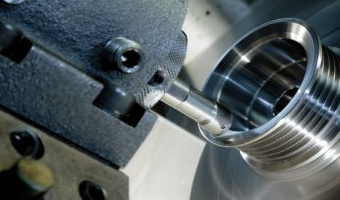
Fine machining
Refers to the process of precision treatment of raw materials or semi-finished products. The standard smoothing surface roughness is Ra 0.8 μm (32 μin).
Machining Texture:Slightly visible.
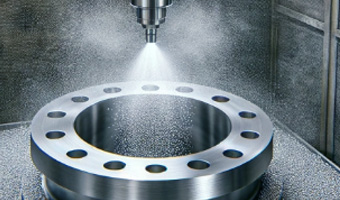
Bead blasting
Bead blasting refers to the use of round spherical media that, when impacted against the surface of a part, will leave a more uniform finish caused by the sphere “dimpling” the surface.
Machining Texture:Frosted grain.
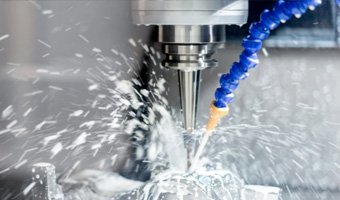
Brushing
Brushing is a surface treatment process that uses abrasive belts to draw traces on the surface of a material, usually for aesthetic purposes.
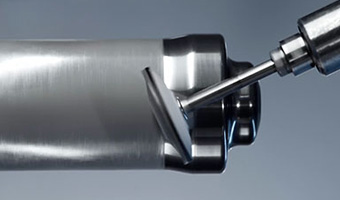
Polishing
From Ra 0.8 to Ra0.1, the polishing process uses abrasive materials to rub the surface of the part, making the surface of the part more shiny, depending on your requirements.
Machining Texture:Smooth, glossy finish
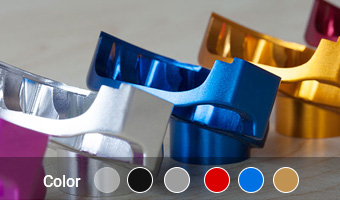
Anodizing
Aluminum and its alloy in the corresponding electrolyte and specific process conditions, due to the action of external current, the process of forming an oxide film on the aluminum product.
Machining Texture:Smooth, matte finish.
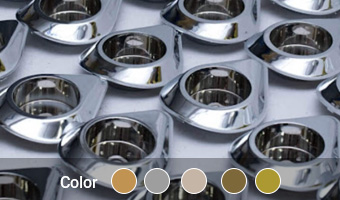
Electroplating
Electroplated coating preserves the surface of parts and resists rusts and other defects from causing decay by applying electric currents to reduce metal cations.
Machining Texture:Smooth, glossy finish.
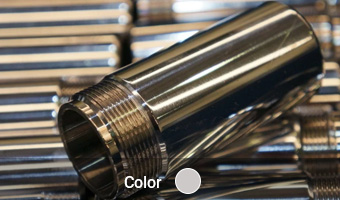
Electroless nickel plating
Electroless nickel plating is a process that deposits an alloy of nickel-phosphorus onto the surface of a metal. This process is chemical only, so does not involve the use of electricity.
Machining Texture:Reduced but visible.
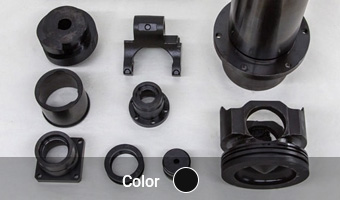
Black oxide
Black oxide is a conversion coating similar to Alodine that is used for steel and stainless steel. It is used mainly for appearance and for mild corrosion resistance..
Machining Texture:Smooth, matte.
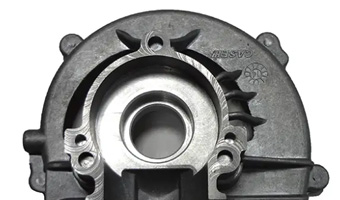
Powder coating
Using corona discharge, we make the powder coating adsorbed to the part, creating a more wear-resistant layer with a typical thickness ranging from 50 μm up to 150 μm.
Machining Texture:Glossy.
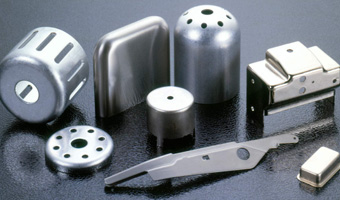
Chromate conversion coating
Chromate conversion coating is a type of conversion coating, used on aluminum as a corrosion inhibitor, as a primer for paint due to increased adherence or to preserve electrical conductivity.
Machining Texture:Visible.
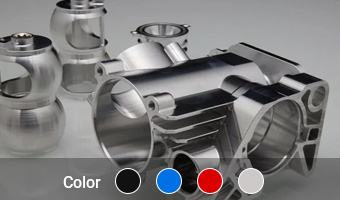
Electrophoresis
In the solution under the action of direct current electric field, the charged resin moves to the opposite electrode phenomenon. Strong corrosion resistance, can be on different colors.
Machining Texture:Visible.
As-machined
The standard finish of our parts, the "machined" finish, has a surface roughness of 3.2 μm (126 μin), which removes sharp edges and cleanly removes burrs from the part.
Machining Texture:There are slight scratches on the visible surface.
Smooth machining
A finishing CNC machining operation can be applied to the part to reduce its surface roughness. The standard smoothing surface roughness is Ra 1.6 μm (64 μin). Light surface scratches are visible.
Machining Texture:Visible, light surface scratches.
Fine machining
Refers to the process of precision treatment of raw materials or semi-finished products. The standard smoothing surface roughness is Ra 0.8 μm (32 μin).
Machining Texture:Slightly visible.
Bead blasting
Bead blasting refers to the use of round spherical media that, when impacted against the surface of a part, will leave a more uniform finish caused by the sphere “dimpling” the surface.
Machining Texture:Frosted grain.
Brushing
Brushing is a surface treatment process that uses abrasive belts to draw traces on the surface of a material, usually for aesthetic purposes.
Polishing
From Ra 0.8 to Ra0.1, the polishing process uses abrasive materials to rub the surface of the part, making the surface of the part more shiny, depending on your requirements.
Machining Texture:Smooth, glossy finish
Anodizing
Aluminum and its alloy in the corresponding electrolyte and specific process conditions, due to the action of external current, the process of forming an oxide film on the aluminum product.
Machining Texture:Smooth, matte finish.
Electroplating
Electroplated coating preserves the surface of parts and resists rusts and other defects from causing decay by applying electric currents to reduce metal cations.
Machining Texture:Smooth, glossy finish.
Electroless nickel plating
Electroless nickel plating is a process that deposits an alloy of nickel-phosphorus onto the surface of a metal. This process is chemical only, so does not involve the use of electricity.
Machining Texture:Reduced but visible.
Black oxide
Black oxide is a conversion coating similar to Alodine that is used for steel and stainless steel. It is used mainly for appearance and for mild corrosion resistance..
Machining Texture:Smooth, matte.
Powder coating
Using corona discharge, we make the powder coating adsorbed to the part, creating a more wear-resistant layer with a typical thickness ranging from 50 μm up to 150 μm.
Machining Texture:Glossy.
Chromate conversion coating
Chromate conversion coating is a type of conversion coating, used on aluminum as a corrosion inhibitor, as a primer for paint due to increased adherence or to preserve electrical conductivity.
Machining Texture:Visible.
Electrophoresis
In the solution under the action of direct current electric field, the charged resin moves to the opposite electrode phenomenon. Strong corrosion resistance, can be on different colors.
Machining Texture:Visible.
Industry
Application Areas of CNC Machining
Customized manufacturers of precision parts in 6 major industries
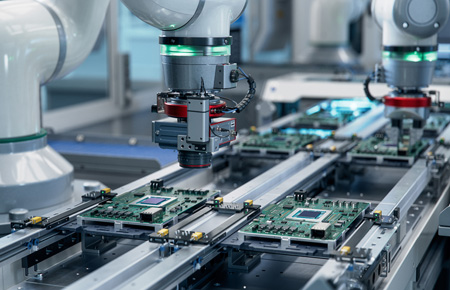
Consumer Electronics
Our manufactured electronic components consistently meet the tight tolerances required in this ever-evolving industry.
Learn More
Aerospace & Aviation
Our manufactured electronic components consistently meet the tight tolerances required in this ever-evolving industry.
Learn More
Automotive
Our manufactured electronic components consistently meet the tight tolerances required in this ever-evolving industry.
Learn More
Medical
Our manufactured electronic components consistently meet the tight tolerances required in this ever-evolving industry.
Learn More
Robotics & Automation
Our manufactured electronic components consistently meet the tight tolerances required in this ever-evolving industry.
Learn More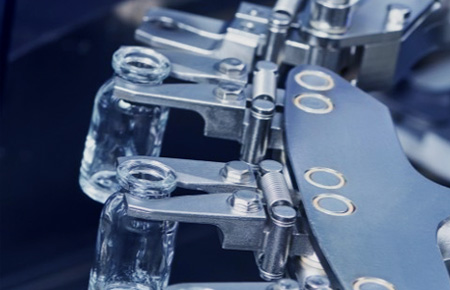
Industrial Machinery Parts
Our manufactured electronic components consistently meet the tight tolerances required in this ever-evolving industry.
Learn MoreTest Inspection
Quality Assurance at the Heart of Our Operations
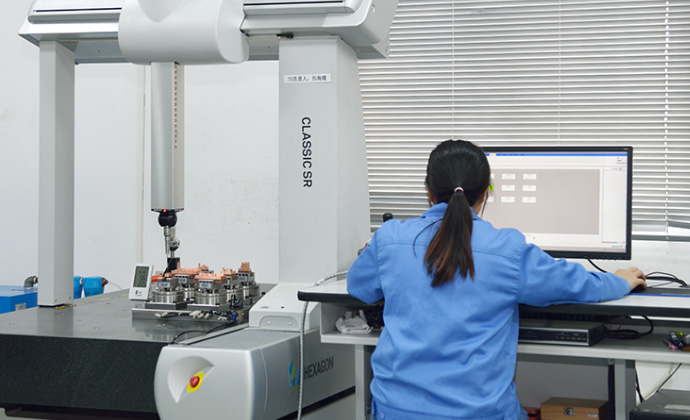
Quality is not just a buzzword at SOMI,it's the foundation upon which we build our reputation Our rigorous quality assurance process encompasses every stage of production, from initial design to final inspection. We employ advanced measurement and testing equipment to verify that each part meets our stringent standards and, more importantly, your expectations. This unwavering dedication to quality ensures that SOMI's CNC machining services are a step above the rest.
Get a Quote
Contact us Today for Your CNC Machining Requirements
Ready to elevate your manufacturing with the precision and quality of SOMI's CNC machining services? Contact us today to discuss your project and discover how we can help you achieve unparalleled results. With SOMI, you're not just choosing a service provider, you're choosing a partner dedicated to your success.
We are committed to providing full-process services from prototyping to mass production. We provide rapid prototyping services to ensure that your design can be realized accurately and efficiently.
We hope to discuss potential cooperation opportunities with you and ask you to provide quotation information for your project. Looking forward to your reply and working with you to promote the success of your project!
- *Name
- *Phone
- *Title
- *Content
FAQ
Frequently Asked Questions
If you have any further questions, please contact us. We look forward to working with you.
- How does CNC drilling technology improve production efficiency over manual drilling?
Quick Answer
CNC drilling eliminates manual operations through fully automated processes: automatic tool changers swap drill bits in seconds, programmed depth control prevents errors, multi-tool programs combine drilling with tapping and countersinking in one cycle, and consistent feed rates optimize tool life. The result is 3-5x faster production with virtually zero operator-dependent errors.
Speed Improvements
A manual machinist typically drills 20-40 holes per hour including layout, center punching, drilling, deburring, and inspection. CNC drilling produces 80-200 holes per hour depending on material and depth. For complex parts with multiple hole sizes, CNC is even more efficient because automatic tool changers switch between different drill sizes in 2-5 seconds, compared to 30-60 seconds for manual tool changes.
Accuracy and Consistency
CNC drilling eliminates the most common manual errors: misaligned holes, incorrect depth, drill wander, and inconsistent chamfer size. CNC programs hold hole positions to ±0.001" and depth to ±0.005" consistently across thousands of parts. This reduces inspection time and virtually eliminates scrap from positioning errors, which typically accounts for 3-5% of manual drilling production.
Combined Operations
The greatest efficiency gain comes from combined operations. A CNC program can drill a hole, chamfer it, and tap threads in a single cycle without operator intervention. Parts that require drill, countersink, tap, and mill operations can be completed in one setup versus 3-4 separate manual setups. This reduces total production time by 50-70% for complex parts.
Why Choose SOMI Custom Parts
At SOMI Custom Parts, we optimize every drilling program for maximum efficiency. Our CAM software calculates optimal peck drilling cycles, chip clearing routines, and feed rate optimization specific to each material. For high-volume production, we can program multi-spindle drilling heads that drill multiple holes simultaneously. This engineering approach to drilling ensures your parts are produced as efficiently as possible without compromising quality.
Case Study
A construction equipment manufacturer needed 10,000 steel mounting plates per year, each requiring 24 precisely located holes of 4 different sizes with countersinking. Manual production was producing 40 plates per shift with 5% scrap. SOMI programmed a CNC cycle with automatic tool changes that produced 120 plates per shift with under 0.5% scrap. Annual savings: $85,000.
Industry Data
The National Tooling and Machining Association reports that CNC automation reduces drilling-related labor costs by 60-75% compared to manual methods. Companies that transition from manual to CNC drilling report an average ROI of 8-14 months through reduced labor, lower scrap rates, and higher throughput (NTMA 2025 Productivity Report).
Related Questions
- What types of holes can CNC drilling create?
- How does CNC milling work?
- What are the advantages of CNC machining?
- What standard tolerances can CNC milling achieve?
- What types of holes and threaded features can be created with CNC drilling services?
Quick Answer
CNC drilling services produce a comprehensive range of hole types: standard through and blind holes, counterbored holes for socket head screws, countersunk holes for flat head fasteners, threaded holes (UNC, UNF, metric from #0 to 2"+), reamed holes for precision fits, and deep holes with specialized gun drilling for depth-to-diameter ratios up to 200:1.
Standard Hole Types
Through holes: Drill completely through the workpiece. Blind holes: Drill to a specified depth without breaking through. Counterbore holes: A larger diameter section at the top for socket head cap screws. Countersink holes: A conical recess for flat head screws. Spotface holes: A shallow flat bottom for washer seating. Center drill holes: Starter holes for lathe work between centers.
Threaded Features
Threads can be created by tapping (cutting threads in a pre-drilled hole) or thread milling (using a thread mill on a CNC machining center). Common thread standards: UNC (Unified Coarse), UNF (Unified Fine), metric coarse and fine (M2 through M30+), NPT (pipe threads), and BSPT. Thread classes: 2B (standard), 3B (precision). Minimum thread depth: typically 1.5x the nominal diameter.
Precision Hole Features
Reamed holes: Drill undersize then ream to final diameter for press-fit bearings and dowel pins. Tolerance: ±0.0002" to ±0.0005". Gun-drilled holes: Deep holes with exceptional straightness for oil passages in hydraulic components, cooling channels in molds, and medical instruments. Depth-to-diameter ratios up to 200:1 are achievable with specialized gun drilling equipment.
Why Choose SOMI Custom Parts
At SOMI Custom Parts, our CNC drilling and tapping capabilities cover the full spectrum from micro-drilling (0.005" diameter) to large-diameter drilling (2"+). We maintain thread gauges for all standard thread sizes and perform in-process thread inspection. Our gun drilling equipment can produce deep, straight holes for hydraulic and mold applications. We also offer combined drilling + tapping in a single CNC cycle for maximum efficiency.
Case Study
A hydraulic manifold manufacturer required 24 precision-drilled and tapped ports on each manifold block, including 8 cross-drilled intersections and 4 NPT pipe thread ports. SOMI programmed the complete drilling cycle on a 4-axis machining center, drilling all holes and tapping all threads in a single setup. The 1,500-piece order was completed with zero thread gauge failures and 100% pass rate on pressure testing.
Industry Data
Drilling and tapping account for approximately 25-35% of all CNC machining operations (Gardner Business Media, 2025). Thread milling has grown 40% over the past 5 years as manufacturers adopt it for its ability to produce threads closer to the bottom of a blind hole and with better thread quality than conventional tapping.
Related Questions
- How does CNC drilling improve production efficiency?
- How does CNC milling work?
- What standard tolerances can CNC milling achieve?
- What materials are available for CNC machining?
- What standard tolerances can I expect from a professional CNC milling parts factory?
Quick Answer
Professional CNC milling facilities maintain three tiers of tolerance: standard (±0.005", 0.13 mm) for general features, precision (±0.001", 0.025 mm) for mating surfaces and critical dimensions, and high-precision (±0.0005", 0.013 mm) for aerospace and medical applications. Surface finish ranges from 32 Ra (standard) to 16 Ra (precision) and 8 Ra (high-precision).
Tolerance Classes Explained
Standard tolerance (±0.005"): Suitable for non-critical dimensions, clearance holes, general profiles. This is the default for most CNC milling shops and requires no special setup. Precision tolerance (±0.001"): Required for mating surfaces, bearing bores, and locating features. Achievable with quality tooling and proper machine maintenance. High-precision tolerance (±0.0005" or better): Required for aerospace, medical, and precision instrument components. May require temperature-controlled environments, specialized machines, and additional inspection.
Geometric Tolerances
Beyond dimensional tolerances, professional shops also control geometric features: flatness of 0.001" per inch, parallelism of 0.002" per inch, perpendicularity of 0.002" per inch, and concentricity of 0.001" TIR (Total Indicated Runout). These geometric tolerances are equally important for parts that must assemble and function correctly.
Surface Finish Standards
Standard milling produces 63-125 Ra. Precision milling achieves 32-63 Ra. Fine milling with light finishing passes reaches 16-32 Ra. Ultra-fine milling using specialized tools and techniques achieves 8-16 Ra. For reference, a typical automotive bracket might specify 63 Ra, while a hydraulic valve spool might require 16 Ra.
Why Choose SOMI Custom Parts
At SOMI Custom Parts, we clearly communicate our tolerance capabilities before production begins. Our standard practice is to hold ±0.003" on all dimensions unless otherwise specified, with critical features machined to ±0.001". For projects requiring ±0.0005" or tighter, we use dedicated precision machines with temperature control. Every part is inspected using CMM equipment, and dimensional reports are provided with your shipment.
Case Study
An aerospace client required aluminum mounting brackets with ±0.0005" on three critical hole locations, flatness of 0.001" across the mounting face, and 16 Ra surface finish. SOMI programmed the part for a 5-axis machine with a finishing pass strategy and verified every dimension on our CMM. The 300-piece order passed client inspection with zero non-conformances.
Industry Data
The American Society of Mechanical Engineers (ASME) Y14.5 standard defines tolerance classes for machined parts. According to a 2025 SME survey, the median CNC milling shop holds ±0.003" as their standard tolerance. Only 22% of surveyed shops consistently achieve ±0.001" or better on complex parts (SME Machining Survey, 2025).
Related Questions
- How does CNC milling work?
- What should I look for in a CNC milling manufacturer?
- What level of precision can CNC turning achieve?
- What are the advantages of CNC machining?
Explore More
SOMI Manufacturing Capabilities


From concept to product
From prototyping to production, our production sites can handle all your manufacturing projects.
subscription