
From concept to product
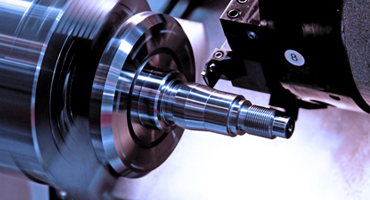
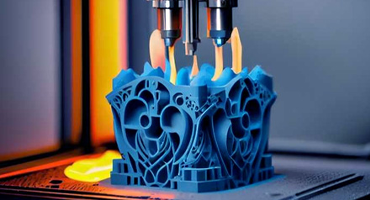
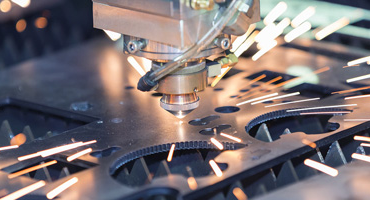
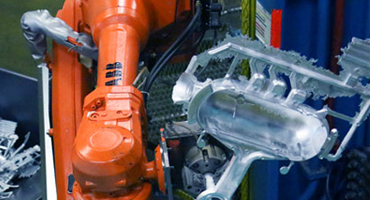
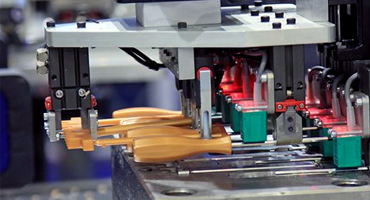
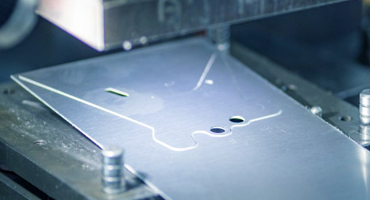
From prototyping to production, our production sites can handle all your manufacturing projects.
How do I join the SOMI manufacturing network?
The short answer
Two tracks. A buyer joins in one step: send a drawing and the quotation workflow starts, within 24 to 48 hours. A factory joins through qualification - document review, an audit, then sample validation - which takes about two to four weeks for the review and audit and six to fourteen weeks end to end when custom tooling is involved.
Two tracks, two timelines
One question decides which process applies: are you buying parts, or making them? A buyer's entry step is a file transfer. A factory's entry step is evidence. Neither costs money, and neither is a formality, but the two timelines differ by an order of magnitude, so it is worth knowing which one you are on before a launch date is fixed.
If you are buying, joining means you are inside the quotation workflow, and nothing else changes: one project manager and one point of contact from the first enquiry through to the shipment. If you are making, joining means your records, your equipment and your output have been checked against a specification that a third party can audit, and the first order is deliberately small for exactly that reason.
What we do not do is charge for the door. There is no application fee, no listing fee and no subscription on either side, which is why the honest answer to how long it takes is about paperwork and sample parts rather than about money.
The buyer track: four steps from enquiry to released order
The buyer path is short because the checks happen on the part rather than on you.
- Share the files. A STEP or IGES model plus a 2D PDF drawing with tolerances is enough to quote. A physical sample can stand in for a model where no CAD exists, but a drawing with tolerances is what makes two quotations comparable.
- DFM review. Geometry, tolerances, wall thickness, bend radius, draft and material are reviewed against the process route before price is discussed. This is where cost is usually found: a wall that is too thick for the cycle time, a tolerance no process holds at that size, or a bend that needs a relief cut.
- Quotation. Unit price, tooling, inspection, lead time and the assumptions behind each of them, in writing. Anything the price depends on that has not been stated is a change order waiting to happen.
- Release. Sample or first article, approval against the drawing, then production. Repeat orders skip the first two steps.

What to send with the first message
Most of the delay in a first quotation is a missing file rather than a slow engineer. This is the short list, and each item changes a number that appears on the quote.
| Send this | Why it moves the price or the date |
|---|---|
| 3D model: STEP, IGES, X_T or STL | Cycle time, tooling route and DFM comments |
| 2D drawing with tolerances and finish callouts | Inspection plan, gauge choice and whether a process can hold it |
| Material and surface finish | Cost, lead time and whether a secondary supplier is needed |
| Annual volume and first-order quantity | Process choice: tooling-free work and tooled work cross over at different points |
| Target date and delivery destination | Production slot and freight mode |
| Compliance requirement, if any | Whether a specific grade, record set or third-party test applies |
| NDA or quality agreement, if you need one | Sign it before drawings are shared, not after |

The factory track: what has to exist at each gate
For a factory, joining is a sequence of six gates, and each one asks for evidence rather than a promise.
- Application. What the factory makes, in which processes, on which equipment, and at what tonnage or envelope limits.
- Entity and scope check. Legal entity, registered scope, facility location and ownership of the machines, so that capacity claimed is capacity controlled.
- Document review. Quality manual and records, gauge calibration status, material certificates, inspection capability and the list of sub-tier suppliers.
- Audit. One day on site against a checklist shared in advance, or a remote process review with live video where travel is not practical. For orders above roughly USD 50,000, published guidance treats the on-site audit as mandatory rather than optional.
- Sample and first article. Trial parts produced against a frozen drawing and reported dimensionally, which is the only step that tests the claims made in the first four.
- Approved status. Entry on the routing list, an agreed escalation path for quality issues and the first production order.
How long it takes, and what makes it slip
The published numbers for custom parts are consistent. Qualification and quality-system review take about two to four weeks. The first-article and production-part approval stage adds two to six weeks after tooling is ready, which puts eight to fourteen weeks between first contact and an approved production part when a new die or mould has to be built. Measured on its own, an approval package takes three to four weeks to assemble for simple stamped or moulded parts, six to eight weeks for medium-complexity parts that need multi-stage processing and third-party testing, and ten to sixteen weeks for safety-critical parts.

| Stage | Typical duration | What makes it slip |
|---|---|---|
| Document review | 1 to 3 weeks | Gauge calibration or material certificates missing |
| On-site or remote audit | 1 day, plus scheduling | Checklist and scope not shared in advance |
| Corrective actions | 2 to 6 weeks | Findings in quarantine control or traceability |
| Sample and first article | 1 to 4 weeks | Drawing not frozen, or a change made mid-sample |
| Production release | 1 to 2 weeks | Approval level not agreed before samples ship |
Why applications stall, and what stops the clock
The findings that delay a first approval are almost never about machining capability. They repeat, and they are administrative:
- Gauges without current calibration. A measurement without a calibration certificate is an opinion, and an inspector will treat it as one.
- An uncontrolled quarantine or material review area. If non-conforming parts are not physically separated, nothing downstream can be trusted.
- Incomplete training records. Key operators and inspectors need traceable qualification, not verbal seniority.
- Sub-tier suppliers outside the system. Plating, heat treatment and coating are where most stamping and machining defects are actually created, and they are often not in the factory's own quality system on paper.
- Broken material traceability. A mill certificate that takes three weeks to appear is a warning sign rather than a formality.
Two practical habits cut most of the delay. Send the checklist two weeks before the visit so the factory prepares the right evidence instead of guessing, and agree the approval submission level before tooling is released rather than after samples ship. Neither is expensive, and both remove the most common cause of a slipped date, which is surprise.
Limits, and how to start
- Not every applicant is accepted. A network is only as good as its worst member, so capability, capacity and record discipline are all part of the decision.
- Joining does not guarantee volume. Work is routed on capability, capacity, price and past performance, in that order.
- The audit does not replace your customer's audit. If your own customer requires their own visit, their own checklist or their own approved vendor list, that runs on top of this one.
- Regulated and export-controlled work needs more. Medical, aerospace and defence programmes carry documentation and control requirements that are assessed case by case before anything is quoted.
- No certification claims are made here. Which quality system a factory holds, and to what scope, is confirmed per programme and per factory in writing rather than assumed from a website.
To start on either track, send what you already have. A buyer needs a model and a drawing. A factory needs a capability list, a licence and the process it wants to be considered for. From there the next step is a free design review on a live part or a scheduled audit, and both are quoted in weeks rather than in fees. See the partner programme for the factory side, CNC machining for the most commonly routed process and sheet metal fabrication for formed and welded work.
Scope and sources. Onboarding durations and the sequence of gates were compiled in 2026 from a published supplier onboarding timeline for stamping parts (qualification two to four weeks, approval two to six weeks after tooling, eight to fourteen weeks end to end, on-site audit mandatory above roughly USD 50,000) and from a PPAP cycle-time breakdown giving three to four weeks for simple stamped or moulded parts, six to eight weeks for medium complexity and ten to sixteen weeks for safety-critical parts. The recurring audit findings, the corrective-action window and the reported first-audit failure rate come from an automotive supply chain certification guide and from an overview of the six-stage automotive supplier admission process. These are planning ranges drawn from published experience, not commitments, and they move with the completeness of the documentation submitted. Nothing here states or implies that any factory holds a particular certificate; quality systems are confirmed per programme, per factory and in writing before production.
Are you looking for a reliable manufacturer of down home textile products?
We can quickly provide customers with market analysis, technical support and customized services.From concept to product
From prototyping to production, our production sites can handle all your manufacturing projects.
subscription