304 Stainless Steel Laser-Cut Plate with Riveted Copper Terminal
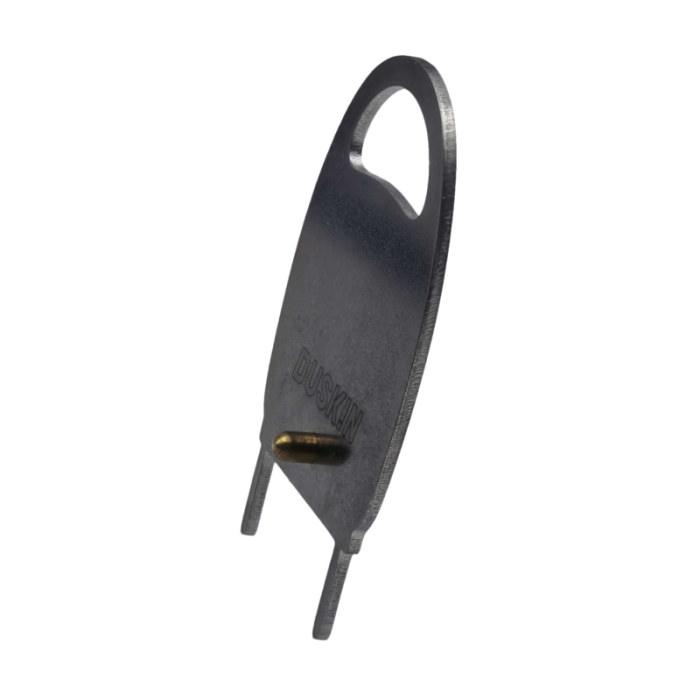
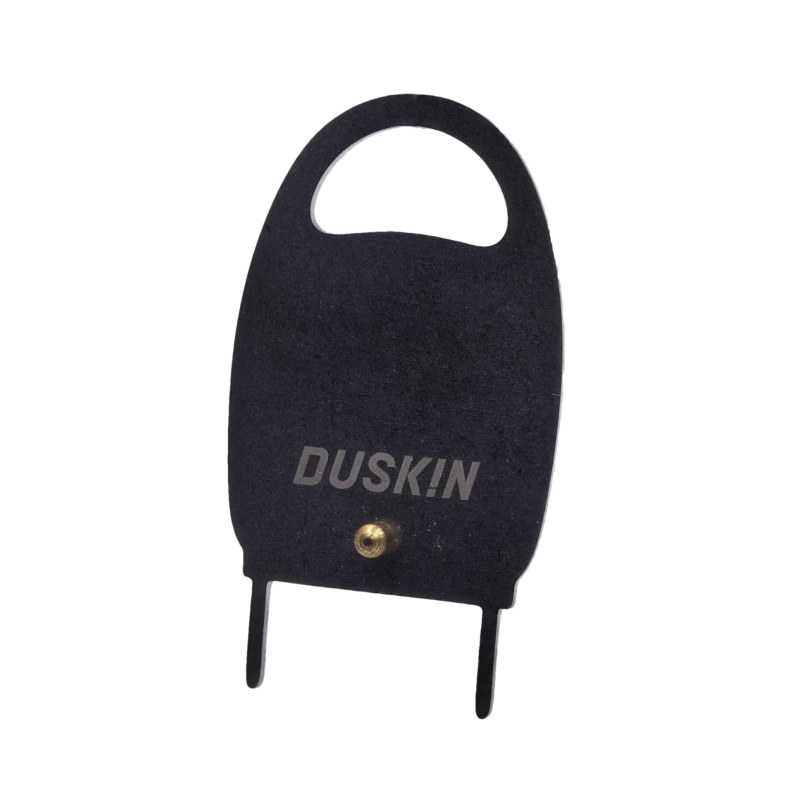
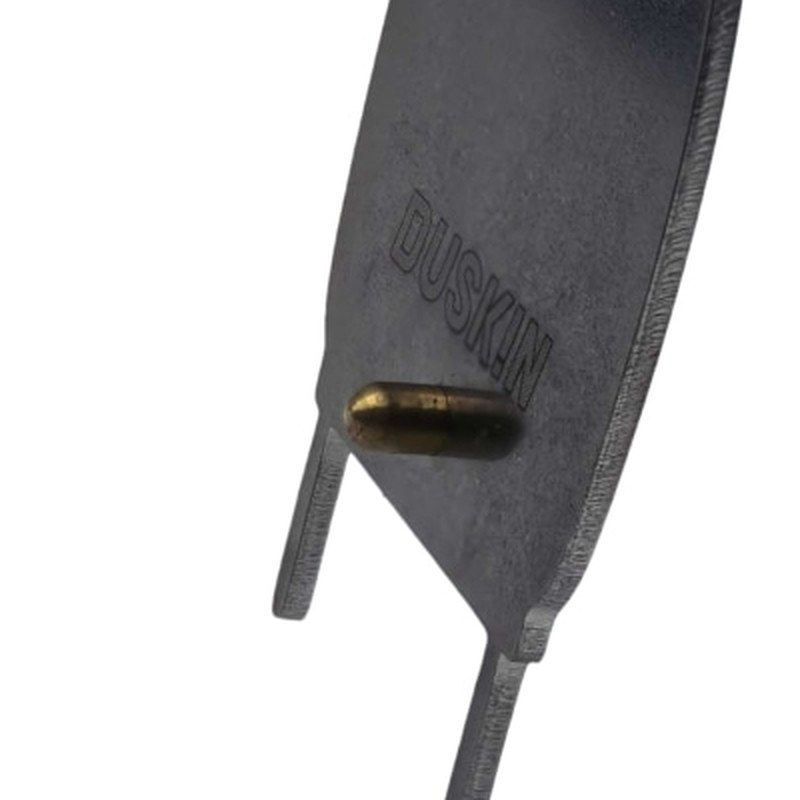
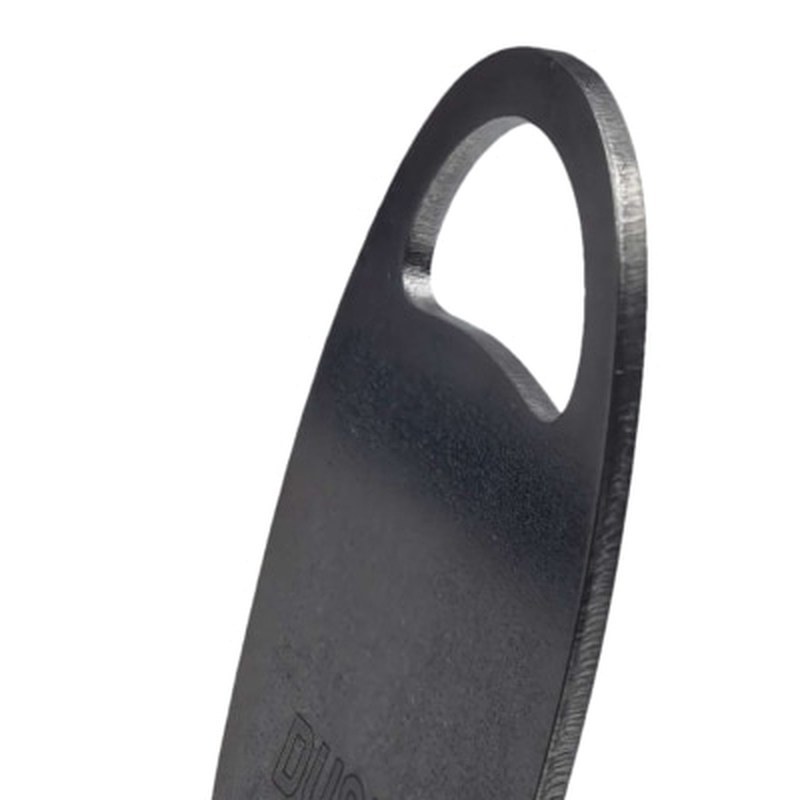
One flat part in 304 stainless steel that carries three jobs at once. The laser-cut profile — loop opening at the top, tapered shoulders, twin tabs at the lower edge — handles mounting and location; a copper terminal riveted through the plate provides the contact point; and the customer logo, applied by laser marking, gives permanent identification. Before assembly the parts ran a magnetic tumbling cycle that removed cutting burr and left the uniform matte-grey surface.
304 SSlaser-cut stainless sheet body
4processes on one part: cut, tumble, rivet, mark
Die-freeprofile comes from the drawing, not tooling
Why This Plate Was Laser Cut
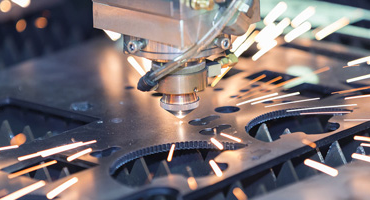
A flat part with an open contour can be laser cut, stamped or milled. This one went to laser cutting because of its geometry and its run size.
No die before the first part
The outline lives in the cutting file. Changing the loop, the tab spacing or the overall shape means editing the drawing, not rebuilding a stamping die — which is what makes short runs and sample rounds practical.
Every contour in one pass
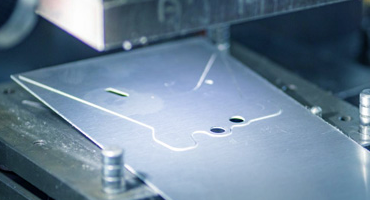
The outer profile, the top loop opening, the twin lower tabs and the terminal hole are cut in a single program run, so the features stay in register with each other piece to piece.
Clean work on sheet gauge
Laser cutting handles thin and mid-weight stainless sheet without the press tooling a stamped part would need, and small internal features are no harder to cut than the outline.
Edges ready for finishing
Cut dross and light burr come off in the magnetic tumbling cycle, which also evens out the surface — so the deburr step and the finish step are the same step.
Specification
The callouts that drove fit, function and appearance on this build. Dimensions and gauge follow the customer drawing.
Item
This build
Category
Sheet Metal Fabrication › Laser Cutting
Material
304 stainless steel sheet, gauge per drawing
Primary process
Fiber laser cutting of profile, loop opening, twin tabs and terminal hole
Deburr and surface
Magnetic tumbling (magnetic abrasive finishing), uniform matte-grey
Inserted feature
Copper terminal, mechanically riveted through the pre-cut hole, solder-free
Identification
Fiber laser marking of the customer logo on the marked face
Key geometry
Top loop opening, tapered body, two extended tabs at the lower edge
Tolerance
Standard laser-cutting tolerances; critical features and hole positions set from the drawing
Quantity
Project-based — sample rounds through repeat production runs
Reference
Customer physical sample and drawing
What Is on the Part
Four elements, each made by a different step, combined in one flat component.
Riveted Copper Terminal
The contact interface. A copper terminal is pressed through the laser-cut hole and riveted in place — a cold mechanical joint, so no soldering heat touches the plate and the stainless surface stays free of heat discoloration.
Bright copper head against the matte plate
Upset-riveted: solder-free, firmly retained
Formed tail visible on the reverse face
Joint holds through handling and downstream assembly
Hole sized to match the terminal, cut in the same program
Tumbled Surface and Laser Mark
After cutting, parts run in a magnetic-field finishing cycle with fine stainless media. The media drives through every contour — loop edge, tab slots, the area around the terminal — removing burr and dross and evening the surface. The logo is then engraved by fiber laser into that finished surface.
Deburr and surface uniformity in one cycle
Consistent soft matte-grey across the batch
Gentle, controlled action keeps flat parts flat
Permanent fiber laser marking, no consumables
Marked after tumbling, so it sits on a uniform base
Process Decisions That Set the Result
Four sequencing choices decide both the look and the reliability of a part like this.
Tumble before riveting
The plate is deburred and finished while it is still flat and feature-free, so the terminal is riveted onto a clean surface with a burr-free hole — the joint seats fully and repeatably.
Rivet instead of solder
A cold upset joint holds the copper terminal without heat, avoiding discoloration of the 304 and keeping the process fast enough for every piece, not just samples.
Mark after the finish
Marking last means the logo is engraved on the final surface condition. The matte tumbled base is exactly what makes the mark read dark and crisp.
One file, one register
Profile, loop, tabs and terminal hole are cut in a single program, so the hole always lands where the drawing says it does — the feature that makes the rivet step smooth.
How It Was Made
Five stages from sheet to a finished, marked, terminal-fitted part.
01
Laser cutting
Outline, loop opening, twin tabs and terminal hole are cut from 304 sheet on a fiber laser, from the customer drawing or sample.
02
Magnetic tumbling
Parts run with fine stainless media under a magnetic field: burr and cutting dross come off, the surface comes out uniformly matte.
03
Terminal riveting
Each terminal is pressed through its pre-cut hole and riveted cold — no solder, no heat, a solid mechanical contact point on every plate.
04
Laser marking
The customer logo is engraved by fiber laser on the marked face, positioned identically piece to piece.
05
Inspection
Parts are checked against the sample for contour, terminal retention and mark quality, then packed with protection between layers.
Laser Cutting, Stamping or Machining
All three can make a flat stainless plate. What separates them is tooling, geometry and volume — not material.
Factor
Laser cutting (used here)
Stamping
CNC machining
Tooling
None — the contour is a file
Progressive or single-hit die
None, but program plus fixturing
Best for
Flat profiles with mixed openings and slots, sample to mid runs
Rule of thumb from this build: a flat contour with openings, tabs and one inserted terminal is fastest to laser cut and tumble. If the part becomes a high-volume fixed design, stamping can win on per-piece cost; if it grows milled features or thicker plate, machining enters the picture. Capability detail sits under laser cutting and sheet metal fabrication.
Questions Buyers Ask Before Ordering
Can you work from our physical sample instead of a drawing?
Yes. This project ran from a customer sample: the contour, tab positions and terminal hole were measured against the supplied part. If drawings or a 3D file exist, send them together with the sample — the drawing defines which features are critical and which are cosmetic.
Is there a minimum quantity for a laser-cut part like this?
Because there is no die, there is no tooling floor to amortize. Sample rounds and small batches are practical; the economics only shift toward stamping when a fixed design runs in high volume.
Will the laser-marked logo wear off?
No. Fiber laser marking changes the surface itself — there is no ink or label to fade, peel or lift. It survives cleaning and normal service wear for the life of the part.
How is the copper terminal retained, and why not solder it?
The terminal is upset-riveted through the laser-cut hole: a cold mechanical joint that holds firmly without heat. Soldering stainless can discolor the plate and adds a step; riveting keeps the surface clean and the joint consistent piece to piece.
Can the same flow run other materials?
Yes. 304 is what this build called for. The same cut, tumble, rivet and mark sequence applies to other stainless grades, aluminum and brass sheet, with laser, media and marking parameters adjusted per material.
What finish will I actually receive?
The magnetic tumbling cycle gives the uniform soft matte-grey surface shown in the photos — deburred, safe to handle, and consistent across the batch. If your design calls for a different surface, say so at RFQ; the sequence can be adjusted.
Client Feedback
The plates came back matching our samples — same contour, same matte surface, and the copper terminals stayed rock solid through our assembly line. The laser-marked logo is crisp and does not wear.
Need a laser-cut part with an inserted terminal?
Send a drawing, a DXF or a physical sample. We will come back with the material callout, the cut sequence, the deburr method and how the terminal or marking step should be sequenced.
We are committed to providing full-process services from prototyping to mass production. We provide rapid prototyping services to ensure that your design can be realized accurately and efficiently.
We hope to discuss potential cooperation opportunities with you and ask you to provide quotation information for your project. Looking forward to your reply and working with you to promote the success of your project!
*Email
*Name
*Phone
*Title
*Content
Upload
Only supports .rar/.zip/.jpg/.png/.gif/.doc/.xls/.pdf, maximum 20MB.