Parts Customization / Processing Service Expert

From concept to product
From prototyping to production, our production sites can handle all your manufacturing projects.
Home / All / Buyer's Guides

Buyer's Guides

  • Car Brakes and Accessories: The Ultimate Guide for Braking System Components Suppliers
    Car Brakes and Accessories: The Ultimate Guide for Braking System Components SuppliersDec 5,2025
    This article offers a comprehensive guide to understanding automotive braking systems from the perspective of a leading Braking System Components Supplier. It breaks down the intricate workings of key components, including brake calipers, pads, rotors, fluid, master cylinders, and brake boosters.
  • How CNC Milling and Turning Achieve Tight Tolerances for Machining Parts Manufacturers
    How CNC Milling and Turning Achieve Tight Tolerances for Machining Parts ManufacturersDec 4,2025
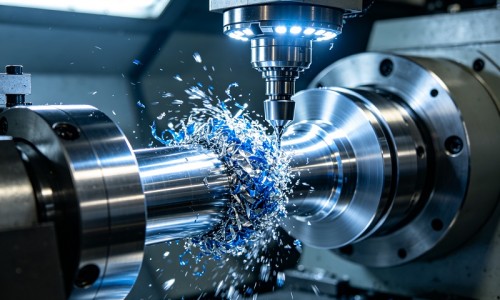
    As a CNC Machining Parts Manufacturer, precision is paramount in producing high-quality components for diverse industries. Modern manufacturing heavily relies on advanced CNC turning and milling techniques to achieve extremely tight tolerances. CNC turning, a subtractive process, efficiently creates cylindrical parts by rotating a workpiece against a stationary cutting tool.
  • Custom Machined Plastic Parts: Understanding the Differences Between 3D Printing and CNC Machining
    Custom Machined Plastic Parts: Understanding the Differences Between 3D Printing and CNC MachiningDec 3,2025
    When developing custom plastic parts, manufacturers often choose between CNC machining and industrial 3D printing. CNC machining is a subtractive method, removing material from a solid block to achieve precise dimensions, and is known for its accuracy, tight tolerances, and superior material strength due to isotropic properties. It supports a wide array of engineering-grade plastics like ABS, PC, Nylon, POM, PEEK, and Acrylic, retaining the inherent properties of the raw material.
  • How Small Batch CNC Machining and 3D Printing Impact Automotive Part Suppliers
    How Small Batch CNC Machining and 3D Printing Impact Automotive Part SuppliersDec 2,2025
    The automotive industry is rapidly adopting both small batch CNC machining and 3D printing to meet growing demands for customization, faster product development, and supply chain efficiency. While fundamentally different—CNC is subtractive, removing material, and 3D printing is additive, building layer by layer—both technologies offer unique advantages for automotive part suppliers.
  • How to Choose: SLA vs. SLS vs. FDM for Your 3D Printing SLA Parts Supplier
    How to Choose: SLA vs. SLS vs. FDM for Your 3D Printing SLA Parts SupplierDec 1,2025
    Selecting the appropriate 3D printing technology is crucial for project success, with Fused Deposition Modeling (FDM), Stereolithography (SLA), and Selective Laser Sintering (SLS) being prominent options. FDM, known for its cost-effectiveness and accessibility, is ideal for early-stage conceptual models, basic prototypes, and large, simple parts without stringent requirements for surface finish or fine detail. Its limitations include visible layer lines, lower resolution, and anisotropic mechani
  • Hard vs. Soft Silicone Rubber Protective Covers: A Comprehensive Comparison
    Hard vs. Soft Silicone Rubber Protective Covers: A Comprehensive ComparisonNov 30,2025
    Choosing the right smartphone protective cover involves understanding the distinct features of hard and soft cases. Hard cases, typically made from materials like polycarbonate (PC), ABS, or rigid TPU, offer a stiff, unyielding shield against scratches and direct impacts, maintaining the phone’s slim profile. They are highly customizable due to their smooth surface, allowing for various designs and finishes.
  • The Anatomy of Precision: Why Tight Tolerances in Surgical Instrument Components are Non-Negotiable
    The Anatomy of Precision: Why Tight Tolerances in Surgical Instrument Components are Non-NegotiableNov 29,2025
    In surgery, there is no margin for error. This article explores the critical role of precision engineering and tight tolerances in manufacturing surgical instrument components, detailing how material science, advanced machining, and rigorous quality control converge to ensure patient safety and optimal surgical outcomes.
  • Understanding Precision Sheet Metal for Avionics Enclosure Manufacturers
    Understanding Precision Sheet Metal for Avionics Enclosure ManufacturersNov 28,2025
    The article emphasizes the critical role of precision sheet metal fabrication for Avionics Enclosure Manufacturers in the aerospace industry. It highlights that these enclosures are essential for protecting sensitive electronic components and ensuring the structural integrity, safety, and performance of aircraft and spacecraft. The complex demands placed on these manufacturers include stringent requirements for robustness, lightweight design, and flawless performance in extreme environments. Key
  • The Benefits of Custom Metal Stamping Services: An Essential Guide
    The Benefits of Custom Metal Stamping Services: An Essential GuideNov 27,2025
    Custom metal stamping services are pivotal in manufacturing lightweight and durable metal components across various industries. This process involves transforming flat sheet metal into specific shapes using a stamping press and specialized dies, including techniques like punching, blanking, bending, and coining. It is a cost-effective, high-precision, and fast production method for large volumes, offering design versatility and enhanced part strength through work hardening. However, challenges s
  • What is the Overmolding Process? A Comprehensive Overview
    What is the Overmolding Process? A Comprehensive OverviewNov 26,2025
    Overmolding is an advanced injection molding technique that integrates two or more distinct materials into a single, seamless, multi-material component, significantly enhancing its functionality, durability, and aesthetics. This process involves molding a second material, often a softer polymer like a thermoplastic elastomer (TPE) or thermoplastic polyurethane (TPU), over a pre-existing base component, known as the substrate, which can be rigid plastic, metal, or glass. The primary objective is
  • Understanding the Liquid Silicone Molding Process: A Versatile Solution Explained
    Understanding the Liquid Silicone Molding Process: A Versatile Solution ExplainedNov 25,2025
    Liquid Silicone Molding (LSM), also known as Liquid Injection Molding (LIM), is a highly efficient manufacturing method for producing precise and durable silicone components. This process utilizes Liquid Silicone Rubber (LSR), a two-part platinum-ccured elastomer known for its superior properties, including resistance to extreme temperatures (-65°C to 250°C), chemicals, UV radiation, and aging. LSR is also biocompatible, hypoallergenic, and an excellent electrical insulator, making it suitable f
  • The Ultimate Guide to Anodized Aluminum Finish: Colors, Durability, and Aesthetics
    The Ultimate Guide to Anodized Aluminum Finish: Colors, Durability, and AestheticsNov 24,2025
    Anodized aluminum finish transforms aluminum surfaces into a durable, corrosion-resistant, and aesthetically pleasing anodic oxide layer through an electrochemical process. Unlike paints or plating, this integrated layer prevents chipping, flaking, or peeling, enhancing the material's natural protective qualities. The process involves immersion in an acid electrolyte bath where an electric current converts the aluminum surface into aluminum oxide. Crucial pre-treatment steps, including cleaning,

Are you looking for a reliable manufacturer of Custom Parts?

We can quickly provide customers with market analysis, technical support and customized services.