What a CNC Milling Parts Supplier Can Offer: From Stamping to Custom Packaging
As your dedicated CNC Milling Parts Supplier, we understand that manufacturing excellence goes far beyond just cutting metal. It's about delivering comprehensive solutions that meet your exact needs, from the initial design to the final packaged product. We're here to show you the full scope of what a top-tier CNC Milling Parts Supplier can offer.
Join us as we explore the diverse capabilities of a leading CNC Milling Parts Supplier, highlighting our commitment to quality, innovation, and client satisfaction at every stage of the manufacturing process.
Beyond Basic Fabrication: The Value-Added Services of a CNC Milling Parts Supplier
In today's competitive landscape, selecting a CNC milling parts supplier is about more than just finding someone to cut metal. It's about forging a partnership with a company that offers a holistic suite of services designed to enhance your product and streamline your operations. A truly comprehensive supplier provides value at every step, from initial fabrication to the final packaged part. This integrated approach moves beyond basic production to offer significant strategic advantages.
Streamlining Your Supply Chain with Our Full-Service Approach
Manufacturing supply chain management involves overseeing the entire process, from sourcing raw materials to delivering finished products to customers in the most efficient and cost-effective manner. When you partner with a single-source supplier for multiple manufacturing stages, you fundamentally simplify this complex web of logistics. Metal fabrication, for example, is a multi-stage process that can include design, cutting, welding, finishing, and shipping. Consolidating these steps under one roof eliminates the challenges of juggling different timelines, communication channels, and quality standards across multiple vendors.
The benefits of this streamlined approach are immediate and impactful:
- Reduced Logistical Complexity: Coordinating with a single point of contact for all your needs—from machining and heat treating to assembly and packaging—drastically reduces administrative overhead. This eliminates the "finger-pointing" between different vendors when issues arise, ensuring clear accountability.
- Lower Overall Costs: A single-source partner can optimize the entire production flow, minimizing material waste and avoiding the redundant administrative costs associated with managing multiple vendors. This lean approach reduces internal management expenses and simplifies the purchasing experience.
- Faster Turnaround Times: Integrated workflows, where design, engineering, and production teams collaborate closely, significantly reduce lead times. An efficient supply chain ensures timely product delivery, which is a critical factor in customer satisfaction and allows for a faster time-to-market for new products.
- Consistent Quality Control: When one supplier oversees the entire process, from fabrication to finishing, a consistent standard of quality is maintained throughout. This unified control prevents the variations and potential compatibility issues that can arise when different companies handle different stages.
Unlocking Efficiency Through Strategic Partnerships and Integrated Solutions from Your CNC Milling Parts Supplier
The most forward-thinking CNC milling suppliers act as strategic partners rather than mere vendors. They offer integrated solutions that begin long before the first chip is cut. This involves a collaborative approach where the supplier brings extensive process and operational experience to the table, ensuring that machinery, automation, control systems, and fixtures all work together seamlessly.
An integrated partnership provides several key advantages for unlocking efficiency:
- Design for Manufacturability (DFM): A knowledgeable supplier will provide crucial feedback on your part designs, suggesting modifications that can reduce machining time, lower costs, and improve the final part's performance. This early-stage collaboration is a hallmark of a true solutions provider.
- Material Sourcing and Management: Leveraging an established network of trusted material vendors, your supplier can procure the necessary raw materials, ensuring quality and potentially reducing lead times. This removes the burden of sourcing from your team and mitigates the risk of working with new or unvetted material suppliers.
- Comprehensive Project Management: From initial concept to the final packaged part, a full-service supplier can manage the entire project. This includes overseeing outside processes like heat treating, plating, or specialized coatings through a network of proven partners, ensuring every step meets rigorous quality standards without requiring you to manage those relationships yourself.
- Flexible and Scalable Production: Top-tier suppliers can accommodate a wide range of production volumes, from rapid prototypes and small, repetitive runs to large-scale production. This flexibility allows you to scale production up or down based on demand without sacrificing quality or speed.
By consolidating your manufacturing needs with a supplier who offers these integrated services, you create a more agile, responsive, and efficient supply chain that provides a significant competitive advantage.
Precision and Expertise: Core Competencies of Your CNC Milling Parts Supplier
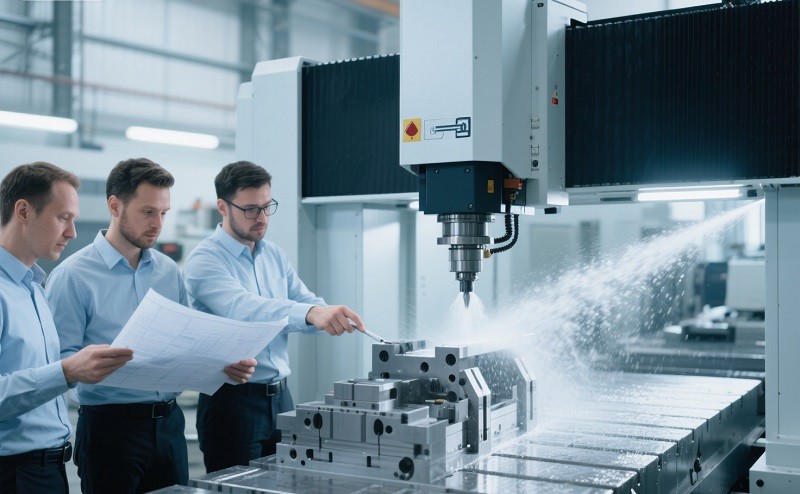
The heart of any CNC milling supplier lies in its technical capabilities. While many shops can perform basic milling operations, a premier supplier distinguishes itself through mastery of advanced techniques, specialized processes, and an unwavering commitment to quality. These core competencies are what enable the production of components that meet the most demanding specifications for industries like aerospace, medical, and defense.
Mastering Complex Geometries with Advanced CNC Machining and Honing Capabilities
Modern engineering often requires parts with intricate features and complex geometries that are impossible to produce with traditional methods. A leading CNC milling supplier leverages advanced machinery and processes to turn these complex designs into physical realities.
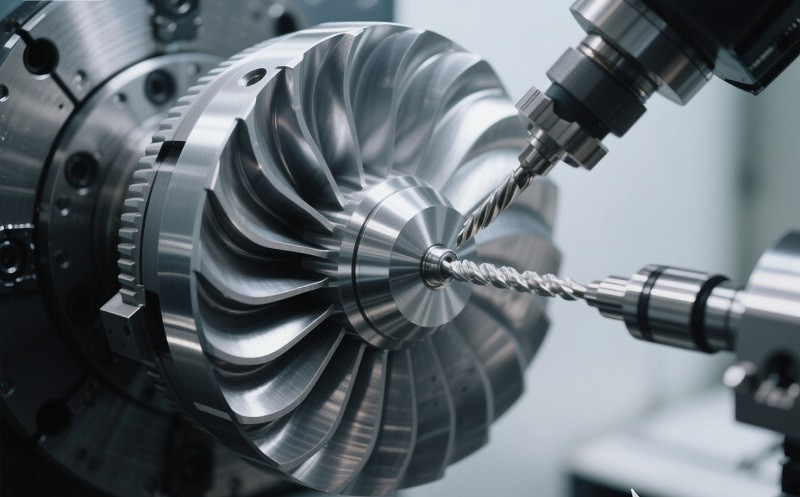
5-Axis CNC Machining: This technology is a game-changer for producing complex parts. Unlike traditional 3-axis machines that only move along the X, Y, and Z axes, 5-axis machines add two rotational axes. This allows the cutting tool to approach the workpiece from virtually any angle in a single setup. The key benefits include:
- Machining of Complex Shapes: 5-axis machining is essential for parts with compound curves, deep cavities, and contoured surfaces, such as turbine blades, impellers, and medical implants.
- Reduced Setups and Higher Accuracy: By machining multiple faces of a part in one continuous operation, the need for multiple manual setups is eliminated. This not only saves significant time but also reduces the risk of human error, resulting in higher precision and tighter tolerances.
- Improved Surface Finish: The ability to keep the cutting tool tangential to the surface allows for a cleaner cut, resulting in a superior surface finish that may reduce or eliminate the need for secondary polishing operations.
CNC Honing: Honing is a precision finishing process used to perfect the geometry, size, and surface of an internal bore. It involves stroking an abrasive stone along a controlled path inside a cylindrical part. A CNC honing process, guided by computer numerical control, offers a sophisticated level of precision and repeatability. Key outcomes of honing include:
- Exceptional Size and Geometric Accuracy: The purpose of honing is to refine a surface by achieving a desired size, correcting its geometric form, and improving its overall finish. It can effectively correct errors in roundness, straightness, and taper, achieving tolerances that are often difficult with boring or reaming alone.
- Superior Surface Finish: Honing creates a signature cross-hatch pattern on the interior surface, which is ideal for retaining lubrication and ensuring the proper seating of seals or pistons in hydraulic and pneumatic applications. The process can produce extremely smooth surfaces, with Ra (roughness average) values as low as 0.04 micrometers.
The Strength of Rolled Threads: Specialized Offerings from Your CNC Milling Parts Supplier
For threaded components subjected to high stress or fatigue, the method used to create the threads is critically important. While many shops use thread cutting, a superior supplier will offer thread rolling—a specialized cold-forming process that produces stronger, more durable threads.
Thread cutting involves removing material with a die or single-point tool to create the thread profile. This process cuts through the material's grain structure, which can introduce stress concentrations and make the threads weaker.
In contrast, thread rolling uses hardened steel dies to press against a cylindrical blank, displacing the material to form the threads instead of cutting it away. This cold-forming process has several key advantages:
| Feature | Rolled Threads | Cut Threads |
|---|---|---|
| Process | Material is displaced and formed (cold-worked). No material is removed. | Material is cut away and removed. |
| Strength | Increased tensile and shear strength. Material grain flows along the thread contour, enhancing strength. The cold-working process can increase tensile strength by up to 30%. | Weaker due to severed grain structure. Cutting can introduce micro-tears, which act as stress risers. |
| Fatigue Resistance | Significantly higher fatigue life (50-75% greater). The process creates smooth, burnished roots free from cutter marks that could initiate fatigue failures. | Lower fatigue resistance. Surface imperfections from cutting can be starting points for fatigue cracks. |
| Surface Finish | Smooth, compacted, and burnished surface, which is less prone to loosening. | Can have a rougher surface with tears or chatter marks from the cutting tool. |
| Material Efficiency | No material waste (no chips are produced). More environmentally friendly and cost-effective for high volumes. | Generates scrap material (chips), which results in material waste. |
Due to their superior strength and fatigue resistance, rolled threads are often the preferred choice for critical applications in the aerospace, automotive, and defense industries, where reliability is paramount. Offering this specialized capability demonstrates a supplier's commitment to providing the highest performance components.
Quality Assurance and Industry Certifications: What to Expect from a Leading CNC Milling Parts Supplier
A supplier's promise of precision and expertise is only as good as its quality management system. In manufacturing, especially for high-stakes industries, quality assurance (QA) is a proactive discipline focused on preventing defects, while quality control (QC) is the reactive process of identifying them. A top-tier CNC milling parts supplier masters both, integrating robust inspection processes and adhering to globally recognized industry standards to build trust and guarantee performance.
Rigorous quality control is not just about internal efficiency; it's a competitive differentiator that provides customers with traceable, objective evidence of quality. This commitment is demonstrated through several key practices and certifications.
Key Quality Control Processes:
Coordinate Measuring Machine (CMM) Inspection: CMMs are a cornerstone of modern quality control. These high-precision devices measure the physical geometry of a part by sensing points on its surface with a probe. The machine compares the collected data against the original CAD model, verifying dimensional accuracy with sub-micron precision. CMM inspections are critical for:
- Verifying Complex Geometries: They excel at measuring intricate features where traditional tools like calipers fall short.
- Early Defect Detection: By inspecting parts at various production stages, CMMs catch deviations early, preventing costly rework and material waste.
- Process Validation: CMM data helps validate that the manufacturing process is stable and capable of holding tight tolerances consistently.
- Traceability: They generate detailed inspection reports that provide objective proof of conformance, which is essential for regulated industries.
First Article Inspection (FAI): This is a comprehensive verification process performed on the first production run item to ensure it fully complies with all design specifications. For industries like aerospace, the AS9102 standard dictates the formal process for FAI, ensuring every dimension, note, and specification on the drawing is verified and documented.
Statistical Process Control (SPC): Rather than inspecting every single part, SPC uses statistical methods to monitor and control a process. By analyzing data trends from a sample of parts, manufacturers can identify and correct process drift or tool wear before it leads to out-of-tolerance components, moving from reactive inspection to predictive quality control.
Essential Industry Certifications:
Certifications are not just badges; they are proof that a supplier's quality management system has been rigorously audited and conforms to international standards.
ISO 9001:2015: This is the global benchmark for a Quality Management System (QMS). An ISO 9001 certified supplier has demonstrated a commitment to customer focus, process-driven operations, and continual improvement. It provides the foundational framework for consistent process control and documented manufacturing protocols.
AS9100D: This standard is specifically for the aviation, space, and defense industries. It includes all the requirements of ISO 9001 but adds nearly 100 additional clauses addressing critical areas like risk management, product safety, traceability, and supplier control. For OEMs in the aerospace sector, AS9100 certification is often a non-negotiable requirement for their suppliers.
ISO 13485:2016: This certification is essential for manufacturers of medical device components. It outlines strict controls for design, manufacturing, risk mitigation, and full component traceability to ensure patient safety and product reliability.
ITAR Registration: The International Traffic in Arms Regulations (ITAR) is a U.S. government regulation controlling the export and import of defense-related articles and services on the United States Munitions List (USML). A manufacturer that is ITAR registered is legally permitted to produce parts for military and defense applications, ensuring that sensitive technical data is protected from unauthorized access by foreign persons.
When you select a CNC milling parts supplier with these robust quality processes and certifications, you are partnering with an organization dedicated to delivering proven, reliable, and compliant components.
From Our Floor to Your Door: Comprehensive Finishing and Packaging Solutions by Your CNC Milling Parts Supplier
The manufacturing process doesn’t end when a part comes off the machine. A truly comprehensive CNC milling parts supplier extends their service all the way to your facility's doorstep, ensuring that the precision and quality meticulously crafted during production are preserved through finishing, identification, and final delivery. This end-to-end responsibility is crucial for protecting your investment and simplifying your receiving and assembly processes.
Ensuring Perfection: Stamping, Marking, and Identification by Your CNC Milling Parts Supplier
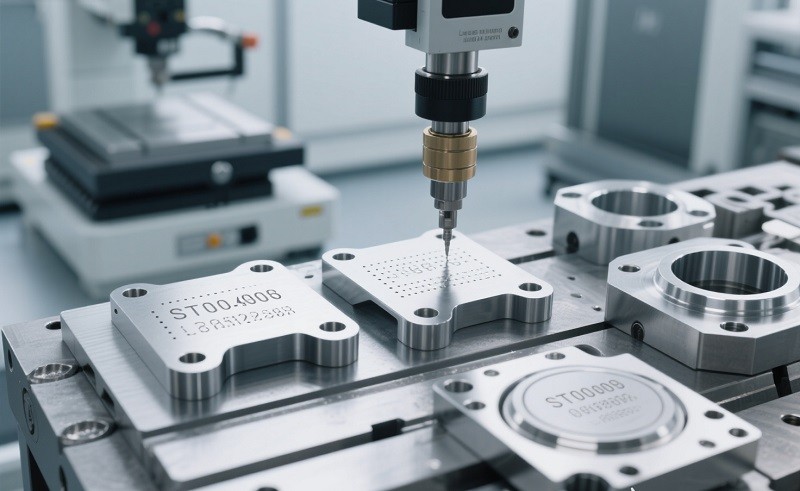
In modern manufacturing, full traceability is often a requirement, not a feature. Direct part marking is the process of adding permanent identification directly onto a component's surface. Marking enables "cradle-to-grave" traceability, which is essential for quality control, recall management, and supply chain accountability. A versatile supplier can offer several methods to suit different materials, applications, and durability requirements.
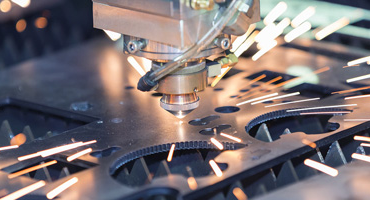
- Laser Marking: This non-contact method uses a focused beam of light to create a high-contrast, permanent mark on a part's surface. It is incredibly precise and versatile, capable of producing everything from simple serial numbers to complex logos and high-resolution data matrix codes. Because it is a non-contact process, it is ideal for sensitive or delicate components.
- Dot Peen Marking (Pin Stamping): This method uses a carbide or diamond stylus to create a series of small, indented dots that form characters and codes. Dot peen marking creates deep, highly durable marks that can remain legible even after painting or coating, making it a favored choice in the automotive and heavy equipment industries for VINs and component identification.
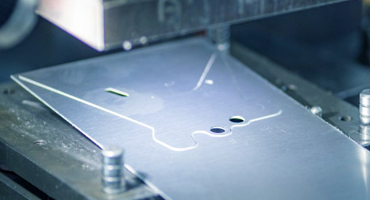
- Stamping and Engraving: Traditional stamping presses can be used for high-volume, repetitive marking of logos, part numbers, or date codes. Engraving provides a clean, aesthetic mark suitable for a variety of applications.
Here's a comparison of common marking methods:
| Marking Method | Best For | Key Advantages | Considerations |
|---|---|---|---|
| Laser Marking | High-precision, complex graphics (QR codes, logos), delicate parts. | Fast, highly precise, non-contact, versatile across many materials. | Higher initial equipment cost. |
| Dot Peen Marking | Deep, highly durable marks for harsh environments, traceability after painting. | Cost-effective for deep marks, permanent and resistant to wear. | Slower than laser marking, can be noisy, not suitable for brittle materials. |
| Stamping | High-volume, repetitive, simple information (e.g., part numbers). | Fast for mass production, creates a permanent impression. | Fixed design per die, not suitable for variable data like serial numbers. |
By offering a range of marking capabilities, your supplier ensures every part is clearly identifiable, supporting your quality assurance and assembly workflows.
Protecting Your Investment: Custom Packaging and Secure Delivery from Your CNC Milling Parts Supplier
The most perfectly machined part is worthless if it arrives damaged. Fragile, intricate, or heavy metal parts are at high risk of nicks, scratches, or corrosion if shipped in poor-quality or generic packaging. A premier supplier recognizes that packaging is the final and most critical step in preserving a part's integrity. The manufacturing process is not complete until a pristine component is unboxed by the client.
A comprehensive packaging and delivery solution includes several layers of protection:
Corrosion Prevention: Newly machined metal surfaces are highly susceptible to rust, especially during transit through humid or salty environments. Effective prevention strategies include:
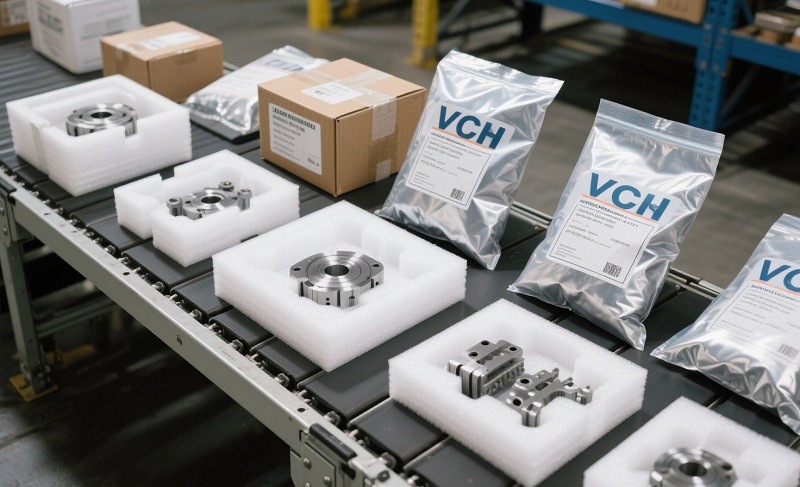
- VCI (Volatile Corrosion Inhibitor) Paper and Bags: These materials release vapors that form a protective, invisible layer on the metal surface, preventing moisture and oxygen from causing rust.
- Desiccants: Moisture-absorbing packets are placed inside sealed packaging to keep the internal environment dry.
- Protective Coatings: Applying a temporary rust-preventive oil or wax-based coating acts as a physical barrier against the elements.
Custom-Fit Physical Protection: Proper packaging is the first line of defense against physical damage. This means no "one-size-fits-all" boxes. A dedicated supplier will design packaging solutions tailored to the part's specific geometry, weight, and fragility. This includes:
- Custom-cut foam inserts, bubble wrap, or heavy-duty crates to absorb shock and prevent movement.
- Separators and dividers to avoid part-on-part contact, which can cause scratches and fretting corrosion on finished surfaces.
- Vacuum-sealed packaging to protect against dust and environmental contaminants.
Kitting and Assembly Services: To further streamline your operations, many suppliers offer kitting services. This involves compiling all individual components needed for a specific assembly into a single, ready-to-use kit. This simplifies your procurement process, improves inventory management by placing multiple components under a single SKU, and accelerates your final assembly workflow.
By choosing a supplier that invests in professional, custom packaging and finishing, you ensure that the high-tolerance, precision parts you ordered arrive in the exact same condition they left the inspection table.
Leveraging Collaboration for Success: How Your CNC Milling Parts Supplier Drives Innovation
In the modern manufacturing ecosystem, the relationship between a client and their CNC milling parts supplier has evolved far beyond a simple transactional exchange. The most successful and innovative outcomes arise from deep, strategic collaboration. A supplier that acts as a true partner becomes an extension of your team, leveraging their expertise to drive efficiency, improve quality, and foster innovation from the earliest stages of product development.
Building Strong Relationships with Customers and Partners
A long-term partnership built on trust and transparent communication is more valuable than a series of one-off, low-cost contracts. When a CNC supplier transitions from being a vendor to a strategic partner, they become invested in your success. This collaborative approach unlocks numerous benefits that a purely transactional relationship cannot offer. Secure manufacturing partnerships are often defined by shared values, high standards for product quality, and a mutual commitment to continuous improvement.
This collaborative relationship manifests in several key ways:
- Enhanced Communication and Efficiency: Strong partnerships foster smoother, more open communication, which reduces delays and errors. When both parties trust each other, real-time information can be shared freely, leading to better tracking of inventory, production, and logistics.
- Greater Stability and Predictability: Long-term contracts provide a steady, predictable flow of business for the supplier, which in turn allows them to offer more stable pricing and dedicated capacity to the client. This mutual stability protects against market volatility and allows for better financial and resource planning on both sides.
- Collaborative Product Development (CPD): Forward-thinking suppliers get involved early in the design phase. This practice, known as CPD, brings together stakeholders from both the client and the supplier to co-create products. By providing Design for Manufacturability (DFM) feedback, a skilled supplier can help simplify complex designs, identify more cost-effective materials, and suggest production techniques that improve the final part's performance and reduce lead times. Reviewing various CNC Milling Parts Cases often reveals how this close, early-stage collaboration produces superior and more innovative outcomes.
Driving Continuous Improvement Through Strategic Alliances and Expert Guidance
A strategic supplier relationship is dynamic, not static. It is rooted in the principle of continuous improvement, where the supplier actively seeks to refine processes, eliminate waste, and enhance value for the client. This commitment is often guided by proven methodologies like Lean Manufacturing and Kaizen.
- Lean Manufacturing and Supplier Involvement: Lean manufacturing is a philosophy focused on maximizing value by eliminating waste. A lean supplier constantly works to reduce cycle times, limit material usage, eliminate errors, and avoid costly rework. Involving suppliers in your lean journey is critical; they are an essential part of your value stream, and their ability to adopt practices like Just-In-Time (JIT) delivery directly impacts your inventory costs and production flow. Lean suppliers gain significant competitive advantages in production, distribution, and communication.
- The Spirit of Kaizen: Kaizen, the principle of continuous improvement, promotes a culture where everyone is encouraged to find and implement small, incremental improvements. When a supplier adopts this mindset, they are not just fulfilling orders; they are proactively looking for ways to make your product better and your supply chain more efficient. This can involve optimizing toolpaths, improving production floor organization, or refining quality control measures.
- Access to Expertise and Advanced Technology: Strategic alliances give you access to your supplier's specialized knowledge, resources, and technology without needing to invest in them yourself. A supplier who stays at the forefront of CNC technology—adopting 5-axis machining, automation, or advanced CAM software—brings those capabilities to your projects. This collaborative partnership enables you to integrate innovations and enhance your offerings without bearing the full cost or risk of R&D.
Ultimately, a CNC milling parts supplier who embraces collaboration and continuous improvement becomes a powerful engine for innovation, helping you build better products, streamline your supply chain, and achieve long-term success.
Conclusion
As a comprehensive CNC Milling Parts Supplier, we are committed to being more than just a vendor; we strive to be a true partner in your success, offering a spectrum of services that go the extra mile. From providing expert Design for Manufacturability feedback and mastering complex geometries to ensuring part traceability through precision marking and protecting your investment with custom packaging, our goal is to deliver a seamless, end-to-end solution.
By choosing a CNC Milling Parts Supplier that prioritizes quality, precision, and customer satisfaction at every stage, you can optimize your operations and achieve your manufacturing goals efficiently. This strategic partnership empowers you to not only receive superior components but also to innovate faster and build a more resilient supply chain. We invite you to share this article with your network and to reconsider what you expect from your manufacturing partners.