
From concept to product
From prototyping to production, our production sites can handle all your manufacturing projects.
Home / All / Sheet Metal Fabrication / What thickness and types of metal can be cut with industrial laser cutting machines?
What thickness and types of metal can be cut with industrial laser cutting machines?
Quick Answer
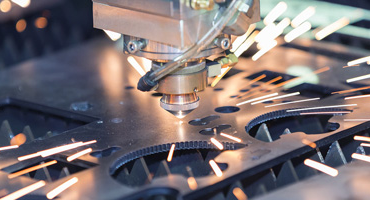
Industrial fiber laser cutters handle a wide range of materials and thicknesses: mild steel up to 25mm (1"), stainless steel 304/316 up to 16mm, aluminum up to 10mm, and brass/copper up to 6mm. A 6kW fiber laser can cut 12mm mild steel at 2 meters/minute, while a 12kW laser cuts 25mm mild steel at 0.5 meters/minute. Laser cutting produces heat-affected zones of 0.05-0.2mm.
Thickness Capabilities by Power
3kW laser: Mild steel to 12mm, stainless to 6mm, aluminum to 4mm. 6kW laser: Mild steel to 20mm, stainless to 10mm, aluminum to 6mm. 10kW laser: Mild steel to 25mm, stainless to 16mm, aluminum to 10mm. 12kW+ laser: Mild steel to 30mm, stainless to 20mm, aluminum to 12mm. The maximum thickness is also affected by the assist gas (oxygen for steel, nitrogen for stainless/aluminum).
Cut Quality and Tolerances
Fiber laser cutting produces kerf widths of 0.1-0.4mm depending on material and thickness. Tolerance: ±0.1mm for thin materials (under 3mm), ±0.2mm for medium thickness (3-10mm), and ±0.3-0.5mm for thick materials (10-25mm). Edge squareness: typically 89-91 degrees. Surface finish: 6-25 Ra depending on material and cutting parameters.
Materials That Can Be Laser Cut
Excellent cutting: Mild steel, stainless steel (304, 316, 430), galvanized steel, aluminum (5000, 6000 series). Good cutting: Brass, copper, titanium, Inconel. Challenging (reflectivity issues): Pure copper, high-reflectivity aluminum alloys (require specialized lasers or surface coatings). Fiber lasers handle reflective materials better than CO2 lasers because the shorter wavelength is less reflective.
Why Choose SOMI Custom Parts
At SOMI Custom Parts, we operate 6kW fiber laser cutting equipment capable of handling material sizes up to 3000 x 1500mm. Our nesting software optimizes material utilization, typically achieving 80-85% material usage versus 60-70% for manual layout. We offer both oxygen-assisted cutting for thick steel and nitrogen-assisted cutting for clean, oxidation-free edges on stainless steel and aluminum.
Case Study
A construction equipment manufacturer needed 500 steel brackets cut from 20mm mild steel plate with tight dimensional accuracy for a structural assembly. SOMI's 6kW fiber laser cut all brackets to ±0.2mm tolerance with clean edges requiring minimal grinding before welding. The client reported that the laser-cut parts fit perfectly in their weld fixture, eliminating the rework they frequently experienced with their previous plasma-cut parts.
Industry Data
Fiber laser technology has advanced rapidly: a 6kW fiber laser in 2025 costs 60% less than a 3kW system in 2015, while cutting speeds have increased 3x. Fiber lasers now account for 78% of all industrial laser cutting installations, replacing older CO2 laser technology (Laser Institute of America, 2025).
Related Questions
- How accurate is laser cutting?
- What are the common metal bending techniques?
- What materials are used in sheet metal fabrication?
- What processes are involved in sheet metal fabrication?
Are you looking for a reliable manufacturer of down home textile products?
We can quickly provide customers with market analysis, technical support and customized services.From concept to product
From prototyping to production, our production sites can handle all your manufacturing projects.
subscription