
From concept to product
From prototyping to production, our production sites can handle all your manufacturing projects.
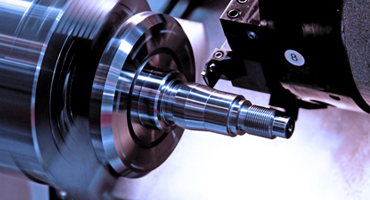
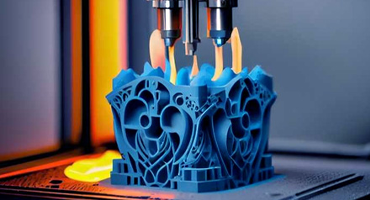
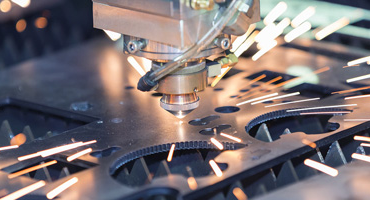
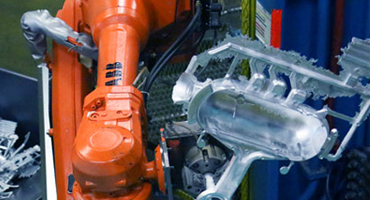
What industries use SOMI services?
The short answer
Six groups carry most of the work: automotive and e-mobility, industrial machinery and automation, medical devices, aerospace, electronics and semiconductor equipment, and lighting, energy and consumer products. Automotive accounts for roughly a quarter to a third of global precision machining demand, and medical devices grow fastest at close to 10 percent a year. The processes differ less than the evidence.
The industries in one table
Every one of these industries buys the same six families of process - CNC machining, sheet metal fabrication, metal stamping, die casting, injection moulding and 3D printing - but each weights them differently and each judges the result on a different criterion.

| Industry | What it usually buys | What the order is judged on |
|---|---|---|
| Automotive and e-mobility | Stamped brackets, die cast housings, machined fittings, moulded trim | Cycle time, capability studies and production-part approval evidence |
| Industrial machinery | Machined frames and bores, welded and formed enclosures, robot and actuator parts | Rigidity, repeatability between batches and fit at assembly |
| Medical devices | Surgical and diagnostic components, housings, instrument parts | Traceability, material certificates and process validation records |
| Aerospace | Machined structural parts, sheet metal details, printed brackets | Material certification, first article inspection and dimensional reporting |
| Electronics and semiconductor equipment | Chassis, heat sinks, extruded profiles and machined housings | Flatness, thin walls, surface finish and cosmetic control |
| Lighting, energy and consumer | Extruded housings, die cast bodies, coated and anodised parts | Corrosion performance, outdoor life and colour consistency |
Industry by industry, what actually changes
Automotive and e-mobility
This is the largest single buyer of precision machined parts at about 26.8 percent of global demand in 2025, and it is changing shape rather than slowing. An electric vehicle carries roughly 40 percent more machined parts than the equivalent combustion model, because the motor, power electronics and thermal management add parts where the engine and gearbox used to sit, and the precision requirement moves from around IT8 to IT6 and IT7. In practice that means more parts crossing from general turning to high precision turning and five-axis work, and more of them subject to capability studies rather than a simple pass or fail. Stamping, die casting and injection moulding follow the same volume logic: tooling is justified by annual volume, and the first article is the gate.
Industrial machinery and automation
Machinery and automation work is judged on stiffness and repeatability, not on cosmetics. Bores that carry bearings, faces that mount a rail, frames that must not twist under load and shafts that run true batch after batch are the recurring parts. The evidence that matters is dimensional consistency over time: the same measurement, the same gauge, the same answer on run one and run ten. Robotics adds a second requirement, because a joint housing that is a gram too heavy costs torque at every cycle, so wall thickness and rib layout get designed rather than inherited.
Medical devices
Medical work is the fastest growing segment reported, at around 9.87 percent a year, and it is the one where documentation is the product as much as the part is. Small lots, controlled processes, validated cleaning and handling, and full material traceability from a certificate to a serialised part. Where a medical programme requires a particular quality system, that requirement is a fact about the factory and the programme, and it is confirmed in writing before an order is placed rather than assumed from a general capability statement.
Aerospace
Aerospace is the second largest segment by demand at about 23.8 percent, and it is the least tolerant of substitution. Material certificates with heat and lot numbers, first article inspection against the drawing, dimensional reports with the shipment, and a change control process that does not allow a silent revision. Aluminium and titanium dominate, with high-temperature alloys where the environment demands them. Metal additive work appears here first, typically for brackets and ducting where a lattice core or a consolidated assembly saves mass that machining cannot.
Electronics and semiconductor equipment
At about 16 percent of demand, this segment is driven by flatness, thin walls and appearance. Heat sinks, chassis, card cages, extruded profiles with machined end details and anodised front panels are typical. Two requirements dominate the quotation: how flat a face has to be over its full length, and how thin a wall can run before flow or distortion becomes the limit. Cosmetic requirements are specified on the drawing, because a scratch that is invisible on a bracket ends an order on a bezel.
Lighting, energy and consumer products
Here the governing risk is the environment rather than the tolerance. Extruded aluminium housings, die cast bodies, powder coated and anodised finishes, stainless and plated hardware, and outdoor equipment that has to survive coastal air or a decade of ultraviolet exposure. The numbers that decide these programmes are coating thickness, salt spray performance and colour consistency between batches, not the fourth decimal place of a bore.
Where the demand sits
Segment size is useful context for a buyer deciding how specialised a supplier needs to be. Automotive, aerospace and defence, medical devices, semiconductor and electronics, and industrial machinery together account for essentially the whole precision machining market, with the remaining share spread thinly across power generation, mining, marine and construction.

Why a mixed portfolio helps your project
Working across several industries is not a marketing point, it changes the engineering. Inspection discipline that a medical programme forces on a shop - calibrated gauges, recorded measurements, a defined sampling plan - is then applied to an automotive bracket that only needed a visual check. The corrosion rules that keep a lighting housing alive for ten years in coastal air get applied to an electric vehicle charger enclosure. The tooling-cost discipline that a high-volume electronics programme imposes gets applied to a low-volume machinery part, where a simpler die and a shorter lead time beat a clever one.

The reverse also holds. A supplier who only ever quotes one industry tends to quote it the way that industry always buys. A casting that is right for an automotive housing is often the wrong answer for a medical instrument, and the argument is easier to have when both customers are in the same building.
Limits: what we do not claim, and where we hand over
- No certification claims on this page. Which quality system a factory holds, and to what scope, is confirmed per programme and per factory in writing. Industry names are listed because work is quoted in them, not because a certificate covers them.
- Regulated parts run under your qualification programme. For implants, instruments and flight hardware, the customer's own validation, testing and approval programme governs. We build to it and provide the records it asks for; we do not replace it.
- Export-controlled and defence work is assessed case by case. Controlled technology, restricted end users and specific documentation regimes are checked before anything is quoted, and some enquiries are declined.
- We are not the right route for everything. A single one-off part driven only by the lowest possible price, with no tolerance and no date, is usually better served by a local job shop. So is a part whose volume is below the minimum efficient run for its process.
- Volume honesty matters more than winning the enquiry. Where annual volume sits below the minimum order quantity for a process, or where a tolerance is outside what any listed process can hold, the answer is a different route rather than a hopeful quotation.
- Market shares cited here describe the market, not our mix. They come from published 2025 market data and are included to size each segment for planning, not to imply a share of it.
How to start
Send the industry, the model and the drawing, plus whatever the industry's own requirements are - a standard to build to, an inspection report format, a coating specification or a compliance statement. The first pass reviews the geometry, names the process route and comes back with a quotation and the assumptions it rests on. See sheet metal fabrication for formed, welded and coated assemblies, aluminium die casting for high-volume housings and SLM metal 3D printing for the complex geometry that machining cannot reach.
Scope and sources. Segment sizes and growth rates were compiled in 2026 from 2025 market research on precision machining by end user, which reports automotive at 26.8 percent, aerospace and defence at 23.8 percent, medical devices at 18.4 percent, semiconductor and electronics at 16.0 percent and industrial machinery at 15.0 percent of global precision machining revenue, published by PW Consulting. The faster growth of the medical segment, the automotive share of CNC spending and the electric-vehicle parts count increase are taken from Mordor Intelligence CNC market analysis and from a 2026 precision turning industry review reporting a roughly 40 percent increase in machined part count per electric vehicle and a shift from IT8 to IT6 and IT7. The process lists are drawn from the SOMI Custom Parts published capability set. Market shares describe the market rather than our order book, and all figures are planning context rather than a quotation or a guarantee. Nothing here states or implies a certification held by any factory; quality systems are confirmed per programme and per factory in writing before production.
Previous
What is CNC machining?
Are you looking for a reliable manufacturer of down home textile products?
We can quickly provide customers with market analysis, technical support and customized services.From concept to product
From prototyping to production, our production sites can handle all your manufacturing projects.
subscription