Your Essential Guide to MJF 3D Printing Materials: From Prototyping to Production
Your Essential Guide to MJF 3D Printing Materials: From Prototyping to Production
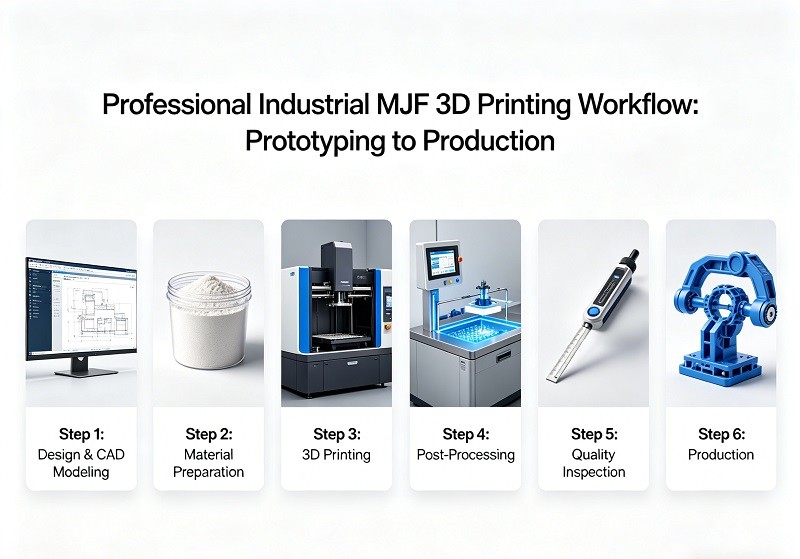
Multi Jet Fusion (MJF) has revolutionized industrial 3D printing, offering a powerful solution for creating strong, complex parts with incredible speed and precision. Developed by HP, this powder-bed fusion technology is trusted across industries like automotive, aerospace, medical, and consumer electronics for both functional prototyping and end-use part production. . But the success of any MJF project hinges on one critical decision: selecting the right material. .
As a leading supplier of 3D printing MJF parts, we understand that navigating the landscape of available polymers can be challenging. Each material offers a unique profile of mechanical properties, from rigidity and temperature resistance to flexibility and impact strength. Choosing the correct one ensures your parts will perform as intended, function reliably, and meet the specific demands of their application. This guide will walk you through the most common and effective materials used in MJF 3D printing, empowering you to make informed decisions for your next project.
Why Material Selection is Crucial for MJF Success
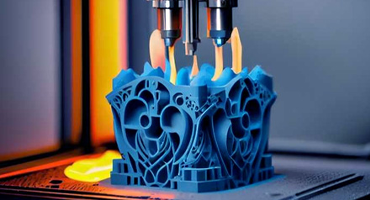
Unlike an FDM printer that uses filament, MJF technology builds parts by selectively applying fusing and detailing agents onto a bed of powder material, which is then fused by infrared energy. . This process creates parts with nearly isotropic mechanical properties, meaning they are equally strong in all directions—a significant advantage over many other 3D printing methods. . However, the base powder determines the final part's characteristics. Your choice will impact everything from its tensile strength and flexibility to its chemical resistance and surface finish. A mismatched material can lead to part failure, unnecessary costs, and project delays. By understanding the core attributes of each option, you can optimize your design for performance and manufacturability.
HP PA 12: The Versatile Workhorse of MJF
The most common material for MJF is Polyamide 12 (PA 12), a robust thermoplastic renowned for its balanced profile of strength, detail, and durability. . It's an excellent all-around choice for a wide variety of applications, making it the go-to material for many projects. .
Key Properties:
- High Strength and Stiffness: PA 12 produces rigid parts with excellent structural integrity. .
- Good Chemical Resistance: It stands up well against oils, greases, hydrocarbons, and alkalis. .
- Dimensional Accuracy: It delivers high-density parts with fine feature resolution and sharp edges. .
- Biocompatibility: Many PA 12 grades are certified for medical applications, meeting standards like USP Class I-VI for skin contact. .
Common Applications: PA 12 is ideal for functional prototypes, complex assemblies, housings, enclosures, and parts requiring watertight properties. .
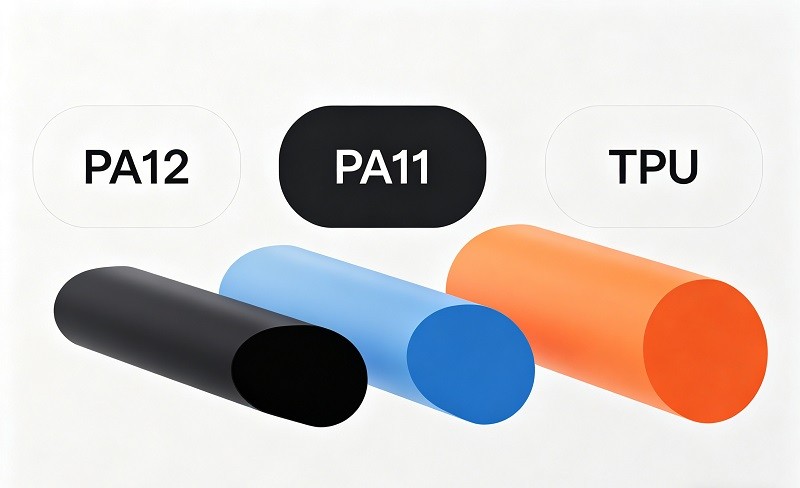
HP PA 11: For Ductility and Impact Resistance
When your application demands higher toughness and flexibility than PA 12 can offer, PA 11 is the superior choice. . Derived from renewable castor oil, PA 11 is a more environmentally friendly option known for its excellent ductility and impact resistance. . Parts made from PA 11 can bend further before breaking and resist cracking under stress, making it perfect for components that face repeated force or movement. .
Key Properties:
- High Elongation at Break: Superior flexibility and resistance to fatigue. .
- Excellent Impact Resistance: Can absorb significant energy without fracturing, even at low temperatures. .
- Good Chemical Resistance: Similar to PA 12, it holds up well in harsh environments. .
Common Applications: PA 11 shines in applications like snap-fit components, living hinges, prosthetics, sporting goods, and automotive interior parts that need to withstand impact. .
PA 12 Glass Beads (GB): For Added Stiffness and Stability
For applications that demand even greater stiffness and thermal stability, PA 12 with a 40% glass bead filling (PA 12 GB) is the answer. . The addition of glass beads enhances the material's rigidity and dimensional stability, making it ideal for structural parts that must hold their shape under load and at higher temperatures. .
Key Properties:
- High Stiffness and Rigidity: Significantly stiffer than standard PA 12. .
- Enhanced Dimensional Stability: Less prone to warping or changing shape with temperature shifts.
- Excellent Mechanical Strength: Ideal for load-bearing applications. .
Common Applications: PA 12 GB is frequently used for fixtures, jigs, enclosures, housings, and other structural components where minimal flex is required. .
TPU: The Choice for Flexible and Elastic Parts
When your design requires rubber-like flexibility, shock absorption, and high elasticity, Thermoplastic Polyurethane (TPU) is the perfect material. . MJF technology is exceptionally well-suited for printing TPU, producing parts that are not only durable and tear-resistant but also have a smooth surface finish. .
Key Properties:
- High Elasticity and Rebound: Can be stretched or compressed and will return to its original shape. .
- Excellent Shock Absorption: Ideal for dampening vibrations and absorbing impacts. .
- Good Wear and Abrasion Resistance: Durable enough for end-use applications. .
Common Applications: TPU is used for a wide range of flexible parts, including seals, gaskets, shoe midsoles, protective gear, bellows, grippers for robotics, and cushioning elements. .
Polypropylene (PP): Lightweight and Chemically Resistant
Polypropylene (PP) is a versatile material known for its excellent chemical resistance, low moisture absorption, and light weight. . A key benefit of MJF-printed PP is its ability to be welded to other PP components made through traditional methods like injection molding, making it great for integrated manufacturing workflows. .
Key Properties:
- Superb Chemical Resistance: Ideal for pipes, fluid systems, and containers. .
- Low Moisture Absorption: Maintains its properties in humid or wet environments. .
- Weldability: Can be fused with traditionally manufactured PP parts. .
Common Applications: Due to its properties, PP is widely used in the automotive, medical, and consumer goods industries for prototypes and functional parts. .
MJF Materials at a Glance: A Comparison Table
To help you decide, here is a quick comparison of the primary MJF materials available. As your supplier, we can provide detailed datasheets for each.
| Material | Key Strengths | Best For |
|---|---|---|
| Nylon PA 12 | Balanced strength, stiffness, and detail | Functional prototypes, complex housings, enclosures |
| Nylon PA 11 | High ductility, impact resistance, flexibility | Snap-fits, living hinges, prosthetics, sporting goods |
| PA 12 Glass Beads | Maximum stiffness, thermal stability | Structural parts, fixtures, load-bearing components |
| TPU | High elasticity, shock absorption, tear resistance | Flexible seals, gaskets, cushioning, grippers |
| Polypropylene (PP) | Excellent chemical resistance, lightweight | Fluid containers, automotive parts, weldable components |
Beyond the Material: The Impact of Post-Processing
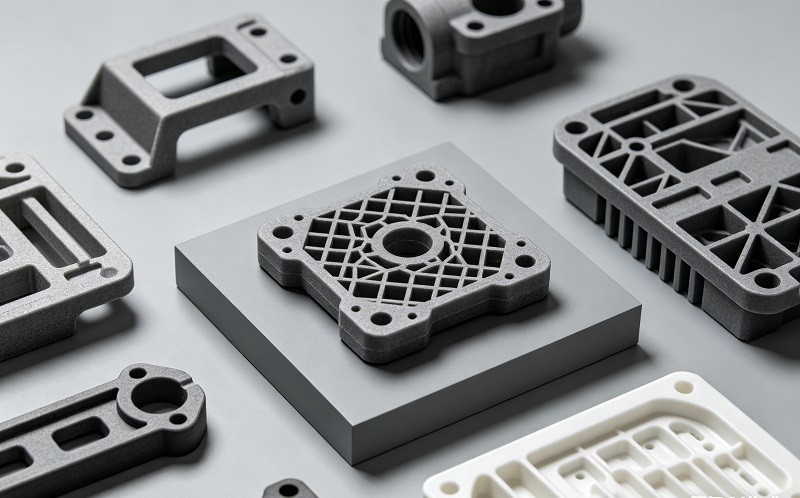
Raw MJF parts come out of the printer with a slightly grainy, matte gray surface. However, various post-processing options can enhance both their appearance and performance. .
- Bead Blasting: A standard process that removes loose powder and creates a uniform, smooth finish.
- Dyeing: Parts, especially those made from PA 12 and PA 11, can be dyed black or other colors for a consistent, production-quality aesthetic. .
- Vapor Smoothing: This process uses chemical vapor to melt the part's outer surface, resulting in a sealed, semi-glossy finish that is smoother and has enhanced mechanical properties. .
How We Ensure Quality as Your MJF Parts Supplier
Choosing the right material is only half the battle. As an experienced 3D printing MJF parts supplier, we are committed to delivering the highest quality components. Our process control ensures:
- Material Traceability and Quality: We use premium, certified powders from trusted manufacturers like HP to guarantee consistent performance. .
- Process Optimization: Our machines are calibrated for optimal packing density, thermal consistency, and agent deposition, ensuring your parts have superior, isotropic mechanical properties. .
- Expert Consultation: Our team of engineers is here to help you select the ideal material and optimize your design for the MJF process, ensuring you achieve the best possible outcome for your project.
Partner with an Expert for Your MJF 3D Printing Needs
Multi Jet Fusion offers a direct path from digital design to robust, functional parts suitable for the most demanding industries. . By understanding the unique advantages of materials like PA 12, PA 11, TPU, and their variants, you can unlock new possibilities in product development and manufacturing.
Ready to start your next project? Contact us today. As your dedicated MJF parts supplier, we provide the expertise, materials, and technology to bring your ideas to life with unparalleled quality, speed, and reliability.