The Complete Guide to CNC Machining Carbon Steel: 1018, 1045, and 4140
The Complete Guide to CNC Machining Carbon Steel: 1018, 1045, and 4140
From mild 1018 to pre-hardened 4140, carbon steel remains the most-machined material family in precision manufacturing. This guide gives you machinability ratings, cutting parameters, heat treatment strategy, tolerances and cost data you can actually use when quoting or specifying steel CNC parts.
Introduction: The Workhorse of Precision Machining
Every machine shop has a bar rack full of it. Carbon steel is inexpensive, predictable to cut, recyclable, and strong enough for the majority of mechanical parts in the world. Global metal processing is projected to reach US$684.7 billion in 2026, and CNC cutting alone accounts for roughly 34% of that value — the largest single process segment. Automotive remains the biggest consumer at about 28.6% of demand, followed by machinery, energy and aerospace.
Yet "steel" is not a material. Specifying "carbon steel" without a grade is one of the most common — and most expensive — mistakes on a CNC drawing. The difference between AISI 1018, 1045 and 4140 is the difference between a US$8 bracket and a US$95 hardened shaft. This guide compares the three grades across chemistry, machinability, cutting parameters, heat treatment, cost and applications, so you can specify the right grade the first time.
What Is Carbon Steel and Why Does Grade Matter?
Carbon steel is an iron-carbon alloy containing up to about 2.1% carbon. In the AISI/SAE 10xx designation system, the last two digits give the nominal carbon content in hundredths of a percent: 1018 = 0.18% C, 1045 = 0.45% C. 4140 is technically a chromium-molybdenum alloy steel with 0.40% carbon, but it is grouped with carbon steels in most RFQs because it is specified and machined in the same way.
Carbon content drives the machinability trade-off more than any other factor. Higher carbon raises strength and hardenability but lowers machinability, dulls tools faster and generates more heat at the cutting edge. Industry convention sets AISI 1212 free-machining steel at a 100% machinability baseline; 1018 rates about 70-78%, 1045 about 55%, and 4140 about 55% annealed / 45% quenched and tempered. For reference, resulfurized 12L14 reaches 160-190% — the fastest-cutting steel available, at the cost of weldability and strength.
The Three Workhorse Grades at a Glance
| Property | AISI 1018 | AISI 1045 | AISI 4140 |
|---|---|---|---|
| Type | Low-carbon mild steel | Medium-carbon steel | Chromium-molybdenum alloy steel |
| Carbon content | 0.15-0.20% | 0.43-0.50% | 0.38-0.43% |
| Tensile strength (annealed) | 440-580 MPa | 585-680 MPa | 655-1020 MPa |
| Yield strength (approx.) | 370 MPa | 450-500 MPa | 420-660 MPa |
| Hardness (as supplied) | 120-150 HB | 170-230 HB | 190-280 HB (pre-hardened) |
| Machinability rating | 70-78% | 55% | 55% (ann.) / 45% (Q&T) |
| Typical turning speed | 120-180 SFM / 180-250 m/min | 90-140 SFM / 140-200 m/min | 80-120 SFM / 100-150 m/min |
| Heat treatment | Carburizing / case hardening | Quench & temper (thin sections) | Full Q&T, deep hardenability |
| Typical use | Fixtures, brackets, pins, structural parts | Shafts, axles, gears, bolts | High-strength shafts, gears, hydraulic and aerospace parts |
Cross-reference: 1018 is similar to GB 20#, JIS S20C and EN C15; 1045 to S45C and C45; 4140 to 42CrMo4. Always confirm the exact equivalent and its material certificate (MTC) with your supplier.
Key Benefits of CNC Machining Carbon Steel
Best Strength-to-Cost Ratio
1018 bar stock is the cheapest engineering material per kilogram in any shop, and heat-treated 4140 delivers alloy-grade strength at a fraction of titanium or stainless cost. Material price differences rarely dominate the quote — machining time does.
Fast, Predictable Machining
Normalized carbon steel cuts with consistent chip formation and low work hardening. 1018 turns and mills at speeds close to aluminum-free-machining practice, with tool life 3-5 times longer than hardened alloy steel.
Heat Treatment Flexibility
Each grade answers a different treatment: 1018 carburizes to a hard 50-60 HRC case with a tough core, 1045 through-hardens in thin sections, and 4140 hardens deeply across thick sections to 28-55 HRC.
Weldability Where You Need It
Low-carbon 1018 welds with all common processes (MIG, TIG, resistance) without preheat. That makes it the default for welded assemblies, frames and structural components.
Universal Availability
1018 and 1045 are stocked in every industrial region in round bar, hex, flat and plate. Short material lead times mean fast prototype and production turnaround — usually the biggest schedule advantage a buyer gets.
Sustainable and Recyclable
Steel is the world's most recycled metal; machining chips and offcuts are 100% reclaimable scrap with real value. Pair that with flood coolant filtration and steel CNC programs align with green manufacturing goals.
1018 vs 1045 vs 4140: How to Choose the Right Grade
Selection is a triangle of strength, machinability and cost. Start with the load case, then the section size (hardenability), then the required surface treatment — only then compare price.
Choose 1018 When
Cost and machining speed come first. Fixtures, brackets, mounting plates, pins, welded frames, case-hardened gears and any part where a tough core plus hard surface is acceptable. Machinability of 70-78% keeps cycle times and tool cost minimal.
Choose 1045 When
You need noticeably higher strength than 1018 without the alloy price. Axles, gear blanks, bolts, studs and wear components that respond to induction hardening. Expect about 1.3x the machining time of 1018.
Choose 4140 When
High stress, impact, torque or cyclic fatigue — or thick sections that must harden through. Drive shafts, hydraulic fittings, heavy gears and aerospace hardware. Use pre-hardened 28-32 HRC for direct machining or annealed + Q&T for maximum strength.
Cutting Parameters, Tooling and Chip Control
The numbers below are proven starting points for carbide tooling on rigid CNC machines. Adjust for machine condition, tool holder overhang and coolant delivery.
CNC Turning Parameters (Carbide Inserts)
| Grade | Hardness (HB) | Cutting speed (m/min) | Feed (mm/rev) | Depth of cut (mm) | Recommended insert |
|---|---|---|---|---|---|
| 1018 / Q235 | 120-160 | 180-250 | 0.15-0.30 | 1-4 | Uncoated or TiN carbide |
| 1045 / S45C | 170-230 | 140-200 | 0.12-0.25 | 1-3 | TiAlN-coated carbide |
| 4140 | 220-280 | 100-150 | 0.10-0.20 | 1-3 | TiAlN or PVD-coated carbide |
CNC Milling Parameters (End Mills)
| Grade | Cutting speed (SFM) | Feed per tooth (mm) | Axial depth | Radial depth | Coolant |
|---|---|---|---|---|---|
| 1018 / Q235 | 120-180 | 0.05-0.12 | 1-2D | 0.2-0.5D | Flood or mist |
| 1045 / S45C | 90-140 | 0.04-0.10 | 1-1.5D | 0.2-0.4D | Flood |
| 4140 | 70-110 | 0.03-0.08 | 0.5-1D | 0.15-0.3D | High-pressure |
Tooling Rules That Pay
- Uncoated carbide is cheapest for high-volume 1018, but TiAlN/AlTiN coatings pay back quickly on 1045 and above — they manage the heat that cratering comes from.
- For 1045 finishing, use a TiAlN-coated grade in the ISO P15-P30 range with medium-positive geometry; positive rake for finishing, negative rake and a strong edge for roughing.
- Use climb milling where possible to cut burr formation. 1018 is gummy — aggressive chip-breaker inserts and proper feed keep long stringy chips from wrapping the spindle.
- Drilling: start with a spot or center drill; for deep holes use peck cycles with chip evacuation every 1-2 drill diameters (3-6 mm drills on 1018: 2,500-4,000 RPM, 0.08-0.15 mm/rev).
- Coolant: flood coolant for most turning and milling; high-pressure through-spindle coolant improves chip breaking on low-carbon grades. If a shop machines steel dry, ask for documented tool-life data.
Heat Treatment: Machining Order and Distortion Control
Heat treatment is where carbon steel earns its keep — and where most quality problems begin. The disciplined sequence is: rough machine in the annealed condition, heat treat, then finish critical surfaces. Quenching distorts: parts that were within tolerance before treatment routinely warp, grow or crack afterward.
| Treatment | Best grades | Typical result | Distortion risk |
|---|---|---|---|
| Annealing / normalizing | All | Softens, relieves stress, improves machinability | Very low |
| Quench & temper | 1045, 4140 | 1045: 50-55 HRC thin sections; 4140: 28-55 HRC deep | High |
| Carburizing / case hardening | 1018, 1020 | Surface 50-60 HRC, tough core | Medium |
| Induction hardening | 1045, 4140 | Localized 55-62 HRC, case 1-5 mm | Low-Medium |
| Nitriding | 4140, 4340 | Case ~0.3 mm, minimal distortion | Very low |
- Leave 0.2-0.5 mm stock on critical surfaces and finish-machine or grind after heat treatment.
- Specify hardness as a range, never a single point: "HRC 28-32", not "HRC 30". Name the test method (Rockwell C) and the location (surface or core).
- Do not carburize 4140 — at 0.40% carbon the process adds almost nothing. Carburizing belongs on 1018/1020.
- Design for low distortion: uniform wall thickness, generous fillets (3-5 mm radius minimum), symmetric geometry, and avoid abrupt section changes next to thin walls.
Budget data from Chinese heat-treatment suppliers: stress relieving US$0.60-1.20/kg, quench & temper for 4140 US$1.20-2.80/kg, induction hardening US$0.80-3.00/part. In the US, the same services run roughly 3-4x higher. Add 1-4 days of lead time per furnace cycle.
Tolerances, Surface Finish and Corrosion Protection
Carbon steel is not just cheap — it holds precision. A well-rigid CNC setup machines 1018/1045/4140 to ±0.01 mm as a standard production tolerance and ±0.005 mm on ground features; finish grinding after heat treatment reaches ±0.005 mm (about 0.0002"). Typical machined surfaces measure Ra 0.4-1.6 µm from turning and milling, and Ra 0.2-0.8 µm after grinding.
The catch is corrosion. Plain carbon steel rusts, so every steel part needs a finish decision on the drawing. Common choices: black oxide (cosmetic, light protection), zinc plating (structural parts, clear or yellow chromate), nickel plating (wear and corrosion, cosmetic), phosphate + oil (interior components), and powder coating (exterior frames and enclosures). Galvanized or stainless alternatives only make sense when the service environment demands them — they cost 2-5x more in material alone.
Carbon Steel Parts Across Industries
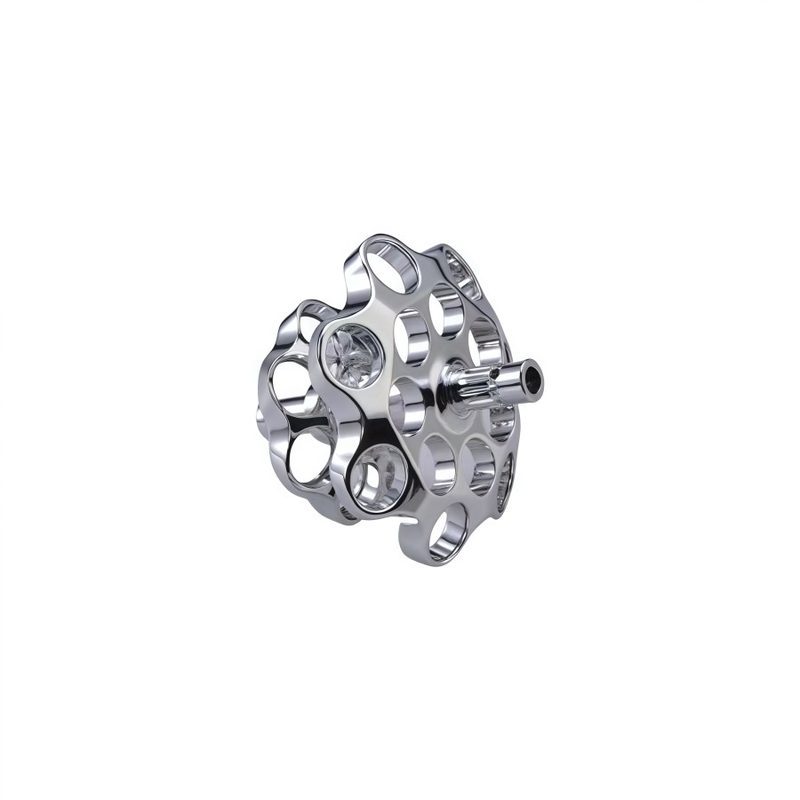
Aerospace and Defense
4140 and 4340 high-strength fittings, actuators and structural hardware machined to AS9100 and AS9102 requirements. Pre-hardened 4140 at 28-32 HRC machines cleanly, then finish ground surfaces carry the tight tolerances.
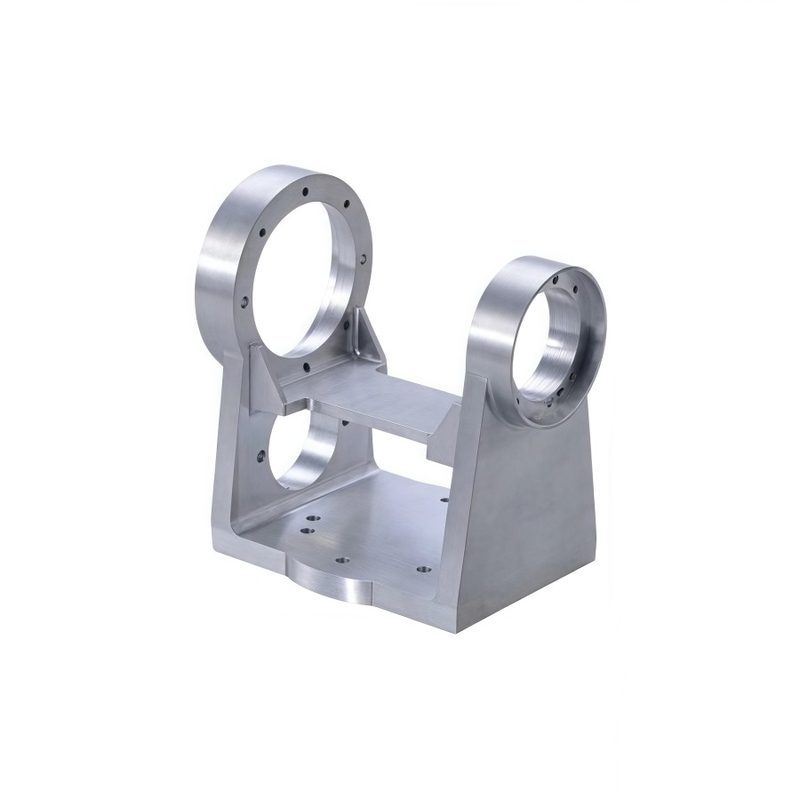
Robotics and Automation
Mild steel (1018) structural brackets, mounting plates and precision pins with chromate or black spray coating. 1018's weldability simplifies frame integration, and its machinability keeps prototype cycles short.
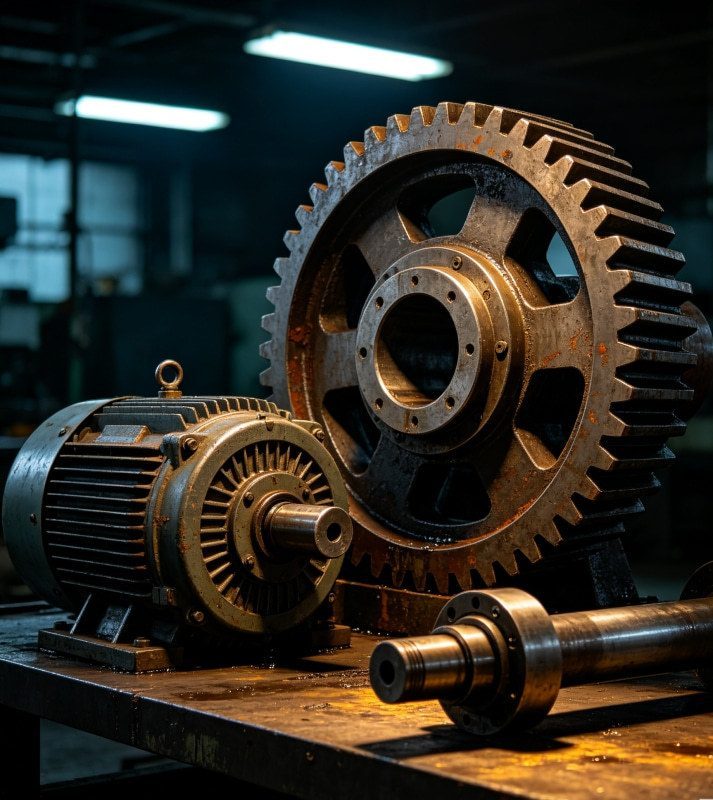
Industrial Machinery
Spindles, bushings, sleeves and hydraulic components in 1045 and 4140. Induction-hardened bearing journals and Q&T cores give wear resistance where cycle life matters.
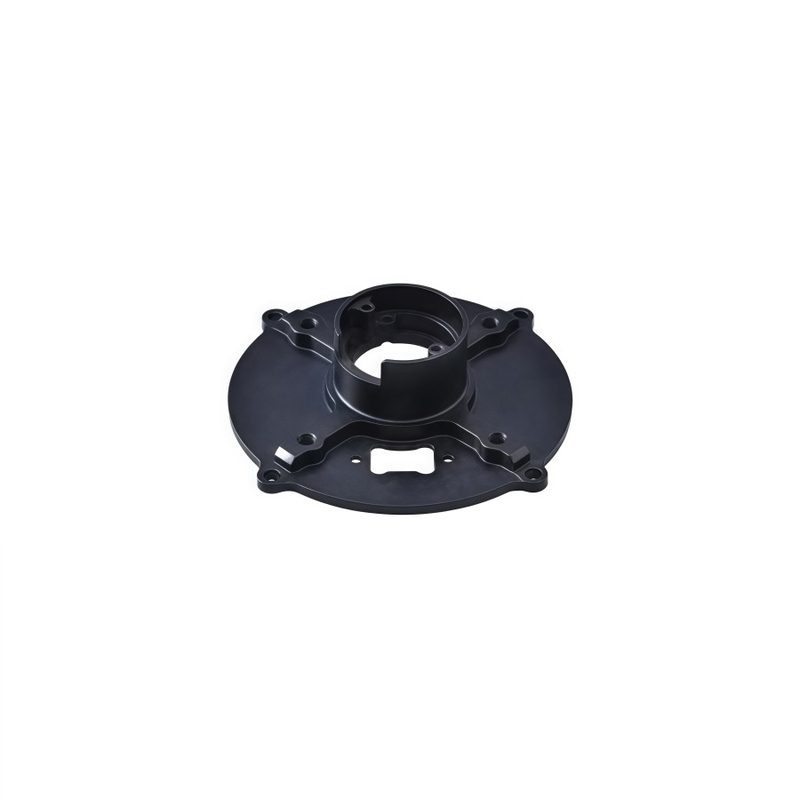
Automotive and Energy
Axles, gear blanks, bolts and drivetrain hardware in 1045; oil and gas components in 4140. Batch production from 50 to 50,000+ pieces benefits from automated turning and hard turning instead of grinding.
How SOMI Custom Parts Can Help
SOMI Custom Parts is an ISO 9001-certified precision manufacturer running CNC turning, CNC milling and CNC drilling for steel parts in prototype to production volumes. When you send us a 1018, 1045 or 4140 drawing, you get more than a quote:
- Material verification — mill test certificates (MTC) confirming grade chemistry for every heat of steel.
- DFM review — our engineers flag gummy-chip geometry, thin walls, sharp corners and heat-treatment distortion risks before the first toolpath.
- Controlled parameters — documented speeds, feeds and tool coatings per grade, with in-process inspection at critical operations.
- Complete finishing — black oxide, zinc/nickel plating, phosphating, powder coating and precision grinding in our approved supplier network.
- Full documentation — FAIR, Cp/Cpk capability studies, hardness reports and dimensional reports on request.
Browse our full manufacturing capabilities or read more material and machining guides. To start a steel part project, send us your inquiry with the drawing and target quantity — we typically respond with a DFM check and quote within one business day.
Frequently Asked Questions
Which carbon steel grade is easiest to machine?
AISI 1018 — and its Chinese equivalent Q235 — is the most forgiving. With a 70-78% machinability rating, it cuts at high speeds with standard carbide tooling, produces good surface finishes and extends tool life. It is the default for high-volume production.
Can carbon steel be machined without coolant?
Yes, but tool life drops and heat can cause dimensional drift. For precision work or grades 1045 and above, flood coolant or high-pressure mist is strongly recommended. If a supplier machines steel dry, ask for documented tool-life data and inspect for heat discoloration.
What insert grade is best for machining 1045 steel?
TiAlN-coated carbide inserts with medium-positive geometry, commonly a PVD-coated grade in the ISO P15-P30 range. TiAlN and AlTiN coatings handle the heat generated at higher cutting speeds and are the standard choice on 1045 and above.
1018 or 4140 for a shaft — which should I pick?
For light-duty, welded or case-hardened shafts, 1018 keeps cost and cycle time low. For high torque, impact or fatigue loading — and for thick sections that must harden through — 4140 (often pre-hardened 28-32 HRC) is the correct choice. If you are unsure, 4140 pre-hardened is the safe industrial default.
How do I avoid distortion after heat treating machined parts?
Machine in three stages: rough machine annealed, heat treat, then finish critical surfaces. Leave 0.2-0.5 mm grinding stock on ground features, design uniform wall thickness with generous fillets, and specify hardness as a range (e.g., HRC 28-32) with a defined test method.
What surface finish should I specify for carbon steel parts?
Machined surfaces: Ra 0.8-1.6 µm for general turning and milling, Ra 0.2-0.8 µm after grinding. Always add a corrosion-protection finish to the drawing — black oxide, zinc, nickel, phosphate or powder coating — because plain carbon steel rusts in service.
Conclusion
Carbon steel is the workhorse for a reason: 1018 for cost and speed, 1045 for strength without the alloy premium, and 4140 for high-load, deep-hardened parts. The grades machine differently, heat-treat differently and cost differently — and the guide above is what separates a smooth production run from a scrap pile.
The next step is simple. Send SOMI Custom Parts your steel part drawing via our inquiry page, or contact our engineering team to discuss material selection, heat treatment and finishing for your next batch. If you would like to learn more about our company first, visit our about page.