Home / All / Technology Innovation / Precision CNC Parts for Consumer Electronics: Enclosures, Heat Sinks, and Connectors
Precision CNC Parts for Consumer Electronics: Enclosures, Heat Sinks, and Connectors
Aug 24,2026
Introduction: Precision Inside Every Device You Use
The smartphone in your pocket, the laptop on your desk, and the earbuds in your ears all depend on components that must fit within fractions of a millimetre. Precision CNC machined parts for consumer electronics — enclosures, heat sinks, and connectors — are the quiet backbone of the industry, delivering the dimensional control, thermal performance, and cosmetic quality that modern products demand.
Industry analysts project the electronics segment of CNC machining to grow at a compound annual rate of roughly 6.7% through 2026, driven by shorter product life cycles and relentless miniaturisation. In flagship smartphones, tolerances can be as tight as 0.01 mm on structural metal parts, and CNC machining can account for 15–25% of the total bill of materials for high-end metal devices. Understanding how these parts are designed and manufactured is no longer optional for engineers and procurement teams — it directly determines product quality, cost, and time to market.
This guide explains what makes consumer-electronics-grade CNC parts different from general machining, how to specify enclosures, heat sinks, and connectors correctly, and how SOMI Custom Parts supports projects from prototype to high-volume production.
What Are Precision CNC Parts for Consumer Electronics?
Consumer electronics CNC parts are machined components that must combine tight dimensional accuracy, controlled surface finish, and consistent batch quality at production scale. They fall into three dominant families, plus a long tail of internal structural parts:
While injection molding and die casting are used for very high volumes, CNC machining remains the go-to process for consumer electronics because it offers three things those processes cannot match easily: micron-level accuracy without tooling investment, aesthetic surface finishes directly from the machine, and the flexibility to iterate designs between production runs. As devices shrink and thermal demands rise, machined parts are increasingly the only practical way to hold the tolerances required.
Six capabilities explain why brands and OEMs keep choosing CNC for electronics components:
Micron-level accuracy
Critical features can be held to ±0.005 mm, with 5-axis machines completing complex parts in a single setup to avoid tolerance stack-up.
Cosmetic-grade finishes
From as-machined Ra 1.6 µm to bead blasting and anodizing, surfaces meet both functional and aesthetic requirements of visible devices.
Material freedom
Aluminum 6061/6063/7075, magnesium, copper, brass, stainless steel, and engineering plastics can all be machined to specification.
Fast iteration
No mold or die means functional prototypes in days and design changes between batches without tooling write-offs.
Batch consistency
In-process probing and CMM verification keep repeatability across runs — essential when a laptop chassis ships by the hundreds of thousands.
Integrated thermal & EMI design
Heat sinks, shielding features, and sealing grooves can be machined into a single monolithic part, reducing assembly cost.
There is an economic logic too. CNC cost shares are significant: 15–25% of BOM in high-end smartphones, 8–15% in laptop enclosures, and 20–35% in wearable housings where miniaturization drives difficulty. But smart specification controls that cost — tightening only the critical 20–25% of features and letting ISO 2768 general tolerances cover the rest can cut machining cost by 20–50% without affecting performance. Meanwhile, thin-wall machining now routinely achieves 0.4 mm walls in aluminum for phones and 0.8 mm for laptops, feeding the 2026 trend toward micro-manufacturing at scale.
CNC Machined Enclosures: Materials, Wall Thickness, and Finishes
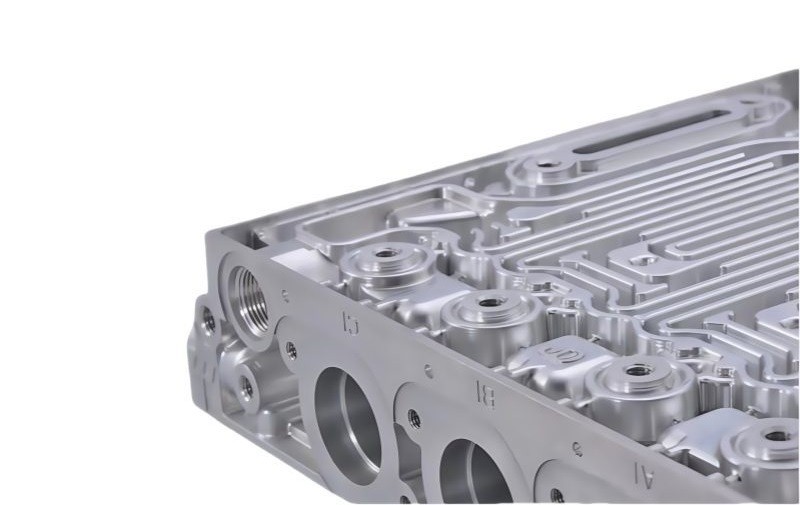
An enclosure does more than hold a product together: it shields electronics from dust and moisture, manages heat, and delivers the tactile, premium feel users associate with quality brands.
Material selection
Aluminum 6061 / 6063 — the default for housings and chassis: lightweight, thermally conductive (167 W/m·K), and excellent for anodizing. 6063 suits extrusions and cosmetic profiles; 6061 suits machined structures.
Magnesium alloys (AZ31B) — 30% lighter than aluminum for portable devices, machined to 0.5 mm walls where weight is critical.
Stainless steel (304/316) — for premium exteriors, antenna-adjacent parts, and corrosion-prone wearables.
Engineering plastics (PC, ABS, PEEK) — insulating housings and internal mounts where electrical isolation matters.
Design rules that prevent rework
DFM essentials for machined enclosures: keep wall thickness above 0.4 mm (phone-class) or 0.8 mm (laptop-class) in aluminum; specify corner radii at least 0.5 times the wall thickness; add 0.5–1° draft per side when the part will be anodized; and include thermal relief slots around screw bosses to prevent warping.
Finishing for look and function
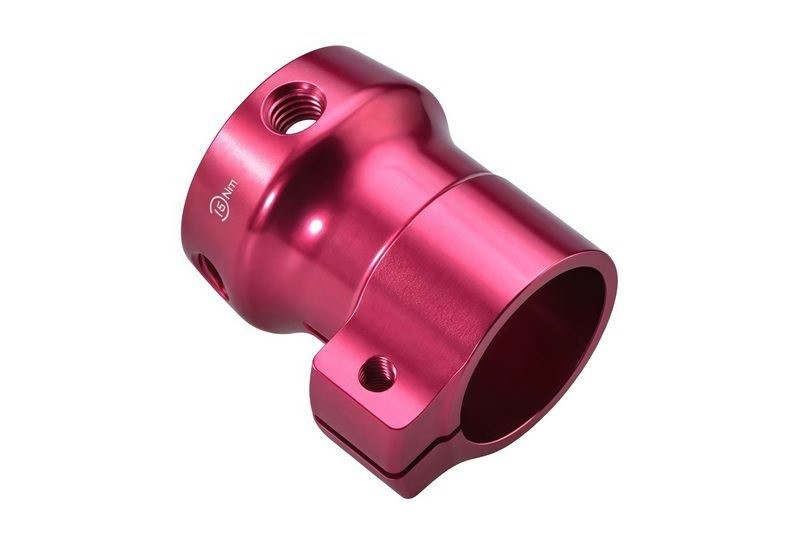
Cosmetic enclosures are typically bead blasted to a uniform matte texture, then anodized — Type II (5–20 µm) for color and corrosion resistance, Type III hardcoat (40–100 µm) for wear-critical surfaces. Where EMI grounding is needed, chromate conversion (Alodine) per MIL-DTL-5541 maintains electrical conductivity, while machined grooves accept gaskets and O-rings to reach IP-rated sealing. Screen printing or laser marking adds logos and regulatory labels without affecting the coating.
CNC Machined Heat Sinks: Fins, Interfaces, and Thermal Materials
Thermal management is the highest-stakes engineering problem in modern electronics. Processors, power amplifiers, LED arrays, and battery packs all need heat moved away quickly, and the heat sink is where CNC machining shines.
Materials and thermal performance
Aluminum 6063 is the workhorse (167 W/m·K) — cheap, light, and easily anodized black for emissivity. Copper C11000 (385 W/m·K) delivers roughly double the conductivity for high-density applications such as server modules and power electronics; oxygen-free C10100 is specified where conductivity must be maximized. For copper, electroless nickel plating prevents oxidation while keeping thermal contact.
What to specify on the drawing
Base flatness: typically ±0.05 mm on the thermal interface surface — the single most important callout for heat transfer.
Fin geometry: fins to ±0.1 mm, with machined aspect ratios up to 10:1 depth-to-width in aluminum; thin fins demand high-speed machining (20,000–40,000 rpm spindles) and adaptive toolpaths to prevent deflection.
Surface finish: Ra 0.8–1.6 µm on contact faces, finer where thermal interface material (TIM) is applied.
Case study: a laptop OEM ordered 2,500 CNC-machined 6061 heat sinks with ±0.008 mm on fins and mounting surfaces, finished with Type II anodizing — delivered ready for full assembly, demonstrating that machined thermal parts scale beyond prototyping.
Precision CNC Connectors: Contacts, Plating, and Tolerances
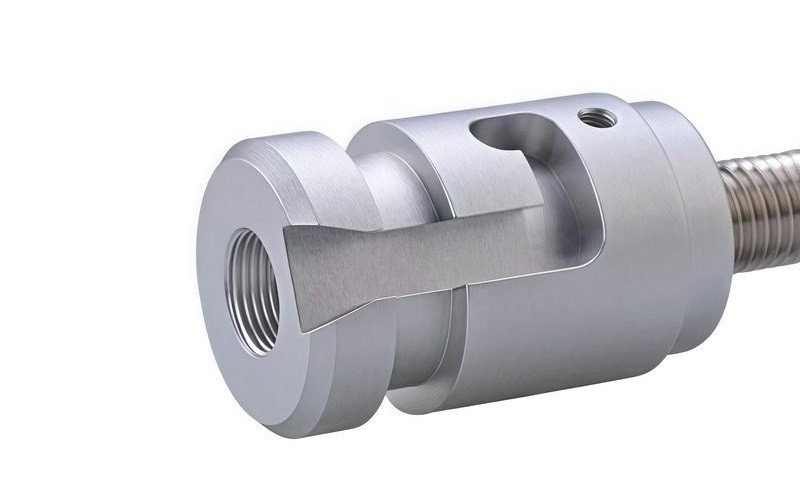
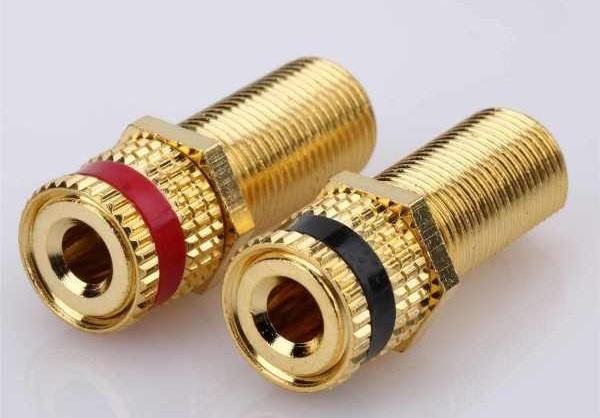
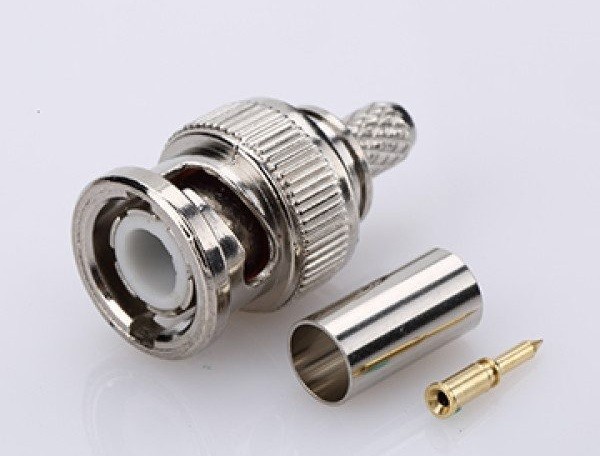
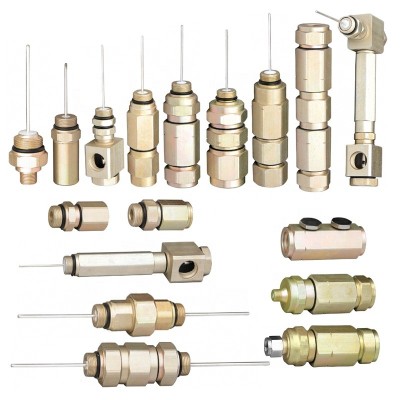
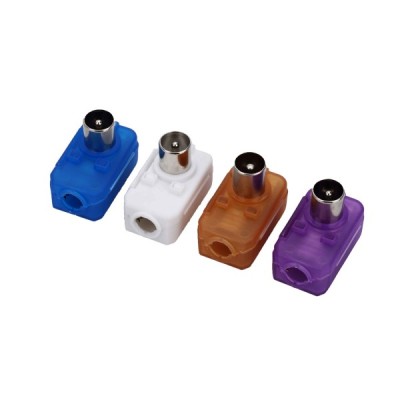
Connectors are the most tolerance-sensitive parts in consumer electronics. A poorly made contact pin degrades signal integrity; a misaligned jack fails after 10,000 insertions. This is why connector families such as RCA, BNC, F-type, USB, and custom ports are almost exclusively CNC turned or Swiss-machined.
Machining and tolerances
Critical contacts are held to ±0.005 mm to ±0.01 mm with surface finishes of Ra 0.4–0.8 µm after plating. Swiss-type turning is preferred for slender pins and miniature housings, achieving tolerances around ±0.0002 in (±0.005 mm) with diameters down to sub-millimetre scale. Concentricity between bore and outer diameter — not just OD size — is what separates a reliable connector from an intermittent one, so drawings should call out true position and coaxiality rather than blanket tolerances.
Materials and plating
Material
Why it is used
Typical plating
Application
Brass (C360)
Excellent machinability, low cost
Gold, nickel, or tin
RCA, BNC, F-type bodies
Copper (C11000)
High electrical conductivity
Nickel + selective gold
Contacts, terminals, shields
Stainless steel 304
Strength and corrosion resistance
Passivation or gold flash
Spring contacts, outer sleeves
Aluminum 6061
Lightweight connector housings
Anodizing or Alodine
Panel-mount shells
Gold plating guarantees low and stable contact resistance for signal paths; nickel provides a hard, corrosion-resistant undercoat or standalone finish; tin offers solderability at lower cost. Plating thickness must be specified together with tolerances, because a 2 µm deposit changes a critical diameter — smart drawings account for the coating layer.
Scale data point: in one high-volume program, CNC-turned 5G antenna components ran at more than 2 million pieces per month with a 99.98% yield using in-process vision inspection — proof that machined connectors can sustain mass production economics.
Tolerances, Surface Finishes, and Quality Standards
Choosing the right tolerance and finish for each part family controls both cost and reliability. The table below is a practical procurement reference for consumer electronics parts:
Component
Recommended tolerance
Typical finish (Ra)
Cost impact if over-toleranced
Connectors / contacts
±0.005–0.01 mm on critical features
0.4–0.8 µm
High
Enclosures / housings
±0.05–0.1 mm
1.6–3.2 µm (blasted/anodized)
Medium
Heat sinks
±0.05 mm base, ±0.1 mm fins
0.8–1.6 µm
Medium–high
PCB brackets / mounts
±0.1 mm
3.2 µm
Low
Quality and compliance framework
Reputable suppliers build consumer-electronics parts under a documented quality system. At a minimum, look for ISO 9001:2015 certification, CMM inspection traceable to ISO 10360-2, surface roughness verification per ISO 4287, corrosion testing per ASTM B117, and RoHS / REACH compliance for materials and finishes. Aerospace and medical-adjacent electronics may additionally require AS9100 or ISO 13485. These standards are verifiable evidence of process control — ask your supplier for certificates and inspection reports rather than accepting claims.
How SOMI Custom Parts Can Help
At SOMI Custom Parts, we manufacture precision components for consumer electronics under an ISO 9001 quality system, covering the full process chain in-house: CNC milling for enclosures, chassis, and heat sinks; CNC turning for connectors, pins, and terminals; plus surface finishing — bead blasting, anodizing (Type II and III), Alodine, plating, and laser marking — so your parts arrive ready for assembly.
Our engineers review drawings before production with a structured DFM check, and our experience shows this early review typically identifies 15–45% in savings through minor design tweaks — smaller radii, standard hole sizes, and tolerance hierarchy. Whether you need a single functional prototype to validate a new wearable, or a 100,000-piece production run of machined housings, we provide material certifications, CMM inspection reports, and full traceability. Browse the custom parts catalog to see our capabilities, or send your drawings for a free DFM review and quotation.
Frequently Asked Questions
What tolerance should I specify for consumer electronics CNC parts?
Only tighten features that functionally need it. Connector contacts often require ±0.005–0.01 mm; enclosure fits work well at ±0.05–0.1 mm; heat sink bases need flatness around ±0.05 mm. Leave non-critical dimensions to ISO 2768 to control cost.
Which material and finish are best for a phone or wearable housing?
Aluminum 6061 or 6063 with bead blasting and Type II anodizing is the industry standard: lightweight, corrosion-resistant, and available in any brand color. For premium or skin-contact parts, consider titanium or stainless steel with PVD or polished finishes.
Should my heat sink be aluminum or copper?
Aluminum (167 W/m·K) is cost-effective and light; copper (385 W/m·K) roughly doubles conductivity for high-density or space-constrained applications. Many designs use a copper base with aluminum fins to balance performance and weight.
Gold or nickel plating for connectors — how do I choose?
Gold gives the lowest, most stable contact resistance for signal integrity and is standard for audio/video and RF contacts. Nickel is harder and cheaper, ideal for mechanical durability and as an undercoat. Tin suits solderable, lower-cost terminations.
How long does it take to go from prototype to production?
Machined prototypes are typically delivered within days, and production batches follow once the design is validated. Because CNC requires no tooling, ramp-up is faster and design changes between batches are inexpensive compared with molding or casting.
Conclusion
Precision CNC machining is the manufacturing engine behind modern consumer electronics. Enclosures, heat sinks, and connectors each place different demands on tolerance, material, and finish — and specifying them correctly is the difference between a product that feels premium and one that fails in the field. Apply tolerance hierarchy, choose the right finish for the function, and work with a supplier whose quality system you can verify.