Hard Turning vs CNC Grinding: Which Precision Finishing Process Is Right for You?
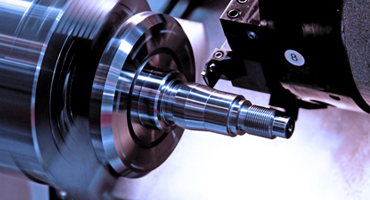
When a component must survive demanding service as a gear shaft, bearing race, hydraulic piston, or precision connector, engineers face one of the classic decisions in precision manufacturing: finish it by hard turning with a CBN insert, or by CNC grinding with an abrasive wheel. Both processes routinely machine steels hardened to 45-70 HRC, but they differ sharply in tolerance capability, surface finish, cycle time, cost per part, and surface integrity. This guide compares the two processes with real shop-floor data and market context so you can select the right finishing route for your custom CNC parts. Hard turning is a single-point cutting operation performed on a rigid CNC lathe using CBN (cubic boron nitride) or ceramic inserts to machine workpieces at 45-70 HRC. Material is removed by shear deformation - the same mechanism as conventional turning - so the process generates clean, recyclable chips instead of abrasive sludge. Because a single chucking can combine turning, facing, grooving, and threading, hard turning consolidates multiple grinding operations into one setup and eliminates cumulative positioning errors between machines. Practical hard turning parameters on hardened alloy steels typically run cutting speeds of 100-200 m/min with CBN inserts, light depths of cut (0.1-0.3 mm), and dry or minimum-quantity-lubrication (MQL) conditions. The upper hardness limit is roughly 65-68 HRC; beyond that, CBN tool wear accelerates exponentially and grinding becomes the more economical choice. CNC grinding removes material with a rotating abrasive wheel whose bonded grits cut microscopic layers through friction and fracture. The wheel is dressed to a precise profile, and controlled spark-out passes deliver exceptional geometry. Cylindrical, centerless, surface, and internal grinding each specialize in specific part families - for example, cylindrical grinding dominates shafts, bearing journals, and spindle work. Grinding remains the reference process for the most demanding specifications: dimensional tolerances of ±0.001-0.003 mm, roundness below 0.5 µm, and surface finishes from Ra 0.05 µm down to mirror finishes below Ra 0.01 µm in ultra-precision applications. The trade-off is speed: incremental abrasive passes make grinding 3-5 times slower than hard turning on the same feature, and setup is heavier because wheels must be dressed and specialized fixtures aligned. The table below condenses the engineering differences that drive process selection for hardened steel components. Surface roughness is usually the first filter in the selection process. Hard turning reliably delivers Ra 0.2-0.8 µm, which is perfectly adequate for bearing seats, seal surfaces, and most functional interfaces on hardened steel. Grinding extends below Ra 0.2 µm and is effectively mandatory for mirror finishes, high-friction surfaces, or parts requiring an oil-retention cross-hatch pattern. Temperature is the hidden variable behind these numbers. Steel grows about 11 µm/m per °C: on a 100 mm feature, a 1 °C drift equals roughly 1.1 µm of size error. Both processes demand thermal control - stabilized coolant, warmed-up machines, and measurement at 20 °C - but hard turning is generally more forgiving because the chip carries away the majority of the cutting heat, reducing the risk of thermal distortion on thin-wall features. For a representative batch of 500 hardened steel rollers (55 HRC, Ø40 × 100 mm), the per-part economics separate clearly: Hard turning saves roughly 64% here - and the gap widens further when you add the costs of coolant systems, filtration maintenance, hazardous waste disposal, and the labor of moving parts between a lathe and a grinder. A tier-1 automotive case study illustrates the speed advantage: an output shaft at 45 HRC dropped from a 4.2-minute grinding cycle to a 1.1-minute hard-turning cycle - a 72% machining-time saving with tool life of about 80 parts per edge - despite higher insert prices. However, reject rate is part of the equation. If hard turning produces a 5% scrap rate versus 0.5% for grinding, the effective cost per good part rises - so for ultra-tight tolerance work where any rework is unacceptable, grinding still wins on total quality cost. Surface integrity often decides whether a part survives in service. Hard turning typically induces compressive residual stress, which inhibits crack initiation and improves fatigue life - a critical advantage for drivetrain and suspension components. Grinding, when coolant and feed control slip, can instead leave tensile stress and create a brittle, untempered martensitic "white layer" or localized over-tempering known as grinding burn, which is invisible to the naked eye but causes premature fatigue failure. The mitigation on the grinding side is disciplined process control: correct wheel selection, adequate spark-out, and controlled coolant application, verified with metallurgical inspection on first articles. On the hard-turning side, the risks are different - lobing, thermal drift, and notch wear - so uncut chip thickness must be kept above the tool edge hone to avoid plowing and excessive force. There is no universal winner; the decision follows the drawing, the batch, and the material state. A hybrid workflow often delivers the best of both worlds: hard turn the roughing and semi-finishing passes for speed and flexibility, then take a light grinding pass of only 0.05-0.10 mm stock for final tolerance and finish. This combination shortens cycle time while keeping the accuracy and surface quality that only abrasive finishing can guarantee. SOMI Custom Parts is an ISO-certified precision manufacturer with in-house CNC turning, CNC milling, drilling, and surface finishing capabilities. Our engineers review every drawing before quoting: if a hardened part genuinely needs grinding, we say so; if hard turning meets the specification at a lower cost, we recommend it - and for mixed requirements we design the hybrid process that controls both tolerance and total cost. We apply Cpk ≥ 1.33 process-capability targets, in-process gauging, and ISO 4287 surface measurement on critical features, and we document inspection results so your quality team can verify every claim. From a single prototype to volume production of thousands of parts, our precision machining services are built around honest process selection and transparent quoting. Explore our CNC turning parts and CNC milling parts capabilities. Review the surface finishing options available for your finished components. Browse the full product catalog or read more manufacturing guides. Send your drawings for a free DFM review and quotation via the inquiry page. Not typically. Grinding reaches Ra 0.05-0.1 µm, while hard turning normally stops around Ra 0.2 µm; with wiper inserts and optimized parameters some shops reach 0.15 µm. For mirror finishes, grinding remains superior. Up to 65-68 HRC is feasible with CBN inserts. Above that hardness, tool wear accelerates exponentially and grinding becomes the more economical and reliable process. In general, yes. Grinding holds ±0.001 mm consistently, while hard turning on a standard CNC lathe holds ±0.005 mm; only ultra-precision lathes with hydrostatic bearings approach grinding-level accuracy. Start with the drawing’s tolerance and surface roughness. If they exceed hard turning’s capability, choose grinding. Then compare cycle times and tooling cost per part - a simple ROI spreadsheet clarifies the decision quickly. Yes. Hard turning runs dry or with MQL, produces clean recyclable steel chips, and avoids coolant disposal. Grinding generates hazardous abrasive sludge and requires filtration systems, adding both cost and environmental burden. Hard turning and CNC grinding are complementary precision finishing processes, not rivals. Hard turning wins on speed, flexibility, and operating cost for parts at 45-60 HRC with functional tolerances; grinding remains irreplaceable for the most demanding tolerances, mirror finishes, thin-wall geometries, and very hard materials. The right answer comes from reading the drawing first, then running the numbers - and when the specification demands it, combining both processes delivers the best quality at the lowest total cost. Have a hardened part that needs finishing? Send your drawings to SOMI Custom Parts for a free process recommendation and quotation, or contact our engineering team to discuss the best route for your application.Hard Turning vs CNC Grinding: Which Precision Finishing Process Is Right for Your Parts?
What Is Hard Turning?
What Is CNC Grinding?
Key Differences: A Side-by-Side Comparison
Metric Hard Turning (CBN) CNC Grinding Dimensional tolerance ±0.005 - 0.010 mm (IT6-IT7) ±0.001 - 0.003 mm (IT5-IT7) Surface finish (Ra) 0.2 - 0.8 µm; wiper inserts reach 0.15 µm 0.05 - 0.2 µm; precision 0.04-0.16, mirror <0.01 µm Roundness / cylindricity 0.5 - 12 µm <0.5 µm Material removal rate 3-5× faster Slow incremental passes Geometric flexibility Bores, contours, threads in one setup Limited by wheel profile Residual stress Compressive (improves fatigue life) Tensile if process is poorly controlled Setup time Minimal - standard CNC lathe setup Significant - wheel dressing, fixtures Environmental impact Dry / MQL; clean recyclable chips Hazardous grinding sludge + coolant Machine capital cost Lower - a rigid CNC lathe Higher - specialized grinder + foundation Surface Finish and Tolerance Capabilities
Cost Analysis: Hard Turning vs Grinding
Surface Integrity: White Layer, Residual Stress, and Grinding Burn
When to Choose Hard Turning vs When to Choose CNC Grinding
Choose hard turning when
Choose CNC grinding when
How SOMI Custom Parts Can Help
Frequently Asked Questions
Can hard turning achieve the same surface finish as grinding?
What hardness limit is practical for hard turning?
Is grinding always more accurate than hard turning?
How do I decide between the two processes for my job?
Is hard turning greener than grinding?
Conclusion