EDM vs CNC Machining: Wire EDM, Sinker EDM, and Milling Compared
When a drawing calls for a feature that a rotating cutter simply cannot reach — or a material hardened beyond 60 HRC — electrical discharge machining (EDM) often becomes the only practical answer. Yet for the majority of everyday precision parts, CNC milling remains faster, cheaper, and more productive. This guide compares wire EDM, sinker EDM, and CNC milling on the factors that actually drive your decision: tolerance, surface finish, material hardness, geometry limits, cost, and lead time — so you can specify the right process from the first RFQ. The question “EDM or CNC?” is rarely answered once for a whole part. In a typical precision job, 90–95% of the material volume is removed by CNC milling, while EDM finishes the 5–10% that only sparks can achieve — deep ribs, sharp internal corners, hardened profiles, and sub-0.5 mm features. Understanding how each process removes material is the first step to combining them intelligently. EDM is a non-contact, thermal erosion process. A tool electrode and the workpiece sit in a dielectric fluid (deionized water for wire EDM, hydrocarbon oil for sinker EDM). A high-frequency electrical discharge — typically thousands of sparks per second — melts and vaporizes tiny amounts of workpiece material at 8,000–12,000 °C in the spark zone. The dielectric flushes the eroded debris and re-insulates the gap so the next spark can strike. Because there is no mechanical contact, material hardness is irrelevant to EDM: hardened tool steel at 60–70 HRC, tungsten carbide, titanium, and Inconel are machined with the same ease as annealed steel. There are three main EDM variants: A thin brass or coated wire (0.1–0.3 mm) travels through the part like an ultra-precise bandsaw, cutting through-profiles with tolerances down to ±0.001 mm and surface finishes to Ra 0.1 µm in multi-pass skimming. A shaped graphite or copper electrode is plunged into the work to form blind cavities, deep ribs, sharp internal corners, and textures — the backbone of injection mold and die manufacturing. A rotating hollow brass tube drills 0.1–3 mm diameter holes in hardened steel, carbide, and superalloys — used for turbine blade cooling holes, fuel injector orifices, and wire-EDM start holes. CNC (computer numerical control) machining removes material with rotating cutting tools that physically shear chips from the workpiece. Milling, turning, and drilling are the core operations, and they dominate production because of sheer speed: a CNC mill removes material at 1,000–10,000+ mm³/min, compared with roughly 10–200 mm³/min for EDM. For open pockets, faces, holes, threads, and 3D sculpted surfaces in aluminum, steel, plastics, and composites, CNC milling is normally the fastest and most economical path. CNC also works on non-conductive materials — plastics, ceramics, composites, and wood — which EDM cannot touch. Typical production tolerances are ±0.01–0.05 mm, with ±0.002–0.01 mm achievable on modern machines, and standard surface finishes of Ra 0.4–3.2 µm. The trade-off is mechanical force: tool pressure can deflect thin walls, cause chatter, and leave burrs that need secondary deburring. Explore our CNC milling capabilities to see how these limits are managed in practice. The table below compares the decisive engineering factors. Note that tolerance and surface finish overlap — the real differentiators are geometry access and material hardness. Choosing between the two EDM families is mostly a geometry question. Wire EDM cuts profiles completely through the workpiece thickness — like a super-accurate, zero-force bandsaw — while sinker EDM burns a mirror-image cavity into the part using a custom-shaped electrode. Typical wire EDM jobs: punch and die profiles, precision mold inserts, thin-wall features below 0.5 mm, high-aspect-ratio slots, gear profiles, and extrusion dies. Because there is no tool wear (the wire is consumed continuously), repeatability is extremely high, and automated threading enables unattended overnight operation. Typical sinker EDM jobs: injection mold cavities, die-casting dies, deep narrow ribs (0.3–1.0 mm wide, 5–20 mm deep), internal sharp corners in closed features, and VDI surface textures transferred directly to the cavity. Every EDM spark melts a tiny volume of material. Most is flushed away, but a thin layer re-solidifies on the surface — the recast layer, or “white layer”. Typical thickness is 2–10 µm for wire EDM and 5–25 µm for sinker EDM, and its microhardness can be 30–50% higher than the substrate. Below it sits a heat-affected zone (HAZ) extending roughly 25–125 µm. For most functional tooling this layer is harmless, and many designs even exploit EDM surface texture. But for fatigue-critical aerospace and medical components, standards such as AMS 2628 demand complete removal of the recast layer — typically by light grinding, polishing, or chemical etching after EDM. A knowledgeable supplier will flag this requirement on your drawing before quoting, not after parts fail inspection. See our surface finishing services for post-EDM treatments. EDM is often described as “expensive,” but the honest comparison is total landed cost per usable part, including tooling, secondary operations, scrap, and schedule. Three scenarios illustrate the logic: Real-world cases reinforce the point. A medical-device maker machining titanium bone screws paid ~30% more per EDM-machined piece but eliminated a heat-treatment step and cut total project cost by about 18%. An automotive tooling shop that moved hardened shaft production from grinding to hard turning plus wire EDM reduced cycle time per part from 4.2 to 1.1 minutes and cut machining cost per part from roughly $3.50 to $1.25 — savings of more than 60% on that operation. The lesson: compare the whole process chain, not just the hourly rate. The global electrical discharge machines market was valued at about USD 1.7 billion in 2025 and is projected to reach USD 2.5 billion by 2032 (roughly 5.8% CAGR), with wire EDM the largest type segment and automotive the largest application segment. The demand drivers are exactly the geometries above: Use the flowchart below as a first-pass filter, then confirm with a machinist who runs both processes. In most real projects, geometry comes first — through-cut profiles favor wire EDM, blind 3D cavities favor sinker EDM, and everything else favors CNC. SOMI Custom Parts is an ISO 9001-certified precision parts manufacturer combining CNC turning, CNC milling, CNC drilling, sheet metal fabrication, die casting, injection molding, and surface finishing under one roof. Our engineers evaluate your drawing end to end — material, heat treatment, geometry, tolerance, and quantity — and route each feature to the process that delivers the required quality at the lowest total cost. Where EDM is the right call, we specify the finish passes and recast-layer strategy your drawing demands; where CNC wins, we optimize toolpaths and fixturing for speed and repeatability. Every project ships with full inspection reports, material certificates, and traceability — the trust framework engineers need before a part goes into a medical device, an aircraft assembly, or a production line. Start by reviewing our complete product catalog or the CNC machining parts page to see typical part families and finishes. For drawings that mix hardened features with machined bodies, our team will propose the most cost-effective process mix and quote the whole chain — not just the machine hours. You can also read more process-comparison articles on our blog, or learn about our facilities on the About Us page before sending your project. Yes. Because EDM removes material with sparks rather than cutting force, hardness is irrelevant — hardened tool steels at 60–70 HRC, carbide, titanium, and Inconel machine with the same ease as annealed steel. This is why EDM is commonly performed after heat treatment to avoid distortion. Generally yes for through-profiles: wire EDM holds ±0.001 mm (and ±0.0005 mm on top-tier machines with thermal compensation) versus ±0.01–0.05 mm typical for CNC milling. But accuracy also depends on geometry — for open 3D surfaces and blind pockets, CNC milling is the accurate and practical choice. No. Blind cavities, sharp internal corners, deep narrow ribs (aspect ratios to 50:1), thin walls below 0.5 mm, and features in hardened steel are impractical or impossible to mill. EDM handles these without cutting force, deflection, or burrs — the price is slow material removal. Every EDM cut leaves a recast (“white”) layer roughly 2–25 µm thick with elevated hardness, plus a shallow heat-affected zone. For fatigue-critical aerospace and medical parts, specifications such as AMS 2628 require removing it — typically by grinding or chemical etching. For standard tooling it is usually left in place. It depends on the whole process chain. CNC milling is cheaper for simple, high-volume parts. EDM can be cheaper per usable part for small batches of hardened or complex parts because it removes tooling, deburring, and post-heat-treat correction costs. Compare total landed cost, not hourly rate. EDM and CNC machining are not rivals — they are complementary capabilities that belong in the same toolbox. Use CNC milling for fast, economical bulk removal on any machinable material; use wire EDM for precision through-profiles, thin walls, and hardened plates; use sinker EDM for blind cavities, sharp corners, and mold details that no cutter can reach. The best parts are usually made by combining all three in one intelligent process plan. Send your drawing to SOMI Custom Parts for a free DFM review and quote, or contact our engineering team to discuss which process mix fits your project.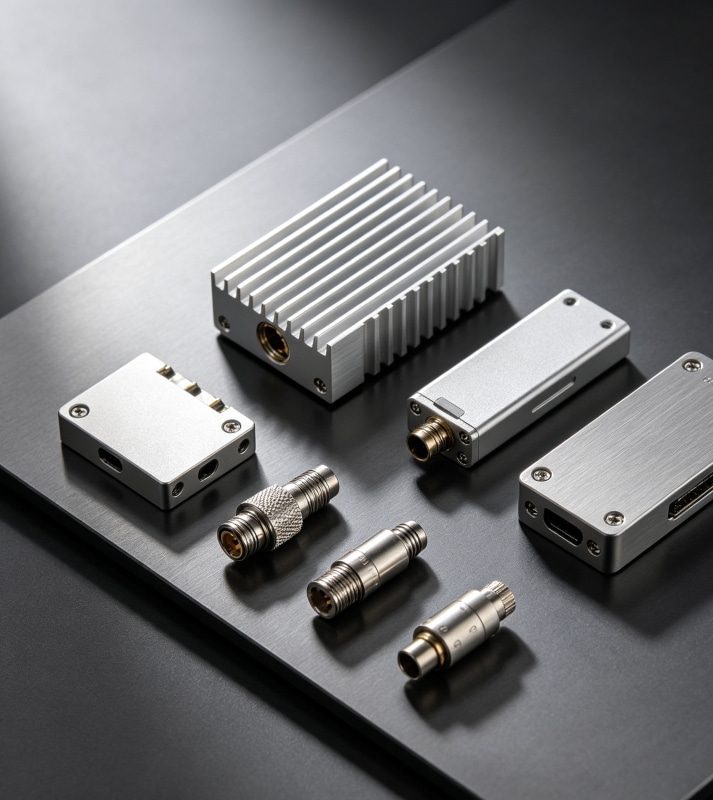
What Is Electrical Discharge Machining (EDM)?
Wire EDM
Sinker EDM
Hole Drilling EDM
What Is CNC Machining — and Where It Excels
EDM vs CNC Machining: Head-to-Head Comparison
Factor CNC Milling Wire EDM Sinker EDM Material removal rate 1,000–10,000+ mm³/min 150–300 mm²/min (through-cut) 10–500 mm³/min Material hardness Tool wear rises with hardness Irrelevant — cuts 60–70 HRC with no speed penalty Cutting force Yes — deflection, chatter, burrs None — burr-free, ideal for thin walls Typical tolerance ±0.01–0.05 mm ±0.002–0.010 mm (±0.001 mm common) ±0.005–0.025 mm Surface finish (Ra) 0.4–3.2 µm 0.1–1.6 µm (multi-pass) 0.1–3.2 µm (mirror possible) Internal corner radius Tool radius, min ~0.3–0.5 mm Wire radius, ~0.1–0.2 mm Near-zero, electrode-defined Blind cavities / deep ribs Limited by tool access No — through-cut only Yes — aspect ratios to 50:1 Materials Metals, plastics, composites Electrically conductive only Best for Bulk removal, high-volume parts Precision through-profiles, hardened plates Mold cavities, dies, fine details Wire EDM vs Sinker EDM: Know the Difference
Surface Integrity: Managing the Recast Layer and Heat-Affected Zone
Cost Analysis: When EDM Makes Economic Sense
Where EDM Is Indispensable: Aerospace, Medical, Mold & Die, Automotive
A Practical Decision Framework
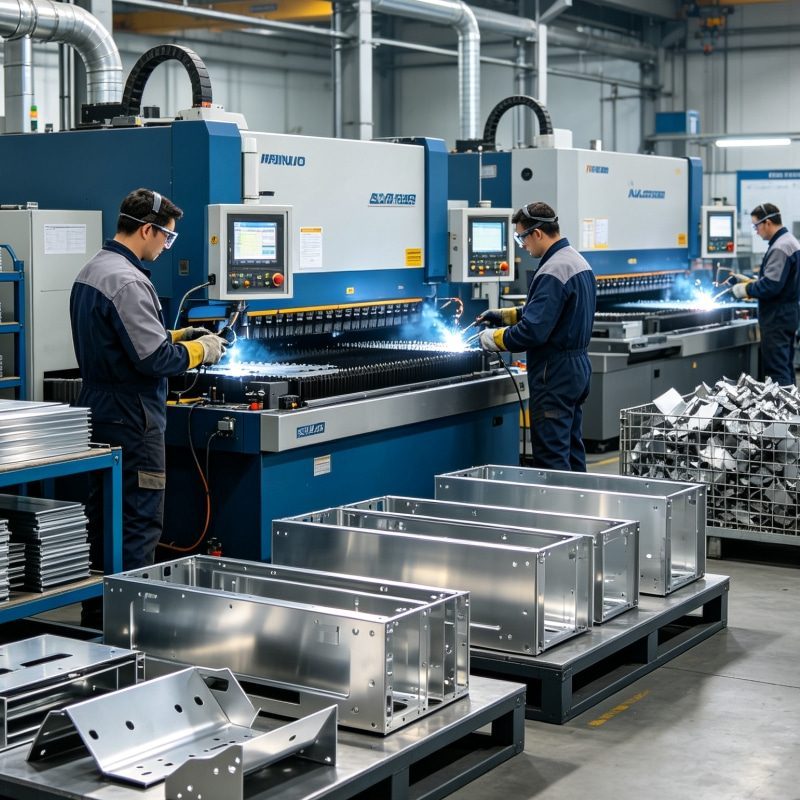
How SOMI Custom Parts Can Help
Frequently Asked Questions
Can EDM machine hardened steel?
Is wire EDM more accurate than CNC milling?
Can CNC machining do everything EDM can?
Does EDM damage the surface?
Which is cheaper — EDM or CNC machining?
Conclusion