
CNC Machining for Defense and Military Applications: Compliance and Quality Standards
Defense & Military Manufacturing
CNC Machining for Defense and Military Applications: Compliance and Quality Standards
From UAV airframe brackets to naval valve bodies, military-grade CNC parts must hold micron-level accuracy, survive extreme environments, and satisfy a layered compliance framework that includes ITAR, DFARS, AS9100D, and MIL-SPEC requirements. This guide explains what defense CNC machining really involves — and how to qualify a supplier who can deliver it.
Introduction: Why Precision Machining Is Mission-Critical for Defense
The defense industry operates under a simple rule: a part that fails in the field is not a warranty claim — it is an operational risk. Military platforms from main battle tanks to unmanned aerial vehicles contain thousands of CNC-machined components, each produced to dimensional tolerances that ordinary commercial parts never approach. A single bracket, housing, or valve body machined a few microns out of specification can compromise an entire system.
The numbers reflect how central this work has become. The global military contract manufacturing services market was valued at roughly USD 65.5 billion in 2025 and is projected to reach USD 99.47 billion by 2032, a CAGR of about 6.15%. Precision machining accounts for the largest service segment at approximately 38.1%, while aerospace and avionics represent the dominant end market at 49.1%. In the United States alone, the precision machining market is projected to reach USD 23.07 billion in 2026, driven largely by defense and aerospace demand.
What Is Military-Grade CNC Machining?
Military-grade CNC machining is the production of precision components for defense platforms using computer-controlled milling, turning, grinding, EDM, and multi-axis operations — governed by stricter material, traceability, inspection, and documentation requirements than general-purpose machining. It is not a different machine technology so much as a different operating discipline.
In practice, the process range mirrors commercial CNC work, but the controls around it do not:
CNC Milling
Rotating tools remove material from a stationary workpiece — the standard process for brackets, housings, and structural components with complex features.
CNC Turning
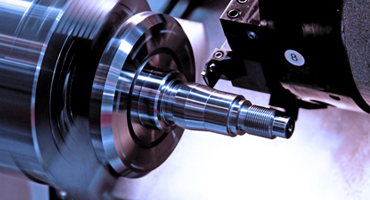
The workpiece rotates against a cutting tool to create cylindrical parts: shafts, pins, bushings, valve components, and connector bodies.
5-Axis & Swiss Machining
Five-axis centers approach a part from multiple directions in one setup; Swiss machining delivers exceptional precision on small, slender defense components.
Grinding & EDM
Grinding achieves the tightest dimensional accuracy and finest finishes; EDM machines hard materials and features conventional tools cannot reach.
Every operation is supported by a quality management system that tracks material from mill certificate to finished shipment — because in defense work, the documentation is as important as the metal itself.
Key Benefits of CNC Machining for Defense Applications
Why does CNC machining dominate defense manufacturing rather than casting, forging, or additive processes alone? The answer sits in five measurable advantages:
Micron-Level Precision
Structural brackets hold ±0.001 in (25 µm); precision avionics and IMU hardware reaches ±0.0003–0.0005 in (7.5–12.5 µm).
Repeatability at Scale
CNC programs deliver identical parts across thousands of units, essential for field-replaceable and interoperable defense hardware.
Complex Geometries
Thin-wall enclosures, internal coolant channels, and multi-surface housings are machinable in single or few setups with 5-axis capability.
Proven Materials
Military alloys — 7075-T6, Ti-6Al-4V, Inconel 718, 17-4 PH — are all fully machinable with controlled processes and certified raw material.
Prototype-to-Production
The same equipment and quality system carry a part from first article through full-rate production without a supplier change.
Full Traceability
Material test reports, inspection data, and process records accompany every lot, satisfying audit and chain-of-custody requirements.
Compliance Framework: ITAR, DFARS, AS9100D, and CMMC
Compliance is the defining difference between defense CNC machining and commercial work. Defense suppliers operate under a layered regulatory framework, and gaps at any level create audit risk that travels up the supply chain. Understanding the four core frameworks is essential before sourcing military parts.
| Framework | What It Governs | Key Requirements |
|---|---|---|
| ITAR | Export of defense articles and technical data (USML) under US State Department jurisdiction | DDTC registration with current registration letter and M-code; access limited to US persons; Technology Control Plan; civil penalties exceed USD 1.2M per violation |
| DFARS | Contract clauses flowing down to contractors and subcontractors | 252.204-7012: NIST SP 800-171 controls for covered defense information, 72-hour cyber incident reporting; 252.225-7009: specialty metals sourcing with mill test reports |
| AS9100D | Aerospace/defense quality management system | Incorporates ISO 9001:2015 plus 100+ sector requirements: operational risk management, full traceability, first article inspection per AS9102, counterfeit parts prevention |
| CMMC | Cybersecurity certification for contractors handling controlled unclassified information (CUI) | Level 2 requires the 110 NIST SP 800-171 Rev 2 controls verified by a C3PAO; Phase 1 self-assessment effective November 10, 2025 |
The compliance obligations flow down the supply chain in full. Tier 1 suppliers carry the broadest burden — full AS9100D, ITAR registration, CMMC Level 2 where CUI is involved, and DFARS specialty metals documentation — and they verify compliance at every tier below them. A Tier 3 machining shop that touches CUI drawings or produces ITAR-controlled parts carries the same ITAR and CMMC obligations as the tiers above it, and its documentation package feeds directly into the Tier 1 audit package.
MIL-SPEC Materials: Alloys That Win Contracts
Material selection in defense machining is dictated by MIL-SPEC and AMS specifications rather than general availability. Each alloy below has a defined role, a governing specification, and a machining profile that experienced shops understand:
| Material | Typical Defense Application | Key Properties |
|---|---|---|
| Aluminum 7075-T6 | Airframes, avionics bays, weapon brackets, UAV structures | Specific strength exceeding most steels at one-third the weight; compatible with MIL-A-8625 Type III hard anodize |
| Titanium Ti-6Al-4V (AMS 4928) | Naval shaft fittings, missile frames, helicopter rotor components | Outstanding strength-to-weight ratio; near-zero magnetic signature valuable for mine-clearing and naval platforms |
| Inconel 718 (AMS 5664) | Turbine blades, exhaust sections, afterburner components | Retains ~80% of room-temperature strength at 650 °C |
| Stainless 17-4 PH (AMS 5659) | Naval fittings, weapon components, salt-spray structural parts | Corrosion resistance plus heat-treatable strength across multiple hardness levels |
| Alloy Steel 4340 / 4130 | High-impact linkages, weapon mounts, turret gears | High strength and wear resistance; often black oxide or nitride finished |
| Aluminum 6061-T6 | Ruggedized enclosures, drone chassis, mounting hardware | Excellent machinability with good strength and corrosion performance |
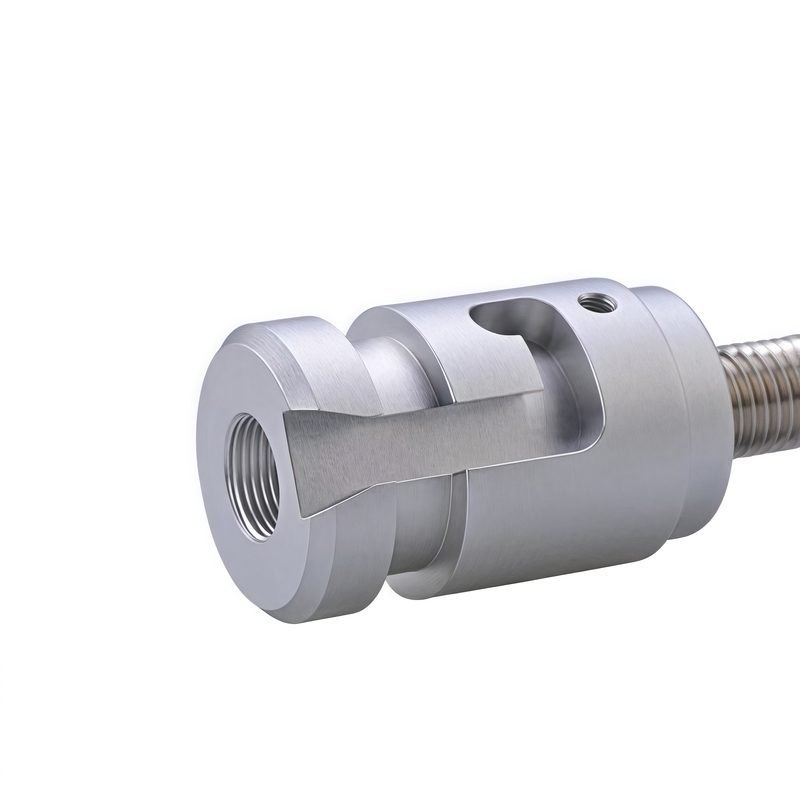
Counterfeit material prevention is a formal requirement in aerospace/defense programs — AS5553 covers counterfeit parts avoidance, and buyers verify raw material through 3.1 mill certificates and heat-lot traceability. Some shops add in-house XRF scanning to confirm alloy chemistry on every incoming bar. In a mission-critical component, the material certificate is part of the part.
Military Surface Finishes and Plating Standards
Finishing in defense work is governed by military specifications that define coating thickness, adhesion, and performance. The right finish extends service life, controls corrosion, and in some cases reduces radar or light signature:
MIL-A-8625 Anodizing
Type II sulfuric anodize for corrosion and dye; Type III hardcoat produces a 25–75 µm (0.5–4.5 mil) oxide layer with extreme wear resistance — standard for Picatinny-rail optics mounts and tactical rails.
MIL-DTL-5541F Chem Film
Chromate conversion coating (SurTec 650) that protects against corrosion while maintaining electrical conductivity for EMI/RFI shielding and grounding on communication enclosures.
MIL-DTL-13924 Black Oxide
Converts steel surfaces to magnetite, reducing light reflection for non-reflective tactical hardware — common on 4140 pins and fasteners used in night operations.
ASTM A967 / AMS 2700 Passivation
Removes free iron from stainless surfaces to maximize corrosion resistance — essential for 316 and 17-4 PH components in marine and naval salt-spray environments.
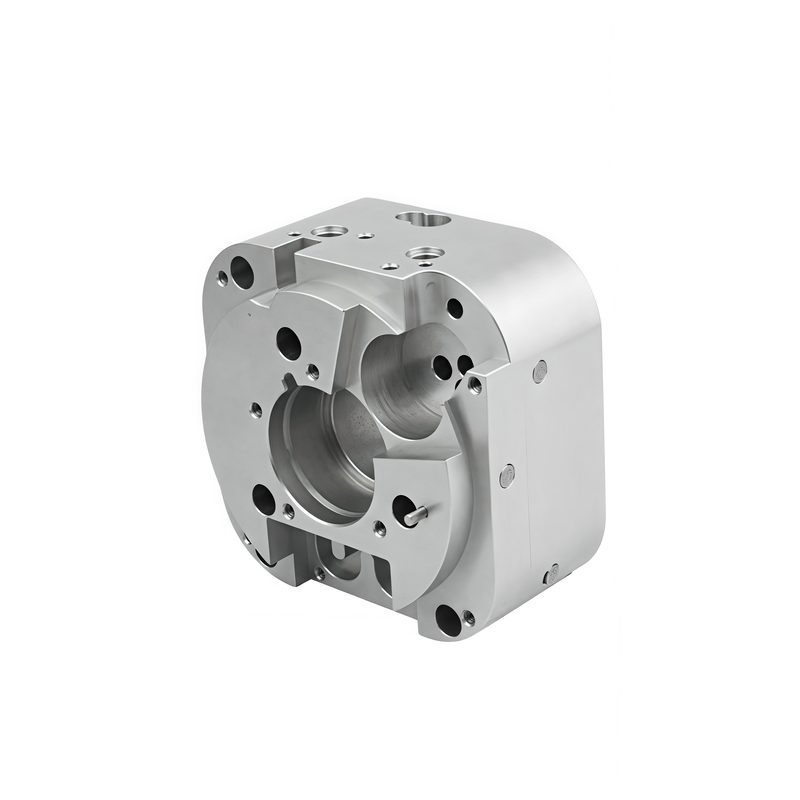
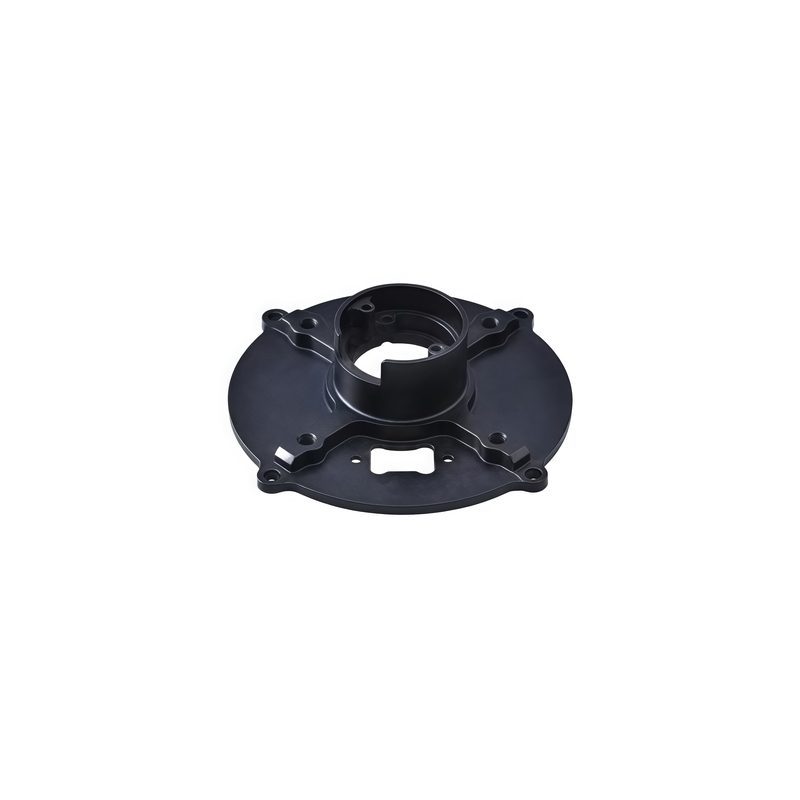
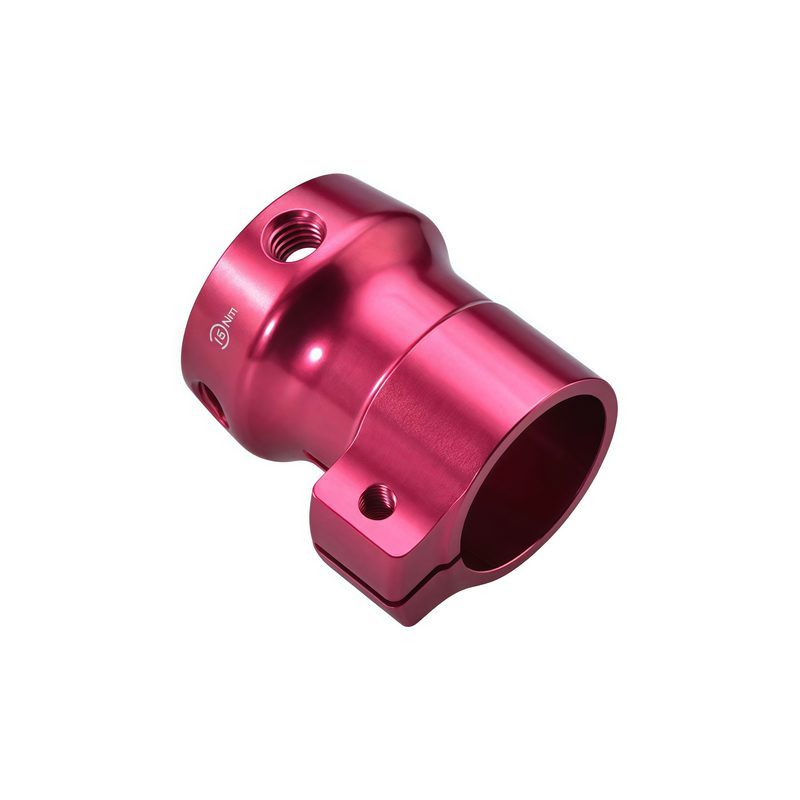
Other treatments in the defense finishing toolbox include QPQ nitride for extreme wear on gears and shafts, manganese phosphate for corrosion and lubrication retention, and CARC-ready surfaces that accept chemical-agent-resistant coatings where required.
Tolerances and Quality Control in Defense Machining
Defense drawings specify tolerances that demand the right machines, tooling, and metrology. Typical bands look like this:
| Component Class | Typical Tolerance | Inspection Method |
|---|---|---|
| Structural brackets & housings | ±0.001 in (25 µm) | CMM + calipers, dimensional report |
| Precision avionics / IMU hardware | ±0.0003–0.0005 in (7.5–12.5 µm) | CMM, optical measurement |
| Titanium / Inconel mating flanges | ±0.0005 in post-heat-treat | CMM, surface finish gage |
| Small Swiss-turned components | ±0.0002 in achievable | Optical comparator, CMM |
Quality control in defense shops goes beyond final inspection. First Article Inspection per AS9102 with ballooned drawings and traceable sign-off is standard; job travelers record actuals at every operation; nonconformance and corrective action processes have defined closure timeframes. CMM equipment is calibrated to NIST-traceable standards, and every critical dimension is verified before lot release.
How SOMI Custom Parts Can Help
SOMI Custom Parts operates an ISO 9001-certified manufacturing facility with in-house CNC turning, milling, and drilling, plus supporting services in surface finishing and secondary operations. For customers in defense-adjacent and dual-use industries — avionics housings, ruggedized enclosures, precision shafts, valve bodies, and connector hardware — SOMI provides the process discipline, material traceability, and inspection documentation that program managers expect, while keeping communication fast and direct.
- Certified quality system with documented inspection records and material traceability
- CNC turning and milling to tolerances down to ±0.005 mm on qualified features
- MIL-spec-compatible finishes including anodizing (Type II/III), chemical film, passivation, plating, and black oxide
- Experienced engineering team applying DFM to reduce cost without compromising critical dimensions
- Full documentation packages: material certs, inspection reports, and certificates of conformance
If your program calls for precision CNC parts built with strict documentation and traceability, our CNC milling, CNC turning, and CNC drilling capabilities cover the full range. Review our surface finishing options or browse the complete product catalog to see what we produce.
Frequently Asked Questions
Is AS9100 certification required for defense CNC machining?
No federal statute makes AS9100 a blanket legal requirement for every DoD contract, but in practice primes write AS9100D certification into subcontracts, and it flows down every tier. An ISO 9001:2015 foundation with AS9100D alignment is the realistic baseline for defense program work.
What is the difference between ITAR and DFARS compliance?
ITAR governs the export of defense articles and technical data under State Department jurisdiction; DFARS governs the terms of DoD contracts, including specialty metals sourcing and cybersecurity (NIST SP 800-171 / CMMC). Both can apply to the same supplier on the same program.
What tolerances can CNC machining hold for military components?
Structural brackets typically hold ±0.001 in (25 µm); precision avionics and IMU hardware reaches ±0.0003–0.0005 in; Swiss-turned miniature components can achieve ±0.0002 in. Tight tolerances require stable machines, qualified tooling, and thermal control.
Which materials are most common in defense machining?
Aluminum 7075-T6 and 6061-T6 for lightweight structures and enclosures; titanium Ti-6Al-4V for high-stress components; Inconel 718 for high-temperature engine parts; 17-4 PH and 316 stainless for corrosion-critical hardware; and 4340/4130 alloy steels for high-strength mechanical parts.
What documentation should a defense CNC supplier provide?
Expect 3.1 mill certificates with heat-lot traceability, AS9102 first article inspection reports, CMM dimensional reports, process certification for finishes (e.g., MIL-A-8625 anodize), certificates of conformance, and, where required, ITAR/DFARS compliance evidence.
Conclusion
CNC machining for defense and military applications is precision manufacturing under a compliance microscope. The machine tools are similar to commercial work — the difference is in certified materials, documented processes, verified inspection, and a quality system that can survive audit at every tier of the supply chain. As defense budgets rise and production modernizes, suppliers who combine real machining capability with disciplined documentation are the ones who win multi-year programs.
Whether you are developing a ruggedized housing, a precision shaft assembly, or a structural bracket for a dual-use platform, the right partner makes the difference between a part that passes inspection and a part that performs in the field. Send us your drawings for a DFM review and quotation, or contact our team to discuss your program requirements. You can also explore our full range of manufacturing insights and learn more about who we are.