
From concept to product
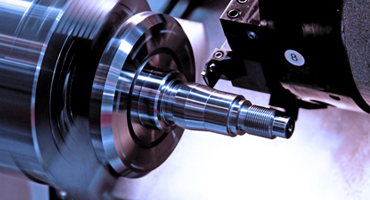
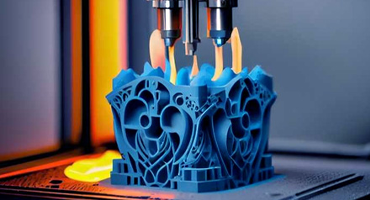
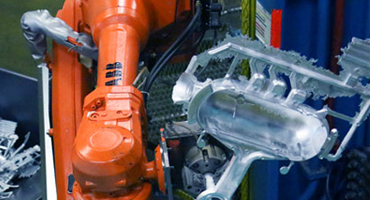
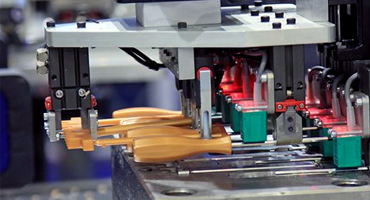
From prototyping to production, our production sites can handle all your manufacturing projects.

How do I start a metal fabrication project?
The short answer
Start with one controlled file set: a STEP model plus a dimensioned PDF, and state the material grade, quantity, finish and the date that matters. A DFM review comes back in 24 to 48 hours and standard geometry quotes within hours. Prototypes typically run 7 to 14 business days, low volume 2 to 3 weeks, and new hard tooling 4 to 8 weeks.
The route from RFQ to packed parts
A fabrication project is not one process, it is a route. The stages below are the order in which the decisions actually get made, and each one has a clear owner. Keeping it to one approval path is what makes a schedule believable.

What to put in the first email
Quotes slow down for one reason: the supplier is missing a fact that only the buyer has. An RFQ that carries the eight lines below can be priced in hours instead of days, and it eliminates the assumptions that later turn into cost disputes.

The single most useful thing to send is both a 3D model and a 2D drawing. The STEP file carries the geometry and lets the shop check bend relief and assembly relationships; the dimensioned PDF carries what the model cannot express - material, thickness, tolerances, threads, weld symbols, surface roughness and the revision you actually want built. Sending only one of the two usually produces a review that stops halfway.
How long each size of job takes
Lead time is driven by tooling and material availability far more than by machine time. A part that needs no new tooling can move in days; a part that needs a progressive die has to wait for the die.

Standard sheet metal work without new tooling ships in about 5 to 10 business days. A first-article inspection report, a capability study or an unusual alloy adds time to that, and the drawing decides which of those apply - the headline lead time does not. When you need a date you can plan around, ask what in your file set is driving the longest element, then decide whether to change it.
Prototype, first article, production: three gates
Each gate exists to catch a class of problem at the cheapest point where it can be caught. Skipping one moves the cost to the customer, usually at the end of the programme.
| Gate | What is checked | What it protects |
|---|---|---|
| DFM review | Bend radii, hole-to-bend distance, tool access, coating build-up | Cost, before any tooling exists |
| Prototype parts | Fit and function on real components | Design risk, before hard tooling |
| First article inspection | Every critical dimension against the drawing for the first part off the tool | Specification risk |
| Tool qualification | Capability study on critical features as a repeatable process | Repeatability risk across the run |
| Pilot run | Process validated at near production volume | Ramp risk when demand arrives |
For a new or modified part, prototyping before committing to hard tooling is the cheapest insurance available. A supplier that pushes straight to a hard tool without offering a prototype has removed your safety net, and that is worth treating as a caution rather than a schedule advantage.
Six things that delay a project
- More than one revision in the file set. A model at revision C paired with a drawing at revision A guarantees a re-quote or a wrong part.
- Tolerance called out on everything. Blanket plus or minus 0.05 mm on non-functional features adds inspection time and cost without adding function. A tolerance table that distinguishes critical from general features quotes faster and cheaper.
- No quantity structure. Annual volume and batch size decide the process. A prototype quantity quoted against production volume, or the reverse, lands the project on the wrong route.
- Finish left to the last minute. Colour approvals, masking plans and outside coating queues are the longest common delay on an otherwise simple sheet metal assembly.
- Buyer-supplied parts with no date. An assembly waiting on a customer-furnished component cannot be scheduled, only started and set aside.
- Design frozen too late. Every change after a die is cut costs money and production time, and each modified station is priced separately.
Ask for the fastest practical route, not the fastest sentence. A realistic date that holds is worth more than three revised dates. If a supplier cannot explain what is driving their lead time, they are guessing at it.
Starting a project with SOMI Custom Parts
Send the drawing package, an annual quantity and the date that matters, and we will come back with a DFM review, a process route, the flat pattern and a tolerance for each feature rather than a single number. Building the flat pattern, tooling and first-article inspection under one roof is what keeps the sequence decisions in quoting instead of on the shop floor: see sheet metal fabrication, metal stamping, or start with our inquiry form.
Scope and sources. Lead times, review windows and gate definitions above are typical published figures for custom metal fabrication in 2026 and were cross-checked against public fabrication ordering and quoting guides, including an RFQ to packed-parts route for sheet metal. Real schedules move with material availability, tooling queue, inspection level and finishing capacity, so treat these as planning ranges rather than commitments. Tolerance and inspection requirements are taken from the drawing package you issue.
Are you looking for a reliable manufacturer of down home textile products?
We can quickly provide customers with market analysis, technical support and customized services.From concept to product
From prototyping to production, our production sites can handle all your manufacturing projects.
subscription