
From concept to product
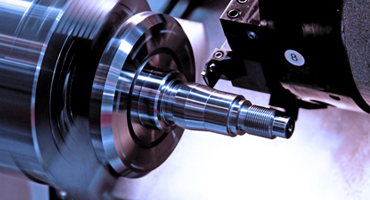
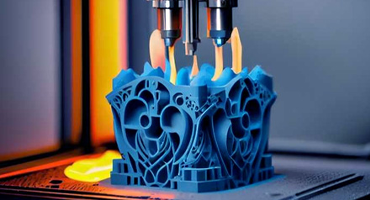
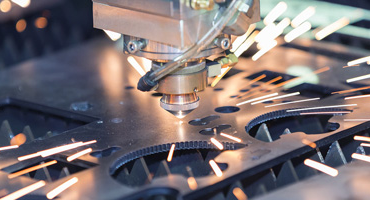
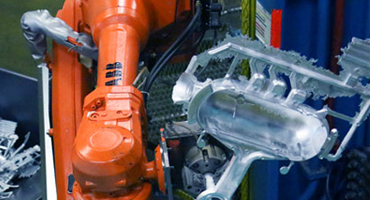
From prototyping to production, our production sites can handle all your manufacturing projects.
What determines the cost of CNC machined parts?
The short answer
A CNC quote is six numbers, not one. Machine time carries 30 to 60 percent, material 15 to 40 percent, setup and programming 10 to 25 percent, tooling 5 to 15 percent, finishing 5 to 25 percent and inspection 5 to 10 percent. Quantity then changes the unit price more than any negotiation.
A quote is six numbers, not one
Buyers often treat a machined part price as a property of the part, when it is actually the sum of six cost components whose shares move with the material, the geometry and the order quantity. Published quoting guides converge on the same structure: machine time as the largest single element at roughly thirty to sixty percent of the total, material at fifteen to forty percent, setup and programming at ten to twenty-five percent, tooling at five to fifteen percent, surface finishing at five to twenty-five percent, and inspection with documentation at five to ten percent. Overhead and profit sit on top of those, typically in a ten to twenty percent band that widens for specialised work.
The practical value of knowing the structure is that it tells you which lever moves the price. A negotiation on the machine rate moves one component. A design change that removes a setup or relaxes a tolerance can move three at once, which is why the largest savings in machining are found in the drawing rather than in the purchase-order discussion. A proper quote breaks material, machining and finishing out separately; a single lump sum hides which component is heavy, and comparing two lump sums tells you almost nothing about where the money sits.

Machine time is the largest single lever
Machine time is calculated as the shop's hourly rate multiplied by the cycle time, and because it is the biggest component it is also the first place to look. Cycle time depends on how much material is removed, on how much surface area has to be finished, on how many tool changes the program forces, and above all on how many times the part is re-clamped. A five-axis cycle that takes thirty minutes can cost the same as a three-axis cycle that takes sixty, because the five-axis rate is higher but it eliminates setups.
Shop rates vary widely by region and by machine class, and the regional gap is larger than most buyers expect. In the same published 2026 comparison, a three-axis machine runs about thirty-five to fifty US dollars an hour in China and about eighty to one hundred and fifty in the United States, while a five-axis machine runs about sixty to ninety in China against one hundred and fifty to two hundred and fifty in the United States, with Germany and Switzerland above that for micron-level work. A five-axis machine also bills at roughly one and a half to two and a half times the three-axis rate for the machine itself, so a five-axis route has to remove enough setups to justify the premium.
Tool changes and positioning moves are the hidden part of the cycle. A common estimation rule is to sum the pure cutting time for every operation and multiply by one and a half to two and a half to allow for tool changes, rapid moves and handling, so a part with twenty minutes of cutting typically bills thirty-five to fifty minutes of machine time. Anything that reduces non-cutting time, such as a fixture that holds the part for two faces, pays back immediately.
Material: you pay for the billet, not the part
Material cost is driven by the grade, the billet size and the buy-to-fly ratio, which is the ratio of stock bought to part shipped. The grade effect is large and predictable in direction: aluminium 6061 usually sits at a few dollars per kilogram, stainless 304 in a similar range, and titanium Ti-6Al-4V can exceed eighty dollars per kilogram with Inconel 718 above ninety. Because the same part in titanium can cost twenty to fifty times the aluminium price before a single cut is made, the material grade is often the largest single decision a buyer makes.
The billett effect is subtler and more controllable. Machined parts consume far more raw material than their finished weight: a simple turned part might use forty to sixty percent of the stock, a part machined from bar or billet fifteen to thirty-five percent, and a complex five-axis part as little as five to fifteen percent, so a one hundred gram aluminium bracket can start as four to six hundred grams of stock. Specifying a billet size that sits close to the part envelope is one of the cheapest savings available: a twenty-five millimetre part cut from a thirty millimetre billet wastes seventeen percent of the material, and trimming the billet to twenty-six millimetres removes almost all of that waste.
Setup, tooling and finishing
Setup and programming are fixed costs per part design, which means they are painful on a one-off and nearly free at volume. A single prototype might carry eighty to one hundred and fifty dollars of setup, while the same setup spread across a hundred parts adds one or two dollars each. This is the component that explains why the first unit is expensive and the thousandth is not. Every additional setup also adds fifteen to thirty minutes of non-productive time plus its own programming and fixturing, and reducing a part from three setups to two has been reported to cut ten to twenty percent of total cost.
Tooling is small on aluminium and can be decisive on titanium or Inconel, where tool life can fall to a tenth of the aluminium figure and ceramic or cubic-boron-nitride inserts cost several times a standard carbide insert. Custom form cutters and special inserts add a one-time charge that belongs in its own line, typically fifty to two hundred dollars per tool. Finishing is the component that most often surprises buyers, because it is quoted per operation and the operations stack: anodising is the inexpensive end, hard anodising and electroless nickel sit in the middle, and a PTFE-impregnated or multi-layer coating can move the part price by a large fraction on its own. Inspection is similar in shape: a standard dimensional check is usually included, while a full coordinate-measuring report, material test records and a formal first-article package add a project-level charge.

How quantity changes the unit cost
The single largest variable in the unit price is the order quantity, because setup and tooling are fixed and cycle time is not. A published illustration of a medium-complexity aluminium bracket shows the shape of the curve: about one hundred and eighty to two hundred and fifty dollars for a single piece where setup dominates, forty-five to seventy dollars at ten pieces as the setup splits, eighteen to twenty-eight dollars at a hundred pieces where cycle time takes over, ten to fifteen dollars at a thousand pieces with optimised fixturing and feeds, and six to ten dollars at ten thousand pieces where a dedicated cell and tooling investment finally pay off.

The consequence for a buyer is that a small quantity is not a slightly more expensive version of a large one; it is a different economic animal. If the design is still moving, buying a hundred pieces at twenty-three dollars each to test the market is usually better than buying ten at fifty-seven, because the extra cost of the first ninety is small and the information is worth more. If the design is frozen and the volume is real, moving from a thousand to ten thousand is the difference between a general-purpose fixture and a dedicated cell, and that is a supplier conversation rather than a design decision.
The five levers you can actually pull
Most of a machined part's cost is set before a quote is issued, and the levers below are the ones that move it without touching performance.
- Pick the right material, not the strongest one. Aluminium 6061 machines about thirty percent faster than 7075 and costs less per kilogram, so defaulting to the strongest grade when a mid-grade would do compounds the difference at volume.
- Tolerance only what functions. Every additional decimal place of precision multiplies cost; applying a precision callout to a non-functional feature buys inspection time and scrap risk and nothing else.
- Design for fewer setups. Orient the critical features so they can be reached from one direction, and keep a flat reference surface for stable clamping. Each setup removed takes non-productive time, error and cost out at once.
- Use standard tooling. Internal corner radii that match stock end-mill sizes avoid custom cutters entirely, while deep narrow cavities force long-reach tools, lighter passes and more tool wear; a four-to-one depth ratio can cost two to three times a two-to-one cavity.
- Buy in the right quantity. Combining parts into one order amortises the setup across the batch and is usually the largest single saving available without changing the part at all.
Where the cheapest quote is the wrong one
Three situations should make a buyer slow down rather than sign. The first is a quote that comes in far below the others: a variance of up to about thirty percent between quotes is normal, but a quote sixty percent or more below the market usually indicates something has been assumed, omitted or cut, and the omitted item tends to be inspection or finishing. The second is a lump-sum quote with no breakdown, because it leaves you unable to see whether the saving came from the machine rate or from a tolerance nobody is going to hold. The third is a request for a tolerance the process cannot deliver at the quoted price, where the honest answer is a different process, a different quantity or a different material rather than a lower number.
Two limits belong on the same page. The percentages here are planning ranges from published quoting guides and not a rate card for any particular shop, and they will move with the material market, the finishing supply chain and the exchange rate. And the cost structure is not a substitute for a real quote: the useful move is to send a complete drawing and ask which components dominate, because that answer is specific to your part in a way no range can be.
Send the STEP model and a toleranced drawing, the material grade and condition, the quantity with an annual forecast so the setup can be amortised realistically, the finish per surface, the inspection package your contract requires, and a note naming which features and which tolerances are functional. Those items let a supplier separate material, machining, finishing and inspection, and let you see which lever to pull. A supplier that answers with a breakdown and a note on what is driving the price is giving you a tool rather than a number. See CNC machining for what the process can hold, surface finishing for the cost that most often surprises buyers, and die casting when the volume is high enough that a mould beats cutting from solid.
Scope and sources. The six-component cost structure and the share ranges come from a 2026 CNC cost guide (material typically 15 to 40 percent, machine time 30 to 60 percent, setup and programming 10 to 25 percent, tooling 5 to 15 percent, surface finishing 5 to 25 percent and inspection 5 to 10 percent, with 2026 hourly rates of about 35 to 50 US dollars for three-axis and 60 to 90 for five-axis in China against 80 to 150 and 150 to 250 in the United States, aluminium 6061 at roughly 4 to 7 US dollars per kilogram, stainless 304 at 6 to 10, titanium Ti-6Al-4V above 80 and Inconel 718 above 90, and the bracket cost curve from about 180 to 250 dollars at one piece down to 6 to 10 dollars at ten thousand) and from a cost estimation guide (machine time 45 to 65 percent, material 15 to 30 percent, setup 10 to 20 percent and tooling 5 to 15 percent, hourly rates of 60 to 90 dollars for a three-axis vertical machining centre and 100 to 150 for a five-axis machine, the rule of multiplying pure cutting time by 1.5 to 2.5 for tool changes and positioning, and material utilisation of 40 to 60 percent for a simple turned part against 15 to 35 percent from bar and 5 to 15 percent for a complex five-axis part). Design rules and their cost impact come from a CNC cost optimisation guide (each additional setup adding 15 to 30 minutes of non-productive time, cutting a part from three setups to two saving 10 to 20 percent of total cost, custom tools adding 50 to 200 dollars each, a four-to-one deep cavity costing two to three times a two-to-one cavity, and the tolerance cost multipliers of 1.0 at 0.1 mm, 1.1 to 1.2 at 0.05 mm, 1.3 to 1.5 at 0.025 mm, 1.5 to 2.0 at 0.01 mm and 2.0 to 3.0 at 0.005 mm). The finishing and inspection shares and the material-weight effects come from a cost calculation guide (material 20 to 40 percent, machine time 30 to 50 percent, programming and setup 5 to 20 percent, tooling 5 to 15 percent and surface treatment 10 to 30 percent, with a five-axis rate 1.5 to 2.5 times a three-axis rate) and from a quote breakdown study (material 15 to 30 percent, machining time 30 to 45 percent, fixturing and programming 5 to 12 percent, tooling 3 to 8 percent, fixturing 2 to 6 percent, surface treatment 5 to 12 percent, inspection 3 to 8 percent, packaging 2 to 5 percent and profit 8 to 20 percent). Figures are planning ranges from published sources and not a quotation; confirm them against your own drawing, material, finishing and quantity.
Are you looking for a reliable manufacturer of down home textile products?
We can quickly provide customers with market analysis, technical support and customized services.From concept to product
From prototyping to production, our production sites can handle all your manufacturing projects.
subscription