Introduction: Why Brass and Copper Alloys Matter in Precision Machining
Brass and copper are among the most widely machined non-ferrous materials in the world, and in 2026 their importance is growing faster than ever. Electrification, renewable energy, data centers, and advanced medical devices all depend on copper and brass components for conductivity, thermal performance, and corrosion resistance. An electric vehicle uses significantly more copper than an internal combustion vehicle, and global copper spot prices have risen roughly 38.7% since 2020, reflecting sustained industrial demand.
For engineers and buyers, the challenge is not whether to use these alloys, but how to machine them efficiently. A poorly chosen grade can triple cycle time, while an unoptimized tool path on pure copper can produce built-up edge, torn surfaces, and scrapped parts. This complete guide covers the brass and copper alloys used in CNC machining, the cutting parameters that work, tolerance and surface finish capabilities, design rules that reduce cost, finishing options, and the applications where each alloy shines. You can browse our CNC machining parts capabilities or read more articles on precision manufacturing.
What Are Brass and Copper Alloys?
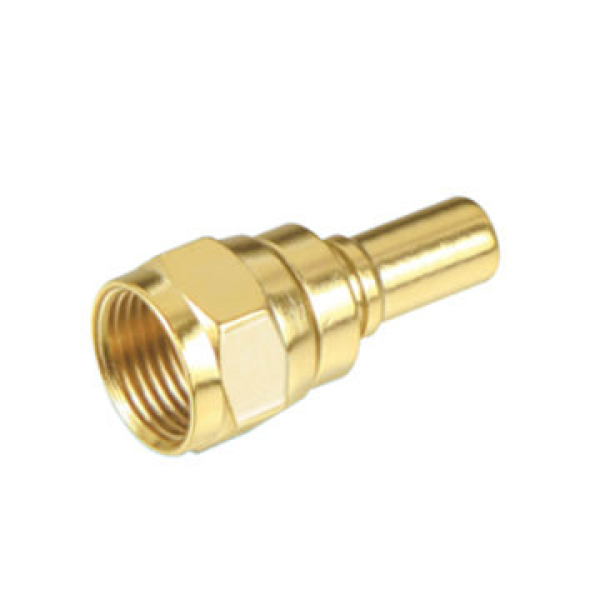
Copper alloys are grouped by their primary alloying elements. Brass is a copper-zinc alloy, typically 55-70% copper with 30-45% zinc, and its golden color, corrosion resistance, and outstanding machinability make it a default choice for fittings, valves, and electrical hardware. Bronze adds tin for bearing and marine applications, and cupronickel adds nickel for seawater piping. Pure copper grades such as C110 ETP and C101 OFHC contain 99.9% copper or more.
The alloy choice determines almost everything about cost and quality. The machinability index, measured against C360 free-cutting brass at 100%, ranges from 20% for pure copper to 100% for free-cutting brass. A part that takes three minutes to turn in C360 can take fifteen minutes in C110 with more tool wear. Understanding this trade-off before design is the single most effective way to control cost in brass and copper machining.
Key Benefits of Brass and Copper Parts
Both material families deliver a combination of properties that few other metals can match. Here are the benefits that drive their use in precision parts.
- Electrical conductivity: Pure copper reaches 101% IACS; brass delivers 26-28% IACS, which is still excellent for machined connectors and terminals.
- Thermal performance: Copper conducts heat at 391 W/mK, making it the top choice for heat sinks and bus bars; brass at 115 W/mK remains strong for valve bodies.
- Corrosion resistance: Both resist atmospheric corrosion; naval brass and cupronickel are engineered for saltwater service.
- Machinability: C360 brass has a machinability rating of 100%, the benchmark for all engineering metals, enabling high-speed production.
- Antimicrobial properties: Copper and brass naturally kill bacteria, which is why they are specified in medical instruments and touch surfaces.
- Appearance: The gold-like finish of brass makes it ideal for decorative hardware and customer-facing components.
Brass Grades for CNC Machining
Five brass grades cover the majority of CNC milling and turning work. Selecting between them is a balance of machinability, strength, corrosion resistance, and compliance.
| Grade | UNS | Machinability | Tensile Strength | Best For |
|---|
| C360 Free-Cutting | C36000 | 100% | 58,000 PSI | Fittings, valves, connectors, high-volume turning |
| C260 Cartridge | C26000 | 30% | 68,000 PSI | Deep drawing, stampings, decorative parts |
| C353 High-Lead | C35300 | 90% | 55,000 PSI | Clock parts, engraving plates |
| C464 Naval Brass | C46400 | 30% | 75,000 PSI | Marine hardware, propeller shafts |
| C510 Phosphor Bronze | C51000 | 20% | 75,000 PSI | Springs, bearings, electrical contacts |
C360 free-cutting brass is the gold standard for machinability. Its 3% lead acts as a built-in lubricant, producing short, clean chips that clear easily, allowing surface speeds up to 1,000 SFM with long tool life. Where lead content is restricted, lead-free alternatives such as CZ121 or C360 with RoHS exemptions are specified; for potable water contact, NSF/ANSI 61 and WRAS-compliant grades are required. C260 cartridge brass offers better ductility and strength for cold-formed features, but its 30% rating makes high-volume machining roughly three times slower than C360.
Copper Grades for CNC Machining
When the application demands maximum conductivity, pure copper and specialty alloys are the answer. Each grade trades machinability against electrical performance.
| Grade | Machinability | Conductivity | Notes |
|---|
| C110 ETP Copper | 20% | 101% IACS | Highest conductivity; soft and gummy to machine |
| C101 OFHC Copper | 20% | 101% IACS | Oxygen-free; resists hydrogen embrittlement |
| C145 Tellurium Copper | 80% | 93% IACS | Best balance of machinability and conductivity |
| C172 Beryllium Copper | 20% | 15-28% IACS | Heat-treatable to 40+ HRC; springs and non-sparking tools |
C110 ETP copper is the reference for electrical components: bus bars, connectors, and RF components demand its 101% IACS rating. Because it is soft and ductile, it requires sharp polished tooling, high feed rates, and flood coolant. C145 tellurium copper adds a small tellurium addition that lifts machinability to 80% while retaining 93% of C110's conductivity, making it the pragmatic choice when both machinability and conductivity matter. C172 beryllium copper can be heat treated to high hardness for springs and wear-critical contacts, but its dust is toxic, so it must only be machined with proper ventilation and dust collection. In all cases, material certification and traceability are essential for medical, aerospace, and fluid-power components.
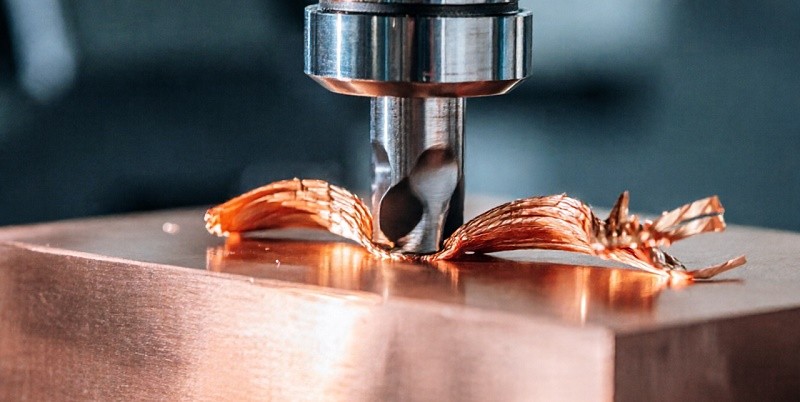
Why Pure Copper Is Difficult to Machine
Pure copper presents three well-documented challenges. Understanding the root cause of each is the key to a successful machining process.
- Built-up edge (BUE): Copper welds to the tool face under cutting pressure, changing the effective tool geometry and tearing the surface. Fix it with sharp polished tooling, a positive rake angle of 8-12 degrees, uncoated carbide or PCD inserts, surface speeds above 200 SFM, and high-pressure flood coolant directed at the rake face.
- Long, continuous chips: Ductile copper produces stringy chips that wrap around the tool and workpiece, jamming paths and damaging surfaces. Fix it with chip-breaking insert geometry, higher feed rates, periodic retracts on deep turning passes, and climb milling, which breaks chips at entry.
- Workholding marking: Copper in the half-hard condition is roughly HRB 40-50, so serrated steel jaws leave permanent indents. Fix it with soft jaws, collet chucks, step fixtures, or sacrificial toe clamps, and never touch off a datum surface with steel workholding.
Brass, by contrast, chips break cleanly and tool wear is minimal. This difference is why cycle times for brass are typically two to three times faster than for pure copper on equivalent parts.
![copper and brass metal shavings on industrial CNC machinery]()
Cutting Parameters and Tooling for Brass and Copper
Starting parameters for CNC turning with uncoated carbide are shown below. Adjust based on machine rigidity, depth of cut, and part geometry. With PCD tooling, surface speeds can be increased by 50-100%.
| Parameter | C101 / C110 Copper | C260 Brass | C360 Brass |
|---|
| Surface speed (carbide) | 200-350 SFM | 350-500 SFM | 500-800 SFM |
| Feed rate | 0.003-0.006 in/rev | 0.004-0.008 in/rev | 0.006-0.012 in/rev |
| Roughing depth of cut | 0.050-0.100 in | 0.075-0.150 in | 0.100-0.200 in |
| Finishing depth of cut | 0.005-0.010 in | 0.005-0.010 in | 0.010-0.020 in |
| Rake angle (insert) | +8 to +12 deg | +5 to +10 deg | +5 to +8 deg |
| Tool material | Uncoated carbide or PCD | Uncoated carbide | Uncoated carbide or HSS |
| Coolant | Flood required | Flood recommended | Flood recommended |
| Thread tapping speed | 50-80 SFM | 80-120 SFM | 100-150 SFM |
For milling, brass runs comfortably at 5,000-10,000+ RPM with aggressive feeds, while pure copper needs sharp polished-flute end mills, high feed rates to prevent sticking, and flood coolant. Avoid dwell time on copper; keep the tool moving. For high-volume brass parts, CNC turning is often faster and cheaper than milling, because brass turns beautifully on a lathe with an excellent surface finish directly off the tool.
Tolerances and Surface Finish Capability
Tolerance capability on copper is comparable to aluminum in production conditions, with two caveats: workholding pressure must be controlled, and pure copper requires sharper tooling. Standard CNC machining of brass and copper achieves ±0.025 mm on turned diameters, with precision work reaching ±0.013 mm using PCD or freshly sharpened carbide.
| Feature | C360 Brass | C110 / C101 Copper |
|---|
| Turned OD (standard) | ±0.025 mm | ±0.025 mm |
| Turned OD (precision) | ±0.013 mm | ±0.013 mm |
| Bored ID (standard) | ±0.025 mm | ±0.025 mm |
| Milled pocket (standard) | ±0.050 mm | ±0.050 mm |
| Flatness | ±0.001 in/in | ±0.002 in/in |
| Thread fit (tapped) | 6H | 6H |
| Surface finish (turning) | Ra 0.8-1.6 um | Ra 0.8-1.6 um; PCD achieves Ra 0.4 um |
| Surface finish (milling) | Ra 0.8-1.6 um | Ra 1.6-3.2 um |
For pure copper, a spring pass on the final turning cut removes elastic deflection and improves tolerance capability by roughly 50%. Always specify the required Ra on the drawing rather than writing "machine finish", which is ambiguous; if cosmetic appearance matters, also call out the direction of lay.
Design Rules for Brass and Copper Parts
Eight design rules prevent the most common quality issues and reduce cost on copper and brass components.
- Specify C360 unless conductivity above 26% IACS or hydrogen-embrittlement resistance is required. Misspecifying C110 where C360 would work is the most common copper DFM error and multiplies cost fivefold.
- Avoid walls thinner than 1 mm on pure copper parts. If thin walls are required, machine from half-hard stock and use a spring-pass finishing cut.
- Chamfer all sharp edges by 0.25-0.5 mm at 45 degrees. Copper burrs are ductile and tenacious; a chamfer converts deburring into a controlled cut.
- Limit slot depth-to-width ratio to 3:1 on pure copper; C360 can be slotted to 5:1 cleanly.
- Design through-holes with a minimum diameter of 1.27 mm in pure copper. Below 1 mm, use EDM or switch to C360.
- Include a spring-pass note for tight-tolerance ODs on C110 and C101.
- Do not anodize copper. Anodizing is aluminum-specific; specify electroless nickel, silver, or tin plating instead.
- Confirm whether tolerances apply before or after plating, because coatings add measurable thickness.
Surface Finishing and Plating Options
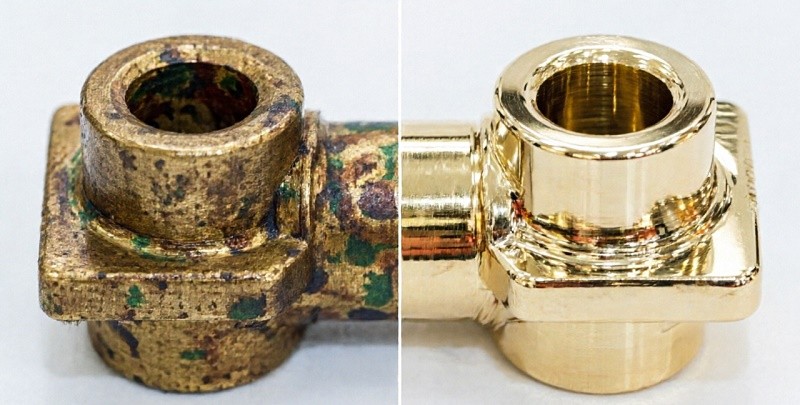
Brass and copper tarnish over time, so a finish or plating protects the part and controls its final appearance. Plating thickness must be factored into tolerance-critical fits and thread engagement.
| Finish | Best For | Typical Thickness |
|---|
| Nickel plating | Corrosion protection, bright silver appearance, wear resistance | 5-25 um |
| Tin plating | Solderability, food-safe contacts, PCB connectors | 2-5 um (ASTM B545) |
| Gold plating | Electrical contacts, low contact resistance, premium appearance | 0.5-2 um |
| Silver plating | Best conductivity, RF components | 2-10 um |
| Clear lacquer | Preserve natural brass or copper color, prevent tarnish | Thin film |
| Passivation | Light corrosion protection | Chemical film |
Electroplating per ASTM B733 and passivation per ASTM A967 are common standards. Electrical conductivity can be verified against ASTM B193, which requires pure copper at 100% IACS or better. Electropolishing can take surface finish below Ra 0.4 um for precision electrical and medical components.
Applications by Industry
Copper and brass components serve critical functions across nearly every manufacturing sector.
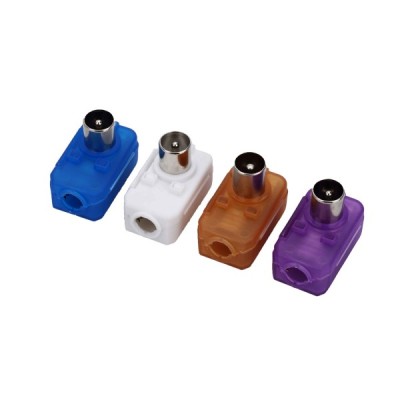
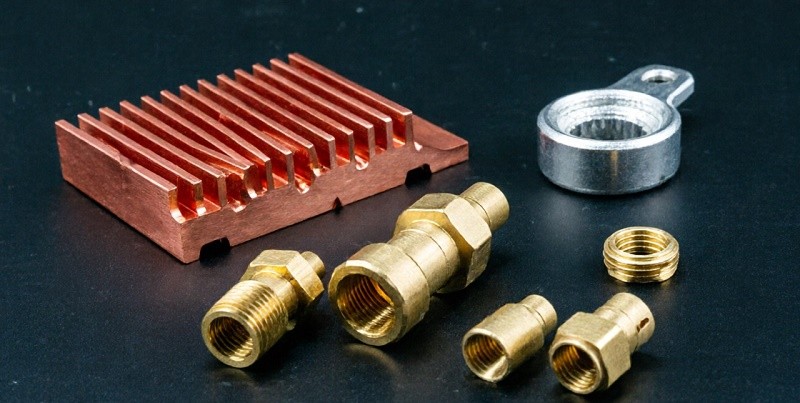
- Electrical and electronics: connectors, terminals, bus bars, RF connectors, and shielding housings. Copper for conductivity, brass for easy machining.
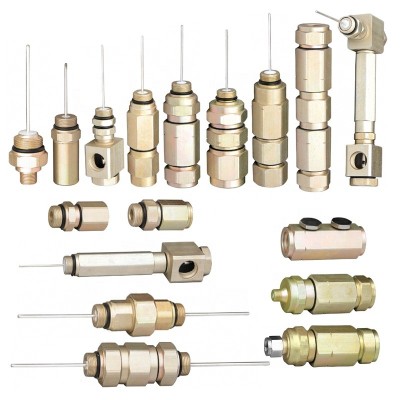
- Plumbing and fluid systems: valves, fittings, and pipe components in lead-free brass for potable water and compressed air.
- Thermal management: copper heat sinks, cold plates, and heat exchangers for electronics and power modules.
- Automotive and EV: electrical connectors, battery contacts, and sensor bodies where conductivity and reliability matter.
- Medical: instrument components benefiting from brass antimicrobial properties.
- Marine and decorative: naval brass hardware, propeller shafts, and architectural fixtures.
In 2026, high-end brass and copper CNC component orders have grown more than 30% year over year, with precision parts commanding two to three times the price of standard components. The precision copper machining market is expanding at a compound annual growth rate above 9% as electrification and data infrastructure drive demand.
How SOMI Custom Parts Can Help
SOMI Custom Parts is a precision CNC machining manufacturer with deep experience in brass and copper alloys. Our engineers review every design for manufacturability before production, flagging features that drive cost on these materials and recommending the right grade for conductivity, machinability, and compliance. We machine C360, C260, C110, C101, and C145, and we coordinate plating with machining so tolerances account for coating thickness from the start.
With ISO 9001-aligned quality management, dimensional inspection, and material traceability, we support customers from prototype to production across electrical, fluid, thermal, and medical applications. Learn more about us, review our full product range, or explore sending an inquiry with your drawings. We provide DFM feedback and fast, accurate quotes for machined brass and copper parts.
Frequently Asked Questions
Is brass easier to CNC machine than aluminum?
Yes. C360 free-cutting brass has a machinability rating of 100%, the benchmark for all metals. Chips break cleanly, tool life is long, and surface finish is smooth with minimal effort. Total machining cost for C360 brass is similar to 6061 aluminum because the higher material price is offset by faster cycle times.
Can pure copper be CNC machined?
Yes, but pure copper (C110) is soft and gummy, so it tends to stick to tools and produce long stringy chips. Use sharp polished tooling, high feed rates, and flood coolant. Tellurium copper (C145) machines much more easily while retaining about 93% of the electrical conductivity.
Which copper alloy is best for electrical parts?
C110 ETP copper offers the highest electrical conductivity at 101% IACS. If machinability matters too, C145 tellurium copper delivers 93% IACS at 80% machinability. For RF connectors and waveguides, C110 is preferred because even small conductivity losses matter at high frequencies.
What tolerances can CNC machining hold on brass and copper?
Standard CNC machining achieves ±0.025 mm on turned diameters, with precision features at ±0.013 mm using PCD or freshly sharpened carbide. Milled features typically hold ±0.050 mm, and tapped threads meet 6H fit. Surface finish down to Ra 0.4 um is achievable with PCD tooling.
Is brass RoHS compliant?
C360 and other leaded brasses contain lead, a regulated substance under the EU RoHS directive. Some applications qualify under specific RoHS exemptions. Where compliance without exemption is required, specify a lead-free brass grade, and for potable water contact, NSF/ANSI 61 or WRAS-approved grades.
Conclusion
Brass and copper alloys deliver a combination of conductivity, thermal performance, corrosion resistance, machinability, and appearance that few materials can match. The key to cost-effective parts is choosing the right grade up front, applying the correct cutting parameters, and following design rules that prevent the common failure modes of built-up edge, burrs, and workholding marks.
Whether you need high-volume C360 fittings, precision C110 electrical contacts, or C145 components that balance machinability with conductivity, working with an experienced CNC partner makes the difference between scrap and repeatable quality. Contact SOMI Custom Parts today with your drawings and requirements, and our engineering team will help you select the optimal alloy, tolerance strategy, and finishing solution for your project.