How Custom CNC Machining Services for Steel Parts Cut Real Components
Welcome to an in-depth look at how custom CNC machining services for steel parts are revolutionizing manufacturing. We'll explore the precision, versatility, and unique advantages these services offer for creating real, tangible components. Have you ever wondered how complex, custom steel parts are made with incredible accuracy? Today, we're diving into the world of custom CNC machining, focusing on its crucial role in producing high-quality steel components for a variety of industries.
Understanding the Fundamentals of Custom CNC Machining Services for Steel Parts
Before we can appreciate the intricate steel components produced through custom CNC machining, it's essential to grasp the foundational principles of the technology itself. This section will break down what CNC machining is, how it has evolved, and why it is indispensable for creating unique steel parts that meet today's demanding engineering requirements.
What is CNC Machining and How Does it Apply to Steel Parts?
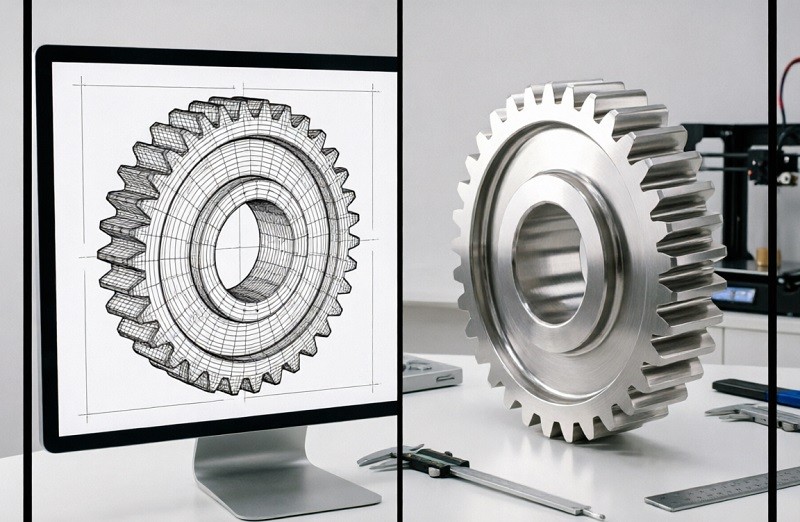
At its core, CNC (Computer Numerical Control) machining is a subtractive manufacturing process. This means it creates a final product by methodically removing material from a solid block, known as a workpiece or blank. The entire operation is automated and controlled by pre-programmed computer software. This digital approach begins with a Computer-Aided Design (CAD) model, which is a 2D or 3D digital blueprint of the final part. This CAD file is then translated by CAM (Computer-Aided Manufacturing) software into a specific set of instructions called G-code. This G-code directs the movements of the cutting tools with extreme precision.
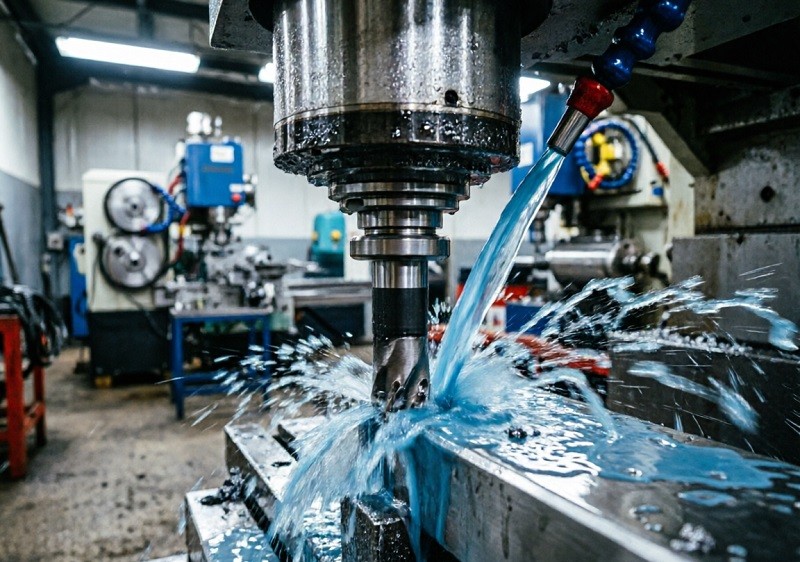
When applied to a robust and durable material like steel, this process requires specialized considerations. The inherent hardness of steel means that high-speed cutting tools, often made of high-speed steel (HSS) or solid carbide, are necessary to shape the material effectively. The process generates significant heat, so coolants and lubricants are essential to prevent damage to both the cutting tool and the steel part itself.
Several key CNC operations are used to shape steel:
- Milling: This process uses rotating multi-point cutting tools to remove material from a stationary workpiece. It is highly versatile and can create complex shapes, grooves, and pockets.
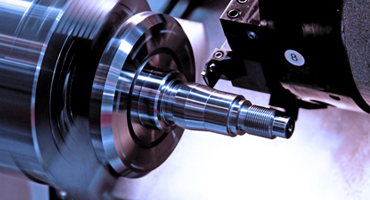
- Turning: In this operation, the steel workpiece rotates at high speed while a stationary single-point cutting tool is pressed against it. This method is ideal for producing cylindrical, conical, or spherical parts like shafts and spindles.
- Drilling: CNC drilling creates precise round holes for bolts, fasteners, or fluid passages, with automated control over depth and diameter.
- Grinding: Often used as a finishing operation, grinding employs an abrasive wheel to remove small amounts of material, resulting in a very smooth surface finish and exceptionally tight tolerances.
Through the precise, computer-controlled execution of these operations, raw blocks of steel are sculpted into highly accurate and functional components for countless applications.
The Evolution of Custom Steel Part Production with CNC Technology
The journey from manually crafted steel parts to today's highly automated production is a story of remarkable technological advancement. For centuries, manufacturing steel components was a labor-intensive process, relying entirely on the skill and intuition of machinists who operated manual lathes, mills, and drills. This traditional approach was time-consuming and heavily dependent on the operator's expertise, leading to potential inconsistencies between parts and limitations on geometric complexity.
The revolution began in the mid-20th century with the development of Numerical Control (NC) technology. The first NC machines, pioneered by figures like John T. Parsons in the 1940s and 50s, used punched paper tapes to store and feed instructional data to the machine tools. This was a monumental leap, as it introduced automation to the machining process, allowing for the creation of identical parts with greater accuracy than ever before.
The true paradigm shift occurred with the integration of computers, transforming NC into CNC (Computer Numerical Control). This transition, which gained momentum in the 1960s and 70s, replaced the fragile punch tapes with digital programming. The advent of affordable microprocessors and the development of more sophisticated software in the 1980s and 90s democratized CNC technology.
A pivotal moment in this evolution was the integration of Computer-Aided Design (CAD) and Computer-Aided Manufacturing (CAM) software.
- CAD software allows engineers to create highly detailed and precise 2D and 3D digital models of the steel parts.
- CAM software then takes these digital designs and automatically generates the G-code toolpaths required for the CNC machine to produce the physical component.
This seamless digital workflow drastically reduced human error, accelerated production timelines, and unlocked the ability to create incredibly complex designs that were previously unimaginable. The evolution from manual labor to a fully integrated CAD/CAM/CNC process has elevated the production of custom steel parts to new heights of precision, efficiency, and complexity.
Why Custom Machining is Essential for Unique Steel Component Needs
While off-the-shelf components work for many standard applications, innovation and high-performance engineering often require parts that simply don't exist in a catalog. Custom machining becomes essential when projects demand unique specifications that standard parts cannot meet. It addresses the need for components with specific dimensions, non-standard material properties, intricate geometries, or exceptionally tight tolerances that are critical to the function and safety of the final product.
The core reasons why custom machining for steel parts is indispensable include:
- Meeting Exacting Specifications: In industries like aerospace, automotive, and medical, components must meet stringent standards for fit, form, and function. Custom machining can produce steel parts with tolerances as tight as ±0.0001 inches, ensuring perfect integration and performance. This level of precision is impossible to achieve with generic parts.
- Enabling Innovation and Prototyping: When developing a new product, engineers often need to create and test unique components. Custom machining is the fastest way to translate a digital design into a functional steel prototype for evaluation, testing, and iteration. This agile approach accelerates the product development cycle.
- Solving Unique Integration Challenges: Legacy equipment repair, system retrofits, or creating devices with a unique form factor often require parts designed to fit into a specific, non-standard space. Custom machining allows for the creation of one-of-a-kind solutions that solve these complex integration problems.
- Optimizing Material and Performance: A project may require a specific grade of steel with unique properties (e.g., high strength, corrosion resistance, or heat tolerance) that isn't available in standard components. Custom machining allows engineers to select the ideal material and then shape it to their precise design, optimizing performance without compromise.
Essentially, custom machining bridges the gap between digital design and physical reality, empowering engineers and designers to move beyond the limitations of mass-produced parts and create truly tailored, high-performance steel components.
The Unmatched Advantages of Custom CNC Machining Services for Steel Parts
Choosing to work with Custom CNC Machining Services for Steel Parts offers a plethora of benefits that go far beyond simple customization. These advantages—ranging from unparalleled precision to cost-effective production for niche applications—are what make CNC machining a cornerstone of modern manufacturing. This section explores the key benefits that make this technology the preferred choice for producing high-quality steel components.
Achieving Precision and Repeatability in Steel Component Manufacturing
Two of the most significant advantages of CNC machining are its unparalleled precision and its unwavering repeatability. These two attributes are deeply intertwined and are fundamental to modern manufacturing, especially in sectors where quality and consistency are non-negotiable.
Precision in CNC machining refers to the machine's ability to produce parts that conform to the exact specifications of the digital design. This closeness to the intended dimensions is measured by tolerance. A "tight" tolerance indicates a very small acceptable deviation from the design. Modern CNC machines can consistently achieve incredibly tight tolerances when working with steel.
- Standard Tolerances: For general applications, a standard tolerance is often around ±0.127 mm (±0.005 inches).
- High-Precision Tolerances: For more demanding applications like aerospace or high-performance automotive parts, tolerances can be tightened to ±0.01 mm to ±0.05 mm.
- Ultra-Precision Tolerances: In highly specialized fields such as medical implants or optics, tolerances can even reach ±0.001 mm to ±0.005 mm.
This high level of precision is achieved through a combination of factors, including the rigidity of the machine, the quality of the cutting tools, real-time computer control, and the skill of the programmer who optimizes the cutting paths and parameters.
Repeatability is the ability of the CNC machine to produce identical parts consistently across an entire production run, from the first component to the thousandth. Once a G-code program is perfected and loaded, the machine executes the exact same set of instructions for every workpiece. This automated process eliminates the inconsistencies and human error inherent in manual machining, ensuring every part is a near-perfect replica of the last.
The combination of high precision and excellent repeatability is critical for:
- Interchangeable Parts: Ensures that any component can be swapped with another from the same batch without affecting the assembly's fit or function.
- Assembly Line Efficiency: Predictable, uniform parts streamline assembly processes, reducing delays and rework.
- Product Reliability: Consistent quality across all components leads to a more reliable and higher-performing final product.
In essence, CNC machining for steel provides the confidence that every part manufactured will meet the design intent with a verifiable and consistent level of quality.
Creating Complex Geometries and Designs with Custom CNC Machining Services for Steel Parts
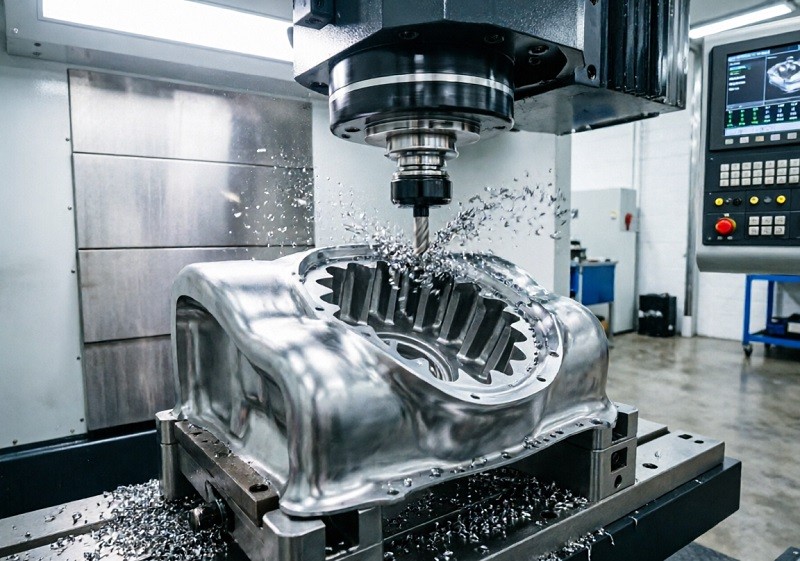
One of the most transformative capabilities of CNC machining is its ability to produce parts with highly complex and intricate geometries that would be difficult, if not impossible, to create with traditional manufacturing methods. This is largely thanks to the technology of multi-axis machining.
Standard CNC machines operate on three linear axes: X (left-right), Y (front-back), and Z (up-down). While effective for many applications, their capabilities are limited. Multi-axis machining introduces additional rotational axes, fundamentally changing what is possible.
- 4-Axis Machining: Adds a rotational axis (the A-axis), allowing the workpiece to be rotated during the machining process. This is useful for creating features on the side of a cylindrical part.
- 5-Axis Machining: Adds two rotational axes (A and B axes) to the three linear axes. This allows the cutting tool to approach the workpiece from virtually any angle. The workpiece can be tilted and rotated, enabling the machine to create complex curves, deep cavities, undercuts, and compound angles—all in a single setup.
The key benefits of using multi-axis CNC machines for creating complex steel parts include:
- Single-Setup Machining: Complex parts that would traditionally require multiple setups on different machines can be completed in one continuous operation. Each time a part is manually re-fixtured, the risk of error increases. By eliminating these additional setups, 5-axis machining significantly improves accuracy and positional consistency across features.
- Improved Surface Finish: Multi-axis machines allow the cutting tool to maintain an optimal angle relative to the material's surface at all times. This can result in a superior surface finish, reducing the need for time-consuming secondary finishing processes.
- Shorter, More Rigid Tools: The ability to tilt the tool or workpiece means shorter, more rigid cutting tools can be used. Shorter tools are less prone to vibration, which further enhances precision and surface quality.
- Unlocking Design Freedom: For engineers and product designers, 5-axis CNC machining removes many traditional manufacturing constraints. It empowers them to design for optimal function and performance, creating lighter, stronger, and more efficient parts with highly organic and complex shapes, such as turbine blades, medical implants, and high-performance automotive components.
Ultimately, multi-axis CNC technology is the engine that drives innovation, allowing the sophisticated designs of today's most advanced industries to be brought to life in steel with unparalleled precision.
Rapid Prototyping and Quick Turnaround Times for Steel Components
In today's fast-paced market, the speed at which a product moves from concept to reality is a critical competitive advantage. Custom CNC machining is an invaluable tool for rapid prototyping and production, offering exceptionally quick turnaround times for steel components.
Traditionally, creating a prototype, especially from a hard material like steel, was a long and arduous process involving manual fabrication, casting, or forging. These methods could take weeks or even months and often required expensive, dedicated tooling. CNC machining has completely changed this dynamic.
The key factors contributing to the speed of CNC prototyping are:
- Direct from Digital to Physical: The process starts with a CAD file. This digital design can be translated into machine instructions (G-code) in minutes or hours, allowing the machine to start cutting almost immediately. There is no need for time-consuming physical patterns or molds.
- Automation and High-Speed Machining: Modern CNC machines operate with high-speed spindles that can remove material much faster than conventional equipment. Once programmed, these machines can run continuously with minimal supervision, producing parts in a fraction of the time it would take a manual machinist.
- Rapid Design Iteration: One of the biggest advantages is the ability to make quick and easy design changes. If a flaw is found in a prototype or an improvement is conceptualized, designers can simply update the CAD file. A new, modified prototype can often be produced within a day or two, allowing for rapid testing and design validation cycles. This agility drastically shortens the overall product development timeline.
- No Tooling Lead Time: Unlike processes like injection molding or die casting, which require the creation of expensive and time-consuming molds or dies, CNC machining works directly on stock material. This eliminates the significant lead time associated with tool production, making it ideal for creating one-off prototypes or small batches.
Some machining services can deliver custom steel prototypes in as little as one day. This ability to get a functional, high-fidelity steel part into the hands of engineers for testing and evaluation almost immediately is transformative. It allows companies to identify design issues early, refine their products faster, and ultimately bring a more polished and reliable product to market in record time.
Cost-Effectiveness for Low-Volume and Niche Production of Steel Parts
While mass production methods like casting or forging are a great fit for high-volume orders, they come with substantial upfront costs for tooling such as molds and dies. This makes them economically unfeasible for projects that only require a small number of parts. This is where CNC machining excels, offering a highly cost-effective solution for low-volume and niche production runs.
The economic advantages of using CNC machining for small batches of steel parts stem from several key factors:
- No Tooling Costs: The most significant financial advantage is the elimination of tooling expenses. CNC machining is a "tooling-free" process, meaning there is no need to design, manufacture, and amortize the cost of a mold or die, which can run into thousands or even tens of thousands of dollars. Production can begin almost immediately after the CAD file is programmed.
- Reduced Setup Time and Costs: While there are setup costs associated with programming the machine and preparing the material, these are significantly lower than the costs and lead times associated with creating hard tooling. Modern CAM software automates much of the toolpath generation, and multi-axis machines can complete complex parts in a single setup, further reducing labor and time.
- Economies of Scale at Lower Quantities: The cost per part in CNC machining decreases as the quantity increases, but the savings are most dramatic at lower volumes. While a single one-off part will have the highest per-unit cost (as it absorbs all the setup expenses), producing 10, 50, or 100 parts allows those initial costs to be spread out, leading to a much lower price per piece. This makes CNC ideal for batches that are too small for casting but too large for one-off prototyping.
- Minimized Material Waste: Advanced CAM software can optimize toolpaths and use "nesting" strategies to arrange parts on a raw material sheet in the most efficient way possible. This minimizes scrap and reduces material costs, which is especially important when working with expensive steel alloys.
- On-Demand Production: CNC machining supports a "just-in-time" manufacturing model. Businesses can order small batches as needed, reducing the financial burden of holding and managing large inventories. This is perfect for startups, companies testing a new market, or industries that require custom parts on an infrequent basis.
For applications like producing spare parts for legacy equipment, creating custom components for a niche market, or fulfilling a pilot production run, CNC machining is often the most practical and financially sound manufacturing method.
Navigating the Challenges and Limitations of Custom CNC Machining Services for Steel Parts
While custom CNC machining is a powerful and versatile technology, it's not without its challenges and limitations. Understanding these potential drawbacks is crucial for effective project planning and for making informed decisions about whether CNC is the right choice for your specific needs. This section will provide a balanced look at the initial investments, material considerations, and competitive landscape of CNC machining for steel components.
Understanding the Initial Investment and Potential Lead Times for Custom Steel Machining
While CNC machining avoids the high tooling costs of other methods, it's important to have a realistic understanding of its cost structure and delivery timelines. Both can be influenced by a wide range of factors, and careful planning is necessary to manage expectations and budgets effectively.
Initial Investment and Costs
The cost of custom CNC-machined steel parts is not a simple flat rate. It is a calculation based on several primary drivers:
- Machine Time: This is often the biggest cost factor. The longer a part takes to machine, the more expensive it will be. Hourly rates for running a CNC machine can range significantly, from $20-$30 per hour for a basic 3-axis machine to $150 or more for a high-end 5-axis machine.
- Material Cost: Steel itself varies in price. Common mild steel is relatively inexpensive, but high-performance stainless steel, tool steel, or other exotic alloys cost significantly more per kilogram.
- Part Complexity: An intricate design with complex geometries, tight tolerances, and multiple features requires more sophisticated programming, longer machining times, and potentially the use of more expensive multi-axis machines, all of which drive up the cost.
- Setup and Programming: There is a fixed, upfront cost associated with preparing a job. This includes the time a skilled programmer takes to create and verify the CAM toolpaths and the machinist's time to set up the machine, tools, and fixtures. For a single part or very small batch, this setup cost can represent a large portion of the total price.
- Labor: The expertise of skilled CNC programmers and operators is a crucial cost component. Their hourly rates, which can range from $30-$50, contribute to the overall project expense.
Potential Lead Times
Lead time is the total time from placing an order to receiving the finished parts. While CNC is known for rapid turnarounds, especially for prototypes, production lead times can vary significantly.
- Simple Prototypes: Can often be produced and shipped in as little as 1-3 business days, especially if made from common materials.
- Complex Parts or Small Batches: A typical lead time might be 3-10 business days.
- Production Orders: For larger quantities, lead times can extend to several weeks (e.g., 5-8 weeks is not uncommon). The actual machining time per part might be short, but the order must be slotted into the shop's production schedule.
Factors that can extend lead times include:
- Material Availability: If a non-standard or exotic steel alloy is required, it may need to be special-ordered, adding days or weeks to the timeline.
- Part Complexity and Tolerances: Intricate parts with very tight tolerances require more machine time and more rigorous quality inspection, both of which can lengthen the lead time.
- Secondary Processes: If parts require post-machining finishes like heat treatment, plating, or powder coating, these steps add extra time, often 3-7 days per process.
- Shop Capacity: The supplier's current workload and machine availability directly impact scheduling and when a new job can begin.
Clear communication with your machining partner and providing well-defined technical drawings are key to getting accurate cost estimates and realistic lead time projections. Planning ahead and avoiding last-minute urgent requests can also help manage costs and ensure timely delivery.
Material Constraints and Waste Considerations in Custom Steel Part Production
The versatility of CNC machining is one of its greatest strengths, but the process is still bound by the physical properties of the materials being worked and the inherent nature of subtractive manufacturing. Understanding these constraints is vital for realistic design and efficient production.
Material Constraints and Machinability
Not all steel alloys are created equal, and their individual properties significantly impact the machining process. The key concept here is machinability, which refers to how easily a material can be cut. A material's machinability rating affects cutting speeds, tool life, and ultimately, the cost and time required for production.
- Hardness and Toughness: Extremely hard or tough steels, like tool steels (e.g., D2, A2) or certain high-alloy and stainless steels (e.g., Inconel, hardened 17-4 PH), are more difficult to machine. They cause rapid tool wear and require slower cutting speeds and more rigid machine setups, which increases both time and cost.
- Ductility and "Gumminess": Some softer steels can be "gummy," producing long, stringy chips that don't break easily. These can wrap around the tooling and interfere with the cutting process, requiring special attention to chip management.
- Free-Machining Steels: To counteract these issues, some steel alloys are specifically designed for better machinability. "Free-machining" grades like 12L14 steel or 303 stainless steel contain additives like sulfur or lead. These elements help to break chips into smaller, more manageable pieces and reduce friction, allowing for faster cutting speeds and improved surface finishes. According to machinability charts, which often use 1212 steel as a 100% baseline, a free-machining steel like 12L14 can have a rating of 170%, while a tough stainless steel like 316L may only be rated at 40%.
- Work Hardening: Some materials, particularly certain stainless steel alloys, have a tendency to harden when being machined. The heat and pressure from the cutting tool can make the material surface harder, which makes subsequent cuts more difficult and increases tool wear.
Waste Considerations in Subtractive Manufacturing
By its very definition, CNC machining is a subtractive process—it creates a part by cutting material away from a solid block. This means that waste generation, in the form of metal chips (also known as swarf), is an unavoidable consequence. For complex parts machined from a large initial billet, the amount of material removed can be substantial.
However, this "waste" is far from worthless. Steel is a highly recyclable material, and the chips generated during CNC machining are a valuable commodity. Responsible machining shops implement robust recycling programs:
- Segregation: Chips are carefully separated by material type (e.g., stainless steel, mild steel, aluminum) to ensure the purity of the scrap and maximize its value.
- Processing: Chips are often processed to remove cutting fluids. This can be done using centrifuges or briquetting machines, which compress the chips into dense pucks, squeezing out residual oils and coolants.
- Recycling: The clean, processed chips are sold to recyclers or metal suppliers, who melt them down to be used in the production of new steel.
Recycling CNC chips is a critical part of sustainable manufacturing. It reduces the need for raw material extraction, saves a significant amount of energy compared to producing new steel, and provides a revenue stream that can help offset production costs. While subtractive manufacturing does create waste, a circular approach ensures that this material is put back into the industrial ecosystem.
When to Choose Custom CNC Machining Services for Steel Parts Over Alternatives
Deciding on the right manufacturing process for a steel component is a critical decision that impacts cost, quality, strength, and lead time. Custom CNC machining is an incredibly versatile option, but it's not always the best choice for every scenario. Understanding its advantages and disadvantages compared to other common methods like casting, forging, and metal 3D printing is key to making an informed decision.
A direct comparison highlights the unique strengths of each process:
| Factor | Custom CNC Machining | Metal 3D Printing (DMLS/SLM) | Casting (Sand/Investment/Die) | Forging (Hot/Cold) |
|---|---|---|---|---|
| Material Strength | Good to Excellent. Strength is based on the properties of the raw material billet. The grain structure is cut during machining. | Good. Mechanical properties can be slightly less uniform than wrought materials and may be anisotropic (stronger in certain directions). | Fair to Good. Can have issues with porosity or inclusions. Grain structure is less refined than forged parts. | Excellent. The forging process aligns the metal's grain structure with the part's shape, resulting in superior strength, toughness, and fatigue resistance. |
| Geometric Complexity | Excellent. Multi-axis CNC can create very complex shapes, but is limited by tool access (e.g., internal channels). | Best. Unmatched ability to create highly complex, organic shapes, internal lattices, and consolidated assemblies that are impossible with other methods. | Good to Very Good. Excellent for complex internal and external shapes (especially investment casting), but with limitations on wall thickness and fine details. | Fair. Best for simpler, solid shapes. Cannot create sharp corners, internal threads, or highly intricate features without secondary machining. |
| Precision & Tolerance | Best. Capable of achieving extremely tight tolerances (down to ±0.001 mm) and a superior surface finish directly from the machine. | Fair to Good. Tolerances are generally looser than CNC. Post-machining is often required to achieve tight tolerances on critical surfaces. | Fair. Tolerances are much looser than CNC. Machining is almost always required for surfaces that need to be precise. | Poor to Fair. Has the loosest tolerances. Forging produces a near-net shape that requires significant machining to achieve final dimensions. |
| Lead Time | Excellent. Fastest option for prototypes and low-volume runs, with parts possible in 1-10 days. No tooling is required. | Excellent. Very fast for one-off complex parts and prototypes (3-7 days), as it builds directly from a CAD file. | Poor to Fair. Longest lead time due to the necessity of creating a pattern or mold, which can take weeks or months. | Poor. Also requires long lead times for the creation of expensive and durable forging dies. |
| Cost | Low-Volume: Excellent. No tooling costs make it highly economical for prototypes and small batches. High-Volume: Poor. Higher cycle times and material waste make it more expensive per part in mass production. |
Low-Volume: Fair to Good. Very cost-effective for single, highly complex parts. Can be expensive for simpler parts or slightly larger batches. High-Volume: Poor. Currently the most expensive process for mass production due to machine cost and slow build speeds. |
Low-Volume: Poor. High upfront tooling costs make it uneconomical for small runs. High-Volume: Best. Once the mold is made, the cost per part is extremely low, making it ideal for mass production. |
Low-Volume: Poor. Extremely high die costs make it prohibitive for small quantities. High-Volume: Excellent. Very low cost per part in high-volume production, combined with minimal material waste. |
| Material Waste | High. As a subtractive process, it generates a significant amount of scrap material (chips). | Best. As an additive process, it uses only the material needed to build the part, resulting in minimal waste. | Good. A near-net shape process with relatively low waste, although runners, gates, and sprues must be removed. | Excellent. A near-net shape process that deforms rather than removes material, leading to very little waste. |
When to Choose Custom CNC Machining:
- When you need the highest precision and tightest tolerances.
- For rapid prototyping and low to medium-volume production (1 to ~1000 parts).
- When you need a part with a superior surface finish without secondary processing.
- For parts with complex features that are still limited by line-of-sight tool access.
- When you need to get a functional part made from a production-grade material quickly.
Optimizing Your Projects with Dedicated Custom CNC Machining Services for Steel Parts
Making the decision to use custom CNC machining is only the first step. To truly unlock the full potential of this technology, it's crucial to approach your project with a strategic mindset. This involves selecting the right partners, understanding the modern, streamlined workflow, and recognizing the real-world scenarios where these services deliver the most value. By optimizing your approach, you can ensure your steel components are not only manufactured to specification but also contribute to a more efficient and successful project overall.
The Benefits of Partnering with a Specialized Provider for Custom Steel Parts
Choosing a manufacturing partner is as critical as finalizing the design of your part. While many machine shops offer general CNC services, partnering with a provider that specializes in steel components provides a distinct set of advantages that can significantly enhance your project's outcome. Generalist shops may have the equipment, but specialists possess the deep, nuanced knowledge required to excel with a challenging material like steel.
Here are the key benefits of working with a specialized steel machining provider:
- Deep Material Expertise: A specialist understands the subtle but critical differences between various steel alloys. They know how 316 stainless steel differs from 4140 alloy steel in terms of machinability, tool wear, heat treatment response, and ideal cutting parameters. This expertise allows them to select the perfect tooling, optimize machine settings, and avoid common pitfalls, leading to higher-quality parts and fewer production issues.
- Design for Manufacturability (DFM) Guidance: An experienced steel specialist can provide invaluable DFM feedback early in the design process. They can review your CAD model and identify features that might be difficult or expensive to machine—such as overly deep pockets, sharp internal corners, or unnecessarily tight tolerances. Their suggestions can simplify the design without compromising function, leading to significant cost savings and faster production times. This collaborative approach helps bridge the gap between design intent and manufacturing reality.
- Optimized Equipment and Tooling: Specialized providers have invested in the right equipment for the job. This includes rigid, high-torque CNC machines that can handle the forces of cutting steel, as well as a comprehensive library of cutting tools specifically designed for various steel alloys. They have the right drills, end mills, and inserts to achieve optimal performance and surface finish.
- Established Supply Chain and Quality Control: A specialist in steel parts has a well-established network of trusted material suppliers, ensuring they can source high-quality, certified steel alloys reliably. Furthermore, their quality control processes are tailored to the specific challenges of steel, including in-process inspection and verification of mechanical properties after procedures like heat treatment.
- Greater Efficiency and Faster Turnaround: Because they work with steel day in and day out, specialist shops have streamlined workflows and a wealth of experience to draw upon. This efficiency translates into fewer errors, less machine downtime, and ultimately, quicker and more reliable lead times for your project.
Partnering with a specialist is not just about outsourcing production; it's about gaining an expert consultant who can help you optimize every aspect of your steel component, from design refinement to final delivery.
Streamlined Processes: From Online Quoting to Global Shipping for Custom Steel Components
The journey of a custom steel component from a digital idea to a physical part has been radically transformed by technology. Modern custom CNC machining services have replaced fragmented, multi-step processes with a highly efficient, digitally integrated workflow. This streamlined approach shortens timelines, reduces errors, and provides greater transparency for the customer.
The process typically unfolds in these key stages:
- Online Quoting and CAD File Submission: It all begins with the customer's digital design. Using an online portal, a customer can upload their 3D CAD file (often in formats like .STEP, .IGES, or .SLDPRT) and 2D technical drawings (.PDF).
- Automated and Expert Review: Many services now use AI-driven software to provide an instant quote by analyzing the part's geometry, volume, and features. This is often followed by a Design for Manufacturability (DFM) review, where an experienced engineer examines the design to identify any potential issues that could increase cost or complexity. They might suggest simple changes, like increasing a corner radius or relaxing a non-critical tolerance, to optimize the part for production.
- CAM Programming: Once the order is confirmed, the CAD file is imported into CAM (Computer-Aided Manufacturing) software. A programmer then generates the optimal toolpaths—the precise route the cutting tools will follow—and simulates the entire machining process to detect any potential collisions or errors before any metal is cut. This output is the G-code that will control the CNC machine.
- Material Procurement and Machine Setup: The specified grade of steel is sourced from a certified supplier and cut to the appropriate stock size. A skilled machinist then sets up the CNC machine, loading the correct cutting tools, securing the workpiece in a fixture or vise, and calibrating the machine's origin points.
- CNC Machining: The G-code program is loaded, and the automated machining begins. The CNC machine precisely executes the programmed operations—milling, turning, drilling, etc.—to transform the raw steel block into the final part.
- Quality Control and Inspection: Throughout and after the machining process, the part undergoes rigorous quality checks. Dimensions are verified using precision instruments like calipers, micrometers, and Coordinate Measuring Machines (CMMs) to ensure they fall within the specified tolerances.
- Post-Processing and Finishing: If required, the part is sent for secondary operations. This can include deburring to remove sharp edges, heat treatment to alter its hardness and strength, or surface finishing like plating, anodizing, or powder coating to improve corrosion resistance and appearance.
- Final Inspection, Packaging, and Global Shipping: After a final quality inspection, the finished components are carefully packaged to prevent damage during transit. Reputable providers offer robust global shipping solutions, managing logistics and customs to deliver parts to customers anywhere in the world, often with delivery times of just a few days.
This end-to-end digital workflow provides a seamless, efficient, and reliable path from concept to component, no matter where the customer is located.
Real-World Applications: Where Custom CNC Machining Services for Steel Parts Shine
The strength, precision, and versatility of custom CNC-machined steel parts make them indispensable across a wide range of industries where performance and reliability are paramount. From the depths of the ocean to the skies above, these components form the backbone of modern technology. Here are some of the key sectors where custom steel parts shine:
1. Aerospace and Defense The aerospace and defense industries operate under the most stringent quality and safety standards. Failure is not an option, which is why CNC machined steel is used for a multitude of flight-critical components. The ability to create parts with extreme precision from high-strength, heat-resistant steel alloys is essential.
- Examples: Landing gear components, engine mounts, turbine blades, structural brackets and spars, actuator components, and precision fasteners. Stainless steel and titanium alloys are commonly used for their strength-to-weight ratio and corrosion resistance.
2. Automotive Industry In the automotive sector, especially in high-performance and racing applications, custom CNC-machined steel parts are crucial for achieving peak performance, durability, and safety. The process is used for both prototyping new engine designs and producing final production parts.
- Examples: Custom gears and splines, engine blocks and cylinder heads, suspension components, brake calipers, driveshafts, and gearbox housings.
3. Medical and Surgical The medical industry relies on CNC machining to produce highly precise, biocompatible, and sterilizable components. Surgical instruments and implants must be manufactured to exacting specifications to ensure patient safety and efficacy.
- Examples: Custom surgical instruments (scalpels, forceps), orthopedic implants (hip and knee joints, bone plates), spinal devices, and precision components for diagnostic equipment like MRI and CT scanners. Grades like 316L stainless steel and titanium are favored for their excellent corrosion resistance and biocompatibility.
4. Industrial Machinery and Automation The backbone of the manufacturing sector itself is built with precision-machined steel parts. Industrial machines, robotic systems, and automated production lines depend on the durability and accuracy of their components to operate efficiently and reliably.
- Examples: Robotic arms and actuators, precision jigs and fixtures, machine tool holders, specialized gears and cams, and components for conveyor systems.
5. Energy and Petrochemical In the demanding environments of the energy sector, components must withstand extreme pressures, high temperatures, and corrosive substances. Custom CNC machining is used to create robust steel parts for oil and gas drilling, power generation, and renewable energy systems.
- Examples: Valves, pump shafts, turbine components (blades and hubs), flanges, fittings, and specialized drilling equipment.
6. Marine Applications The harsh, saltwater environment of the marine industry requires components with exceptional corrosion resistance and strength. Custom-machined stainless steel parts are essential for everything from recreational boats to large shipping vessels.
- Examples: Propeller shafts, engine components, rudders, and various hardware fittings that are exposed to the elements.
Across these diverse fields, custom CNC machining provides the tailored solutions needed to push the boundaries of innovation and ensure the highest levels of performance and reliability.
Conclusion
In conclusion, custom CNC machining services for steel parts stand as a testament to modern manufacturing capabilities. They empower industries to create highly specialized, durable components that meet the most exacting standards of precision and quality. We've seen how critical this technology is for driving innovation, allowing designers and engineers to produce intricate steel parts that are both robust and dimensionally accurate. Embracing these advanced services not only leads to superior final products but also unlocks new design possibilities for a diverse array of applications, from aerospace to medical devices.
The ability to transform a digital concept into a tangible, high-performance steel component with speed and repeatability is a game-changer for product development and niche manufacturing. As technology continues to evolve, the partnership between creative engineering and specialized CNC machining will undoubtedly continue to build the future of manufacturing.
What are your thoughts on the future of custom manufacturing? Have you used custom CNC services for a project? Share your experiences in the comments below, and if you found this article insightful, please share it with your network