Your Guide to SLM 3D Printing for Custom Aerospace & Automotive Parts
Revolutionizing Manufacturing: The Rise of SLM in Aerospace and Automotive Industries
The aerospace and automotive industries demand the highest standards of precision, strength, and performance. Every component, from a simple bracket to a complex turbine blade, is critical for safety and efficiency. Traditional manufacturing methods have long been the standard, but they often come with limitations in design complexity, material waste, and lead times. Enter Selective Laser Melting (SLM), a transformative metal 3D printing technology that is reshaping how high-performance parts are made.
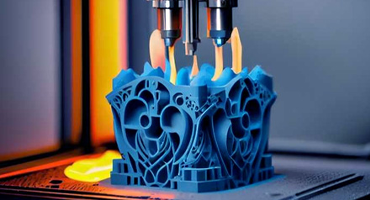
SLM, a type of additive manufacturing, uses a high-powered laser to fuse fine metal powders layer by layer, directly from a 3D CAD model. This process enables the production of fully dense, intricate metal parts that are often lighter, stronger, and more complex than their traditionally manufactured counterparts. For industries where weight reduction and performance optimization are paramount, SLM offers a clear competitive advantage.
What is Selective Laser Melting (SLM)? A Technical Overview
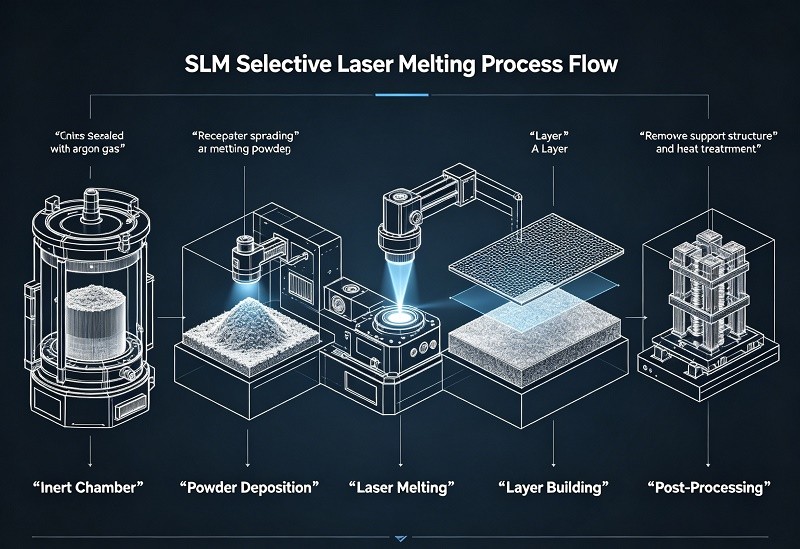
Selective Laser Melting is a powder bed fusion process that builds components from the ground up. The workflow begins with a thin layer of fine metal powder being spread across a build platform. A powerful laser, guided by a digital design file, then selectively melts and fuses the powder particles in specific areas. The platform lowers, a new layer of powder is applied, and the process repeats until the final, solid part is formed. The entire process occurs in a controlled chamber filled with inert gas to prevent oxidation, ensuring the part's metallurgical integrity.
This layer-by-layer approach is what gives SLM its incredible design freedom. Features that are impossible to create with subtractive methods, such as internal cooling channels, complex lattice structures, and topologically optimized shapes, become feasible with SLM.
Unlocking Performance: Key Benefits of SLM for Custom Parts
The adoption of SLM technology in demanding sectors like aerospace and automotive is driven by a range of significant benefits that directly impact performance, cost, and innovation.
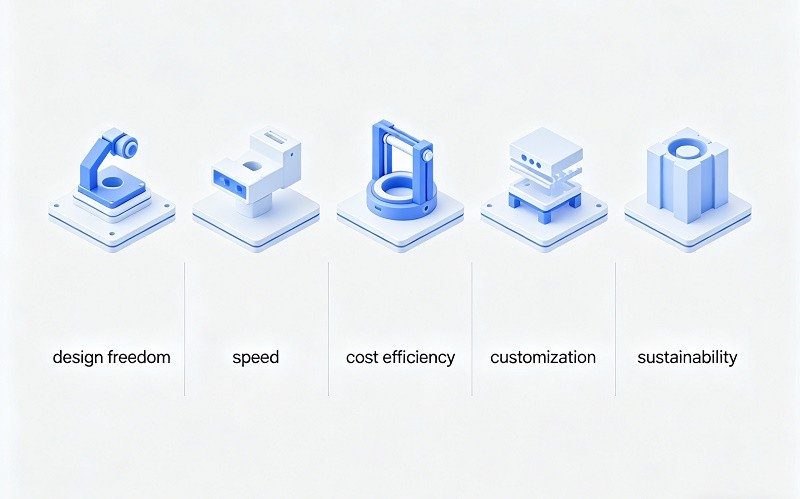
Design Freedom and Complexity
SLM removes many of the constraints imposed by traditional manufacturing. Engineers can design parts based on function and performance rather than manufacturability. This leads to the creation of highly optimized components with complex internal geometries and organic shapes that reduce weight while maintaining or even increasing strength.
Weight Reduction and Lightweighting
In both aerospace and automotive applications, reducing weight is critical for improving fuel efficiency. SLM excels at creating lightweight structures, such as hollow or lattice-filled parts, without compromising structural integrity. This can lead to significant fuel savings over the lifetime of an aircraft or vehicle.
Part Consolidation
Complex assemblies that traditionally require multiple components to be manufactured and then joined can often be redesigned and printed as a single, consolidated part using SLM. This reduces assembly time, simplifies the supply chain, eliminates potential points of failure, and can lead to a stronger, lighter final product.
Rapid Prototyping and Faster Iteration
SLM accelerates the product development cycle by enabling rapid prototyping of metal parts. Engineers can quickly move from design to a functional metal prototype, allowing for faster testing, validation, and design iteration. This agility means products can be brought to market faster and with greater confidence.
Material Efficiency and Reduced Waste
Unlike subtractive manufacturing, which can generates significant scrap material by carving parts from a solid block, SLM is an additive process that uses only the material needed to build the part. Unused powder can often be recycled for future builds, making SLM a more sustainable and cost-effective manufacturing method, especially when using high-value materials.
Material Choices: High-Performance Metals for SLM
The versatility of SLM extends to its wide range of compatible materials, allowing for the selection of the perfect alloy for specific application requirements.
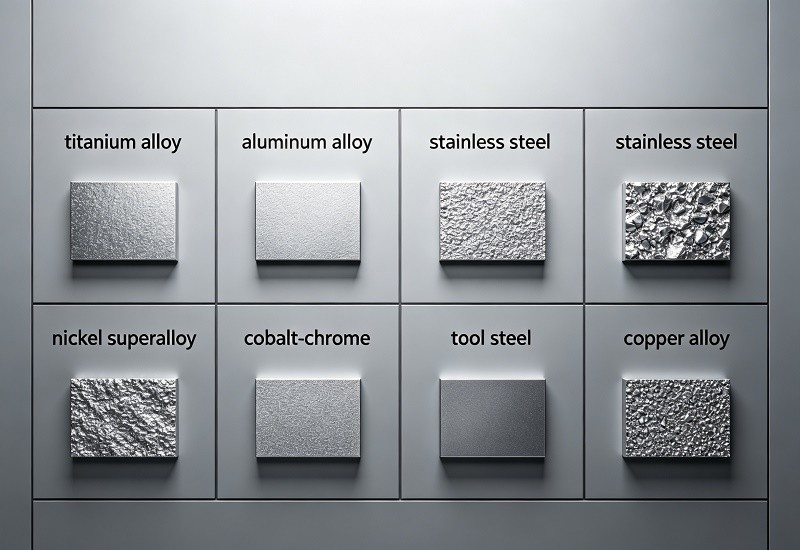
| Material | Key Properties | Common Applications |
|---|---|---|
| Titanium Alloys | High strength-to-weight ratio, corrosion resistance | Structural airframe components, landing gear, engine parts |
| Nickel Superalloys | Excellent high-temperature strength, corrosion resistance | Turbine blades, combustors, exhaust systems |
| Aluminum Alloys | Lightweight, good thermal conductivity | Heat exchangers, brackets, housings |
| Stainless Steels | High strength, corrosion resistant, durable | Jigs, fixtures, tooling, fluid-carrying components |
These materials, when processed with SLM, can produce parts with mechanical properties that are often comparable or superior to those made through casting or forging.
SLM in the Aerospace Industry: Reaching New Heights
The aerospace industry was an early adopter of SLM, leveraging the technology to produce flight-critical components that meet stringent safety and performance standards. Applications range from engine components like fuel nozzles and turbine blades with complex internal cooling channels to lightweight structural brackets and satellite components. By enabling these advanced designs, SLM helps create more fuel-efficient aircraft and more capable spacecraft.
SLM in the Automotive Industry: Accelerating Innovation
In the automotive world, SLM is used for everything from rapid prototyping of engine parts to the production of custom, high-performance components for luxury and racing vehicles. It allows manufacturers to create lightweight chassis components, customized interior elements, and efficient engine parts like pistons and housings. This technology is not just for high-end applications; it's also revolutionizing the production of jigs, fixtures, and tools, making assembly lines more efficient.
Partnering for Success: How to Choose a Custom SLM Parts Supplier
Selecting the right supplier is as critical as the technology itself. A good partner doesn't just print parts; they provide engineering expertise and quality assurance. When evaluating a potential custom SLM parts supplier, consider the following key factors:
Industry Experience and Expertise
Look for a supplier with proven experience in the aerospace or automotive sectors. They will understand the specific demands, material requirements, and safety standards of your industry. Their expertise can help you optimize your designs for additive manufacturing.
Quality Certifications and Compliance
A supplier's commitment to quality is non-negotiable. Certifications like AS9100 for aerospace and IATF 16949 for automotive are crucial indicators of a robust quality management system. These certifications ensure that processes for production, traceability, and inspection are standardized and reliable.
Technical Capabilities and Production Capacity
Assess the supplier's technical capabilities, including the range of machines, materials they offer, and their post-processing capabilities (like heat treatment and surface finishing). Ensure they have the production capacity to meet your project's timeline, from single prototypes to low-volume production runs.
Quality Control and Inspection Processes
Inquire about their quality control procedures. Do they use advanced inspection technologies like Coordinate Measuring Machines (CMMs) or 3D scanning? A reliable supplier will provide detailed inspection reports and can demonstrate full traceability of materials and processes.