Your Essential Guide to Modern Metal Welding Solutions and Techniques.
Welcome to our essential guide to modern metal welding solutions and techniques, where we'll explore the fascinating world of joining metals. Metal welding is a critical skill across many industries, from construction to aerospace, and is fundamental to the creation of over 50% of the U.S. gross national product. We're here to help you understand the core concepts and various methods available today, empowering you to tackle any project with confidence.
Exploring Fundamental Metal Welding Solutions
Welding is more than a trade; it's the backbone of modern civilization, a process that shapes, connects, and secures the metal that forms our world. Before diving into advanced techniques, it's crucial to grasp the foundational principles that make welding a unique and indispensable fabrication method. This section will introduce you to the core concepts of metal welding, its importance, and the basic techniques that every aspiring welder should know.
What is Metal Welding and Why is it Important?
At its core, welding is a fabrication process that joins materials—usually metals or thermoplastics—by using high heat to melt the parts together, allowing them to cool and fuse. Unlike lower-temperature methods like soldering or brazing which do not melt the base metal, welding creates a permanent, molecular-level bond by melting the parent materials. Often, a filler material is added to the joint to form a molten pool that cools into a weld, which can be even stronger than the original materials.
The importance of welding in modern society cannot be overstated. It is a foundational industrial process that ensures the safety, durability, and functionality of the infrastructure and products we rely on daily. Look around, and you'll see the impact of welding everywhere:
- Construction and Infrastructure: From the steel skeletons of skyscrapers and bridges to the pipelines that transport essential resources like oil and gas, welding provides the structural integrity needed for these massive structures to withstand immense stress and environmental factors.
- Automotive and Transportation: The automotive industry heavily relies on welding for fabricating vehicle frames, body panels, and exhaust systems, which is critical for both performance and passenger safety. In fact, nearly 95% of NASCAR racecars are hand-welded.
- Aerospace: In the aerospace sector, precision welding is used to create lightweight yet incredibly strong components for aircraft and spacecraft that must endure extreme conditions.
- Manufacturing: A vast array of manufactured goods, from household appliances and furniture to heavy industrial machinery, are assembled using various welding techniques, making it a cornerstone of modern production.
Ultimately, welding offers a high-strength, permanent joining method that mechanical fastening like bolting or riveting often cannot match, providing unparalleled design flexibility and durability.
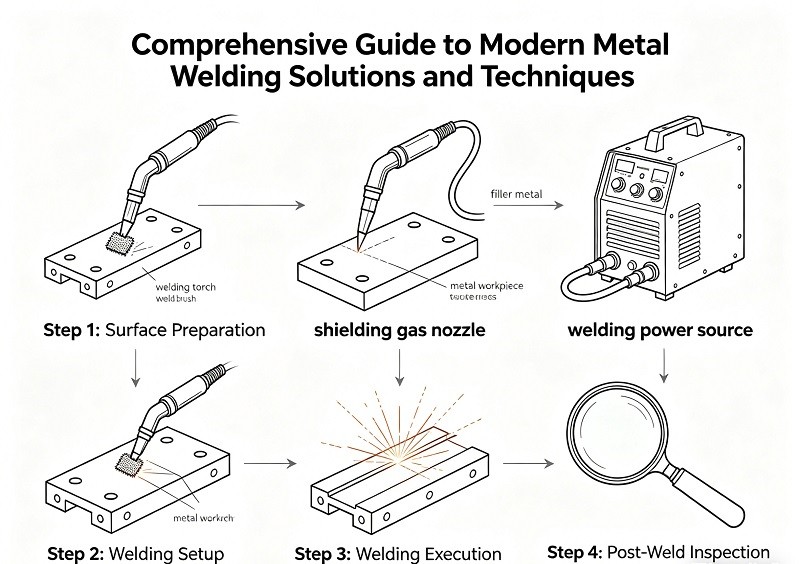
Basic Metal Welding Techniques: An Overview
While there are over 30 different types of welding, they can be broadly categorized into a few main processes. For beginners and many common applications, understanding gas and arc welding provides a solid foundation. These methods represent two different approaches to generating the intense heat required to create a strong weld.
Gas Welding: Precision and Portability
Gas welding, often called oxy-fuel or oxy-acetylene welding, is one of the oldest and most versatile welding processes. It operates by burning a mixture of a fuel gas (most commonly acetylene) and oxygen to produce a high-temperature flame, which can reach about 3,200°C (5,792°F). This highly concentrated flame is directed by a torch to melt the edges of the metal parts, creating a molten pool. As this pool cools and solidifies, it fuses the pieces into a single, strong joint.
Key Advantages:
- Portability: One of the greatest advantages of gas welding is its portability. Since it doesn't require electricity, a setup consisting of gas cylinders, regulators, hoses, and a torch can be used almost anywhere, making it ideal for fieldwork and remote repairs.
- Cost-Effectiveness: The initial equipment cost for gas welding is generally lower compared to many electric welding processes, making it accessible for hobbyists and small workshops.
- Versatility and Control: Gas welding is highly versatile and can be used to join a wide variety of ferrous and non-ferrous metals, including steel, copper, and aluminum. It offers excellent control over the heat input and the welding puddle, which is beneficial for welding thin materials, performing intricate repair work, and bridging gaps between parts.
- Simplicity: The process is relatively straightforward and easy to learn for beginners.
Limitations: Despite its benefits, gas welding has a slower heating and cooling rate compared to modern arc welding methods. This makes it less suitable for welding thick sections of metal or for high-volume production. Additionally, the large heat-affected zone can sometimes alter the mechanical properties of certain metals, and the lack of an automated shielding system makes the weld prone to defects if not performed carefully.
This technique remains highly relevant for specific applications such as sheet metal fabrication, automotive repairs, and in industries where its precision and portability are paramount.
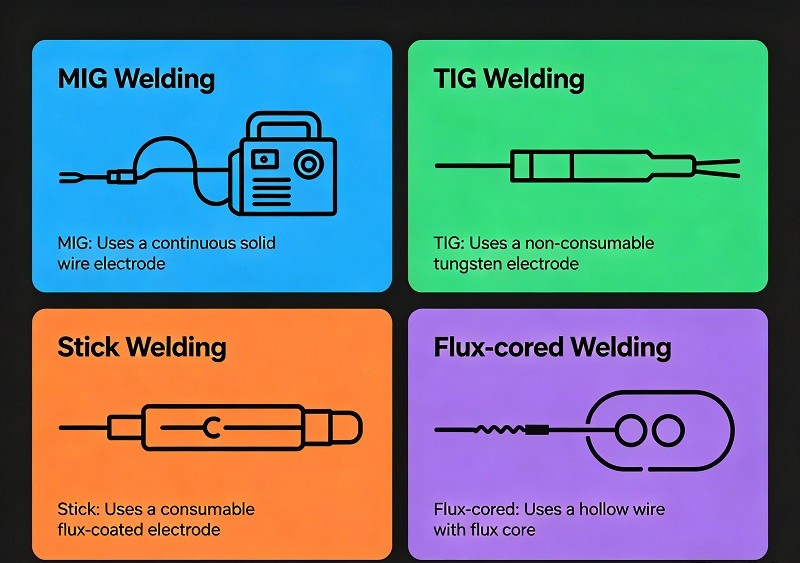
Arc Welding: Power for Structural Integrity
Arc welding encompasses a group of processes that use a power supply to create an electric arc between an electrode and the base metal to melt the metals at the joining point. This arc generates intense heat, with temperatures reaching from 5,000°C to 20,000°C (roughly 9,000°F to 36,000°F), which rapidly creates a molten weld pool. Due to its high heat, power, and efficiency, arc welding is fundamental to the construction, manufacturing, and repair industries, especially for creating strong, load-bearing joints.
Arc welding methods are broadly divided into two categories based on the type of electrode used:
Consumable Electrode Processes: In these methods, the electrode not only conducts the current to create the arc but also melts and becomes part of the weld, acting as the filler material. Common examples include:
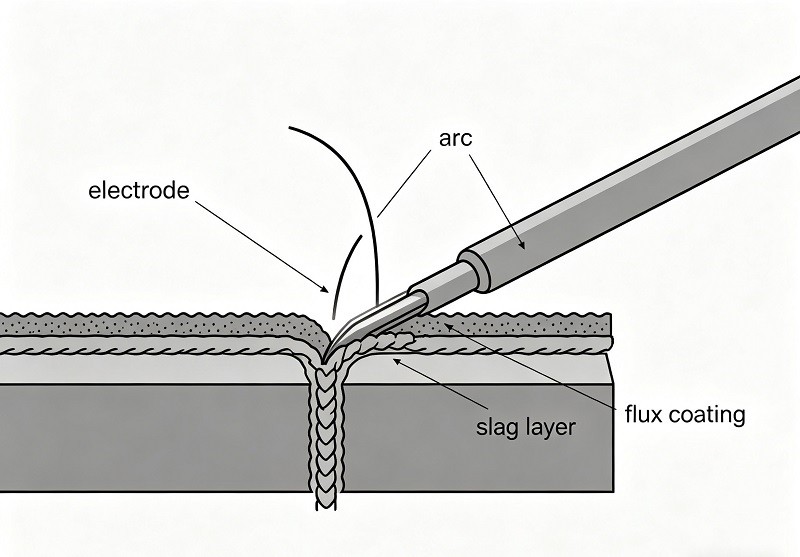
- Shielded Metal Arc Welding (SMAW): Also known as "stick welding," this is one of the most common and versatile methods. It uses a consumable electrode "stick" coated in flux, which melts during welding to produce a shielding gas that protects the weld pool from atmospheric contamination. SMAW is highly portable and effective outdoors or in windy conditions, making it a staple for structural steel construction, pipelines, and heavy equipment repair.
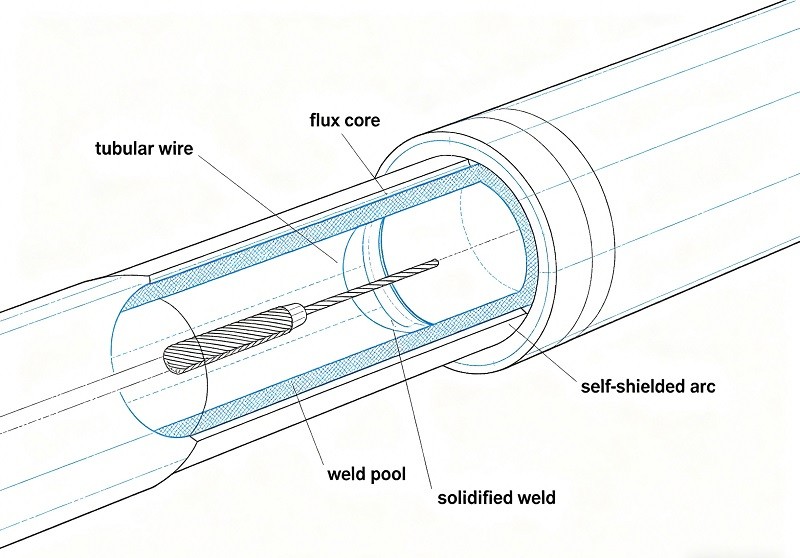
- Flux-Cored Arc Welding (FCAW): Similar to MIG welding, FCAW uses a continuously fed wire electrode. However, the wire is tubular and filled with flux. This flux creates a shielding gas (self-shielded FCAW-S) or is used in conjunction with an external shielding gas (gas-shielded FCAW-G) to protect the weld. FCAW is known for its high welding speed and deposition rates, making it excellent for welding thick materials in heavy fabrication and construction.
Non-Consumable Electrode Processes: These methods use an electrode that does not melt during the process. A separate filler rod is typically fed into the weld pool by hand. The most common example is Gas Tungsten Arc Welding (GTAW or TIG), which will be covered in a later section.
Arc welding's ability to produce deep-penetrating, high-strength welds makes it indispensable for applications where structural integrity is paramount. From the framework of buildings to the chassis of heavy machinery, the power of the electric arc ensures durable and reliable joints that form the backbone of our industrial world.
Developing Your Welding Skills: Courses and Training
Becoming a proficient welder is a journey that combines theoretical knowledge with extensive hands-on practice. Whether you aim to pursue welding as a career or a serious hobby, investing in formal education and certification is the most reliable path to success.
Formal Training and Education Paths
- Vocational Schools and Community Colleges: Many institutions offer welding programs that can range from a few months to two years. These programs provide a comprehensive education covering essential topics like blueprint reading, metallurgy, shop safety, and practical training in various welding processes (SMAW, MIG, TIG). Students benefit from a structured environment, experienced instructors, and access to professional-grade equipment.
- Welding Apprenticeships: An alternative to traditional schooling is a welding apprenticeship, which combines paid, on-the-job training with classroom instruction. Apprenticeships, which typically last 3-4 years, allow you to learn directly from experienced journeymen in a real-world work environment. The American Welding Society (AWS) and the U.S. Department of Labor have approved guidelines for registered apprenticeships, creating structured career pathways.
The Importance of Certification
While not always mandatory to start, certification is a crucial step for career advancement and proof of your skills. The American Welding Society (AWS) Certified Welder (CW) is the most widely recognized credential.
- How to Get Certified: The CW test is purely performance-based; there are no course prerequisites. You must schedule an exam at an AWS Accredited Test Facility (ATF), where your ability to produce a sound weld according to a specific code or standard (like AWS D1.1 for structural steel) is evaluated.
- Benefits of Certification: Holding a certification significantly enhances your job opportunities and earning potential. It demonstrates your competence to employers and opens doors to specialized, higher-paying roles in industries with specific standards, such as the American Petroleum Institute (API) for pipeline welding.
Continuous Skill Development
Welding is a trade that requires lifelong learning.
- Practice: Consistent practice across different materials, positions, and projects is key to refining your technique and building muscle memory.
- Mentorship: Learning from experienced welders and seeking constructive feedback provides invaluable insights that can't be found in textbooks.
- Advanced Training: As you progress, you can pursue advanced certifications like Certified Welding Inspector (CWI) or Supervisor (CWS) to move into leadership roles.
Committing to professional development ensures you stay current with industry trends, master new technologies, and build a successful and rewarding career in welding.
The Role of Acetylene in Metal Welding Solutions
In the realm of gas welding, acetylene reigns as the undisputed king of fuel gases. For over a century, the combination of oxygen and acetylene has been the standard for cutting, brazing, and welding, particularly with steel. Its effectiveness stems from a unique combination of high flame temperature and beneficial chemical properties.
Why is Acetylene the Premier Fuel Gas?
While other fuel gases like propane or hydrogen can be used, acetylene offers distinct advantages that make it superior for true fusion welding:
- Hottest Flame Temperature: When combined with pure oxygen, acetylene produces the hottest and most efficient flame of any commercial fuel gas, reaching temperatures of approximately 3,100-3,500°C (about 5,600-6,300°F). This intense heat allows for rapid, localized melting of the base metal, which is crucial for achieving deep penetration and strong welds, especially in steel.
- Heat Transfer Rate: Acetylene's flame has the highest rate of heat transfer, meaning it can bring the workpiece to its melting point faster than other gases. This efficiency saves time and reduces overall gas consumption.
- Reducing Atmosphere: When burned, the oxy-acetylene flame creates a "reducing" zone, which is an area that naturally cleans the surface of the metal by removing oxides, leading to a cleaner and more sound weld. Propane flames lack this characteristic, making them unsuitable for high-quality steel welding.
The Three Flame Types: A Welder's Control Panel
A key advantage of oxy-acetylene welding is the ability for the welder to precisely adjust the chemical properties of the flame by changing the ratio of oxygen to acetylene. This creates three distinct flame types for different applications:
Neutral Flame:
- Ratio: An approximately 1:1 ratio of oxygen to acetylene.
- Appearance: Characterized by a bright, well-defined inner cone and a larger, bluish outer envelope. It produces a hissing sound.
- Use: This is the most common and versatile flame. It has no chemical effect on the metal, making it ideal for welding mild steel, stainless steel, cast iron, and aluminum. The inner cone's tip, the hottest part of the flame, is used for melting the metal.
Carburizing (Reducing) Flame:
- Ratio: An excess of acetylene compared to oxygen.
- Appearance: Has three zones: the inner cone, a whitish "acetylene feather" extending beyond it, and the blue outer envelope. It is a quiet and smoky flame.
- Use: This flame introduces carbon into the weld pool, which can increase hardness. It's used for welding high-carbon steels and for hard-facing applications where a wear-resistant surface is desired. It should not be used on steels that would become brittle from absorbing carbon.
Oxidizing Flame:
- Ratio: An excess of oxygen compared to acetylene.
- Appearance: Has a short, pointed, and sometimes purplish inner cone and makes a distinct roaring sound. It is the hottest of the three flames.
- Use: The excess oxygen will "burn" or oxidize the metal, which is generally undesirable for steel. However, this flame is excellent for the braze-welding of materials like copper and brass, where the oxidizing effect helps in the process.
The ability to manipulate these flames gives a skilled welder exceptional control over the welding process, allowing for tailored solutions for a wide variety of metals and applications.
Advanced Metal Welding Solutions: Understanding MIG and TIG
As technology has progressed, arc welding has evolved into more sophisticated and specialized processes. Among the most prominent are Metal Inert Gas (MIG) and Tungsten Inert Gas (TIG) welding. These advanced solutions offer significant gains in speed, precision, and quality, making them staples in modern manufacturing and fabrication. Understanding their unique characteristics, applications, and differences is key to selecting the right tool for high-performance welding jobs.
MIG Welding: The Fast and Versatile Solution
MIG welding, or Gas Metal Arc Welding (GMAW), is a semi-automatic process that has become incredibly popular due to its speed, ease of use, and versatility. It's often the go-to method in production environments, auto body repair, and general fabrication for its ability to quickly lay down strong, high-quality welds with minimal cleanup.
How MIG Welding Works and Its Main Characteristics
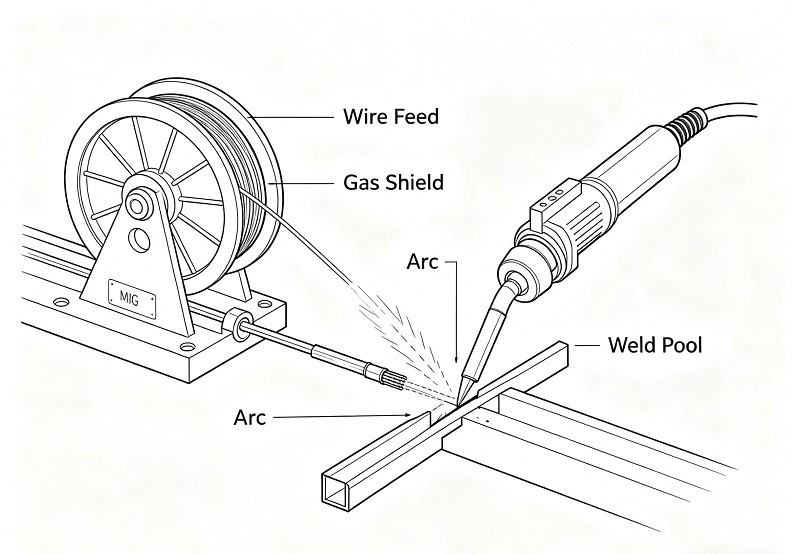
MIG welding is a gas metal arc welding (GMAW) process where an electric arc forms between a continuously fed consumable wire electrode and the workpiece. This arc melts both the wire and the base metal, fusing them together to form a strong joint. The entire process is automated: when the operator pulls the trigger on the MIG gun, the machine simultaneously starts feeding the wire, delivers the electrical current, and releases a flow of shielding gas.
Key Components and Process:
- Consumable Wire Electrode: A spool of solid metal wire is loaded into the welding machine. This wire acts as both the electrode to create the arc and the filler material for the joint. The process is semi-automatic because the wire feeds continuously at a preset speed, meaning the welder only needs to control the gun's position and travel speed.
- Shielding Gas: As the weld is created, the weld pool is vulnerable to contamination from oxygen and nitrogen in the atmosphere, which can cause defects like porosity and brittleness. To prevent this, a shielding gas (typically a mixture of argon and carbon dioxide) flows through the welding gun's nozzle, blanketing the molten metal and protecting it until it solidifies.
- Power Supply: MIG welding uses a constant voltage, direct current (DC) power source. This setup helps maintain a stable arc length even if the welder's hand moves slightly, making the process more forgiving and easier to learn.
Main Characteristics:
- Speed and Efficiency: Because the filler wire is fed continuously, welders can lay down long, uninterrupted welds much faster than with stick welding. This high deposition rate makes MIG welding extremely efficient for production work.
- Ease of Use: The semi-automatic nature of MIG welding—often described as a "point-and-shoot" process—makes it one of the easiest welding techniques to learn. The machine handles the wire feed, allowing beginners to focus on achieving a steady hand and consistent travel speed.
- Clean Welds: When set up correctly, MIG welding produces very little spatter and no slag, the hardened protective layer found in stick welding. This results in cleaner welds that require minimal post-weld cleanup, saving time and labor.
- Versatility: MIG welding can be used on a wide range of metals, including carbon steel, stainless steel, and aluminum, and is effective on materials from thin-gauge sheet metal to thick structural plates.
These characteristics combine to make MIG welding a dominant process in many industrial sectors where speed, efficiency, and consistent quality are top priorities.
Common Applications for MIG Metal Welding Solutions
Thanks to its speed, versatility, and relative ease of use, MIG welding is one of the most widely used welding processes across numerous industries. Its efficiency makes it the preferred method for both high-volume production and smaller-scale fabrication.
Here are some of the most common applications for MIG welding:
- Automotive Industry: This is perhaps the most well-known application. MIG welding is a workhorse in both automotive manufacturing and repair. It is used extensively for joining frame components, attaching body panels, and fabricating and repairing exhaust systems. The process is valued for its ability to produce strong, reliable welds on the relatively thin metals used in car bodies without causing distortion.
- Manufacturing and Production: MIG welding is a cornerstone of the manufacturing sector. Because of its high speed and the minimal cleanup required, it is ideal for assembly-line production. This includes everything from making home appliances and metal furniture to fabricating parts for heavy machinery. The process is also easily adapted for robotic automation, further boosting productivity in large-scale manufacturing.
- Construction and Metal Fabrication: In construction, MIG welding is used for the fabrication of structural steel components, such as beams and supports, in a shop environment. It's also used for creating metal assemblies like gates, railings, and fences. Its ability to weld a wide range of material thicknesses with good penetration makes it a versatile choice for general metal fabrication shops.
- Shipbuilding: The shipbuilding industry employs MIG welding for constructing ship hulls, decks, and other large structures. The process's high deposition rates are particularly advantageous for welding the thick steel plates used in maritime construction.
- Repair and Maintenance: The portability of smaller MIG welders and their ease of use make them a popular choice for general repair and maintenance tasks. It is frequently used in workshops, on farms, and even in home garages to repair cracks, fix damaged equipment, and restore the structural integrity of metal parts.
From building cars to constructing skyscrapers, the efficiency and adaptability of MIG welding make it an indispensable tool for joining metals in the modern world.
TIG Welding: Precision and Aesthetic Metal Welding Solutions
At the other end of the arc welding spectrum from the fast and furious MIG process lies Tungsten Inert Gas (TIG) welding, technically known as Gas Tungsten Arc Welding (GTAW). Renowned for its precision, control, and the beautiful, high-quality welds it produces, TIG welding is often considered an art form. It is the preferred method for applications where the aesthetic finish is just as important as the structural strength of the joint.
The Mechanics and Unique Traits of TIG Welding
TIG welding is an arc welding process that generates heat using an electric arc established between a non-consumable tungsten electrode and the workpiece. Tungsten is used because it has an extremely high melting point (3,410°C / 6,170°F), allowing it to sustain the arc without burning away.
How the Process Works:
- Non-Consumable Electrode: Unlike MIG welding, the tungsten electrode in the TIG torch does not melt or become part of the weld. Its sole purpose is to create a stable, precise arc.
- Manual Filler Metal Application: If additional material is needed to fill the joint, the welder manually feeds a separate filler rod into the molten weld puddle with their other hand. This two-handed technique is similar to oxy-acetylene welding and requires a high degree of skill and coordination. For some very tight-fitting joints, no filler metal is needed at all (an autogenous weld).
- Inert Shielding Gas: An inert gas, typically pure argon or sometimes a helium mix, flows through the torch to shield the tungsten electrode, the arc, and the molten weld pool from atmospheric contamination. This inert shield is critical for producing a pure, non-oxidized weld.
- Heat Control: A key feature of TIG welding is the exceptional control it offers the operator. Often, a foot pedal or a fingertip control on the torch is used to vary the welding amperage in real-time. This allows the welder to "soft start" the arc, precisely manage the heat input into the puddle, and gently cool the weld down, which is crucial for preventing cracks in sensitive alloys.
Unique Traits of TIG Welding:
- Exceptional Precision and Control: The stable arc and manual heat/filler control give the welder unparalleled command over the weld puddle. This makes it ideal for intricate work and welding very thin materials without burn-through.
- High-Quality, Aesthetic Welds: TIG welding is renowned for producing exceptionally clean, strong, and visually appealing welds. Since no flux is used and spatter is minimal to non-existent, the finished weld bead is smooth and requires little to no post-weld cleanup.
- Versatility with Metals: TIG welding can be used to join more metals and alloys than any other process, including carbon steel, stainless steel, aluminum, magnesium, nickel alloys, copper, brass, titanium, and even gold.
- High Skill Requirement: The need to manipulate the torch with one hand and feed the filler rod with the other, all while controlling the amperage with a foot pedal, makes TIG welding a complex process that is difficult to master.
- Slower Process: Due to its manual nature and lower deposition rates, TIG welding is significantly slower than processes like MIG or stick welding, making it less suitable for large-scale production.
These traits position TIG welding as the premier choice for applications where quality, precision, and appearance are non-negotiable.
Where TIG Welding Shines: Detailed Applications
The unique characteristics of TIG welding—unmatched precision, superior quality, and material versatility—make it the essential choice for a wide array of critical and high-value applications. While slower than other methods, it is indispensable in industries where failure is not an option and where aesthetic perfection is required.
Here are some of the key areas where TIG welding is the preferred solution:
- Aerospace and Aviation: This is one of the primary industries where TIG welding is dominant. It is used to weld critical components like aircraft frames, engine parts, and fuel systems made from lightweight, high-strength materials such as aluminum, titanium, and nickel alloys. The process provides the high-purity, defect-free welds necessary to ensure the safety and reliability of aircraft and spacecraft.
- Pipe and Tube Welding: TIG welding excels at creating strong, leak-free joints in piping and tubing. It is heavily used in the construction of pipelines for the oil and gas, chemical processing, and food and beverage industries. The smooth internal weld bead that can be achieved with TIF ensures there are no crevices to trap bacteria, a critical requirement for sanitary applications. The precision of TIG is also ideal for the thin-walled tubing found in bicycle frames and motorsport roll cages.
- Automotive Industry: While MIG welding handles much of the high-volume production, TIG welding is used for specialized tasks where precision and appearance are crucial. This includes custom exhaust systems, turbo kits, suspension components, and the repair of aluminum or magnesium parts. The high-end automotive and motorsport sectors rely on TIG for its ability to produce beautiful, strong welds on a variety of alloys.
- Art and Sculpture: The clean, aesthetically pleasing welds produced by the TIG process make it a favorite among metal artists and sculptors. It provides the control needed to create intricate designs and a fine finish that becomes part of the artwork itself, often requiring no grinding or cleanup.
- Repair and Tooling: Because TIG welding can join a vast range of metals and offers precise heat control, it is an excellent choice for repairing valuable tools, dies, and molds. A skilled welder can carefully build up worn or damaged areas with a matching filler metal, restoring the part to its original specifications.
- Medical and Nuclear Industries: In fields where quality and purity are of the utmost importance, such as in the manufacturing of medical devices or components for nuclear facilities, TIG welding is often the only acceptable method. It produces welds that are free from contamination and possess superior structural integrity.
In all these applications, the deliberate, skillful nature of TIG welding provides a level of quality that justifies the slower speed and higher cost associated with the process.
Comparing MIG vs. TIG: Choosing the Best Metal Welding Solution
Choosing between MIG (GMAW) and TIG (GTAW) welding is a critical decision that directly impacts a project's efficiency, cost, quality, and final appearance. While both are advanced arc welding processes that use a shielding gas, they are fundamentally different in their operation and are suited for very different tasks. There is no single "better" method; the best solution depends entirely on the specific demands of the job at hand.
Factors Influencing Your Choice: Material, Quality, and Volume
Making the right choice between MIG and TIG hinges on three primary factors: the material you are working with (especially its thickness), the required quality and appearance of the final weld, and the volume or speed of production required.
1. Material and Thickness:
- TIG Welding: Excels on thin materials. The precise heat control offered by the foot pedal allows welders to create strong joints on very thin-gauge metals without warping or burning through. TIG is the undisputed champion for materials under 3mm thick and for reactive or exotic metals like aluminum, magnesium, and titanium where weld purity is critical.
- MIG Welding: Is the powerhouse for thicker materials. Its high deposition rate and efficient heat transfer allow it to weld thick plates of steel and aluminum much faster than TIG. While MIG can be used on thinner materials, it lacks the delicate control of TIG and carries a higher risk of burn-through for beginners.
2. Weld Quality and Appearance:
- TIG Welding: This is the "beauty" process. TIG produces exceptionally clean, precise, and aesthetically pleasing welds with a characteristic "stack of dimes" appearance that is often left exposed as a mark of craftsmanship. With no spatter or slag, it requires minimal to no post-weld cleanup. For any project where appearance is paramount—from custom motorcycle frames to architectural metalwork—TIG is the superior choice.
- MIG Welding: While a skilled operator can produce a good-looking MIG weld, the process is generally prioritized for function and strength over beauty. MIG welds can have some spatter and are not as refined in appearance as TIG welds. If the joint will be ground down, painted, or hidden from view, the less-than-perfect appearance of a MIG weld is often acceptable.
3. Production Volume and Speed:
- MIG Welding: This is the "speed" process. The semi-automatic, continuous wire feed makes MIG welding significantly faster than TIG. Welders can lay down long, continuous beads without stopping, drastically increasing productivity and lowering labor costs. For high-volume manufacturing, fabrication shops, and any job where time is money, MIG is the go-to method.
- TIG Welding: This is a slow, deliberate process. The manual, two-handed technique requires more time and skill, making it unsuitable for high-production environments. The time spent creating one perfect TIG weld could be used to make several functional MIG welds.
Summary Comparison Table:
| Factor | MIG (GMAW) | TIG (GTAW) |
|---|---|---|
| Speed | Fast. Continuous wire feed enables high productivity. | Slow. Manual process requiring careful control. |
| Ease of Use | Easy to learn. "Point-and-shoot" operation. | Difficult to master. Requires two-handed coordination. |
| Material Thickness | Best for thicker materials (>3mm). | Best for thinner materials and delicate work. |
| Weld Quality | Good and strong, but functional. | Exceptional. High purity, strong, and precise. |
| Appearance | Functional. Can have spatter. Often requires cleanup. | Excellent. Clean, aesthetic "stack of dimes" look. No spatter. |
| Cost | Lower equipment and operational cost. | Higher equipment and operational cost. |
| Best For… | Production, manufacturing, thick sections, speed. | Precision, thin metals, aesthetics, exotic alloys. |
Ultimately, MIG is the workhorse for production and heavy fabrication, while TIG is the artist's tool for precision and beauty.
Strategic Choices for Metal Welding Solutions: Materials, Design, and Alternatives
Achieving a successful welded connection goes beyond just choosing the right process like MIG or TIG. It involves a holistic approach that considers the properties of the metal being joined, the thoughtful design of the weld joint itself, and an awareness of alternative joining methods. Strategic decisions in these areas are crucial for ensuring the final product is not only strong and durable but also cost-effective and fit for its intended purpose.
Mastering Weld Joint Designs for Robust Metal Welding Solutions
The design of the weld joint is as critical as the welding process itself. A properly designed joint ensures that the fused metal has the necessary strength to handle the stresses it will encounter during its service life. It dictates how the load is transferred between the two pieces of metal and is fundamental to achieving full penetration and creating a sound weld.
The Five Basic Weld Joint Types and Their Applications
The American Welding Society (AWS) recognizes five fundamental types of joints that form the basis of nearly all welded fabrications. Understanding their geometry and typical uses is essential for any welder.
Butt Joint:
- Description: A joint where two workpieces are placed in the same plane, with their edges meeting end-to-end. It's the most common joint used for fabricating structures and piping systems.
- Preparation: For thin materials (less than 1/8-inch), the edges can be left square. For thicker materials, the edges must be beveled (shaped) to create a V, U, or J-groove. This preparation allows the weld to penetrate the full thickness of the material, ensuring a strong connection.
- Application: Widely used for joining pipes, plates, and panels where a smooth, flush surface is desired, such as in pipelines, pressure vessels, and automotive body panels.
Lap Joint:
- Description: Formed when two pieces are placed in an overlapping pattern. The weld, typically a fillet weld, is then made at the edge where the two pieces intersect.
- Application: Very common in sheet metal work and for joining pieces of different thicknesses. While easy to prepare, lap joints can be susceptible to corrosion in the overlapping area. They are used in auto body repairs, HVAC ducting, and tanks.
Tee Joint (T-Joint):
- Description: Created when two pieces intersect at a 90-degree angle, forming a "T" shape. The edge of one piece is welded to the flat surface of the another. A T-joint is a type of fillet weld.
- Application: One of the most common joints, found extensively in structural fabrication. It is used to connect support beams, build frames for machinery, and in shipbuilding and general construction where strong, right-angled connections are needed. Welding on both sides of the "T" significantly increases its strength.
Corner Joint:
- Description: Similar to a T-joint, a corner joint is formed when two pieces meet at a right angle, but they form an "L" shape at a corner. They can be configured as an "open corner," where the outside corners touch, or a "closed corner," where one edge sits flush against the face of the other piece.
- Application: Commonly used in the construction of boxes, frames, tanks, and enclosures. It's a staple in the sheet metal industry for creating square frames and structures.
Edge Joint:
- Description: Formed by placing the edges of two (or more) pieces flush with each other and welding along the shared edge.
- Application: This joint is typically used for thinner sheet metals where the primary goal is to tie the pieces together rather than to bear a significant load. Applications include reinforcing flanges on beams and welding mufflers. The weld only goes on one side, making it weaker than other joints but sufficient for low-stress applications.
Why Proper Joint Design is Key to Strong Welds
A welded structure can only be as strong as its weakest point. A poor joint design, even when executed by a skilled welder with the best equipment, can create inherent weaknesses that lead to cracks or catastrophic failure under load. Proper joint design is therefore a non-negotiable aspect of safe and reliable fabrication.
Here are the key reasons why thoughtful joint design is crucial:
- Ensures Adequate Weld Penetration: The primary goal of a welded joint is to fuse the two pieces of metal completely. For materials thicker than a few millimeters, simply placing the edges together (a square butt joint) will not allow the welding arc to penetrate to the root of the joint. By beveling the edges to create a groove (like a V-groove), the welder gains access to the base of the joint, ensuring the first pass (the root pass) achieves full fusion. This creates a solid foundation for subsequent passes to fill the joint.
- Manages Heat and Distortion: Welding introduces a significant amount of localized heat, which causes the metal to expand and contract. This can lead to distortion, where the metal parts warp and move out of alignment. A well-designed joint, such as a double-V butt joint (beveled on both sides), allows the welder to alternate welding from side to side. This balanced application of heat helps to counteract the warping forces, minimizing distortion and maintaining the dimensional accuracy of the assembly.
- Controls Weld Strength and Cost: The design of the joint directly influences the amount of weld metal required to fill it. While a wider groove ensures good access and penetration, it also requires more filler metal and more time to weld, increasing costs. An optimized joint design provides just enough access for a sound weld without being excessively large. The goal is to create a joint that is as strong, or even stronger, than the base metal itself without unnecessary waste.
- Distributes Stress Effectively: A properly designed joint helps to distribute stress evenly across the weld area. Poorly designed joints, particularly those with sharp corners or incomplete fusion, can create stress concentration points. These are areas where stress can build up, acting like a tiny wedge that can initiate a crack and ultimately lead to the failure of the joint.
- Improves Accessibility: Different materials and welding processes have unique characteristics. For example, the molten weld metal of nickel-based alloys is more "sluggish" than steel and doesn't flow as easily. The joint design for such alloys must be wider to allow the welder to manipulate the electrode and place the weld bead precisely to ensure good fusion with the sidewalls.
In short, joint design is not merely about how the pieces fit together; it's a critical engineering step that dictates strength, durability, cost, and the overall success of the welding project.
Material-Specific Metal Welding Solutions
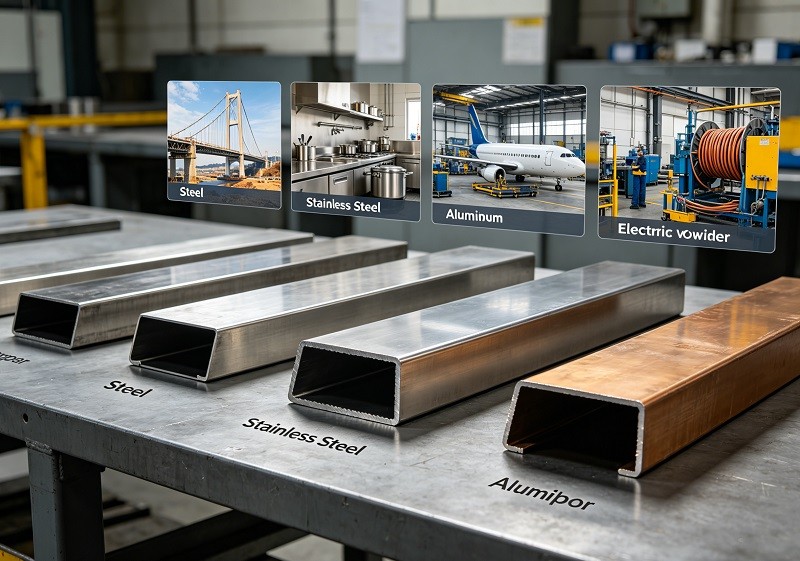
Different metals have unique chemical compositions, melting points, and thermal characteristics. As a result, a one-size-fits-all approach to welding is rarely effective. Successfully joining different materials requires a tailored strategy that accounts for their specific properties. This includes choosing the right welding process, selecting the appropriate filler material and shielding gas, and using specific techniques to manage heat and prevent defects.
Welding Stainless Steel: A Practical Guide
Stainless steel is prized for its corrosion resistance and strength, making it a popular choice for applications ranging from kitchen equipment to architectural fixtures. However, welding stainless steel presents unique challenges compared to carbon steel. Its physical properties—namely, low thermal conductivity and high thermal expansion—require careful technique to avoid defects.
Key Challenges in Welding Stainless Steel:
- Distortion (Warping): Stainless steel does not dissipate heat well. This causes heat to concentrate in the weld zone, leading to significant expansion. As the weld cools, the metal contracts, which can cause the material to warp or distort, especially on thin sheets.
- Heat Tint and Loss of Corrosion Resistance: The very property that makes stainless steel "stainless" is a thin, invisible layer of chromium oxide on its surface. When overheated during welding, the chromium can react with oxygen and form a visible "heat tint" (a colored oxide layer). More critically, excessive heat can cause a phenomenon called carbide precipitation, where chromium is drawn out of the metal, depleting its corrosion resistance near the weld.
- Contamination: Stainless steel is highly sensitive to contamination, especially from carbon steel. Using tools (like grinders or wire brushes) that have been used on plain steel can embed iron particles into the stainless surface, leading to rust.
Practical Guide and Best Practices:
Choose the Right Process:
- TIG Welding: This is the preferred method for high-quality, precise, and aesthetic welds, especially on thin stainless steel. It offers the best control over heat input, minimizing distortion and preserving the material's properties.
- MIG Welding: Faster than TIG, MIG is great for thicker sections and production work. Using a pulsed MIG machine provides better heat control, which is highly beneficial for stainless steel.
Meticulous Preparation and Cleaning:
- Dedicated Tools: Always use tools (wire brushes, grinding wheels) that are designated for stainless steel only to prevent cross-contamination from carbon steel.
- Thorough Cleaning: Before welding, clean the joint area with a degreaser or solvent like acetone to remove any oils, grease, or other contaminants. This is a non-negotiable step for achieving a quality weld.
Select the Correct Consumables:
- Filler Metal: Match the filler metal to the grade of stainless steel you are welding. For example, use an ER308L rod or wire for welding 304 or 304L stainless steel. If in doubt, a higher-alloy filler like ER309L can often be used to join dissimilar metals.
- Shielding Gas: For TIG welding, 100% argon is standard. For MIG welding, a tri-mix gas (typically 90% Helium, 7.5% Argon, and 2.5% CO2) is highly recommended over standard carbon steel mixes to ensure a stable arc and protect the weld's corrosion resistance.
Control Your Heat Input:
- Move Quickly: Use a consistent and relatively fast travel speed to avoid lingering in one spot and overheating the material. The goal is to get in and get out while achieving proper fusion.
- Tack Welds and Clamping: Use plenty of tack welds to hold the pieces firmly in place. Clamping the workpiece to a copper or aluminum backing bar can act as a "heat sink," drawing excess heat away from the weld zone and reducing warping.
- Let It Cool: Allow the weld to cool naturally. Never quench a hot stainless steel weld in water, as this can cause cracking.
Use Proper Technique:
- Push, Don't Pull: When MIG welding, use a "push" technique (angling the torch forward in the direction of travel). This provides better gas coverage and a cleaner weld.
- Back Purging: For critical welds on pipes or enclosed shapes, shielding the back of the weld with argon gas (back purging) is essential to prevent oxidation (known as "sugaring") on the inside, which would compromise corrosion resistance.
By following these practices, you can overcome the challenges of welding stainless steel and produce strong, durable, and corrosion-resistant joints.
Challenges and Solutions for Welding Aluminum and Other Metals
Welding Aluminum
Aluminum is a popular material due to its light weight and corrosion resistance, but it is notoriously difficult to weld. Several unique properties create challenges that require specific solutions:
Oxide Layer: Aluminum instantly forms a tough, transparent layer of aluminum oxide when exposed to air. This oxide layer melts at a much higher temperature (around 2,072°C or 3,762°F) than the aluminum itself (around 660°C or 1,220°F).
- Challenge: If this oxide layer is not removed, it will prevent the molten aluminum from fusing properly, resulting in a weak, contaminated weld. Attempting to simply burn through it with more heat will melt and burn away the base metal underneath before the oxide breaks down.
- Solution: The oxide layer must be dealt with in two ways. First, it should be mechanically removed right before welding using a dedicated stainless steel wire brush (one used only for aluminum to prevent contamination). Second, the welding process itself must have a "cleaning action." For TIG welding, this is achieved by using an AC (alternating current) setting, which breaks up the oxide layer during part of its cycle.
High Thermal Conductivity: Aluminum conducts heat very rapidly, about 3 to 5 times faster than steel.
- Challenge: The heat from the welding arc is quickly wicked away from the joint, making it difficult to establish and maintain a molten weld puddle. This can lead to a lack of fusion or incomplete penetration. Conversely, once the whole piece heats up, its low melting point makes it highly susceptible to overheating, distortion, and burn-through.
- Solution: Higher amperage and faster travel speeds are required to concentrate the heat at the joint. Preheating thicker sections of aluminum can help achieve better penetration. For TIG welding, using a foot pedal to precisely control the amperage in real-time is crucial to manage the heat as the workpiece gets hotter.
Porosity: Molten aluminum readily absorbs hydrogen, which is released as the metal solidifies.
- Challenge: This escaping hydrogen gets trapped as tiny bubbles within the weld, creating porosity. Porosity significantly weakens the joint. Hydrogen can come from moisture in the air or on the surface of the filler rod or base metal.
- Solution: All materials—base metal and filler rods—must be stored in a dry place and be impeccably clean. Use 100% pure argon as a shielding gas to protect the weld from atmospheric moisture. Do not weave the torch; use a direct "stringer" bead to minimize contamination.
Welding Other Non-Ferrous Metals
- Copper: Like aluminum, copper has very high thermal conductivity, which makes it difficult to maintain heat at the joint. It requires significant preheating and high heat input during welding. The heat of welding can also anneal the copper, reducing any strength it gained from cold working.
- Titanium: Titanium is highly reactive with oxygen, nitrogen, and hydrogen at welding temperatures.
- Challenge: Exposure to air during welding will cause embrittlement, leading to a weak and brittle joint.
- Solution: Exceptional shielding is required. This often means using a TIG torch with a large gas lens to provide a wide blanket of argon, as well as a "trailing shield" that continues to protect the weld bead as it cools. For the highest quality welds, back purging the inside of the joint with argon is also necessary.
Innovative Alternatives and Design for Metal Welding Solutions
While welding is a dominant method for joining metals, it's not always the only or best solution. The field of material joining is constantly evolving, with innovative alternatives offering unique advantages in certain scenarios. Furthermore, designing components with the joining method in mind from the outset—a practice known as Design for Manufacturing (DFM)—can dramatically improve the quality, efficiency, and cost-effectiveness of the final product.
Beyond Traditional Welding: Exploring Other Joining Methods
Welding creates a powerful metallurgical bond by melting the base metals, but it's not the only way to join metal components. Several alternative methods exist, each with its own set of advantages, particularly for applications involving dissimilar materials, heat-sensitive components, or where a permanent bond is not desired.
1. Brazing and Soldering:
- How They Work: Both brazing and soldering are thermal processes that join metals using a filler material that is melted and flows into the joint via capillary action. Crucially, the base metals themselves are not melted. The filler metal simply bonds to the surfaces of the workpieces.
- The Difference: The primary distinction is temperature. Brazing occurs at temperatures above 450°C (840°F), while soldering occurs below this temperature.
- Advantages over Welding:
- Joining Dissimilar Metals: Because the base metals aren't melted, it's easy to join materials with vastly different melting points, such as copper to steel.
- Less Thermal Stress: The lower temperatures significantly reduce the risk of heat distortion, warping, and changes to the base metal's properties, making these methods ideal for delicate parts or heat-treated components.
- Cleaner Finish: Brazed and soldered joints are typically very neat and require little to no finishing.
- Limitation: The resulting joints are not as strong as welded joints and are generally not suitable for high-stress, structural applications.
2. Structural Adhesives:
- How They Work: Modern structural adhesives, such as two-part epoxies and acrylics, create a powerful chemical bond between surfaces. These are not ordinary glues; high-performance structural adhesives can create bonds that rival or even exceed the strength of mechanical fasteners in certain applications.
- Advantages over Welding:
- Joins Any Material: Adhesives can bond virtually any material to another, including metals, plastics, and composites (like carbon fiber), which cannot be welded.
- No Heat Distortion: As it is a cold process, there is zero risk of heat-related damage.
- Even Stress Distribution: Adhesives distribute stress over the entire bonded area, unlike the concentrated stress points found in bolts or spot welds. This can improve fatigue resistance.
- Invisible Bond Lines: They provide a clean, aesthetically pleasing finish with no visible fasteners.
- Limitation: The joint strength is highly dependent on surface preparation. Surfaces must be impeccably clean for the adhesive to bond effectively. Cure time is also a factor.
3. Mechanical Fasteners:
- How They Work: This broad category includes all forms of non-permanent and permanent fasteners, such as nuts and bolts, screws, and rivets. They create a mechanical lock between two or more parts.
- Advantages over Welding:
- Disassembly: Most mechanical fasteners (bolts and screws) allow for easy disassembly for maintenance or repair.
- No Heat Required: The process doesn't involve heat, eliminating concerns about distortion or metallurgical changes.
- Simplicity and Speed: Fastening with bolts or screws is a quick and simple process that requires minimal specialized skill.
- Limitations: Fasteners create stress points at each hole. Over time, vibrations can cause them to loosen. They also add weight and do not provide the continuous, sealed joint of a weld or adhesive bond.
4. Clinching:
- How It Works: Clinching is a cold-forming process that joins sheet metals by creating a mechanical interlock. A punch and die are used to draw the metals and form them into a strong, localized button-like joint.
- Advantages Over Welding:
- Extremely Fast and Energy Efficient: The process is entirely mechanical and takes only a fraction of a second, with very low energy consumption.
- Joins Dissimilar and Coated Metals: Clinching can easily join dissimilar metals (e.g., aluminum to steel) and pre-painted or coated materials without damaging the surface finish.
- No Fumes or Sparks: It is a clean and safe process.
- Limitation: The joint strength is generally less than that of a spot weld, and it is limited to sheet metal applications.
The best joining method is always the one that best fits the specific requirements of the project, balancing the need for strength, appearance, material compatibility, production speed, and cost.
Designing Components with Welding in Mind
Designing a component is not just about its final function; it's about making it manufacturable. When welding is the chosen joining process, integrating Design for Manufacturing (DFM) principles from the very beginning can drastically reduce costs, improve weld quality, and speed up production. This means considering how a part will be welded long before it reaches the shop floor.
Here are key principles for designing weld-friendly components:
Simplify the Design and Reduce Part Count: Every individual part in an assembly adds cost through material, handling, and labor. Where possible, use bends and forms to create features rather than welding on separate pieces. A simpler design with fewer parts and fewer welds is almost always cheaper and faster to produce.
Ensure Weld Accessibility: This is one of the most critical considerations. A welder needs to be able to physically reach the joint with the welding torch at the correct angle. Designing joints in tight, inaccessible corners makes welding difficult, if not impossible, and often results in poor-quality welds. Always visualize the welding process and ensure there is adequate clearance for the torch and the welder's hands.
Design for Material Thickness: Try to keep the thicknesses of the metals being joined as similar as possible. Welding a very thin piece of metal to a very thick one is challenging because the heat required to melt the thick piece will often burn through and destroy the thin piece.
Incorporate Self-Fixturing Features: One of the most time-consuming parts of welding is setting up and clamping the components in the correct position. By designing in features like tabs and slots, parts can be interlocked, which automatically aligns them and holds them in place. This greatly reduces the need for complex fixtures and jigs, speeds up assembly, and ensures accuracy.
Minimize Weld Size and Length: Do not "over-weld." Specifying larger or longer welds than are structurally necessary wastes filler material, increases labor time, and introduces more heat into the part, which increases the risk of distortion. Use intermittent or "stitch" welds instead of continuous welds for applications that are not subject to high stress or do not need to be leak-proof.
Plan for Distortion: Since welding heat will inevitably cause some material movement, a good design anticipates this. Allowing for a certain amount of distortion and planning for it is often more cost-effective than trying to eliminate it completely with complex fixtures and weld sequences.
Choose the Right Joint: The choice of joint (butt, lap, tee, etc.) should be deliberate. For example, using lap joints can simplify fit-up problems and avoid the cost of beveling edges, which is often required for butt joints on thicker material.
By thinking like a fabricator during the design phase, engineers can create parts that are not only functional but also efficient to produce, leading to higher quality weldments at a lower overall cost.
Ensuring Excellence in Your Metal Welding Solutions: Quality and Safety
Successfully joining metals is only half the battle. True excellence in welding is achieved when the final product is not only strong and functional but was also created in a manner that prioritizes the quality of the weld and the safety of the welder. Neglecting either of these crucial elements can lead to catastrophic failures, costly rework, and serious personal injury. Adhering to proven best practices and stringent safety protocols is the hallmark of a professional and responsible welding operation.
Achieving High-Quality Welds: Techniques and Best Practices
A high-quality weld is one that is strong, uniform, and free of defects. Achieving this requires more than just running a bead along a joint; it's a systematic process that begins before the arc is ever struck and continues after the weld has cooled. By following established best practices, welders can consistently produce joints that meet or exceed strength and appearance requirements.
1. Meticulous Pre-Weld Preparation: This is arguably the most critical and often overlooked step. The foundation of a quality weld is a clean surface.
- Remove All Contaminants: Before welding, the joint area must be completely free of any foreign material, including rust, mill scale, paint, oil, grease, and moisture. These contaminants will vaporize in the intense heat of the arc and get trapped in the weld pool, causing defects like porosity (gas pockets) and cracking.
- Proper Cleaning Methods: Use a wire brush (dedicated to the specific metal type to avoid cross-contamination), grinder, or chemical solvent like acetone to thoroughly clean the surfaces.
2. Correct Equipment and Parameter Setup: Your welding machine and consumables must be appropriate for the job.
- Choose the Right Process: As discussed, MIG is ideal for speed and thicker materials, while TIG excels in precision and thin materials.
- Set Correct Parameters: Voltage, amperage (wire feed speed in MIG), and polarity must be set according to the material type, thickness, and welding position. Incorrect settings can lead to a host of problems, such as incomplete fusion (too cold) or burn-through (too hot). Always refer to a welding procedure specification (WPS) or machine chart, and fine-tune on a scrap piece.
- Select Proper Consumables: The filler metal (rod or wire) must be compatible with the base metal to ensure a strong metallurgical bond. The shielding gas and its flow rate are also critical for protecting the weld from atmospheric contamination.
3. Master Proper Welding Technique: Consistent operator technique is vital for a uniform weld. Key elements include:
- Travel Speed: Moving too fast results in a narrow, weak bead with poor fusion. Moving too slow introduces excessive heat, which can cause burn-through and warping. A steady, consistent pace is essential.
- Torch/Electrode Angle: The angle of the torch in relation to the joint—known as the work angle and travel angle—affects bead shape and penetration. A push angle is generally used for MIG, while a drag angle is common for stick welding.
- Arc Length: Maintaining a consistent, short arc length provides a more focused arc, better penetration, and greater control over the weld puddle.
4. Control Heat Input and Distortion: Welding generates intense heat, which can cause metal to warp.
- Use Tack Welds: Firmly tack weld the components at several points along the joint before beginning the final weld.
- Utilize Clamps and Jigs: Use strong clamping or fixtures to hold the parts securely in place and resist movement during welding and cooling.
- Weld in Segments: For long joints, welding in shorter segments and alternating sides can help distribute heat more evenly and minimize distortion.
5. Post-Weld Cleaning and Inspection: Once the weld is complete, the job isn't finished.
- Clean Between Passes: For multi-pass welds, it is absolutely essential to remove all slag (the glassy coating left by stick or flux-cored welding) before laying the next bead. Trapped slag is a serious defect that creates a weak spot in the weld.
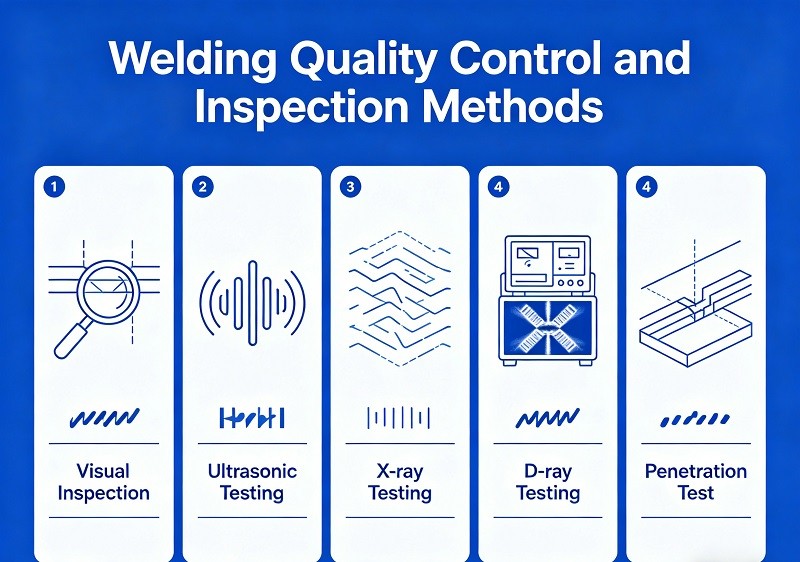
- Visual Inspection: A good weld should be uniform in width, have a consistent ripple pattern, and blend smoothly into the base metal with no signs of undercutting, cracks, or surface porosity.
By diligently following these best practices, from preparation to inspection, welders can ensure the creation of high-quality, defect-free welds that are both strong and reliable.
Safety Protocols for All Metal Welding Solutions
Welding is an inherently hazardous process that exposes operators to a combination of intense heat, high-voltage electricity, harmful radiation, and toxic fumes. Adhering to strict safety protocols is not just a matter of compliance; it is a fundamental requirement for protecting oneself and others from serious injury or long-term health problems. A safe welder is an effective welder, and safety should always be the top priority in any welding environment.
Understanding the Hazards and Preventative Measures
At the heart of welding safety is a thorough understanding of the potential dangers. Each hazard has a corresponding set of preventative measures that, when followed diligently, can significantly mitigate risk.
1. Personal Protective Equipment (PPE): The First Line of Defense
PPE is non-negotiable and serves as a barrier between the welder and various hazards. Essential PPE includes:
- Welding Helmet: This is one of the most critical pieces of safety gear. It protects the face and eyes from the intense ultraviolet (UV) and infrared (IR) radiation of the arc, which can cause severe "arc eye" or "welder's flash"—a painful condition akin to a sunburn on the cornea. It also shields against sparks and hot spatter. Helmets with an appropriate auto-darkening filter shade are highly recommended.
- Flame-Resistant Clothing: Welders must wear durable, flame-resistant clothing to protect their skin from UV radiation, sparks, and heat. Natural fibers like heavyweight cotton or leather are preferred, as synthetic materials like polyester can melt and cause severe burns. This includes long-sleeved jackets, aprons, and full-length pants without cuffs (which can catch sparks).
- Welding Gloves: Heavy-duty, flame-resistant gloves, typically made of leather, are essential to protect the hands and lower arms from heat, burns, cuts, and electric shock.
- Safety Glasses and Boots: Safety glasses with side shields should always be worn under the welding helmet for protection from flying debris when grinding or chipping slag. Steel-toed leather boots protect the feet from falling objects and sparks.
2. Electric Shock
Arc welding involves a live electrical circuit, making electric shock a serious and immediate risk that can be fatal.
- Hazard: Electric shock occurs when a welder touches two metal objects with a voltage between them, becoming part of the electrical circuit. This risk is greatly increased in wet or damp conditions.
- Prevention:
- Always inspect equipment, cables, and electrode holders for damage before use.
- Wear dry, insulated welding gloves and rubber-soled boots.
- Never weld in wet conditions or while standing in water.
- Keep the work area dry and insulated from the ground if necessary.
- Never touch the metal parts of the electrode holder with bare skin or wet clothing.
3. Fire and Explosions
The intense heat and sparks from welding can easily ignite flammable materials. Sparks can travel up to 35 feet from the work area.
- Hazard: Welding near combustible materials like wood, paper, solvents, or flammable gases poses a significant fire risk.
- Prevention:
- Inspect the work area and remove all flammable materials within a 35-foot radius.
- If materials cannot be moved, cover them with fire-resistant blankets.
- Keep a suitable fire extinguisher (Class ABC) nearby and know how to use it.
- Never weld on or near closed containers, tanks, or drums that have held flammable substances, as residual vapors can explode.
By understanding these hazards and consistently applying the proper preventative measures—especially the use of PPE—welders can create a safe working environment.
The Importance of Proper Ventilation and Equipment
Beyond the immediate dangers of heat and electricity, welding creates an environment filled with airborne hazards that pose significant long-term health risks. The "smoke" generated by welding is a complex mixture of fine metallic particles (fumes) and gases that can be highly toxic. Proper ventilation and well-maintained equipment are critical for controlling these invisible dangers.
Welding Fumes: An Invisible Threat
Welding fumes are generated as the metal and consumables are vaporized by the intense heat of the arc. The composition of the fume depends on the welding process, the base metal, any coatings (like paint or galvanizing), and the filler materials used. These fumes can contain a cocktail of hazardous substances, including oxides of chromium, nickel, manganese, and aluminum.
- Health Hazards: Short-term exposure to these fumes can cause eye, nose, and throat irritation, dizziness, and nausea. A common acute illness is "metal fume fever," which presents with flu-like symptoms. Long-term exposure, however, is far more dangerous and has been linked to serious respiratory illnesses, including pneumonia, occupational asthma, and various forms of cancer.
Ventilation: The Solution to Air-Borne Contaminants
The single most effective way to protect against welding fumes is to ensure they are removed from the welder's breathing zone.
- Best Practice - Local Exhaust Ventilation (LEV): The preferred method for indoor welding is LEV, which captures fumes at their source before they have a chance to spread. This can include:
- Extracted Benches: Downdraft tables that pull fumes downward away from the operator.
- Movable Fume Extractors: Flexible arms with a hood that can be positioned directly over the weld.
- On-Torch Extraction: A system built into the welding torch itself that vacuums fumes away at the point of generation.
- General Ventilation: In large, open workshops, effective general ventilation that creates a steady flow of fresh air can help disperse fumes. However, this is generally not sufficient on its own for regular welding operations and should be seen as a secondary measure.
- Respiratory Protective Equipment (RPE): When adequate ventilation cannot be achieved (e.g., during outdoor work or in confined spaces), welders must use appropriate respiratory protection. A powered air-purifying respirator (PAPR) that integrates with the welding helmet is an excellent option, as it provides a constant flow of filtered air.
Equipment Inspection and Maintenance
Faulty equipment is a leading cause of welding accidents. Regular inspection and maintenance are essential safety protocols.
- Before Each Use: Conduct a quick visual inspection of all equipment. Check for:
- Damaged Cables: Look for frayed or cracked insulation on power cables, which poses an electrical shock hazard.
- Leaky Hoses: Inspect gas hoses for leaks or damage that could compromise shielding gas coverage and create a fire hazard.
- Worn Consumables: Check that welding torches, electrode holders, and ground clamps are in good condition. Damaged equipment can lead to poor electrical connections, overheating, and erratic arcs.
- Qualified Repairs: Only qualified technicians should service or repair welding equipment. Never attempt to modify or repair a machine without proper training.
A commitment to providing excellent ventilation and maintaining equipment in top condition is a critical investment in the long-term health and safety of every welder.
Conclusion
We've journeyed through the diverse landscape of metal welding solutions, from fundamental techniques like gas and arc welding to the precision of TIG and the speed of MIG. We explored how the right joint design is critical for strength and how different materials, like stainless steel and aluminum, demand their own unique approaches. Most importantly, we've emphasized that achieving high-quality welds goes hand-in-hand with uncompromising safety standards, from using the correct PPE to ensuring proper ventilation.
The right metal welding solution depends on your project's unique needs, balancing factors of material, thickness, speed, and desired finish. We hope this guide has equipped you with the knowledge to make informed decisions and appreciate the art and science of metal joining. Whether you are a hobbyist embarking on your first project or a professional fabricator refining your skills, the principles of careful preparation, precise technique, and a safety-first mindset are the keys to success. Now, go forth and create strong, beautiful, and lasting connections. We encourage you to share this guide with fellow makers and continue the conversation on building a better, safer, and more skilled welding community.