Why a Skilled CNC Turned Parts Supplier is Crucial for Medical Devices
In the rapidly evolving medical device industry, precision and reliability are not just desirable—they are absolutely essential. The quality of every component directly impacts performance, safety, and ultimately, patient outcomes. In a field where the smallest miscalculation can have life-altering consequences, the manufacturing process for medical components demands the highest standards of accuracy. This is because medical devices, from surgical tools to life-sustaining implants, must function flawlessly and safely under real-world conditions.
This is why the selection of a skilled CNC Turned Parts Supplier becomes a critical strategic decision. Choosing the right partner means ensuring that every part meets the stringent specifications required for medical applications, avoiding costly delays, and maintaining the highest standards of quality. A strategic partnership with a reliable supplier is key to navigating the complex regulatory landscape and building a resilient supply chain for critical medical devices. Ultimately, the right supplier does more than just manufacture a part; they become an integral part of the innovation and safety that defines modern healthcare.
Prioritizing Expertise and Advanced Capabilities in Your CNC Turned Parts Supplier
When sourcing components for medical devices, the supplier's expertise and technological capabilities are paramount. The medical field demands an unparalleled level of quality and precision, and only a supplier with a deep understanding of these requirements can be considered a true partner. This involves not only having the right machinery but also the institutional knowledge to handle the unique challenges of medical manufacturing, from material science to regulatory compliance.
Deep Understanding of Medical Device Requirements
A proficient supplier for the medical industry does more than simply machine parts to a print. They possess a comprehensive understanding of what makes a medical component successful: biocompatibility, sterilization resilience, and flawless performance in critical situations. This expertise is foundational, ensuring that every part, no matter how small, contributes positively to the device's overall safety and efficacy.
Experience with Challenging Materials and Tolerances
The success of medical devices often hinges on components machined from materials that are notoriously difficult to work with. A top-tier CNC supplier must demonstrate mastery over these materials and the ability to hold extremely tight tolerances.
Expertise in Medical-Grade Materials: The choice of material is critical for biocompatibility, strength, and sterilization resistance. A proficient supplier has extensive experience with a range of medical-grade materials, including:
- Titanium and its alloys (e.g., Ti-6Al-4V): Valued for their high strength-to-weight ratio, excellent corrosion resistance, and biocompatibility, titanium alloys are a top choice for orthopedic and dental implants. Their strength and low thermal conductivity, however, make them challenging to machine, often causing rapid tool wear.
- Stainless Steel (e.g., 316L, 17-4 PH): Widely used for surgical instruments and some implants due to its corrosion resistance, durability, and ability to be easily sterilized. However, certain grades can work-harden during the machining process, requiring specialized knowledge to manage.
- PEEK (Polyetheretherketone): A high-performance polymer increasingly used as a metal replacement in spinal cages, cranial implants, and other applications. Its benefits include a bone-like stiffness which can reduce stress shielding, and radiolucency, which allows for clear post-operative imaging with X-rays or MRI. However, PEEK is difficult to machine due to its poor thermal conductivity, which can lead to localized melting or warping if not managed properly.
- Advanced Plastics and Polymers (e.g., Radel, Ultem, Delrin): These materials are chosen for their lightweight properties, chemical resistance, and suitability for disposable devices or components in diagnostic equipment. Machining these requires specific techniques to avoid melting, deformation, and residual stress.
Achieving Ultra-Tight Tolerances: In medical device manufacturing, precision is not just a goal; it's a safety requirement. Minor deviations in dimensions can compromise functionality, leading to device failure or patient harm. For critical components like orthopedic implant interfaces or parts for surgical robots, tolerances can be as tight as ±0.0001 inches (2.54 micrometers). A skilled supplier uses advanced CNC machinery and rigorous quality control to consistently achieve these specifications. This capability is crucial for:
- Surgical Instruments: Tools like scalpels, forceps, and retractors demand perfect form and balance to ensure they perform reliably in a surgeon's hands.
- Implants: Parts like hip replacements or bone screws must fit a patient's anatomy perfectly to avoid pain, rejection, or the need for revision surgery.
- Diagnostic Equipment: The accuracy of MRI machines, CT scanners, and lab equipment depends on the ultra-precise components within them.
A supplier's experience is evident in their ability to discuss the specific challenges of each material—like managing heat in PEEK or controlling tool wear with titanium—and how their processes overcome them to deliver parts that are not only dimensionally accurate but also retain the material's intended biocompatible properties.
Advanced Machining Technology and Versatility
The complexity and miniaturization of modern medical devices demand more than just standard machining. A leading supplier invests in advanced technology that provides the versatility needed to produce intricate components efficiently and accurately. This technological edge enables innovation and supports the entire product lifecycle, from prototyping to full-scale production.
Multi-Axis Machining and Cleanroom Support
To meet the evolving demands of the medical industry, suppliers must offer both sophisticated machining capabilities and controlled environments for assembly and packaging.
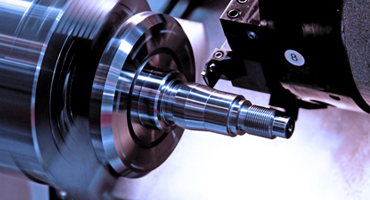
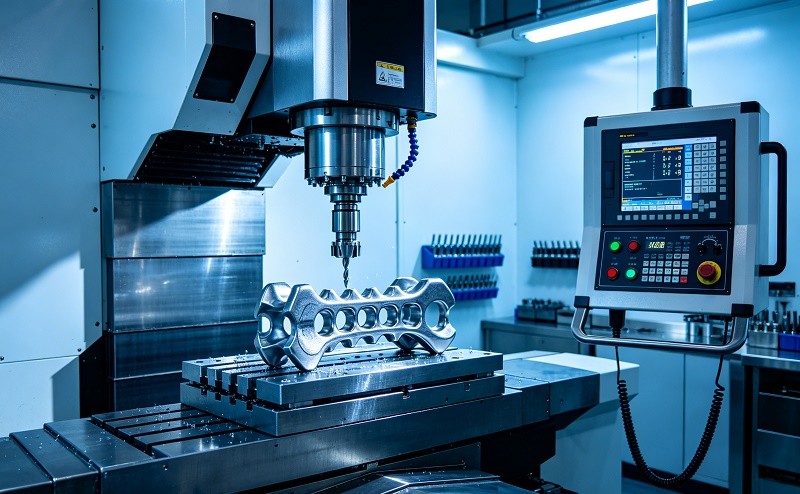
The Power of Multi-Axis Machining: Modern medical devices often feature complex, organic shapes and intricate features that are difficult or impossible to create with traditional 3-axis machines. This is where multi-axis CNC machining, particularly 5-axis technology, becomes essential.
- What is 5-Axis Machining? Unlike 3-axis machines that move along the X, Y, and Z linear axes, 5-axis machines add two rotational axes. This allows the cutting tool to approach a workpiece from multiple angles in a single setup.
- Key Advantages for Medical Devices:
- Complex Geometries: Enables the manufacturing of anatomically accurate orthopedic implants, custom prosthetics, and advanced surgical instruments with curved surfaces and deep undercuts.
- Higher Precision: By machining a part in a single setup, the risk of error from repositioning the workpiece is eliminated, leading to tighter tolerances and greater accuracy.
- Improved Surface Finish: The tool can be kept tangent to the cutting surface, resulting in a smoother finish. This is critical for implants, where surface quality can affect biocompatibility and wear.
- Efficiency: Consolidating operations into one setup significantly reduces lead times and a supplier's ability to handle high-mix, low-volume production effectively.
A supplier equipped with 5-axis capabilities can produce highly sophisticated parts like spinal fusion cages, complex surgical tools, and custom-fit implants with unmatched precision and efficiency.
The Necessity of Cleanroom Support: For many medical devices, the manufacturing process doesn't end when the part comes off the machine. Components that are implantable, come into contact with patients, or require sterilization must be handled in a controlled environment to prevent contamination.
- What is a Cleanroom? A cleanroom is a specially engineered space where airborne contaminants like dust, microbes, and aerosol particles are strictly controlled and monitored. They are classified by cleanliness level, with ISO Class 7 and ISO Class 8 being common for medical device assembly.
- Why It's Crucial:
- Patient Safety: Prevents contamination that could lead to infections, device malfunction, or rejection by the body.
- Regulatory Compliance: Meets stringent FDA and ISO requirements for manufacturing sterile or high-risk devices.
- Product Integrity: Ensures that sensitive components are assembled, cleaned, and packaged without being compromised by environmental factors.
A supplier offering integrated cleanroom services—including assembly, ultrasonic cleaning, solvent bonding, and sterile packaging—provides a seamless, single-source solution. This eliminates the logistical challenges and contamination risks of moving parts between a machine shop and a separate cleanroom facility, ensuring a validated, end-to-end manufacturing process.
Customization and Design for Manufacturability (DFM) Support
The best suppliers act as strategic partners, not just parts producers. They offer crucial support during the design and development phase, ensuring that components are not only functional but also optimized for efficient, cost-effective, and reliable production. This collaborative approach is key to accelerating timelines and mitigating manufacturing risks.
Enabling Customization for Patient-Specific Solutions: The trend towards personalized medicine is driving the need for custom and patient-specific medical devices. From orthopedic implants fitted to a patient's unique anatomy to specialized surgical tools for novel procedures, the ability to produce one-off or small-batch custom components is essential.
A proficient CNC supplier facilitates this by:
- Rapid Prototyping: Using CNC machining to create functional prototypes from production-grade materials, allowing engineers and clinicians to test and refine designs quickly.
- Flexibility in Production: Having the processes and technology to seamlessly switch from prototyping to small-batch or full-scale production without significant tooling changes.
- Direct Collaboration: Working closely with a medical device company's design team to translate complex requirements, such as those derived from a patient's CT scan, into a finished, high-precision part.
The Strategic Value of Design for Manufacturability (DFM): DFM is a proactive engineering practice where a product is designed for ease of manufacturing. A supplier with strong DFM expertise provides invaluable feedback early in the design process, which can prevent costly and time-consuming problems down the line. Key benefits of early DFM collaboration include:
- Cost Reduction: By simplifying geometries, standardizing components, and optimizing material usage, DFM can significantly lower a part's production cost.
- Improved Quality and Consistency: Feedback from a manufacturer helps align design tolerances with machine capabilities, reducing the risk of errors and improving the repeatability of the manufacturing process.
- Faster Time-to-Market: Early identification of potential manufacturing issues minimizes the need for late-stage design revisions, which are a common cause of project delays.
- Risk Mitigation: A DFM review can flag design features that might be difficult to machine, inspect, or that could compromise the part's integrity, allowing for adjustments before production begins.
Examples of DFM in Action: A skilled CNC supplier might suggest:
- Modifying a sharp internal corner to include a radius, which accommodates the shape of a cutting tool and reduces stress concentration.
- Changing a tolerance on a non-critical feature from very tight to a standard one, significantly reducing machining time and cost without affecting performance.
- Providing feedback on a material selection that, while functional, could be replaced by a more easily machinable and equally effective alternative.
By partnering with a CNC supplier that offers robust customization and DFM support, medical device manufacturers gain a strategic advantage. This collaboration ensures a seamless transition from concept to commercialization, resulting in higher-quality products that are brought to market faster and more economically.
Demonstrating Proven Quality Management
In the medical device industry, quality is not optional. A supplier's commitment to quality must be embedded in their culture and validated by internationally recognized standards and robust internal processes. This provides objective proof that they can consistently meet the stringent demands of medical applications.
Essential Certifications (ISO 9001, ISO 13485)
Formal certifications serve as an independent validation of a supplier's quality management system (QMS). For medical device manufacturing, certain certifications are not just beneficial—they are often a prerequisite for doing business.
ISO 13485: The Gold Standard for Medical Devices ISO 13485 is the internationally recognized standard for a QMS specific to the medical device industry. It is designed for organizations involved in the design, production, installation, and servicing of medical devices. Holding this certification is crucial because it demonstrates that a supplier's processes are built around safety, risk management, and regulatory compliance.
Key aspects of ISO 13485 include stringent requirements for:
- Risk Management: Integrating risk management activities throughout the product lifecycle.
- Traceability: Maintaining detailed records that allow every component to be traced from its raw material source to the final device.
- Process Validation: Ensuring that manufacturing processes consistently produce products that meet predetermined specifications.
- Regulatory Compliance: Aligning the QMS with the regulatory requirements of major markets, such as the FDA's Quality Management System Regulation (QMSR) in the U.S. and the EU's Medical Device Regulation (MDR).
Regulatory bodies like the FDA and Health Canada increasingly expect suppliers in the medical device supply chain to be ISO 13485 certified, making it a critical factor in supplier selection.
ISO 9001: The Foundation of Quality Management ISO 9001 is a more general standard for quality management that can apply to any industry. It provides the foundational principles for a structured QMS, focusing on customer satisfaction, process-driven operations, and continual improvement. While ISO 13485 is more specific to the medical field, ISO 9001 certification indicates a strong, underlying commitment to quality. For a CNC machining supplier, ISO 9001 ensures they have established, documented processes for production control, inspection, and corrective actions. Many suppliers build their ISO 13485 system upon their existing ISO 9001 framework.
A Note on AS9100 While the outline mentions AS9100, it's important to clarify its relevance. AS9100 is the quality management standard for the aerospace and defense industries. It builds on ISO 9001 with additional requirements for product safety, configuration management, and counterfeit part prevention. Although a supplier with AS9100 certification demonstrates a commitment to high-stakes quality and traceability, ISO 13485 is the more relevant and direct certification for medical device components. An AS9100 certification can be a positive indicator of a supplier's capabilities, but it is not a substitute for ISO 13485.
When evaluating a CNC turned parts supplier, verifying their ISO 13485 certification is a non-negotiable step. It provides the assurance that they have the systems in place to manage the unique risks and regulatory demands of producing components for medical devices.
Robust In-house Quality Control and Inspection (CMM, Material Traceability)
Beyond external certifications, a supplier's internal quality control (QC) procedures are what guarantee the precision and reliability of every part they produce. A robust in-house QC system is a clear indicator of a supplier's commitment to excellence and their ability to mitigate risks.
Advanced Inspection with Coordinate Measuring Machines (CMM): Visual inspection is not enough for the micron-level precision required in medical devices. A top-tier supplier invests in advanced metrology equipment, with the Coordinate Measuring Machine (CMM) being a cornerstone of modern quality assurance.
- How CMMs Work: A CMM uses a highly sensitive probe to take precise measurements of a part's geometric characteristics in three dimensions (X, Y, and Z). This data is then compared directly to the original CAD model or engineering drawing to verify conformity.
- Benefits in Medical Manufacturing:
- Unmatched Accuracy: CMMs can measure features with extreme precision, ensuring that complex parts like orthopedic implants or surgical instruments meet their critical specifications.
- Quality Documentation: The process generates detailed inspection reports, which provide objective, traceable evidence of a part's dimensional accuracy. This documentation is vital for regulatory submissions and audits.
- Efficiency and Repeatability: Automated CMMs can inspect parts much faster and more consistently than manual methods, reducing bottlenecks and ensuring that every part in a production run is checked against the same standard.
Using CMMs allows a supplier to identify and correct any deviations from the design early in the process, ensuring consistent quality and preventing defective parts from reaching the supply chain.
The Critical Importance of Material Traceability: In the medical field, knowing the exact origin and journey of every material is a non-negotiable safety requirement. Material traceability is the systematic process of tracking all components and raw materials from their source through the entire manufacturing process to the final product.
- Why It's Essential:
- Ensuring Biocompatibility: Guarantees that the specified medical-grade materials, free from contaminants, were used.
- Regulatory Compliance: ISO 13485 and FDA regulations mandate strict traceability. A robust system provides the necessary documentation to prove compliance.
- Rapid Recall Management: In the event of a material defect or component failure, a strong traceability system allows a manufacturer to quickly identify and isolate all affected batches, minimizing patient risk and the scope of a recall.
A competent supplier's traceability framework should include:
- Assigning a unique lot or batch number to all incoming raw materials.
- Documenting which material lot was used for each specific production run.
- Retaining all material certifications and inspection records.
- Clearly labeling finished parts or batches to link them back to their production and material history.
A supplier with a rigorous in-house QC program, including advanced CMM inspection and comprehensive material traceability, demonstrates a deep understanding of the risks involved in medical device manufacturing and has the systems in place to manage them effectively.
Ensuring Reliability and Responsive Support from Your CNC Turned Parts Supplier
Choosing a supplier is not just a one-time transaction; it is the beginning of a long-term relationship. Beyond technical skill and quality systems, a supplier's reliability, communication, and commitment to support are crucial for the success of any medical device project. A truly valuable partner acts as an extension of your own team, proactively managing timelines and taking accountability for their work.
Transparent Communication and Timely Delivery
In the fast-paced medical device industry, delays can be costly, disrupting product launches and impacting patient access to critical technologies. A reliable supplier understands this and builds their processes around clear communication and a commitment to on-time delivery.
Managing Lead Times and Production Schedules
The total time it takes to get a finished part—the lead time—is influenced by many factors, including material procurement, engineering review, machine setup, machining time, and any required secondary processes like anodizing or heat treatment. Delays in any of these stages can have a cascading effect on a project.
A skilled supplier manages lead times proactively through:
- Effective Production Scheduling: Utilizing advanced scheduling software and processes to optimize machine utilization and workflow. This involves analyzing current capacity, prioritizing jobs based on urgency and complexity, and accurately estimating the time required for each step. Companies using software-driven scheduling can see a significant reduction in lead times, sometimes by as much as 25%.
- Strategic Material Planning: A common cause of delay is waiting for specialty raw materials. A proactive supplier works with clients to forecast material needs and may even maintain a strategic inventory of commonly used medical-grade metals and plastics to shorten procurement times.
- Realistic Forecasting: An experienced supplier breaks down the total lead time into its core components (e.g., programming, machining, inspection, finishing) to provide a realistic and reliable delivery date from the outset. This transparency allows medical device companies to build accurate project timelines.
Clear Communication on Project Updates and Potential Delays
Even with the best planning, unforeseen issues can arise. A machine can break down, a raw material delivery can be late, or a part may reveal unexpected complexity during manufacturing. In these moments, the quality of a supplier's communication is what sets them apart.
A reliable partner is defined by:
- Proactive Updates: They don't wait for you to ask for a status report. A good supplier provides regular updates on the progress of your order, giving you visibility into the production process.
- Honesty and Transparency: If a delay occurs, they inform you immediately. They explain the cause of the problem, what they are doing to resolve it, and provide a revised timeline. This honesty allows you to adjust your own plans accordingly and fosters trust.
- Collaborative Problem-Solving: A true partner involves you in finding solutions. They might suggest alternative materials or minor design tweaks that could get the project back on track without compromising quality.
In an industry where time is critical, a supplier who masters scheduling and communicates transparently is an invaluable asset. They provide not just components, but also the predictability and reliability needed to navigate the complex path of medical device development and manufacturing.
Strong After-Sales Support and Accountability
The relationship with a supplier doesn't end upon delivery. For complex medical components, the ability to address issues after the fact, provide comprehensive documentation, and commit to a long-term partnership is just as crucial as the initial manufacturing quality. This post-delivery support is a hallmark of a truly accountable and reliable supplier.
Handling Defects, Rework, and Inspection Documentation
Even in the most controlled manufacturing environments, nonconforming parts can occasionally occur. How a supplier manages these instances is a true test of their commitment to quality and accountability.
Structured Process for Rework and Nonconformance: A top-tier supplier does not simply scrap a defective part and start over without analysis. They have a documented and rigorous process for handling nonconformities, which is a key requirement of quality standards like ISO 13485. This process includes:
- Identification and Segregation: Immediately identifying a nonconforming part and moving it to a quarantine area to prevent it from accidentally entering the supply chain.
- Root Cause Analysis: Investigating why the defect occurred. Was it due to tool wear, a programming error, or a material issue? Understanding the root cause is crucial for preventing a recurrence.
- Disposition: A formal review to decide the fate of the part. Options may include scrapping it, repairing it, or reworking it to bring it into compliance with specifications.
- Rework Procedure: For parts that can be salvaged, a formal rework procedure must be established and documented. According to FDA regulations, rework is an action taken on a nonconforming product to ensure it fulfills the specified requirements before it is distributed. This process must include re-testing and re-evaluation to verify that the part meets its original specifications and that the rework did not adversely affect its integrity.
- Documentation: All rework activities, including the analysis and re-inspection results, must be thoroughly documented in the Device History Record (DHR).
A supplier who treats defects as a learning opportunity to improve their processes is far more reliable than one who simply hides mistakes.
The Importance of Inspection Documentation: The paperwork that accompanies your parts is nearly as important as the parts themselves. Comprehensive documentation provides a clear, traceable record of quality and is essential for regulatory compliance.
When you receive a shipment, you should expect:
- Material Certifications: Documents from the raw material supplier that certify the material type, lot number, and compliance with specified standards (e.g., ASTM or ISO).
- Certificate of Conformance (CoC): A document from the CNC supplier stating that the parts were manufactured and inspected according to your drawings and specifications.
- Inspection Reports: Detailed data from quality checks, including First Article Inspection (FAI) reports and CMM data. These reports provide objective proof that the parts meet dimensional and tolerance requirements.
This documentation serves as evidence of compliance during FDA audits and is a critical component of your device's historical record, ensuring accountability at every step of the supply chain.
Commitment to Long-Term Partnership
The most successful relationships between medical device manufacturers and their suppliers are not transactional; they are strategic partnerships built on trust, collaboration, and a shared vision. A supplier who is committed to a long-term partnership will invest time and resources to understand your products, challenges, and business goals.
This commitment is demonstrated through:
- Proactive Collaboration: Engaging early in the design process to provide DFM feedback, suggesting innovative solutions, and helping to solve complex manufacturing challenges.
- Shared Goals: Aligning their success with yours. A true partner understands that delivering high-quality, reliable components on time directly contributes to your ability to launch innovative products and improve patient care.
- Investment in the Relationship: Regular communication, willingness to adapt to changing needs, and a focus on continuous improvement are all signs of a supplier who sees you as more than just a customer.
- Strategic Sourcing: For the medical device OEM, this means moving beyond a purely cost-based selection process and developing system-wide relationships with preferred suppliers. This leads to better pricing through volume, reduced administrative overhead, and opportunities for collaborative innovation.
Ultimately, a supplier who is accountable for their work and invested in a long-term partnership becomes a vital part of your ecosystem. They provide not just parts, but also the reliability, expertise, and support needed to thrive in the demanding and highly regulated medical device industry.
Strategic Location and Logistical Advantages
In today's volatile global supply chain, the geographical location of your CNC supplier can have a significant impact on lead times, communication, quality control, and overall project risk. While offshoring can sometimes seem attractive from a cost perspective, partnering with a domestic supplier offers numerous strategic advantages that often outweigh any initial price differences.
Benefits of Working with a Domestic CNC Turned Parts Supplier
Choosing to partner with a domestic CNC supplier—one located within your own country—offers powerful advantages for medical device manufacturing. This strategy, often referred to as "reshoring" or "nearshoring," helps mitigate many of the risks and hidden costs associated with overseas suppliers.
1. Enhanced Supply Chain Resilience and Reduced Lead Times Global supply chains are vulnerable to a host of disruptions, including geopolitical tensions, natural disasters, and pandemics. Sourcing components from overseas often involves long transit times (45-60 days is not uncommon), customs delays, and the risk of port congestion.
- Key Advantage: A domestic supplier dramatically shortens the supply chain. Shipping is reduced from weeks to mere days, providing faster, more predictable deliveries. This allows for just-in-time manufacturing, reduces the need for large buffer inventories, and enhances your ability to respond quickly to market changes.
2. Improved Communication and Collaboration Working with a supplier in a different time zone can create significant communication hurdles. A simple question can lead to a 24-hour delay in response, slowing down problem-solving and decision-making.
- Key Advantage: A domestic partner operates in the same or a similar time zone, enabling real-time collaboration. Engineering teams can communicate seamlessly, resolving issues quickly and accelerating development cycles. Site visits and in-person audits are far easier to arrange, fostering a stronger, more transparent relationship.
3. Stronger Quality Control and Regulatory Alignment While many overseas suppliers are competent, ensuring consistent quality and regulatory compliance from a distance can be challenging. Domestic suppliers operate under the same stringent regulatory bodies, such as the FDA.
- Key Advantage: Domestic manufacturers have a deep, inherent understanding of local regulatory standards. This alignment reduces compliance risks and simplifies the audit process. Direct oversight is more feasible, allowing for tighter control over the entire manufacturing process, from raw material sourcing to final inspection.
4. Greater Intellectual Property (IP) Protection For innovative medical devices, protecting your intellectual property is paramount. Sourcing from some overseas locations can carry a higher risk of IP theft and reverse engineering, with limited legal recourse.
- Key Advantage: Working with a U.S.-based supplier provides the robust legal protection of U.S. patent and IP laws. Enforceable Non-Disclosure Agreements (NDAs) and secure IT infrastructures provide greater peace of mind that your proprietary designs are safe.
5. Total Cost of Ownership vs. Price per Part The lower price-per-part of an overseas supplier can be misleading. When considering the total cost of ownership, factors like high shipping costs, import tariffs, travel expenses for audits, and the cost of managing a complex, long-distance supply chain can quickly erode initial savings.
- Key Advantage: Domestic sourcing provides greater cost predictability. It can also improve cash flow, as payment terms are often more favorable (e.g., Net 30 after delivery) compared to the upfront payments frequently required by overseas suppliers.
By choosing a skilled domestic CNC turned parts supplier, medical device manufacturers can build a more resilient, responsive, and secure supply chain, ultimately gaining a powerful competitive advantage.

Conclusion
Ultimately, choosing the ideal CNC Turned Parts Supplier for medical devices is a decision that extends far beyond just comparing prices. It's about securing a partner who deeply understands your needs and consistently delivers on quality and precision. This strategic choice influences everything from product performance and regulatory compliance to your ability to innovate and respond to market demands. A supplier is not merely a vendor but a critical extension of your own development and manufacturing ecosystem.
By diligently evaluating a supplier's expertise, technological capabilities, quality systems, and commitment to support, we ensure that every component contributes to the success and safety of critical medical applications, fostering innovation and reliability in the healthcare industry. When patient safety is on the line, the integrity of your supply chain is paramount. Investing in a strong, transparent, and collaborative partnership with a skilled CNC supplier is an investment in the quality of your product and the well-being of the patients who depend on it.
We encourage you to share this article with your colleagues and discuss how your current supplier relationships align with these critical principles. Taking a strategic, holistic approach to supplier selection is fundamental to building a resilient and successful medical device enterprise.