What is Custom Sheet Metal Fabrication? An Essential Guide to Precision Parts
Have you ever wondered how complex metal parts, from intricate medical components to robust aerospace pieces, are made with such perfect precision? We're diving into the world of Custom Sheet Metal Fabrication, a professional manufacturing process that creates exact metal parts for specific needs.
This guide is your essential roadmap to understanding how Custom Sheet Metal Fabrication delivers tailored solutions, ensuring every component meets unique structural, functional, and environmental demands. It's all about making sure you get exactly what you need, every time.
Join us as we explore the advantages of this specialized approach, from material selection to advanced engineering methods, and discover why it's crucial for projects demanding the highest quality and durability.
Understanding What Custom Sheet Metal Fabrication Really Is
Custom sheet metal fabrication is far more than a simple production method; it's a sophisticated engineering discipline dedicated to transforming flat sheets of metal into precise, three-dimensional structures designed for a specific purpose. Unlike mass-produced, off-the-shelf components, every custom part is conceived and built to solve a unique challenge, fitting perfectly within a larger assembly and performing its function flawlessly. This bespoke process is the backbone of innovation across countless industries, enabling the creation of parts that would be impossible to source otherwise.
At its heart, custom fabrication is about control—complete control over the material, the dimensions, the tolerances, and the final finish. It bridges the gap between a digital design and a physical, high-performance component. This journey from concept to reality involves a meticulous sequence of design, cutting, forming, and assembly, all guided by expert engineers and executed with state-of-the-art technology. It ensures that the final product not only looks right but also withstands its operational environment, whether that’s the intense vibration of an aircraft engine, the sterile conditions of a medical lab, or the corrosive atmosphere of a marine setting.
More Than Just Cutting Metal: A Tailored Approach
Thinking of sheet metal fabrication as merely cutting metal is like thinking of architecture as just laying bricks. The reality is a deeply integrated process where every step is tailored to the project's specific requirements. It begins not on the factory floor, but on a computer screen, where engineers collaborate with clients to translate an idea into a detailed, manufacturable design. This tailored approach is what separates custom fabrication from generic production, ensuring that every angle, curve, and connection serves a deliberate purpose.
This customization is essential for innovation and efficiency. It allows for the optimization of a part's weight, strength, and functionality while minimizing waste and assembly time. Instead of forcing a standard part to fit a custom need—often leading to compromises in performance and durability—the part itself is created to be the perfect solution from the outset. This bespoke nature empowers engineers to push the boundaries of design, creating more efficient, reliable, and cost-effective products.
The Core Process: Designing, Shaping, Joining
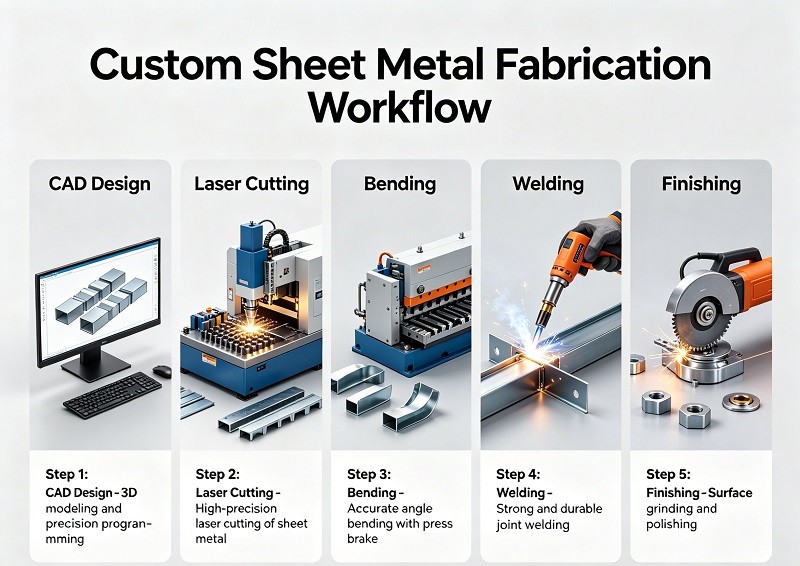
The journey of a custom sheet metal part follows a structured yet flexible workflow. While the specifics can vary based on complexity and material, the core process universally revolves around three fundamental stages: designing, shaping, and joining. Each stage is critical and builds upon the last, culminating in a precision-engineered component.
Designing: This foundational phase is where the blueprint for the part is created. Using advanced Computer-Aided Design (CAD) software, engineers produce detailed 2D and 3D models. These models define the part's exact geometry, dimensions, bend lines, and hole placements. During this stage, Design for Manufacturability (DFM) principles are applied to ensure the part can be produced efficiently and cost-effectively. The design phase also often includes Finite Element Analysis (FEA), a simulation technique used to predict how the part will react to real-world forces, such as vibration, heat, and mechanical stress, allowing for design optimization before any material is used.
Shaping (Cutting and Forming): Once the design is finalized, the digital file is sent to the machinery that will shape the metal. This stage has two primary parts:
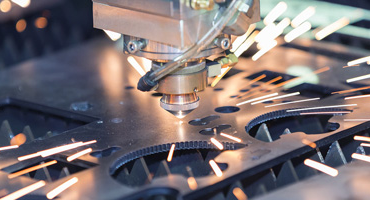
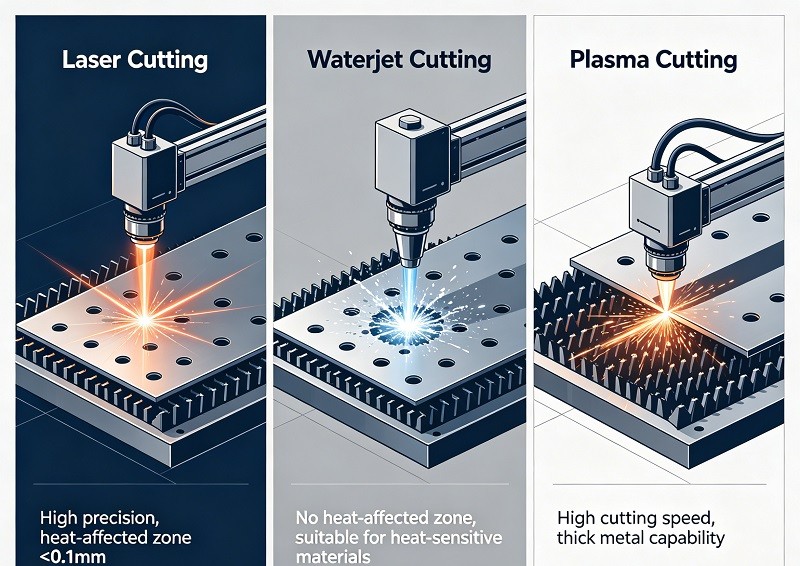
- Cutting: The flat sheet metal is cut to the precise outline specified in the CAD file. Common cutting technologies include laser cutting (for high precision and intricate shapes), plasma cutting (for thicker materials), and waterjet cutting (which uses a high-pressure stream of water and is ideal for materials sensitive to heat).
- Forming: After cutting, the 2D metal blank is given its 3D shape. This is typically achieved through bending, where a press brake is used to create precise angles. Other forming processes include stamping (using a die to form the metal), rolling (to create curves and cylinders), and punching (to create holes or specific features).
Joining (Assembly): If the final product consists of multiple pieces of metal, they are joined together in this final stage. The most common joining method is welding, with techniques like TIG (Tungsten Inert Gas) and MIG (Metal Inert Gas) offering strong, clean seams. Other joining methods include using rivets, fasteners (screws and bolts), and structural adhesives, depending on the application's requirements for strength, permanence, and aesthetics. After assembly, the part often undergoes finishing processes like grinding, sanding, and coating.
Why 'Custom' Makes All the Difference
The word "custom" is the defining element that elevates sheet metal fabrication from a generic service to a specialized solution. While standard, off-the-shelf parts are designed for broad, general-purpose use, they almost always involve compromises. They may be the wrong size, the wrong material, or lack a feature critical for your application. Custom fabrication eliminates these compromises entirely.
Here’s why 'custom' is so crucial:
Perfect Fit and Integration: Custom parts are designed to fit your assembly perfectly, with no need for post-production modifications like drilling extra holes or grinding edges. This precision simplifies the final assembly process, reduces labor costs, and minimizes the risk of errors. A perfect fit ensures seamless integration with other components, leading to better overall product performance.
Optimized Performance: With custom fabrication, you have complete control over every attribute of the part. You can select the ideal material and its exact thickness to achieve the required balance of strength, weight, and corrosion resistance. The design can be fine-tuned to enhance structural integrity, manage thermal loads, or improve ergonomics, ensuring the part performs optimally in its intended environment.
Material and Cost Efficiency: The custom design process allows for the strategic use of materials. Advanced software can "nest" parts on a sheet of metal to maximize yield and minimize scrap, which reduces material costs significantly. By designing a part for its specific function, you avoid over-engineering with unnecessarily thick or expensive materials, leading to a more cost-effective solution in the long run.
Consolidation of Parts: Often, a complex assembly made of multiple standard components can be redesigned as a single, custom-fabricated part. This part consolidation reduces the total number of components, eliminates several joining steps (like welding or fastening), lowers the assembly time, and increases the overall strength and reliability of the final product by minimizing potential points of failure.
In essence, "custom" means the part is born from your specific need, rather than being adapted to it. This fundamental difference is what enables the creation of highly efficient, reliable, and innovative products.
Essential for Precision Parts Across Industries
The demand for precision is universal in modern engineering, and custom sheet metal fabrication is the key that unlocks this level of accuracy across an astonishingly wide range of industries. Whenever a component must meet exact specifications for fit, form, and function, custom fabrication becomes not just a preference, but a necessity. From the life-or-death reliability required in aerospace and medical devices to the demanding performance of automotive and electronic systems, this tailored manufacturing approach provides the foundation for building the world's most advanced products.
It is the go-to solution when "close enough" is not good enough. The ability to control every aspect of a part—from its complex geometry down to its surface finish—allows engineers and designers to solve unique challenges, improve efficiency, and ensure the structural integrity and longevity of their creations. This level of specialization has made custom sheet metal fabrication an indispensable partner in innovation, enabling breakthroughs that would be impossible with standard, mass-produced components.
From Automotive to Aerospace: Where Custom Sheet Metal Fabrication Shines
Custom sheet metal fabrication is a cornerstone of manufacturing in industries where precision, strength, and reliability are non-negotiable. Its applications are as diverse as the sectors it serves, providing critical components that form the backbone of both everyday products and cutting-edge technology.
Below is a table highlighting its role in several key industries:
| Industry | Key Applications | Why Custom Fabrication is Essential |
|---|---|---|
| Aerospace | Brackets, enclosures for avionics, fuselage components, airframe parts, interior panels. | Uncompromised Safety & Weight: Parts must be incredibly strong yet lightweight to maximize fuel efficiency. Custom fabrication allows for the use of advanced alloys and designs that meet stringent aerospace-grade specifications and tight tolerances. |
| Automotive | Chassis components, brackets, body panels, exhaust system parts, battery enclosures for EVs. | Performance & Scalability: Custom parts are designed for a perfect fit within the vehicle's assembly line, simplifying production. They are engineered to withstand constant vibration and road stress while contributing to the vehicle's overall structural integrity and safety. |
| Medical | Enclosures for diagnostic equipment, surgical tool trays, custom carts, internal device components. | Hygiene & Precision: Medical devices require materials like stainless steel that are easy to sterilize and corrosion-resistant. Parts must be manufactured to exact dimensions to house sensitive electronics and ensure reliable operation in clinical environments. |
| Electronics | Housings, enclosures, chassis for servers, racks, faceplates, brackets for internal components. | Protection & Thermal Management: Custom enclosures protect sensitive electronics from dust, moisture, and physical impact. They can be designed with features like vents or mounts for cooling fans to manage heat dissipation, which is crucial for performance and longevity. |
| Energy | Enclosures for control panels, components for solar panel mounting systems, parts for wind turbines. | Durability & Environmental Resistance: Components in the energy sector are often exposed to harsh outdoor environments. Custom fabrication allows for the selection of materials and finishes (like galvanizing or powder coating) that provide long-term protection against corrosion and UV degradation. |
| Telecommunications | Server racks, communication towers components, antenna mounts, power supply housings. | Structural Integrity & Customization: Racks and enclosures must be strong enough to support heavy equipment while allowing for customized layouts and cable management. Parts must be durable to withstand outdoor conditions for years of reliable service. |
When Standard Parts Just Won't Do
While off-the-shelf (OTS) components can be a quick and cheap solution for generic projects, they come with significant limitations. There are many scenarios where relying on a standard part is inefficient, risky, or simply impossible. Custom fabrication becomes the only viable path forward when a project's requirements are highly specific.
Here are key situations where standard parts fail and custom fabrication is necessary:
Unique Geometric Requirements: Your project may require a part with a complex shape, non-standard angles, or specific curves that simply don't exist in any catalog. Forcing a standard part to fit often involves cutting, bending, or welding, which compromises its structural integrity and adds labor costs. A custom part is built to the exact shape from the start.
Strict Tolerance Demands: In high-tech applications like aerospace, robotics, or scientific instruments, components must fit together with microscopic precision. Standard parts are manufactured with wider tolerance ranges that are unacceptable in these fields. Custom fabrication can achieve much tighter tolerances, ensuring perfect alignment and functionality.
Specific Material or Performance Needs: An off-the-shelf part might be available in the right shape but the wrong material. For example, you might need a bracket with the strength of steel but the light weight of aluminum, or a part that can withstand extreme temperatures or corrosive chemicals. Custom fabrication gives you the freedom to choose the perfect material and thickness for the job.
Part Consolidation for Efficiency: A complex assembly might require several standard parts to be bolted or welded together. This increases the bill of materials, complicates the assembly process, and creates multiple potential points of failure. A custom-fabricated part can often consolidate these multiple components into a single, stronger, and more reliable piece, simplifying production and improving the final product.
Prototyping and Innovation: When developing a new product, you are by definition creating something that doesn't exist yet. Prototyping is an inherently custom process. Custom sheet metal fabrication allows for the rapid creation of prototypes to test form, fit, and function, enabling quick design iterations and accelerating the path to market.
Aesthetic and Branding Requirements: For consumer-facing products, aesthetics are crucial. Custom fabrication allows you to design parts that align with your brand's visual identity, with specific finishes, colors, and even logos integrated into the component itself. Standard parts offer little to no room for such customization.
Ultimately, choosing custom fabrication is a strategic decision to invest in precision, performance, and long-term value, ensuring your final product is not limited by the constraints of generic components.
The Outstanding Benefits of Custom Sheet Metal Fabrication
Opting for custom sheet metal fabrication is more than just a manufacturing choice; it's a strategic investment in quality, efficiency, and reliability. This tailored approach delivers a host of benefits that ripple through the entire lifecycle of a product, from simplified assembly to enhanced long-term performance. By moving beyond the limitations of standard parts, companies can unlock new levels of design freedom, optimize material usage, and create products that are stronger, more durable, and perfectly suited to their purpose. The advantages extend beyond the physical part itself, leading to significant savings in time, money, and effort over the long run.
The core value of custom fabrication lies in its ability to deliver exactly what is needed, without compromise. This precision-driven process ensures that every component is an asset to the final product, rather than a potential liability. Whether the goal is to reduce weight, increase strength, or simply achieve a perfect fit, custom fabrication provides the tools and expertise to make it happen.
Achieving the Perfect Fit Every Time
One of the most immediate and impactful benefits of custom sheet metal fabrication is the ability to achieve a perfect fit. In any complex assembly, the way components interact is critical to the overall functionality and structural integrity of the final product. Misalignments, gaps, or internal stresses caused by ill-fitting parts can lead to premature wear, performance issues, and even catastrophic failure. Custom fabrication eliminates these risks by producing parts that are manufactured to the exact dimensions specified in the design.
This guarantee of a perfect fit is not a luxury; it is a fundamental requirement for high-performance applications. It simplifies the entire manufacturing workflow, reduces downstream complications, and ensures that the end product operates as intended from day one. This level of precision provides a solid foundation for building reliable and sophisticated systems.
Optimizing Functionality and Durability
When a part is custom-designed for its specific role, its functionality can be optimized to an exceptional degree. Rather than adapting a generic component, engineers can design features directly into the part that enhance its performance. For example, a custom electronics enclosure can be fabricated with precisely placed vents for optimal airflow, integrated mounting points for circuit boards, and specific cutouts for connectors, all contributing to a more efficient and reliable electronic device.
Durability is also significantly enhanced through custom fabrication. The process begins with selecting the ideal material and thickness to withstand the specific loads and environmental conditions the part will face. Finite Element Analysis (FEA) simulations during the design phase can identify potential stress points, allowing engineers to add reinforcing features like ribs or flanges to strengthen critical areas. By designing the part holistically, its geometry, material, and features all work together to create a component that is inherently more robust and has a longer service life. This proactive approach to design prevents issues that might only become apparent after a standard part fails in the field.
Simplified Assembly and Enhanced Structural Integrity
The precision of custom-fabricated parts leads directly to a smoother, faster, and more cost-effective assembly process. When every part fits together perfectly, assemblers don't have to waste time modifying components on the line—a practice that introduces inconsistencies and potential defects. This "drop-in" readiness of custom parts reduces labor costs, minimizes assembly errors, and accelerates the entire production timeline.
Furthermore, a perfect fit enhances the overall structural integrity of the assembly. Gaps and misalignments in mechanically joined parts can create uneven load distribution, leading to stress concentrations at connection points. Custom parts ensure a tight, seamless fit, allowing forces to be distributed evenly across the structure as intended in the original design. In many cases, custom fabrication can also be used to consolidate what would have been multiple smaller parts into a single, more complex component. This part consolidation eliminates joints—which are often the weakest points in an assembly—resulting in a monolithic structure that is inherently stronger, stiffer, and more reliable.
Smart Material Choices in Custom Sheet Metal Fabrication
The ability to choose the perfect material for a specific application is a cornerstone of custom sheet metal fabrication. Unlike the limited options available with standard parts, custom fabrication opens the door to a vast library of metals and alloys, each with unique properties. This freedom allows engineers to make strategic decisions that balance weight, strength, corrosion resistance, thermal conductivity, and cost. A smart material choice is critical to a part's success, directly impacting its performance, durability, and overall value.
Selecting the right material is a science in itself, considering factors like the operating environment, the mechanical stresses the part will endure, and any special requirements such as electrical conductivity or aesthetic appearance. With a custom approach, a part isn't just made; it's engineered from the atomic level up to meet its functional demands.
The Power of Aluminum: Lightweight, Strong, and Corrosion-Resistant
Aluminum is one of the most popular materials in custom sheet metal fabrication, and for good reason. Its remarkable combination of properties makes it an ideal choice for a wide range of applications, from aerospace components to consumer electronics enclosures. The primary advantage of aluminum is its excellent strength-to-weight ratio; it offers substantial strength at roughly one-third the weight of steel. This makes it invaluable in industries like automotive and aerospace, where reducing weight is critical for improving fuel efficiency and performance.
Beyond its light weight, aluminum naturally forms a passive, protective oxide layer on its surface, which gives it excellent corrosion resistance in most environments. For even greater protection, it can be anodized, a process that thickens the oxide layer and can also be used to add color. Aluminum is also a great thermal and electrical conductor, is non-magnetic, and is highly workable, making it easy to cut, form, and weld. Common alloys like 5052 (excellent formability and corrosion resistance) and 6061 (higher strength, often used for structural applications) provide a versatile toolkit for engineers.
Beyond Aluminum: Stainless Steel for Harsh Environments
When an application demands superior strength and exceptional resistance to corrosion or high temperatures, stainless steel is often the material of choice. Stainless steel is an alloy of iron, chromium, and, in many cases, nickel. The chromium is the key element, as it forms a tough, invisible, self-healing layer of chromium oxide on the surface that prevents rust and resists attack from a wide variety of chemicals.
This makes stainless steel essential for parts used in harsh environments, such as:
- Medical and Food Processing Equipment: Its non-porous and easy-to-clean surface prevents bacterial growth, making it ideal for applications requiring strict hygiene.
- Marine Hardware: It withstands the corrosive effects of saltwater, making it perfect for boats and coastal structures.
- Chemical Processing Plants: It can handle exposure to acids and other aggressive chemicals without degrading.
- High-Temperature Applications: Certain grades of stainless steel retain their strength at elevated temperatures, making them suitable for exhaust systems, furnaces, and engine components.
While heavier and typically more expensive than aluminum, the extreme durability and longevity of stainless steel make it a cost-effective choice for applications where part failure is not an option. Popular grades include 304 (the most common general-purpose stainless steel) and 316 (which includes molybdenum for enhanced resistance to chlorides, like saltwater).
Perforated Sheets: Distributing Load for Maximum Strength
Perforated sheet metal is a unique material option that offers a surprising range of functional benefits. It is a standard sheet that has been punched or stamped with a pattern of holes, slots, or other shapes. While it might seem that removing material would weaken the sheet, perforated metal can be engineered to provide an excellent combination of strength, light weight, and functionality.
The key benefits of using perforated sheets in custom fabrication include:
- Weight Reduction: The most obvious benefit is a significant reduction in weight compared to a solid sheet of the same dimensions, which is crucial for applications in transportation and aerospace.
- Load Distribution: When used in architectural panels or flooring, perforated sheets distribute loads across a wider surface area, preventing stress concentrations. The pattern and size of the perforations can be designed to optimize this effect.
- Ventilation and Filtration: The openings allow for the passage of air, light, and sound, making perforated sheets ideal for enclosures for electronics that need cooling, speaker grilles, and HVAC systems. They can also act as screens to filter out debris.
- Aesthetic Appeal: Perforated metal offers a modern, high-tech look and can be used to create visually interesting facades, partitions, and decorative elements in architectural design.
By selecting the material, hole pattern, and hole size, engineers can customize a perforated sheet to meet very specific structural and functional requirements.
Saving Time, Money, and Effort with Custom Sheet Metal Fabrication
While custom work is sometimes perceived as being more expensive upfront than buying standard parts, this view often overlooks the substantial long-term savings that custom fabrication delivers. By optimizing every aspect of a component's design and production, this tailored approach minimizes waste, eliminates costly rework, and creates more durable products that require less maintenance over their lifetime. The initial investment in custom design and engineering pays dividends by streamlining assembly, improving product performance, and ultimately lowering the total cost of ownership.
These savings are not accidental; they are the direct result of a process that prioritizes precision and planning. By addressing potential issues at the digital design stage—long before any metal is cut—custom fabrication avoids the costly and time-consuming problems that frequently arise from trying to force-fit generic components into a specialized application.
Avoiding Waste and Rework Through Expert Design
One of the most significant sources of financial loss in manufacturing is waste—both in terms of materials and labor. Expert design, a core component of custom sheet metal fabrication, directly tackles these inefficiencies.
Material Waste Reduction: Using advanced nesting software, a fabricator can arrange the digital patterns for multiple parts on a single sheet of metal in the most efficient way possible, much like a puzzle. This minimizes the amount of scrap material left over after cutting, which can lead to dramatic cost savings, especially when working with expensive alloys. Furthermore, by designing the part to be exactly as strong as it needs to be—and no more—engineers avoid using unnecessarily thick or oversized material, further reducing waste.
Elimination of Rework: Rework is a hidden cost that plagues projects using standard parts. When a component doesn't fit correctly, it must be manually modified on the assembly line. This unplanned labor is expensive and time-consuming. Even worse, it can compromise the quality and consistency of the final product. Custom-fabricated parts are designed for a perfect fit, eliminating the need for on-the-fly adjustments. They arrive ready for assembly, ensuring a smooth, predictable, and efficient production process. This precision from the start saves countless hours and prevents the kind of frustrating delays that can derail a project timeline.
Long-Term Cost-Effectiveness and Material Optimization
The true economic benefit of custom sheet metal fabrication is best understood by looking at the total cost of ownership (TCO) rather than just the initial price per part. A well-designed custom component delivers value over its entire lifecycle.
A part made from the optimal material and designed for its specific operational stresses will last longer and fail less often. This enhanced durability means lower maintenance costs, fewer service calls, and less downtime for the end product, all of which are significant long-term financial benefits. For example, using corrosion-resistant stainless steel for a part in a marine environment might cost more upfront than plain steel, but it will save thousands in replacement costs over the years.
Material optimization goes hand-in-hand with this long-term view. A custom fabricator can help you select a material that provides the required performance without being excessively expensive. In some cases, a clever design can allow for the use of a thinner or less costly material while still achieving the same level of strength as a bulkier, more expensive standard part. This intelligent marriage of design and material science ensures that you are only paying for the performance you actually need, making custom fabrication a highly cost-effective solution when viewed through a long-term lens.
The Advanced Process Behind Precision Custom Sheet Metal Fabrication
Achieving the high level of precision demanded by modern industries is not the result of simple metalworking; it's the outcome of a highly sophisticated and technology-driven process. The journey from a conceptual idea to a finished physical component is a seamless integration of digital design, advanced engineering analysis, and state-of-the-art manufacturing techniques. Every step is meticulously controlled and executed to ensure the final part meets the most stringent specifications for accuracy, durability, and performance. This process is what transforms a flat, unassuming sheet of metal into a critical component capable of performing in the most demanding environments.
This advanced workflow is characterized by a "measure twice, cut once" philosophy, amplified by the power of modern technology. By investing heavily in the digital pre-production phase, fabricators can identify and solve potential problems before they ever reach the factory floor, saving time, reducing waste, and guaranteeing a higher quality outcome. It is a harmonious blend of human expertise and machine precision.
From Concept to Creation: Design and Engineering Excellence
The foundation of any successful custom-fabricated part is laid long before any machinery is powered on. It begins in the design and engineering stage, a collaborative and data-driven phase where a client's vision is transformed into a flawless digital blueprint. This is where engineering excellence truly shines, as designers use powerful software tools not only to define the part's shape but also to simulate its real-world performance and optimize it for manufacturability. This upfront investment of intellect and technology is what ensures the final product is not only accurate but also functional, efficient, and cost-effective.
This initial phase is arguably the most critical part of the entire process. Mistakes or oversights at this stage can lead to costly and time-consuming problems down the line. By leveraging advanced design and simulation tools, engineers can build and test the part in a virtual environment, refining every detail until the design is perfected.
Using CAD and FEA for Flawless Designs
At the heart of modern product design are two indispensable technologies: Computer-Aided Design (CAD) and Finite Element Analysis (FEA). These software tools have revolutionized the way parts are conceived and validated.
Computer-Aided Design (CAD): CAD software is used to create highly detailed 2D and 3D models of the sheet metal part. These are not just simple drawings; they are information-rich digital prototypes that contain all the geometric data needed for manufacturing. This includes precise dimensions, bend radii, bend angles, hole locations, and material thickness. A key advantage of CAD is the ability to create "flat patterns." The software can digitally "unfold" a 3D model into the 2D shape that will be cut from the metal sheet, automatically calculating the correct dimensions to account for how the material will stretch and deform during bending (known as the bend deduction or K-factor). This ensures that when the 2D part is cut and bent, it will form the correct 3D shape with incredible accuracy.
Finite Element Analysis (FEA): Once a CAD model is created, it can be imported into FEA software for virtual testing. FEA breaks down the digital model into a large number of small pieces, or "finite elements," and uses complex equations to simulate how the part will behave under various conditions. Engineers can apply virtual forces, pressures, vibrations, and thermal loads to see how the part will respond. This analysis can pinpoint potential weak spots, areas of high stress, or excessive flexing. Based on these simulation results, the designer can modify the model—by adding a reinforcing rib, changing the material, or increasing the thickness—to improve its strength and durability. Using FEA drastically reduces the need for expensive and time-consuming physical prototyping and testing, allowing for rapid design iteration and optimization.
Ensuring Functionality, Ergonomics, and Environmental Adaptability
A great design goes beyond just physical dimensions and strength. The engineering process must also consider how the part will be used, who will use it, and where it will operate.
Functionality: This is the primary consideration. The design must ensure the part performs its intended job flawlessly. For an electronics enclosure, this means not only protecting the components inside but also providing adequate ventilation and easy access for maintenance. For a structural bracket, it means supporting the required load without failing. Every feature, from a simple hole to a complex bend, must have a clear functional purpose.
Ergonomics: If the part or the final product will be handled by people, ergonomics becomes crucial. This involves designing the component to be safe, comfortable, and easy to use. For example, a custom-fabricated handle should be shaped to fit the human hand, and an access panel should have smooth, deburred edges to prevent cuts. Ergonomic design enhances user satisfaction and safety.
Environmental Adaptability: A part must be designed to survive and function in its intended environment. This requires careful consideration of factors like temperature fluctuations, humidity, exposure to UV radiation, and contact with corrosive substances. The design and engineering process addresses this by guiding the selection of the right material and surface finish. A part destined for outdoor use might be made from galvanized steel or powder-coated aluminum to resist rust, while a component for a sterile medical lab would be fabricated from electropolished stainless steel. Ensuring environmental adaptability is key to the part's long-term reliability and lifespan.
Cutting-Edge Techniques for Custom Sheet Metal Fabrication
Once a flawless digital design is approved, it's time to bring it to life on the factory floor. This is where a company's investment in cutting-edge equipment and skilled technicians pays off. Precision manufacturing relies on a suite of advanced technologies that can cut, form, and join metal with a degree of accuracy that was unimaginable just a few decades ago. These techniques are controlled by computers that read the digital instructions directly from the CAD files, ensuring that the physical part is a perfect replica of the virtual model.
From intricate cuts made by focused beams of light to powerful machines that bend thick steel plates with pinpoint accuracy, these modern processes are the engine of custom fabrication. They enable the creation of complex geometries and ensure consistent quality from the first prototype to a full production run.
Precise Cutting: Laser, Waterjet, and Plasma Technologies
The first step in shaping the metal is to cut the 2D flat pattern from the raw sheet. The choice of cutting technology depends on the material, its thickness, and the required level of precision.
| Cutting Technology | How It Works | Best For | Advantages | Limitations |
|---|---|---|---|---|
| Laser Cutting | A high-powered, focused laser beam melts, burns, or vaporizes the material in a very small, localized area. A jet of gas blows the molten material away to create the cut. | Intricate designs, tight tolerances, and thin to medium-thickness metals (e.g., steel up to 1", stainless up to 0.5", aluminum up to 0.5"). | Exceptionally high precision and accuracy. Clean, smooth edges often require no secondary finishing. Fast for thin materials. | High initial equipment cost. Not as effective on highly reflective metals or very thick plates. Creates a small heat-affected zone (HAZ). |
| Waterjet Cutting | A pump generates an ultra-high-pressure stream of water (up to 90,000 PSI), which is forced through a tiny nozzle. For cutting hard materials, an abrasive like garnet is mixed into the stream. | Virtually any material, including metals, plastics, stone, glass, and composites. Excellent for thick materials and those sensitive to heat. | No heat-affected zone (HAZ), so the material's properties are not altered. Can cut very thick materials (over 6"). Extremely high precision. | Slower cutting speed compared to laser or plasma, which can increase cost. The machinery is complex and requires significant maintenance. |
| Plasma Cutting | An electrical arc is passed through a gas (like nitrogen or oxygen), which is forced through a constricted opening. This superheats the gas into a state of plasma, which is hot enough to melt the metal. | Medium to thick conductive metals (e.g., steel, stainless steel, aluminum). Good for applications where speed is more important than perfect edge quality. | Very high cutting speeds, especially on medium-thickness plates. Lower equipment cost than laser or waterjet. | Lower precision than laser or waterjet. Creates a larger heat-affected zone (HAZ) and a more angled edge (kerf). Edge cleanup is often required. |
Forming and Welding: Crafting and Joining Components Seamlessly
After cutting, the 2D blanks are given their 3D shape through forming, and if necessary, multiple pieces are joined together through welding.
Forming: The most common forming technique is bending, performed on a machine called a press brake. The press brake has a punch and a die. The flat sheet is placed between them, and the punch presses the metal into the die cavity, creating a controlled bend at a precise angle. Modern CNC (Computer Numerical Control) press brakes can execute a sequence of complex bends automatically, ensuring high repeatability and accuracy. Other forming methods include stamping, where a die press shapes the part in a single stroke (ideal for high-volume production), and rolling, which uses rollers to create cylindrical or curved parts.
Welding: Welding is used to create strong, permanent bonds between metal components. The choice of welding technique depends on the material, thickness, and aesthetic requirements.
- TIG Welding (Tungsten Inert Gas): This method uses a non-consumable tungsten electrode to create the arc. It is a highly precise and clean process that produces strong, high-quality welds. It's often used for stainless steel and aluminum, especially when appearance is important.
- MIG Welding (Metal Inert Gas): This process uses a continuous wire feed that acts as both the electrode and the filler material. It's faster than TIG welding and is very versatile, making it a workhorse for fabricating many types of steel and aluminum parts.
- Robotic Welding: For high-volume production, robotic welding cells provide unparalleled consistency and speed. A robot arm manipulates the welding torch, following a pre-programmed path to create perfect welds on every part, every time.
Beyond the Build: Surface Finishing and Quality Control
The manufacturing process doesn't end after the part is formed and welded. Two final stages are crucial for delivering a high-quality product: surface finishing and quality control.
Surface Finishing: This refers to a variety of processes applied to the surface of the part to protect it, improve its function, or enhance its appearance. Common finishes include:
- Powder Coating: A dry powder is applied electrostatically and then cured with heat to form a hard, durable, and attractive finish that is more resistant to chipping and scratching than conventional paint.
- Anodizing: An electrochemical process for aluminum that creates a durable, corrosion-resistant oxide layer. It can also be used to add color.
- Plating: A thin layer of another metal (like zinc, nickel, or chrome) is deposited on the surface to provide corrosion resistance or a decorative look.
- Deburring and Graining: Mechanical processes used to remove sharp edges (burrs) left over from cutting and to apply a uniform brushed (grained) finish to the surface for aesthetic purposes.
Quality Control (QC): Throughout the entire process, and especially at the end, the part is rigorously inspected to ensure it meets all specifications. QC technicians use precision measuring tools like calipers, micrometers, and Coordinate Measuring Machines (CMMs) to verify dimensions, angles, and hole positions. Welds are inspected for integrity, and surface finishes are checked for thickness and consistency. This final quality check is the gatekeeper that guarantees the customer receives a part that perfectly matches the approved design.
Finding the Right Partner for Your Custom Sheet Metal Fabrication Needs
Choosing a manufacturer for your custom sheet metal parts is one of the most critical decisions you'll make in your project's lifecycle. The right partner acts as more than just a supplier; they become an extension of your engineering team, providing valuable insights, proactive problem-solving, and a shared commitment to quality. Their expertise can elevate your design, streamline production, and ultimately lead to a superior final product. Conversely, the wrong partner can lead to missed deadlines, budget overruns, and parts that fail to meet specifications, causing significant and costly setbacks.
Therefore, selecting a fabricator should be a careful and deliberate process. It's not just about finding the lowest price, but about finding a partner who demonstrates a deep understanding of the craft, invests in modern technology, and prioritizes clear, collaborative communication. The strength of this partnership will directly influence the success of your project.
Why Collaboration and Communication are Key
In custom manufacturing, where every detail matters, effective collaboration and open communication are the bedrock of a successful project. Unlike purchasing standard parts from a catalog, creating a custom component is an interactive process that requires a constant flow of information between the client and the fabricator. Misunderstandings or a lack of clarity can lead to critical errors. A partnership built on trust and transparency can navigate complexities, adapt to changes, and ensure that the final product aligns perfectly with the initial vision.
This collaborative spirit should begin at the earliest stages of the project and continue through to final delivery. When both sides are engaged and communicative, potential problems can be identified and solved proactively, leading to a smoother, more efficient process for everyone involved.
Early Engagement and Transparent Pricing Discussions
One of the hallmarks of a great fabrication partner is their willingness to engage with you early in the design process. This concept, often called Design for Manufacturability (DFM), involves the fabricator reviewing your initial designs and providing feedback on how to make them easier, faster, and more cost-effective to produce, without sacrificing functionality. A good partner might suggest:
- Changing a bend radius to a standard tool size to avoid custom tooling costs.
- Slightly modifying a design to improve how parts can be nested on a sheet, reducing material waste.
- Recommending a more cost-effective material that still meets all performance requirements.
- Consolidating multiple parts into a single, more elegant component.
Engaging a fabricator early turns the process from a simple transaction into a collaborative effort to build the best possible part.
Equally important is transparency in pricing. A reliable partner will provide a detailed quote that clearly breaks down the costs, including materials, labor, tooling, and finishing. They should be able to explain what drives the costs in your design and offer suggestions for reducing them if necessary. Beware of quotes that are significantly lower than others without a clear explanation, as they may be cutting corners on quality, using inferior materials, or planning to add unexpected charges later. Open discussions about budget and pricing from the start build trust and prevent financial surprises down the road.
Ensuring Your Unique Requirements are Understood
Your project has unique needs, and it is crucial that your fabrication partner fully understands and respects them. This goes beyond simply reading the dimensions on a CAD drawing. It involves a deep dive into the part's application and purpose.
Effective communication is the only way to achieve this level of understanding. A good partner will ask probing questions, such as:
- "What is the ultimate function of this part?"
- "What other components will it interact with?"
- "What is the environment in which this part will operate?"
- "Are there critical dimensions or features that have zero tolerance for error?"
You, in turn, should be prepared to provide as much information as possible, including detailed drawings, 3D models, and a clear statement of work (SOW). The more context you can give your fabricator, the better equipped they will be to make smart decisions throughout the manufacturing process. This dialogue ensures that subtle but critical requirements—like the need for a perfectly smooth edge for aesthetic reasons or a specific internal finish for sanitary purposes—are not overlooked. A partner who listens and asks questions is a partner who is dedicated to getting it right.
What to Look for in a Custom Sheet metal Fabrication Manufacturer
When you're ready to vet potential fabrication partners, you need a clear set of criteria to evaluate them against. A manufacturer's capabilities are a direct reflection of their people, their equipment, and their processes. A state-of-the-art facility is only as good as the experienced technicians who operate it, and a commitment to quality must be embedded in the company's culture from top to bottom. Looking for tangible evidence of expertise, technological investment, and quality assurance will help you separate the truly exceptional fabricators from the rest.
Think of it as hiring for a critical role on your team. You want to see their resume (past work), check their references (certifications and client testimonials), and interview them to gauge their expertise and problem-solving skills.
Experienced Staff and State-of-the-Art Equipment
These two factors are inextricably linked. The most advanced machinery in the world is ineffective in the hands of an untrained operator, and the most experienced engineer is limited by outdated equipment. A top-tier fabricator invests in both.
Experienced Staff: Look for a company with a team of seasoned engineers, programmers, machine operators, and welders. An experienced team can offer invaluable DFM advice, troubleshoot complex manufacturing challenges, and ensure that every process is executed to the highest standard. Don't be afraid to ask about the team's experience, their certifications (e.g., certified welders), and their tenure with the company. A low employee turnover rate is often a sign of a well-run, stable organization.
State-of-the-Art Equipment: A manufacturer's equipment list tells you a lot about their capabilities and their commitment to quality. A modern facility should have a range of CNC machinery, including laser cutters, waterjets, CNC press brakes, and robotic welding cells. Advanced equipment leads to tighter tolerances, greater consistency, faster production times, and the ability to work with a wider range of materials and thicknesses. A company that continuously invests in new technology is a company that is serious about staying at the forefront of the industry.
A Commitment to Quality, From Prototype to Production
A genuine commitment to quality is not just a slogan; it's a systematic, verifiable process that touches every aspect of the operation. Here are key indicators of a manufacturer's dedication to quality:
Quality Management System (QMS): Ask if the company is certified to a recognized quality standard like ISO 9001. This certification means that an independent auditor has verified that the company has robust, repeatable processes in place for everything from quoting and order entry to manufacturing and inspection. An ISO 9001 certification is a powerful third-party endorsement of their commitment to quality.
Prototyping Capabilities: The ability to produce high-quality prototypes is essential for product development. A good partner will work closely with you to create and refine prototypes, using them as a tool to validate the design before committing to a full production run. Their approach to prototyping is often a good indicator of their overall attention to detail.
Inspection and Quality Control: A serious fabricator invests in its quality control department. This includes having a dedicated, climate-controlled inspection room with advanced measuring equipment like a Coordinate Measuring Machine (CMM). They should have a clear process for in-process inspections (checking parts at various stages of production) as well as a final inspection before shipping. Ask to see a sample inspection report to understand the level of detail they provide.
Scalability: The right partner should be able to support your project as it grows. They should have the capacity to handle everything from a single prototype to a low-volume run and, eventually, full-scale production involving thousands of parts. This scalability ensures that you can maintain a consistent level of quality and a single point of contact as your needs evolve.
In summary, Custom Sheet Metal Fabrication offers unparalleled precision, durability, and cost-effectiveness for projects with unique needs. It’s about creating solutions that fit perfectly, last longer, and perform precisely as required. By leveraging advanced design tools, a wide array of materials, and cutting-edge manufacturing techniques, this process transforms ambitious concepts into tangible, high-performance components.
When you need parts that demand exact specifications, choosing a specialized fabrication partner is crucial. They bring the expertise, technology, and collaborative dedication required to transform your vision into a high-quality physical product. This partnership is an investment in certainty, ensuring that your components will not just meet, but exceed, your expectations for form, fit, and function.
For all your custom part requirements, especially for precision components, think of a dedicated specialist. True custom parts manufacturers are committed to delivering not just parts, but solutions tailored precisely to your specific applications.