What are CNC Machining Surface Finishes: Understanding Roughness, Waviness, and Texture
In CNC machining, creating a perfect part is about more than just getting the right shape; it’s also about how the surface feels and looks. We're talking about CNC machining surface finishes. Understanding the nuances of a surface is crucial because it directly affects how well a part performs, how long it lasts, and its overall appearance. A meticulously controlled surface can mean the difference between a component that functions flawlessly for years and one that fails prematurely.
Today, we're going to dive deep into the world of CNC machining surface finishes. We'll break down the key concepts of surface texture—specifically roughness, waviness, and lay—so you can better understand and specify your part requirements for any project. This knowledge is essential for engineers, designers, and anyone involved in manufacturing to ensure that the final product meets both functional and aesthetic expectations without incurring unnecessary costs.
What Exactly Are CNC Machining Surface Finishes: Deciphering Roughness, Waviness, and Lay
When we discuss the "finish" of a CNC machined part, we are referring to its surface texture. This is a comprehensive term that describes the overall topography of a surface, defined by three main characteristics: roughness, waviness, and lay. Each of these elements is a result of the manufacturing process and plays a distinct role in the part's functionality and quality. Confusing them can lead to incorrect specifications, inflated costs, or critical performance issues in the final application. It’s essential to understand each component to control the quality of a machined surface effectively.
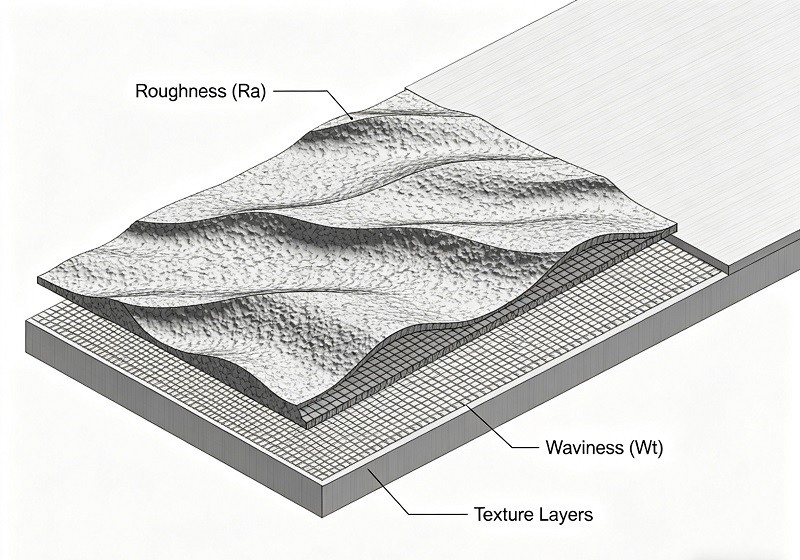
Defining the Texture of Your Part: Roughness and Its Importance
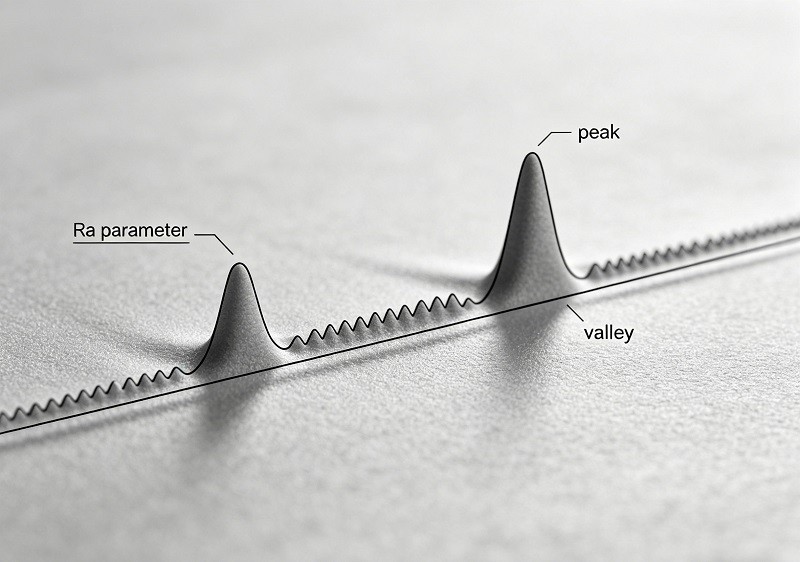
Surface roughness, often shortened to just "roughness," refers to the fine, high-frequency irregularities found on a surface. These microscopic peaks and valleys are an inherent result of the CNC machining process, created by the cutting tool as it removes material. Even a part that appears perfectly smooth to the naked eye has a measurable level of roughness. In engineering, surface roughness is a quantifiable measurement, not just a visual or tactile assessment.
The importance of managing surface roughness cannot be overstated, as it directly impacts several key performance attributes:
- Friction and Wear: The roughness of a surface is a primary factor controlling friction. Rougher surfaces generate more friction and can lead to accelerated wear on mating or moving parts. Conversely, smoother surfaces typically reduce contact resistance, thereby extending the component's operational life.
- Fatigue Life: The microscopic valleys on a rough surface can act as stress concentrators, which are points where stress is amplified. For components subjected to cyclic loading and vibration, these points can become the origin of fatigue cracks, significantly reducing the part's service life. A smoother surface generally leads to better fatigue resistance.
- Corrosion Resistance: A smooth surface has fewer microscopic pockets where moisture and other corrosive agents can collect. By minimizing these sites, a lower surface roughness can enhance a part's resistance to corrosion and prolong its durability.
- Aesthetic Appeal: For consumer-facing products, a smooth and glossy finish often conveys a sense of high quality and precision. The visual appearance is directly tied to the surface roughness, making it a critical consideration in product design.
- Sealing Capability: In applications involving gaskets or fluid seals, such as hydraulic systems, the surface roughness of the mating flanges is critical. A surface that is too rough can create leak paths, while a properly controlled finish ensures a tight, reliable seal.
Understanding and specifying the appropriate surface roughness is a balancing act between performance requirements and manufacturing costs. A finish that is smoother than functionally necessary will only add to the production time and expense without providing any additional benefit.
Beyond Roughness: Understanding Waviness and Lay
While roughness deals with microscopic texture, it's crucial to look at the bigger picture of a part's surface, which includes waviness and lay. These two elements describe larger-scale variations and the orientation of the surface pattern.
Waviness: The Long-Wavelength Deviations
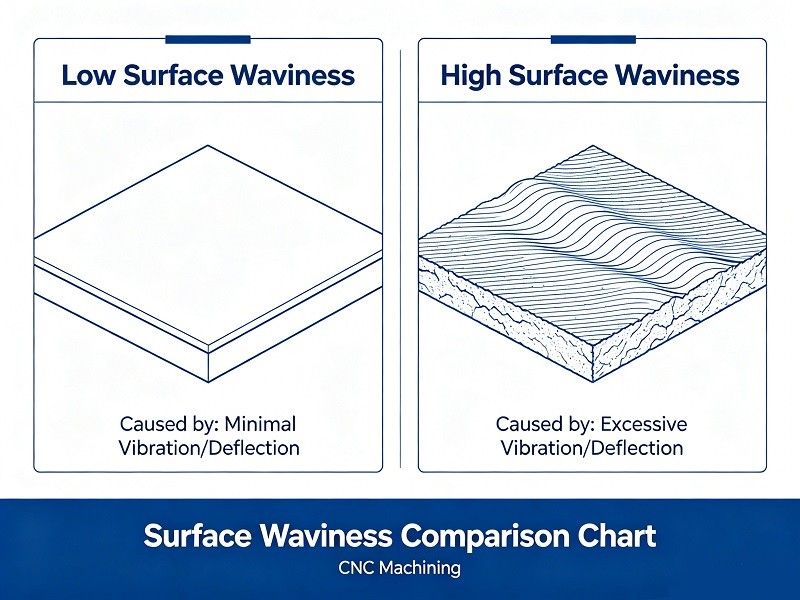
Waviness refers to the more widely spaced component of surface texture, characterized by longer wavelengths than roughness. You can think of it as gentle, periodic undulations across the surface. These larger irregularities are not typically caused by the direct action of the cutting tool's edge but rather by instabilities or periodic errors in the machining system.
Common causes of waviness include:
- Vibrations in the CNC machine or workpiece.
- An imbalance in a rotating component, like a grinding wheel.
- Deflection of the tool or part during machining.
- Inaccuracies or wear in the machine tool's guideways.
Waviness is a critical parameter in applications where the overall form or flatness of a surface matters, such as in sealing flanges, bearing races, or optical components. Excessive waviness can prevent parts from mating correctly, leading to leaks, uneven load distribution, or poor performance.
Lay: The Direction of the Pattern
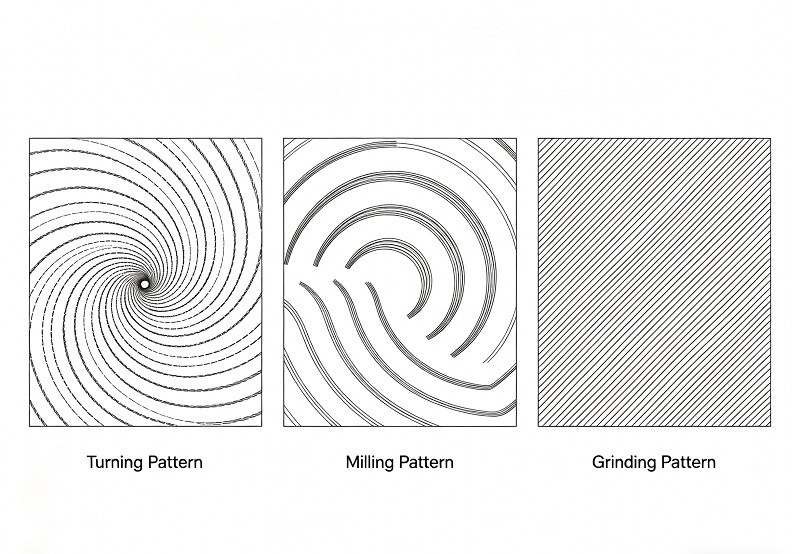
Lay is defined as the predominant direction of the surface pattern, which is determined by the manufacturing process used. It's the visual direction of the tool marks or grain on the machined surface. For example, a turning operation typically creates a circular or helical lay, while a milling operation might produce a linear or cross-hatched lay.
The directionality of the surface texture can significantly impact function. For parts that slide against each other, the lay should ideally be oriented to facilitate smooth movement and proper lubricant distribution. In sealing applications, a circular lay on a flange face can be beneficial because the tool marks do not create a direct leak path from the inside to the outside.
Common types of lay are standardized and can be specified on engineering drawings to ensure the manufacturing process achieves the desired directional pattern:
| Lay Symbol | Description | Visual Representation |
|---|---|---|
| = | Parallel: Lay is parallel to the boundary line of the view in which the symbol appears. | Lines running horizontally. |
| ⊥ | Perpendicular: Lay is perpendicular to the boundary line of the view. | Lines running vertically. |
| X | Crossed: Lay is angular in two directions, forming a crosshatch pattern. | Overlapping lines at an angle. |
| M | Multi-directional: Lay is random or has no specific direction. | Irregular, overlapping patterns. |
| C | Circular: Lay is roughly circular relative to the center of the surface. | Concentric or spiral circles. |
| R | Radial: Lay is radial, extending from the center of the surface outwards. | Lines radiating from a central point. |
Controlling both waviness and lay, in addition to roughness, provides a comprehensive approach to engineering surfaces for optimal performance and longevity.
Key Parameters We Use to Measure CNC Machining Surface Finishes (e.g., Ra and Rz)
To control and communicate surface finish requirements effectively, we need a standardized, quantitative language. This is where surface finish parameters, typically measured in micrometers (µm) or microinches (µin), come into play. These parameters are derived from data collected by a profilometer, an instrument that drags a fine stylus across the part's surface to trace its microscopic profile. Among the dozens of available parameters, Ra and Rz are the most common in the world of CNC machining.
Ra (Roughness Average)
Ra, or Roughness Average, is the most widely used surface roughness parameter globally. It represents the arithmetic average of the absolute values of the profile's deviations from the mean line over a given evaluation length. In simpler terms, it captures the average height of all the microscopic peaks and valleys on the surface.
Strengths of Ra:
- Stability and Repeatability: Because it's an average of thousands of data points, Ra is not overly influenced by a single extreme flaw, like a deep scratch. This makes it a very stable and reliable metric for monitoring the consistency of a manufacturing process.
- Simplicity: Ra provides a single, easy-to-understand number that gives a general sense of the surface's texture, making it excellent for general quality control.
Limitations of Ra:
- Loss of Detail: Its greatest strength—its averaging nature—is also its biggest weakness. Two surfaces with vastly different profiles can have the exact same Ra value. One surface might have uniform, gentle ripples, while another could be very smooth but contain a few deep scratches. The averaging effect can hide these critical outliers, which could lead to functional failure.
Rz (Mean Roughness Depth)
Rz, often referred to as Mean Roughness Depth, provides a different perspective on the surface. Instead of averaging all points, Rz focuses on the extremes. In modern standards, Rz is typically calculated as the average of the five largest peak-to-valley heights across five consecutive sampling lengths. This method makes it much more sensitive to individual, significant irregularities like scratches, burrs, or chatter marks.
When to Use Rz:
- Critical Sealing Surfaces: For applications like hydraulic seals or gaskets, a single deep scratch can create a leak path. Ra might not detect this flaw, but Rz will, as it specifically captures extreme deviations.
- Bearing and Sliding Interfaces: In components with sliding contact, a high peak can concentrate stress and act as a point of accelerated wear. Rz is better at identifying such potential failure points.
- Coating Adhesion: When applying coatings, a surface with high peaks and deep valleys may lead to uneven coating thickness and poor adhesion. Rz helps control these extreme features.
Here's a comparison to clarify the difference:
| Parameter | Ra (Roughness Average) | Rz (Mean Roughness Depth) |
|---|---|---|
| What it Measures | The arithmetic average of all profile deviations from the mean line. | The average of the highest peaks & deepest valleys over several sampling lengths. |
| What it Tells You | The overall, general smoothness of the surface. | The magnitude of the most significant surface irregularities (extremes). |
| Sensitivity | Low sensitivity to single outliers (scratches, deep marks). | High sensitivity to outliers and individual defects. |
| Best For | General process control, non-critical surfaces, cosmetic applications. | Functional surfaces where extremes matter: sealing, sliding, bearings. |
A Note on Conversion: It is critical to understand that there is no reliable mathematical formula to convert between Ra and Rz. The relationship between them depends entirely on the profile shape, which is determined by the manufacturing process. While rough estimation charts exist, they should be used with extreme caution. The best practice is to specify the parameter that is most relevant to the part's function.
How We Achieve Different CNC Machining Surface Finishes: Factors and Control
Achieving a specific surface finish is not an accident; it is the result of carefully controlling a complex interplay of variables. From the tool that cuts the material to the speed at which it moves, every element of the CNC machining process leaves its signature on the part's surface. Mastering these factors is fundamental to producing high-quality components that meet both functional and aesthetic requirements.
The Critical Role of Tooling: Selection, Geometry, and Wear
The cutting tool is the first and most direct point of contact with the workpiece, and its characteristics profoundly influence the final surface finish. The right tool, used correctly, can produce a smooth, clean surface, while the wrong tool or a worn one will invariably degrade quality.
Tool Selection: The material of the cutting tool is fundamental. High-speed steel (HSS) is versatile, but for harder materials or higher speeds, carbide tools are necessary to maintain a sharp cutting edge. Ceramic and diamond-tipped tools offer exceptional hardness and are capable of producing very fine finishes on specific non-ferrous and abrasive materials. Coated tools (e.g., with Titanium Nitride - TiN) can reduce friction and prevent material from adhering to the tool (a phenomenon called built-up edge), which is crucial for achieving a clean cut, especially in soft materials like aluminum.
Tool Geometry: The specific shape of the cutting tool's edge, known as its geometry, is a critical design parameter that directly impacts chip formation and surface quality.
- Nose Radius: This is the radius of the tool's tip. A larger nose radius spreads the cutting force over a wider area, which generally produces a smoother surface finish by reducing the height of the "scallops" left between passes. However, a very large radius can increase cutting forces and the risk of chatter, so a balance must be struck. A smaller radius may be needed for fine details or to minimize vibration on less rigid setups.
- Rake Angle: This is the angle of the cutting face relative to the workpiece. A positive rake angle helps shear the material more cleanly, reducing cutting forces and leading to a better finish, particularly in softer materials like aluminum. A negative rake angle provides a stronger cutting edge, which is necessary for hard materials or interrupted cuts, but it can increase cutting forces.
- Clearance (Relief) Angle: This is the angle that prevents the flank (side) of the tool from rubbing against the newly machined surface. Insufficient clearance causes friction, heat, and "ploughing" of the material rather than cutting it, which degrades the surface finish.
Tool Wear: Even the perfect tool will not perform well if it is worn. As a tool is used, its sharp cutting edge gradually erodes through mechanisms like abrasion, chipping, and cratering. A worn tool has several negative effects on surface finish:
- Dull Edge: A dull edge no longer shears the material cleanly; it tears and deforms it, resulting in a rough, uneven, and often smeared surface.
- Altered Geometry: Wear changes the tool's effective geometry, including the nose radius and rake angles, leading to increased cutting forces and unpredictable results.
- Increased Friction and Heat: A worn tool rubs more than it cuts, generating excessive heat that can cause thermal damage to the workpiece surface and alter its material properties.
Continuous monitoring of tool wear and a strategy for timely replacement are essential for maintaining consistent surface quality throughout a production run. A worn tool is a primary cause of poor surface finish and dimensional inaccuracy.
Optimizing Our Cutting Parameters for Desired CNC Machining Surface Finishes
Alongside tooling, the "speeds and feeds" used during machining are the most powerful levers for controlling surface finish. These cutting parameters—specifically cutting speed, feed rate, and depth of cut—determine how the tool interacts with the material and the resulting texture it leaves behind. Optimizing them is a crucial step for achieving any desired surface finish.
Cutting Speed: This is the speed at which the workpiece surface moves past the cutting tool (in turning) or the speed of the tool's circumference (in milling). It's typically measured in Surface Feet per Minute (SFM) or meters per minute (m/min).
- Effect on Surface Finish: Generally, a higher cutting speed results in a better surface finish. Higher speeds reduce the occurrence of a "built-up edge" (BUE), a phenomenon where material from the workpiece welds itself to the tool tip, causing the surface to be torn rather than cleanly cut. However, a speed that is too high can cause excessive heat and tool chatter, which negatively impacts the finish.
- Balancing Act: The ideal cutting speed is a balance between achieving a good finish, managing heat generation, and preserving tool life.
Feed Rate: This is the distance the cutting tool travels along the workpiece during one revolution of the spindle or part. It's often expressed in inches per revolution (IPR), millimeters per revolution (mm/rev), or inches per minute (IPM).
- Effect on Surface Finish: The feed rate has one of the most direct and significant impacts on surface roughness. A lower feed rate means the tool advances more slowly, causing the cutting paths to overlap more. This overlap smooths out the peaks and valleys (scallops) left by the tool, resulting in a finer finish. Conversely, a higher feed rate creates more pronounced scallops and a rougher surface.
- Trade-off: While a very low feed rate produces a superior finish, it also significantly increases machining time and cost. The key is to use a feed rate that is as high as possible while still meeting the specified surface finish requirement.
Depth of Cut (DOC): This refers to how deep the tool penetrates into the material in a single pass. It’s important to distinguish between a roughing pass and a finishing pass.
- Roughing Pass: A deeper depth of cut is used to remove a large amount of material quickly. These passes prioritize material removal rate over surface quality and will naturally produce a very rough finish.
- Finishing Pass: A much shallower depth of cut (often around 0.1 to 0.5 mm) is used for the final pass. A light DOC minimizes cutting forces, reduces tool deflection, and allows the tool to create a clean, accurate surface without introducing significant stress or heat into the part.
The relationship between these parameters and surface finish can be summarized in the following table:
| Parameter | To Improve Surface Finish (Lower Ra) | Effect on Machining Time |
|---|---|---|
| Cutting Speed | Increase (within limits) | Decreases Time |
| Feed Rate | Decrease | Increases Time |
| Depth of Cut (Finish Pass) | Decrease | Increases Time |
Ultimately, achieving a target surface finish is about finding the optimal "recipe" of these parameters for a given material, tool, and machine setup. An experienced machinist will leverage these relationships to produce parts that are both functionally sound and cost-effective.
Minimizing Vibration and Chatter in CNC Machining for Better Surface Finishes
Vibration during machining, commonly known as chatter, is one of the biggest enemies of a good surface finish. Chatter is a self-exciting vibration that occurs between the cutting tool and the workpiece, and if left uncontrolled, it can have disastrous effects on the quality of a part. The distinct, high-pitched noise it produces is often accompanied by a visibly wavy or rippled pattern on the machined surface.
How Chatter Degrades Surface Finish:
- Irregular Tool Marks: Chatter causes the cutting tool to bounce against the workpiece, creating inconsistent chip thickness and leaving behind a pattern of uneven, deep marks. This results in a very poor surface texture that significantly increases roughness values.
- Dimensional Inaccuracy: The vibration prevents the tool from following its programmed path precisely, leading to inaccuracies in the final dimensions of the part.
- Accelerated Tool Wear: The jarring impacts from chatter can cause the cutting edge of the tool to chip or wear down rapidly, which further degrades the surface finish and can lead to tool failure.
Minimizing or eliminating chatter is essential for any high-precision machining operation. This is achieved by focusing on the overall rigidity of the machining system. Every component, from the machine itself to the way the part is held, contributes to the system's susceptibility to vibration.
Key Strategies to Minimize Chatter:
Rigid Workholding: This is the foundation of a stable machining process. The workpiece must be clamped securely to prevent it from moving or vibrating under the force of the cut.
- Proper Fixturing: Use high-quality vises, chucks, or custom fixtures that provide strong and evenly distributed clamping pressure.
- Support for Thin or Long Parts: Thin-walled or long, slender parts are especially prone to vibration. Supporting them with additional clamps, a tailstock (on a lathe), or a steady rest can dramatically increase rigidity.
- Clamping Position: Position clamps as close to the machining area as possible to provide maximum support.
Stable Tooling Setup: The tool and its holder are a common source of vibration.
- Minimize Tool Overhang: Use the shortest possible tool that can perform the operation. A longer tool acts like a lever, amplifying vibrations.
- Rigid Tool Holders: Use high-quality, balanced tool holders like shrink-fit, hydraulic, or high-precision collet chucks. These provide better gripping force and inherent damping properties compared to standard holders.
Machine Condition and Maintenance: The machine tool itself must be rigid and well-maintained. Worn spindle bearings, loose guideways, or a non-level machine base can all be sources of vibration. Regular maintenance ensures the machine operates at its full potential.
Optimized Cutting Parameters: Sometimes, chatter is a result of hitting a resonant frequency of the system.
- Vary Spindle Speed: Small adjustments to the spindle speed (either increasing or decreasing) can often move the operation out of an unstable "chatter zone."
- Adjust Feed and Depth of Cut: A shallow depth of cut can sometimes be more prone to chatter. Increasing the chip load by using a higher feed rate or a slightly deeper cut can sometimes stabilize the process by keeping the tool consistently engaged with the material.
By systematically addressing each of these areas, machinists can create a stable and rigid cutting environment, which is a prerequisite for achieving smooth, chatter-free surface finishes.
The Influence of Material Properties and Post-Machining Processes on Surface Finishes
The final surface finish of a CNC machined part is not solely determined by the machining process itself. The inherent properties of the workpiece material play a significant role, and in many cases, secondary post-machining processes are employed to further refine or alter the surface.
Influence of Material Properties: Different materials interact with a cutting tool in different ways, a characteristic broadly described as machinability. This interaction directly influences the achievable surface finish.
- Hardness: Harder materials, like hardened steels or titanium alloys, resist the cutting action more. While this can lead to faster tool wear, they are also less prone to plastic deformation and can often hold a very fine, crisp finish when machined with the correct parameters and rigid tooling.
- Ductility: Softer, more ductile materials like aluminum or low-carbon steel are easier to cut but can present their own challenges. They are more prone to forming a built-up edge (BUE), where material sticks to the tool, leading to a rough, torn surface. Their softness can also make them susceptible to scratching or smearing if not handled carefully.
- Microstructure: The internal grain structure of a material affects how it fractures at the point of cutting. Materials with a fine, uniform grain structure tend to machine more predictably and produce a smoother finish compared to materials with a coarse or inconsistent structure.
Post-Machining Processes for Surface Finish Enhancement: Often, the "as-machined" surface is just the starting point. Many applications require a surface that is smoother, harder, more corrosion-resistant, or has a specific aesthetic. This is achieved through a variety of post-machining treatments.
Here are some common post-machining processes used to modify surface finishes:
| Process | Description | Effect on Surface |
|---|---|---|
| Polishing/Lapping | Mechanical processes that use abrasives to remove microscopic peaks from the surface. | Creates |
| a very smooth, often mirror-like, and reflective finish. Drastically reduces Ra values. | ||
| Bead Blasting | Propels fine media (like glass beads) against the surface at high velocity. | Removes tool marks and creates a uniform, non-directional, matte or satin texture. |
| Anodizing | An electrochemical process, primarily for aluminum and titanium, that grows a durable, corrosion-resistant oxide layer. | Improves hardness and corrosion resistance. The porous surface can be dyed for color. Slightly increases roughness. |
| Powder Coating | A dry powder is electrostatically applied and then cured under heat to form a hard, protective polymer layer. | Provides a durable, impact-resistant, and decorative finish in a wide range of colors. |
| Plating | An electrochemical process that deposits a thin layer of another metal (e.g., chrome, nickel, zinc) onto the surface. | Can improve hardness, wear resistance, corrosion resistance, and electrical conductivity. |
| Heat Treatment | A controlled process of heating and cooling to alter the material's microstructure. | Primarily used to change mechanical properties like hardness and strength, which can indirectly affect wear resistance. |
Choosing the right material and factoring in any necessary post-processing steps during the design phase are crucial for achieving the final desired surface characteristics in a cost-effective manner.
Advanced Techniques to Enhance CNC Machining Surface Finishes
Beyond the fundamentals of tooling and basic cutting parameters, there are advanced strategies and technologies that machinists use to push the boundaries of surface quality. These techniques often involve sophisticated software, specialized equipment, and a deeper understanding of the physics of cutting. Employing these methods can lead to superior finishes, greater efficiency, and the ability to produce highly complex and precise components.
Leveraging Advanced Toolpath Strategies for Superior Finishes
The path a cutting tool takes across a workpiece is not arbitrary; it is a carefully planned strategy programmed using Computer-Aided Manufacturing (CAM) software. Modern CAM systems offer sophisticated toolpath options that go far beyond simple straight lines. These advanced strategies are designed to control cutting forces, reduce chatter, and ultimately produce a superior surface finish.
Constant Engagement Toolpaths: A primary cause of poor surface finish is the variation in cutting forces as a tool moves into and out of corners. Traditional offset toolpaths cause the cutter's engagement with the material to spike dramatically in corners, leading to tool deflection, chatter, and visible marks on the surface. To solve this, advanced CAM software employs constant engagement or adaptive clearing toolpaths.
These strategies modify the tool's path to maintain a consistent chip load and cutting force, regardless of the part's geometry. Instead of making sharp turns, the tool follows smooth, arcing paths that keep the radial engagement steady. The benefits of this approach are significant:
- Improved Surface Finish: By eliminating force spikes, the tool cuts more smoothly and consistently, leaving a uniform finish without the "witness marks" often seen in corners.
- Reduced Chatter: Stable cutting forces prevent the onset of self-exciting vibrations, resulting in a chatter-free cut.
- Increased Tool Life: The even distribution of load and heat across the cutting edge dramatically reduces tool wear.
Trochoidal Milling: Trochoidal milling is a specific type of high-efficiency toolpath often used for machining deep slots or pockets. Instead of plunging a tool into a full-width cut, trochoidal milling uses a series of continuous, circular or spiral movements. The tool "rolls" into the cut with a low radial engagement but can use a much deeper axial depth of cut.
This strategy offers several advantages for surface finish:
- Excellent Chip Evacuation: The circular motion effectively throws chips out of the cutting zone, preventing them from being re-cut, which is a common cause of poor finish.
- Low Cutting Forces and Heat: The light radial cut keeps forces and heat generation to a minimum, which is ideal for thin-walled parts and difficult-to-machine materials. The result is a cleaner cut with less thermal distortion.
- Superior Wall Finish: Although primarily a roughing strategy, trochoidal milling produces remarkably good wall finishes due to the stable cutting conditions it creates.
Finishing-Specific Toolpaths: CAM software provides a variety of toolpaths specifically designed for finishing operations, where surface quality is the top priority.
- Scallop (Constant Stepover) Toolpaths: Ideal for free-form 3D surfaces, this strategy maintains a constant distance between adjacent passes, creating a highly uniform scallop pattern. This results in a very consistent and predictable surface texture.
- Spiral and Radial Toolpaths: Used for circular pockets or faces, these paths create a continuous cutting motion without the abrupt direction changes that can mar a surface.
- Contour (Waterline) Toolpaths: Excellent for steep walls, this method uses a series of Z-level contours to machine the surface, similar to the lines on a topographical map.
By leveraging the power of modern CAM software, we can select and fine-tune these advanced toolpath strategies to overcome the limitations of traditional methods, achieving exceptional surface finishes even on the most complex parts.
The Impact of Cutting Fluids and Coolants on CNC Machining Surface Finishes
The intense friction and heat generated at the cutting zone are major adversaries to a good surface finish. Cutting fluids, also known as coolants and lubricants, are critical for managing these effects. Proper application of the right fluid can dramatically improve surface quality, extend tool life, and increase overall machining efficiency.
The primary functions of cutting fluids in enhancing surface finish are:
- Cooling: The immense heat produced during cutting can cause thermal damage to the workpiece surface, lead to dimensional inaccuracies, and accelerate tool wear. Coolants, which are typically water-based fluids like emulsions or synthetics, are excellent at dissipating this heat. By keeping the tool and workpiece at a stable temperature, they prevent material deformation and help maintain the sharpness of the cutting edge.
- Lubrication: Friction between the cutting tool, the workpiece, and the newly formed chip can lead to a rough, torn surface. Lubricants, which are often oil-based, create a protective film at the cutting interface. This film reduces friction, which in turn lowers cutting forces and heat generation. It also prevents the chip from welding to the tool (built-up edge), a common cause of poor surface finish.
- Chip Evacuation: If chips are not effectively removed from the cutting area, they can be re-cut by the tool, a phenomenon that invariably scratches and mars the workpiece surface. Cutting fluids play a vital role in flushing these chips away from the cutting zone, ensuring a clean path for the tool on its next pass.
Advanced Coolant Delivery Methods:
How the coolant is delivered can be just as important as the type of fluid used. Modern CNC machines employ sophisticated systems to maximize the effectiveness of the cutting fluid.
- High-Pressure Coolant (HPC): Standard flood coolant can sometimes create a vapor barrier at the hot cutting zone, preventing the liquid from reaching the tool's edge effectively. High-pressure systems, often operating at 1,000 PSI or more, can penetrate this vapor barrier. This ensures the fluid directly cools and lubricates the cutting edge, provides powerful chip evacuation, and allows for significantly higher cutting speeds and feeds, all contributing to a better surface finish.
- Through-Spindle Coolant: This system delivers coolant directly through channels inside the spindle and the cutting tool itself, exiting at the tool tip. It is exceptionally effective for drilling and deep pocketing operations, as it flushes chips out from the inside and guarantees that the coolant reaches the precise point of the cut, where it is needed most.
- Minimum Quantity Lubrication (MQL): Also known as near-dry machining, MQL is an environmentally friendly alternative to traditional flood coolants. This method delivers a very fine mist of oil (an aerosol) directly to the cutting edge. While its cooling properties are less than flood coolant, the high-quality lubricant is extremely effective at reducing friction. For many materials, particularly aluminum, MQL can produce an excellent surface finish while dramatically reducing fluid consumption and creating a cleaner work environment.
By combining the right type of fluid with an effective delivery method, we can create an optimal machining environment that minimizes friction and heat, leading to a consistently superior surface finish.
High-Speed Machining (HSM) for Efficiency and Refined CNC Machining Surface Finishes
High-Speed Machining (HSM) is a manufacturing approach that redefines the relationship between speed, efficiency, and quality. Rather than simply "machining faster," HSM is a distinct strategy that involves using extremely high spindle speeds (often 15,000 RPM or more) combined with lighter, faster cuts. When applied correctly, this technique can dramatically improve both productivity and surface finish.
The philosophy behind HSM is a departure from conventional machining, which often uses slower speeds and deeper cuts. The HSM approach is "light and fast."
Key Principles of High-Speed Machining:
- High Spindle Speeds and Feed Rates: HSM utilizes spindle speeds that can be several times higher than conventional methods. This is paired with a proportionally high feed rate.
- Shallow Depth of Cut: To compensate for the high speeds, HSM employs a significantly lighter radial depth of cut (the "stepover") and sometimes a lighter axial depth of cut. This "light cut" approach is fundamental to the process.
- Consistent Chip Load: The goal of HSM, often facilitated by advanced CAM toolpaths, is to maintain a constant, light load on the cutting tool. This avoids the force spikes that cause chatter and tool wear in traditional machining.
How HSM Improves Surface Finish:
HSM provides several key advantages that directly result in a more refined surface finish:
- Reduced Cutting Forces: The combination of high speed and a light depth of cut significantly lowers the forces exerted on the tool and workpiece. This minimizes tool deflection and reduces the likelihood of chatter, both of which are major causes of poor surface finish.
- Improved Heat Management: In conventional machining, a significant amount of heat is transferred from the cutting zone into the workpiece and the tool. In HSM, the cutting action is so fast that the majority of the heat is generated within the chip itself and is immediately evacuated with the chip. This keeps both the tool and the workpiece cooler, preventing thermal distortion and preserving the integrity of the machined surface.
- Chip Thinning Effect: At low radial depths of cut (when the tool is engaged with less than half of its diameter), a phenomenon called "chip thinning" occurs. The actual thickness of the chip becomes smaller than the programmed feed per tooth. HSM strategies compensate for this by increasing the feed rate to maintain an optimal chip thickness, ensuring the tool is always cutting efficiently rather than rubbing, which would degrade the surface. This leads to a cleaner shearing action and a smoother finish.
- Excellent for Complex and Thin-Walled Parts: Because HSM exerts such low cutting forces, it is the ideal method for machining delicate features, thin walls, and complex 3D contours without causing part deformation or vibration. This allows for the creation of highly detailed and accurate parts with excellent surface quality.
In essence, High-Speed Machining achieves a superior surface finish not by being more aggressive, but by being more controlled. By replacing brute force with speed and finesse, HSM allows for faster material removal, longer tool life, and a level of surface quality that is often difficult to achieve with conventional methods.
When and How Surface Treatments Transform CNC Machining Surface Finishes
While the CNC machining process itself is capable of producing a wide range of surface finishes, the "as-machined" surface is often just the beginning of the journey. For many applications, the part must undergo secondary surface treatments to meet specific functional or aesthetic requirements. These treatments can dramatically transform a part's properties, enhancing everything from corrosion resistance and hardness to its final color and texture. Understanding when and how to apply these treatments is a critical aspect of product design and manufacturing.
A Look at Common Surface Treatment Methods (Anodizing, Plating, Powder Coating, Black Oxide)
Surface treatments can be broadly categorized into several types, each with unique characteristics and applications. These processes add, remove, or alter the material at the very top layer of the part to achieve the desired outcome.
Here's a look at some of the most common methods used for CNC machined parts:
| Treatment Method | Description | Primary Purpose & Benefits | Common Materials |
|---|---|---|---|
| Anodizing | An electrochemical process that grows a controlled oxide layer on the surface of a metal. This layer is integral to the part. | Corrosion & Wear Resistance: Creates a hard, durable, and corrosion-resistant surface. Aesthetics: The porous layer can be dyed a wide variety of colors for cosmetic purposes. Provides electrical insulation. | Aluminum, Titanium |
| Plating | An electrochemical process (electroplating) or chemical process (electroless plating) that deposits a thin layer of another metal onto the surface of the part. | Wear Resistance & Hardness: Coatings like hard chrome or nickel add significant surface hardness. Corrosion Protection: Zinc or nickel plating protects the underlying material from rust. Conductivity/Solderability: Gold or silver plating improves electrical properties. | Most Metals (Steel, Brass, Aluminum) |
| Powder Coating | A dry, powdered polymer is electrostatically applied to the part and then cured with heat, forming a tough, skin-like layer. | Durability & Impact Resistance: Creates a finish that is much tougher than conventional paint. Corrosion Resistance: Provides an excellent barrier against moisture and chemicals. Aesthetics: Available in a vast range of colors, textures, and gloss levels. | Most Metals |
| Black Oxide | A chemical conversion coating that forms a layer of black iron oxide (magnetite) on the surface of ferrous metals. | Mild Corrosion Resistance: Offers minimal corrosion protection, often enhanced with a wax or oil topcoat. Dimensional Stability: Adds no significant thickness to the part, making it ideal for precision components. Reduced Light Reflection: Provides a dark, non-reflective finish. | Steel, Stainless Steel, Copper |
| Bead Blasting | A mechanical process that propels fine media (e.g., glass beads) at the surface to remove tool marks and imperfections. | Aesthetic Finish: Creates a uniform, non-directional matte or satin texture. Surface Preparation: Cleans the surface and prepares it for other treatments like anodizing or powder coating. | Most Metals, some Plastics |
| Polishing | A mechanical process that uses progressively finer abrasives to smooth the surface. | Aesthetics: Creates a smooth, highly reflective, mirror-like finish. Reduced Friction: A very smooth surface can lower the coefficient of friction. | Metals, Plastics |
Choosing the right surface treatment depends entirely on the part's intended function, operating environment, and aesthetic requirements.
Considering Dimensional Accuracy: How Treatments Alter CNC Machining Surface Finishes
A critical consideration often overlooked in the design of tightly toleranced parts is that most surface treatments are additive—they physically add a layer of material to the part's surface. This can significantly alter the final dimensions and must be accounted for during the initial CNC machining stage. Failure to do so can result in parts that are out of tolerance, do not fit correctly in assemblies, or fail to function as intended.
Understanding "Build-Up" vs. "Penetration"
It's important to distinguish between treatments that primarily build up on the surface and those that also penetrate it.
- Additive Processes (Plating, Powder Coating): These treatments deposit a new layer entirely on top of the original surface. The dimensional change is a direct addition of the coating's thickness. If a shaft is powder coated with a 75 µm layer, its diameter will increase by 150 µm (75 µm on each side).
- Conversion Coatings (Anodizing): Anodizing is more complex. The process converts the existing aluminum into aluminum oxide. This new layer grows both into the substrate and out from the original surface. For a typical Type II anodize, the growth is roughly 50% penetration and 50% build-up. This means a 10 µm thick anodize layer will only add about 5 µm to the outer dimension per surface. Hard anodizing (Type III) has a similar ratio, but since the coatings are much thicker, the dimensional change is far more significant.
The table below provides typical thickness ranges for common treatments and illustrates how they can impact part dimensions. These are general guidelines; always consult with your finishing supplier for precise specifications.
| Surface Treatment | Typical Added Thickness (per surface) | Tolerance Control | Impact on Precision Parts |
|---|---|---|---|
| Anodizing (Type II) | 4–12.5 µm (0.00016"–0.0005") | Good to Fair | Moderate change. Must be accounted for in bores and on threads. Dimensions should allow for this growth. |
| Anodizing (Type III) | 13–75 µm (0.0005"–0.003") | Fair | Significant change. Critical for fits. Parts are often machined undersize to compensate. |
| Electroless Nickel Plating | 5–25 µm (0.0002"–0.001") | Excellent | Very uniform coating good for complex shapes, but dimensional growth must be factored into the design. |
| Hard Chrome Plating | 10–100 µm (0.0004"–0.004") | Good | Adds significant thickness and hardness. Often used to build up worn surfaces. Requires pre-machining to specific undersize dimensions. |
| Powder Coating | 50–125 µm (0.002"–0.005") | Poor | Very thick coating. Not suitable for tight-tolerance features. Areas requiring precision fit must be masked. |
| Black Oxide | < 1 µm (<0.00004") | Excellent | Negligible dimensional change. Ideal for precision parts where corrosion resistance is needed without altering dimensions. |
Non-Additive Processes: Some processes, like bead blasting, polishing, and electropolishing, are subtractive. They remove material to achieve the desired effect. While the amount of material removed is often very small, it can still affect dimensions. For example, aggressive polishing to create a mirror finish will slightly reduce the size of a part and can round sharp edges.
For any project involving post-machining treatments on tight-tolerance parts, clear communication and planning are essential. The part must be intentionally machined to dimensions that account for the growth or removal of material during the finishing process to ensure the final, coated part meets all specifications.
Our Best Practices for Designing Parts with Specific CNC Machining Surface Finishes and Treatments
Successfully designing and manufacturing a part with a specific surface finish and treatment requires foresight, clear communication, and a solid understanding of the entire production process. It's a collaborative effort between the designer and the machinist to balance functional requirements, aesthetic goals, and manufacturing costs. Adhering to a set of best practices can prevent costly rework, delays, and functional failures.
1. Design for Manufacturability (DFM) from the Start: The most effective way to control costs and ensure quality is to consider the surface finish during the initial design phase.
- Specify Only What is Necessary: A smoother finish is always more expensive. Critically evaluate which surfaces truly require a tight finish for functional reasons (e.g., sealing, bearing, or mating surfaces) and which can have a standard, more economical as-machined finish. Applying a blanket high-end finish to an entire part dramatically increases cost without adding value.
- Account for Treatment Thickness: As discussed, additive processes like anodizing and powder coating increase part dimensions. If a part has tight tolerances, the initial machined dimensions must be adjusted to allow for this growth. Forgetting this step is a common and costly error.
- Consider Part Geometry: Features like deep pockets, sharp internal corners, and tiny holes can be difficult to reach with finishing tools or may cause issues with uniform coating. Design with generous radii and accessible features where possible to facilitate easier and more consistent finishing.
2. Use Standardized Symbols on Drawings: Clear and unambiguous communication is key. Engineering drawings are the primary way to convey your requirements to the machinist.
- Use Proper Callouts: Utilize standard surface finish symbols as defined by standards like ISO 1302 or ASME Y14.36M. These symbols can specify the required roughness value (e.g., Ra 1.6 µm), the lay direction, and even the manufacturing process to be used (e.g., "Grind").
- State Parameters and Units Clearly: Avoid ambiguity. Always specify the parameter (Ra, Rz) and the units (µm or µin). A note simply saying "roughness 32" is open to interpretation and can lead to errors.
- Define a General Note: For non-critical surfaces, use a general note in the title block of the drawing, such as "UNSPECIFIED SURFACES TO BE 3.2 Ra MAX" or similar. This saves you from having to call out the finish on every single surface.
3. Foster Open Communication with Your Machinist: A drawing can only convey so much. Talking directly with your manufacturing partner is invaluable.
- Discuss the Part's Function: Explain why a certain surface needs a specific finish. If a machinist understands that a face is a critical sealing surface, they can take extra care and use the appropriate techniques to ensure it meets the requirement.
- Be Open to Feedback: An experienced machinist may suggest alternative methods or materials that can achieve your desired result more cost-effectively. They have hands-on knowledge of what is practical and what is difficult to achieve.
- Review Prototypes: Before committing to a full production run, get a first article or prototype made. This allows you to inspect the finish, test the fit of mating parts, and make any necessary adjustments to the design or specifications.
4. Balance Cost and Quality: Ultimately, the goal is to achieve the required performance at the lowest possible cost.
- Understand the Cost Drivers: Finer finishes require more machine time (slower feeds), more setup steps, and potentially expensive secondary operations like grinding or polishing. This relationship is not linear; the cost to go from a 1.6 Ra to a 0.8 Ra is significantly higher than going from 3.2 Ra to 1.6 Ra.
- Get Quotes for Different Finishes: If you are unsure, ask your supplier to quote the part with different finish levels. Seeing the cost impact firsthand can help you make an informed decision about what is truly necessary for your application.
By following these best practices, you can ensure that the final product not only looks right but also performs flawlessly, all while keeping the manufacturing process efficient and cost-effective.
Conclusion
So, as we've seen, managing CNC machining surface finishes is a nuanced but critical aspect of product development. It’s a discipline that goes far beyond aesthetics; it is fundamental to a part's performance, reliability, and ultimate service life. The microscopic texture of a surface dictates how it interacts with the world—how it wears, how it seals, and how it resists fatigue and corrosion.
From understanding the subtle but crucial differences between roughness, waviness, and lay, to selecting the right cutting tools, optimizing machining parameters, and applying suitable post-treatments, every decision impacts the final quality of your components. Achieving the perfect surface finish is a careful balancing act. It requires a deep understanding of material properties, toolpath strategies, and the dimensional impact of secondary processes.
We always recommend fostering open communication with your machinist and giving thoughtful consideration to the true functional requirements of your application. This collaborative approach allows you to strike the perfect balance between functionality, appearance, and cost-effectiveness in your CNC machining surface finish specifications. By being intentional and precise with your requirements, you ensure that you get the performance you need without paying for a finish you don’t.