What Are Custom Sheet Metal Fabrication Services? An Introduction to Laser Cutting and Material Choices
In the realms of modern construction and manufacturing, a significant transformation is underway. We've observed a pronounced shift away from one-size-fits-all components and toward highly specialized, tailored solutions. This is because standard parts often fall short of meeting the intricate and demanding specifications of today's advanced projects, creating a growing necessity for customized approaches.
This comprehensive guide aims to demystify the world of Custom Sheet Metal Fabrication Services. We will delve into their diverse applications across various industries, explore key processes such as precision laser cutting, and navigate the critical decisions involved in material selection that dictate the final product's performance and longevity.
Join us as we explore how these bespoke services are not just fulfilling but are actively exceeding the complex demands of contemporary projects. By offering unparalleled precision, exceptional durability, and remarkable efficiency, custom fabrication is proving to be an indispensable asset for engineers, architects, and designers striving to push the boundaries of what's possible.
Understanding Custom Sheet Metal Fabrication Services: A Foundation of Tailored Solutions
To truly appreciate the impact of custom sheet metal fabrication, it's essential to first grasp its fundamental principles. This field represents a departure from mass production, focusing instead on creating unique components designed and built for a specific purpose. It is a collaborative process between the client and the fabricator, ensuring that the final output perfectly aligns with the project's vision and technical requirements.
What Defines Custom Sheet Metal Fabrication Services?
Custom sheet metal fabrication is a comprehensive set of manufacturing processes designed to cut, bend, and assemble sheet metal into specialized parts and structures. Unlike off-the-shelf components, every piece produced through custom fabrication begins with a unique design, often a CAD (Computer-Aided Design) file, tailored to a client's specific needs. This process transforms flat sheets of metal—such as steel, aluminum, or stainless steel—into finished products ranging from intricate electronic enclosures to massive structural elements for buildings.
The "custom" aspect is central to its definition. It means that dimensions, material types, thicknesses, bend angles, and finishes are all specified by the customer to meet a particular function. Fabrication shops utilize a variety of technologies, including laser cutters, press brakes, welders, and finishing tools, to bring these bespoke designs to life. The service is not merely about production; it involves a partnership that includes design consultation, material selection guidance, and prototyping to ensure the final product delivers optimal performance, fit, and durability. This tailored approach allows for innovation and problem-solving, providing solutions that would be impossible to achieve with standard, mass-produced parts.
The Core Benefits of Choosing Custom Sheet Metal Fabrication Services
Opting for custom fabrication over standard parts is a strategic decision that yields significant advantages. These benefits extend beyond simple customization, impacting a project's structural quality, budget, timeline, and even its environmental footprint. By understanding these core advantages, project managers and engineers can make more informed decisions that enhance the overall value and success of their work.
Enhanced Durability and Structural Integrity
One of the most significant benefits of custom sheet metal fabrication is the ability to create parts with superior durability and structural integrity. When you specify the exact material, thickness, and reinforcement features, you ensure the component is perfectly engineered for its intended load and environmental conditions. Unlike standard parts, which may be over-or under-engineered for an application, custom components are optimized for strength and longevity. Techniques such as precise welding, strategic bending, and using high-quality alloys contribute to a final product that can withstand stress, vibration, and corrosion far more effectively than a generic alternative. This tailored approach minimizes weak points and ensures the part integrates seamlessly into the larger assembly, enhancing the reliability of the entire system.
Cost-Effectiveness and Efficiency in Project Completion
While the term "custom" might suggest higher costs, custom sheet metal fabrication is often more cost-effective in the long run. This efficiency stems from several factors. Firstly, material usage is highly optimized. Advanced software nests parts tightly on a sheet of metal to minimize waste (scrap), which reduces material costs. Secondly, by designing parts for a specific function, you eliminate the need for costly modifications or additional brackets that are often required to make standard parts fit. Furthermore, custom-fabricated components are designed for perfect assembly, which significantly reduces labor time and costs on-site. The precision of processes like laser cutting ensures that parts fit together flawlessly, accelerating the project timeline and preventing costly delays.
Eco-Friendly Practices and Material Utilization
Sustainability is an increasingly important consideration in manufacturing and construction, and custom fabrication offers notable environmental advantages. The emphasis on precise planning and optimized material usage directly translates to less waste. Most scrap metal generated during the fabrication process is fully recyclable, creating a closed-loop system that reduces the demand for virgin materials and the energy required to produce them. Reputable fabricators often adhere to eco-friendly practices, including using energy-efficient machinery and minimizing harmful chemicals in finishing processes. By choosing custom fabrication, clients can support a more sustainable supply chain and reduce the overall environmental impact of their projects.
Diverse Applications Driving the Need for Custom Sheet Metal Fabrication Services
The versatility of custom sheet metal fabrication has made it an indispensable part of numerous industries. Its ability to produce precise, durable, and aesthetically pleasing components means it can be adapted to solve challenges in virtually any sector. From the towering skeletons of modern skyscrapers to the sleek finishes in a designer kitchen, the impact of custom metalwork is all around us. This section explores some of the key applications that highlight the critical role these services play in shaping our world.
Building Modern Infrastructure: From Bridges to Skyscrapers
In the realm of large-scale construction, custom sheet metal fabrication provides the backbone for much of our modern infrastructure. For bridges, custom-fabricated structural steel components, gusset plates, and expansion joints are engineered to withstand immense loads and environmental stressors, ensuring public safety and longevity. In skyscrapers, these services are essential for creating custom curtain wall panels, structural brackets, elevator shafts, and HVAC system components. Each piece is designed to fit precise architectural specifications and integrate seamlessly with other building systems. The ability to create large, complex, and load-bearing structures with high precision is a testament to the power of custom fabrication in building the icons of our cityscapes.
Architectural and Interior Design Components That Utilize Custom Sheet Metal Fabrication Services
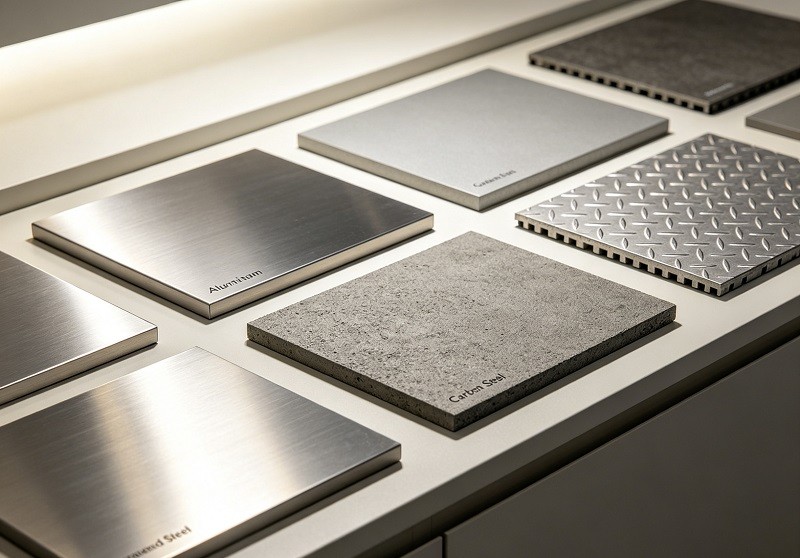
Custom sheet metal fabrication is where function meets artistry in architectural and interior design. Architects and designers leverage these services to create unique and visually stunning elements that define a space. This includes everything from elaborate metal facades and decorative panels that give a building its identity, to bespoke staircases, railings, and light fixtures that elevate interior aesthetics. Materials like stainless steel, brushed aluminum, and weathered steel (Corten) are often chosen for their visual appeal and durability. Custom fabrication allows for the realization of complex geometric patterns, perforated designs, and unique finishes, giving designers the freedom to push creative boundaries and craft truly memorable and personalized environments.
Specialized Industrial and Commercial Applications
Beyond construction and design, custom sheet metal fabrication is a cornerstone of the industrial and commercial sectors. In manufacturing, it is used to create custom machinery guards, conveyor systems, control panels, and a host of specialized equipment tailored to a specific production line. For the electronics industry, fabricators produce precision-made chassis, enclosures, and racking systems that protect sensitive components and manage heat. In the commercial world, restaurants rely on custom stainless steel kitchens for hygiene and efficiency, while retail stores use custom metal shelving and displays to create a unique brand experience. In each of these applications, custom fabrication provides solutions that are tailored to the unique operational needs, safety standards, and spatial constraints of the business, ensuring optimal performance and efficiency.
Navigating Material Choices in Custom Sheet Metal Fabrication Services
The success of any custom sheet metal project hinges on one of the most critical decisions made at the outset: the choice of material. The material selected will dictate not only the component's final cost but also its strength, weight, durability, corrosion resistance, and appearance. With a wide array of metals available, each with its own unique set of properties, understanding these characteristics is essential for engineers, designers, and project managers. A well-informed decision ensures the fabricated part will perform reliably in its intended environment, while a poor choice can lead to premature failure and costly rework.
Key Materials and Their Characteristics for Custom Sheet Metal Fabrication Services
The selection of the right metal is a foundational step in the custom fabrication process. Each material offers a different balance of strength, cost, weight, and resistance to environmental factors. The choice depends entirely on the application's specific requirements, from load-bearing structural components to purely aesthetic decorative pieces.
Mild Steel: The Versatile and Economical Option
Mild steel (a form of low-carbon steel) is arguably the most common and versatile material used in sheet metal fabrication. Its popularity stems from its excellent combination of strength, weldability, and workability, all at a relatively low cost. It is easily bent, cut, and formed, making it ideal for a wide range of applications, including structural frames, machinery parts, and general-purpose enclosures. However, its primary drawback is its low resistance to corrosion. Without a protective coating like paint, powder coating, or galvanization, mild steel will rust quickly when exposed to moisture. Despite this, its affordability and ease of fabrication make it the go-to choice for many projects where a protective finish will be applied.
Stainless Steel: For Durability and Corrosion Resistance
When corrosion resistance is a primary concern, stainless steel is often the superior choice. This alloy, which contains a minimum of 10.5% chromium, forms a passive, self-healing oxide layer on its surface that protects it from rust and staining. This makes it indispensable for applications in corrosive or hygienic environments, such as food processing equipment, medical devices, marine hardware, and architectural facades. Stainless steel is available in numerous grades (e.g., 304 for general use, 316 for marine environments) and finishes (e.g., brushed, polished, matte). While it is more expensive and can be more challenging to machine than mild steel, its exceptional durability and low maintenance requirements often justify the initial investment.
Aluminum: Lightweight Strength
Aluminum's most defining characteristic is its remarkable strength-to-weight ratio. It is approximately one-third the weight of steel, making it the ideal material for applications where reducing weight is critical, such as in the aerospace, automotive, and transportation industries. Beyond its light weight, aluminum is also naturally resistant to corrosion due to the rapid formation of a protective oxide layer. It is also an excellent thermal and electrical conductor. While not as strong as steel, certain alloys can achieve impressive structural strength. It is easily formed, machined, and recycled, making it a sustainable and versatile option for products ranging from electronic enclosures to window frames and vehicle body panels.
Galvanized and Spring Steel: Specialized Choices
Beyond the primary three, fabricators work with a variety of specialized steels tailored for specific performance needs. Galvanized Steel is typically low-carbon steel that has been coated with a layer of zinc. This zinc coating provides excellent corrosion protection, making it a cost-effective alternative to stainless steel for outdoor applications like ductwork, roofing, and fencing. The zinc acts as a sacrificial barrier, corroding before the steel underneath is affected. Spring Steel is a special type of high-carbon steel or alloy steel designed to have a high yield strength. This unique property allows it to be bent or twisted to a significant degree and still return to its original shape. As the name suggests, it is primarily used to make springs, but it is also used for manufacturing flat springs, clips, washers, and saw blades where elasticity and resilience are paramount.
The table below provides a quick comparison of these common materials:
| Material | Key Characteristics | Common Applications | Corrosion Resistance |
|---|---|---|---|
| Mild Steel | Economical, strong, highly formable, weldable | Structural components, machinery, general fabrication | Low (requires coating) |
| Stainless Steel | Excellent corrosion resistance, hygienic, aesthetic | Food processing, medical, architectural, marine | High to Excellent |
| Aluminum | Lightweight, high strength-to-weight ratio, corrosion resistant | Aerospace, automotive, electronics, consumer goods | Good to Excellent |
| Galvanized Steel | Corrosion resistant due to zinc coating, cost-effective | HVAC ductwork, roofing, outdoor enclosures | Good |
| Spring Steel | High yield strength, excellent elasticity, resilience | Springs, clips, blades, flat springs | Low (often oiled or coated) |
Mechanical Factors Guiding Material Selection for Custom Sheet Metal Fabrication Services
Choosing a material goes beyond just its basic type. A deeper understanding of its mechanical properties is crucial to ensure the long-term success and safety of the final part. The forces a component will endure, the environment it will live in, and its expected lifespan all depend on these intrinsic characteristics.
Understanding Material Strength and Ductility
Strength is a measure of a material's ability to withstand an applied load without breaking or deforming. It is typically discussed in terms of tensile strength (resistance to being pulled apart) and yield strength (the point at which it begins to deform permanently). For a load-bearing structural part, high strength is non-negotiable. Ductility, on the other hand, is a measure of a material's ability to deform under tensile stress—in other words, its capacity to be stretched or bent without fracturing. A highly ductile material is easier to form during fabrication, but it may not be as strong. The ideal material choice often involves a trade-off between strength and ductility, depending on whether the priority is formability during manufacturing or load-bearing capacity in its final application.
The Importance of Corrosion Resistance
Corrosion is the gradual destruction of a material by chemical or electrochemical reaction with its environment. For metal parts, this is most commonly seen as rust on steel. The consequences of corrosion can range from a purely cosmetic issue to catastrophic structural failure. Therefore, assessing the operational environment is critical. Will the part be exposed to moisture, salt spray, chemicals, or high humidity? For outdoor, marine, or chemical processing applications, selecting a material with inherent corrosion resistance, such as stainless steel or aluminum, is essential. For less harsh environments, a less-resistant material like mild steel can be used, provided it is protected by an appropriate finish like powder coating or galvanization. Ignoring corrosion resistance can lead to a drastically shortened service life and potential safety hazards.
The Consequences of Improper Material Selection in Custom Sheet Metal Fabrication Services
Choosing the wrong material can have severe and wide-ranging consequences that undermine the entire project. If a material with insufficient strength is selected for a structural application, it could lead to immediate or fatigue-induced failure, posing a significant safety risk. If corrosion resistance is overlooked, a part intended for long-term outdoor use might fail in a fraction of its expected lifespan, leading to costly replacement and downtime. Conversely, over-engineering by choosing an expensive, high-performance material when a simpler one would suffice leads to budget overruns and unnecessary expense. Improper material selection can also impact the manufacturing process itself; a design requiring tight bends may be impossible to produce if the chosen material lacks the necessary ductility, leading to cracking and wasted resources. Ultimately, a mistake in material choice can compromise the function, safety, and financial viability of a project.
Core Fabrication Processes in Custom Sheet Metal Fabrication Services: Emphasizing Laser Cutting
Once the design is finalized and the material is chosen, the raw sheet metal must be transformed into the finished product. This is accomplished through a series of core fabrication processes, each playing a vital role in shaping, joining, and finishing the component. Among these, laser cutting stands out for its precision and efficiency, but it is the seamless integration of cutting, bending, welding, and finishing that defines high-quality custom fabrication. Understanding these key processes provides insight into how a simple sheet of metal becomes a complex, functional part.
Precision and Efficiency: The Role of Laser Cutting in Custom Sheet Metal Fabrication Services
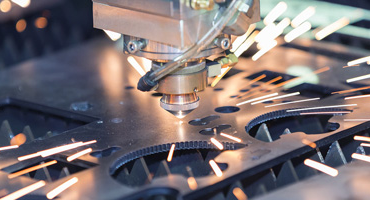
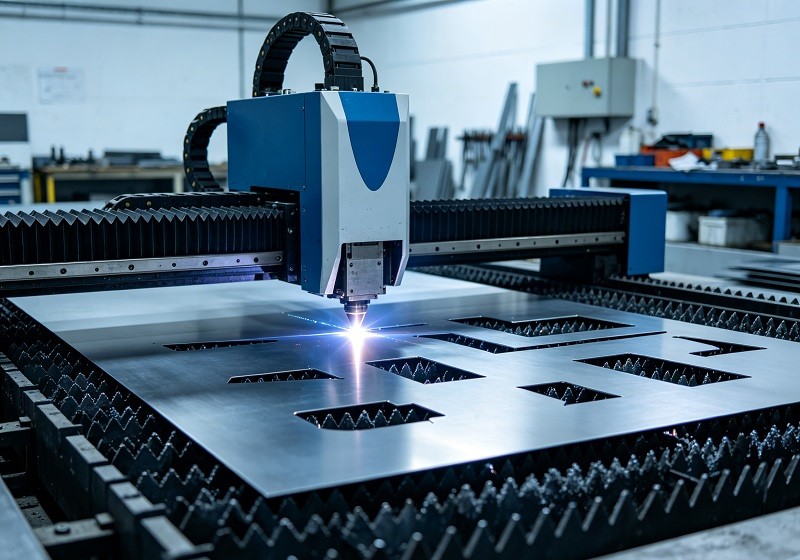
Laser cutting is a cornerstone of modern sheet metal fabrication, renowned for its unparalleled precision, speed, and versatility. The process uses a high-powered, focused laser beam, guided by a computer, to cut through metal. As the beam melts, vaporizes, or burns through the material, a jet of gas blows the molten material away, leaving an extremely clean, smooth, and precise edge.
The key advantages of laser cutting include:
- High Precision: Lasers can achieve incredibly tight tolerances, making them perfect for creating complex shapes and intricate patterns that would be difficult or impossible with traditional cutting methods.
- Superior Edge Quality: The cuts are clean and often require little to no secondary finishing, saving time and labor.
- Minimal Heat-Affected Zone (HAZ): The laser's energy is highly concentrated, which minimizes the area of the surrounding material that is affected by heat, reducing the risk of warping or distortion.
- Versatility: A single laser cutter can process a wide variety of materials and thicknesses, from thin aluminum sheets to thick steel plates.
- Efficiency: The process is fast, highly automated, and can be run 24/7, making it cost-effective for both prototyping and large production runs.
Bending and Welding: Essential Techniques in Custom Sheet Metal Fabrication Services
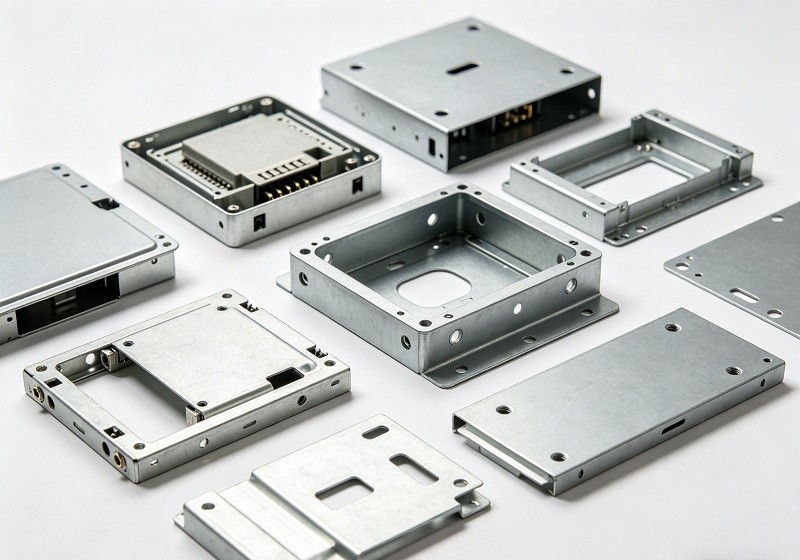
While cutting gives the part its two-dimensional shape, bending and welding are what create the three-dimensional form.
Bending is typically performed using a machine called a press brake. A press brake uses a punch and a die to apply controlled pressure to the sheet metal, creasing it to a specific angle along a straight line. Modern CNC (Computer Numerical Control) press brakes can be programmed to perform a sequence of complex bends with high-volume repeatability and accuracy, transforming a flat cutout into a box, chassis, or bracket.
Welding is the process of joining two or more metal parts together by melting them at the joining point and allowing them to fuse as they cool. There are several welding techniques used in custom fabrication, including MIG (Metal Inert Gas), TIG (Tungsten Inert Gas), and spot welding. The choice of method depends on the material, the thickness, and the required strength and aesthetic of the final weld. TIG welding, for example, is known for producing very clean, precise welds ideal for visible joints on materials like stainless steel and aluminum, while MIG welding is faster and often used for structural steel. Skilled welding is crucial for ensuring the structural integrity and durability of the final assembly.
Finishing Processes: Enhancing Aesthetics and Protection for Custom Sheet Metal Fabrication Services
The final step in the fabrication journey is finishing. These processes are applied to protect the part from the environment and to achieve the desired aesthetic appearance. Finishing is not just about looks; it is a critical layer of defense against corrosion, wear, and abrasion.
Common finishing processes include:
- Powder Coating: A dry powder is applied electrostatically to the part and then cured with heat. It creates a thick, durable, and uniform finish that is more resistant to chipping, scratching, and fading than conventional paint.
- Painting: Liquid paint offers a vast range of color options and can be applied for both protective and decorative purposes.
- Anodizing: An electrochemical process used for aluminum that creates a hard, durable, and corrosion-resistant oxide layer. It can also be dyed to produce various colors.
- Plating: A thin layer of another metal (such as zinc, chrome, or nickel) is deposited onto the surface to provide corrosion resistance or a decorative finish.
- Grinding and Polishing: Mechanical processes used to smooth welds, remove imperfections, and create a desired surface texture, such as a brushed or mirror finish on stainless steel.
Optimizing Costs and Choosing a Partner for Custom Sheet Metal Fabrication Services
Successfully completing a custom fabrication project is not just about a great design; it's also about managing costs effectively and selecting the right manufacturing partner. The financial investment can be significant, and the quality of the final product is directly tied to the expertise and capabilities of the fabricator you choose. Understanding the factors that drive costs and knowing what to look for in a provider are crucial steps in ensuring your project is delivered on time, on budget, and to the highest standard of quality.
Factors Influencing the Cost of Custom Sheet Metal Fabrication Services
The price of a custom-fabricated part is not arbitrary; it is the result of several interconnected variables. A clear understanding of these cost drivers allows you to make informed decisions during the design phase to better control the final project budget.
Material and Thickness Considerations
Material is one of the most significant cost factors. As discussed previously, high-performance materials like stainless steel and certain aluminum alloys are inherently more expensive than mild steel. Beyond the base price per kilogram, some materials are also more difficult and time-consuming to cut, bend, and weld, which increases labor and machine time costs. The thickness of the material also plays a major role; thicker sheets cost more and require more powerful machinery and longer processing times for cutting and bending, all of which drive up the price.
Design Complexity and Production Scale
The complexity of your design directly impacts the cost. A part with many intricate cuts, tight-tolerance bends, extensive welding, and complex assembly will require more programming, machine setup, and skilled labor than a simple bracket. The number of individual operations a part must go through on the shop floor is a primary determinant of its final cost.
Production scale, or quantity, also has a profound effect. A one-off prototype will be relatively expensive because all the setup and programming costs are concentrated on a single unit. As the production volume increases, these initial setup costs are amortized over many parts, drastically reducing the per-unit price. Mass production allows for process optimization and bulk material purchasing, leading to significant economies of scale.
Strategies for Cost-Effective Custom Sheet Metal Fabrication Services
While costs are influenced by the project's needs, there are several strategies that can be employed to optimize the budget without sacrificing quality.
- Design for Manufacturability (DFM): The most effective way to reduce cost is during the design phase. Work with your fabricator to simplify the design. Can you reduce the number of welds by using more bends? Can you use a standard material thickness? Can tolerances be loosened in non-critical areas? Small changes guided by DFM principles can lead to substantial savings.
- Material Optimization: Choose the most cost-effective material that meets the project's performance requirements. Don't over-specify. If a powder-coated mild steel part will function just as well as a more expensive stainless steel one, it presents a significant cost-saving opportunity.
- Consolidate Orders: Whenever possible, increase your order quantity to take advantage of economies of scale. Ordering a larger batch of parts less frequently is almost always more cost-effective than placing multiple small orders.
- Standardize Components: If you have a project with multiple similar but slightly different parts, explore whether they can be standardized into a single, more versatile design. This can streamline production and increase volume.
Selecting the Right Provider for Your Custom Sheet Metal Fabrication Services Needs
Choosing a fabrication partner is a critical decision that will impact the quality, cost, and timeline of your project. The right partner is more than just a supplier; they are a collaborator invested in your success.
Key Qualities: Experience, Quality Assurance, and Certifications
When evaluating potential fabricators, look for a proven track record. How long have they been in business? Can they provide case studies or examples of projects similar to yours? A long history of experience often indicates stability and deep process knowledge. A robust Quality Assurance (QA) program is non-negotiable. Ask about their inspection processes, whether they perform first-article inspections, and how they handle non-conforming parts. Furthermore, industry certifications, such as ISO 9001, demonstrate a formal commitment to quality management systems and consistent processes, providing an extra layer of confidence in their capabilities.
Assessing Equipment, Materials, and Project Management
The quality of a fabricator's output is directly related to the quality of their equipment. A shop with modern, well-maintained CNC laser cutters, press brakes, and welding stations is more likely to produce precise and consistent parts. Inquire about their machinery and its capabilities. Ask about their material sourcing practices. Do they have relationships with reputable suppliers and can they provide material traceability certifications? Finally, evaluate their project management. A good partner will offer clear and consistent communication, provide realistic lead times, and be proactive in identifying potential issues. Strong project management is the glue that holds the entire process together, ensuring your project flows smoothly from order to delivery.
By carefully considering these factors, you can build a strong, collaborative relationship with a fabrication provider who will not only meet but exceed your expectations, transforming your designs into high-quality, cost-effective realities.
In conclusion, it is clear that Custom Sheet Metal Fabrication Services are an indispensable component of modern industry, providing bespoke solutions that masterfully blend strength, efficiency, and aesthetic appeal. From foundational structural elements to intricate decorative features, the ability to tailor every aspect of a component—from its material to its final finish—empowers innovation across construction, manufacturing, and design.
To ensure the success of your project, making informed choices is paramount. This involves a deep understanding of the unique properties of different materials, a grasp of the capabilities and precision offered by core processes like laser cutting, and, most importantly, the selection of a reliable and skilled fabrication partner. Collaborating with an experienced provider who can offer design-for-manufacturability feedback and maintains a rigorous quality control system is a crucial step toward achieving your vision.
By embracing the potential of these specialized services, we can confidently address even the most complex design challenges. This tailored approach allows us to move beyond the limitations of standard components and achieve superior, optimized outcomes in all our manufacturing and construction endeavors. We encourage you to share this article and start a conversation about how custom fabrication can elevate your next project.