Understanding the Types of CNC Machines for Custom Turning & Milling Parts
As manufacturing continues its rapid evolution, the demand for precise, customized parts has grown significantly. Companies across diverse industries, from aerospace and automotive to medical devices and electronics, increasingly rely on advanced manufacturing techniques to produce specialized components that meet stringent performance and quality standards.
In this dynamic landscape, Computer Numerical Control (CNC) machining stands out as a transformative process. It leverages computer-controlled tools to cut, mill, drill, and shape materials with exceptional accuracy, offering unparalleled precision, repeatability, and efficiency over traditional manual methods. This technology has become the backbone of modern production, enabling the creation of parts with complex geometries and tight tolerances that were once impossible to achieve at scale.
This blog post will delve into the world of CNC machining, specifically focusing on the types of CNC machines best suited for creating custom turning and milling parts. We will explore their unique capabilities, highlight their core advantages, and provide guidance on selecting the right technology for your specific project needs.
Understanding the Fundamentals of CNC Turning & Milling Custom Parts
Before diving into the specific types of machines, it's essential to grasp the fundamental principles of CNC machining and why it has become the gold standard for producing custom components. This technology is a fusion of advanced software, robotics, and traditional machining techniques, resulting in a process that is both highly automated and incredibly precise.
What Exactly is CNC Machining?
At its core, CNC machining is an automated manufacturing process guided by pre-programmed computer software. It dictates the movement of factory tools and machinery, transforming a digital design into a physical part.
The Role of Computer Numerical Control
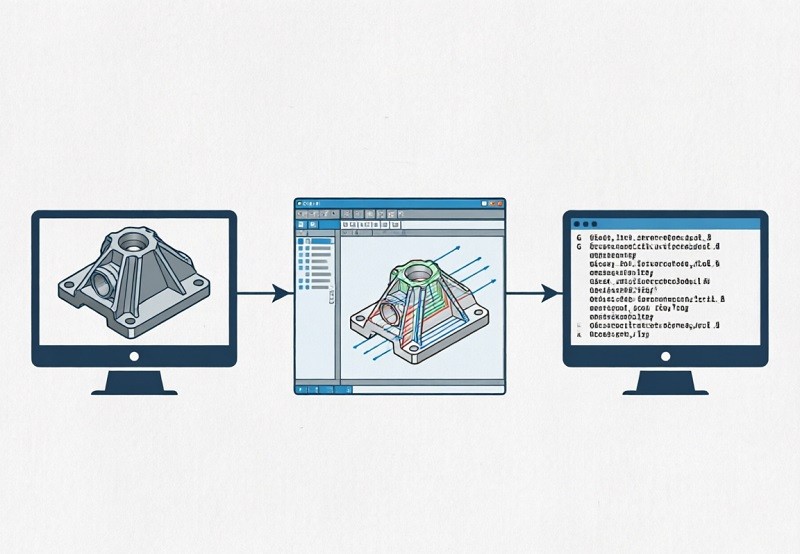
Computer Numerical Control (CNC) is the automated control of machining tools (such as drills, lathes, and mills) by means of a computer. The process begins with a 3D solid model created using Computer-Aided Design (CAD) software. This digital blueprint is then converted by Computer-Aided Manufacturing (CAM) software into a specific set of instructions called G-code.
G-code is the programming language that directs the CNC machine's every action, including:
- Movement: Controlling the precise position of the cutting tool and/or workpiece along multiple axes (X, Y, and Z).
- Speed: Dictating the rotational speed of the cutting tool (spindle speed) and the rate at which it moves across the material (feed rate).
- Tool Selection: Automatically changing cutting tools for different operations, such as drilling, tapping, or contouring.
- Coolant Flow: Managing the application of cutting fluid to cool the tool and workpiece, and to flush away chips.
This reliance on a digital script ensures that every part produced is a perfect replica of the original design, eliminating the human error and variability inherent in manual machining.
Subtractive Manufacturing for Custom Parts
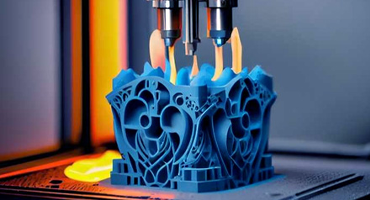
CNC machining is a form of subtractive manufacturing. This means it creates the desired part by systematically removing material from a solid block, bar, or sheet, known as a workpiece or blank. This is in direct contrast to additive manufacturing (like 3D printing), which builds a part layer by layer.
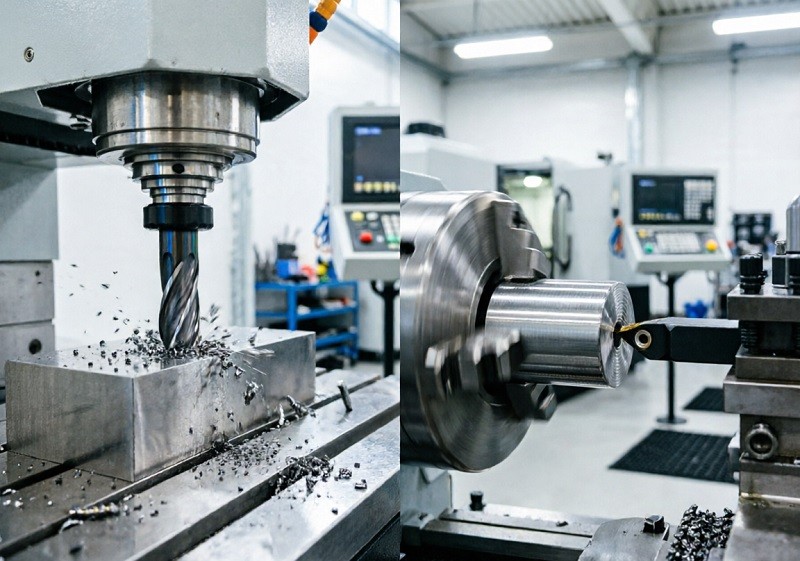
The subtractive process involves a cutting tool that moves in relation to the workpiece, carving away excess material to reveal the final shape. Whether it's a milling machine's rotating end mill cutting a stationary block or a lathe's static tool shaping a rotating bar, the principle remains the same: subtraction leads to precision. This method is exceptionally well-suited for creating parts from metals and plastics that require high strength, superior surface finishes, and tight dimensional accuracy.
Key Advantages for Custom Turning & Milling Parts Production
The widespread adoption of CNC machining stems from a powerful combination of benefits that are particularly impactful for the production of custom parts, where quality and consistency are paramount.
Unmatched Precision and Repeatability
The primary advantage of CNC machining is its extraordinary precision and repeatability. Because the entire process is computer-driven, machines can execute cutting paths with tolerances as tight as ±0.0001 inches (or about 2.5 micrometers). This level of accuracy is critical for industries where parts must fit together perfectly and perform reliably under stress, such as in aerospace assemblies, medical implants, and high-performance automotive engines.
Furthermore, this precision is repeatable across thousands of units. Once the G-code program is perfected, the CNC machine can produce identical parts consistently, whether it's the first or the ten-thousandth piece. This ensures uniformity and quality control on a scale that manual processes simply cannot match.
Efficiency, Speed, and Cost-Effectiveness
While the initial investment in CNC machinery can be significant, the long-term efficiency and speed gains lead to substantial cost-effectiveness. CNC machines can operate 24/7 with minimal supervision, drastically increasing production output. Automated tool changes and optimized cutting paths reduce cycle times, allowing parts to be manufactured much faster than with manual methods.
This automation also reduces direct labor costs and minimizes the risk of costly errors. For both one-off custom prototypes and large-scale production runs, CNC machining provides a scalable solution that becomes more cost-effective as volume increases.
Design Flexibility and Material Versatility
CNC machining offers immense freedom for engineers and designers. The technology can produce parts with highly complex geometries, including intricate curves, sharp angles, and internal cavities that would be difficult or impossible to create otherwise. This empowers innovation, allowing for the creation of optimized, lightweight, and highly functional components.
Equally important is the vast range of materials that can be machined. CNC technology is compatible with:
- Metals: Aluminum, stainless steel, brass, copper, titanium, and various tool steels.
- Plastics: ABS, polycarbonate, nylon, PEEK, and acrylic.
- Composites: Carbon fiber, fiberglass.
- Wood and Foam: For prototyping and specific applications.
This material versatility makes CNC machining a go-to choice for nearly any industry. The ability to work with robust materials like steel is particularly crucial. For instance, creating parts through Custom Mild Steel CNC Machining is a common requirement for structural components that demand both strength and machinability.
Exploring CNC Machine Types for Precision Turning & Milling Custom Parts
While the term "CNC machine" is often used broadly, it encompasses a wide variety of equipment, each designed for specific tasks and geometries. The two most fundamental types for creating custom parts are milling machines and turning machines (lathes). Understanding their differences is key to selecting the right process for your project.
CNC Milling Machines: Crafting Complex Shapes
CNC milling is one of the most common and versatile machining processes. It is used to create flat and contoured surfaces, slots, pockets, and other complex features on a workpiece.
How CNC Milling Works
In CNC milling, the workpiece is held stationary on a machine bed while a multi-point cutting tool rotates at high speeds to remove material. The computer controls the movement of both the workpiece and the cutting tool along multiple axes to execute the programmed cutting path. The rotating tool, known as a mill or end mill, chips away at the material to shape the part according to the CAD model.
This process is ideal for producing non-symmetrical and prismatic parts, such as engine blocks, enclosures, brackets, and molds.
From 3-Axis to 5-Axis Milling for Intricate Custom Parts
CNC milling machines are often categorized by the number of axes of movement they offer. This directly impacts the complexity of the parts they can produce.
| Machine Type | Description | Best For |
|---|---|---|
| 3-Axis Milling | The tool moves along the X, Y, and Z linear axes. The workpiece remains fixed. It is the most common form of CNC milling. | 2.5D parts: profiles, pockets, drilled holes. Simple prismatic shapes. |
| 4-Axis Milling | Includes the three linear axes (X, Y, Z) plus one rotational axis (the A-axis), which rotates the workpiece. This allows for machining on the sides of a part. | Cylindrical parts with features on the circumference, such as cam lobes or helical grooves. |
| 5-Axis Milling | Includes three linear axes and two rotational axes (A and B, or B and C axes). This allows the tool to approach the workpiece from any direction in a single setup. | Highly complex 3D shapes, contoured surfaces, and parts requiring machining on multiple faces. |
The move from 3-axis to 5-axis milling represents a significant leap in capability. With 5-axis machining, undercuts and deep, complex cavities can be created in a single setup, which improves accuracy (by not having to re-fixture the part) and reduces overall machining time.
Ideal Applications for CNC Milling Custom Parts
Thanks to its versatility, CNC milling is used to produce a vast array of custom components across countless industries. Common applications include:
- Aerospace: Turbine blades, structural components, and fuselage panels.
- Automotive: Engine blocks, transmission components, and suspension parts.
- Medical: Custom surgical instruments, orthopedic implants, and enclosures for medical devices.
- Electronics: Heatsinks, custom enclosures, and connectors.
- Prototyping: Creating functional prototypes from production-grade materials for testing and validation.
CNC Turning Machines (Lathes): Perfecting Cylindrical Custom Parts
CNC turning is a machining process used to create cylindrical or conical parts. It is fundamentally different from milling in how the tool and workpiece interact.
How CNC Turning Works
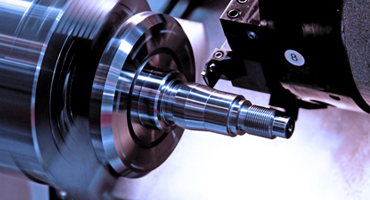
In CNC turning, the workpiece is mounted on a chuck and rotated at high speed. A stationary single-point cutting tool is then moved along the surface of the rotating workpiece to remove material. The computer controls the movement of the cutting tool along two axes: longitudinally along the length of the part (Z-axis) and radially toward or away from the center of the part (X-axis).
This process, performed on a machine called a CNC lathe, is exceptionally efficient for creating parts with rotational symmetry.
Types of CNC Lathes for Various Custom Parts
Just as with milling machines, there are several types of CNC lathes, each optimized for different production needs:
- 2-Axis Lathes: The most basic type, with X and Z axes for standard turning, boring, and drilling operations.
- Turret Lathes: Equipped with a turret that holds multiple tools, allowing for fast, automated tool changes to perform a sequence of operations without stopping.
- Swiss-Type Lathes (Sliding Headstock): Ideal for producing small, complex, and slender parts. In a Swiss lathe, the workpiece moves back and forth through a guide bushing while the tool remains stationary, providing excellent support and minimizing deflection.
- Multi-Axis Turn-Mill Centers: These advanced machines combine the capabilities of both a lathe and a milling machine. They can turn a part and then stop the rotation to perform milling, drilling, and tapping operations, enabling the creation of highly complex parts in a single setup.
Optimizing Production of Round Custom Parts with CNC Turning
CNC turning is the most economical and fastest way to produce round custom parts, especially in medium to high volumes. Its primary applications include:
- Shafts and axles
- Pins, dowels, and fasteners
- Custom screws and bolts
- Nozzles and connectors
- Rollers and bushings
- Any component with a primarily cylindrical or conical profile.
The speed and efficiency of turning make it a cornerstone of manufacturing for any part that can be produced on a lathe.
Beyond Milling and Turning: Other Specialized CNC Machines for Custom Parts
While milling and turning are the most common CNC processes, several other specialized machines are used to meet unique manufacturing challenges, such as working with extremely hard materials or achieving ultra-fine surface finishes.
Wire Cut EDM for Hard and Intricate Custom Parts
Electrical Discharge Machining (EDM) is a non-contact machining process that uses electrical sparks to erode material. Wire EDM specifically uses a thin, electrically charged wire (typically brass) as an electrode to cut through conductive materials. The wire never physically touches the workpiece. Because it relies on thermal energy, it can easily cut hardened tool steels, titanium, and other exotic alloys that are difficult or impossible to machine with traditional cutting tools. It is renowned for creating sharp internal corners, intricate profiles, and tapered shapes with high accuracy.
CNC Grinders for High-Precision Surface Finishing of Custom Parts
CNC grinding is a finishing process that uses a rotating abrasive wheel to remove minute amounts of material from a workpiece. Its primary purpose is not to shape a part from a raw block but to bring a previously machined part to its final, highly precise dimensions and achieve a superior surface finish. CNC grinders can produce surfaces that are exceptionally flat, smooth, and have very tight tolerances, making them essential for manufacturing bearing races, precision shafts, and optical components.
CNC Drills and Routers for Diverse Custom Part Needs
- CNC Drills: These machines are optimized for one primary task: accurately drilling holes. They move a drill bit along the X and Y axes to position it over the workpiece and then lower it along the Z-axis to create holes of specified depths and diameters.
- CNC Routers: Similar in motion to a 3-axis milling machine, a CNC router is typically used for cutting softer materials like wood, plastic, foam, and soft metals like aluminum. They are commonly used in sign making, woodworking, and for creating larger-scale parts that do not require the extreme rigidity of an industrial milling machine.
Choosing the Right CNC Technology for Your Custom Turning & Milling Parts Project
With a clear understanding of the different CNC machine types, the next step is selecting the most appropriate technology for your specific custom part. This decision hinges on several factors, including the part's geometry, the material being used, the required tolerances, and the production volume.
Milling vs. Turning: Which is Best for Your Custom Parts?
The most fundamental choice is often between CNC milling and CNC turning. The geometry of your part is the primary deciding factor.
Considering Part Geometry and Complexity
Here's a simple breakdown to guide your decision:
| Factor | Choose CNC Turning If… | Choose CNC Milling If… |
|---|---|---|
| Primary Shape | The part is primarily cylindrical, conical, or round. | The part is primarily square, rectangular, or prismatic. |
| Features | Features are concentric, such as grooves, threads, and bores. | Features are non-symmetrical, such as pockets, slots, and flat faces. |
| Symmetry | The part has rotational symmetry around a central axis. | The part is asymmetrical or has complex 3D surface contours. |
| Example | Shafts, pins, nozzles, custom fasteners. | Enclosures, brackets, molds, engine blocks. |
If a part contains both cylindrical and prismatic features, a multi-axis turn-mill center may be the most efficient option, as it can perform both turning and milling operations in a single setup.
Material Properties and Production Volume
While geometry is key, material and volume also play a role. Extremely hard materials may be better suited for specific processes like grinding or EDM after initial machining. For production volume, turning is generally faster and more cost-effective for simple round parts, making it ideal for high-volume runs. Milling setups can sometimes be more complex, but once programmed, they are perfectly suited for automated, high-volume production of complex parts.
The Impact of CNC Multi-Axis Machines on Custom Part Manufacturing
The evolution of multi-axis CNC machines, particularly 5-axis mills and turn-mill centers, has revolutionized custom part manufacturing by enabling what is often called "done-in-one" production.
Integrated Turn-Mill Solutions for Efficient Custom Parts
Turn-mill centers are the ultimate hybrid machines, combining the capabilities of a CNC lathe and a CNC milling machine into a single, powerful platform. A part can be turned to create its cylindrical features, and then the workpiece rotation can be stopped and indexed to allow for milling, drilling, and tapping operations with live tooling.
The advantages of this integrated approach are immense:
- Improved Accuracy: It eliminates the inaccuracies that can arise from moving a part between different machines and re-clamping it.
- Reduced Lead Times: By consolidating operations, the total manufacturing time is significantly shortened.
- Lower Costs: Fewer setups mean less operator intervention and lower labor costs.
- Greater Complexity: Extremely complex parts that would require numerous setups on separate machines can be produced efficiently.
Partnering with the Right CNC Machining Service for Custom Parts
For most businesses, owning and operating a full suite of advanced CNC machines is not feasible. Therefore, partnering with a specialized CNC machining service is the most effective way to access this technology.
Evaluating Technical Capabilities and Quality Standards
When choosing a partner, it's crucial to evaluate their technical capabilities and commitment to quality. Key factors to consider include:
- Machine Inventory: Do they have the right machines for your part's complexity (e.g., 3-axis, 5-axis, lathes, turn-mill centers)?
- Material Expertise: Do they have proven experience working with your specified material?
- Quality Certifications: Look for certifications like ISO 9001, which demonstrates a commitment to a robust quality management system.
- Inspection and Metrology: Do they use advanced inspection tools, such as Coordinate Measuring Machines (CMMs), to verify that parts meet dimensional specifications?
- Programming and Engineering Support: A strong team of programmers and engineers is essential for translating your designs into high-quality finished parts.
The Value of Expert Collaboration for Custom Parts
The best CNC machining partners act as more than just a vendor; they become an extension of your engineering team. They can provide Design for Manufacturability (DFM) feedback, which involves analyzing your part design and suggesting modifications that can:
- Reduce machining time and cost.
- Improve part strength and functionality.
- Ensure the design is optimized for the chosen manufacturing process.
This collaborative approach ensures that your innovative designs are transformed into tangible, perfectly executed custom parts in the most efficient and cost-effective manner possible.
Conclusion
The world of CNC machining offers incredible opportunities for creating high-quality, precise, and complex custom turning and milling parts. From the fundamental efficiency of 3-axis milling and 2-axis turning to the "done-in-one" capabilities of advanced multi-axis turn-mill centers, there is a CNC solution for nearly any manufacturing challenge.
By understanding the different types of CNC machines and their specific applications, businesses can make informed decisions to optimize their manufacturing processes, reduce costs, and accelerate product development for their custom parts. This knowledge empowers you to select the right technology that aligns with your part’s geometry, material, and quality requirements.
Ultimately, choosing the right CNC technology and a reliable manufacturing partner is crucial for transforming innovative designs into tangible, perfectly executed custom turning and milling parts. Embracing these advanced processes is no longer just an option but a necessity for staying competitive in today's demanding market.