Understanding How a CNC Machining Parts Supplier Achieves OEM Quality
As an Original Equipment Manufacturer (OEM), you face the constant challenge of delivering high-quality components while managing tight deadlines, cost-efficiency, and complex designs. You need partners who can consistently meet your exact specifications and industry standards. A dedicated CNC Machining Parts Supplier not only understands these demands but has built their entire operation around satisfying them.
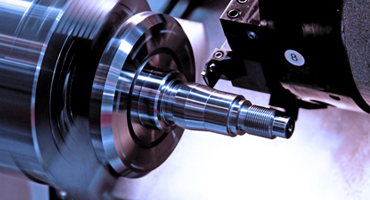
CNC (Computer Numerical Control) machining is a critical technology in modern manufacturing, using computer systems to precisely control machines that shape raw materials. This process is fundamental to creating parts with the accuracy and consistency that OEMs require. This blog will explore how a reliable CNC machining parts supplier ensures the quality OEMs demand and how these strategic partnerships drive success.
We'll delve into the advancements in CNC technology, the tangible benefits of outsourcing your component manufacturing, and the essential qualities to look for in a top-tier CNC machining partner to meet and exceed your expectations.
The Evolution of Precision: How a CNC Machining Parts Supplier Stays Ahead
In the competitive landscape of manufacturing, standing still is falling behind. The most dependable CNC machining suppliers are in a constant state of evolution, investing in technology, software, and talent to push the boundaries of precision and efficiency. They understand that an OEM's success is directly tied to the quality of the components they receive. This commitment to progress is what separates a mere parts provider from a true manufacturing partner.
Advanced CNC Technology for Unmatched Accuracy
The core of any elite CNC machining operation is its technology. Modern advancements have revolutionized what is possible, allowing for the creation of parts that are more complex, more precise, and produced more efficiently than ever before. For an OEM, this translates to better-performing products, lower costs, and faster-to-market timelines.
Higher Precision and Efficiency
Modern CNC machines have transformed manufacturing by offering unprecedented levels of precision and efficiency. High-speed machining (HSM), for instance, utilizes optimized tool paths and faster, lighter cuts to drastically reduce cycle times, turning hours of work into minutes without compromising on surface finish or accuracy. This leap in productivity allows OEMs to accelerate their production schedules and achieve greater output.
Furthermore, the integration of cutting-edge software and hardware has pushed machining tolerances to incredible limits, often measured in microns (±0.005 mm). Advanced control systems can monitor tool positioning in real-time and automatically compensate for tool wear, ensuring every part in a large production run is identical to the first. This level of consistency is non-negotiable in sectors like aerospace, medical, and automotive, where performance and safety are paramount.
Multi-Axis Machining and Automation Integration
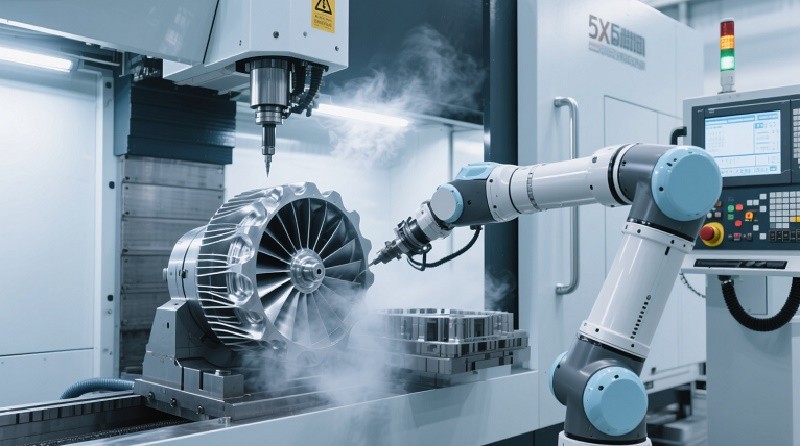
One of the most significant innovations in recent years is the widespread adoption of multi-axis CNC machining. While traditional 3-axis machines operate on the X, Y, and Z axes, 5-axis and even 7-axis machines introduce rotational axes that allow the cutting tool to approach a workpiece from multiple directions in a single setup. This capability is a game-changer for several reasons:
- Complex Geometries: It enables the manufacturing of highly intricate designs, such as turbine blades, medical implants, or complex engine components, that would be impossible or prohibitively expensive with traditional methods.
- Improved Accuracy: By eliminating the need for multiple setups and manual repositioning of the workpiece, multi-axis machining drastically reduces the risk of human error and cumulative positioning inaccuracies.
- Greater Efficiency: Completing a part in a single clamping can shorten order fulfillment times by as much as 70%, boosting overall throughput.
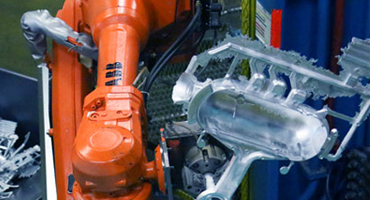
Automation is another key element. The integration of robotic arms for loading and unloading materials, pallet changers, and automated in-process inspection systems enables "lights-out" manufacturing, where production continues 24/7 with minimal human intervention. This not only maximizes machine uptime and productivity but also enhances consistency and reduces labor costs.
Specialized Expertise in Critical Industries
A premier CNC machining supplier doesn't just own advanced equipment; they possess deep, specialized knowledge of the industries they serve. This expertise allows them to understand the unique material requirements, compliance standards, and performance demands of critical sectors.
Meeting Demands in Semiconductor Manufacturing
The semiconductor industry is defined by its demand for extreme precision and purity. Components used in wafer fabrication equipment, such as wafer handling fixtures, heat sinks, and precision enclosures, must be manufactured to incredibly tight tolerances, as the smallest flaw can lead to catastrophic failure. A specialized supplier understands the nuances of this field, from material selection to contamination control.
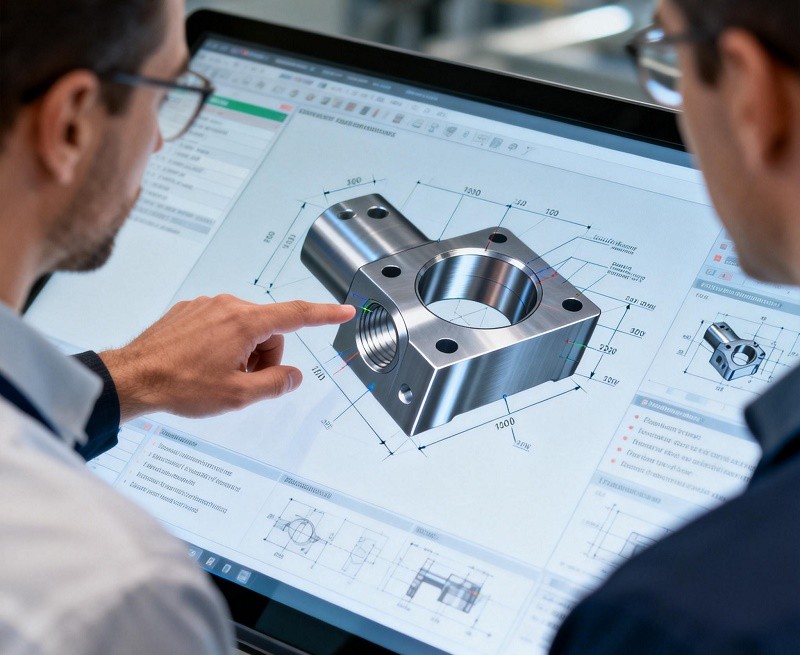
CNC machining is essential for creating the high-precision parts that form the backbone of semiconductor manufacturing equipment. This includes machining not only metals but also specialized non-metal materials like Delrin, Teflon, and PEEK, which have specific properties required for sensitive electronic applications. Furthermore, the use of advanced CAD/CAM modeling allows for the 3D visualization and testing of component compatibility before any material is cut, ensuring perfection from the start.
High-Performance Engine Components
In the world of high-performance engines, every component is critical. CNC machining is the core technology used to produce essential engine parts like cylinder heads, engine blocks, pistons, and crankshafts, where tight tolerances directly impact power, efficiency, and reliability. 5-axis CNC machining is particularly vital for creating the complex geometries found in modern engine designs, such as intricate internal oil and water systems.
A supplier with expertise in this area understands the immense stresses these components endure. They can recommend and work with high-strength materials like forged steel, titanium alloys, and specialized aluminum grades. Their process control ensures that every part meets the exacting specifications required to withstand extreme temperatures and pressures, delivering the performance and durability that high-performance automotive and aerospace applications demand.
Strategic Advantages: Why Partnering with a Specialized CNC Machining Parts Supplier Makes Sense
For many OEMs, the decision to manufacture components in-house versus outsourcing is a critical strategic choice. While maintaining full control seems appealing, partnering with a specialized CNC machining supplier offers a host of advantages that can significantly enhance an OEM's competitiveness, efficiency, and bottom line. It's a move that shifts the focus from managing production to driving innovation.
Optimizing Cost and Resources
One of the most compelling reasons to outsource is the immediate and long-term financial benefit. Running an in-house machining operation is a massive undertaking that extends far beyond the initial purchase of equipment. A strategic partnership allows OEMs to leverage the supplier's efficiencies for their own gain.
Cost Efficiency and Reduced Financial Investment
The primary benefit of outsourcing is a significant reduction in capital expenditure. Acquiring, housing, and maintaining a fleet of state-of-the-art CNC machines represents a substantial financial investment, with a single advanced 5-axis machine costing hundreds of thousands of dollars. Beyond the initial purchase, there are ongoing costs for maintenance, software updates, and specialized tooling.
By partnering with a supplier, OEMs can avoid these heavy capital investments and convert a large fixed cost into a predictable operating expense. Specialized suppliers achieve economies of scale by serving multiple clients, which allows them to offer more competitive pricing. They have already made the investment in top-tier technology and have optimized their processes for maximum efficiency, a benefit that is passed directly to their OEM partners. This frees up an OEM's capital to be allocated to core business activities like research and development or marketing.
Focusing on Core Business Activities
Every minute spent on managing machine uptime, training operators, or troubleshooting production issues is a minute not spent on what truly drives an OEM's business: innovation, product design, and customer relationships. Outsourcing non-core activities allows companies to sharpen their focus on their core competencies.
By delegating the complexities of component manufacturing to a trusted expert, OEMs can redirect their internal resources—engineering talent, management attention, and R&D budgets—toward developing the next generation of products. This strategic alignment is crucial for staying ahead in a competitive market. A manufacturing partner's role is to handle the production process, allowing the OEM to excel at designing, marketing, and selling superior products.
Accessing Cutting-Edge Capabilities
Beyond cost savings, outsourcing provides immediate access to a level of technology and expertise that would be difficult and expensive to build in-house. A specialized supplier's business model is built on being at the forefront of manufacturing technology.
Leveraging Advanced Technology and Expertise
Top-tier CNC machining suppliers are constantly investing in the latest equipment, from multi-axis machining centers to advanced metrology and inspection tools. Partnering with them gives an OEM instant access to these capabilities without the associated cost and learning curve. This allows for the production of more complex and innovative parts that may not have been feasible with in-house equipment.
Equally important is the human expertise. A specialized supplier employs a team of experienced machinists, programmers, and engineers who live and breathe precision manufacturing. This deep pool of talent provides invaluable insights, from offering Design for Manufacturability (DFM) feedback to solving complex production challenges. This collaborative expertise can lead to better product designs, improved performance, and lower production costs.
Scalability and Risk Reduction Through Outsourcing
Market demand is rarely static. It fluctuates with economic cycles, seasonal trends, and new product launches. For an OEM with a fixed in-house capacity, scaling production up or down can be a significant challenge. Outsourcing provides critical flexibility and scalability. A manufacturing partner can adjust production volumes to match an OEM's changing needs without the OEM having to invest in new equipment or lay off skilled workers.
This partnership also serves as a powerful risk mitigation strategy. By outsourcing, an OEM transfers some of the risks associated with manufacturing—such as supply chain disruptions, equipment failure, or regulatory compliance—to the supplier. This creates a more resilient operation, allowing the OEM to confidently manage demand variations and navigate market uncertainties with greater agility.
Ensuring Flawless Execution: What to Look for in a Quality CNC Machining Parts Supplier
Selecting a CNC machining partner is a high-stakes decision. The right supplier acts as an extension of your own team, while the wrong one can lead to production delays, quality issues, and budget overruns. To ensure flawless execution, OEMs must look beyond the quote and evaluate a supplier's fundamental commitment to quality, their technical capabilities, and their proven track record of reliability.
Commitment to Quality and Compliance
In precision manufacturing, quality is not a feature; it's the foundation. A top-tier supplier demonstrates this commitment through rigorous, documented processes and adherence to internationally recognized standards. For an OEM, this is the ultimate assurance that every part will meet or exceed specifications.
Rigorous Quality Control and Certifications
A serious commitment to quality is evident in a supplier's Quality Management System (QMS). Reputable suppliers prioritize robust quality assurance (QA) measures to ensure consistency. Key indicators of a strong QMS include:
- Certifications: ISO 9001 is the global standard for quality management, providing a framework for process control and continual improvement. For industries with elevated requirements, certifications like AS9100 (aerospace and defense) or IATF 16949 (automotive) are critical. These signal that a manufacturer adheres to the most stringent standards for traceability, risk management, and process control.
- Inspection Processes: Quality control should be integrated throughout the manufacturing cycle. This includes First Article Inspection (FAI) to validate the initial setup, in-process checks to monitor consistency, and final inspection before shipping.
- Metrology Equipment: A supplier's investment in advanced inspection tools, such as Coordinate Measuring Machines (CMMs), optical comparators, and automated vision systems, demonstrates their ability to verify parts to the tightest tolerances. A dedicated, climate-controlled inspection area further shows a commitment to measurement accuracy.
A structured quality control system ensures defective parts are caught early, reducing waste and preventing costly project setbacks. Ultimately, this builds trust and strengthens long-term partnerships.
Precision Beyond Expectations
The term "precision" can be subjective, but in high-stakes industries, it is defined by measurable data. A leading CNC machining supplier can consistently achieve and verify extremely tight tolerances, often measured in microns (µm). A human hair is about 70 microns thick, while some tight tolerances in CNC machining can be as low as ±2 to ±5 microns.
Achieving this micron-level precision requires more than just advanced machines; it demands a culture of quality. This includes:
- Regular Calibration: Frequent machine calibration is essential to compensate for factors like vibration or thermal drift that can affect accuracy.
- Expert Programmers and Operators: Skilled personnel who understand how to optimize tool paths, cutting speeds, and work-holding strategies are crucial for maintaining precision.
- Process Validation: Using methods like Statistical Process Control (SPC) allows a supplier to monitor and control processes, ensuring that they remain stable and capable of producing parts that consistently meet specifications.
When a supplier can demonstrate this level of control, an OEM can be confident that every component will deliver predictable performance and perfect alignment.
Comprehensive Service and Customer Satisfaction
The ideal supplier is more than just a machine shop; they are a full-service manufacturing partner. Their value extends beyond production to include a wide range of capabilities and a proven dedication to helping their clients succeed.
Diverse Machining Capabilities
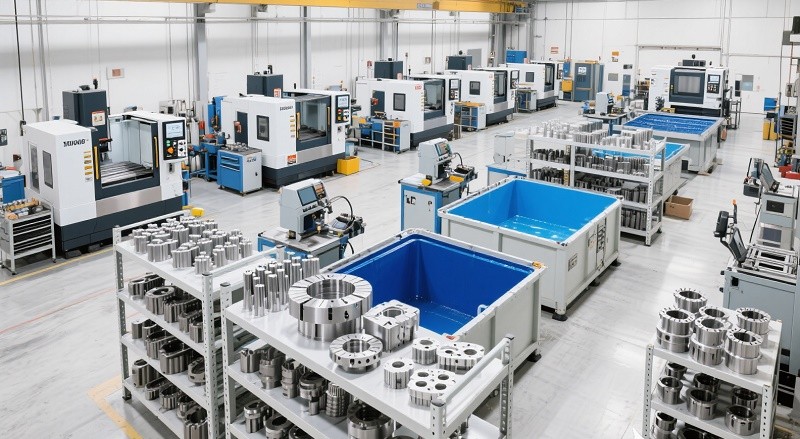
A supplier with a comprehensive suite of in-house capabilities can act as a one-stop shop, streamlining the supply chain and reducing logistical complexity for the OEM. This ensures greater control over the final product and shortens lead times. A well-equipped partner should offer a variety of services, including:
- CNC Milling: 3, 4, and 5-axis milling for producing complex geometries.
- CNC Turning: Creating cylindrical components with high precision, including lathes with live tooling for combined operations.
- Grinding: Services like CNC ID/OD (internal/external diameter) grinding and surface grinding to achieve very fine surface finishes and tight dimensional accuracy.
- Electrical Discharge Machining (EDM): Wire EDM and sinker EDM for machining extremely hard materials or creating intricate shapes that are difficult to achieve with traditional cutting tools.
- Secondary and Finishing Services: Capabilities such as heat treating, anodizing, plating, and assembly.
By offering these diverse services under one roof, a supplier can take a part from raw material to a finished, assembled component, providing immense value and efficiency.
Proven Reliability and Customer Focus
A supplier's technical specifications are only half the story. Their proven reliability and approach to customer relationships are equally important. Before committing to a long-term partnership, an OEM should evaluate:
- Track Record and References: An experienced supplier should be able to provide examples of similar projects and references from satisfied clients, demonstrating their understanding of your industry.
- On-Time Delivery (OTD): Reliable shops track and share their OTD metrics. A consistently high OTD rate is a strong indicator of good project management and production planning.
- Communication: Effective and transparent communication is the bedrock of a successful partnership. The supplier should be responsive, proactive in addressing potential issues, and willing to collaborate closely.
- Customer Satisfaction: Look for evidence of long-term relationships and positive testimonials. A supplier who is focused on their customers' success will act as a true partner, working to find solutions and add value at every stage.
By thoroughly vetting these aspects, an OEM can select a supplier who not only meets the technical requirements but also proves to be a dependable and valuable partner for years to come.
Innovative Solutions from a Leading CNC Machining Parts Supplier
Top-tier CNC machining suppliers do more than just manufacture parts to a print. They function as innovative partners, offering custom engineering expertise and problem-solving skills that help OEMs overcome complex design challenges and improve product performance. This collaborative approach turns the supplier relationship into a powerful driver of innovation.
Custom Engineering for Complex Designs
In today's market, OEMs are constantly pushing the boundaries of what's possible, creating products with increasingly complex geometries and demanding performance requirements. A premier CNC machining partner rises to this challenge by providing tailored engineering solutions that go beyond standard production.
Tailored Solutions for Unique OEM Needs
When a one-size-fits-all approach won't work, custom engineering becomes essential. A skilled CNC machining supplier collaborates closely with an OEM's design team to transform a concept into a manufacturable reality. This partnership is particularly critical in industries like aerospace and medical devices, where complex machined parts must meet stringent specifications.
This collaborative process, known as Design for Manufacturability (DFM), is a systematic approach to optimizing designs for efficient and cost-effective production. A knowledgeable supplier can provide invaluable DFM feedback, suggesting modifications that:
- Simplify Geometry: Adjusting complex features or sharp internal corners to align better with standard CNC tooling can significantly reduce machining time and cost.
- Optimize Material Selection: Recommending materials that offer the right balance of performance, cost, and machinability.
- Refine Tolerances: Identifying which tolerances are critical for function and which can be loosened to lower manufacturing costs without compromising performance.
By an OEM's engineering team, the supplier helps solve problems before they start, ensuring the final part is not only feasible but also optimized for quality and cost. This often includes designing specialized tooling or fixtures to handle unique geometries and ensure consistent results across prototypes and high-volume production runs.
Torsional Vibration Dampers: A Case Study in Precision
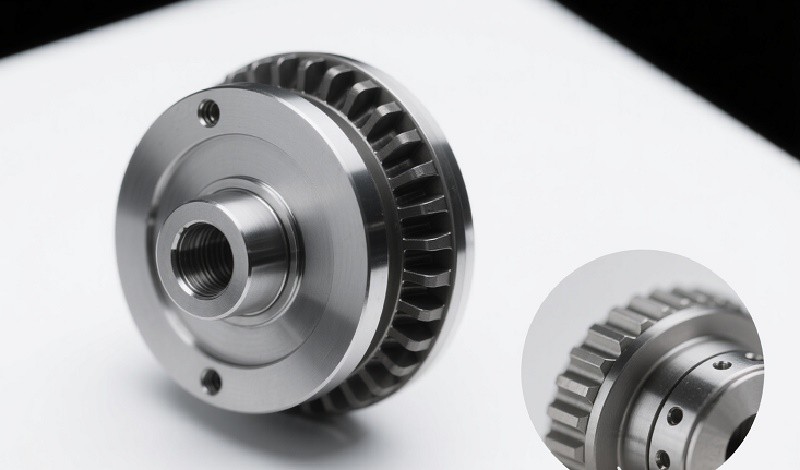
A perfect example of where precision CNC machining is mission-critical is in the manufacturing of high-performance engine components, specifically torsional vibration dampers (TVDs), also known as harmonic balancers. These components are essential for engine longevity and performance.
Controlling Vibrations in High-Performance Engines
Internal combustion engines generate powerful torsional vibrations as the crankshaft flexes and twists during its rotation. If left unchecked, these vibrations can lead to premature wear on engine components, catastrophic crankshaft failure, and excessive noise and vibration. A torsional vibration damper is mounted to the front of the crankshaft to absorb and dissipate this harmful vibrational energy, protecting the engine.
The role of the TVD is especially crucial in modern high-performance engines, which are often lighter, run at higher RPMs, and produce more torque—all factors that increase torsional vibration. A precisely engineered and manufactured damper is required to effectively cancel out the specific vibrational frequencies unique to each engine design.
Advanced Damper Designs for Optimal Performance
The effectiveness of a torsional vibration damper depends entirely on the precision of its components. CNC machining is indispensable for creating the advanced designs used in today's high-performance dampers. There are two primary types:
Elastomer (Rubber) Dampers: These consist of an outer inertia ring bonded to an inner hub with a rubber element. The precision of the fit between these components is critical for the damper's effectiveness and durability. CNC machining ensures the hub and ring have the exact dimensions and surface finish needed for a perfect bond.
Viscous Dampers: Often preferred for high-performance and heavy-duty applications, these dampers contain an internal inertia ring that shears through a layer of highly viscous silicone fluid. The energy from torsional vibrations is converted into heat and dissipated. The manufacturing of a viscous damper requires extremely tight tolerances. The gap between the inertia ring and the housing, which is filled with silicone fluid, must be precisely controlled. Even a tiny deviation can alter the damping characteristics and render the unit ineffective.
Precision CNC machining makes it possible to create the complex internal geometries, ensure perfect balance, and maintain the micron-level tolerances that these advanced damper designs demand, ultimately leading to a smoother, more reliable, and longer-lasting engine.
Key Takeaways
Partnering with a high-quality CNC machining parts supplier offers significant strategic advantages for OEMs. By leveraging a supplier's advanced technology, specialized expertise, and rigorous quality control, OEMs can optimize costs, focus on their core competencies, and bring superior products to market more efficiently. The right partner acts as an extension of your own team, providing custom engineering solutions for complex designs and ensuring flawless execution on critical components like torsional vibration dampers. This collaborative relationship is key to navigating the challenges of modern manufacturing and driving innovation.
Conclusion
Ultimately, a successful OEM relies on more than just internal capabilities; it depends on strategic partnerships with expert providers. A high-quality CNC machining parts supplier can be the cornerstone of your product's success, ensuring that every component meets rigorous standards of precision and reliability. This is not just about outsourcing a process; it's about gaining a competitive edge.
By choosing the right CNC machining parts supplier, you gain a partner that brings advanced technology, specialized expertise, and an unwavering commitment to quality. This allows you to innovate freely and deliver superior products to the market faster and more efficiently. A strong partnership enables you to focus on what you do best—designing and selling exceptional products—while trusting that your manufacturing is in expert hands.
When you seek a partner for global CNC part processing services and OEM customized solutions, SOMI Custom Parts stands ready to meet your exacting demands with precision and excellence. We are committed to fostering collaborative relationships and delivering the quality your brand deserves.