The Ultimate Guide to SLA 3D Printing for 3D Printing SLA Parts Suppliers
As a leading 3D Printing SLA parts supplier, a deep and comprehensive understanding of Stereolithography (SLA) is not just beneficial—it is fundamental to delivering the high-quality, precision-engineered parts our clients expect. This ultimate guide is crafted to explore the full spectrum of SLA technology. We will journey from its core principles and operational mechanics to its vast material versatility and the diverse applications that make it a cornerstone of modern additive manufacturing.
SLA 3D printing stands as a revolutionary additive manufacturing process, celebrated for its capacity to produce isotropic, watertight prototypes and end-use parts with exceptional detail. For us, as a dedicated supplier, mastering this technology is crucial. It allows us to meet a broad and demanding range of industrial requirements, where accuracy, surface finish, and specific material properties are not just a goal, but a prerequisite. This guide will delve into how we can leverage SLA to its fullest potential, ensuring every part we deliver meets the highest standards of quality and performance.
Key Takeaways
- Fundamental Process: SLA 3D printing operates through photopolymerization, where a UV laser selectively cures liquid resin layer by layer to build a solid object. This method is the foundation for achieving high-resolution and intricate parts.
- Unmatched Quality: The primary advantages of SLA are its exceptional accuracy, precision, and the ability to produce parts with a smooth surface finish that is comparable to injection molding, minimizing the need for extensive post-processing.
- Material Versatility: SLA technology supports a vast array of photopolymer resins, from general-purpose materials for visual prototypes to specialized engineering, dental, and castable resins that meet specific functional, thermal, and biocompatibility requirements.
- Workflow is Key: A successful SLA print involves a multi-step workflow including design, slicing, printing, washing, and post-curing. Each step, especially post-processing, is critical for achieving the desired mechanical properties and dimensional accuracy of the final part.
- Strategic Advantage: For suppliers, implementing SLA in-house provides significant benefits, including faster turnaround times, reduced costs, greater control over the supply chain, and the ability to scale production to meet growing client demands.
- Broad Applications: SLA is not limited to prototyping; it is widely used across industries like aerospace, automotive, healthcare, and jewelry for everything from manufacturing aids and casting patterns to end-use components.
Understanding the Fundamentals of SLA 3D Printing for 3D Printing SLA Parts Suppliers
Stereolithography, often abbreviated as SLA, was the world's first 3D printing technology, patented in the 1980s. It falls under the category of vat polymerization, an additive manufacturing process that builds objects by curing liquid photopolymer resin layer by layer. The technology is renowned for its ability to produce parts with extremely high accuracy, fine details, and a smooth surface finish, making it an indispensable tool for professionals across numerous industries. For any 3D Printing SLA parts supplier, a foundational knowledge of this process is the first step toward guaranteeing quality and meeting diverse client needs.
How SLA 3D Printing Works: A Core Process for 3D Printing SLA Parts Suppliers
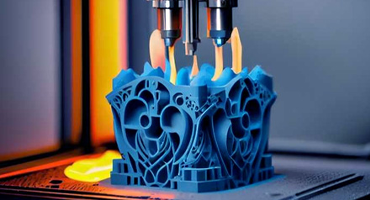
The magic of SLA 3D printing lies in a chemical process called photopolymerization. It all begins with a 3D digital model, typically a CAD file, which is sliced into ultra-thin cross-sectional layers by specialized software. The printer then uses this information to guide a high-precision ultraviolet (UV) laser over a vat of liquid photopolymer resin.
The process unfolds as follows:
- A build platform is submerged into the resin-filled vat, positioned just one layer-thickness below the surface.
- A system of computer-controlled mirrors, known as galvanometers, directs the UV laser to trace the shape of the first layer onto the resin.
- The focused UV light instantly cures and solidifies the liquid resin it touches, forming a solid layer that adheres to the build platform.
- The platform then moves by a precise increment (the layer height), and a recoater blade or mechanism allows fresh resin to flow over the just-printed layer.
- This process is repeated layer by layer, with each new solidified layer fusing to the one before it, until the entire three-dimensional object is formed.
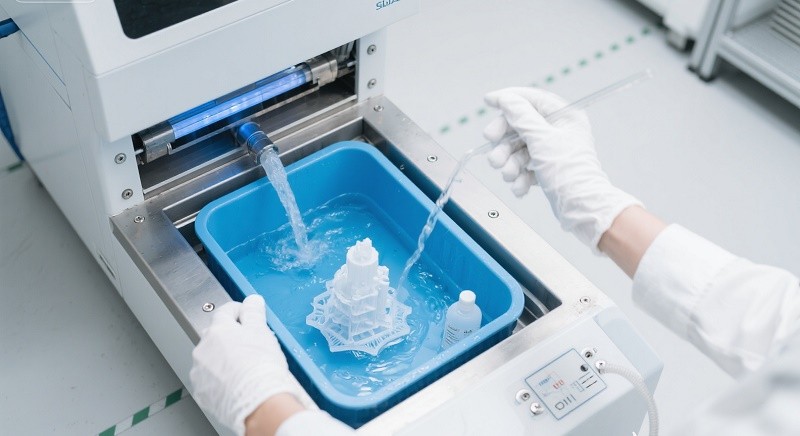
Once printing is complete, the part, now in a "green" or partially cured state, is lifted from the resin vat. It then undergoes essential post-processing steps: a chemical wash to remove excess uncured resin, and a final post-cure in a UV chamber to achieve its optimal mechanical strength and stability.
The Evolution of SLA: Inverted vs. Traditional Systems
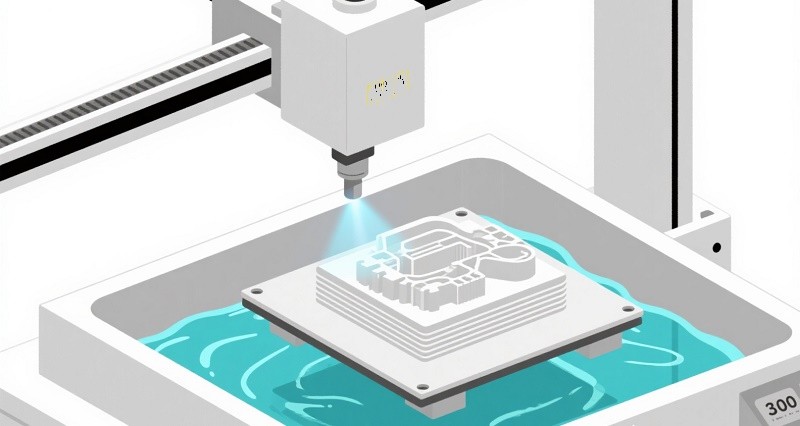
The core principle of SLA has evolved into two primary system architectures: traditional "top-down" and the more common "bottom-up" or inverted SLA. Understanding their differences is key to appreciating the capabilities of modern SLA printers.
Traditional (Top-Down) SLA: In the original SLA systems, the laser source is positioned above the open vat of resin, and the build platform starts at the top of the vat, moving downwards after each layer is cured.
- Advantages: This design is not limited by the size of the resin tank and can support very large build volumes. The part is not subjected to peeling forces, which can be beneficial for very delicate structures.
- Disadvantages: These printers require a large volume of resin to fill the entire vat, which is costly and can lead to material waste. They are also generally larger and more complex.
Inverted (Bottom-Up) SLA: Introduced in the early 2010s, this innovative design positions the light source below a resin tank that has a transparent bottom. The build platform descends into the tank and then rises upward, "peeling" each newly cured layer away from the tank floor.
- Advantages: Inverted SLA printers require a significantly smaller volume of resin, reducing material costs and making it easier to swap materials. The compact design has enabled the development of more affordable and accessible desktop SLA machines.
- Disadvantages: The "peel" process, which separates the cured layer from the tank base, introduces mechanical forces that can affect print quality and speed, especially for large, solid parts. However, innovations like flexible resin tanks have helped mitigate these forces.
The Role of Photopolymer Resins in Creating 3D Printing SLA Parts
Photopolymer resins are the lifeblood of the SLA process. These are light-sensitive liquid plastics that undergo a dramatic transformation when exposed to UV light. The composition of these resins is a sophisticated blend of different chemical components that dictate the final properties of the printed part.
The key ingredients in a typical SLA resin include:
- Monomers and Oligomers: These are the primary building blocks of the plastic. When the printing process starts, they are short molecular chains in a liquid state.
- Photoinitiators: These crucial additives are the catalysts of the reaction. When they absorb UV light from the laser, they create highly reactive molecules called free radicals.
- Additives: A variety of other components can be mixed in to modify the resin's properties. This can include pigments for color, blockers to control light penetration, and other agents to enhance toughness, heat resistance, or flexibility.
The process of photopolymerization is a chain reaction:
- The UV laser's photons strike the photoinitiator molecules.
- The activated photoinitiators initiate polymerization by causing the liquid monomers and oligomers to link together and form long, cross-linked polymer chains.
- This linking process converts the liquid resin into a solid, hardened plastic, forming one layer of the 3D object.
The beauty of this technology lies in the diversity of available resins. Material manufacturers have developed a wide array of formulations that mimic the properties of common industrial thermoplastics like ABS and polypropylene, as well as materials with specialized characteristics, making SLA incredibly versatile.
SLA vs. Other Technologies: What 3D Printing SLA Parts Suppliers Need to Know
While SLA was the original vat polymerization technology, it now shares the stage with similar resin-based methods, primarily Digital Light Processing (DLP) and Masked Stereolithography (MSLA), which often uses an LCD screen. As a supplier, it's vital to understand the distinctions to recommend the best solution for a client's specific needs.
All three technologies cure liquid resin using UV light, but they differ in their light source and how they project it to form a layer.
DLP and LCD: Key Distinctions from Traditional SLA
- Stereolithography (SLA): Uses a single point of light—a UV laser—that is guided by galvanometers to trace the geometry of each layer. Think of it as drawing the layer with a very fine pen.
- Digital Light Processing (DLP): Employs a digital light projector to flash an image of an entire layer at once onto the resin vat. This is like projecting a complete slide for each layer. The image is composed of square pixels called voxels.
- Masked Stereolithography (MSLA) / LCD: Utilizes an array of UV LEDs as a backlight, which shines through an LCD screen. The LCD screen acts as a mask, displaying the cross-section of the layer and only allowing light to pass through where the resin needs to be cured. Like DLP, this method cures an entire layer simultaneously.
Comparing Performance: Speed, Accuracy, and Resolution for 3D Printing SLA Parts
The differences in light sources directly impact the performance characteristics of each technology. Here is a breakdown of how they compare in the metrics that matter most to clients: speed, accuracy, and resolution.
| Feature | Stereolithography (SLA) | Digital Light Processing (DLP) | Masked Stereolithography (MSLA/LCD) |
|---|---|---|---|
| Light Source | UV Laser | Digital Projector | UV LEDs with LCD Mask |
| Print Speed | Speed depends on the complexity and size of the layer, as the laser must trace every detail. Can be slower for large, dense parts. | Fast, as the entire layer is cured at once. Speed is independent of the part's width. | Very fast, for the same reason as DLP. Cures entire layers simultaneously. |
| Resolution | Determined by the laser's spot size, which is very small. Excellent for fine details and sharp corners. True resolution across the entire build plate. | Resolution is defined by the projector's pixel size. It can be very high but is fixed. For larger parts, the pixels are stretched, potentially reducing detail. | Resolution is determined by the LCD's pixel density. Higher resolution screens (e.g., 4K, 8K) provide finer detail, but the pixel grid can sometimes be visible. |
| Accuracy | Generally considered one of the most accurate 3D printing technologies due to the precision of the laser and calibrated optics. Achieves very tight tolerances. | Highly accurate, but accuracy can decrease slightly toward the edges of the build plate due to lens distortion from the projector. | Accuracy is very good and consistent across the build plate but is ultimately limited by the physical size of the pixels on the LCD screen. |
| Surface Finish | Produces the smoothest surface finish, with layer lines that are often imperceptible to the naked eye. | Excellent surface finish, but the projection of square pixels (voxels) can sometimes lead to very slight vertical artifacts. | Smooth surface finish, similar to DLP, though the structure of the LCD pixels can sometimes influence the texture. |
| Build Volume | Industrial SLA machines can achieve very large build volumes, as the galvo system can direct the laser over a large area. | Build volume is often limited by the projector's resolution and effective throw distance. Higher resolution at smaller build areas is a common trade-off. | Build volume is tied to the size and resolution of the available LCD screens. Larger screens are becoming more common, enabling bigger prints. |
Key Takeaway for Suppliers:
- Choose SLA when a project demands the absolute highest precision, the smoothest surface finish, and fine, sharp features, especially on larger parts.
- Choose DLP or MSLA/LCD when speed is the top priority, particularly for producing many small parts at once, as the entire platform is exposed simultaneously. These are excellent for rapid prototyping and low-volume production runs where turnaround is critical.
The SLA 3D Printing Workflow: Ensuring Quality for Our 3D Printing SLA Parts
Delivering high-quality SLA parts is not just about having a good printer; it requires a meticulous and standardized workflow from initial design to final finishing. Each stage plays a critical role in the final part's accuracy, appearance, and mechanical performance.
From Design to Post-Processing: Steps for Creating High-Quality 3D Printing SLA Parts
A successful SLA print is the result of a well-executed, multi-stage process. As a supplier, mastering this workflow ensures consistency and quality across all projects.
- 3D Design (CAD): The process starts with a 3D model created in Computer-Aided Design (CAD) software. The design must be "watertight," meaning it has no holes in its geometry, and is typically exported as an STL or OBJ file.
- Slicing and Print Preparation: The STL file is imported into a slicer software. Here, several crucial preparations are made:
- Orientation: The part is oriented on the build platform to optimize for print success, surface quality, and support minimization.
- Support Generation: Overhangs and islands require support structures to anchor them to the build plate or another part of the model during printing. The slicer automatically generates these fine, easily removable structures.
- Slicing: The software slices the model into hundreds or thousands of thin horizontal layers and generates the toolpath for the laser.
- Printing: The file is sent to the SLA printer, and the printing process begins. The machine builds the part layer by layer, a process that can take anywhere from a few hours to several days depending on the size and complexity of the object.
- Washing: Once printing is finished, the build platform with the attached part is removed from the printer. The part, still covered in sticky, uncured resin, is then washed in a solvent, typically isopropyl alcohol (IPA) or tripropylene glycol monomethyl ether (TPM), to clean off all residual liquid. This step is crucial for a clean surface finish and proper curing.
- Support Removal: After washing and drying, the support structures are carefully removed. This can be done by hand, with flush cutters, or other tools. The points where supports connected to the part often leave small nubs that require further finishing.
- Post-Curing: This is the final and one of the most important steps. The "green" part, while solid, has not yet reached its final material properties. It is placed in a curing chamber that uses a controlled combination of UV light and heat to complete the polymerization process. This step significantly increases the part's hardness, strength, and thermal resistance.
Optimizing Post-Curing and Finishing for Superior 3D Printing SLA Parts
While printing itself defines the shape, it is the post-processing that perfects the part. For a supplier aiming to deliver professional-grade components, mastering finishing techniques is non-negotiable.
The Importance of Post-Curing: Post-curing is not an optional step; it's a scientific necessity. Without it, SLA parts remain relatively soft and can deform over time. An optimized post-curing cycle, tailored to the specific resin, ensures that all unreacted monomers are fully cross-linked, locking in the material's intended properties. This is especially critical for:
- Functional Parts: To achieve the required tensile strength, stiffness, and durability.
- High-Temperature Applications: To maximize the material's heat deflection temperature (HDT).
- Biocompatible Parts: To ensure no unreacted chemicals can leach out, which is a requirement for medical and dental applications.
Advanced Finishing Techniques: Beyond basic support removal, various finishing techniques can elevate an SLA part from a prototype to a production-quality component:
- Sanding: Wet sanding with progressively finer grits of sandpaper is used to smooth away support marks and create a perfectly uniform matte surface.
- Polishing: For parts made with clear resins, polishing can be used to achieve glass-like optical clarity, ideal for lenses, light pipes, and fluidic analysis models.
- Painting and Coating: SLA parts can be easily primed and painted to match any color specification. Special coatings, such as soft-touch or EMI/RFI shielding, can also be applied for specific functional requirements.
- Vapor Honing: This process uses a fine abrasive slurry to create a uniform satin finish, which is excellent for hiding minor imperfections and providing a professional look.
- Plating: For applications requiring high strength, stiffness, or conductivity, SLA parts can be electroplated with metals like nickel or copper.
By optimizing this entire workflow, a 3D Printing SLA parts supplier can consistently produce parts that are not only dimensionally accurate but also functionally robust and aesthetically flawless.
Key Advantages of SLA for 3D Printing SLA Parts Suppliers: Precision, Speed, and Versatility
Stereolithography (SLA) is not just another 3D printing technology; it is a powerhouse of precision, speed, and versatility that provides a distinct competitive edge. For a supplier of 3D printed parts, understanding and leveraging these advantages is crucial for meeting the exacting demands of clients in industries from aerospace to healthcare. The technology's ability to produce parts with unparalleled accuracy, smooth finishes, and robust material properties makes it the go-to choice for a wide range of applications.
Unmatched Accuracy and Precision for Consistent 3D Printing SLA Parts
Accuracy is the cornerstone of SLA 3D printing. It refers to how closely a printed part matches the dimensions of its original CAD file, and in this regard, SLA is a top performer. The technology routinely achieves tolerances between ±0.05 mm and ±0.15 mm, with some industrial machines capable of even tighter specifications.
This exceptional level of accuracy is attributed to several factors:
- Focused Laser Beam: The highly focused and precisely controlled UV laser has a very small spot size, allowing it to draw intricate details and sharp edges with extreme fidelity.
- Controlled Photopolymerization: The process of curing liquid resin is highly predictable and controllable, minimizing the warping and dimensional shifts common in other technologies like FDM.
- High Resolution: SLA printers can produce parts with layer heights as thin as 25 microns (0.025 mm), which is finer than a human hair. This high Z-axis resolution contributes significantly to dimensional accuracy, especially on curved or angled surfaces.
This level of detail is why businesses trust a professional 3D Printing SLA parts supplier for their critical components, from form-and-fit test prototypes to final production parts where every micron matters.
Achieving Superior Surface Finishes and Fine Details on 3D Printing SLA Parts
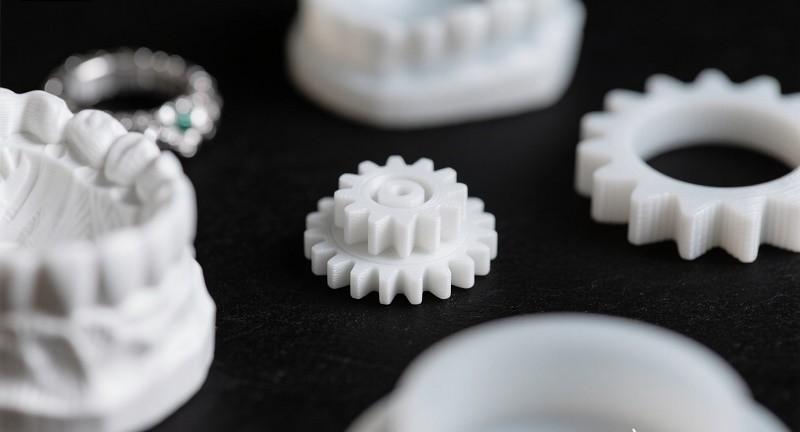
One of the most visually striking benefits of SLA is its ability to produce parts with an exceptionally smooth surface finish, often comparable to that of injection-molded plastics. Because the parts are created from a liquid resin pool, the transitions between layers are incredibly smooth, resulting in layer lines that are typically invisible to the naked eye.
This characteristic provides several key benefits:
- Aesthetic Quality: SLA parts are ideal for presentation models, marketing prototypes, and consumer products where appearance is paramount.
- Reduced Post-Processing: The smooth "off-the-printer" finish significantly reduces the time and labor required for sanding and polishing, streamlining the entire production workflow.
- Fine Feature Resolution: SLA excels at replicating intricate textures, small embossed text, and complex geometries that other technologies might struggle to produce cleanly.
For applications like medical models, detailed figurines, or high-end electronic enclosures, the superior surface quality of SLA is a decisive advantage.
Material Versatility: Expanding Possibilities for 3D Printing SLA Parts Suppliers
The versatility of SLA is largely driven by its vast and ever-expanding library of photopolymer resins. Material science advancements have moved SLA far beyond its original use for cosmetic prototypes. Today, a 3D Printing SLA parts supplier can offer materials that match or even exceed the performance of traditional engineering plastics.
This material diversity allows suppliers to cater to a huge range of applications with properties including:
- Toughness and Durability: Resins that mimic ABS and polypropylene offer high impact resistance for functional prototypes and end-use parts.
- High-Temperature Resistance: Specialty resins can withstand high temperatures, making them suitable for under-hood automotive components, injection mold inserts, and fluidic devices.
- Flexibility: Rubber-like resins can be used to create flexible prototypes for seals, gaskets, and overmolds.
- Biocompatibility: Medically certified resins are available for producing custom surgical guides, dental models, and patient-specific anatomical models.
- Castability: "Castable wax" resins are designed to burn out cleanly, providing patterns for investment casting in the jewelry and metal parts industries.
This breadth of material options enables suppliers to offer true, functional solutions rather than just visual models.
Speed and Efficiency for Rapid Prototyping and Production of 3D Printing SLA Parts
In the world of product development, time is money. SLA technology offers a powerful combination of speed and efficiency that can drastically accelerate innovation cycles. While the laser-based system traces each layer, the overall process is incredibly fast for producing highly detailed one-off prototypes compared to traditional CNC machining or tooling.
The key benefits in terms of speed are:
- Rapid Iteration: Designers and engineers can go from a CAD model to a physical part in hand within hours, allowing for quick testing, validation, and design refinement.
- No Tooling Required: SLA eliminates the long lead times and high costs associated with creating molds or tooling, making it ideal for custom parts and low-volume production.
- Streamlined Workflow: When combined with efficient post-processing systems, a fleet of SLA printers can operate with high throughput, delivering parts to clients faster than ever.
This speed advantage is why SLA is a cornerstone of rapid prototyping and is increasingly being adopted for agile, on-demand manufacturing.
Isotropy and Watertightness: Critical Properties for Functional 3D Printing SLA Parts
Beyond aesthetics and speed, SLA parts possess two critical physical properties that make them suitable for demanding functional applications: isotropy and watertightness.
Isotropy: Isotropic materials exhibit uniform mechanical properties (like strength and stiffness) in all directions. In many 3D printing processes, particularly FDM, the bonds between layers are weaker than the material within a layer, creating an anisotropic part. In contrast, SLA parts are highly isotropic. The photopolymerization process creates strong covalent bonds between layers, resulting in parts that have nearly identical strength whether they are stressed along the X, Y, or Z axis. This uniformity is crucial for predictable performance in mechanical assemblies and functional components.
Watertightness: The chemical bonding between layers and the non-porous nature of the cured resin make SLA parts inherently watertight. This makes the technology an excellent choice for applications involving fluid management, such as:
- Prototypes for valves, pumps, and manifolds to test fluid flow.
- Housings for electronic components that need to be protected from moisture.
- Custom-designed microfluidic devices for research and diagnostics.
These functional characteristics elevate SLA from a simple prototyping tool to a legitimate manufacturing solution for end-use parts.
Exploring Material Options for 3D Printing SLA Parts Suppliers
The true power and versatility of Stereolithography are unlocked through its extensive range of specialized photopolymer resins. For a 3D Printing SLA parts supplier, having a deep understanding of these materials is essential for guiding clients toward the optimal choice for their project. Material selection is a strategic decision that directly impacts a part's functionality, durability, appearance, and cost. Modern SLA resins have evolved far beyond simple modeling plastics, now offering properties that rival traditional engineering-grade materials.
General Purpose Resins: Foundation for Diverse 3D Printing SLA Parts
General Purpose, or Standard, resins are the workhorses of the SLA world. They are formulated to produce high-resolution parts with an excellent surface finish and fine details, making them perfect for applications where visual appearance and dimensional accuracy are the primary concerns.
Key Characteristics and Applications:
- Properties: These resins are known for producing rigid, high-stiffness parts, though they tend to be more brittle than engineering resins. They are not typically recommended for functional applications involving high stress or impact.
- Visual Prototyping: Their primary use is for creating concept models and aesthetic prototypes that look and feel like a finished product. The high detail they capture is ideal for assessing the form and fit of a new design.
- Color and Finish: Available in a range of colors like grey, white, black, and clear, they provide a great canvas for painting and finishing. Grey resin, in particular, is favored for its ability to highlight fine surface details.
- Cost-Effectiveness: Standard resins are generally the most affordable SLA materials, making them a cost-effective choice for rapid design iteration where multiple versions of a prototype are needed.
Engineering Resins: Tailoring 3D Printing SLA Parts for Specific Needs
Engineering resins are designed to provide specific mechanical and thermal properties that meet the demands of functional testing and end-use applications. These materials are formulated to mimic the performance of common industrial thermoplastics, allowing engineers to create prototypes that behave like the final production part.
| Resin Type | Key Properties | Common Applications | Mimics Plastic |
|---|---|---|---|
| Tough Resin | High impact strength, shatter-resistant, durable. Balances strength and compliance. | Jigs and fixtures, functional prototypes, enclosures, snap-fit joints. | ABS |
| Durable Resin | High elongation at break, high impact resistance, flexible, wear-resistant. Best for moving parts. | Squeezable prototypes, low-friction assemblies, ball joints, parts requiring deformation. | Polypropylene (PP) |
| High-Temp Resin | High Heat Deflection Temperature (HDT), high stiffness, thermal stability. | Hot air/fluid flow apparatus, mold prototypes, under-the-hood components, heat-resistant fixtures. | Glass-filled Thermoplastics |
| Rigid / Ceramic-Filled | Extremely stiff, high tensile modulus, dimensionally stable, resistant to deformation over time. | Thin-walled parts, fixtures requiring high rigidity, models for wind tunnel testing. | Glass- or Fiber-filled Plastics |
| Flexible / Elastic Resin | Low tensile modulus, high elongation. Simulates the feel and performance of rubber. | Seals, gaskets, stamps, ergonomic prototypes, wearables, soft-touch surfaces. | Silicone / TPU |
These advanced materials enable a 3D Printing SLA parts supplier to move beyond simple models and deliver robust, functional components for rigorous real-world testing and low-volume production.
Specialty Resins: Advanced Solutions for 3D Printing SLA Parts
Beyond general and engineering applications, a new class of specialty resins has emerged to serve highly regulated and specialized industries. These materials offer unique properties tailored to the demanding requirements of healthcare, jewelry, and more.
Dental and Biomedical Resins: Meeting Healthcare Demands for 3D Printing SLA Parts
SLA has become a transformative technology in the dental and medical fields, largely thanks to the development of biocompatible resins. These materials have undergone rigorous testing to be certified safe for human contact.
- Key Feature: Biocompatibility. These resins are classified according to ISO standards (e.g., Class I for temporary contact, Class IIa for longer-term contact), ensuring they are safe for clinical use.
- Dental Applications:
- Surgical Guides: Highly accurate, sterilizable guides for precise dental implant placement.
- Crown and Bridge Models: Exceptionally detailed models with removable dies for verifying the fit of prosthetics.
- Splints and Night Guards: Durable, transparent resins for creating custom-fit orthodontic appliances.
- Medical Applications:
- Anatomical Models: Patient-specific models created from CT or MRI scans for pre-surgical planning and education.
- Medical Device Prototypes: Creating high-fidelity prototypes of new medical instruments and devices.
Jewelry and Castable Resins: Crafting Intricate 3D Printing SLA Parts
The jewelry industry has embraced SLA for its ability to create intricate and detailed patterns for investment casting. This is made possible by castable wax resins.
- Key Feature: Clean Burnout. These resins are formulated with a high wax content, allowing them to burn out cleanly from the investment mold with no ash or residue. This is critical for creating a perfect cavity into which molten metal can be poured.
- Applications:
- Custom Jewelry: Creating master patterns for rings, pendants, and other intricate designs. SLA's high resolution captures sharp prongs, fine filigree, and detailed engravings perfectly.
- Small Metal Components: Used beyond jewelry for producing small, detailed metal parts for industries like aerospace and manufacturing through the same investment casting process.
Selecting the Right Material: A Strategic Decision for 3D Printing SLA Parts Suppliers
Choosing the correct resin is a critical consultation step between a supplier and their client. The decision should be based on a clear understanding of the part's intended application. When advising clients, consider these key factors:
- Mechanical Requirements: Will the part be under stress, impact, or flexion? This will determine whether a Tough, Durable, or Rigid resin is needed.
- Thermal Requirements: Will the part be exposed to elevated temperatures? If so, a High-Temp resin is essential.
- Aesthetic and Visual Needs: Is the part a visual model, or does it require optical clarity? This will point towards General Purpose or Clear resins.
- Regulatory Requirements: Does the part need to be biocompatible for medical or dental use? This strictly limits the choice to certified materials.
- Post-Processing Needs: Is the part intended for investment casting? Only a Castable Wax resin will work.
By creating a decision-making framework, a supplier can effectively translate a client's needs into the ideal material choice, ensuring the final part performs exactly as required.
| Application Requirement | Recommended Resin Family | Example |
|---|---|---|
| Visual Prototype, Fit-Check | General Purpose / Standard | A new product enclosure to show stakeholders. |
| Functional Assembly, Snap-Fits | Engineering: Tough or Durable | A load-bearing jig or a prototype with snap-fit closures. |
| Fluid/Air Flow Testing at High Temps | Engineering: High-Temp | A manifold prototype for an engine component. |
| Surgical Planning or Drill Guide | Specialty: Dental/Biocompatible | A patient-specific guide for a dental implant. |
| Master Pattern for Metal Ring | Specialty: Castable Wax | An intricate ring design to be cast in gold. |
| Transparent Cover or Light Pipe | General Purpose: Clear | A transparent cover to view internal mechanisms. |
Strategic Implementation of SLA for 3D Printing SLA Parts Suppliers: In-House vs. Services
For a growing business that relies on high-quality prototypes and production parts, a critical strategic decision revolves around how to access SLA technology: should you bring printing capabilities in-house or continue to outsource to a service bureau? For a 3D Printing SLA parts supplier, this decision is even more central, as it directly impacts service offerings, operational efficiency, and supply chain control. While outsourcing has its place, establishing in-house SLA printing capabilities offers transformative benefits that can propel a supplier to the next level.
Benefits of Bringing SLA 3D Printing In-House for 3D Printing SLA Parts Suppliers
Moving SLA production in-house is a significant investment, but the return on that investment can be substantial, touching everything from cost and speed to innovation and supply chain security.
Cost Reduction and Faster Turnaround Times for 3D Printing SLA Parts
Outsourcing involves markups, shipping costs, and communication overhead. Bringing production in-house directly tackles these inefficiencies.
- Faster Turnaround: The most immediate benefit is a dramatic reduction in lead times. Instead of waiting days or weeks for a part to be quoted, printed, and shipped, in-house printers can produce parts overnight. This agility is a massive competitive advantage, enabling you to offer rapid prototyping services that meet the tightest deadlines. For product development, this means engineers can iterate on designs daily instead of weekly, accelerating the entire innovation cycle.
- Cost Per Part: While there's an initial capital expenditure, the per-part cost of in-house printing is significantly lower than outsourcing. You are only paying for the material and labor, eliminating the service bureau's profit margin. This allows for more cost-effective experimentation and makes low-volume production runs more economically viable.
Enhanced Supply Chain Resilience and Control for 3D Printing SLA Parts
In today's volatile global market, dependence on external suppliers creates risk. In-house 3D printing is a powerful tool for building a more resilient and agile supply chain.
- On-Demand Manufacturing: With printers on site, you can produce parts exactly when you need them. This is invaluable for creating custom jigs, fixtures, and other manufacturing aids that can streamline your own production processes or those of your clients.
- Reduced Dependency: In-house printing insulates your business from external disruptions, such as shipping delays, customs issues, or a sudden closure of a key supplier. This control ensures you can maintain production continuity and meet client commitments reliably.
- Intellectual Property Protection: Keeping the entire process in-house provides greater security for sensitive client designs. There is no need to send proprietary CAD files to third-party vendors, reducing the risk of intellectual property exposure.
Scalable Production for Growing Demands of 3D Printing SLA Parts
Starting with a single desktop SLA printer can be a gateway to a fully scalable production model. As demand for your services grows, you can seamlessly expand your capacity.
- From One to Many: The modular nature of modern SLA technology makes it easy to add more printers to your fleet as needed. This allows for a "pay-as-you-grow" approach to scaling operations, avoiding a massive upfront investment.
- Low-Volume Production: A fleet of SLA printers can function as a digital factory, capable of handling low- to mid-volume production runs of end-use parts. This is ideal for bringing new products to market without committing to expensive injection molding tooling or for producing highly customized products.
- Mass Customization: SLA is perfectly suited for mass customization, where each part produced can be unique. In-house capabilities allow you to offer tailored solutions to clients in industries like healthcare (patient-specific devices) or consumer goods (personalized products).
Managing a Fleet of SLA 3D Printers for Optimal Output of 3D Printing SLA Parts
Transitioning from a single printer to a print farm requires a strategic approach to management to ensure efficiency, consistency, and reliability. Running a fleet of printers like a well-oiled machine is what separates an amateur setup from a professional production facility.
Key Management Considerations:
- Workflow Automation Software: To manage dozens or hundreds of print jobs across multiple machines, specialized fleet management software is essential. This software can automate job queuing, assign prints to available machines, monitor progress remotely, and track material usage, significantly reducing manual oversight.
- Standardized Processes: Consistency is key. You must establish and document standardized operating procedures (SOPs) for every stage of the workflow, including:
- Print Preparation: Consistent orientation and support strategies.
- Material Handling: Proper storage, mixing, and tracking of resin batches to ensure material properties are stable.
- Post-Processing: Uniform washing and curing cycles for every resin type to guarantee that all parts meet the same mechanical and dimensional specifications.
- Dedicated Workspace and Maintenance: A dedicated, well-organized space is crucial for efficiency and safety. This includes areas for printing, washing, post-curing, and finishing. A regular maintenance schedule for each printer—including cleaning optics, replacing resin tanks, and calibrating systems—is vital to prevent downtime and ensure consistent print quality.
- Training and Expertise: Your team must be thoroughly trained on every aspect of the SLA process, from machine operation and maintenance to the nuances of different materials. This expertise is a core part of your value proposition as a high-quality 3D Printing SLA parts supplier.
By strategically implementing and managing in-house SLA capabilities, a supplier can unlock unprecedented levels of speed, control, and quality, establishing a strong foundation for long-term growth and success.
Applications and Future Trends for 3D Printing SLA Parts Suppliers
Stereolithography has matured from a niche rapid prototyping technology into a mainstream manufacturing tool with a profound impact across a multitude of industries. For a 3D Printing SLA parts supplier, understanding the current applications and keeping an eye on future trends is vital for staying competitive and identifying new market opportunities. The precision, smooth finish, and material versatility of SLA make it uniquely suited to solve complex challenges in engineering, healthcare, manufacturing, and beyond.
Diverse Industries Benefiting from 3D Printing SLA Parts
SLA's unique capabilities have led to its adoption in some of the world's most demanding sectors. Its ability to create highly detailed and accurate parts quickly makes it an invaluable asset.
- Engineering and Product Design: This remains the primary application area. SLA is used extensively for creating high-fidelity concept models, form-and-fit test prototypes, and functional assemblies that closely mimic final products.
- Manufacturing: Beyond prototyping, SLA is used to create on-demand manufacturing aids. This includes custom jigs, fixtures, and gauges that improve accuracy and efficiency on the assembly line. It's also used for rapid tooling, such as creating master patterns for vacuum casting or even short-run injection molds.
- Automotive and Aerospace: In these industries, precision is paramount. SLA is used to produce prototypes for aerodynamic wind tunnel testing, lightweight non-structural components, and complex interior parts. Some components have even been tested on the International Space Station, showcasing the technology's reliability.
- Healthcare and Dentistry: SLA has revolutionized personalized medicine. It is used to create patient-specific anatomical models for surgical planning, highly accurate dental models for crowns and bridges, and biocompatible surgical guides for precise implant placement.
- Jewelry and Consumer Goods: The technology's ability to capture fine detail makes it perfect for crafting intricate master patterns for investment casting in the jewelry industry. In consumer electronics, it's used to prototype detailed enclosures and casings with a production-quality feel.
- Entertainment and Art: Artists and model makers use SLA to create detailed figurines, movie props, and complex sculptures that would be difficult or impossible to make with traditional methods.

Innovations and Future Outlook for 3D Printing SLA Parts Suppliers
The field of SLA 3D printing is continuously evolving, driven by innovations in hardware, software, and materials science. As a supplier, staying abreast of these trends is crucial for offering state-of-the-art solutions.
Hardware and Process Advancements:
- Next-Generation Light Engines: The future promises even faster printing speeds. Innovations include more powerful lasers, advanced light processing units, and novel peeling mechanisms that reduce the forces on the part during printing, allowing for quicker layer changes.
- Larger Build Volumes: Demand for larger parts is driving manufacturers to develop industrial SLA machines with significantly bigger build platforms, opening up new applications for large-scale prototypes and consolidated parts.
- Automation and Robotics: The integration of robotics for automated part removal, washing, and transfer to curing stations is a key trend. This will enable 24/7 "lights-out" manufacturing, increasing throughput and reducing labor costs for print farms.
Material Science Innovations:
- Advanced Engineering Resins: Expect to see resins with even better mechanical properties, including higher strength, greater toughness, and improved temperature and chemical resistance, further blurring the line between prototypes and production parts.
- Ceramic and Composite Resins: The development of resins filled with ceramic or other composite materials is a major area of research. These new materials promise to deliver parts with exceptional stiffness, heat resistance, and unique properties previously unattainable with SLA.
- Sustainable Materials: As the industry grows, there is an increasing focus on developing more environmentally friendly resins, including plant-based or recyclable options, to reduce the ecological footprint of additive manufacturing.
Software and AI Integration:
- AI-Powered Slicing: Future slicer software will likely incorporate artificial intelligence to automatically optimize part orientation, support generation, and print settings for maximum speed and success rate.
- In-Process Monitoring: Advanced sensors and cameras integrated into printers will provide real-time monitoring of the printing process. This data can be used to detect potential failures early and make live adjustments, improving reliability and reducing waste.
- Digital Inventory and Supply Chain Integration: SLA technology will become further integrated into digital manufacturing ecosystems, enabling companies to maintain virtual inventories and print replacement parts on-demand, revolutionizing supply chain management.
For a forward-thinking 3D Printing SLA parts supplier, these trends represent exciting opportunities to expand service offerings, improve efficiency, and deliver even greater value to clients across all industries.
SLA 3D printing has firmly established itself as an indispensable technology for any serious parts supplier. Its powerful combination of unparalleled precision, exceptional material versatility, and increasing efficiency provides a robust platform for delivering top-tier solutions. By staying informed about the latest technological advancements and continuously optimizing our internal processes, we can ensure that we continue to provide exceptional 3D printing SLA parts and services that meet the evolving needs of our clients.
At our core, we are committed to leveraging the full, unbridled potential of SLA 3D printing to serve a global clientele with specialized and reliable solutions. As a dedicated 3D Printing SLA parts supplier, we pride ourselves on offering not just high-quality standard components, but also comprehensive, customized OEM services meticulously tailored to the unique requirements of each individual project. We invite you to engage with this technology and discover how our expertise can bring your most ambitious designs to life. Feel free to share this guide and join the conversation on the future of manufacturing.