The Role of CNC Machining Parts Manufacturers in Aerospace Precision
As dedicated CNC Machining Parts manufacturers, we operate at the intersection of innovation and precision. We recognize that in today's advanced industries, the margin for error is non-existent. From the most intricate component in a life-saving medical device to the largest structural element in an aircraft, absolute accuracy is not just a goal—it's a requirement. This demand for perfection is especially true in the aerospace sector, where safety and performance are paramount.
Join us on an in-depth exploration of the CNC machining world. This article will illuminate the profound impact of this technology on aerospace precision, highlighting the critical expertise and capabilities that specialized CNC Machining Parts manufacturers contribute to this high-stakes industry. We will delve into the fundamental processes, the variety of techniques, and the distinct advantages that make CNC machining the gold standard for creating components that can withstand the extreme demands of flight.
Key Takeaways
This article provides a comprehensive overview of the role of CNC machining parts manufacturers in achieving aerospace precision. Here are the essential points to remember:
- The Foundation of Precision: CNC (Computer Numerical Control) machining is an automated manufacturing process guided by pre-programmed computer software. It is indispensable for producing parts with the high accuracy, complexity, and repeatability demanded by the aerospace industry. The process begins with a detailed CAD model and progresses through CAM translation, machine setup, execution, and meticulous post-processing.
- Specialized Techniques for Diverse Needs: Manufacturers utilize a range of CNC techniques to create specific geometries. CNC milling is used for complex shapes and surfaces, CNC turning for cylindrical components like shafts, and CNC drilling for creating precise holes. Each method is selected based on the part's design and functional requirements.
- Significant Advantages for Aerospace: Partnering with an expert CNC machining manufacturer offers unparalleled benefits, including:
- Precision and Repeatability: Consistently producing identical parts within extremely tight tolerances.
- Material Efficiency: The subtractive process is optimized to reduce waste, a crucial factor when working with expensive aerospace-grade materials.
- Complex Geometries: Manufacturing intricate designs that would be impossible with traditional methods.
- Material Versatility: The ability to work with a wide array of high-performance materials like titanium, aluminum alloys, and superalloys.
- Critical Aerospace Applications: CNC machining is essential for manufacturing a vast range of aerospace components, including engine parts, landing gear, structural frames (airframes), and turbine blades. The integrity of these parts directly impacts aircraft safety and performance.
- Stringent Material and Quality Standards: Aerospace manufacturers must adhere to strict quality control standards, such as AS9100. This involves using advanced materials like aerospace-grade aluminum (e.g., 7075), titanium, and steel alloys, which offer the necessary strength-to-weight ratio and resistance to extreme temperatures and corrosion.
- Choosing the Right Partner: Selecting a CNC machining partner for aerospace projects requires careful evaluation of their technical expertise, the quality of their equipment (e.g., 5-axis machines), their certifications (like AS9100), and their commitment to a collaborative partnership. Effective communication and a proven track record are key indicators of a reliable manufacturer.
What is CNC Machining and How Do CNC Machining Parts Manufacturers Utilize It?
CNC (Computer Numerical Control) machining is a transformative manufacturing technology that sits at the core of modern industrial production. It is a subtractive process, meaning it creates parts by selectively removing material from a solid block (known as a workpiece or blank) using precision cutting tools. Unlike traditional methods that rely on manual control by a machinist, CNC machining is fully automated. Pre-programmed computer software dictates the precise movements of the machinery, ensuring unparalleled accuracy, consistency, and efficiency.
This automation makes CNC machining the backbone of precision manufacturing, enabling the creation of complex components that meet the most demanding specifications. Reputable CNC Machining Parts manufacturers leverage this technology to serve a multitude of sectors, including automotive, medical, electronics, and, most critically, aerospace. The global market for CNC machines reflects this importance, with projections expecting it to reach $111 billion by 2026. By translating digital designs into physical objects with immense precision, CNC machining has revolutionized how high-quality parts are made.
The Fundamentals of CNC Machining
The core principle behind CNC machining is automated, precise, and consistent motion control. Unlike manual machines that require an operator to turn cranks or wheels, CNC machines interpret a digital file and translate it into physical movements. This process relies on a few key fundamentals:
- Computer-Aided Design (CAD): The process begins with the creation of a 2D or 3D digital model of the final part. This CAD file contains all the geometric details, dimensions, and tolerances required.
- Computer-Aided Manufacturing (CAM): The CAD file is then processed by CAM software. This software generates the specific machine code—most commonly G-code and M-code—that acts as the instruction set for the CNC machine.
- Machine Code (G-code & M-code): G-code directs the machine's movements, such as the tool's path, speed, and position (controlling the X, Y, and Z axes). M-code controls miscellaneous functions, like starting or stopping the spindle, activating coolant, and changing tools.
- Machine Execution: Once the code is loaded, the CNC machine executes the commands with high precision. It automates the entire subtractive process, cutting away material to shape the final part exactly as designed.
This automated workflow eliminates the potential for human error associated with manual machining, resulting in superior accuracy and repeatability, which are essential for producing high-tech components for industries like aerospace.
The Detailed Process Employed by CNC Machining Parts Manufacturers
The journey from a digital concept to a physical, high-precision component is a systematic and multi-stage process. Expert CNC Machining Parts manufacturers have refined this workflow to ensure quality, efficiency, and adherence to the strictest specifications. Each step builds upon the last, culminating in a finished part that is ready for its critical application.
CAD Model Design: The Starting Point for Every CNC Machining Parts Manufacturer
Every precision manufacturing project begins with a digital blueprint. This blueprint is the Computer-Aided Design (CAD) model, a 2D or 3D digital representation of the part. Created using specialized software like SolidWorks, AutoCAD, or CATIA, the CAD model is the foundational element of the entire CNC machining process.
A high-quality CAD model is far more than just a picture; it is a detailed and data-rich file that dictates the part's final form and function. Key information encoded within the model includes:
- Exact Geometry: The precise shape, curves, and surfaces of the component.
- Dimensions and Tolerances: Critical measurements and the acceptable range of variation for each feature.
- Material Specifications: The type of material to be used, which influences tool selection and machine settings.
- Feature Details: Specifics like the location and size of holes, threads, and chamfers.
For a CNC Machining Parts manufacturer, an accurate and well-designed CAD model is essential. It serves as the single source of truth for the project, minimizing ambiguity and reducing the risk of costly errors. Modern CAD software allows for detailed simulations and analysis, enabling engineers to test for potential design flaws or manufacturing challenges before any physical production begins. This digital-first approach streamlines the entire workflow, improves efficiency, and ensures the final component is perfectly aligned with the design intent.
Translating Design to Machine Language: How CNC Machining Parts Manufacturers Prepare for Production
Once a flawless CAD model is finalized, it cannot be fed directly to the CNC machine. The digital design must first be translated into a language the machine can understand. This crucial bridge between design and production is handled by Computer-Aided Manufacturing (CAM) software. CNC Machining Parts manufacturers rely on sophisticated CAM systems to prepare the design for physical execution.
The CAM process involves several key steps:
- Importing the CAD Model: The 3D CAD file is loaded into the CAM software. The software analyzes the geometry to identify features that need to be machined.
- Generating Toolpaths: The programmer uses the CAM software to define the optimal path the cutting tool will follow to remove material. This involves selecting the right tools, setting cutting depths, and determining the sequence of operations to achieve the final shape efficiently.
- Setting Machining Parameters: Critical variables such as spindle speed (how fast the tool rotates), feed rate (how fast the tool moves into the material), and coolant flow are programmed. These parameters are optimized based on the material being cut, the tool being used, and the desired surface finish.
- Creating the CNC Program (G-code & M-code): With all parameters set, the CAM software "posts" the program, which means it translates the entire strategy into G-code and M-code.
- G-code (Geometric Code): This is the primary language that controls the machine's movement. It dictates the coordinates for the tool path (e.g., G01 for a linear move, G02 for a clockwise arc) and its positioning along the X, Y, and Z axes.
- M-code (Miscellaneous Code): This code controls all non-cutting machine functions. It handles actions like starting and stopping the spindle (e.g., M03), turning the coolant on or off (e.g., M08), and performing a tool change (e.g., M06).
This resulting program is a precise, line-by-line script that the CNC machine will follow without deviation, ensuring the part is manufactured exactly as intended by the CAM programmer.
Machine Setup and Preparation: Ensuring Flawless Execution by CNC Machining Parts Manufacturers
With a verified CNC program in hand, the next phase involves physically preparing the machine for operation. This setup stage is a meticulous process where even the smallest oversight can lead to significant errors. For professional CNC Machining Parts manufacturers, this is a critical checkpoint to guarantee precision.
The setup process includes several distinct steps:
Machine Preparation: Before any job, the machine must be thoroughly cleaned to remove chips, dust, and old coolant that could interfere with the operation. The technician checks and refills coolant and lubrication levels and ensures the machine is connected to a stable power supply. A warm-up cycle is often run to stabilize the machine's temperature and distribute lubricants, which is crucial for maintaining tight tolerances.
Workholding Setup: The raw material block, or workpiece, must be held securely in place. This is achieved using specialized workholding devices like vises, chucks, or custom fixtures. The choice of workholding is critical; it must prevent the part from moving or vibrating under the immense force of the cutting tool. Improper workholding can lead to dimensional inaccuracies, poor surface finishes, or even catastrophic failure.
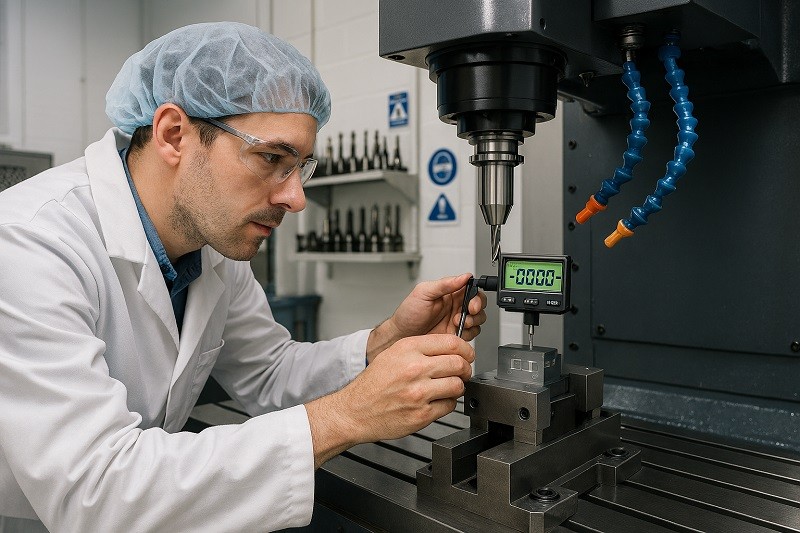
Tooling Installation and Calibration: The correct cutting tools for the job are loaded into the machine's tool holder or carousel. Each tool's length and diameter must be precisely measured and calibrated. This tool calibration process ensures that the machine's control system knows the exact position of the cutting edge, which is fundamental for accuracy. Out-of-spec tools are adjusted or replaced to ensure they perform within the required tolerance limits.
Setting the Work Offset: The machinist must establish a "zero point" or datum on the workpiece. This reference point tells the machine where the part is located in its physical space. All movements in the G-code program are relative to this work offset.
Program Loading and Verification: The CNC program is loaded into the machine's controller. A "dry run" is often performed, where the machine runs through the toolpaths in the air, several inches above the workpiece. This allows the operator to visually verify the tool's movements and check for any potential collisions or programming errors before any material is cut. An initial test cut on a sample piece may also be performed for final verification.
Only after this comprehensive setup and verification checklist is complete can the actual machining begin.
The Machining Phase: Precision at Work with CNC Machining Parts Manufacturers
This is where the digital plan becomes a physical reality. The operator initiates the CNC program, and the machine begins the subtractive manufacturing process. High-speed cutting tools, guided by the G-code, engage the workpiece and start to remove material layer by layer. This material is cut away in the form of small chips.
The machining phase is typically broken into two main stages:
- Roughing: This initial stage is focused on removing the bulk of the unwanted material as quickly as possible. The primary goal is speed and efficiency, shaping the workpiece into a near-net form. The surface finish during this stage is coarse, and the dimensional accuracy is not yet at its final tolerance.
- Finishing: After the roughing pass, a finishing pass is performed. This stage uses a different tool and more precise cutting parameters (often a lower feed rate and higher spindle speed) to achieve the final dimensions and the specified surface finish. The goal of the finishing pass is to bring the part within the tight tolerances required by the design.
Throughout the machining process, coolant is continuously flooded over the tool and workpiece. This serves multiple critical functions:
- It dissipates the immense heat generated by friction.
- It lubricates the cutting action.
- It flushes away chips from the cutting area, preventing them from interfering with the toolpath or damaging the surface finish.
Modern CNC manufacturers often use real-time monitoring systems to track the machine's performance during operation. These systems provide live data on tool wear, machine status, and production counts, allowing operators to intervene quickly if an issue arises and ensuring consistent quality throughout a production run.
Post-Processing and Finishing: The Final Touches from CNC Machining Parts Manufacturers
The CNC machining process does not end when the cutting stops. To meet the demanding functional and aesthetic requirements of industries like aerospace, a series of post-processing and finishing steps are essential. These final touches transform a raw machined part into a finished, high-performance component.
Key post-processing stages include:
Deburring: The machining process often leaves small, sharp pieces of excess material, known as burrs, along the edges of a part. Deburring is the critical process of removing these imperfections. If left unaddressed, burrs can compromise safety, affect dimensional tolerances, and prevent parts from fitting together correctly. Methods range from manual filing and brushing to automated processes like tumbling and electrochemical deburring.
Cleaning and Inspection: After deburring, parts are thoroughly cleaned to remove any residual coolant, oils, and metal chips. They then undergo a rigorous quality inspection using precision measurement tools like calipers, micrometers, and Coordinate Measuring Machines (CMM) to ensure every dimension is within the specified tolerance.
Surface Finishing Treatments: A variety of surface treatments can be applied to enhance a part's properties. These treatments are chosen based on the desired outcome, whether it's improved durability, corrosion resistance, or aesthetics. Common finishing options include:
- Mechanical Finishes: Processes like polishing, brushing, and bead blasting alter the surface texture to create a smooth, matte, or satin finish.
- Chemical and Electrochemical Finishes:
- Anodizing: Widely used for aluminum, this process creates a hard, corrosion-resistant oxide layer. Type III hardcoat anodizing is especially valued in aerospace for its superior wear resistance.
- Plating: A thin layer of another metal (like nickel or chrome) is deposited on the surface to improve hardness and corrosion resistance.
- Passivation: A chemical treatment for stainless steel that removes free iron from the surface to enhance its natural corrosion resistance.
- Heat Treatment: Processes like annealing or tempering are used to alter the material's microstructure, improving its hardness, strength, and toughness.
- Coatings: Applying finishes like powder coating provides a durable, protective, and decorative layer.
Part Marking: For traceability, many aerospace components require permanent markings, such as serial numbers or manufacturer codes. Laser engraving is a common, non-contact method used to create precise and permanent marks without stressing the part.
These final steps are just as crucial as the machining itself, ensuring that every component delivered by a CNC Machining Parts manufacturer is not only dimensionally perfect but also functionally and aesthetically ready for its end-use.
Types of CNC Machining: Specialized Techniques from CNC Machining Parts Manufacturers
CNC machining is not a one-size-fits-all technology. CNC Machining Parts manufacturers employ a variety of specialized techniques and machines, each suited for creating different types of geometries and features. The choice of process depends on the part's design, the material, and the required precision. In the aerospace industry, several key CNC machining processes are indispensable for producing complex, high-tolerance components.
The most common types of CNC machines include milling machines, lathes, routers, plasma cutters, and Electrical Discharge Machines (EDM). For the intricate and demanding nature of aerospace parts, multi-axis machining is particularly crucial. While standard 3-axis machines move along the X, Y, and Z axes, more advanced 5-axis and 7-axis machines introduce rotational axes. This allows for the machining of highly complex shapes, such as turbine blades, in a single setup, which significantly reduces production time and improves accuracy.
CNC Milling: A Core Competency for CNC Machining Parts Manufacturers
CNC milling is a highly versatile subtractive manufacturing process that uses rotating, multi-point cutting tools to remove material from a stationary workpiece. The workpiece is securely mounted on the machine bed, and the computer-controlled cutting tool moves along multiple axes to create precise shapes, pockets, holes, and complex surface contours. This method is ideal for producing parts with flat surfaces and intricate details.
In the aerospace industry, CNC milling is used extensively to create a wide variety of critical components, including:
- Structural airframe components
- Engine mounts and housings
- Complex manifolds
- Instrumentation panels
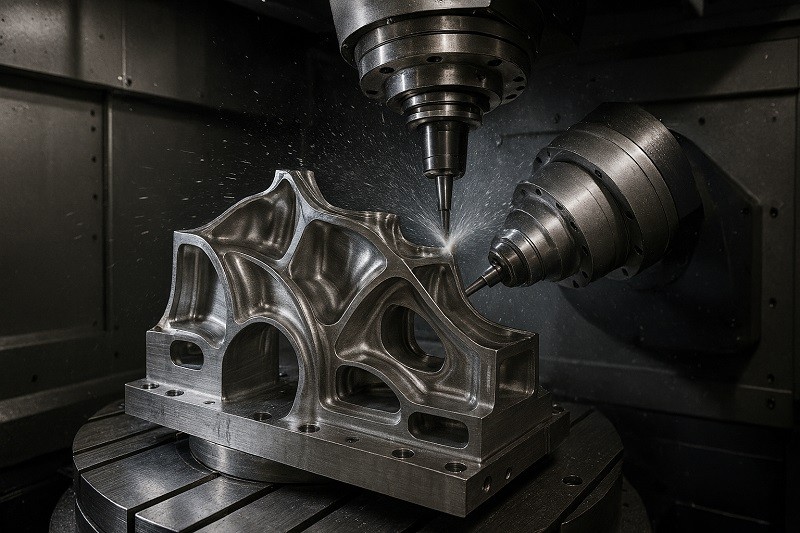
The most advanced form of this technique is 5-axis CNC milling. Unlike traditional 3-axis machines that only move along the X, Y, and Z linear axes, 5-axis machines add two rotational axes (A and B). This allows the cutting tool to approach the workpiece from virtually any angle. The ability to manipulate the part in five directions enables the machining of extremely complex geometries, such as the curved surfaces of turbine blades, in a single setup. This single-setup capability not only makes it possible to create intricate parts but also significantly reduces production time, minimizes the risk of errors from re-fixturing, and improves overall accuracy.
CNC Turning: Creating Cylindrical Perfection with CNC Machining Parts Manufacturers
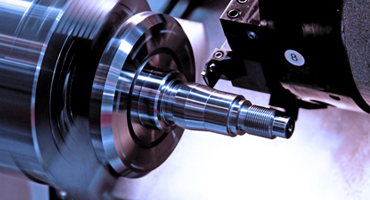
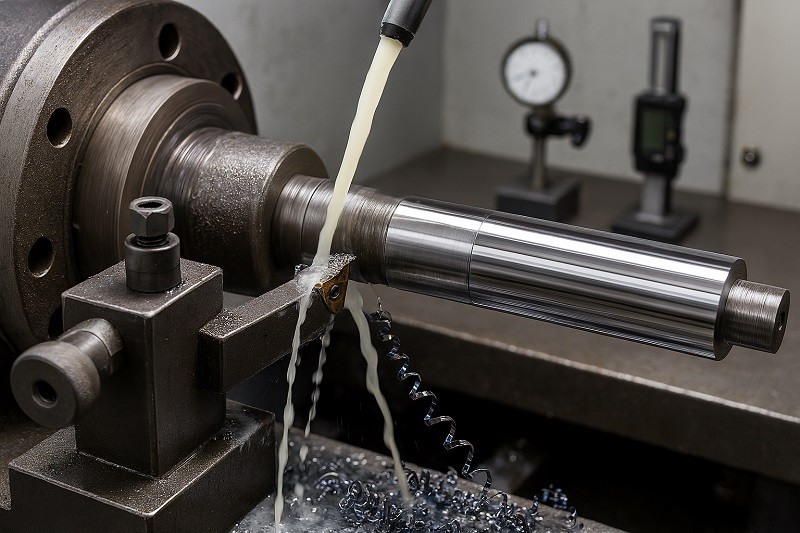
CNC turning is a subtractive manufacturing process used to create cylindrical parts. In stark contrast to milling, where the tool rotates, CNC turning involves rotating the workpiece at high speed while a stationary cutting tool removes material. The process is performed on a CNC lathe, where a bar of material is held in a chuck and spun. The cutting tool is then fed linearly along the surface of the rotating part, carving away material to achieve the desired diameter and features.
This method is exceptionally efficient for producing symmetrical, round components. The operations a CNC lathe can perform are extensive and include:
- Turning: Cutting along the length of the workpiece to create a straight cylindrical surface, forming shafts, pins, and rods.
- Facing: Cutting across the end of the workpiece to create a flat surface.
- Grooving: Creating channels or recesses of a specific depth.
- Threading: Cutting external or internal screw threads.
- Drilling and Boring: Creating or enlarging a hole along the part's central axis.
In the aerospace industry, CNC turning is essential for manufacturing a wide array of high-precision cylindrical components. These parts often must withstand extreme temperatures and pressures, and the precision of CNC turning ensures they conform to the strictest safety and performance standards. Examples of turned aerospace parts include:
- Engine shafts and fasteners
- Bushings and manifolds
- Bolts and other connectors used in high-stress applications
- Landing gear components
CNC Drilling: Precision Holes by CNC Machining Parts Manufacturers
CNC drilling is a machining process dedicated to creating round holes in a workpiece. Unlike manual drilling, CNC drilling utilizes a computer-controlled machine to guide a rotating drill bit to a precise location and create a hole of a specific diameter and depth. This automated process eliminates common manual errors like "drill wandering" and ensures that every hole is perfectly positioned, straight, and consistent, which is paramount for assembly and structural integrity.
The CNC drilling process itself is straightforward but requires precision at every step:
- Spot Drilling: Often, a short, rigid "spot drill" is used first to create a small conical indent. This acts as a precise guide for the main drill bit, preventing it from straying from the intended starting point.
- Drilling: The primary drill bit, guided by the CNC program, penetrates the material to the specified depth.
- Peck Drilling: For deep holes, a technique called peck drilling is used. The drill bit periodically retracts from the hole to clear out chips and allow coolant to reach the cutting edge, preventing overheating and ensuring the hole remains straight.
- Associated Operations: Drilling is often a precursor to other hole-finishing operations like reaming (to improve dimensional accuracy and surface finish), tapping (to cut internal threads), and boring (to enlarge a hole to a very precise diameter).
In the aerospace industry, CNC drilling is critical. Aircraft structures are held together by thousands of fasteners (bolts and rivets), and the holes for these fasteners must be drilled with extreme accuracy. Any misalignment could compromise the structural integrity of the component. CNC drilling is used to create precise holes in everything from engine components and landing gear to fuselage and wing structures, ensuring all parts align and assemble perfectly.
CNC Routing: Versatile Cutting Solutions from CNC Machining Parts Manufacturers
A CNC router is a computer-controlled cutting machine that is conceptually similar to a CNC mill. However, key differences in its construction and operation make it suited for specific applications. Routers typically use a high-speed spindle to cut and shape materials. While mills prioritize torque and rigidity for cutting hard metals, routers emphasize rotational speed.
The primary differences between a CNC router and a CNC mill include:
- Materials: CNC routers are primarily designed to cut softer materials like wood, plastics, foam, and composites. While some can machine soft metals like aluminum, they generally lack the rigidity and torque to effectively cut hard materials like steel and titanium.
- Construction: Routers are often built with a gantry-style frame where the spindle moves over a stationary workpiece bed. This design allows for a much larger working area compared to mills, making routers ideal for large sheets of material. However, they are typically less rigid than milling machines.
- Precision and Speed: CNC routers operate at much higher speeds than mills, making them very efficient for large-scale cutting and carving. However, CNC mills generally offer higher precision and can achieve tighter tolerances, as they are built for greater rigidity and accuracy.
In the aerospace industry, CNC routers are indispensable for working with composite materials. Modern aircraft extensively use lightweight and strong composites like carbon fiber reinforced polymer (CFRP), fiberglass, and honeycomb panels. CNC routers are ideal for trimming, drilling, and shaping these large composite components with high precision and consistency. Applications include machining interior wall panels, cabinetry, ventilation ducts, and various structural elements where large size and moderate complexity are required.
The Advantages of Partnering with Expert CNC Machining Parts Manufacturers
For industries where failure is not an option, choosing the right manufacturing partner is as critical as the design of the component itself. Collaborating with a specialized CNC Machining Parts manufacturer offers a multitude of strategic advantages that go far beyond simple production. These benefits ensure that complex projects, especially in the aerospace sector, are completed to the highest standards of quality, efficiency, and reliability.
By tapping into the knowledge of an experienced CNC provider, companies gain more than just a supplier; they gain a technical ally. This partnership provides access to state-of-the-art equipment and a wealth of expertise in materials, design for manufacturability (DFM), and process optimization, ultimately leading to superior products and a more efficient path to market.
Unmatched Precision and Accuracy: The Hallmark of CNC Machining Parts Manufacturers
The primary advantage of CNC machining lies in its extraordinary precision and accuracy. Because the entire process is guided by computer code, it eliminates the inconsistencies and potential for human error inherent in manual methods. This automated control allows CNC machines to execute repeated, precise movements, producing parts that adhere strictly to the CAD design.
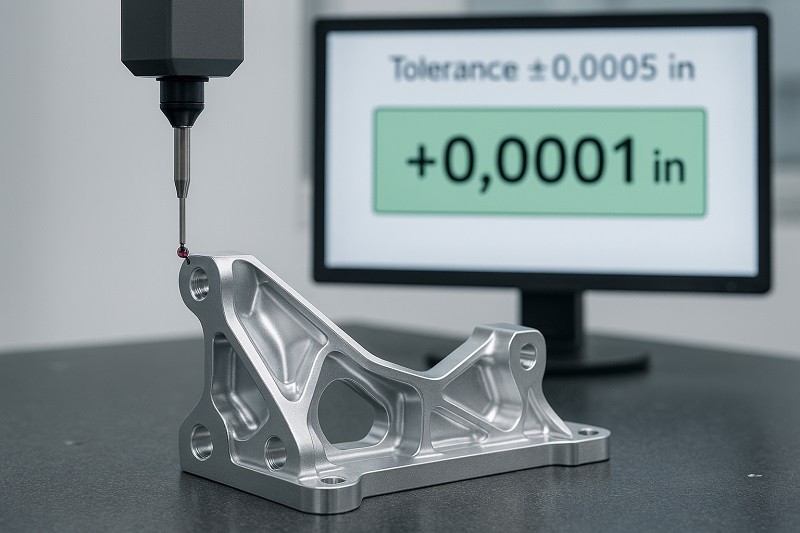
Accuracy refers to how closely a machined part conforms to the specified dimensions in the design. Expert CNC Machining Parts manufacturers use high-quality machines, advanced software, and rigorous calibration routines to achieve exceptional accuracy. Standard CNC machining can achieve tolerances around ±0.005 inches (±0.127 mm), but high-precision setups can consistently reach tolerances as tight as ±0.0005 inches (±0.0127 mm) or even finer.
This level of precision is not just a desirable feature; it is a necessity in the aerospace industry. Key reasons why tight tolerances are critical include:
- Safety: Aerospace components operate under extreme conditions. Any deviation from the specified dimensions could lead to component failure, which could have catastrophic consequences.
- Performance: The aerodynamics of an aircraft are calculated based on exact dimensions. Components that fit together perfectly reduce drag and maximize engine efficiency, directly impacting fuel economy and flight performance.
- Fit and Function: In complex assemblies, parts must fit together seamlessly. Tight tolerances ensure perfect alignment, which reduces friction, stress, and wear, ultimately leading to a longer equipment lifespan.
By partnering with a manufacturer that specializes in tight-tolerance CNC machining, companies can ensure their components meet the stringent safety, performance, and reliability standards of the aerospace industry.
Exceptional Repeatability: Consistency Guaranteed by CNC Machining Parts Manufacturers
While accuracy defines how close a part is to its target dimension, repeatability refers to a machine's ability to consistently produce the same result across multiple operations. For high-volume production, repeatability is just as crucial as accuracy. It ensures that every single component in a batch is virtually identical to the last, which is a non-negotiable requirement for aerospace manufacturing.
CNC machining inherently provides exceptional repeatability because it is a software-driven process. Once a CNC program is created and verified, the machine can execute the exact same sequence of movements and operations thousands of times with minimal deviation. This consistency delivers several key benefits:
- Guaranteed Part Uniformity: In sectors like aerospace, where components manufactured in different locations must assemble perfectly, repeatability is paramount. It ensures interchangeability, simplifies assembly, and makes maintenance and repairs more efficient.
- Reduced Waste and Rework: A repeatable process drastically minimizes the number of rejected parts. If the manufacturing process can produce accurate, in-tolerance parts consistently, it significantly reduces the waste of time, expensive materials, and resources.
- Predictable Quality: Manufacturers can be confident that the 100th part will have the same quality and dimensional integrity as the first. This reliability is built through a combination of high-quality machines, stable operating environments, and robust quality control systems that monitor production in real-time.
Expert CNC Machining Parts manufacturers invest heavily in maintaining their equipment and controlling their work environment to maximize repeatability. Factors like ambient temperature, machine calibration, and tool wear are carefully managed to prevent any drift in performance over a production run, guaranteeing that every part meets the exacting standards required for flight.
Reduced Waste and Material Efficiency: Sustainable Practices of CNC Machining Parts Manufacturers
In an era of increasing environmental awareness, sustainable manufacturing practices are more important than ever. Expert CNC Machining Parts manufacturers are committed to processes that are not only precise but also efficient, leading to a significant reduction in material waste. This is particularly crucial in the aerospace industry, where high-performance materials like titanium and aluminum are expensive.
CNC machining supports sustainability in several key ways:
- Precision Reduces Errors: The high accuracy of CNC machining means parts are made correctly the first time. This drastically reduces the scrap rate compared to manual methods, which are more prone to errors that result in wasted material.
- Optimized Toolpaths: CAM software is used to generate highly efficient toolpaths that remove only the necessary amount of material. This precision ensures that the maximum amount of the workpiece is converted into the final part, minimizing the volume of chips and offcuts.
- Nesting and Material Utilization: For parts cut from sheets of material, advanced "nesting" software arranges multiple parts on a single sheet in a way that maximizes material usage and minimizes the leftover skeleton. This technique is especially useful for CNC routing of composites and sheet metals.
- Recycling of Scrap: Although CNC machining is a subtractive process that inherently generates some scrap, the clean, uncontaminated chips (or swarf) it produces are highly recyclable. Reputable manufacturers have robust systems for collecting and recycling scrap metals like aluminum, steel, and titanium, feeding them back into the supply chain and supporting a circular economy.
By focusing on precision and process optimization, CNC machining proves to be a more sustainable and cost-effective manufacturing method, aligning with the green initiatives of modern industries.
Tackling Complex Geometries: The Expertise of CNC Machining Parts Manufacturers
One of the most significant advantages of modern CNC machining is its ability to produce parts with highly complex and intricate geometries that would be difficult, if not impossible, to create with traditional manufacturing methods. Aerospace components, in particular, often feature sophisticated designs with organic curves, deep pockets, thin walls, and internal cavities to maximize strength while minimizing weight.
Expert CNC Machining Parts manufacturers leverage advanced technology and deep expertise to turn these complex digital designs into reality. The key to this capability is multi-axis machining, especially 5-axis CNC machining.
While standard 3-axis machines are limited to linear movements, 5-axis machines add two rotational axes. This allows the cutting tool to approach the workpiece from all sides in a single setup. The benefits of this approach are transformative:
- Single-Setup Machining: Complex parts that would otherwise require multiple machine setups can be completed in one continuous operation. This eliminates the need to manually re-fixture the part, which is a major source of error and inefficiency.
- Access to Intricate Features: The ability to tilt the tool or the workpiece makes it possible to machine undercuts, angled holes, and complex curved surfaces that are inaccessible to a 3-axis machine. This is crucial for parts like turbine blades, impellers, and complex structural components.
- Improved Surface Finish: By continuously adjusting the angle of the cutting tool relative to the surface, 5-axis machines can maintain an optimal cutting position. This results in a smoother, higher-quality surface finish and reduces the need for subsequent polishing.
- Creation of Monolithic Parts: 5-axis machining enables the creation of monolithic parts—components machined from a single block of material. This is often preferable to assembling multiple smaller pieces, as it eliminates weak points like welds or fasteners and results in a stronger, more reliable final part.
By mastering the art of 5-axis machining, manufacturers can produce incredibly sophisticated, lightweight, and durable components that push the boundaries of aerospace engineering and design.
Material Versatility: A Wide Range of Options from CNC Machining Parts Manufacturers
One of the greatest strengths of CNC machining is its compatibility with an extensive range of materials. This versatility allows manufacturers to select the optimal material for a part's specific application, balancing factors like strength, weight, corrosion resistance, and cost. An expert CNC Machining Parts manufacturer has the equipment and expertise to handle a wide array of metals, plastics, and composites.
A brief overview of common materials includes:
- Metals: CNC machines excel at shaping various metals. This includes lightweight options like aluminum, strong and corrosion-resistant stainless steels, and high-performance superalloys.
- Plastics: A wide variety of engineering plastics can be machined, offering properties like chemical resistance, durability, and electrical insulation. Common choices include PEEK, polycarbonate, nylon, and acetal.
- Composites: Materials like carbon fiber are increasingly used in aerospace for their exceptional strength-to-weight ratios. CNC machining is a key method for shaping and finishing these advanced materials.
This material flexibility is a significant advantage over other manufacturing processes like injection molding, which are often limited to specific polymers. For the aerospace industry in particular, this versatility is crucial. Manufacturers can produce components from aerospace-grade aluminum and titanium alloys, superalloys like Inconel, and high-performance polymers, ensuring that every part has the ideal properties for its demanding role. This ability to work with diverse materials allows for the optimization of performance, weight, and durability across all aircraft systems.
Production Flexibility: Adapting to Your Needs with CNC Machining Parts Manufacturers
CNC machining offers remarkable production flexibility, making it an ideal solution for the dynamic needs of the aerospace industry and beyond. This adaptability allows CNC Machining Parts manufacturers to efficiently handle a wide spectrum of production demands, from one-off prototypes to high-volume manufacturing runs.
The sources of this flexibility are rooted in the core nature of CNC technology:
- Rapid Prototyping: CNC machining is one of the fastest ways to turn a digital design into a physical, functional prototype. Because the process is driven directly from a CAD file, engineers can quickly produce a test part, evaluate its form and function, and make design adjustments. The ability to rapidly iterate on designs significantly shortens the development cycle and reduces time-to-market.
- Scalability from Low to High Volume: The same CNC program used to create a single prototype can be used to produce hundreds or thousands of identical parts. This seamless scalability makes it easy to transition from the prototyping phase to full-scale production without the need for expensive and time-consuming tooling changes, like those required for injection molding.
- Easy Design Changes: If a design needs to be modified, updating the CAM program is often a quick and straightforward process. This adaptability is invaluable in industries where designs are constantly evolving or where customized parts are required for different applications. A simple software adjustment allows a manufacturer to switch between producing different components with minimal downtime.
- Just-in-Time (JIT) Manufacturing: The flexibility of CNC machining supports modern manufacturing philosophies like Just-in-Time production. Companies can produce parts in smaller, more frequent batches as needed, reducing the costs associated with holding large inventories and minimizing waste from overproduction.
By partnering with a CNC Machining Parts manufacturer, companies gain the ability to adapt quickly to changing market demands, production volumes, and design requirements with minimal cost and delay.
CNC Machining in Aerospace: Why Specialized CNC Machining Parts Manufacturers are Essential
The aerospace industry operates on the principles of absolute precision, uncompromising safety, and peak performance. In this high-stakes environment, there is no margin for error. Components must be manufactured to the most stringent standards to withstand extreme temperatures, pressures, and stresses during flight. This is why CNC machining has become an indispensable technology in aerospace manufacturing, and why partnering with a specialized CNC Machining Parts manufacturer is not just beneficial, but essential.
While general manufacturing has its own set of challenges, aerospace CNC machining operates on another level of complexity. It involves:
- Extremely Tight Tolerances: Aerospace parts often require tolerances as tight as a few microns to ensure perfect fit, function, and aerodynamic performance.
- Advanced Materials: The industry relies on high-performance materials like titanium, Inconel, and advanced composites, which are notoriously difficult to machine.
- Complex Geometries: To maximize strength while minimizing weight, aerospace components often feature intricate shapes, thin walls, and complex internal structures.
- Rigorous Quality Standards: The entire manufacturing process is governed by strict quality management systems, like AS9100, which demand complete traceability and documentation from raw material to finished part.
Specialized CNC Machining Parts manufacturers possess the unique combination of advanced machinery (like 5-axis and 7-axis mills), deep expertise in machining exotic materials, and the robust quality control systems necessary to meet these demands. Their role is not just to cut metal, but to serve as a critical partner in ensuring the safety and reliability of every aircraft and spacecraft.
Applications in the Aerospace Industry: The Critical Role of CNC Machining Parts Manufacturers
The versatility, precision, and material compatibility of CNC machining make it the backbone of modern aerospace manufacturing. Specialized CNC Machining Parts manufacturers are responsible for producing a vast and diverse array of components that are critical to the structure, propulsion, and operation of aircraft and spacecraft. The applications are extensive and can be found in virtually every system of an aircraft.
Here is a table summarizing some of the key applications of CNC machining across different areas of an aircraft:
| Aircraft System | Examples of CNC Machined Components | Importance of Precision |
|---|---|---|
| Airframe & Structural Components | Wing ribs and spars, fuselage frames, bulkheads, engine mounts, and pylons. | These parts form the skeleton of the aircraft and must withstand immense aerodynamic forces and stresses. Precision ensures structural integrity and proper load distribution. |
| Engine & Propulsion Systems | Turbine blades, compressor discs, engine casings, fan discs, combustion chambers, and fuel nozzles. | Engine parts operate under extreme heat and pressure. Flawless geometries and surface finishes are required for optimal aerodynamic efficiency, heat resistance, and reliability. |
| Landing Gear | Struts, beams, actuators, shafts, and hydraulic cylinder casings. | Landing gear must absorb enormous impact loads during takeoff and landing. High-strength materials and precise machining are essential for safety and durability. |
| Avionics and Electronics | Sensor housings, electrical connectors, control panels, and enclosures for navigation and communication systems. | These parts protect sensitive electronics from vibration and electromagnetic interference. Precise machining ensures proper component integration and functionality. |
| Hydraulic & Fuel Systems | Hydraulic manifolds, valve components, fuel bodies, and fittings. | These systems require leak-proof connections and precise fluid control. The accuracy of CNC machining is critical for creating reliable seals and passages. |
| Interior Components | Seat frames and tracks, support brackets, ventilation ducts, and interior wall panels. | While less critical for flight safety, these parts must be lightweight, durable, and fit together perfectly to meet the high standards of aircraft interiors. |
From the largest structural frame to the smallest connector, CNC machining is the enabling technology that allows for the safe, reliable, and efficient operation of modern aircraft. The expertise of dedicated CNC Machining Parts manufacturers is what brings these critical components to life.
Common Materials Used by Aerospace CNC Machining Parts Manufacturers
The selection of materials for aerospace components is a critical decision driven by the need to balance strength, weight, temperature resistance, and corrosion resistance. CNC machining is exceptionally versatile, capable of shaping a wide array of high-performance materials to meet these demanding requirements. Aerospace CNC machining primarily utilizes a select range of proven metals, alloys, and composites.
Working with these advanced materials requires specialized knowledge and equipment, as many are difficult to machine. A skilled CNC Machining Parts manufacturer has the experience to optimize tool selection, cutting speeds, and feed rates to successfully machine these demanding materials without compromising their structural integrity.