

The OEM Buyer's Guide to Selecting a Reliable CNC Machining Parts Supplier
As an Original Equipment Manufacturer (OEM) buyer, securing high-quality CNC machining parts is a cornerstone of our production success and a critical factor in maintaining a competitive edge in the market. The process of selecting the right CNC Machining Parts Supplier extends far beyond a simple comparison of price lists. It's about forging a strategic and reliable partnership that delivers sustained value, mitigates risks, and prevents the costly setbacks that can derail a production timeline.
This guide is designed to equip you with the knowledge and framework needed to evaluate and select a partner who will contribute to your long-term success. We will explore the hidden costs of low-price-oriented decisions, identify the essential qualities of a top-tier supplier, and provide a checklist of critical questions to ask during your evaluation process. By shifting the focus from a transactional relationship to a strategic alliance, you can build a more resilient, efficient, and innovative supply chain.
Choosing a Strategic CNC Machining Parts Supplier, Not Just a Vendor
The distinction between a vendor and a strategic partner is fundamental to modern manufacturing. A vendor simply fulfills an order, often with the primary focus being the transaction itself. A strategic partner, however, becomes an extension of your own team. They invest in understanding your projects, challenges, and long-term goals, actively contributing to your success through expertise, innovation, and unwavering reliability. For an OEM, this partnership is not a luxury; it is a strategic imperative for navigating a complex and competitive landscape.
The True Cost Beyond Unit Price
One of the most common pitfalls in procurement is equating the lowest quote with the best value. True cost, or Total Cost of Ownership (TCO), encompasses the entire lifecycle of a component, from initial design and sourcing to final assembly and post-production performance. A strategic approach to sourcing requires looking beyond the per-unit price to understand the long-term financial and operational implications of your choice of supplier.
Why a Low Initial Quote Can Be Expensive Later
The "sweet taste of a low price" can quickly be replaced by the "bitter taste of poor quality." An attractively low quote from a supplier is often a warning sign. Procurement managers are finding that initial quotes can hide a significant portion, sometimes 25-40%, of the true project costs. These hidden expenses emerge later in the form of rework, production delays, and unexpected fees, ultimately inflating the total cost of ownership.
Low-cost sourcing frequently involves compromises that are not immediately apparent. Some common ways a low bid can lead to higher long-term costs include:
- Poor Quality and Defects: To achieve a lower price point, a supplier may use inferior materials, employ less-skilled labor, or cut corners in their quality control processes. This can result in parts that are out of tolerance, have poor surface finishes, or fail prematurely, leading to costly line-down situations, product recalls, and damage to your brand's reputation. Quality control is often one of the biggest challenges when outsourcing to a low-cost supplier.
- "Quality Fade": A particularly dangerous risk is a phenomenon known as "quality fade," where the supplier provides an excellent initial sample but then gradually reduces quality on subsequent production runs to increase their profit margin.
- Unexpected Fees and Price Hikes: A low initial price may not account for essential elements like tooling, fixture design, or robust inspection. These can appear later as separate, non-negotiable charges. Some suppliers might even increase prices after receiving a deposit, citing rising material costs, forcing you to pay more to avoid losing your initial investment.
- Longer Lead Times and Delays: Low-cost suppliers, particularly those overseas, often come with longer and less reliable lead times. Unexpected delays due to shipping, customs, or production inefficiencies can disrupt your manufacturing schedule, leading to expedited freight charges and lost revenue.
- Intellectual Property (IP) Risks: Working with a less reputable, low-cost supplier can expose your company to significant IP risks. There is a greater danger of your designs or proprietary technology being copied or sold to competitors.
Ultimately, a quote that seems too good to be true often is. It's crucial to scrutinize what is—and isn't—included in a price and to consider the potential downstream costs of a decision based solely on the initial bid.
Prioritizing Trust and Reliability for OEM Success
In OEM manufacturing, where consistency and predictability are paramount, trust and reliability are not soft metrics—they are hard assets. A reliable supplier provides more than just conforming parts; they provide peace of mind and a stable foundation for your entire production line. An unreliable partner, on the other hand, introduces volatility and risk that can ripple throughout your supply chain.
Building a relationship founded on trust delivers tangible benefits:
- Supply Chain Stability: A trustworthy supplier communicates proactively about potential disruptions, allowing you to plan accordingly. This contrasts with unreliable partners where supply chain visibility is often limited and updates are inconsistent. This stability is crucial for just-in-time (JIT) manufacturing and minimizing inventory carrying costs.
- Consistent Quality: Reliability means getting the same high-quality part with every order. This consistency is the result of robust, documented processes and a shared commitment to excellence, which are hallmarks of a trusted partner. This avoids the "quality fade" common with suppliers who are not invested in a long-term relationship.
- Reduced Oversight Costs: When you trust your supplier, you can reduce the resources spent on intensive oversight, such as frequent on-site inspections and constant follow-ups. This frees up your procurement and quality teams to focus on more strategic initiatives.
- Effective Problem Solving: Problems are inevitable in manufacturing. A trusted partner will address challenges transparently, focusing on root cause analysis and collaborative solutions rather than assigning blame. This collaborative approach leads to faster, more effective resolutions.
- Innovation and Improvement: Trust fosters open communication, creating an environment where a supplier feels comfortable suggesting design improvements (DFM) or value engineering ideas that can lower costs or enhance product performance.
For an OEM, the success of a product launch, the efficiency of an assembly line, and the satisfaction of the end customer all depend on the consistent performance of every component. Therefore, prioritizing trust and reliability in a CNC Machining Parts Supplier is a direct investment in your own operational success and brand integrity.
Key Qualities in a Reliable CNC Machining Parts Supplier
Identifying a top-tier supplier requires a detailed assessment of their capabilities, processes, and people. A reliable partner demonstrates excellence across several key areas that, together, ensure they can consistently meet your specifications, deadlines, and quality standards. Look for concrete evidence of their investment in technology, commitment to quality systems, and capacity for collaborative engineering.
Modern Equipment and Technological Innovation
A supplier's investment in its equipment and technology is a direct indicator of its commitment to quality, efficiency, and future growth. Outdated machinery can lead to issues with precision, longer cycle times, and an inability to produce complex geometries. Conversely, a shop equipped with modern technology offers significant advantages.
Key technological indicators to look for include:
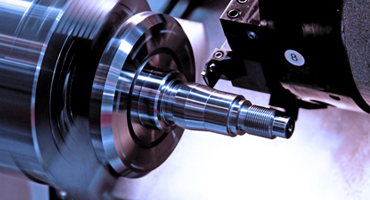
- Multi-Axis CNC Machining: While 3-axis machines are standard, suppliers with 4-axis and, particularly, 5-axis CNC machines can produce highly complex parts with greater accuracy and efficiency. 5-axis machining allows for the creation of intricate geometries in a single setup, which reduces the potential for errors from repositioning the workpiece and improves the overall surface finish. This capability is crucial for industries like aerospace and medical devices.
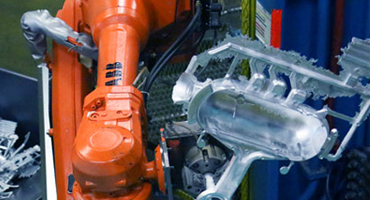
- Automation and Robotics: Forward-thinking suppliers leverage automation to increase productivity and consistency. This can include robotic arms for loading and unloading parts, automated tool changers, and pallet systems that allow for "lights-out" manufacturing (24/7 operation with minimal human intervention). Automation reduces labor costs, minimizes the risk of human error, and shortens lead times.
- Advanced Software (CAD/CAM/ERP): The integration of modern software is critical. Computer-Aided Design (CAD) and Computer-Aided Manufacturing (CAM) software enables the creation of optimized and efficient toolpaths directly from your design files. An Enterprise Resource Planning (ERP) system allows the supplier to efficiently manage workflows, track orders, and provide you with real-time status updates, ensuring transparency and better project management.
- In-Process Inspection: Modern machines are often equipped with in-process probing and inspection technology. These systems can automatically measure part features during the machining cycle, allowing for real-time adjustments to maintain tolerances and ensuring that parts are correct before they are even removed from the machine. This drastically reduces the chance of producing a bad batch of parts.
A supplier that continuously invests in its technological capabilities is not just making parts; it is providing a solution. Their investment translates directly into higher quality, shorter lead times, and a greater ability to tackle your most challenging projects.
Proven Stability and Quality Certifications (e.g., ISO 9001, AS9100D)
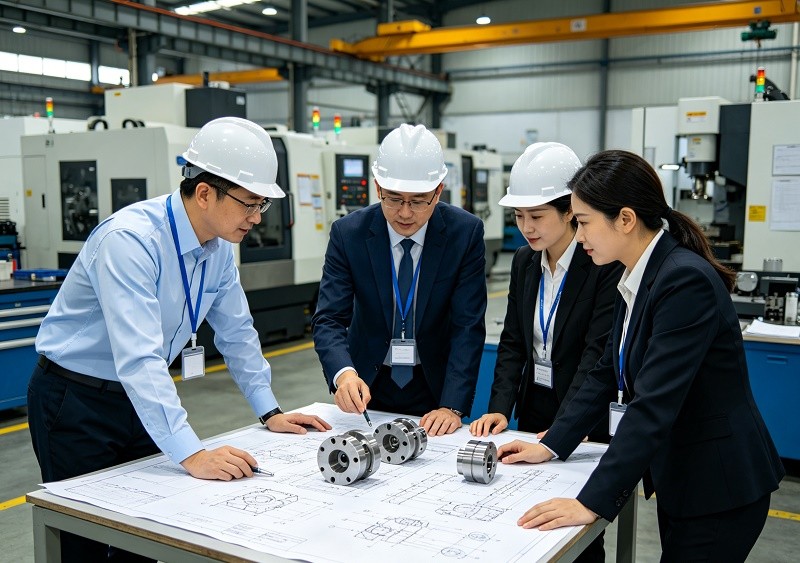
A supplier's certifications and financial health are critical indicators of their long-term reliability and commitment to quality. These are not just logos on a website; they represent rigorous, documented systems and a stable foundation for a lasting partnership.
Quality Management System (QMS) Certifications:
Certifications from the International Organization for Standardization (ISO) and other bodies are objective proof that a supplier adheres to globally recognized standards. For CNC machining, the most relevant certifications include:
| Certification | Description | Importance for OEMs |
|---|---|---|
| ISO 9001:2015 | The international standard for a Quality Management System (QMS). It demonstrates a supplier's ability to consistently provide products and services that meet customer and regulatory requirements. | Provides assurance of a process-oriented approach, focusing on customer satisfaction, risk management, and continuous improvement. It is the baseline for a reliable supplier. |
| AS9100D | The standard for QMS in the aviation, space, and defense industries. It includes all the requirements of ISO 9001 plus additional, more stringent criteria for safety, reliability, and traceability. | Essential for aerospace and defense OEMs. It signifies a supplier's adherence to strict controls for product safety, counterfeit part prevention, and configuration management. |
| ISO 13485 | The QMS standard for the medical device industry. It ensures that a supplier's processes are documented and controlled to produce safe and effective medical components. | Critical for medical OEMs, as it demonstrates compliance with the rigorous regulatory requirements of the healthcare sector. |
| ITAR Registered | Required for any U.S. company that engages in the manufacturing or exporting of defense articles or services. | Mandatory for OEMs working on projects covered by the United States Munitions List (USML), ensuring legal compliance for defense-related work. |
Partnering with a certified supplier mitigates risk by ensuring they have proven systems for quality control, process traceability, and continuous improvement.
Assessing Financial Stability:
A supplier in poor financial health poses a significant risk to your supply chain. They may cut corners on quality, struggle to procure materials, or even face insolvency, leading to sudden and severe production disruptions. A thorough evaluation of a supplier's financial stability is a crucial step in due diligence.
Key areas to investigate include:
- Financial Statements: Request and review the supplier's balance sheet, income statement, and cash flow statement. Look for consistent revenue growth, healthy profit margins, and positive cash flow from operations. These are signs of a well-managed and stable business.
- Credit Rating: Check their credit scores from agencies like Dun & Bradstreet. A strong credit rating indicates a history of meeting financial obligations.
- Debt Levels: Analyze their debt-to-equity ratio. A supplier that is heavily financed by debt can be risky, especially if their earnings decline.
- Customer and Supplier References: Inquire about their payment history with their own suppliers. A company that pays its vendors on time is generally in good financial standing.
A financially stable supplier is one that not only can weather economic downturns but also has the capital to reinvest in new technology and grow with your business. This financial resilience is a cornerstone of a reliable, long-term partnership.
Strong Communication and Engineering Support (DFM)
Beyond the machinery and certifications, the human element of a supplier partnership is what truly makes it strategic. Open, proactive communication and access to engineering expertise can transform a simple supply arrangement into a collaborative powerhouse that drives innovation and efficiency.
The Importance of Clear Communication:
Effective communication is the lifeblood of a successful manufacturing project. Misunderstandings about tolerances, materials, or revisions can lead to catastrophic errors, project delays, and budget overruns. A top-tier supplier prioritizes clear, structured, and proactive communication.
Look for a partner who:
- Provides a Dedicated Point of Contact: Having a single, knowledgeable contact person (like a project manager or engineer) who understands your project streamlines communication and ensures accountability.
- Communicates Proactively: A great partner doesn't wait for you to ask for updates. They provide regular progress reports, flag potential issues early, and confirm key details before production begins. This transparency builds trust and allows for agile problem-solving.
- Clarifies Ambiguity: Instead of making assumptions based on an incomplete drawing, a strong supplier will reach out to clarify all technical requirements, including tolerances, surface finishes, and inspection criteria. This prevents costly rework and ensures the final parts meet your exact specifications.
Engineering Support and Design for Manufacturability (DFM):
One of the most valuable services a supplier can offer is engineering support, particularly in the form of Design for Manufacturability (DFM) analysis. DFM is the practice of designing parts in a way that makes them easier, faster, and more cost-effective to manufacture.
A supplier who provides DFM support acts as an extension of your own engineering team. Before a single chip is cut, their experts will review your design and may suggest improvements such as:
- Adjusting Geometries: They might recommend changing a sharp internal corner, which is difficult to machine, to one with a radius that can be created efficiently with standard tooling.
- Optimizing Tolerances: They can help identify which tolerances are critical for function and which can be relaxed, reducing machining time and cost without impacting performance.
- Suggesting Material Alternatives: Based on their experience, they may propose a more machinable or cost-effective material that still meets your design requirements.
- Simplifying Features: They can identify overly complex features that can be simplified or modified to reduce the number of machine setups and operations.
This collaborative feedback loop is invaluable. By leveraging the supplier's hands-on manufacturing expertise early in the design phase, you can avoid costly redesigns, shorten production timelines, and significantly reduce the final part cost. Choosing a supplier with strong DFM capabilities means you're not just buying a part; you're buying expertise that will optimize your product from the ground up.
Essential Questions for Your CNC Machining Parts Supplier Evaluation
A thorough evaluation process is your best defense against partnering with the wrong supplier. Asking detailed, insightful questions allows you to dig deeper than the surface-level sales pitch and assess a potential partner's true capabilities, processes, and commitment to quality. The goal is to gather concrete evidence of their ability to perform and to understand how they operate as a business.
Organize your questions into categories that cover the most critical aspects of a supplier relationship: quality systems, process control, problem-solving, and the structure of your potential long-term partnership.
Assessing Quality, Process, and Problem-Solving Abilities
A supplier's approach to quality and their methodology for handling challenges are strong predictors of their reliability. A great partner has robust, documented systems for ensuring quality and a transparent, solutions-oriented approach to resolving the inevitable issues that arise in manufacturing.
Key Performance Metrics and Quality Standards
To objectively evaluate a supplier, you need to move beyond subjective promises and focus on measurable data. Key Performance Indicators (KPIs) provide a quantitative way to assess a supplier's past performance and their ongoing commitment to excellence.
Here are some essential questions to ask regarding their metrics and quality standards:
"What are your key performance metrics, and can you share your performance data for the last 12-24 months?"
A transparent and confident supplier will be able to provide data on the following:
- On-Time Delivery (OTD) Rate: This metric, calculated as (Number of On-Time Orders / Total Orders) x 100, is a fundamental indicator of a supplier's reliability. A consistently high OTD rate (typically >95%) shows they can manage their production schedule effectively.
- Quality Rejection Rate / Defective Parts Per Million (DPPM): This measures the number of parts rejected by customers due to quality issues. A low rejection rate or DPPM indicates a robust quality control system and manufacturing process stability. Ask them what their target is and how they track it.
- Overall Equipment Effectiveness (OEE): While more of an internal metric for the supplier, OEE (calculated as Availability x Performance x Quality) reveals how efficiently they use their equipment. A high OEE score suggests a well-run, lean operation, which translates to competitive pricing and reliable output for you.
"Can you walk me through your quality control and inspection process from material arrival to final shipment?"
A detailed answer demonstrates a mature quality system. Look for these key stages:
- Incoming Material Inspection: Do they verify material certifications and test raw materials to ensure they meet specifications before machining begins?
- First Article Inspection (FAI): Do they perform a complete inspection on the first part produced in a run to verify the setup and program are correct? Do they provide an FAI report for your approval?
- In-Process Inspection: How do they monitor quality during production? This could involve scheduled checks by operators, statistical process control (SPC) to monitor trends, or automated in-machine probing. In-process inspection is crucial for catching deviations early and preventing large quantities of bad parts.
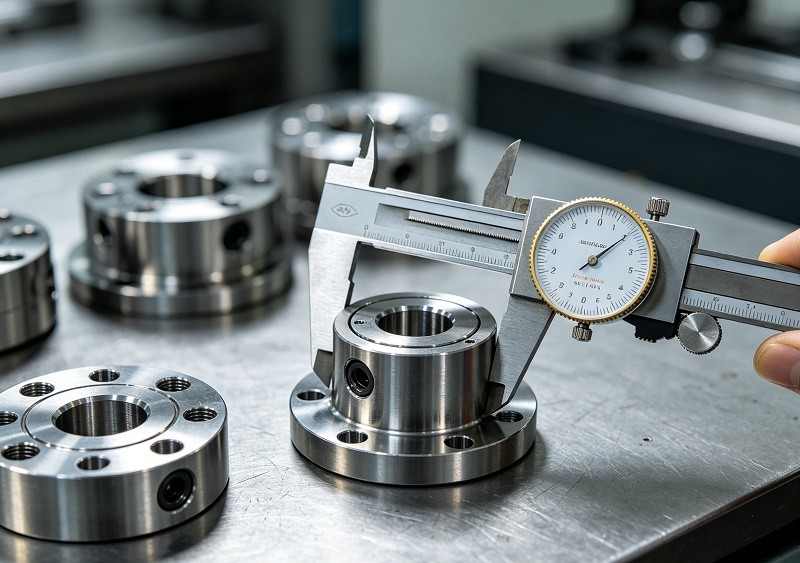
- Final Inspection: What is their process for ensuring parts meet all specifications before they are packaged and shipped? This should involve a documented procedure using calibrated inspection tools. Ask about their equipment, such as Coordinate Measuring Machines (CMMs), optical comparators, and surface roughness testers.
A supplier's ability to clearly articulate and provide evidence for their KPIs and quality processes is a strong indicator of their capability and reliability. A vague or hesitant response should be considered a significant red flag.
How They Handle Challenges and Build Credibility
Defects and mistakes happen; even the best suppliers will eventually face an issue. The true measure of a supplier's character and reliability is not whether they ever make a mistake, but how they respond when they do. A supplier who handles problems with transparency, accountability, and a focus on long-term solutions is a partner you can trust. Conversely, a supplier who hides issues, shifts blame, or offers only quick fixes will be a constant source of risk.
When evaluating a potential partner, ask direct questions about their problem-resolution process:
"Can you provide an example of a time a significant quality issue occurred and walk me through the exact steps you took to resolve it?"
A strong response should include the following key elements, which are often part of a formal Corrective and Preventive Action (CAPA) process:
- Immediate Containment: The first step should always be to contain the problem. This means quarantining any suspect parts, both in their facility and potentially in transit, to prevent more defective products from reaching you.
- Clear Communication: A trustworthy supplier will notify you immediately, explain the nature of the problem, and provide an initial assessment of the impact on your delivery schedule. They won't wait for you to discover the issue.
- Root Cause Analysis (RCA): The most critical step is a thorough investigation to determine the true root cause of the problem. A great partner won't just say, "We replaced the part." They will use structured problem-solving methods (like the "5 Whys" or a fishbone diagram) to understand what process, system, or human factor failed. This is the difference between fixing a symptom and curing the disease.
- Corrective Action Implementation: Based on the RCA, the supplier should implement a specific, documented corrective action to fix the immediate problem. This could involve changing a machine setting, retraining an operator, or adjusting a toolpath.
- Preventive Action and Verification: This is what separates a good supplier from a great one. They will take steps to prevent the problem from ever happening again. This may involve updating standard operating procedures (SOPs), adding a new inspection step, or implementing mistake-proofing ("poka-yoke") mechanisms in their process. They should also describe how they verify that the corrective action was effective over time.
A supplier's willingness to openly discuss past failures and detail their systematic approach to fixing them is a powerful sign of credibility. It shows they are a learning organization committed to continuous improvement rather than one that simply reacts to problems. This builds the trust necessary for a strong, long-term OEM-supplier relationship.
Understanding Cost and Long-Term Partnership with Your CNC Machining Parts Supplier
While quality and reliability are paramount, cost remains a critical factor in any sourcing decision. However, the focus should be on total cost and long-term value, not just the initial unit price. A strategic supplier partnership moves beyond simple transactional pricing to embrace transparent cost structures and collaborative efforts to drive efficiency over time. This approach, often formalized through Long-Term Agreements (LTAs), creates a stable and mutually beneficial relationship.
Transparent Pricing and Value Engineering Opportunities
A strategic partner is open about their cost structure and actively works with you to find ways to reduce costs without compromising function. This collaborative approach to pricing builds trust and delivers far more value than simply choosing the supplier with the lowest initial bid.
Ask for Transparent Pricing Models:
Instead of a single, lump-sum price, ask potential suppliers if they can provide a more detailed cost breakdown. While some proprietary information may be protected, a transparent partner should be able to give you insight into the key drivers of their pricing. This approach, sometimes called "open book costing," enhances trust and turns a price negotiation into a collaborative problem-solving session.
A granular quote might break down costs into categories like:
- Setup Cost: The fixed cost to program the machine and prepare the tooling for your specific job.
- Material Cost: The cost of the raw material required for the parts.
- Machining Time: The cost associated with the time the part spends on the machine.
- Post-Processing: Costs for secondary operations like deburring, anodizing, or heat treating.
- Inspection & Quality: The cost of the quality control processes required to verify the parts.
When a supplier provides this level of detail, it opens the door to a more strategic conversation. Instead of just asking for a lower price, you can ask, "The machining time seems high. Are there any design changes we could make to reduce it?" This leads directly to value engineering.
Embrace Value Engineering Opportunities:
Value engineering (VE) is a systematic approach to improving the "value" of a product by analyzing its functions and costs. An ideal supplier will act as a VE partner, using their manufacturing expertise to suggest ways to reduce cost while maintaining or improving performance.
A supplier committed to value engineering will:
- Review Your Designs Before Production: They will offer free Design for Manufacturability (DFM) feedback, flagging opportunities for cost savings. This is a clear sign they are invested in providing value beyond just machining.
- Suggest Tolerance Adjustments: They will identify non-critical features where tolerances can be relaxed. Loosening a tolerance from ±0.001" to ±0.005" can reduce machining time significantly.
- Recommend Material Alternatives: They might suggest a different alloy or material that is more cost-effective or easier to machine but still meets all functional requirements.
- Optimize Geometries: They can recommend changes to features—like standardizing corner radii or avoiding deep, narrow pockets—that align better with standard tooling and more efficient machining strategies.
By asking for pricing transparency and engaging with a supplier who offers value engineering, you shift the relationship from a simple price negotiation to a collaborative effort to build the best possible part at the most efficient cost.
The Benefits of Long-Term Agreements (LTAs) for Our Supply Chain
Once you have identified a capable and trustworthy supplier, formalizing the relationship through a Long-Term Agreement (LTA) can provide significant benefits for both the OEM and the supplier. An LTA is a contract that establishes terms for a relationship over an extended period, moving beyond individual purchase orders to create a more stable and predictable partnership.
For an OEM, the advantages of an LTA are substantial and directly address key supply chain challenges:
- Price Stability and Cost Reduction: LTAs often include fixed or formula-based pricing, which protects your organization from market volatility and unexpected price hikes. By committing to a certain volume of business, OEMs can often negotiate favorable pricing and achieve cost reductions through economies of scale.
- Supply Chain Stability and Risk Mitigation: An LTA provides an assurance of supply. This commitment from the supplier reduces the risk of stockouts and production disruptions, which is critical for maintaining a smooth manufacturing operation. Knowing you have a guaranteed source for critical components strengthens the resilience of your entire supply chain.
- Improved Quality and Consistency: A long-term relationship allows the supplier to become deeply familiar with your quality standards and part requirements. Over time, this leads to improved process controls, higher consistency in production, and a reduction in defects.
- Reduced Administrative Burden: With an LTA in place, your procurement team spends less time on frequent negotiations, quoting, and sourcing for every order. This frees them up to focus on more strategic activities, such as collaborating with suppliers on innovation and managing overall supply chain performance.
- Guaranteed Capacity and Prioritized Service: An LTA often includes terms that guarantee a certain portion of the supplier's production capacity for your orders. As a contracted, long-term partner, you are more likely to receive prioritized service, especially during periods of high demand or industry-wide capacity constraints.
- Fosters Innovation and Collaboration: The stability of an LTA encourages both parties to invest in the relationship. A supplier with a multi-year contract is more likely to invest in new technology, dedicate engineering resources to your projects, and proactively suggest innovations that can improve your products.
While transactional, order-by-order relationships have their place for non-critical components, an LTA is a powerful tool for managing the sourcing of strategic parts. It codifies the commitment between an OEM and a supplier, transforming the dynamic into a true strategic partnership focused on mutual success and long-term value creation.
Conclusion
Ultimately, choosing an excellent CNC Machining Parts Supplier transforms them from a simple vendor into an invaluable strategic partner for our OEM operations. This shift in perspective is critical for building a competitive and resilient manufacturing ecosystem. It requires moving beyond the transactional mindset of securing the lowest price and embracing a more holistic evaluation rooted in the principles of quality, reliability, and long-term value.
By focusing on a comprehensive assessment that extends beyond the initial quote, we secure not just parts, but a foundation of reliability, a source of innovation, and a more robust supply chain for our future success. A partner who invests in technology, commits to certifiable quality standards, communicates proactively, and collaborates on design for manufacturability (DFM) becomes an extension of our own team. This strategic alliance is what empowers us to navigate market volatility, improve product performance, and ultimately, deliver superior value to our end customers. We encourage you to apply this evaluative framework in your own procurement processes and share your experiences. Building stronger partnerships across our supply base benefits the entire industry.