The Essential Guide for Custom Silicone Rubber Keypad Manufacturers: From Concept to Production
As a custom silicone rubber keypad manufacturer, we understand the critical role these components play in modern electronics, with an exciting market projected for significant growth. We're here to share our insights, guiding you through the intricate world of custom keypad development. This essential guide acts as your compass, navigating the entire product journey from initial concept to successful production, ensuring you possess the knowledge to thrive in this specialized and innovative industry.
Mapping the Market: What Every Custom Silicone Rubber Keypad Manufacturer Should Know
To succeed as a custom silicone rubber keypad manufacturer, a deep understanding of the market landscape is not just beneficial—it's essential. This involves recognizing the global demand drivers, appreciating the diverse applications of silicone keypads, and committing to the unwavering principles of quality and consistency that separate market leaders from the rest.
The Global Demand and Role of Silicone Keypads
The demand for silicone rubber keypads spans a vast array of industries, each leveraging the unique properties of silicone to enhance product functionality and user experience. The global silicone market is on a growth trajectory, driven by its increasing use in high-value sectors. Key markets include consumer electronics, telecommunication devices, medical equipment, and automotive interiors, where durability and reliability are paramount.
In the medical field, the non-porous and easily sterilizable surface of silicone makes it ideal for devices that require stringent hygiene standards. For automotive applications, silicone's resistance to extreme temperatures, UV radiation, and chemicals ensures longevity and performance in challenging environments. The tactile feel and design flexibility also make silicone keypads a preferred choice for everything from remote controls to complex industrial machinery control panels. This widespread adoption underscores the material's versatility and its integral role in modern human-machine interfaces (HMI).
Why Quality and Consistency Matter for a Custom Silicone Rubber Keypad Manufacturer
For any custom silicone rubber keypad manufacturer, quality and consistency are the cornerstones of a strong reputation and long-term success. Inconsistency in production can lead to a host of problems, including variable actuation force, premature wear of legends, and color discrepancies, all of which detract from the end user's experience and can damage a brand's credibility. A high-quality keypad is one that performs reliably over its expected lifespan, provides consistent tactile feedback, and maintains its aesthetic appearance.
Achieving this level of quality requires rigorous control over every stage of the manufacturing process, from raw material inspection to final product testing. Implementing a robust Quality Management System (QMS), such as one certified to ISO 9001 standards, provides a framework for maintaining high standards. Ultimately, a commitment to quality minimizes the risk of product failures, costly recalls, and warranty claims, fostering trust with clients and solidifying your position as a reliable and expert manufacturer.
Choosing Your Foundation: Material Selection for the Custom Silicone Rubber Keypad Manufacturer
The performance, longevity, and feel of a custom silicone rubber keypad are fundamentally determined by the material it's made from. As a manufacturer, guiding your clients through the material selection process is a critical value-add. This requires a comprehensive understanding of different silicone types, their properties, and how they align with specific project requirements and budgetary constraints.
Deciphering Silicone Material Types for Optimal Performance
Silicone rubber is not a one-size-fits-all material. It comes in various grades and formulations, each engineered for different performance characteristics. The most common type used for keypads is high-temperature vulcanized (HTV) silicone. Key properties to consider include durometer, which measures the material's hardness and directly impacts the tactile feel of the buttons. A lower durometer (e.g., 30A) results in a softer button, while a higher durometer (e.g., 70A) creates a firmer feel.
Beyond standard grades, specialized silicone materials offer enhanced capabilities:
- Conductive Silicone: Used for creating the carbon "pills" on the underside of the keys that make electrical contact with the PCB.
- Flame-Retardant Silicone: Essential for applications requiring compliance with UL 94V-0 or other fire safety standards.
- Medical-Grade Silicone: Biocompatible materials (e.g., USP Class VI) are required for devices with skin contact.
- Fluorosilicone: Offers superior resistance to non-polar solvents, fuels, and oils, making it ideal for automotive and industrial applications.
Below is a table summarizing common silicone material types and their typical applications:
| Material Type | Key Properties | Common Applications |
|---|---|---|
| Standard Grade Silicone | Good balance of properties, wide durometer range | Consumer electronics, remote controls, general-purpose keypads |
| Conductive Grade Silicone | Low electrical resistance | Contact pills for keypad switches |
| Flame-Retardant Silicone | Self-extinguishing, low smoke generation | Avionics, public transportation, certified electronics |
| Medical-Grade Silicone | Biocompatible, non-toxic, sterilizable | Medical devices, surgical instruments, healthcare wearables |
| Fluorosilicone | Excellent chemical and fuel resistance | Automotive systems, aerospace controls, industrial machinery |
LSR vs. RTV: Matching the Right Material to Project Needs and Budget
The two primary manufacturing processes involving silicone are Liquid Silicone Rubber (LSR) injection molding and Room-Temperature-Vulcanizing (RTV) molding. While both can be used to create keypads, they serve different purposes, particularly regarding volume and cost.
Liquid Silicone Rubber (LSR) is a two-part platinum-cured silicone that is injected into a heated mold cavity. This process is highly automated, making it ideal for high-volume production runs where precision, consistency, and minimal cycle times are critical. While the initial tooling investment for LSR molding is higher, the cost per part is significantly lower at scale.
Room-Temperature-Vulcanizing (RTV) silicone, often used for prototyping and low-volume production, involves casting the material into a less expensive mold (sometimes made of epoxy or even 3D-printed materials). This process has lower upfront tooling costs but is more labor-intensive and has longer cycle times, resulting in a higher cost per part. It is an excellent choice for creating initial prototypes to validate a design before committing to expensive production tooling.
Key Factors Influencing Material Choice and Product Reliability
Choosing the right material goes beyond basic properties and extends to ensuring long-term product reliability in its intended environment. A custom silicone rubber keypad manufacturer must consider several key factors during the design and consultation phase:
- Operating Environment: Will the keypad be exposed to extreme temperatures, humidity, UV radiation (sunlight), or specific chemicals? For outdoor applications, a UV-resistant grade is crucial to prevent yellowing and degradation. For industrial settings, chemical resistance is paramount.
- Mechanical Stress: The expected lifecycle and actuation frequency determine the required durability. High-use applications, such as POS terminals or medical equipment, demand a material with high tear strength and resilience to prevent mechanical failure.
- Regulatory Compliance: Medical, military, or automotive products often require materials that meet specific industry standards (e.g., FDA, USP Class VI, MIL-STD-810G). Early identification of these requirements is essential.
- Tactile Requirements: The desired snap ratio and actuation force, which define the "click feel" of a button, are heavily influenced by the material's durometer and the geometric design of the key's webbing.
By systematically evaluating these factors, a manufacturer can recommend a material that not only meets the performance specifications but also ensures the keypad's reliability and longevity, ultimately delivering a successful product.
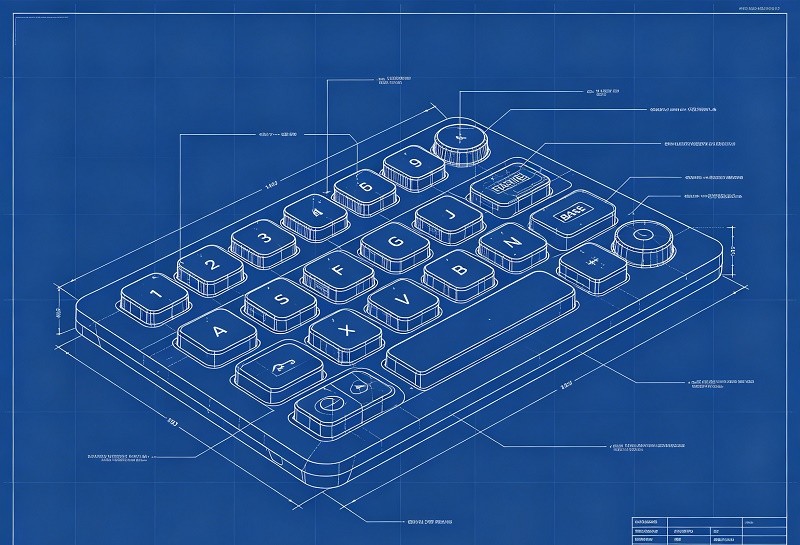
Crafting Perfection: Design, Customization, and User Experience for the Custom Silicone Rubber Keypad Manufacturer
A truly successful custom silicone keypad is more than just a functional component; it's a critical touchpoint that defines the user's interaction with a device. As a manufacturer, your expertise in design and customization is what transforms a basic concept into an intuitive, reliable, and aesthetically pleasing product. This section delves into the nuances of button design, innovative customization techniques, and specialized considerations for demanding applications.
Elevating User Interaction with Thoughtful Button Designs
The tactile experience of a keypad is paramount and is largely governed by its mechanical design. A key concept here is the snap ratio, which is the relationship between the actuation force (the force required to press the key) and the contact force (the force once the key is depressed). A snap ratio between 40% and 60% is typically desired to provide crisp, positive tactile feedback, assuring the user that the keypress has been registered. If the ratio is too low, the key will feel mushy; if it's too high, it will require excessive force.
This feedback is engineered through the geometry of the webbing at the base of the key. By carefully designing the angle and thickness of this membrane, manufacturers can precisely control both the actuation force and the travel distance of the key. Other design considerations include:
- Button Shape and Size: Ergonomics play a huge role. Buttons should be sized and spaced appropriately for the intended use, whether for gloved hands in an industrial setting or precise inputs on a medical device.
- Key Travel: The distance the key moves from its neutral an a actuated position. Deeper travel can provide a more substantial feel but may slow down rapid data entry.
- Actuation Force: Measured in grams, this should be tailored to the application to prevent accidental presses (too low) or user fatigue (too high).
Innovative Customization Techniques: Colors, Backlighting, and Surface Markings
Visual appeal and functionality in various lighting conditions are achieved through a range of customization techniques. As a custom silicone rubber keypad manufacturer, offering a wide palette of options allows clients to align the keypad with their brand identity and product requirements.
- Colors: Silicone can be pigmented to match virtually any Pantone or RAL color standard. Multi-color keypads can be achieved through co-molding, where different colored silicones are molded together in a single part.
- Backlighting: Essential for devices used in low-light conditions. Methods range from individual LEDs placed under each key to using a light guide film (LGF) for more uniform and complex illumination. Laser-etched legends, where a translucent top layer is etched away to reveal a translucent base layer, are a popular and durable backlighting solution.
- Surface Markings (Legends): The durability of the key legends is crucial.
- Screen Printing: A cost-effective method for applying legends, often followed by a protective coating to enhance wear resistance.
- Laser Etching: Provides extremely durable markings that are physically engraved into the silicone surface, making them impossible to wear off.
- Epoxy Coating: A clear, hard epoxy can be applied over printed legends to create a durable, glossy button top that offers superior protection against abrasion and chemicals.
Here's a comparison of common customization techniques:
| Feature | Screen Printing | Laser Etching | Epoxy Coating |
|---|---|---|---|
| Durability | Moderate (Improved with coating) | Excellent | Superior |
| Cost | Low | High | Moderate to High |
| Appearance | Sharp, multi-color graphics | High-contrast, precise | Glossy, "hard cap" feel |
| Best For | Cost-sensitive projects, complex graphics | Backlit keypads, high-wear environments | Premium feel, maximum durability |
Specialized Design Considerations for Diverse Applications
Different environments present unique challenges that demand specialized design approaches. A versatile custom silicone rubber keypad manufacturer must be adept at engineering solutions for these niche applications.
Designing for High-Traffic Medical Environments and Security
In medical settings, hygiene and reliability are non-negotiable. Keypads must be designed for easy and frequent cleaning with harsh disinfectants without degrading. This is often achieved by:
- Sealed Designs: Creating a single, seamless surface with no gaps or crevices where contaminants can accumulate.
- Antimicrobial Properties: Using silicone with antimicrobial additives or applying a specialized coating to inhibit the growth of bacteria.
- Material Biocompatibility: Ensuring any materials that may come into contact with skin are certified to medical standards like USP Class VI to prevent adverse reactions.
For security keypads, such as those on safes or access control systems, the focus is on preventing wear patterns that could reveal frequently used numbers. This can be accomplished with highly durable legends (laser etching or epoxy caps) and materials that resist surface abrasion.
Ensuring Durability for Outdoor and Harsh Conditions
Keypads used outdoors or in industrial facilities must withstand a barrage of environmental abuse. Key design considerations include:
- Ingress Protection (IP) Rating: The design must often be sealed to achieve a specific IP rating (e.g., IP67) to protect the internal electronics from dust and water ingress. This is typically done through gasketing features molded directly into the keypad.
- UV Resistance: Standard silicone can yellow and become brittle with prolonged sun exposure. Using a UV-resistant silicone grade or applying a UV-blocking coating is essential for outdoor longevity.
- Temperature Fluctuation: The material must maintain its elasticity and tactile properties across a wide temperature range, from freezing cold to high heat.
By mastering these advanced design and customization principles, a manufacturer can deliver keypads that are not only functional but are perfectly tailored to their end-use environment, offering a superior user experience and unparalleled durability.

From Blueprint to Reality: The Manufacturing Process for a Custom Silicone Rubber Keypad Manufacturer
Transforming a client's concept into a tangible, high-quality product is the core function of a custom silicone rubber keypad manufacturer. This journey requires a structured process, effective collaboration, and a focus on scalability. Understanding and mastering each stage, from initial discovery to full-scale production, is what ensures a smooth, efficient, and successful outcome.
Navigating the Product Life Cycle: From Discovery to Post-Production
The manufacturing process is a multi-stage journey. A well-defined product life cycle provides a roadmap for both the manufacturer and the client, ensuring all requirements are met at each step.
- Discovery and Quoting: This initial phase involves understanding the client's needs, application, and specifications. It's crucial to gather all necessary details, including 2D/3D CAD files, material requirements, desired actuation force, and compliance standards. Based on this, an accurate quote and timeline can be provided.
- Design for Manufacturability (DFM): Before any tooling is made, a DFM analysis is performed. This expert review identifies potential issues in the design that could affect manufacturing efficiency, quality, or cost. Recommendations may include adjusting wall thickness, draft angles, or tactile webbing geometry to optimize the part for molding.
- Tooling and Prototyping: Once the design is finalized, the compression or injection mold is created. A small batch of prototypes is then produced. These first articles are critical for validating the design, material, and tactile feel before committing to mass production.
- Mass Production: After prototype approval, full-scale production begins. This involves running the molds, applying any secondary processes (printing, coating), and implementing quality control checks throughout the run.
- Quality Assurance and Shipping: Every batch undergoes final inspection to ensure it meets all specifications. This may include life cycle testing, force testing, and cosmetic inspection. Once approved, the parts are securely packaged and shipped to the client.
- Post-Production Support: A good manufacturing partner provides ongoing support, managing inventory for future orders and assisting with any design revisions for a "next-generation" product.
Collaborating Effectively with Trusted Manufacturing Partners
The relationship between a client and a custom silicone rubber keypad manufacturer is a partnership. Clear, consistent, and transparent communication is the bedrock of this collaboration. To ensure a project runs smoothly, clients should provide a comprehensive "tech pack" that includes:
- Detailed CAD Files: Both 2D drawings with tolerances and 3D models are essential.
- Material Specifications: Clearly define the required silicone type, durometer, and color (e.g., Pantone code).
- Performance Requirements: Specify the desired actuation force, snap ratio, and expected product lifecycle (number of actuations).
- Compliance Needs: List all required certifications (e.g., RoHS, REACH, UL, FDA).
For the manufacturer, providing regular updates, transparently discussing challenges, and offering expert guidance during the DFM phase builds trust and ensures the final product aligns perfectly with the client's vision. Choosing a partner with proven experience, relevant certifications (like ISO 9001), and a strong portfolio is crucial for mitigating risks.
Prototyping, Validation, and Scaling for Efficient Production
Prototyping is an indispensable risk-mitigation step in custom manufacturing. It allows for the physical validation of a design before investing in expensive and time-consuming production tooling. Several prototyping methods exist:
- Soft Tooling (RTV Molding): Ideal for creating a small number of production-quality parts using less expensive, short-life molds. This is perfect for functional testing.
- Prototype Steel Tooling: A single-cavity steel mold can be created to produce parts that are identical to what mass production will yield, allowing for thorough validation.
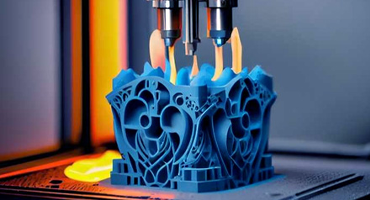
- 3D Printing: While 3D-printed silicone is still an emerging technology, 3D printing can be used to create physical models to check for form and fit, though they won't replicate the tactile feel of a molded part.
Once the prototype is validated and approved, the process can be scaled for mass production. This involves building multi-cavity production molds that can produce multiple keypads in a single cycle. Efficient scaling relies on a well-optimized and validated design, ensuring that the high-volume output maintains the same quality and consistency as the approved prototype. This structured approach minimizes rework, reduces time to market, and ensures a predictable and successful production run.
Embracing the Future: Innovation and Global Sourcing for the Custom Silicone Rubber Keypad Manufacturer
The landscape for manufacturing is in constant flux, shaped by technological advancements, supply chain dynamics, and a growing emphasis on sustainability. For a custom silicone rubber keypad manufacturer, staying ahead means not only perfecting the current processes but also anticipating future trends. Embracing innovation, navigating global sourcing complexities, and adopting sustainable practices are key to long-term growth and market leadership.
Addressing Quality Consistency and Supply Chain Challenges
In a globalized market, manufacturers often face challenges related to the supply chain and quality consistency. The price and availability of raw silicone can be volatile, impacted by geopolitical events and logistical disruptions. A resilient manufacturer diversifies its supplier base for raw materials and maintains strategic inventory levels to buffer against unexpected shortages.
Maintaining quality consistency, especially when working with international partners or multiple production facilities, demands a rigorous and standardized quality assurance protocol. This includes:
- Strict Incoming Quality Control (IQC): Verifying that all raw materials meet specifications before they enter the production line.
- In-Process Quality Control (IPQC): Continuous monitoring and testing during the manufacturing process to catch deviations early.
- Outgoing Quality Assurance (OQA): A final, comprehensive inspection of the finished goods before they are shipped to the client.
By implementing these robust checks, a manufacturer can guarantee that every keypad, whether in the first batch or the tenth, adheres to the exact same standards of excellence.
Leveraging Global Trade Events for Strategic Sourcing and Trend Discovery
Global trade events and exhibitions are invaluable resources for any forward-thinking manufacturer. These events, such as Germany's K-Show for plastics and rubber or major electronics fairs like CES in Las Vegas, provide a unique opportunity to:
- Discover New Technologies: Witness firsthand the latest innovations in materials, molding machinery, and secondary processing equipment.
- Meet with Suppliers: Build relationships with new material suppliers and technology partners from around the world.
- Network with Peers and Clients: Gain insights into emerging market trends and customer needs by engaging with other industry professionals.
- Benchmark Against Competitors: See what other manufacturers are doing and identify opportunities for differentiation.
Active participation in these events allows a custom silicone rubber keypad manufacturer to stay on the cutting edge, adopt new efficiencies, and make strategic sourcing decisions that enhance their competitive advantage.
The Road Ahead: Sustainable Practices and Technological Advancements
The future of manufacturing is increasingly green. There is growing demand for sustainable practices, including waste reduction, energy efficiency, and the use of more environmentally friendly materials. For silicone, this includes exploring recycling options and optimizing molding processes to minimize scrap material. Manufacturers who proactively adopt sustainable practices not only contribute to a healthier planet but also appeal to an increasingly eco-conscious clientele.
Simultaneously, technology continues to push the boundaries of what's possible with silicone keypads. The road ahead is paved with exciting advancements:
- Integrated Haptics: Moving beyond simple tactile feedback to include programmable haptic engines that can provide varied and dynamic responses.
- Printed Electronics: The potential to print sensors and circuits directly onto or within the silicone, creating smarter, more integrated interfaces.
- Optically Clear Silicone: The use of highly transparent liquid silicone rubber allows for more creative and effective backlighting and light-piping solutions in complex assemblies.
- Self-Healing Materials: Research into self-healing silicone could one day lead to keypads that can repair minor cuts or abrasions, dramatically extending product life.
By keeping a pulse on these technological advancements and committing to sustainable operations, a custom silicone rubber keypad manufacturer can not only meet the demands of today but also shape the innovative products of tomorrow.
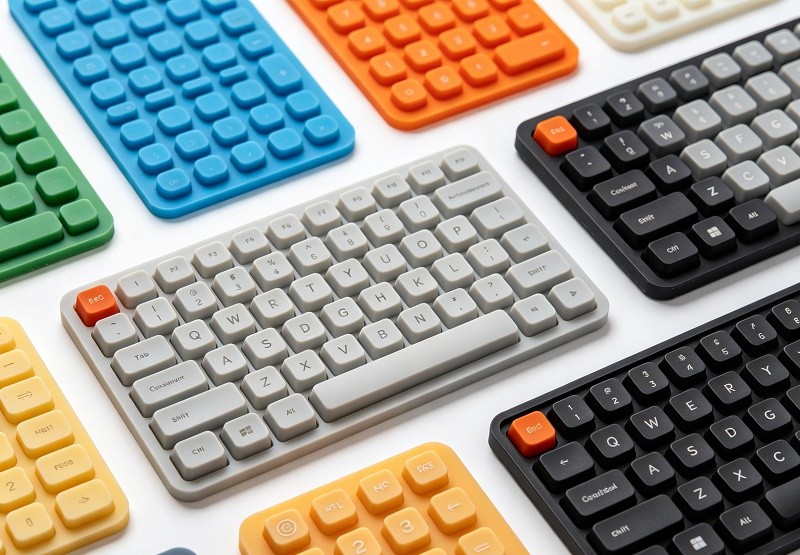
We've journeyed through the entire process, from understanding market demands and selecting the right materials to intricate design, customization, and the comprehensive manufacturing journey. Success as a custom silicone rubber keypad manufacturer fundamentally relies on informed decisions, robust partnerships, and a constant drive for innovation.
By mastering these essential aspects, you are not merely producing keypads; you are crafting superior user experiences and actively shaping the future of human-machine interface solutions. We trust this guide empowers you as you embark on your next groundbreaking project