Introduction: Why Surface Finishing Matters in CNC Machining
In precision CNC machining, producing an accurate part is only half the equation. The final surface finish often determines how a part looks, performs, and survives in its working environment. Without proper surface treatment, even the most precisely machined components can suffer from corrosion, wear, poor aesthetics, and reduced service life.
Surface finishing transforms raw machined parts into durable, functional, and visually appealing components. Whether you are manufacturing aerospace brackets, medical implants, automotive components, or consumer electronics enclosures, the right surface finish directly impacts corrosion resistance, wear behavior, dimensional stability, and perceived quality.
The global precision surface finishing market was valued at approximately USD 1.67 billion in 2025 and is projected to reach USD 2.48 billion by 2032, growing at a CAGR of 5.85% (PMarketResearch, 2025). This growth reflects how manufacturers increasingly treat surface finishing as a critical engineering specification rather than a cosmetic afterthought.
What Is Surface Finishing for CNC Parts?
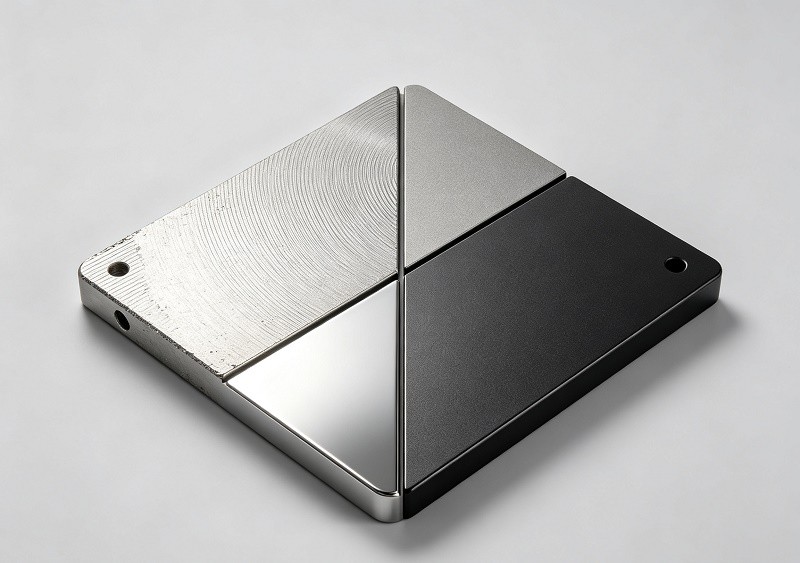
Surface finishing refers to a broad range of post-machining processes applied to manufactured parts to alter, refine, or enhance their surface properties. These processes include mechanical treatments (bead blasting, polishing, grinding), electrochemical conversions (anodizing, passivation), and applied coatings (powder coating, electroplating, PVD).
Each finishing method serves three primary purposes:
- Protection: Preventing corrosion, oxidation, and chemical attack in harsh operating environments
- Function: Improving wear resistance, reducing friction, altering conductivity, or enhancing surface hardness
- Aesthetics: Creating a clean, professional appearance with consistent color, texture, and gloss levels
The choice of surface finish depends on multiple factors including base material, application environment, tolerance requirements, budget, and desired appearance. Understanding the capabilities and limitations of each finishing method is essential for selecting the right process for your CNC machined parts.
Key Benefits of Professional Surface Finishing
Enhanced Corrosion Resistance
Anodizing, powder coating, and plating create protective barriers that shield metal parts from moisture, chemicals, and salt spray. Type III hard anodizing can withstand over 1,000 hours of salt spray testing per ASTM B117.
Improved Wear Resistance
Hard anodizing (Type III) achieves surface hardness of 60–70 HRC, comparable to hardened tool steel. This makes it ideal for sliding contacts, valve bodies, pistons, and high-wear mechanical components.
Superior Aesthetics & Branding
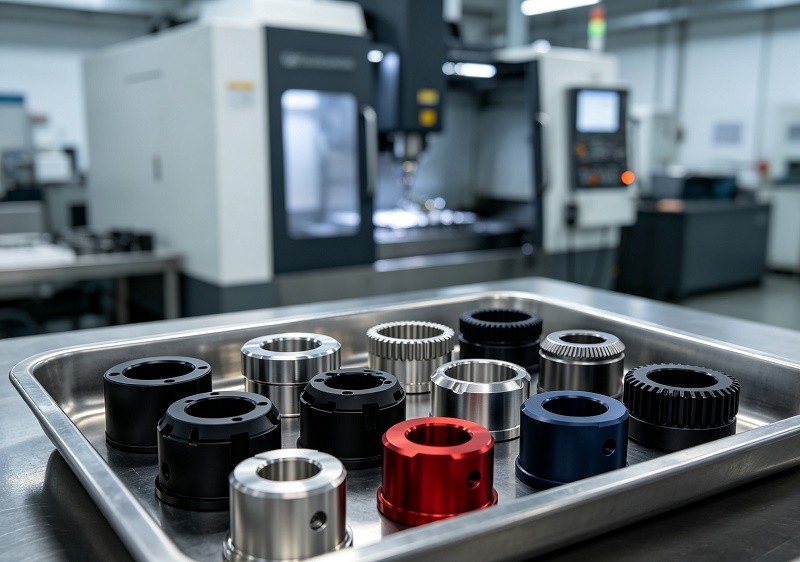
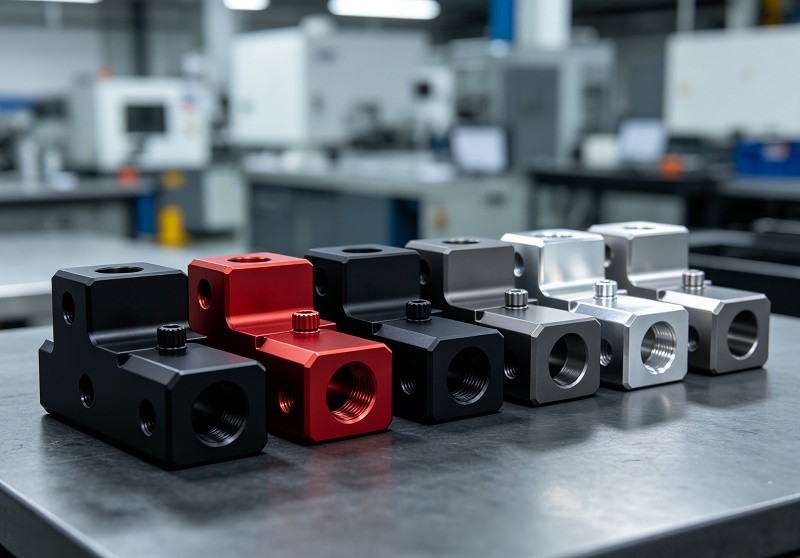
Surface finishes enable consistent color, texture, and gloss across production batches. Powder coating offers virtually unlimited RAL color options, while anodizing provides clean metallic finishes in black, red, blue, gold, and clear.
Extended Product Lifespan
Proper surface treatment can extend component service life by 3–5 times compared to untreated parts. This reduces replacement frequency, maintenance costs, and total cost of ownership for end users.
Anodizing: The Gold Standard for Aluminum Parts
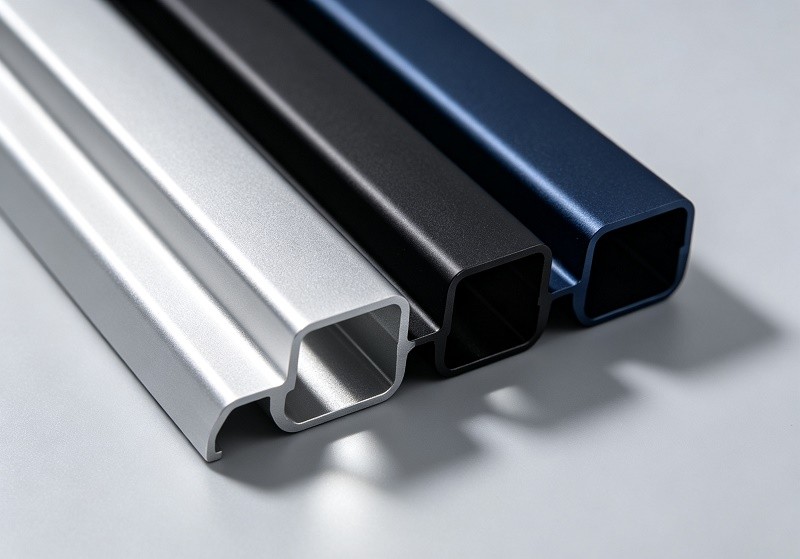
Anodizing is an electrochemical process that converts the aluminum surface into a hard, durable aluminum oxide (Al₂O₃) layer. Unlike paint or plating, the anodized layer is chemically bonded to the substrate — it will not peel, chip, or flake off over time.
There are three main types of anodizing per MIL-A-8625 and ISO 7599:
| Property | Type I (Chromic) | Type II (Sulfuric) | Type III (Hardcoat) |
|---|
| Thickness | 0.5–2.5 μm | 5–25 μm | 25–100 μm |
| Hardness | Low | Medium | High (60–70 HRC) |
| Color Options | Limited | Many (dyeable) | Dark (black/gray) |
| Cost Level | Moderate | Moderate | High |
| Best For | Aerospace, tight tolerances | General use, decorative | Wear surfaces, sliding parts |
| Applications | Aerospace brackets, thin-wall parts | Electronics enclosures, consumer products | Valve bodies, pistons, hydraulic components |
Dimensional Impact: Anodizing grows approximately 50% into the surface and 50% outward. For a Type II coating of 25 μm, the part dimension increases by roughly 12.5 μm per surface. Critical threaded holes and precision bores should be masked or pre-compensated in the machining stage.
Powder Coating: Durable Protection with Unlimited Colors
Powder coating applies a dry, electrostatically charged polymer powder to the part surface, followed by oven curing at 160–200°C. The result is a thick, durable protective coating with excellent impact resistance and broad color selection.
Key characteristics of powder coating according to ISO 8130 and ASTM D3359:
- Coating Thickness: 60–120 μm (0.06–0.12 mm) for standard applications
- Curing Temperature: 160–200°C, which may affect certain aluminum tempers (e.g., T6 over-aging risk)
- Color Range: Virtually unlimited RAL colors, gloss levels from matte to high-gloss, plus textured finishes
- Environmental: Low VOC, solvent-free process with powder recovery rates ≥98.5%
Powder coating is ideal for steel and aluminum parts requiring high impact resistance, outdoor durability, and aesthetic consistency. Common applications include industrial machine covers, equipment enclosures, automotive brackets, outdoor furniture, and signage.
However, powder coating adds measurable thickness that can affect precision fits. Engineers should account for the 60–120 μm coating build-up when designing threaded holes, mating surfaces, and press-fit features.
Electroplating: Zinc, Nickel, and Chrome for Steel Parts
Electroplating deposits a thin metallic layer onto the part surface through an electrochemical process. It is commonly applied to steel, brass, and copper components to improve corrosion resistance, electrical conductivity, and appearance.
| Plating Type | Thickness | Primary Benefit | Common Applications |
|---|
| Zinc Plating | 5–15 μm | Corrosion protection for steel | Fasteners, brackets, hardware |
| Nickel Plating | 10–40 μm | Wear resistance + brightness | Hydraulic components, tools |
| Chrome Plating | 10–50 μm | Hardness + low friction | Piston rods, shafts, molds |
| Gold Plating | 0.5–5 μm | Conductivity + corrosion resistance | Electrical connectors, PCBs |
Each plating process adds measurable thickness that must be considered for tight-tolerance applications. REACH and RoHS compliance in Europe now mandate substitution of hexavalent chromium chemistries, driving adoption of trivalent chrome and other environmentally compliant alternatives.
Other Essential Surface Finishing Methods
Beyond anodizing, powder coating, and plating, several other finishing methods serve specific applications:
Bead Blasting
Creates a uniform matte or satin texture by bombarding the surface with fine glass beads at high pressure. Ideal for hiding tool marks and preparing surfaces for anodizing or coating. Minimal dimensional impact at <0.01 mm removal. Cost-effective at approximately 1.2–1.5× the baseline as-machined cost.
Polishing & Brushing
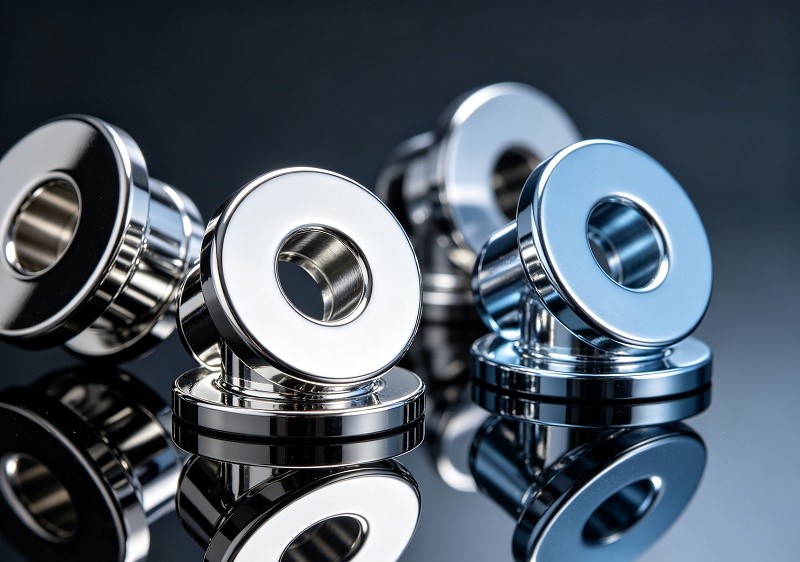
Mechanically removes surface material to achieve Ra values from 0.2 to 0.8 μm for mirror, satin, or brushed finishes. Commonly used for stainless steel medical components, optical devices, and premium consumer products where appearance is critical.
Black Oxide
A chemical conversion finish for steel and stainless steel that creates a matte black surface with minimal dimensional change (typically <1 μm). Ideal for precision tools, fasteners, and machine components where a black finish is needed without affecting critical tolerances.
Passivation
A chemical treatment for stainless steel that removes free iron and surface contaminants, allowing a protective chromium oxide layer to form naturally. Essential for medical devices, food processing equipment, and pharmaceutical components per ASTM A967 and ISO 13485.
How to Choose the Right Surface Finish for Your CNC Parts
Selecting the optimal surface finish requires balancing multiple factors. Based on industry best practices from certified CNC machining facilities, here is a practical decision framework:
- Define the operating environment: Will the part face outdoor exposure, humidity, chemicals, salt spray, or UV radiation? Outdoor applications typically require anodizing or powder coating for corrosion protection.
- Identify critical tolerances: Finishes that add thickness (anodizing: 5–100 μm; powder coating: 60–120 μm; plating: 5–50 μm) require pre-compensation in machining. For tight-tolerance features, consider masking or choosing minimal-dimension-change finishes like bead blasting or passivation.
- Determine aesthetic requirements: Consumer-facing products benefit from consistent color and texture. Anodizing offers clean metallic finishes; powder coating provides unlimited color options; polishing creates premium mirror surfaces.
- Evaluate material compatibility: Anodizing is suitable for aluminum and titanium only. Steel parts are better suited for powder coating, black oxide, or electroplating. Stainless steel components commonly use passivation, electropolishing, or mechanical polishing.
- Assess budget and lead time: As-machined is the lowest cost option. Bead blasting adds minimal cost (typically $1–5 per part). Anodizing Type II costs $2–10 per part with 3–5 day lead times. Powder coating and Type III hard anodizing are higher cost options with longer lead times of 5–10 days.
Pro Tip: Always specify surface finish on your technical drawing using a complete callout. Example: "Finish: Type II anodize per MIL-A-8625 Class 2, color black RAL 9005, thickness 15–25 μm. Mask: all M4 threaded holes; mounting face datum A." Complete callouts reduce quoting ambiguity by 5–15% and prevent costly rework.
How SOMI Custom Parts Can Help
At SOMI Custom Parts, we provide comprehensive CNC machining services with a full range of surface finishing options under one roof. Our ISO 9001-certified facility in China is equipped to handle everything from prototyping to high-volume production, with integrated finishing capabilities that eliminate the complexity of coordinating multiple suppliers.
Our surface finishing services include:
- Anodizing: Type II decorative and Type III hard anodizing per MIL-A-8625, ISO 7599, and AMS 2471/2472 in black, red, blue, gold, clear, and custom colors
- Powder Coating: Polyester, epoxy, and hybrid systems with RAL color matching, gloss levels from matte to high-gloss, and textured finishes
- Plating: Zinc, nickel, and chrome plating with REACH and RoHS-compliant chemistries
- Mechanical Finishes: Bead blasting, polishing, brushing, and vibratory finishing for uniform texture and surface refinement
- Specialty Treatments: Black oxide, passivation (ASTM A967), electropolishing, and custom surface engineering solutions
Our engineering team provides free DFM (Design for Manufacturing) analysis to help you select the optimal surface finish for your application, accounting for material, tolerance, environment, and budget requirements. Browse our CNC machining capabilities or send your 2D/3D drawings for a free quote and finishing recommendation.
Surface Finishing Comparison: Key Technical Specifications
| Finish Method | Thickness | Ra Achievable | Materials | Cost Index | Lead Time |
|---|
| As-Machined | N/A | 3.2 μm (std) | All metals | 1.0× (baseline) | 0 days |
| Bead Blasting | <0.01 mm removal | 1.6–3.2 μm | Most metals | 1.2–1.5× | 1–2 days |
| Type II Anodizing | 5–25 μm add | As-machined + 0.8–1.6 | Aluminum, Titanium | 2.0–3.0× | 3–5 days |
| Type III Hard Anodizing | 25–100 μm add | As-machined + 0.5–1.0 | Aluminum, Titanium | 2.5–4.0× | 5–7 days |
| Powder Coating | 60–120 μm add | As-machined + 0.5–1.0 | Most metals | 2.5–4.0× | 5–10 days |
| Electroplating | 5–50 μm add | Varies | Steel, Brass, Copper | 2.0–4.0× | 3–7 days |
| Polishing | 0.01–0.05 mm removal | 0.2–0.8 μm | Stainless steel, Al, Brass | 3.0–5.0× | 3–5 days |
| Black Oxide | <1 μm add | Minimal change | Steel, Stainless steel | 1.5–2.0× | 1–2 days |
Cost index is relative to baseline as-machined cost. Data compiled from industry sources including CNCTAL, NeWay Machining, Runsom Precision, and SOMI Custom Parts shop-floor experience. Actual pricing varies with batch size, part complexity, material, and masking requirements.
Frequently Asked Questions
What is the best surface finish for CNC aluminum parts?
Anodizing is the most common and recommended finish for CNC aluminum parts. Type II anodizing provides excellent corrosion resistance and color options for decorative and general industrial use. Type III hard anodizing is preferred for high-wear applications requiring surface hardness up to 60–70 HRC. Both types comply with MIL-A-8625 and ISO 7599 standards.
What is the difference between anodizing and powder coating?
Anodizing creates a protective oxide layer that becomes part of the aluminum surface — it will not peel or chip. It offers superior dimensional control with minimal thickness addition (5–100 μm). Powder coating applies a separate polymer layer on top of the surface (60–120 μm), providing higher impact resistance and unlimited color options but less dimensional precision. Anodizing is ideal for precision aluminum parts; powder coating suits steel and aluminum parts requiring bold colors and outdoor durability.
Does surface finishing affect CNC part dimensions?
Yes. Anodizing adds approximately 50% penetration and 50% build-up (total 5–100 μm). Powder coating adds 60–120 μm uniformly. Electroplating adds 5–50 μm. For tight-tolerance holes, threads, and mating surfaces, always specify masking requirements or adjust pre-machining dimensions to compensate for the finishing thickness. Bead blasting and black oxide have minimal dimensional impact.
Which surface finish provides the best corrosion resistance?
For aluminum, Type II and Type III anodizing provide excellent corrosion resistance, with Type III exceeding 1,000 hours of salt spray testing per ASTM B117. For steel, powder coating and zinc/nickel plating offer strong corrosion protection. For stainless steel, passivation (ASTM A967) enhances the natural corrosion resistance. The best choice depends on the base material, operating environment, and required service life.
How much does surface finishing add to CNC part cost?
Surface finishing costs vary by method and batch size. Bead blasting is the most economical at approximately 1.2–1.5× the baseline as-machined cost. Type II anodizing adds 2.0–3.0×, while Type III hard anodizing adds 2.5–4.0×. Powder coating ranges from 2.5–4.0× for small batches, decreasing for volume production. Polishing is the premium option at 3.0–5.0×. Always request a comprehensive quote that includes finishing to avoid unexpected cost overruns. Contact our team for a detailed quote tailored to your specific requirements.
Conclusion
Surface finishing is a critical engineering specification that directly impacts the performance, durability, and appearance of CNC machined parts. From anodizing and powder coating to electroplating and passivation, each finishing method offers distinct advantages for specific materials, applications, and operating environments.
Key takeaways:
- Anodizing remains the gold standard for aluminum parts, offering excellent corrosion resistance, hardness, and aesthetic options
- Powder coating provides superior impact resistance and unlimited color options for steel and aluminum
- Electroplating delivers targeted protection and conductivity for steel, brass, and copper components
- Always compensate for finishing thickness when designing tight-tolerance features
- Specify complete finishing callouts on drawings to reduce cost and prevent defects
At SOMI Custom Parts, we combine precision CNC machining with comprehensive surface finishing capabilities to deliver ready-to-use parts that meet your exact specifications. Explore our full range of CNC machining services, or contact our engineering team for expert guidance on selecting the optimal surface finish for your next project. Read more articles on CNC machining best practices and manufacturing insights.