Stainless Steel CNC Milling and Drilling: Explained for Custom Part Manufacturing
As manufacturing experts, we understand that selecting the right material for custom parts is crucial for success. Among the vast array of options, stainless steel stands out due to its exceptional properties, making it a top choice for CNC milling and drilling projects. Its strength, corrosion resistance, and versatility make it indispensable across diverse industries.
In this comprehensive guide, we'll delve into the world of stainless steel CNC milling and drilling, explaining why it's a preferred material for custom parts and exploring the processes, challenges, and best practices involved. We'll also provide insights into how to achieve optimal results in your next Stainless Steel CNC Milling and Drilling custom part manufacturing endeavor.
Understanding Stainless Steel for Custom Part Manufacturing
Stainless steel is a cornerstone material in modern manufacturing, prized for its unique blend of mechanical strength, environmental resistance, and aesthetic appeal. When it comes to precision manufacturing methods like CNC (Computer Numerical Control) machining, these properties make it a go-to choice for creating high-performance custom parts. But to truly leverage its potential, it's essential to understand its fundamental makeup and the distinct advantages it offers.
What is Stainless Steel and Why is it Used in CNC Milling and Drilling?
At its core, stainless steel is an iron-based alloy, but with a critical addition: a minimum of 10.5% chromium. This chromium content is the secret to its "stainless" quality. It reacts with oxygen in the environment to form a thin, invisible, and incredibly resilient passive layer of chromium oxide on the material's surface. This protective film acts as a barrier against rust and corrosion, and remarkably, it can self-repair if scratched or damaged, as long as oxygen is present. This self-healing ability ensures the longevity and integrity of parts, even after the machining process.
Beyond chromium, other elements like nickel, molybdenum, carbon, and manganese are often added to the alloy. These elements are not just fillers; they are precisely included to enhance specific properties. For instance, nickel increases toughness and ductility, while molybdenum significantly boosts resistance to pitting and crevice corrosion, especially in chloride-rich environments. This ability to create numerous alloys with tailored properties makes stainless steel exceptionally versatile for custom manufacturing.
The Unique Composition and Properties of Stainless Steel for Custom Parts
The composition of stainless steel directly translates into a set of properties that are highly desirable for custom part manufacturing. Its inherent strength and durability make it ideal for components subjected to high stress and harsh conditions. The main characteristics include:
- Corrosion Resistance: This is the most defining feature. The passive chromium oxide layer provides outstanding protection against rust, oxidation, and a wide range of chemical agents. This makes it perfect for parts used in marine, chemical, and food processing environments.
- Mechanical Strength: Stainless steel offers strong mechanical properties even at room temperature. Different grades can provide varying levels of high tensile strength, hardness, and durability, allowing engineers to select a material that perfectly matches the stress requirements of the application.
- Temperature Resistance: Many stainless steel grades maintain their strength and structural integrity at both high and cryogenic (very low) temperatures. This makes them suitable for applications ranging from engine components to equipment for handling liquefied gases.
- Aesthetic Appeal and Hygiene: Stainless steel can be finished in numerous ways, from a matte or brushed look to a bright, reflective mirror polish. Its non-porous, easily cleanable surface is also highly hygienic, making it a standard material in medical, pharmaceutical, and food-grade applications. The biological cleanability of stainless steel is superior to that of aluminum and copper.
- Formability and Weldability: Despite its strength, many stainless steel grades, particularly austenitic ones, exhibit excellent ductility and can be formed, bent, and fabricated with relative ease. This is crucial for creating complex geometries.
- Sustainability: Stainless steel is a "green material" par excellence. It is 100% recyclable, and its long lifespan reduces the need for frequent replacements, minimizing waste and contributing to a lower total cost of ownership over the product's life.
Key Advantages of Stainless Steel for CNC Milling and Drilling Custom Parts
When these inherent properties are paired with the precision of CNC machining, the advantages become even more pronounced. CNC machines, guided by computer programs, can execute highly complex milling and drilling operations with incredible accuracy and repeatability, often to tolerances as fine as 0.02 millimeters. Using stainless steel in this process yields several key benefits:
- Production of Durable, High-Strength Components: CNC machining can shape strong stainless steel alloys into parts that can withstand extreme stress, making them perfect for critical applications in aerospace, automotive, and heavy industry.
- Exceptional Precision and Consistency: The combination of a robust material and a precise manufacturing process ensures that every part produced meets exacting specifications. This is vital for industries like medical device manufacturing, where consistency is non-negotiable.
- Versatility in Design: CNC machining can create intricate geometries, and the wide range of stainless steel alloys means designers can choose a material with the perfect combination of strength, corrosion resistance, and machinability for their specific design.
- Superior Surface Finishes: The CNC process can produce parts with a high-quality surface finish directly from the machine, reducing the need for extensive post-processing and enhancing both the look and function of the final component.
- Cost-Effectiveness for Demanding Applications: While the initial material cost of stainless steel may be higher than some alternatives, its durability, low maintenance needs, and long service life make it a highly cost-effective choice in the long run, especially for parts in harsh environments.
Common Types of Stainless Steel for CNC Milling and Drilling
The world of stainless steel is vast, with over 150 grades grouped into several families. Each family has a unique crystalline structure and distinct properties, making the selection of the right grade a critical step in the manufacturing process. The main families relevant to CNC machining are Austenitic, Ferritic, Martensitic, Duplex, and Precipitation-Hardening steels.
Austenitic Stainless Steel Grades (e.g., 303, 304, 316) for Custom Part Manufacturing
Austenitic stainless steels are the most widely used family, accounting for about 70% of all stainless steel production. They are known for their excellent corrosion resistance, formability, and toughness, even at low temperatures. This family is non-magnetic and cannot be hardened by heat treatment, but they do work-harden during machining.
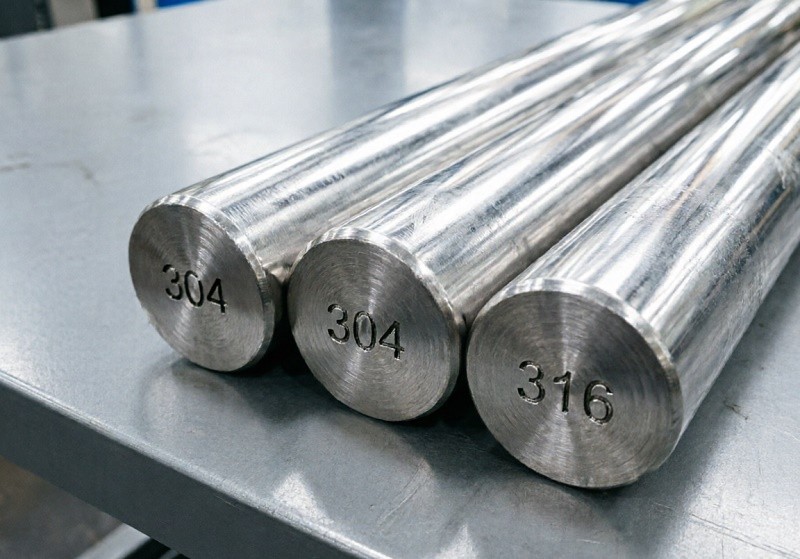
- Grade 304 (A2 Stainless): Often called the "18/8" stainless steel due to its composition of roughly 18% chromium and 8% nickel, 304 is the most popular grade worldwide. It offers a fantastic balance of corrosion resistance, weldability, and formability, making it a versatile choice for everything from kitchen sinks and food processing equipment to architectural panels and automotive trim. However, it can be "gummy" and prone to work-hardening during machining, which requires careful control of speeds and feeds.
- Grade 316 (A4 Stainless/Marine Grade): Similar to 304 but with the addition of 2-3% molybdenum. This addition dramatically increases its resistance to corrosion, especially against chlorides and other industrial solvents. This makes 316 the go-to material for marine applications, chemical processing equipment, medical implants, and pharmaceutical manufacturing. The same molybdenum that enhances its corrosion resistance also makes it tougher and more difficult to machine than 304.
- Grade 303: This grade is specifically designed for machinability. It is essentially a variation of Grade 304 but with sulfur (or sometimes selenium) added. Sulfur acts as a chip-breaker, leading to smaller, more manageable chips during cutting. This allows for significantly faster machining speeds and improved surface finishes, making it the preferred choice for complex, heavily machined parts like nuts, bolts, gears, and fittings. The trade-off for this enhanced machinability is a slight reduction in corrosion resistance and poor weldability compared to 304.
Ferritic and Martensitic Stainless Steel Grades for Specific CNC Applications
Belonging to the 400 series, these grades offer a different set of properties compared to the austenitic family.
- Ferritic Stainless Steels (e.g., 430, 409): These grades have a structure similar to low-carbon steel and are magnetic. Their main alloying element is chromium (10.5-30%), with low carbon content and little to no nickel. Ferritic steels are generally easier to machine than austenitic grades due to lower work-hardening rates. They offer good corrosion resistance (though typically less than 304), excellent thermal conductivity, and resistance to stress corrosion cracking. They are often used in automotive exhaust systems, kitchenware, and industrial equipment.
- Martensitic Stainless Steels (e.g., 410, 420, 440C): Martensitic steels are also chromium-based but have a higher carbon content, which allows them to be hardened and tempered through heat treatment, much like carbon steels. This results in exceptional hardness, strength, and wear resistance. Machinability is fair in the annealed (softened) condition but becomes very difficult after hardening. Grade 440C, for example, is among the hardest stainless steels and is used for razor blades and high-quality cutting tools. Other applications include surgical instruments, valves, and ball bearings.
Duplex and Precipitation-Hardening Stainless Steels in Advanced Custom Part Designs
For the most demanding applications, designers turn to these high-performance categories.
- Duplex Stainless Steels (e.g., 2205, 2507): As the name suggests, duplex steels have a mixed microstructure of both austenite and ferrite, combining the best properties of both families. They typically have high chromium content, moderate nickel, and are often alloyed with nitrogen to improve toughness and corrosion resistance. Duplex grades offer very high strength—often twice that of austenitic steels—along with excellent resistance to stress corrosion cracking. However, their high strength and rapid work-hardening rate make them more challenging to machine, requiring powerful, rigid machines and specialized tooling. They are heavily used in oil and gas, chemical processing plants, and marine environments.
- Precipitation-Hardening (PH) Stainless Steels (e.g., 17-4 PH): These are a special class of steels that can be hardened through a low-temperature aging heat treatment process called "precipitation hardening." Grade 17-4 PH is one of the most common, containing approximately 17% chromium and 4% nickel. PH steels combine the high strength of martensitic grades with the corrosion resistance of austenitic grades. They can be machined in a solution-treated (softer) condition and then hardened to achieve very high tensile strength. This makes them ideal for high-strength applications in the aerospace, defense, and nuclear industries.
The following table provides a summary of the common stainless steel families and their characteristics for CNC machining:
| Steel Family | Common Grades | Key Characteristics | Machinability | Common Applications |
|---|---|---|---|---|
| Austenitic | 303, 304, 316 | Excellent corrosion resistance, good formability, non-magnetic, work-hardens | Poor to Good (303 is best) | Food & beverage, medical, marine, general hardware |
| Ferritic | 430, 409 | Good corrosion resistance, magnetic, lower strength than austenitics | Good | Automotive exhaust systems, kitchenware, decorative trim |
| Martensitic | 410, 420, 440C | High hardness & strength (heat-treatable), magnetic, good wear resistance | Fair (in annealed state) | Cutlery, surgical instruments, valves, bearings |
| Duplex | 2205, 2507 | Very high strength, excellent corrosion & stress cracking resistance | Difficult | Oil & gas, chemical processing, marine construction |
| Precipitation-Hardening | 17-4 PH | Extremely high strength, good corrosion resistance, heat-treatable | Fair (in solution-treated state) | Aerospace, defense, nuclear components, high-performance shafts |
Mastering Stainless Steel CNC Milling and Drilling Processes for Custom Parts
Machining stainless steel is often described as both an art and a science. Its inherent toughness and unique properties demand specific techniques and a deep understanding of the material's behavior under the stress of cutting. Mastering CNC milling and drilling operations for stainless steel is key to producing high-quality, precise custom parts while maintaining efficiency and tool life.
Essential CNC Machining Techniques for Stainless Steel Custom Parts
The success of any stainless steel machining project hinges on using the right strategies. Because of the material's tendency to work-harden and generate significant heat, machinists must employ techniques that are specifically adapted to overcome these challenges. This means carefully controlling every aspect of the cutting process, from the toolpath to the final pass.
Precision Milling Operations for Intricate Stainless Steel Custom Parts
CNC milling uses rotating cutting tools to remove material from a stationary workpiece. For stainless steel, this process requires robust tools and optimized parameters to achieve precision.
Key milling techniques include:
- Climb Milling (Down Milling): In this process, the cutting tool rotates in the same direction as the feed of the workpiece. This technique is highly recommended for stainless steel because it starts the cut with the maximum chip thickness, which helps to get underneath the work-hardened layer created by the previous pass. It also directs cutting forces down into the workpiece, reducing the likelihood of lifting the part and minimizing chatter.
- High-Efficiency Milling (HEM): HEM is a modern toolpath strategy that uses a lower radial depth of cut but a much higher axial depth of cut, often paired with increased feed rates. This approach maintains a constant tool engagement angle, which ensures a consistent chip load and cutting force. For stainless steel, HEM is extremely effective because it reduces heat buildup, minimizes tool wear, and allows for higher material removal rates without producing excessive stress on the tool or part. Tools with multiple flutes (5 or 7) and chipbreaker geometries are excellent choices for HEM toolpaths in stainless steels.
- Trochoidal Milling: This is a specialized form of HEM used for cutting slots or pockets. Instead of a straight linear path, the tool moves in a series of continuous spiral or circular motions. This ensures that the tool is never engaged in a full-width slotting cut, which dramatically reduces heat, chatter, and tool load. For tough materials like stainless steel, trochoidal milling is a game-changer for slotting operations, significantly improving tool life and process stability.
- Tool Selection & Rigidity: The milling process for stainless steel requires extremely rigid machines and tooling setups. Carbide end mills are preferred for their hardness and wear resistance. Tools with specialized coatings like Titanium Nitride (TiN), Titanium Carbonitride (TiCN), or Titanium Aluminum Nitride (TiAlN) provide an extra layer of protection, reducing friction and resisting the high temperatures generated during cutting.
Effective Drilling Strategies for Stainless Steel Components
Drilling is one of the more challenging operations in stainless steel due to the high thrust forces and the difficulty of evacuating chips from a confined hole. Work hardening occurs rapidly at the bottom of the hole, making it progressively harder for the drill to cut.
Effective drilling strategies include:
- Drill Bit Selection: High-quality drill bits are non-negotiable. Solid carbide or cobalt (HSCO) drills are mandatory. Carbide drills are harder and more heat-resistant, making them ideal for high-volume production in rigid CNC machines, especially when coolant can be delivered through the tool. Cobalt drills offer more toughness and are a good choice for less rigid setups or when drilling by hand. A sharp cutting edge is critical to shear the material rather than push it.
- Peck Drilling: This is an essential technique for holes that are more than a few diameters deep. The drill periodically retracts from the hole to break the chip and allow coolant to reach the cutting tip. This prevents long, stringy chips from packing inside the flutes, which can cause overheating, tool jamming, and breakage.
- Pilot Holes and Step Drilling: For larger holes, it's best to start with a smaller pilot hole. A pilot hole establishes a precise center, preventing the larger drill from "walking" or wandering off-center. For very large diameters, a step-drilling approach, where the hole is progressively enlarged with incrementally larger bits, helps to reduce the cutting forces and heat generated by any single tool.
- Appropriate Speeds and Feeds: When drilling stainless steel, it is generally best to use slower RPMs and a steady, positive feed rate. A slow speed helps manage heat generation, while a constant feed ensures the drill is always cutting and not rubbing or dwelling, which causes immediate work hardening. Pushing too hard can break the bit, but insufficient feed pressure will cause the bit to spin in place, generating friction and hardening the material.
Overcoming Challenges in Stainless Steel CNC Milling and Drilling for Custom Part Manufacturing
The very properties that make stainless steel desirable—its strength, toughness, and corrosion resistance—also create significant hurdles during the machining process. These challenges are not insurmountable but require a proactive and knowledgeable approach to manage them effectively.
Addressing Work Hardening and Heat Generation in Stainless Steel Custom Parts
These two challenges are interconnected and are the primary obstacles in machining stainless steel.
Work Hardening: This phenomenon occurs when the material's crystal structure is deformed by the stress and heat of the cutting tool, causing it to become significantly harder. Austenitic stainless steels are particularly prone to this. Once a surface is work-hardened, it becomes extremely difficult for the next pass of the tool to cut, leading to accelerated tool wear, increased cutting forces, and potential tool breakage.
- Solution: The key is to stay "under" the hardened layer. This is achieved by using a sufficiently deep cut and maintaining a constant, positive feed rate. Never allow the tool to dwell or rub against the surface without actively removing material. Using sharp tools is also critical, as a dull tool will plow through the material rather than shear it, generating more deformation and hardening.
Heat Generation: Stainless steel is a poor thermal conductor. This means that the intense heat generated at the cutting zone does not dissipate quickly through the workpiece or the chips. Instead, it concentrates on the cutting tool's edge, leading to a rapid loss of hardness, thermal shock-induced chipping, and adhesion of workpiece material to the tool (known as a built-up edge or BUE).
- Solution: An aggressive cooling strategy is essential. Flooding the cutting zone with high-quality coolant is the standard approach. For more demanding operations, high-pressure coolant systems that deliver a jet of fluid directly to the cutting edge are even more effective. Coolant-through-the-tool systems are especially beneficial for drilling, as they flush hot chips out of the hole while cooling the tip. The choice of coolant is also important; water-soluble or synthetic fluids with extreme pressure (EP) additives are often preferred for their superior cooling and lubricating properties. Optimizing cutting speeds—often reducing them to prevent excessive temperature buildup—is another critical step.
Tool Selection and Chip Control for Optimal Stainless Steel Machining
Choosing the right tool and managing the chips it produces are fundamental to overcoming the challenges of work hardening and heat.
Tool Selection:
- Material: As mentioned, carbide is the preferred material for its heat and wear resistance. For some lower-speed applications or less rigid machines, High-Speed Steel (HSS) with a high cobalt content can also be effective.
- Coatings: Multi-layer coatings like TiAlN, AlTiN, or TiCN are highly recommended. These coatings act as a thermal barrier, protecting the carbide substrate from extreme heat, and they also reduce friction, which helps prevent material from sticking to the tool.
- Geometry: A sharp cutting edge with a positive rake angle is ideal for shearing stainless steel cleanly and reducing cutting forces. This minimizes deformation and, consequently, work hardening. The geometry should be strong enough to resist chipping but sharp enough to cut effectively.
Chip Control:
- The Problem: Due to its ductility and toughness, stainless steel tends to form long, stringy, and continuous chips. These chips can wrap around the tool and workpiece, a dangerous situation that can damage the surface finish, break the tool, and even stop the machine.
- The Solution: Effective chip control involves both tooling and technique. Many modern inserts and end mills designed for stainless steel feature specialized chipbreaker geometries. These are small grooves or features molded onto the tool's cutting face that are designed to force the long chip to curl tightly and break into smaller, manageable pieces. Using techniques like peck drilling also serves to mechanically break the chip. Additionally, a high-pressure coolant stream can forcefully blast chips away from the cutting zone, preventing them from being re-cut, which is a common cause of premature tool failure.
By combining these essential techniques with a deep understanding of the challenges, machine shops can successfully and efficiently produce complex, high-precision custom parts from various grades of stainless steel.
Achieving Excellence: Best Practices and Applications for Stainless Steel CNC Milling and Drilling Custom Parts
Reaching the pinnacle of quality in stainless steel part manufacturing goes beyond just understanding the material and processes. It involves a commitment to best practices, a deep knowledge of finishing options, and an awareness of how these custom parts perform in real-world scenarios. Excellence is achieved when every element—from the initial cut to the final surface treatment—is executed with precision and purpose.
Tips for Successful Stainless Steel CNC Milling and Drilling of Custom Parts
Consistent success in machining stainless steel requires a disciplined and informed approach. Small adjustments and adherence to proven principles can make the difference between a scrapped part and a perfect component. These tips focus on optimizing the key variables that govern the machining process.
Optimizing Cutting Speed, Feed Rate, and Coolant Use for Stainless Steel Custom Parts
The relationship between cutting speed, feed rate, and coolant is the heart of successful stainless steel machining. Finding the perfect balance is crucial for managing heat, preventing work hardening, and maximizing tool life.
- Cutting Speed (SFM/m/min): When machining stainless steel, a common mistake is to run the tool too fast. Excessive speed generates incredible heat at the tool tip, leading to rapid wear and potential failure. A general rule is to start with a more conservative cutting speed and adjust as needed. For example, when milling with carbide tools, typical starting speeds for SUS304 might be 80–120 m/min, while the more difficult SUS316 would be lower at 70–110 m/min. Conversely, a cutting speed that is too low can increase the tool's contact time with the material, promoting work hardening.
- Feed Rate (IPR/mm/rev): A consistent, positive feed rate is critical. The goal is to ensure the cutting edge is always "biting" into fresh material, staying ahead of the work-hardened zone created by the previous rotation. For most stainless steel milling, a feed per tooth (fz) of 0.08–0.15 mm is a good starting point. Use higher feeds for roughing to maximize material removal and lower feeds for finishing to achieve a better surface quality. A feed rate that is too low will cause the tool to rub rather than cut, which generates friction, heat, and severe work hardening.
- Coolant Application: Effective cooling is non-negotiable. A generous flood of high-quality coolant is necessary to dissipate the intense heat generated. Water-based coolants are often used because they provide excellent cooling properties. For even better performance, high-pressure coolant systems, especially those that deliver coolant through the spindle and tool, can forcefully flush hot chips from the cutting zone. This prevents chips from being recut and keeps the cutting edge at a stable temperature, significantly extending tool life.
The synergy of these three parameters is key: slower speeds reduce heat, while higher feeds ensure the tool is cutting effectively to prevent work hardening. Abundant coolant manages the heat that is inevitably produced.
Maintaining Tooling and Machine Rigidity in Stainless Steel CNC Machining
Rigidity is the silent hero of precision machining. Any vibration or deflection in the machine, tool holder, or workpiece can lead to chatter, poor surface finish, dimensional inaccuracies, and premature tool failure. This is especially true when cutting tough materials like stainless steel.
- Machine Rigidity: The CNC machine itself must be robust and well-maintained. A machine with a heavy, solid frame made of high-strength cast iron or steel provides a stable foundation that can absorb cutting forces without vibrating.
- Tooling Rigidity:
- Keep it Short: Use the shortest tool possible for the job. The longer a tool projects from the holder, the more it is prone to deflection and vibration. Minimizing this overhang is one of the most effective ways to increase rigidity.
- Secure Tool Holding: Use high-quality, high-precision tool holders like hydraulic chucks or shrink-fit holders. These provide superior concentricity and gripping force compared to standard collet chucks, minimizing tool runout and ensuring the tool runs true.
- Workholding Rigidity: The workpiece must be clamped securely. Any movement of the part during machining will ruin accuracy. Use high-quality vises, chucks, or custom fixtures designed to hold the part firmly in place without causing distortion.
By ensuring the entire system—machine, tool, and workpiece—is as rigid as possible, you create a stable cutting environment that allows for more aggressive parameters and results in higher quality parts.
Surface Finish Options for Stainless Steel CNC Milled and Drilled Custom Parts
The final finish of a stainless steel part is critical for both its appearance and its performance. A variety of mechanical and chemical finishing processes can be applied after machining to achieve the desired texture, reflectivity, and corrosion resistance.

Aesthetic and Functional Finishes: Polishing, Brushing, and Bead Blasting for Custom Parts
These mechanical finishes alter the surface texture of the part to achieve a specific look and feel.
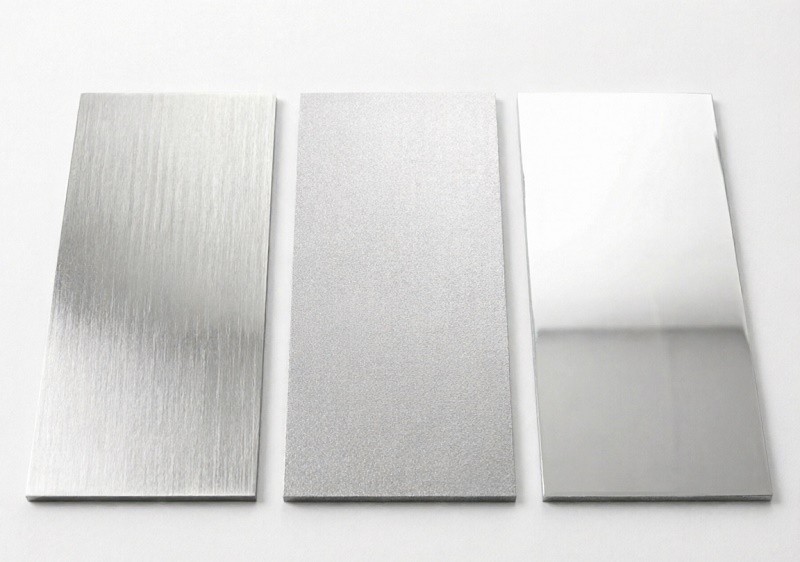
- Polishing (No. 7 and No. 8 Finishes): This process uses progressively finer abrasives to smooth the surface of the metal, ultimately creating a highly reflective, mirror-like appearance. A No. 7 finish is highly reflective but may still show some faint grit lines, while a No. 8 "mirror" finish is buffed to remove all visible scratches, resulting in a flawless, glass-like surface. Mirror polishing not only provides a high-impact aesthetic but also enhances corrosion resistance by creating an ultra-smooth surface that is easy to clean and leaves no crevices for contaminants to lodge.
- Brushing (No. 4 Finish): A brushed finish is created by abrading the surface with a fine-grit belt or brush, producing a pattern of very fine, uniform lines in one direction. This results in a satin-like, non-reflective appearance that is very popular for kitchen appliances and architectural elements. The texture is effective at hiding minor scratches and fingerprints, making it a practical choice for high-traffic applications.
- Bead Blasting: This process involves propelling fine media, such as glass beads, at the part's surface under high pressure. It removes surface imperfections and creates a uniform, non-directional, and soft matte texture. A bead blast finish reduces glare and provides a clean, consistent look, but the fine texture can be more susceptible to showing fingerprints and oils.
Protective Coatings and Treatments to Enhance Stainless Steel Custom Parts
These chemical and electrochemical treatments are designed to maximize the natural corrosion resistance of stainless steel or add other functional properties.
- Passivation: Passivation is not a coating, but a chemical treatment that enhances stainless steel's natural protective layer. The process uses a nitric or citric acid bath to remove free iron and other contaminants left on the surface from the machining process. By removing this free iron, the treatment allows the chromium in the alloy to form a thicker, more uniform, and more robust passive oxide layer when exposed to oxygen. This significantly improves the part's corrosion resistance without changing its appearance or dimensions.
- Electropolishing: This is an electrochemical process often described as "reverse plating." The part is submerged in an electrolyte bath and an electric current is applied, which precisely removes a microscopic layer of surface material. This process smooths out peaks and valleys, removes micro-burrs and other surface defects, and creates an ultra-smooth, bright, and featureless surface. Electropolishing provides a superior level of corrosion resistance—up to 30 times more than passivation alone—and creates a hygienic surface that is extremely easy to clean, making it ideal for medical, pharmaceutical, and food-grade components.
- Protective Coatings (PVD, Black Oxide): For applications requiring properties beyond what the base steel can offer, coatings can be applied.
- PVD (Physical Vapor Deposition): This process applies a very thin, hard ceramic coating (like TiN or AlTiN) to the surface, significantly increasing hardness and wear resistance.
- Black Oxide: This is a conversion coating that produces a black, matte finish on the steel. It offers mild corrosion resistance and improved lubricity, and is often used for aesthetic purposes on industrial parts.
Real-World Applications of Stainless Steel CNC Milling and Drilling for Custom Parts
The exceptional properties of stainless steel, combined with the precision of CNC machining, make it a vital material across a wide spectrum of demanding industries. Its ability to perform reliably in harsh conditions solidifies its role in critical applications where failure is not an option.
Stainless Steel Custom Parts in Medical, Aerospace, and Automotive Industries
These high-tech sectors rely on stainless steel for its strength, cleanliness, and resistance to extreme conditions.
- Medical Industry: Stainless steel is indispensable in the medical field due to its excellent corrosion resistance, high strength, and superior cleanability. Grades like 316L and 17-4 PH are used to machine surgical instruments, medical implantable devices, and diagnostic equipment components. Its hygienic surface resists bacterial growth, and it can withstand repeated sterilization cycles without degrading.
- Aerospace Industry: The aerospace sector uses CNC-machined stainless steel for parts that require high strength, heat resistance, and excellent corrosion resistance. While heavier than aluminum, stainless steel is crucial for components like landing gear, engine parts, fasteners, and structural elements exposed to high temperatures or corrosive fluids. Precipitation-hardening grades like 17-4 PH are especially common due to their incredible strength-to-weight ratio after heat treatment.
- Automotive Industry: In the automotive world, stainless steel parts are valued for their durability and corrosion resistance. CNC milling and drilling are used to create components for exhaust systems, fuel and brake lines, sensors, and structural elements. It is also used in high-performance engines and for decorative trim where an aesthetic, rust-free appearance is desired.
Utilizing Stainless Steel Custom Parts in Food and Beverage, Oil & Gas, and Other Demanding Environments
In these industries, resistance to corrosion, chemicals, and extreme temperatures is paramount.
- Food and Beverage Industry: Hygiene is the top priority in this industry. The smooth, non-porous, and easily cleanable surface of stainless steel prevents bacterial contamination. Grades like 304 and 316 are standard for all equipment that comes into contact with food, including mixing tanks, pipelines, valves, pumps, conveyor systems, and storage containers. The material's chemical inertness ensures that it does not react with foods or alter their taste.
- Oil & Gas Industry: This sector operates in some of the most corrosive environments imaginable, dealing with saltwater, high pressures, and aggressive chemicals. Duplex and super duplex stainless steels are heavily used for their exceptional strength and resistance to pitting and stress corrosion cracking. CNC-machined components like valves, pump parts, heat exchangers, and pipe fittings are essential for both offshore and onshore facilities.
- Other Demanding Environments: Stainless steel's versatility extends to countless other sectors. It is used in chemical processing plants for reactors and piping, in marine applications for boat fittings and propellers, in architectural projects for cladding and structural supports, and in the energy sector for nuclear reactor components and power generation equipment. In every case, CNC machining provides the precision needed to create custom parts that can withstand the unique challenges of their environment.
The journey through stainless steel CNC milling and drilling for custom part manufacturing reveals a material that, while challenging, offers unparalleled benefits. Its inherent strength, corrosion resistance, and aesthetic versatility make it a cornerstone in countless high-performance applications. By understanding the specific characteristics of different stainless steel grades, implementing best practices in machining, and leveraging appropriate surface finishes, we can consistently achieve exceptional custom parts that meet and exceed industry demands. Our expertise ensures that your stainless steel CNC milling and drilling projects for custom parts are executed with precision, durability, and cost-effectiveness in mind.