Revolutionizing Precision: How AI Automation and Predictive Maintenance Are Redefining CNC Machining
In the competitive landscape of precision manufacturing, every minute of uptime and every micron of accuracy counts. For CNC machining parts manufacturers, the relentless pursuit of efficiency, quality, and reliability is a daily challenge. Traditional manufacturing processes, often reliant on reactive repairs and pre-scheduled maintenance, are proving inadequate. Unexpected machine downtime, inconsistent quality, and high operational costs can erode profitability and damage client trust. But a new industrial revolution is underway, powered by Artificial Intelligence (AI) and Machine Learning (ML).
AI is no longer a futuristic concept; it is a tangible, transformative force in CNC machining. By integrating AI-powered automation and predictive maintenance, manufacturers can move from a reactive to a proactive operational model, unlocking unprecedented levels of productivity and precision. This technology enables machines to self-diagnose, optimize their own processes, and operate with minimal human intervention, heralding a new era of smart manufacturing.
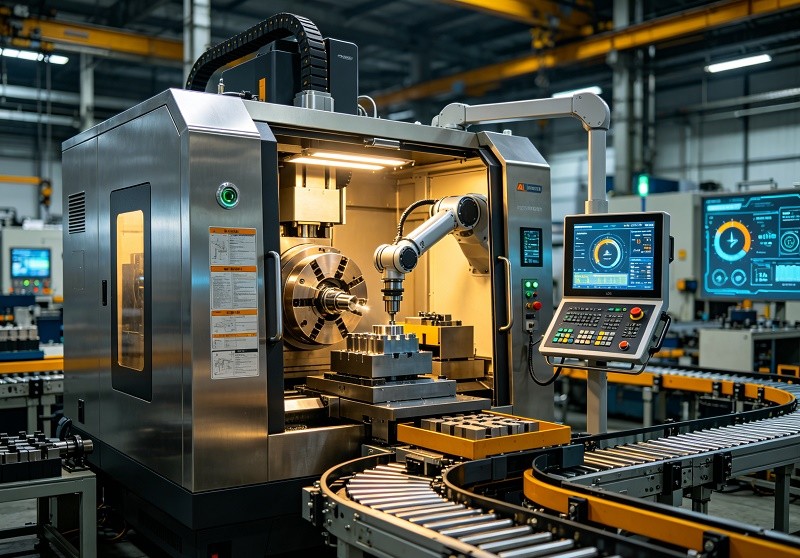
The Core Challenge in Traditional CNC Operations
For decades, CNC machines have been the backbone of precision manufacturing, prized for their accuracy and repeatability. However, they are not without their limitations. The primary challenges that manufacturers face include unplanned downtime, which can cost thousands of dollars per hour in lost production, and reliance on operator experience, which can lead to inconsistencies. Preventive maintenance, based on fixed schedules, often results in servicing machines too early (wasting resources) or too late (risking catastrophic failure).
Enter the Game-Changer: AI and Machine Learning
Artificial Intelligence, and its subset Machine Learning, introduces a paradigm shift. Instead of following rigid pre-programmed instructions, AI-integrated CNC systems can analyze vast amounts of real-time data to make intelligent, autonomous decisions. This capability is split into two main areas: AI-powered automation for optimizing processes and predictive maintenance for eliminating unplanned downtime. Together, they create a smarter, more resilient manufacturing ecosystem.
What is AI-Powered Automation in CNC Machining?
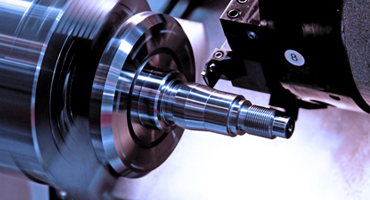
AI-powered automation goes beyond simply loading and unloading parts with robots. It involves using intelligent algorithms to streamline and optimize the entire machining workflow. AI can analyze a 3D CAD model and automatically generate the most efficient toolpaths, selecting the appropriate tools, spindle speeds, and feed rates. This significantly reduces programming time and minimizes the risk of human error. Furthermore, AI systems can make real-time adjustments during the machining process, adapting to variations in material hardness or tool wear to ensure consistent quality.
The Power of Predictive Maintenance: Seeing the Future
Predictive Maintenance (PdM) is one of the most impactful applications of AI in CNC machining. Instead of reacting to a breakdown, PdM uses data to forecast potential failures before they happen. By monitoring the health of a machine's components in real-time, manufacturers can schedule maintenance precisely when needed, turning unplanned downtime into planned, efficient servicing. This proactive approach not only maximizes machine uptime but also extends the lifespan of critical and expensive components like spindles and ball screws.
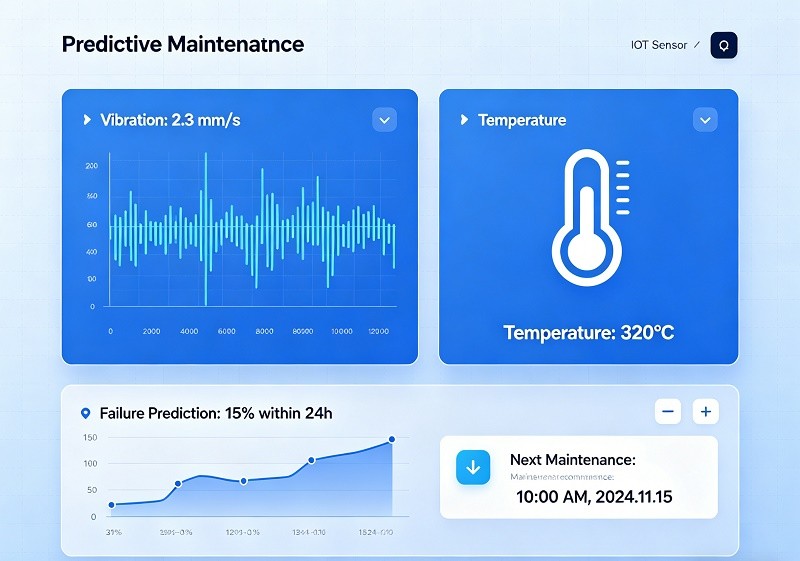
How Predictive Maintenance Works: An Inside Look
The implementation of a predictive maintenance system follows a clear, data-driven pathway:
- Data Collection: IoT (Internet of Things) sensors are installed on critical machine components to collect data on vibration, temperature, power consumption, and acoustics.
- Data Analysis: AI and machine learning algorithms analyze this continuous stream of data, identifying patterns and subtle anomalies that precede a failure.
- Failure Prediction: When the AI model detects a deviation from normal operating parameters, it predicts the Remaining Useful Life (RUL) of the component.
- Actionable Alerts: The system generates an alert for the maintenance team, detailing the potential issue and recommending a course of action, allowing them to schedule repairs before a breakdown occurs.
Key Benefit 1: Drastically Reduce Unplanned Downtime
Unplanned downtime is the nemesis of any manufacturing operation. Studies have shown that predictive maintenance can reduce downtime by up to 50%. For a CNC parts manufacturer, this translates directly into more production hours, better adherence to delivery schedules, and increased profitability. Case studies from early adopters show significant gains, with some achieving a 20% increase in equipment uptime and a 15% reduction in overall maintenance costs.
Key Benefit 2: Enhance Part Quality and Consistency
Quality control is paramount. AI contributes significantly to this by ensuring the machine is always operating in optimal condition. AI-powered in-process monitoring can detect minute deviations from specifications in real time. Vision systems can automatically inspect finished parts for defects with a speed and accuracy that surpasses human capability. According to a Deloitte report, AI-powered quality control can reduce defect rates by up to 50%, minimizing scrap and rework.
Key Benefit 3: Boost Efficiency and Operational Throughput
AI-driven automation optimizes every aspect of the machining process. By generating the most efficient toolpaths and reducing cycle times, AI helps produce more parts in less time. AI-powered scheduling systems can also optimize job allocation across multiple machines, reducing bottlenecks and improving overall shop floor productivity. This holistic optimization leads to a significant increase in Overall Equipment Effectiveness (OEE).
| Feature | Traditional Maintenance | AI-Powered Predictive Maintenance |
|---|---|---|
| Strategy | Reactive (Run-to-failure) or scheduled | Proactive and Condition-based |
| Downtime | High, unplanned, and disruptive | Minimal, planned, and controlled |
| Costs | High emergency repair and labor costs | Lower, planned maintenance costs |
| Component Life | Often shortened by unexpected failures | Maximized through optimal usage |
| Efficiency | Lower due to interruptions | Higher due to stable, continuous operation |
Implementing AI in Your CNC Operations: A Practical Roadmap
Adopting AI technology may seem daunting, but it can be approached systematically:
- Start Small: Begin by identifying a key bottleneck or a critical machine. Pilot a project on a single machine to prove the concept and measure the return on investment (ROI).
- Gather Data: Ensure your machines are equipped with the necessary sensors and are networked to collect performance data. Data is the fuel for AI.
- Partner with Experts: Collaborate with technology providers specializing in AI for manufacturing. They can provide the right software, tools, and expertise to ensure a successful implementation.
- Train Your Team: While AI automates many tasks, it elevates the role of the human operator. Your team will need to be trained to work with these new systems, interpret data, and manage a smart factory environment.
The Future is Smart: The Next Wave of AI in CNC
The integration of AI into CNC machining is still evolving. The next frontier includes generative design, where AI autonomously designs and optimizes parts for manufacturability and performance. We will also see the rise of fully autonomous machining cells, where robots and AI-powered CNC machines a handle the entire production process, from raw material to finished, inspected part, 24/7. Digital twins—virtual replicas of physical machines—will allow for simulation and optimization of processes before a single piece of metal is cut.
For CNC machining parts manufacturers, embracing AI-powered automation and predictive maintenance is not just an option—it is a strategic imperative for staying competitive. By turning data into intelligent action, these technologies unlock a future of unparalleled precision, efficiency, and reliability.