Metal vs Plastic CNC Machining: How to Choose the Right Material for Your Custom Parts
Metal vs Plastic CNC Machining: How to Choose the Right Material for Your Custom Parts
The material you choose determines the strength, weight, cost, and service life of your machined part. This guide compares the most common CNC metals and engineering plastics side by side — and gives you a practical, three-step framework for making the right call.
Introduction: Why Material Choice Makes or Breaks Your Project
Every custom CNC part starts with one fundamental question: should it be metal or plastic? The answer affects not just how the part looks, but how it performs under load, how it behaves in heat and moisture, how precisely it can be machined, and how much it costs to produce. Select the wrong material family and you risk premature wear, dimensional drift, thread failure, or unnecessary expense — even if the part is machined to perfection.
Industry experience shows that material selection is one of the highest-leverage decisions in precision manufacturing. Design-stage choices lock in a large share of total project cost, which is why buyers and engineers who compare metals and plastics systematically before quoting consistently avoid rework, reduce scrap, and get parts that perform in the real world. This guide walks you through the properties that matter, the applications each material family serves best, and a repeatable selection framework you can apply to your next project.
What Is Metal vs Plastic CNC Machining?
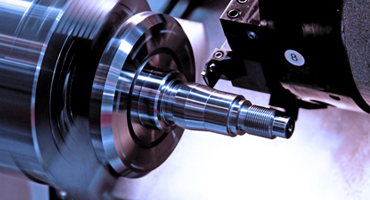
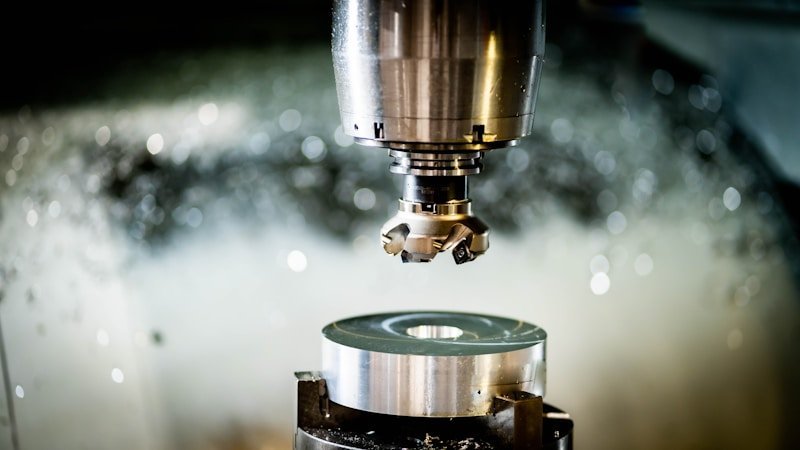
CNC (computer numerical control) machining removes material from a solid block — a metal billet or a plastic rod — using automated cutting tools driven by programmed toolpaths. The same 3-axis mills, 5-axis machining centers, and CNC lathes can process both families, but the materials behave completely differently at the cutting edge.
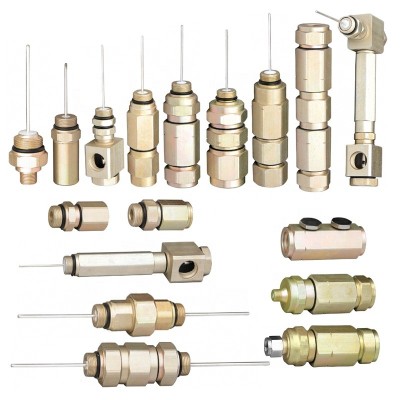
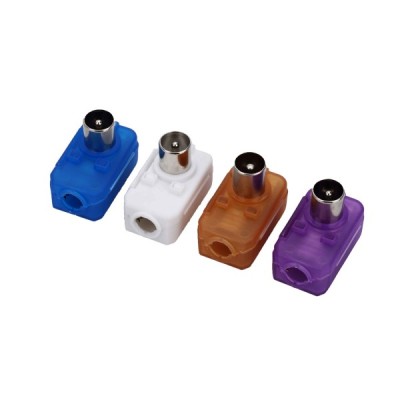
Metal CNC machining typically uses aluminum, steel, stainless steel, brass, copper, or titanium. Metals offer high strength, stiffness, heat resistance, electrical conductivity, and compatibility with surface treatments such as anodizing, plating, and powder coating. Plastic CNC machining processes engineering polymers such as POM (Delrin/Acetal), nylon (PA6/PA66), PEEK, ABS, PTFE, and polycarbonate. Modern engineering plastics are not the cheap, brittle materials of the past — grades like PEEK can replace aluminum or steel in specific applications while cutting weight dramatically.
Because both families can be machined to tight tolerances on the same equipment, the decision is rarely about process capability. It is about matching the material to the part's real function, operating environment, tolerance needs, and budget.
Key Benefits of Choosing the Right Material
Lower Total Project Cost
Comparing total cost — material, machining time, finishing, and failure risk — instead of raw price per kilogram prevents both over-engineering and premature part failure.
Longer Service Life
A material that matches the real operating environment (heat, moisture, chemicals, load cycles) will outlast one chosen purely for looks or habit.
Reliable Tolerances
Understanding thermal expansion, moisture absorption, and machinability lets your supplier hold tight tolerances that survive after the part leaves the machine.
Faster Development Cycles
Prototyping in the right plastic first — then validating in metal — reduces iteration time and lets you prove the design before committing to expensive material.
When to Choose Metal for CNC Machining
Metals are the backbone of structural integrity. Choose a metal when your part must carry significant load, survive high temperatures (often above 200°C), conduct electricity, or hold very tight tolerances under stress. Metals also offer the widest range of surface finishing options, including anodizing, plating, passivation, and powder coating.
When to Choose Plastic for CNC Machining
Modern engineering plastics deliver properties metals cannot match: natural corrosion resistance, electrical insulation, low friction, silent operation, and weight savings of up to 80%. Plastics are also typically faster to machine with less tool wear — but they demand sharp tooling, careful heat control, and attention to moisture absorption.
POM / Delrin (Acetal) — The Machinist's Favorite
Cuts almost like brass, holds the tightest plastic tolerances (±0.025 mm), and offers a naturally slippery, self-lubricating surface. Ideal for precision gears, bushings, pump seals, and food-safe guides. No lubrication required — perfect for clean environments.
Nylon (PA6 / PA66) — Tough and Impact-Resistant
Absorbs vibration, resists abrasion, and runs quieter than metal. Great for wear pads, conveyor components, and lock nuts. Caution: nylon absorbs up to 2.5% moisture by weight, causing 1–2% dimensional growth — pre-dry stock and design for humidity.
PEEK — The Metal Replacement
Continuous service to 250°C, resists almost all solvents and chemicals, survives autoclave sterilization, and withstands high stress. PEEK genuinely replaces aluminum or steel in automotive under-hood parts, medical devices, and electrical connectors — at a material cost 7–20x higher than Delrin.
ABS — The Prototype Standard
Affordable, impact-tough, and easy to finish or paint. Ideal for housings, dashboards, and low-volume production. ABS softens around 100–120°C, so keep it away from heat-intensive applications.
Key Performance Comparison: Metal vs Plastic
| Property | Metal CNC Parts | Plastic CNC Parts |
|---|---|---|
| Mechanical strength | High (up to ~1,500 MPa for alloys) | Moderate (typically below 150 MPa) |
| Heat resistance | Excellent (alloys up to ~1,000°C) | Limited (PEEK tops out near 250°C) |
| Weight | Heavy (steel ~7.8 g/cm³, aluminum ~2.7 g/cm³) | Light (POM ~1.4 g/cm³, nylon ~1.14 g/cm³) |
| Corrosion resistance | Depends on grade & finish (stainless, titanium excellent) | Naturally corrosion-resistant |
| Electrical properties | Conductive — grounding & shielding | Insulating — isolation & short-circuit prevention |
| Achievable tolerance | ±0.005 mm typical; ±0.001 mm achievable | ±0.025 mm (Delrin); ±0.05–0.08 mm (nylon) |
| Surface finish options | Anodizing, plating, polishing, powder coating | Limited — matte-satin straight off machine |
| Machining cost & speed | Slower feeds, higher tool wear | Faster cutting, minimal finishing, lower cost |
The 3-Step Material Selection Framework
Instead of guessing, work through three questions that experienced machine shops use with every material review:
Analyze the Operating Environment
Where will the part live? Outdoors or in washdown conditions — avoid standard steel; choose stainless steel or aluminum. Submerged in oil or chemicals — pick nylon, PTFE, or a compatible polymer. Cleanroom or medical — plastics often win on corrosion, weight, and hygiene. Map temperature, humidity, chemical exposure, UV, and cleaning agents before anything else.
Calculate the Real Cost, Not the Raw Price
Compare total project cost: material price, machining hours, finishing, scrap rate, and expected service life. A titanium part might cost $500 in material and 4 machining hours — an Acetal part $50 and 1 hour. If the plastic part delivers acceptable life at a fraction of the cost, it wins the value test for many non-consumer industrial applications.
Mirror the Manufacturing Process
Consider the geometry. Need thin walls or undercuts? Plastic is easier to shape without chatter. Need a mirror finish? Brass and aluminum polish beautifully; Acetal comes off the CNC with a clean matte-satin finish. Review drawings, 3D files, tolerance requirements, and surface finish together with the material candidate before production.
Machining Considerations: Tooling, Cooling, and Material Behavior
Plastics and metals demand different machining strategies. Getting these right is what separates a clean, dimensionally stable part from one with melted edges, burrs, or drifting tolerances.
Machining Metals
- Use robust, coated carbide tooling; expect higher tool wear.
- Slower feeds and speeds; coolant and chip control are essential.
- Deburring and finishing (anodizing, plating) are usually required.
- Dimensional stability is excellent — tolerances of ±0.005 mm are routine.
Machining Plastics
- Use sharp, polished single-flute or two-flute tools with large rake angles (15–30°).
- Cool with compressed air — flood coolant causes thermal shock in acrylic/PC and moisture swelling in nylon.
- Plastics expand ~10x more than metals per degree; stabilize parts at 20°C before final inspection.
- Pre-dry hygroscopic materials: nylon at 80–100°C for 4–8 hours for tolerances tighter than ±0.1 mm.
Shop-floor results from machining over 2,000 plastic components monthly: switching from 4-flute to single-flute tools cut surface temperature by 38%, and reducing depth of cut from 3 mm to 0.8–1.2 mm dropped scrap by 70% while adding only 6% cycle time.
Common Material Selection Mistakes to Avoid
| Mistake | What Goes Wrong | How to Avoid It |
|---|---|---|
| Choosing by price alone | Cheap plastic part deforms or fails in service, raising total cost | Compare total project cost, not $/kg |
| Ignoring working conditions | Metal corrodes, plastic softens or stress-cracks in the real environment | Base selection on actual heat, moisture, chemical, and UV exposure |
| Underestimating mechanical loads | Bending, cracking, thread failure, premature wear | Match material to real load, vibration, impact, and fastening force |
| Over-specifying premium materials | Specifying PEEK for a room-temperature part adds 7–20x material cost | Prototype in Delrin or nylon first; upgrade only when tests demand it |
| Ignoring moisture absorption | Nylon parts swell 1–2% in humid service and lose fit | Pre-condition or pre-dry stock; machine for equilibrium dimensions |
How SOMI Custom Parts Can Help
At SOMI Custom Parts, we machine both metals and engineering plastics on the same precision CNC equipment, so material selection never limits your design. Our engineering team reviews drawings, 3D models, tolerance requirements, and operating conditions together — then recommends the metal or polymer that delivers the required performance at the lowest total project cost.
We hold tight tolerances across aluminum, steel, brass, titanium, POM, nylon, PEEK, and more, with documented quality control and surface finishing options from anodizing to powder coating. Whether you need a single metal prototype, a plastic production run, or a mixed-material assembly, we support your project from CNC machining to delivery.
Browse our product catalog to see the range of custom parts we produce, or read more buyer's guides on our blog. When you are ready to move, send us your drawings and requirements through our inquiry form for a free material review and quote.
Frequently Asked Questions
Which is cheaper: metal or plastic CNC machining?
Plastics are generally cheaper and faster to machine — lower material cost, faster cutting speeds, and minimal finishing. However, the right comparison is total project cost: a plastic part that deforms in service is more expensive than the metal part that would have lasted. For prototypes and low-stress parts, plastic usually wins on cost; for load-bearing, high-heat, or tight-tolerance parts, metal is often the better value.
Can plastic CNC parts replace metal parts?
Yes — in specific applications. PEEK replaces aluminum or steel where heat, chemicals, and sterilization matter. Delrin replaces brass or bronze in gears and bushings thanks to its self-lubricating surface. The key is redesigning for plastic: thicker walls, larger support areas, and verified fastening strength. Simply substituting plastic for metal in an identical geometry is the most common cause of failure.
What is the best plastic for CNC machining?
POM (Delrin/Acetal) is widely considered the gold standard: it cuts cleanly, holds the tightest tolerances (±0.025 mm), and gives a low-friction surface — ideal for precision gears, bushings, and moving parts. Nylon suits tough, impact-resistant wear parts; PEEK is reserved for high-temperature or chemically aggressive environments where its premium cost is justified.
How tight a tolerance can be held on plastic parts?
Well-controlled plastic machining can hold ±0.025 mm on Delrin and ±0.05 mm on PEEK and dry nylon. Plastics have roughly 10x the thermal expansion of metals and nylon absorbs moisture, so tolerance holding depends on temperature stabilization before inspection and, for hygroscopic materials, moisture pre-conditioning.
Do I need coolant when machining plastic?
Almost never. Compressed air is the safest universal cooling method for plastics. Flood coolant can cause thermal-shock cracking in acrylic and polycarbonate, moisture swelling in nylon, and stain or residue problems on many polymers. Light oil mist is acceptable only for glass-filled high-temperature plastics like GF PEEK.
Conclusion
There is no universal "best" material — only the right material for your part's function, environment, and budget. Metals win on strength, heat resistance, conductivity, and finishing options; engineering plastics win on weight, corrosion resistance, insulation, low friction, and cost for prototypes and light-duty parts. Use the three-step framework — analyze the environment, calculate the real cost, and mirror the manufacturing process — and you will make a decision that survives contact with the real world.
Not sure which material is right for your custom part? Send your drawings and application details to SOMI Custom Parts, and our engineers will review the material options with you — free of charge and without obligation.