Integrating Diverse Materials: The Capabilities of Your CNC Turned Parts Supplier
In today's fast-paced manufacturing world, the demand for high-quality CNC turned parts is more critical than ever for ensuring superior product performance and achieving overall project success. The selection of the right CNC Turned Parts Supplier is not merely a procurement task; it is a fundamental strategic decision that directly impacts operational efficiency, cost-effectiveness, and the ultimate reliability of your products. This article will explore the key qualifications and capabilities that define a premier supplier, focusing on those who can masterfully integrate a diverse range of materials while consistently delivering excellence in every component produced.
Choosing Your CNC Turned Parts Supplier: Experience, Quality, and Precision
Selecting a partner for your CNC turning needs is a decision that carries significant weight. The right supplier does more than just manufacture parts; they become an integral part of your production ecosystem, ensuring that every component functions flawlessly. The evaluation process must be rigorous, focusing on a supplier's demonstrated history, their commitment to stringent quality control, and their ability to achieve the microscopic precision that modern applications demand.
Assessing Proven Expertise and Robust Quality Standards
A supplier's expertise is the bedrock of a reliable manufacturing partnership. This goes beyond the number of years they have been in business; it encompasses the depth of their team's technical knowledge and their experience with a wide array of projects and industries. A truly experienced supplier can provide valuable feedback on designs, anticipate potential manufacturing challenges, and recommend optimizations that save time and money. When you ask about their quality control process, a top-tier supplier will respond with specifics like First Article Inspection (FAI), CMM measurement reports, and statistical process control (SPC), rather than vague assurances.
Verifiable quality standards are non-negotiable. Quality control in CNC machining is a systematic process that ensures every part meets exact specifications for size, mechanics, and aesthetics, from raw material inspection to final product verification. A cornerstone of this commitment is a robust Quality Management System (QMS). Leading suppliers adhere to internationally recognized certifications, which provide a clear framework for their production and quality assurance processes.
Key certifications to look for include:
- ISO 9001: This is the foundational international standard for a QMS, applicable to any industry. An ISO 9001 certified supplier demonstrates a structured approach to meeting customer and regulatory requirements, focusing on principles like customer focus, process-based management, and continuous improvement. Certification proves a commitment to consistent quality and operational excellence.
- AS9100: For projects in the aerospace, space, and defense industries, AS9100 certification is often a mandatory requirement. This standard includes all the requirements of ISO 9001 but adds more than 100 sector-specific criteria to address the critical safety, reliability, and regulatory demands of aerospace. It mandates stricter controls for risk management, configuration management, counterfeit part prevention, and supplier oversight.
Ultimately, a supplier with proven expertise and certified quality systems provides more than just parts; they provide confidence. They should be able to readily supply documentation such as First Article Inspection (FAI) reports and Material Test Records (MTR) for complete quality traceability. Their investment in these standards signals a mature, disciplined approach to manufacturing, ensuring that every component is traceable, compliant, and built to last.
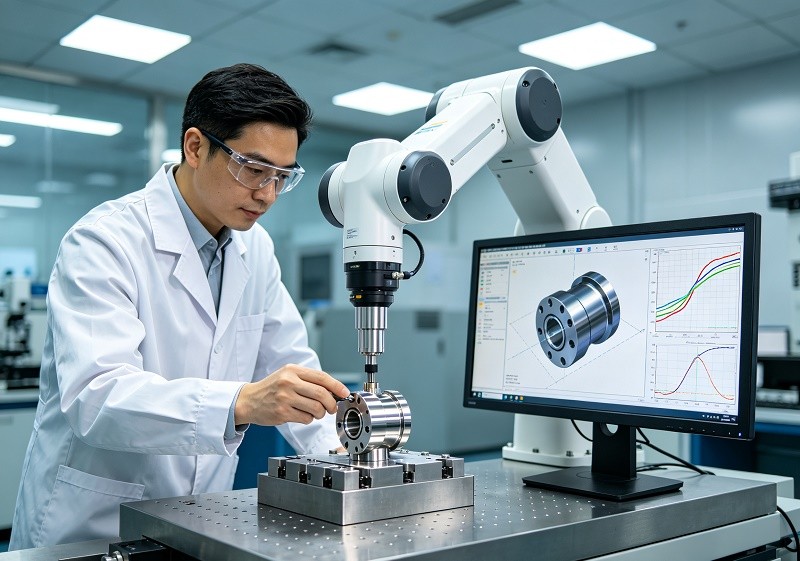
Delivering Microscopic Precision and Adhering to Tight Tolerances
In the world of advanced manufacturing, precision is not just a goal; it is a fundamental requirement. The ability to deliver components with microscopic precision and consistently adhere to tight tolerances is a defining characteristic of a top-tier CNC turned parts supplier. Tolerance refers to the acceptable variation in a part's physical dimensions. While no two machined parts are ever completely identical, tolerances define the acceptable range of deviation that allows for perfect fit and function.
What Are Tight Tolerances?
Tolerances are often measured in thousandths of an inch or in microns. While standard machining tolerances may be around ±0.005" (0.13 mm), tight tolerance machining typically refers to holding dimensions at ±0.001" (0.025 mm) or even smaller. For applications in demanding fields like aerospace, medical devices, or high-performance automotive, tolerances can be as tight as ±0.0002" (0.005 mm), where even the slightest deviation can lead to malfunction or failure. For a part specified at 2.750 inches with a tolerance of ±0.001", the final component must measure between 2.749" and 2.751" to pass quality inspection.
The Critical Importance of Precision
Adhering to tight tolerances is crucial for several reasons:
- Fit and Function: Tighter tolerances ensure that components fit together seamlessly and function exactly as designed. In complex assemblies, improper fit can cause vibrations, premature wear, or complete system failure.
- Consistency and Repeatability: Tight tolerance CNC machining guarantees that every part in a production run is consistent in size and shape. This is vital for interchangeability and for industries like medical device manufacturing, where uniformity is critical for safety and efficacy.
- Performance and Reliability: The reliability and performance of the final product are directly linked to the precision of its components. In aerospace, for example, the safety of engine components depends on achieving incredibly tight tolerances.
- Efficiency: High-precision machining can lead to greater efficiency in the manufacturing process. With less room for error, fewer resources are wasted on defective parts, which can lead to cost savings and faster turnaround times.
Micro Precision Machining
For components on an even smaller scale, suppliers must be capable of micro precision machining. This is an advanced process used to create incredibly accurate workpieces at the micrometer scale (1 micron = 0.001 mm). It is used to produce features smaller than 0.5mm or achieve ultra-tight tolerances below ±0.001mm. This capability is essential for industries driven by miniaturization, such as electronics, medical technology, and photonics, where components can be smaller than a grain of rice.
Achieving this level of precision requires more than just standard equipment. A capable supplier must invest in:
- Advanced CNC Machines: State-of-the-art machines, such as multi-axis CNC centers and Swiss-type lathes, with high-speed spindles and rigid construction.
- Specialized Tooling: The use of micro-tools, which can be thinner than a needle, and optimized tooling strategies are essential.
- Skilled Workforce: Highly trained machinists and programmers who understand the nuances of micro-machining and how different materials behave at such a small scale.
- Rigorous Inspection: Advanced metrology equipment, like Coordinate Measuring Machines (CMMs) and surface profilometers, to verify that tolerances in the micron range are met.
Choosing a supplier that can master both tight tolerances and micro-precision is an investment in quality and reliability. It ensures that your most complex and critical designs are brought to life with the accuracy they demand, safeguarding performance, safety, and your company's reputation.
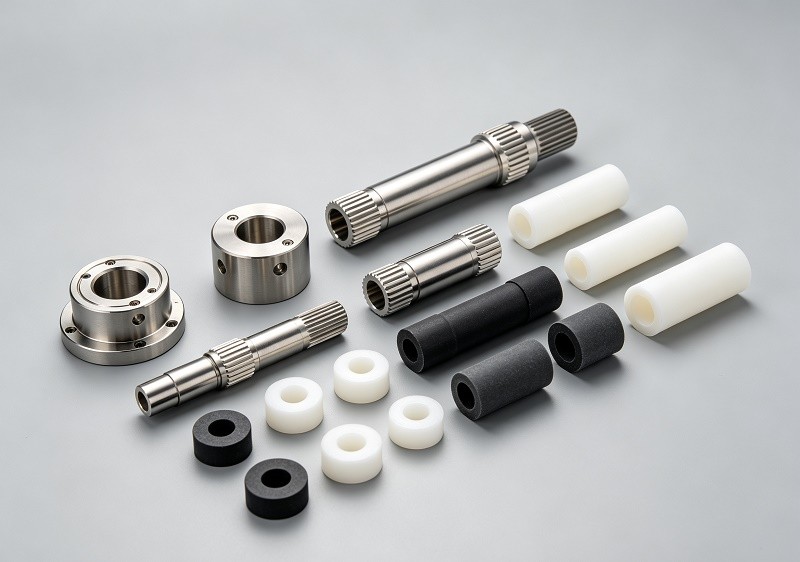
Mastering Diverse Materials from Metals to Advanced Plastics
A truly capable CNC turned parts supplier distinguishes themselves by their ability to expertly machine a wide and diverse range of materials. The choice of material is a strategic decision that impacts the part's strength, weight, corrosion resistance, thermal properties, cost, and overall performance. A supplier's expertise cannot be limited to a single class of material; they must demonstrate mastery over common metals, high-performance alloys, and a growing portfolio of advanced engineering plastics.
Machining a Spectrum of Metals
Different metals present unique machining challenges and advantages. A skilled supplier understands these nuances and can optimize their processes accordingly.
Aluminum (e.g., 6061, 7075): Renowned for its excellent strength-to-weight ratio, high thermal conductivity, and natural corrosion resistance, aluminum is one of the most machinable metals. Its properties allow for high-speed machining and result in smooth finishes, making it ideal for aerospace, automotive, and consumer electronics. However, its softness can lead to stringy chips and potential deformation of thin walls if not handled correctly.
Steel (e.g., Carbon Steel, Alloy Steel): Steel offers high strength, durability, and wear resistance, making it perfect for structural components and high-stress applications. Its machinability varies greatly by grade. Low-carbon steels are relatively easy to machine, whereas high-carbon and alloy steels are harder and require more cutting force and robust tooling.
Stainless Steel (e.g., 304, 316, 303): Valued for its superior corrosion resistance, strength, and hygienic properties, stainless steel is a go-to for medical, marine, and food-processing equipment. However, many grades of stainless steel are prone to work-hardening, which means they become harder during the machining process. This necessitates slower cutting speeds, optimized tooling, and careful heat management to prevent rapid tool wear.
Titanium (e.g., Grade 5 Ti6Al4V): Titanium delivers an exceptional combination of high strength, low weight, and outstanding corrosion resistance, making it a premium choice for aerospace, medical implants, and high-performance automotive parts. It is also one of the most difficult metals to machine. Its low thermal conductivity causes extreme heat to build up at the cutting tool's edge, leading to rapid tool wear. Machining titanium requires slow speeds, specialized tooling, and high-pressure coolant to manage heat and ensure precision.
Brass and Copper: Brass is a cost-effective choice known for its good machinability, corrosion resistance, and electrical conductivity, often used for fittings, connectors, and decorative parts. Copper offers superior electrical and thermal conductivity but at a higher cost.
Navigating the World of Advanced Plastics
Beyond metals, modern manufacturing increasingly relies on advanced engineering plastics that offer unique properties like chemical inertness, light weight, and self-lubrication. Machining plastics, however, presents a completely different set of challenges compared to metals.
Key challenges include:
- Low Melting Point: Plastics have much lower softening temperatures. Excessive heat from cutting can cause the material to melt, deform, or create a poor surface finish.
- Thermal Expansion: Plastics expand and contract significantly with temperature changes, making it difficult to maintain tight dimensional tolerances.
- Chip Control: Plastics often produce long, stringy chips that can wrap around the cutting tool, scratching the workpiece and interrupting the process.
- Brittleness and Softness: Brittle plastics can easily crack or chip, while soft plastics can deform under clamping pressure or when being cut.
A proficient supplier will have deep knowledge of these materials and the techniques to machine them successfully:
| Plastic Material | Key Properties | Common Applications | Machining Considerations |
|---|---|---|---|
| POM (Delrin/Acetal) | Excellent machinability, high stiffness, low friction, great dimensional stability. | Gears, bearings, bushings, precision mechanical parts. | Considered the best all-around plastic for CNC machining; holds tolerances well. |
| PEEK | Exceptional thermal resistance (up to 260°C), chemical resistance, high strength, and biocompatibility. | Aerospace components, medical implants, semiconductor parts, high-voltage insulators. | Expensive but offers premium performance. It has excellent machinability for a high-performance polymer. |
| PTFE (Teflon) | Extremely low coefficient of friction (non-stick), outstanding chemical resistance, and high-temperature tolerance. | Seals, gaskets, liners, non-stick surfaces, chemical-resistant parts. | Softness makes it difficult to clamp without deformation; prone to thermal expansion. |
| Nylon (PA) | High strength, toughness, and excellent wear resistance. | Rollers, wear pads, structural components. | It is moisture-sensitive, which can affect dimensional stability if not controlled. |
| ABS | Good impact resistance, toughness, and rigidity. | Prototypes, enclosures, consumer product housings. | Very cost-effective and easy to machine, making it ideal for non-critical parts. |
An expert CNC turned parts supplier is a material specialist. They can guide you in selecting the optimal material that balances performance, cost, and manufacturability, ensuring your components are perfectly suited for their intended application.
Technical Prowess and Strategic Advantages from Your CNC Turned Parts Supplier
Beyond the fundamental requirements of quality, precision, and material expertise, a truly strategic CNC turned parts supplier offers significant technical and operational advantages. These capabilities transform the relationship from a simple transactional one into a genuine partnership. A supplier's investment in cutting-edge machinery, streamlined in-house processes, and robust support systems are clear indicators of their commitment to long-term success and innovation.
The Benefits of State-of-the-Art Machinery and In-House Manufacturing
A supplier's technical capabilities are directly tied to the machinery they employ and how they structure their operations. Investing in advanced equipment and keeping processes under one roof are powerful strategies for enhancing quality, speed, and efficiency.
The Power of Advanced CNC Machinery
The type and quality of a supplier's CNC machines have a profound impact on the parts they can produce. Look for suppliers who invest in modern, high-performance equipment.
Multi-Axis CNC Machining: Traditional 3-axis machines move along the X, Y, and Z linear axes. However, multi-axis CNC machines (such as 4-axis and 5-axis) can rotate the tool and/or the workpiece, allowing for the creation of highly complex geometries in a single setup. The benefits are substantial:
- Increased Complexity: The ability to cut intricate angles and arcs makes it possible to produce parts that would be impossible on a 3-axis machine without multiple, time-consuming setups.
- Higher Precision: Each time a workpiece is manually re-fixtured, there is a risk of losing precise alignment. By machining multiple faces in one setup, multi-axis machines minimize alignment errors and can hold much tighter tolerances.
- Improved Surface Finish: The tool can be kept closer to the workpiece and at an optimal angle, reducing vibrations and resulting in a smoother surface finish that often requires less post-processing.
- Faster Lead Times: Eliminating the need for multiple setups drastically reduces production time, leading to faster project completion.
Swiss-Type CNC Lathes: Originally developed for the Swiss watchmaking industry, these machines are now indispensable for producing small, long, and slender parts with extreme precision. In a Swiss lathe, the workpiece is supported by a guide bushing very close to the cutting tool. This unique design offers several advantages:
- Exceptional Precision: The guide bushing provides robust support that nearly eliminates deflection and vibration, even when making heavy cuts. This allows Swiss lathes to achieve tolerances down to a few microns.
- Ideal for Small, Complex Parts: These machines excel at producing intricate components for the medical, aerospace, and electronics industries.
- Reduced Cycle Times: Many Swiss lathes feature multiple tool paths and sub-spindles, allowing them to perform simultaneous operations (like turning, drilling, and milling) on a part in one cycle, significantly boosting productivity.
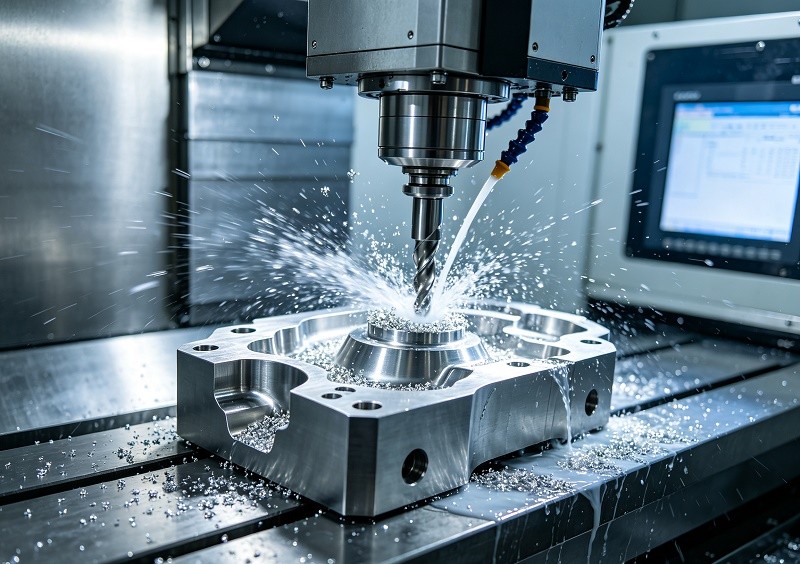
The Strategic Advantage of In-House Manufacturing
A supplier that performs the vast majority of its operations in-house—from machining to finishing and quality control—offers a significant strategic advantage over those who rely heavily on outsourcing. This model of vertical integration provides:
- Greater Quality Control: When all processes are under one roof, the supplier has complete oversight of every step. This leads to more consistent quality and the ability to immediately address any issues that arise.
- Reduced Lead Times: Eliminating the need to ship parts between different vendors for various operations (e.g., machining, then heat treating, then plating) drastically shortens the overall production timeline and simplifies logistics.
- Lower Costs: While the initial investment is higher, in-house manufacturing cuts out the markups from multiple middlemen and reduces shipping expenses, leading to more competitive long-term pricing.
- Enhanced Flexibility and Innovation: Having all capabilities on-site allows for rapid prototyping, easier design modifications, and greater agility in responding to changing customer demands.
- IP Protection: Keeping a project within a single, trusted facility significantly reduces the risk of intellectual property exposure, which is critical for proprietary designs.
By choosing a supplier with both advanced machinery and integrated in-house manufacturing, you are not just buying a part; you are investing in a more efficient, reliable, and secure supply chain.
Streamlined Logistics, Global Sourcing, and Engineering Support
A top-tier CNC turned parts supplier offers more than just manufacturing; they provide a comprehensive support system that streamlines the entire production lifecycle. This includes sophisticated logistics, strategic material sourcing, and invaluable engineering assistance. These value-added services are what define a true manufacturing partner, simplifying your supply chain and enhancing the final product.
Seamless Logistics and Strategic Global Sourcing
In a globalized market, the ability to manage a complex supply chain efficiently is paramount. An elite supplier will have a well-oiled logistics and sourcing strategy designed to ensure reliability, cost-effectiveness, and quality.
- Integrated Supply Chain Management: A capable supplier acts as a single point of contact for the entire manufacturing process. They coordinate everything from raw material procurement to secondary processes like heat treatment, plating, or coating, and finally, delivery. This streamlined approach reduces your internal management burden and simplifies purchasing.
- Global Sourcing and Material Traceability: A strong supplier leverages a trusted network of global material providers. This allows them to source certified materials, including specialized or exotic alloys, that meet rigorous industry standards like ISO 9001, DFARS, ROHS, and REACH. This expertise guarantees full material traceability and compliance, which is critical for industries such as aerospace and defense.
- Logistics and Delivery Management: Expert suppliers coordinate both domestic and international logistics to ensure on-time, cost-effective deliveries. They manage freight, customs clearance, and optimized shipping routes to reduce lead times and transportation costs, ensuring a smooth journey from their facility to yours.
- Inventory Management Solutions: Some suppliers offer advanced services like Vendor-Managed Inventory (VMI) or Just-in-Time (JIT) manufacturing. By proactively managing your stock levels and production schedules, they help minimize inventory risk, reduce storage costs, and prevent stockouts of critical components.
The Power of Proactive Engineering Support
Perhaps one of the most valuable services a supplier can offer is early-stage engineering support, particularly through Design for Manufacturability (DFM). DFM is the practice of designing parts in a way that makes them easier and more efficient to manufacture. Engaging with a supplier that provides DFM feedback can have a transformative impact on a project.
The benefits of solid engineering support and DFM include:
- Cost Reduction: Design decisions can account for up to 70% of a part's final manufacturing cost. By identifying and modifying features that are unnecessarily complex or expensive to machine before production begins, DFM can reduce overall costs by 15-40%. This includes avoiding overly tight tolerances where they aren't needed, optimizing geometry to reduce material waste, and eliminating expensive secondary operations.
- Improved Quality and Reliability: DFM helps identify potential manufacturing issues early in the design phase. By optimizing features like wall thickness, corner radii (fillets), and pocket depths, engineers can create stronger, more reliable parts with better surface finishes. A supplier can provide guidance on a design to make it more machinable while retaining its core function.
- Faster Time-to-Market: A manufacturable design translates to shorter machining times, fewer tool changes, and a smoother production workflow. This reduces the risk of delays caused by unforeseen manufacturing challenges, ultimately accelerating product development cycles and enabling quicker market entry.
- Enhanced Innovation: Collaboration with an experienced supplier during the design phase can lead to better outcomes. They can offer insights on material selection, suggest alternative manufacturing approaches, and help solve complex engineering challenges, turning a good design into a great one.
By offering these value-added services, a supplier demonstrates that they are invested in your success. They become more than just a vendor; they are a strategic partner who provides the logistical and engineering expertise needed to optimize your designs, streamline your supply chain, and bring your products to life with maximum efficiency and quality.
Prioritizing Customization and Responsive Customer Service
In today's highly competitive market, the ability to tailor solutions to specific client needs and provide exceptional, responsive service is what elevates a supplier from a mere parts producer to an indispensable partner. A focus on customization allows for true innovation, while outstanding customer service builds the trust and reliability necessary for a successful long-term relationship.
The Power of Custom CNC Machining
Custom CNC machining is the practice of creating unique, non-standard parts tailored to the precise requirements of a specific application. This goes beyond simply producing from a drawing; it involves a collaborative process to create components with unique geometries, tight tolerances, and specialized materials that off-the-shelf parts cannot provide. The advantages are immense:
- Tailored Solutions: Customization enables the creation of parts that perfectly match the functional and aesthetic needs of a product, enhancing performance and offering a competitive edge.
- Innovation and Complexity: Advanced CNC machines can produce complex shapes, intricate details, and unique features that are impossible to achieve with traditional manufacturing methods. This empowers engineers to design more innovative and efficient products.
- Material Flexibility: A custom machining approach allows for the use of a wide range of materials, from aerospace-grade alloys like titanium and Inconel to high-performance plastics like PEEK, ensuring the final part has the ideal properties for its environment.
- Optimized Performance: Whether for automotive, aerospace, or medical devices, custom-machined parts are designed to meet exact specifications, ensuring better fit, higher reliability, and improved overall system performance.
From Prototype to Production: A Seamless Journey
A key aspect of a great manufacturing partnership is the supplier's ability to support a project throughout its entire lifecycle—from the initial idea to full-scale production. CNC machining is uniquely suited for this journey.
- Rapid Prototyping: In the early stages, CNC machining is ideal for creating high-fidelity, functional prototypes from production-grade materials. Unlike some 3D printing methods used for form and fit, CNC-machined prototypes are strong enough for rigorous mechanical testing, allowing for quick validation of a design's functionality.
- Iterative Development: Product design is rarely a single-step process. After testing, modifications are almost always needed. A responsive supplier can quickly produce iterated versions of a part, allowing engineers to refine their designs with confidence and speed up the development cycle.
- Low-Volume and Bridge Production: Once a design is finalized, CNC machining is perfect for pilot runs or low-volume production without the high upfront costs and long lead times associated with tooling for processes like injection molding.
- Full-Scale Production: A capable supplier can seamlessly transition a project to high-volume manufacturing. By partnering with a single manufacturer for the entire process, you eliminate communication gaps and ensure the initial design intent is preserved, guaranteeing consistency from the first part to the last.
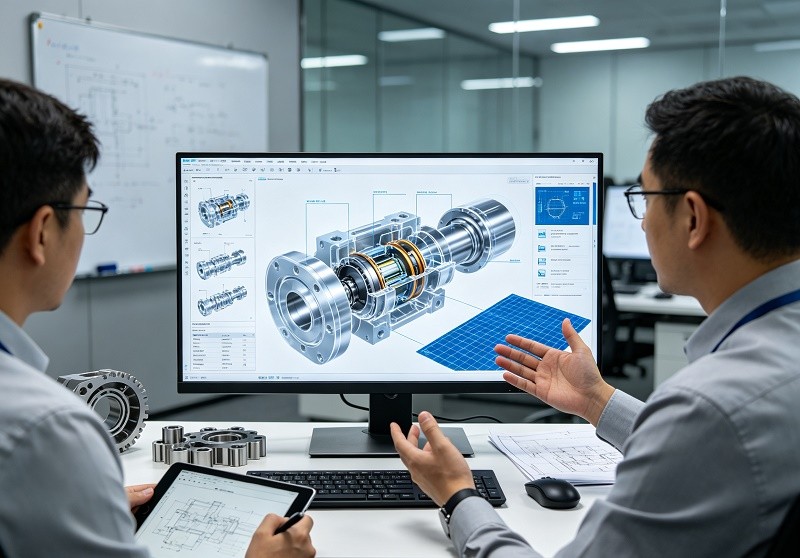
The Unmatched Value of Responsive Customer Service
In manufacturing, where projects are complex and timelines are tight, responsive and clear communication is the linchpin of a successful partnership. Excellent customer service is not a bonus; it is a core requirement.
Key elements of superior customer service in manufacturing include:
- Proactive and Transparent Communication: A great partner keeps you informed at every stage. They provide regular updates on production status, anticipate potential challenges, and transparently communicate any issues and their proposed solutions.
- Active Listening and Expert Guidance: Top suppliers do more than just take orders. They listen to understand your goals and challenges, ask clarifying questions, and offer expert guidance to improve your product and process.
- Fast and Effective Issue Resolution: In any manufacturing project, problems can arise. A partner who prioritizes customer service has dedicated protocols to address issues promptly, minimizing downtime and preventing small problems from escalating.
- Building a Strategic Partnership: Ultimately, the goal is to move beyond a transactional relationship. A supplier with excellent customer service becomes a trusted advisor, demonstrating a commitment to your success and fostering a collaborative partnership built on reliability and mutual respect.
By prioritizing a supplier who excels in both customization and customer service, you secure a partner who is not just equipped to manufacture your parts, but is also invested in helping you innovate and succeed.
Conclusion
Ultimately, partnering with a capable CNC Turned Parts Supplier is about more than just sourcing components; it’s about securing a reliable and innovative partner committed to your project's success. The journey from a digital design to a high-performance physical part is filled with complexities, and the right supplier acts as an expert guide through every stage.
By focusing on the comprehensive capabilities discussed—from mastering material diversity and achieving microscopic precision to providing strategic engineering support and seamless logistics—you can ensure your projects proceed smoothly and efficiently. A supplier's investment in state-of-the-art machinery and in-house processes is a direct investment in the quality and reliability of your final product.
A well-chosen CNC Turned Parts Supplier will truly empower you to bring your most ambitious designs to life with unwavering confidence and efficiency. They provide not just the parts you need, but the expertise, support, and trust required to innovate and lead in a competitive marketplace. We encourage you to share this guide with your colleagues and start a conversation about what you truly need from your manufacturing partners.