Hybrid Manufacturing: Fusing 3D Printing and Injection Molding for Unmatched Production Excellence
Unlocking the Next Wave of Manufacturing Innovation
In today's fiercely competitive market, speed, precision, and cost-effectiveness are not just advantages; they are necessities. For decades, injection molding has been the undisputed champion for mass-producing high-quality plastic parts. However, the rise of additive manufacturing, or 3D printing, has introduced a new paradigm of agility and design freedom. The real breakthrough comes not from choosing one over the other, but from integrating them. This hybrid approach combines the strengths of both technologies, creating a powerful manufacturing system that delivers superior results from prototype to full-scale production.
A Quick Look at Traditional Injection Molding
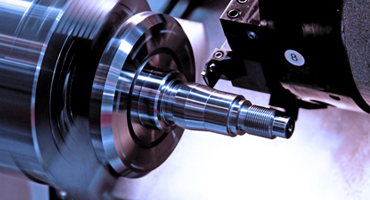
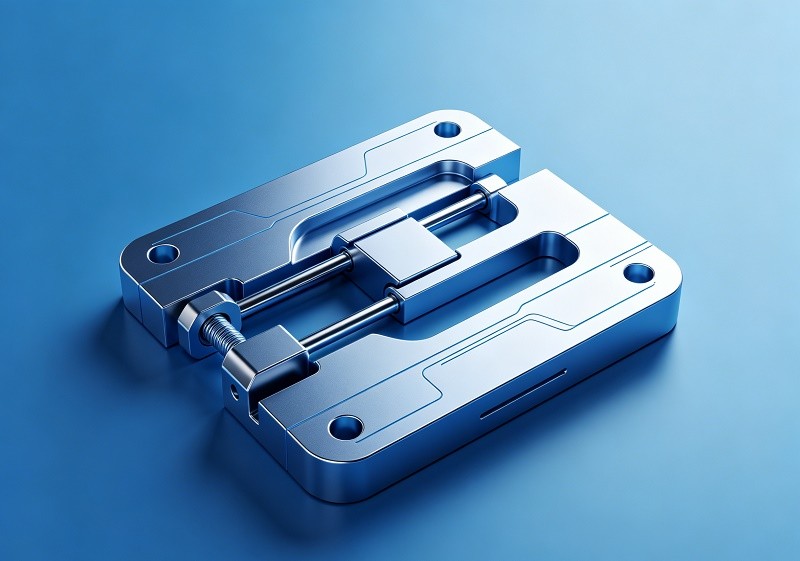
Injection molding is a manufacturing cornerstone, renowned for its ability to produce millions of identical parts with exceptional speed and precision. The process involves injecting molten thermoplastic material into a meticulously crafted metal mold (or tool). Under immense pressure, the material fills the mold's cavity, cools, solidifies, and is then ejected as a finished part. Its primary strengths are its low per-part cost at high volumes and the excellent mechanical properties and surface finish of the final products. However, the high initial cost and long lead times—often weeks or months—for creating the metal molds can be a significant barrier, especially for new products or low-volume runs.
Understanding the Power of Additive Manufacturing (3D Printing)
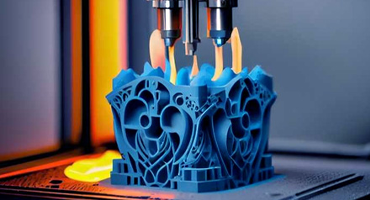
Additive manufacturing (AM), or 3D printing, builds objects layer by layer directly from a digital design file. Unlike injection molding's subtractive heritage (where material is removed to create a mold), AM adds material only where it is needed. This fundamentally different approach provides unparalleled design freedom, allowing for the creation of incredibly complex geometries, internal channels, and intricate features that would be impossible to mold. Its main benefits are rapid speed for one-off parts, no tooling costs, and the ability to make design changes on the fly with minimal expense.
The Synergy: How Do Injection Molding and 3D Printing Work Together?
The true power of this integration lies in using each technology for what it does best. Instead of viewing them as competitors, we see them as complementary partners in a streamlined production workflow. By leveraging 3D printing in the early stages and for specialized applications, we can enhance the efficiency and flexibility of our core injection molding services. This synergy manifests in several key applications that directly benefit our clients.
Application 1: Rapid Prototyping for Flawless Design Iteration
Before committing tens of thousands of dollars to a steel mold, you need to be certain your design is perfect. 3D printing allows us to create high-fidelity physical prototypes in a matter of hours or days. You can hold your part, test its fit and function, and gather feedback. If a design change is needed, we simply update the CAD file and print a new version. This iterative process is fast, affordable, and drastically reduces the risk of costly errors, ensuring the final design is fully validated before mass production begins.
Application 2: Bridge Tooling for Low-Volume Production and Market Testing
What if you need a few hundred parts for a pilot run or to test the market before committing to full-scale production? This is where "bridge tooling" comes in. We can 3D print a mold, often from a durable, heat-resistant resin, and use it for low-volume injection molding runs. These 3D printed molds can typically produce 50 to 100+ parts, providing a cost-effective bridge between prototyping and mass production. This allows you to get your product to market faster and validate demand without the massive upfront investment in a traditional steel mold.
Application 3: Creating Complex Mold Inserts with Conformal Cooling
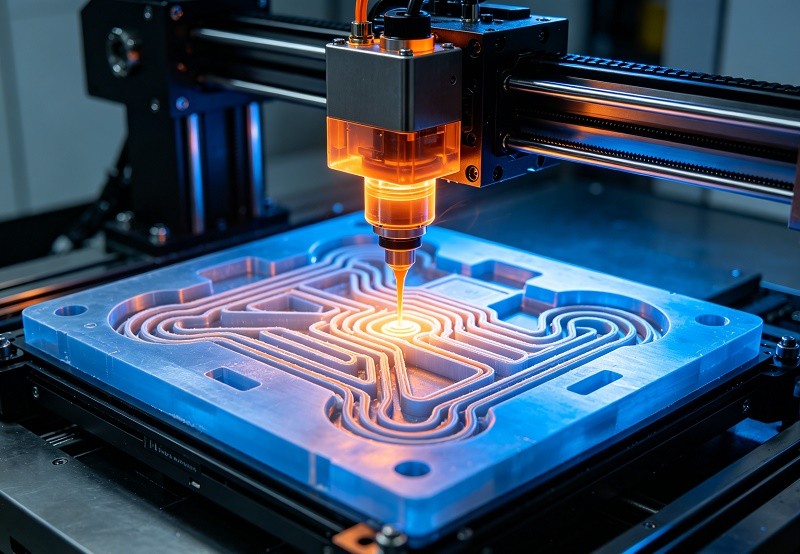
One of the most advanced applications is using metal 3D printing to create highly complex mold inserts that are then integrated into a conventional mold base. This hybrid approach enables the creation of internal cooling channels that conform to the shape of the part cavity—something impossible with traditional drilling. These "conformal cooling" channels dissipate heat more evenly and efficiently, which can shorten cycle times by 30-50%, reduce part warpage, and improve overall part quality. This is a game-changer for optimizing high-volume production.
The Tangible Benefits for Your Project
Integrating 3D printing into our injection molding services offers clear, measurable advantages:
- Unprecedented Speed to Market: Move from concept to functional prototype to market-ready product in a fraction of the traditional time.
- Drastically Reduced Financial Risk: Validate your design and test your market with low-cost 3D printed prototypes and bridge tooling before investing in expensive hard tooling.
- Greater Design Freedom: Create complex, optimized parts that were previously unmanufacturable.
- Improved Product Quality: Achieve better dimensional stability and fewer defects through advanced tooling techniques like conformal cooling.
| Feature | Traditional Molding (Alone) | Hybrid Approach (IM + 3D Printing) |
|---|---|---|
| Upfront Tooling Cost | High ($10,000 - $100,000+) | Low to Moderate (Prototyping & Bridge Tooling) |
| Lead Time for First Parts | 5-15 Weeks | 1-2 Weeks |
| Design Iteration Cost | Extremely High | Very Low |
| Best for Volume | High (10,000+ units) | Low to High (Scales from 1 to 1,000,000+) |
| Geometric Complexity | Limited by mold-making | Nearly Unlimited |
Our Integrated Process: A Seamless Path from Design to Production
As your plastic injection molding service provider, we have built a seamless workflow to harness the power of this hybrid approach. Our process is transparent and collaborative:
- Consultation & Design Review: We start with your CAD design and discuss your project goals, volume requirements, and material needs.
- Prototyping & Validation: We use advanced 3D printing to create functional prototypes for your review and testing.
- Bridge Production (If Needed): We create 3D printed molds to produce initial batches for market testing or early sales.
- Tooling Optimization: For mass production, we determine if hybrid tools with 3D printed inserts can optimize your cycle time and part quality.
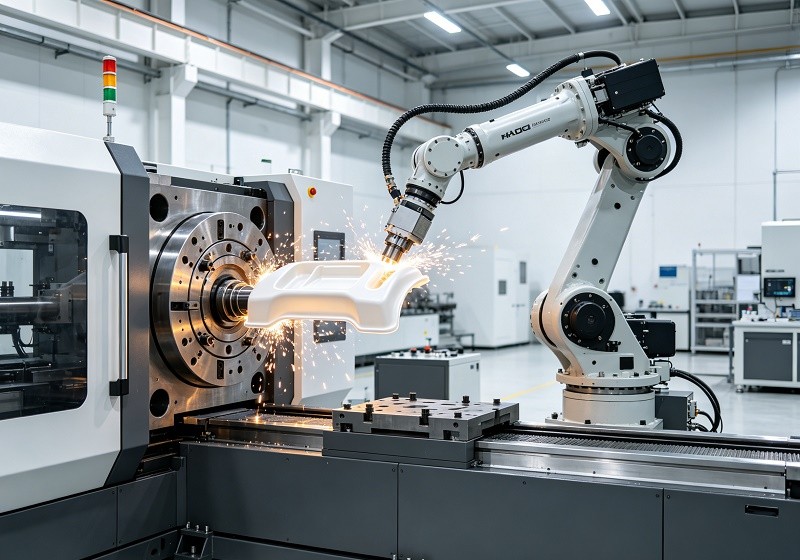
- Full-Scale Injection Molding: We transition to our state-of-the-art injection molding presses for efficient, high-volume manufacturing.
The Future is Hybrid: Staying Ahead of the Curve
Manufacturing is no longer about a single, siloed process. The future belongs to those who can intelligently integrate multiple technologies to create a flexible, efficient, and responsive production ecosystem. By blending the reliability of injection molding with the agility of additive manufacturing, we are not just making parts; we are providing a strategic advantage. This hybrid model minimizes risk, accelerates innovation, and ensures the highest quality outcomes for our customers.
Partner with an Innovator for Your Next Project
Choosing the right manufacturing partner is critical. You need a provider who understands the nuances of both traditional and modern manufacturing techniques. Our expertise across both domains allows us to recommend and execute the most effective strategy for your specific project. By embracing the synergy between 3D printing and injection molding, we deliver a service that is faster, more flexible, and ultimately more valuable.
Ready to see how our hybrid manufacturing approach can benefit your next project? Contact us today to discuss your design.