



How to Select the Ideal BNC Male Connector from a Supplier for Reliable Coaxial Connections
In the world of electronics, from critical CCTV security installations to professional audio-visual setups, we understand that the reliability of your entire system often comes down to the smallest components. That's why I want to guide you through the essential process of selecting the ideal BNC male connector. This fundamental component is the unsung hero that ensures pristine signal integrity, and making the right choice is paramount.
Choosing the right BNC male connector from a reputable supplier isn't just about making a connection; it's about safeguarding your system's performance and avoiding common, costly pitfalls. I am here to help you navigate the complex world of specifications, materials, and types to find the perfect fit for your needs.
Let's explore the critical factors that will empower you to select the best BNC male connector for your specific coaxial connection needs. By focusing on quality and compatibility, you can ensure optimal performance and longevity for all your important projects.
What Every BNC Male Connector Supplier Expects You to Know About Coaxial Cable Fundamentals
Before you can select the right connector, it's crucial to understand the medium it will be attached to: the coaxial cable. A foundational knowledge of coax principles is the first step toward achieving a stable, high-performance connection. This understanding not only helps in making an informed choice but also demonstrates a level of expertise that any quality supplier will appreciate. When you approach a BNC male connector supplier with a clear grasp of these fundamentals, you streamline the process and ensure you get a product that perfectly matches your technical requirements.
The Core Purpose of Coaxial Cables for RF Signals
Coaxial cables are the arteries of modern radio frequency (RF) systems. Their primary purpose is to transmit high-frequency electrical signals from a source to a destination with minimal loss and interference. Unlike a simple wire, a coaxial cable's unique structure, consisting of a central conductor surrounded by an insulating layer, a metallic shield, and an outer jacket, creates an electromagnetic field that stays confined within the shield. This design prevents the signal from radiating outwards and interfering with other nearby electronics, and crucially, it protects the signal from being corrupted by external electromagnetic interference (EMI) and radio frequency interference (RFI). This containment and protection are what make coaxial cables indispensable for clean RF signal transmission.
From CCTV and Broadcast to IoT Communication: Versatility in Application
The unique properties of coaxial cables have led to their adoption across a vast spectrum of industries. While many associate them with legacy cable television, their role has evolved and expanded significantly.
- Broadcast and Video Production: In professional broadcasting, coaxial cables with BNC connectors are the standard for transmitting baseband video signals, such as SDI (Serial Digital Interface) and HD-SDI. The 75 Ohm impedance is critical for maintaining video signal quality, from standard definition to 4K and even 8K resolutions.
- CCTV and Surveillance: Analog and HD-over-Coax security systems rely heavily on coaxial cables (typically RG-59) to transmit video from cameras to recorders (DVRs). This method is valued for its reliability and ability to carry power and video over a single line in some cases (PoC - Power over Coax).
- Internet and Data Communication: While fiber optics are prevalent, coaxial cables (like RG-6) remain a cornerstone of "last-mile" internet delivery for cable broadband services. Their ability to handle high bandwidth over considerable distances makes them ideal for this purpose.
- Internet of Things (IoT) and RF Communications: In the burgeoning world of IoT, coaxial pigtails and cables are used to connect antennas to transmitters and receivers in various devices. From cellular modems and GPS units to LoRaWAN gateways, a reliable coaxial link is essential for wireless communication.
- Test and Measurement: In laboratories and testing environments, precise and shielded coaxial cables are used to connect sensitive equipment like oscilloscopes, spectrum analyzers, and signal generators, where signal purity is of the utmost importance.
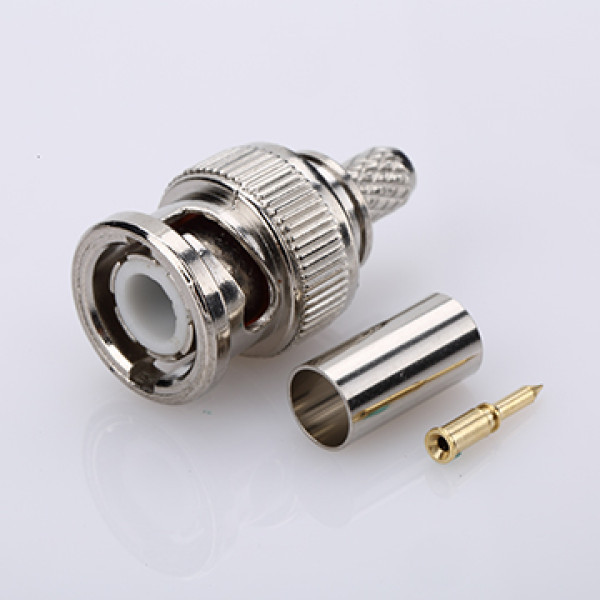
The diverse applications of coaxial cables underscore the need for a reliable connection.
Unpacking the Composition of Quality Coax Cables
The performance of a coaxial cable is not accidental; it is the direct result of its carefully engineered structure. Each of its four main components plays a vital role in transporting the signal efficiently and safely. Understanding these layers helps in appreciating why not all cables are created equal.
Central Conductor: Copper's Role in Efficient Signal Transport
The central conductor is the very heart of the coaxial cable. It is the pathway along which the actual data signal travels. The quality of this conductor directly impacts the signal's strength and clarity.
- Material: Copper is the preferred material due to its excellent electrical conductivity. For most video and data applications, a solid copper conductor provides the best performance, offering low resistance to a signal's flow. In some cases, particularly in less-demanding or cost-sensitive applications, you might find Copper-Clad Steel (CCS). CCS has a steel core for strength, coated with a layer of copper. While stronger and cheaper, it has higher resistance and is not ideal for applications requiring power to be sent over the coax (like powering a CCTV camera) or for the highest quality signals.
- The Skin Effect: At high frequencies, RF signals tend to travel along the outer surface, or "skin," of the conductor. This is why the purity and smoothness of the conductor's surface are so important. Any imperfections can disrupt this flow and degrade the signal. For this reason, silver-plated copper conductors are sometimes used in very high-frequency or precision applications, as silver is an even better conductor than copper.
Dielectric Insulation and Shielding: Guarding Signal Strength and Integrity
If the center conductor is the heart, the dielectric insulator and shield are the guardians of the signal. They work in tandem to maintain the cable's impedance and protect the signal from interference.
- Dielectric Insulator: This is the white, foam-like or solid plastic material that surrounds the center conductor. Its primary role is to keep the center conductor perfectly spaced from the metallic shield, which is critical for maintaining the cable's characteristic impedance (e.g., 75 Ohms). The material used (often Foam Polyethylene - FPE) also influences the cable's signal velocity and loss. A good dielectric minimizes energy absorption, allowing the signal to travel further with less degradation.
- Shielding: The shield is the metallic layer that wraps around the dielectric. It serves two purposes: it acts as the signal's return path and, most importantly, it shields the central conductor from external EMI and RFI. There are two common types of shielding:
- Braid: A woven mesh of tiny copper or aluminum wires. The density of the weave (e.g., 95% coverage) determines its effectiveness. A tight braid provides excellent shielding at lower frequencies.
- Foil: A thin layer of aluminum foil, often bonded to a polyester backing for strength. Foil shields provide 100% coverage and are highly effective at blocking high-frequency interference.
- Most high-quality modern cables, like RG-6, use a "quad-shield" or at least a dual-shield design, combining both foil and braid layers for comprehensive protection across a wide range of frequencies.
Outer Jacket: Essential Protection from Physical Stress and Environmental Factors
The outer jacket is the cable's first line of defense against the outside world. While it doesn't directly interact with the signal, its role in protecting the internal components is indispensable for the cable's longevity and performance.
- Material: The material of the jacket determines its suitability for different environments.
- PVC (Polyvinyl Chloride): The most common and affordable jacket material, suitable for general indoor use. It's flexible but offers limited protection against UV radiation and extreme temperatures.
- PE (Polyethylene): Used for outdoor and direct-burial cables. PE is highly resistant to moisture, UV rays, and temperature changes, making it much more durable for external installations.
- Plenum Rated (FEP): For use in plenum air-handling spaces (like above a drop ceiling), fire codes require cables with low-smoke, low-flame jackets made from materials like Fluorinated Ethylene Propylene (FEP). These are more expensive but are a legal and safety requirement in commercial buildings.
- Protection: The jacket protects the delicate shielding and internal structure from nicks, cuts, moisture, chemicals, and crushing forces. A compromised jacket can lead to moisture ingress, which will quickly corrode the shield and degrade the signal, rendering the cable useless.
Understanding Key Characteristics of 75 Ohm Coax
While coaxial cables come in different impedances, 75 Ohm is the undisputed standard for all forms of video transmission, from analog CCTV to digital broadcast and cable television. This specific impedance value is a design characteristic that arises from the physical dimensions and materials of the cable—specifically, the ratio of the outer shield's diameter to the inner conductor's diameter, and the dielectric constant of the material between them.
Maintaining Signal Integrity with Low Loss Transmission
The primary goal in any cable-based system is to get the signal from point A to point B with as little change as possible. In coaxial cables, this change is quantified as "attenuation" or signal loss, measured in decibels (dB) per unit of distance.
- Causes of Loss: Signal loss is a natural phenomenon caused by the cable's resistance (which converts signal energy to heat) and dielectric losses (where the insulating material absorbs some energy).
- Frequency and Distance: Attenuation is not linear; it increases with both frequency and distance. A 4K video signal (which operates at a very high frequency) will lose much more strength over 100 feet of cable than a standard-definition signal will. Similarly, any signal will be weaker after traveling 200 feet compared to 50 feet.
- Low Loss Cables: This is why "low loss" is a key selling point. High-quality 75 Ohm cables are engineered with superior materials—like a pure copper conductor and high-efficiency foam dielectric—to minimize this attenuation. Choosing the right cable (e.g., RG-11 for very long runs instead of RG-6) is essential for ensuring the signal arriving at the destination is strong and clean enough for the equipment to use.
Durability and Ease of Installation for Diverse Setups
A cable is only as good as its installation. The physical characteristics of 75 Ohm coax play a significant role in its long-term reliability.
- Durability: A durable cable resists damage during and after installation. This is influenced by the thickness and material of the outer jacket, the strength of the shielding, and the cable's bend radius. A cable with a thick, UV-resistant PE jacket is durable for outdoor use, while a cable with quad-shielding and a solid core is physically robust. The "bend radius" is a critical specification; bending a cable tighter than its specified minimum radius can damage the internal structure, permanently altering its impedance and degrading performance.
- Ease of Installation: This is often a trade-off with durability. A thicker, more rigid cable like RG-11 has lower loss but is much harder to bend around corners and terminate. A more flexible cable like RG-59 is easier to work with in tight spaces but has higher loss. Installers must balance the need for performance with the practicalities of the installation environment, choosing a cable that is robust enough for the job but flexible enough to be installed without damage. Proper tools for stripping and terminating the cable are also essential to a successful and reliable installation.
Matching Cable Types and Impedance: Your Guide from a BNC Male Connector Supplier
Choosing the right BNC connector is an exercise in precision matching. A BNC connector doesn't perform in isolation; it becomes part of a complete system, and its success is entirely dependent on its compatibility with the coaxial cable and the equipment it links. A knowledgeable BNC male connector supplier can guide you, but understanding the key variables—cable type, impedance, and frequency—empowers you to make the right decision from the start.
Navigating the World of Coaxial Cable Types
While they all serve the same fundamental purpose, different types of coaxial cables are optimized for different scenarios. The "RG" designation, meaning "Radio Guide," is a legacy military standard, but the numbers are still widely used to differentiate common cable types.
RG-59: The Go-To for CCTV and Standard Video Applications
RG-59 has long been the workhorse for analog video systems. It is thinner and more flexible than its sibling, RG-6, making it easier to install in residential and commercial settings where runs are relatively short and sharp bends may be necessary.
- Characteristics: It typically features a solid copper conductor and is well-suited for lower frequency baseband video signals, like those from traditional analog CCTV cameras.
- Limitations: Its higher signal loss (attenuation) compared to RG-6 makes it less suitable for long-distance runs or for high-frequency applications like satellite TV or high-definition digital signals. Using RG-59 for a long run with an HD camera can result in a degraded or completely lost picture.
- Best Use Case: Ideal for older CCTV systems, short-run analog video, and some component video connections. When connecting BNCs to this cable, you must use connectors specifically sized for RG-59's smaller diameter.
RG-179: When Flexibility and Compactness are Key for Specialized Video
RG-179 is a specialty coaxial cable designed for applications where space and flexibility are the primary concerns. It is significantly thinner and more pliable than standard coax types like RG-59.
- Characteristics: With a diameter of around 2.5mm, it can be routed in extremely tight spaces within equipment or in applications like patchbays. It often has a silver-plated copper-clad steel conductor and a high-temperature FEP jacket.
- Limitations: This compact size comes at the cost of very high attenuation. RG-179 is only suitable for very short patch cables, internal equipment wiring, or applications where signal loss is not a major factor over the short distance.
- Best Use Case: High-density video routing, internal wiring of broadcast equipment, and short-form video patch cables. BNC connectors for RG-179 are highly specialized and much smaller than standard connectors.
RG-6 and RG-11: Powerhouses for Long-Distance and High-Frequency Needs
RG-6 and RG-11 are the modern standards for high-performance video and data transmission. They are designed to handle the higher frequencies and bandwidth requirements of today's digital world.
- RG-6: This is the most common cable for modern CATV, satellite TV, and internet broadband. It has a larger conductor, improved dielectric, and more robust shielding (often quad-shield) than RG-59. This results in significantly lower signal loss, making it suitable for transmitting HD and 4K signals over moderate distances. It represents a good balance of performance, size, and cost.
- RG-11: RG-11 is essentially a heavy-duty version of RG-6. It is thicker, more rigid, and has even lower attenuation. This makes it the champion for very long runs where preserving signal strength is the absolute priority. You would use RG-11 to carry a signal hundreds of feet, for example, from a satellite dish on a large commercial building down to a distribution hub. However, its thickness and stiffness make it difficult to work with and generally unsuitable for direct connection to end devices; it's typically used for the main "backbone" runs and then adapted to more flexible cables for the final connection.
| Cable Type | Common Use Cases | Key Advantage(s) | Key Disadvantage(s) |
|---|---|---|---|
| RG-59 | Analog CCTV, Short-run Baseband Video | Flexible, Easy to Install | High Signal Loss, Low Frequency |
| RG-179 | Internal Wiring, Patch Panels | Extremely Thin and Flexible | Very High Signal Loss, Short Runs Only |
| RG-6 | CATV, Satellite, HD Video, Internet | Lower Loss, High-Frequency Capable | Less Flexible than RG-59 |
| RG-11 | Long-Distance Backbone Runs | Lowest Signal Loss | Rigid, Difficult to Install |
Why 75 Ohm vs. 50 Ohm Impedance Matters for Your BNC Male Connector Supplier Choice
Impedance is arguably the most critical specification to get right. It is a measure of the opposition to the flow of alternating current (AC) in a circuit, measured in Ohms (Ω). For a coaxial system to work correctly, the impedance of the source device, the cable, the connectors, and the destination device must all be the same. Any deviation, known as an impedance mismatch, will cause problems.
Ensuring Compatibility for Optimal Video and RF System Performance
The electronics world has standardized on two primary impedance values for coaxial systems: 50 Ohm and 75 Ohm.
- 75 Ohm: This is the universal standard for video signals. Everything from your television to professional broadcast cameras and SDI matrices is designed around a 75 Ohm system. This value was found to offer an optimal trade-off for low signal loss, which is critical for preserving the quality of complex video waveforms over distance.
- 50 Ohm: This is the standard for most data and RF communication systems. It was determined to be the best compromise for power handling capabilities in transmitters. You'll find 50 Ohm systems in Wi-Fi antennas, two-way radios, and high-frequency test equipment.
The Problem of Mismatch: Connecting a 50 Ohm BNC connector to a 75 Ohm video cable (or vice-versa) creates an impedance mismatch. When the signal encounters this change in impedance, a portion of the signal's energy is reflected back toward the source. This reflection can cause a variety of issues:
- In Video: It can lead to "ghosting" (a faint, secondary image), poor color fidelity, and a general loss of sharpness. In digital signals like HD-SDI, a severe mismatch can cause a "cliff effect," where the signal fails entirely, resulting in a black screen.
- In Transmitters: Reflections can send power back into the transmitter's output amplifier, potentially damaging the equipment.
Although 50 Ohm and 75 Ohm BNC connectors look physically identical and can be mechanically mated, their internal dimensions are different, leading to this performance-killing mismatch.
Consulting Technical Data Sheets for Accurate Impedance Matching
You cannot determine a connector's impedance by looking at it. The only way to be certain is to check the manufacturer's specifications.
- Check the Part Number: Manufacturers often incorporate impedance into the part number or have distinct series for 50 Ohm and 75 Ohm versions.
- Read the Datasheet: The technical datasheet is your source of truth. It will explicitly state the impedance (e.g., "Impedance: 75 Ω") and other critical performance metrics. A reputable supplier will always make these datasheets readily available on their website.
- Check the Cable: The cable itself is usually printed with its type and impedance (e.g., "RG-6/U 75 OHM").
Never assume compatibility. Always verify that both your cable and your BNC connectors are rated for the same impedance—75 Ohm for video, 50 Ohm for most data/RF.
Understanding Frequency Range and Bandwidth: Key Considerations
Beyond impedance, a connector's performance is also defined by its frequency range. A BNC connector isn't a simple piece of metal; it's a precision-engineered component designed to maintain its characteristic impedance up to a certain maximum frequency.
Selecting Connectors Rated for Your Application's Requirements, such as 4K Signals
As video resolutions have increased, so have the frequencies required to transmit them.
- Standard Definition (SD): Operates at relatively low frequencies. Almost any standard 75 Ohm BNC connector can handle SD video.
- High Definition (HD-SDI): HD at 1.5 Gbps requires connectors that perform well up to 1.5 GHz.
- Full HD (3G-SDI): At 3 Gbps, you need a connector rated for at least 3 GHz to ensure signal integrity. These are often marketed as "HD BNC" or "3 GHz BNC" connectors.
- 4K UHD (6G-SDI & 12G-SDI): 4K video requires massive bandwidth. 6G-SDI needs a 6 GHz rated connector, and the highest quality single-link 4K requires 12G-SDI, demanding connectors rated to at least 12 GHz.
These high-frequency BNCs (often called "True 75 Ohm" or "12G BNC") are manufactured to much tighter tolerances. They use different materials and internal geometries to minimize signal reflections at these incredibly high frequencies. Using a standard 1 GHz BNC in a 12G-SDI signal path is a recipe for failure; the signal loss and reflections would be so severe that the picture would likely not appear at all. Always match the connector's frequency rating to the highest frequency you expect your system to carry, with a comfortable margin for error.
Avoiding Common Selection and Installation Errors According to Your BNC Male Connector Supplier
Even with the perfect cable and a high-quality connector, the final connection is only as strong as the weakest link in the installation process. Errors in selection and termination are incredibly common and are responsible for a vast majority of signal problems. A good BNC male connector supplier knows that their product's reputation depends on it being used correctly. Here are the pitfalls to avoid and the best practices to follow.
The Pitfalls of Mismatched Connectors
The term "mismatch" extends beyond just impedance. It also applies to the physical and electrical compatibility between the connector and the cable. Choosing the wrong connector, even if it has the correct impedance, will lead to a failed or unreliable connection.
Selecting the Incorrect Size for Your Cable (e.g., RG-6 on RG-59)
Coaxial cables, as we've discussed, come in various sizes (RG-59, RG-6, etc.). Each cable type has a unique set of diameters for its central conductor, dielectric, and outer jacket. BNC connectors are precision-manufactured to fit one specific cable type.
- The Problem: Attempting to install a BNC connector designed for RG-6 onto a thinner RG-59 cable will result in a connection that is loose and insecure. The center pin of the connector may not make proper contact with the cable's conductor, and the crimp sleeve or compression ring will be too large to grip the cable jacket securely. This leads to intermittent signals, easy pull-outs, and a path for moisture to enter the connection.
- The Reverse Problem: Trying to force a smaller RG-59 connector onto a thicker RG-6 cable simply won't work without damaging the cable. You might crush the dielectric, which would ruin the cable's impedance, or you might not be able to get the connector on at all.
The Solution: Always purchase connectors that are explicitly specified for your exact cable type. The product description should clearly state "BNC Connector for RG-59" or "BNC Compression Connector for RG-6." Do not mix and match.
Ensuring the Right Bandwidth and Impedance for Optimal Performance
This is a point worth repeating because it is so critical. We've covered the difference between 50 Ohm and 75 Ohm, but it's crucial to also consider bandwidth (frequency rating).
- The Scenario: You might be working on a 4K video installation that uses 12G-SDI signals. You correctly select a 12G-SDI rated coaxial cable and ensure your equipment is compatible. However, you accidentally purchase standard 75 Ohm BNC connectors that are only rated for 1.5 GHz (HD-SDI).
- The Result: While the impedance (75 Ohm) is technically correct, the connector is not designed to perform at the 12 GHz frequency of your signal. It will introduce massive signal reflections and loss, acting as a low-pass filter that effectively blocks the 4K signal. The system will fail, and you'll be left troubleshooting, potentially replacing the very connectors you just installed.
The Solution: Always verify three things:
- Impedance: 75 Ohm for video.
- Cable Type: Matches your cable (e.g., RG-6).
- Frequency Rating: Meets or exceeds the highest frequency of your application (e.g., 12 GHz for 12G-SDI).
Best Practices for Preparing and Terminating Cables
A perfect connector can be ruined by a sloppy termination. Cable preparation is a craft that requires precision and the right tools. Rushing this step is a false economy, as it will inevitably lead to future problems.
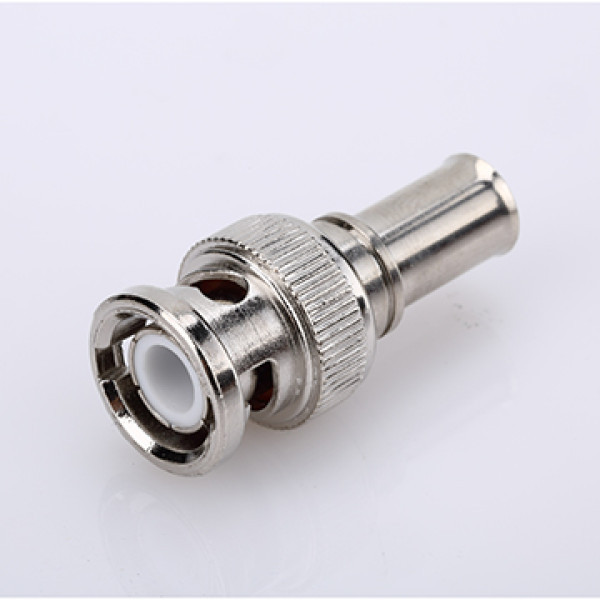
Correct cable stripping dimensions are critical for a successful termination.
Avoiding Cable Damage with Proper Cutting and Stripping Techniques
The goal of stripping a coax cable is to expose the different layers to precise, specified lengths without damaging the layers underneath.
- Use the Right Tool: Do not use a utility knife or pocket knife. A dedicated coaxial cable stripping tool is essential. These tools have pre-set, adjustable blades designed to cut only to the correct depth for each layer. A good stripper will perform a two-step or three-step cut in one motion.
- Follow the "Cut Sheet": Your connector's manufacturer will provide a specification sheet that shows the exact lengths for the exposed center conductor, the dielectric, and the foil/braid. Adhering to these dimensions is not optional; it's required for the connector to fit and perform correctly.
- Inspect Your Work: After stripping, inspect the cable. Ensure the center conductor is not nicked or scored. A nick creates a weak point that can break easily. Make sure there are no stray braid wires touching the center conductor, as this will create a direct short circuit. The foil and braid should be neatly folded back over the jacket.
Implementing Correct Crimping and Compression for Secure and Reliable Connections
There are two primary methods for attaching BNC connectors: crimping and compression. Both can provide excellent results when done correctly with the proper tools.
- Crimping: This traditional method involves using a crimp tool to deform a metal sleeve around the back of the connector, securing it to the cable's jacket and braid.
- Best Practices: Use a high-quality ratcheting crimp tool with the correct die set for your BNC connector size. A cheap, non-ratcheting tool can result in an under-crimped (loose) or over-crimped (damaging) connection. Ensure the center pin is also correctly crimped or soldered onto the center conductor before inserting it into the connector body.
- Compression: This is the modern, preferred method, especially for high-frequency and digital signals. A compression connector has a captive sleeve that is pushed forward and compressed around the cable body using a dedicated compression tool.
- Best Practices: This method provides a 360-degree, weather-sealed connection that is extremely robust and reliable. It's crucial to use the correct compression tool for your brand of connectors, as different manufacturers have slightly different designs (e.g., linear vs. radial compression). Although the initial tool cost is higher, the resulting connections are far superior in pull strength, electrical performance, and resistance to moisture.
Understanding Male, Female, and Reverse Polarity Connectors
Finally, a simple but common error is ordering the wrong gender or polarity of a connector. Getting this wrong means the parts simply won't connect.
Identifying Connector Types for Seamless Integration
- Male (Plug): The BNC male connector, the focus of this guide, is the "plug." It is characterized by the outer rotating locking shell and a central pin. It is typically found on the end of a cable.
- Female (Jack): The BNC female connector is the "jack" or receptacle. It has two external bayonet lugs that the male connector's shell locks onto. It contains a central socket that accepts the male pin. Female connectors are typically found mounted on equipment chassis or wall plates.
- Reverse Polarity (RP-BNC): This is a specialty connector type primarily used in some Wi-Fi applications to comply with FCC regulations, preventing consumers from connecting non-standard, gain-boosting antennas. An RP-BNC male plug has the same outer shell as a standard male, but the inside features a socket instead of a pin. An RP-BNC female jack has the bayonet lugs but features a central pin instead of a socket. They are deliberately designed not to mate with standard BNC connectors. It is rare to encounter these in the video world, but it's important to know they exist to avoid accidental purchase.
By being mindful of these common errors—mismatched components, poor termination technique, and incorrect gender/polarity—you can dramatically increase the reliability and performance of your coaxial connections.
What to Demand from Your BNC Male Connector Supplier for Long-Term Reliability
Selecting the ideal BNC connector isn't just about matching specs on a datasheet; it's about partnering with a supplier who is committed to quality, consistency, and support. The reliability of your system for years to come depends on the choices you make today. When you're sourcing these critical components, there are certain non-negotiable qualities and services you should demand from your BNC male connector supplier.
The Importance of Quality Materials in BNC Connectors
The materials used to construct a BNC connector have a direct and profound impact on its electrical performance, mechanical durability, and resistance to environmental factors. A cheap connector made from inferior materials is a liability waiting to happen.
Assessing the Impact of Material Choice on Performance and Longevity
Here's what to look for in a high-quality BNC connector:
- Body Material: The connector's main body should be made of machined brass. Brass offers excellent mechanical strength, is easily machined to tight tolerances, and is corrosion-resistant. Cheaper connectors might use zinc or other pot metals, which are weaker, more brittle, and susceptible to corrosion.
- Plating: The plating on the connector body is crucial for conductivity and environmental protection.
- Nickel: Nickel plating is common, durable, and provides good corrosion resistance. It is an excellent choice for a wide range of applications and offers a good balance of cost and performance.
- Silver: Silver offers superior conductivity to nickel but is prone to tarnishing. While tarnish doesn't significantly degrade electrical performance, it can be an aesthetic concern.
- Trivalent/White Bronze: Some modern high-end connectors use alloys like white bronze as an alternative to nickel, offering similar durability with low-intermodulation properties.
- Center Pin Material and Plating: The center contact is the most critical point for signal transfer.
- Material: The pin itself should be made from a material like beryllium copper or phosphor bronze, which are springy and maintain good contact pressure over many mating cycles.
- Plating: Gold is the preferred plating for the center pin. Gold is an exceptional conductor, is highly resistant to oxidation and corrosion, and ensures a clean, reliable electrical contact even after years of service. A cheap connector with a tin or nickel-plated pin is a significant red flag for critical applications.
- Dielectric Material: The insulator that separates the center pin from the connector body should be made of a high-quality material like PTFE (Teflon). PTFE has excellent dielectric properties (maintaining stable impedance) and a high melting point, which is important if the center pin needs to be soldered.
A supplier should be transparent about the materials used in their connectors. This information should be clearly available on the technical datasheet.
The Value of Robust Design Features
Beyond materials, the mechanical design of the connector itself contributes significantly to its reliability, especially in applications where connections are made frequently or are subject to vibration and movement.
Prioritizing Secure Locking Mechanisms and Stable Impedance for Critical Applications
- Secure Locking: The bayonet-style locking mechanism is the hallmark of the BNC connector. A well-designed connector will have a smooth but firm locking action. It should click securely into place and require a deliberate quarter-turn to disconnect. A loose or sloppy locking mechanism can lead to intermittent signal loss if the connector is bumped or vibrates.
- Stable Impedance: A "True 75 Ohm" connector is designed from the ground up to maintain a constant 75 Ohm impedance from the point where the cable attaches, all the way through to the center pin's mating point. This requires precision engineering of the connector's internal geometry. A reputable supplier will often verify their designs using advanced network analyzers and include performance charts (like VSWR or Return Loss) in their datasheets to prove the connector's stability across its rated frequency range. This level of detail provides confidence that you are buying a component that will perform as advertised.
Seeking Comprehensive Product Information and Technical Support
A supplier's responsibility doesn't end at the point of sale. Their role as a true partner is evident in the quality of the information and support they provide. This is a key tenet of establishing trust and ensuring you can use their products effectively.
Ensuring Correct Application and Ease of Troubleshooting
When evaluating a supplier, look for the following:
- Detailed Datasheets: As mentioned, a comprehensive datasheet is non-negotiable. It should include all critical specifications: impedance, frequency range, materials, plating, mechanical drawings with dimensions, and termination instructions (including strip dimensions).
- Application Notes and Guides: A great supplier goes beyond datasheets. They provide application notes, how-to guides, and video tutorials that help customers correctly select, install, and troubleshoot their products. This demonstrates their expertise and their investment in customer success.
- Accessible Technical Support: What happens when you run into a problem? Can you easily reach a knowledgeable technical support representative who can help you resolve an issue? A supplier who hides behind a generic contact form is less desirable than one who provides direct access to experts.
- Traceability and Consistency: Your supplier should be able to guarantee that the connector you buy today is the same quality and specification as the one you buy six months from now. This requires robust quality control processes and supply chain management.
Demanding these standards of quality, design, and support ensures that you are not just buying a piece of metal, but a reliable solution backed by a trustworthy partner.
I hope this guide has armed you with the essential knowledge to make confident and informed decisions when selecting BNC male connectors for your projects. Remember, the ultimate reliability and performance of your signal transmission chain often hinge on these small but crucial choices you make at the component level.
By paying diligent attention to the interplay between cable type, impedance matching, frequency compatibility, and correct installation practices, you can confidently navigate the market and choose the ideal components from a trusted BNC male connector supplier. This careful approach moves beyond simply "making it work" and elevates your projects to a professional standard of quality and durability.
Make every connection count. By prioritizing quality materials, robust design, and precise compatibility, you are investing in the long-term integrity of your signal. This commitment ensures that your systems will deliver clean, reliable, and high-quality performance for all your current and future applications.