How to Pick the Right CNC Machining Parts Supplier: 10 Essential Tips
Choosing the right CNC machining parts supplier is crucial for the success of any manufacturing project, whether you're working on prototypes or large-scale production. A reliable supplier ensures precision, quality, and timely delivery, directly impacting your product's performance and cost-efficiency. Making an informed decision can save you from costly delays and subpar results.
As we navigate the complexities of modern manufacturing, selecting a capable CNC machining parts supplier becomes a strategic advantage. I'll guide you through the essential factors to consider, helping you identify a partner that aligns with your specific needs and project goals.
This guide will outline the top 10 tips for picking the best CNC machining parts supplier, focusing on what truly matters to secure high-quality components and a smooth production process.
Evaluate Expertise and Experience: The Foundation of a Great CNC Machining Parts Supplier
A supplier's background is the bedrock of their ability to deliver. It provides insight into their stability, problem-solving skills, and understanding of industry-specific demands. A supplier with a proven track record is more likely to anticipate challenges and navigate the complexities of manufacturing, ensuring your project's success from the outset.
Assessing Years in Business and Industry Specialization
A supplier's longevity in the competitive manufacturing landscape often correlates with reliability and financial stability. Companies that have operated for a decade or more have likely weathered economic shifts and refined their processes, indicating they are a stable partner for long-term projects. However, years in business are only part of the story. Industry specialization is equally critical. A supplier that primarily serves the aerospace industry will have a deep understanding of its stringent requirements for tight tolerances and exotic materials, which may differ significantly from the needs of the medical device or automotive sectors. When a supplier specializes in your industry, they are already familiar with the common standards, materials, and quality expectations, which can dramatically reduce ramp-up time and miscommunication.
For instance, a supplier focused on medical device components will be well-versed in materials like medical-grade stainless steel and PEEK, and will operate within a framework that prioritizes biocompatibility and traceability, often holding certifications like ISO 13485. Similarly, an automotive-focused supplier will be optimized for high-volume production and the cost-effective machining of durable materials required for that sector. Assessing this alignment ensures the supplier isn't just capable of making your part, but is an expert in making parts like yours.
Reviewing Past Projects and Client Testimonials for a CNC Machining Parts Supplier
A supplier’s portfolio is a tangible showcase of their capabilities. When reviewing past projects, look for parts with similar complexity, materials, and tolerances to your own. A diverse portfolio that displays a range of geometries and technical challenges is a strong indicator of a capable and versatile partner. Don't be afraid to ask for specific case studies relevant to your project; a confident supplier should be able to provide examples that demonstrate their expertise in solving problems similar to yours. These case studies can reveal how they handled intricate designs, challenging materials, or tight deadline pressures.
Client testimonials and reviews provide another layer of validation. While company websites will feature curated praise, look for independent reviews on platforms like Google, Thomasnet, or other B2B directories for a more unbiased perspective. A pattern of positive feedback regarding communication, quality, and on-time delivery is a powerful endorsement. Furthermore, asking for a list of professional references allows you to speak directly with current or former clients. A supplier who is confident in their service quality will readily provide these contacts. When speaking with references, inquire about the supplier's responsiveness to issues, their consistency in meeting deadlines, and their overall performance as a strategic partner.
Understanding Material Expertise Relevant to Your CNC Machining Parts
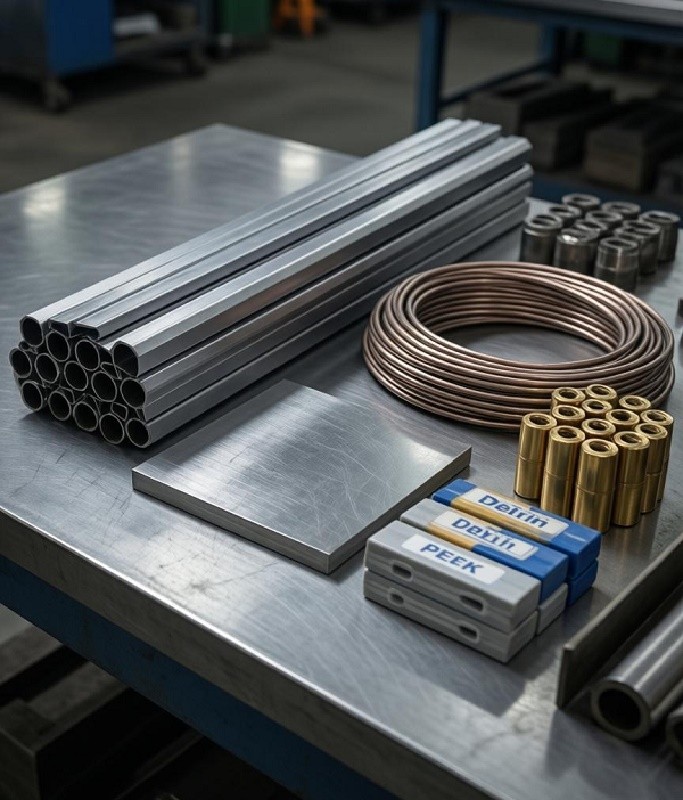
The material you choose is fundamental to your part's function, and your supplier's ability to machine that material correctly is non-negotiable. Every material behaves differently during the machining process; they have unique properties regarding hardness, thermal stability, and reaction to cutting forces. A supplier's expertise with a wide range of materials—from common metals like aluminum, stainless steel, and brass to engineering plastics like Delrin and nylon, and even exotic alloys like titanium and Inconel—is a mark of a highly skilled operation.
A supplier with deep material expertise will understand the specific tooling, cutting speeds, feed rates, and coolants required for each. Machining a soft material like aluminum 6061 is vastly different from machining hardened tool steel or a high-performance superalloy. An inexperienced shop might struggle with the latter, leading to poor surface finish, dimensional inaccuracies, or even tool failure. A knowledgeable supplier can also provide valuable Design for Manufacturability (DFM) feedback related to your material choice, potentially suggesting an alternative that offers better performance, easier machinability, or lower cost without sacrificing function.
Here is a brief overview of common material categories and their machining considerations:
| Material Category | Examples | Machining Considerations | Common Applications |
|---|---|---|---|
| Aluminum Alloys | 6061, 7075, 2024 | Excellent machinability, lightweight, good strength-to-weight ratio. | Aerospace, automotive, consumer electronics. |
| Stainless Steels | 304, 316, 17-4 PH | More challenging than aluminum; work-hardens. Requires rigid setups and optimized cutting parameters. | Medical devices, food processing, marine hardware. |
| Carbon & Alloy Steels | 1018, 4140, A36 | Varies from soft and gummy to hard and abrasive. Heat treatment significantly alters machinability. | Industrial machinery, automotive components, tooling. |
| Titanium Alloys | Grade 2, Grade 5 (Ti-6Al-4V) | Difficult to machine due to low thermal conductivity and chemical reactivity. Requires low speeds and high feed rates. | Aerospace, medical implants, high-performance sports equipment. |
| Superalloys | Inconel, Hastelloy | Extremely difficult to machine; high strength at elevated temperatures. Causes rapid tool wear. | Jet engines, gas turbines, chemical processing. |
| Engineering Plastics | Delrin (POM), PEEK, Nylon | Generally easy to machine but requires care to avoid melting or warping. PEEK can be abrasive. | Bearings, gears, medical instruments, electrical insulators. |
Asking a potential supplier about their experience with your specific material, and the challenges they've overcome with it, can quickly reveal the depth of their expertise.
Prioritize Quality Control and Certification for Your CNC Machining Parts Supplier
Quality is not an accident; it is the result of a deliberate, systematic, and documented process. A premier CNC machining parts supplier embeds quality control into every stage of their operation, from initial design review to final shipment. This commitment ensures that the parts you receive meet your specifications every single time, preventing costly rework, assembly issues, and product failures down the line.
In-House Quality Systems and Inspection Standards
A robust in-house quality management system (QMS) is the backbone of a reliable supplier. This system should be more than just a final check; it should be a comprehensive process that begins the moment your purchase order is received. Look for suppliers who can detail their quality procedures, which should include:
- Material Traceability: A system for tracking raw materials from their source, complete with material certifications, ensuring the specified grade and a
- First Article Inspection (FAI): A full inspection of the first part produced in a run to verify that the setup and programming are correct before proceeding with mass production.
- In-Process Inspection: Regular checks performed by machine operators or quality personnel at various stages of the machining process. This proactive approach catches potential deviations early, preventing an entire batch from being produced out of spec.
- Final Inspection: A concluding examination of the finished parts to verify all dimensions, features, and cosmetic requirements are met according to the print. This is often documented in a final inspection report that can be shipped with the parts.
- Calibration and Equipment Maintenance: A schedule for regularly calibrating all inspection tools (calipers, micrometers, CMMs) and maintaining CNC machinery to ensure consistent performance.
A supplier who can confidently walk you through these processes demonstrates a true commitment to delivering quality.
The Importance of ISO Certifications for a CNC Machining Parts Supplier
Certifications from the International Organization for Standardization (ISO) are an independent validation of a supplier's quality management system. They indicate that the company adheres to globally recognized standards for consistency, documentation, and continuous improvement. While not a guarantee of a perfect part, they are a powerful indicator of a professional and reliable operation.
The most common and fundamental certification is ISO 9001:2015. This standard sets the criteria for a QMS and is based on principles like a strong customer focus, the involvement of top management, a process-based approach, and continual improvement. A supplier with ISO 9001 certification has proven they have a systematic approach to achieving customer satisfaction.
For specific industries, more stringent certifications are often required:
- AS9100: This is the standard for aerospace manufacturing. It includes all the requirements of ISO 9001 plus additional, more rigorous quality and safety requirements specific to the aerospace industry, such as critical item management and stringent traceability.
- ISO 13485: This certification is for the manufacturing of medical devices. It establishes requirements for a QMS that can demonstrate its ability to provide medical devices and related services that consistently meet customer and applicable regulatory requirements.
- IATF 16949: This is crucial for suppliers in the automotive sector, focusing on continuous improvement, defect prevention, and the reduction of variation and waste in the supply chain.
Choosing a supplier with the appropriate certifications for your industry provides significant peace of mind and can be a requirement for your own quality system.
CMM and Tolerance Testing Capabilities of a CNC Machining Parts Supplier
For parts with complex geometries and tight tolerances, visual inspection and basic hand tools like calipers are not enough. This is where advanced metrology equipment becomes essential. A Coordinate Measuring Machine (CMM) is a device that measures the geometry of physical objects by sensing discrete points on the surface of the object with a probe. CMMs are the gold standard for dimensional inspection, providing a level of accuracy and repeatability that is impossible to achieve manually.
When evaluating a supplier, inquire about their CMM capabilities. A supplier with a modern, well-calibrated CMM in-house is equipped to verify the most critical dimensions of your parts with high precision. They should be able to provide detailed CMM reports that map out the measured dimensions against your design specifications, providing irrefutable proof of compliance. This is especially important for parts that utilize Geometric Dimensioning and Tolerancing (GD&T), a symbolic language used on engineering drawings to define the allowable deviation of feature geometry. A supplier who is proficient in both machining to and inspecting for GD&T specifications is a truly advanced partner.
Assess Technical Capabilities and Equipment of Your CNC Machining Parts Supplier
The equipment and technology a supplier uses directly determine the complexity, precision, and efficiency with which they can produce your parts. A shop filled with state-of-the-art machinery and staffed by skilled programmers is capable of tackling a broader range of projects and delivering higher quality results. Assessing these technical capabilities is crucial to ensure a supplier can meet not just your current needs, but also your future ambitions.
Examining Machine Types: 3, 4, and 5-Axis CNC Machining
Not all CNC machines are created equal. The number of axes a machine can move along determines the complexity of the parts it can create in a single setup. Understanding the differences is key to matching your part's geometry with the right supplier.
- 3-Axis CNC Machining: This is the most common type of CNC machining. The cutting tool moves along the X, Y, and Z linear axes. It is ideal for parts with simpler geometries that don't have deep or curved cavities or features on multiple faces. It's cost-effective for drilling, milling flat surfaces, and cutting profiles.
- 4-Axis CNC Machining: This adds a rotational axis (the A-axis) to the standard 3-axis movement. This allows the machine to rotate the workpiece, enabling it to machine features on the sides of a part without requiring a new setup. It's useful for creating features around a cylinder or avoiding multiple manual fixtures.
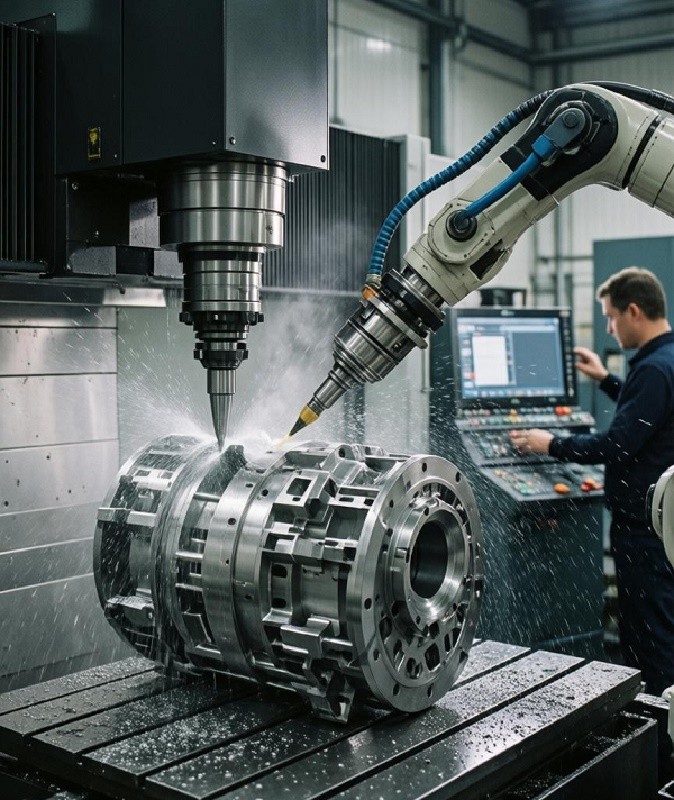
- 5-Axis CNC Machining: This is the pinnacle of machining capability, adding a second rotational axis (the B-axis) to the machine's movement. With 5-axis machining, the cutting tool can approach the workpiece from any direction in a single setup. This allows for the creation of extremely complex shapes and contoured surfaces, such as those found in aerospace components, medical implants, and impellers. The primary benefits of 5-axis machining are higher precision (since the part is not refixtured multiple times), faster lead times, and the ability to produce intricate geometries that would be impossible or prohibitively expensive otherwise.
A supplier with a mix of 3, 4, and 5-axis machines demonstrates a capacity to handle a wide variety of jobs efficiently, choosing the most cost-effective method for simple parts and having the advanced capability for complex ones.
Advanced Machining Techniques and Software Used by a CNC Machining Parts Supplier
The machine itself is only half the equation; how it's programmed and operated is equally important. Advanced suppliers leverage sophisticated software and techniques to optimize the manufacturing process. Inquire about their use of CAD/CAM (Computer-Aided Design/Computer-Aided Manufacturing) software. Leading CAM systems like Mastercam, SolidCAM, or Fusion 360 allow programmers to create highly efficient toolpaths that can reduce cycle times, improve surface finish, and extend tool life.
Furthermore, ask about advanced techniques they employ, such as:
- High-Speed Machining (HSM): This involves using higher spindle speeds and feed rates with lighter cutting passes. It can dramatically reduce machining time and produce smoother finishes on certain materials.
- Trochoidal Milling: An advanced toolpath strategy used for roughing out large amounts of material quickly, especially in hard metals, while minimizing stress on the cutting tool.
- Simulation Software: Before a single chip is cut, advanced shops use verification and simulation software to run a digital twin of the entire machining process. This helps identify potential collisions, programming errors, and inefficiencies, de-risking the process and ensuring the first part is a good part.
A supplier who invests in modern software and actively employs these advanced techniques is committed to efficiency, quality, and pushing the boundaries of what's possible.
Scalability and Production Capacity of a CNC Machining Parts Supplier
Your needs may change over time, from a single prototype to a run of thousands of parts. It's crucial to select a supplier who can grow with you. Assess their production capacity by considering several factors:
- Number and Variety of Machines: A large number of machines means they can run multiple jobs concurrently and have redundancy if a machine goes down for maintenance.
- Shop Hours and Shifts: Does the shop run one shift, or do they have second and third shifts to increase throughput for large orders or expedited jobs?
- Automation: Look for signs of automation, such as robotic loaders, pallet changers, or bar feeders. These technologies allow a shop to run "lights out," with machines operating unattended overnight or on weekends, dramatically increasing capacity and cost-effectiveness for high-volume production.
- Project Management: How do they manage workflow and scheduling? A supplier with a robust ERP (Enterprise Resource Planning) system can better manage their capacity and give you more reliable lead times.
A supplier with strong scalability can support your project from the initial R&D phase, through prototyping and validation, and seamlessly into full-scale production. This avoids the disruption and risk of having to switch suppliers as your volume requirements increase.
Focus on Communication and Project Management with Your CNC Machining Parts Supplier
Even the most technologically advanced supplier is a poor partner if communication is difficult. Clear, responsive, and proactive communication is the glue that holds a manufacturing project together. It prevents misunderstandings, aligns expectations, and ensures that when challenges inevitably arise, they are resolved quickly and efficiently. Strong project management complements this by providing structure, transparency, and predictability.
Responsiveness and Clarity in Communication
When you reach out to a potential supplier, pay close attention to their communication style from the very first interaction. How quickly do they respond to your request for a quote (RFQ)? Is their response thorough and professional? A supplier who is slow or unclear at the beginning is likely to be the same once they have your order. The ideal partner will provide a dedicated point of contact—a project manager or account manager—who understands your project and is readily available to answer questions.
Clarity is just as important as speed. You need a partner who can communicate technical details effectively, whether they are confirming a specification or providing Design for Manufacturability (DFM) feedback. DFM feedback is a hallmark of a great supplier. This is when they review your design and proactively suggest modifications that could improve manufacturability, reduce cost, or enhance the part's performance without compromising its function. This collaborative approach demonstrates that they are not just a job shop but a true partner invested in your project's success.
Project Management Tools and Regular Updates from Your CNC Machining Parts Supplier
Effective project management ensures that your job doesn't get lost in the shuffle. Ask potential suppliers about the systems and tools they use to manage projects and track progress. Modern shops often use ERP (Enterprise Resource Planning) or dedicated project management software to schedule jobs, manage resources, and monitor timelines. These systems provide visibility and help ensure that delivery dates are met.
Regular, proactive updates are a key part of this process. A good supplier won't wait for you to ask for a status update. They will have a system for keeping you informed at critical milestones, such as when materials have been ordered, when production has begun, and when the parts have shipped. Some suppliers may offer an online portal where you can log in to see the real-time status of your order. This transparency builds trust and allows you to plan your own downstream activities, such as assembly and testing, with confidence.
Ensuring Intellectual Property Protection with Your CNC Machining Parts Supplier
Your designs are valuable intellectual property (IP). Whether it's a revolutionary new product or a proprietary component for your internal machinery, protecting your IP is paramount. It is crucial to work with a supplier who takes this responsibility seriously.
The first and most fundamental step is to have a Non-Disclosure Agreement (NDA) in place before you send any detailed drawings or 3D models. A reputable supplier will be accustomed to this process and should be willing to review and sign your NDA without hesitation. Be wary of any supplier who pushes back or dismisses the need for one.
Beyond the NDA, consider the supplier's internal security measures. How do they handle and store your digital files? Do they have a secure network? Who has access to sensitive project information? While it can be difficult to audit this from afar, you can ask about their data security policies. Working with established, professional suppliers, particularly those in the US or Western Europe, often provides a higher degree of IP protection due to strong legal frameworks and business ethics. Choosing a supplier based solely on the lowest price from a region with weak IP laws can be a costly mistake in the long run.
Consider Lead Times, Flexibility, and Cost-Effectiveness with Your CNC Machining Parts Supplier
In the world of manufacturing, time is money. A supplier's ability to deliver quality parts on time, adapt to inevitable changes, and offer transparent, fair pricing is what separates a mere vendor from a long-term strategic partner. Looking beyond the price per part to the total cost and value of the relationship is essential for making a wise choice.
Evaluating Turnaround Times and Adaptability to Changes
Lead time—the time from placing an order to receiving your parts—is a critical factor in any project schedule. When requesting a quote, make sure the supplier provides a clear and realistic delivery date. Be wary of suppliers who promise impossibly fast turnarounds, as this may be a red flag for overpromising or cutting corners on quality. A reliable supplier will have a good handle on their capacity and will provide a lead time they can confidently meet. It is also important to inquire about their track record for on-time delivery; many will even track this as a key performance indicator (KPI) and be able to share their metrics.
Equally important is a supplier's flexibility and how they handle changes. In product development, designs are rarely set in stone. Engineering Change Orders (ECOs) are a fact of life. A good supplier will have a clear process for managing these changes. They will be able to quickly assess the impact of a design change on cost and lead time and communicate this to you clearly. Their ability to adapt without causing major disruptions to the production schedule demonstrates agility and a customer-focused mindset. This adaptability is invaluable, saving you time and frustration when design revisions are necessary.
Transparent Pricing and Value-Added Services from a CNC Machining Parts Supplier
The price you are quoted should be clear, detailed, and easy to understand. A transparent quote should itemize costs, so you know exactly what you are paying for. A typical breakdown might include:
- Material Costs: The cost of the raw material for your parts.
- Setup Costs: A one-time charge for setting up the CNC machine for your specific job.
- Machining Time: The cost based on how long the machine will be running to produce your parts.
- Finishing & Post-Processing: Costs for any additional services like anodizing, plating, heat treating, or polishing.
- Quality Inspection: Costs associated with specific inspection requirements or documentation like CMM reports.
Beyond the core machining, many suppliers offer value-added services that can simplify your supply chain and save you time and money. These services can turn a part supplier into a one-stop-shop solution. Examples include:
- Anodizing, Plating, and Painting: Various surface treatments to improve corrosion resistance, hardness, or aesthetics.
- Heat Treating: Processes to alter the material's properties, such as increasing hardness or reducing stress.
- Assembly Services: The supplier can assemble your machined components with other parts (either supplied by them or by you) into sub-assemblies.
- Laser Etching & Part Marking: Adding part numbers, logos, or other identifying marks.
- Custom Packaging and Kitting: Packaging parts in specific kits for easy assembly on your production line.
Choosing a supplier that offers these services can significantly streamline your operations, as it reduces the number of vendors you need to manage.
Long-Term Value vs. Initial Quotes from a CNC Machining Parts Supplier
It can be tempting to choose the supplier that provides the lowest initial quote. However, the cheapest option is rarely the best value in the long run. The true cost of a machined part goes far beyond the price on the invoice. This is often referred to as the Total Cost of Ownership (TCO). The TCO includes not just the purchase price, but all associated costs throughout the part's lifecycle.
Consider the "hidden costs" of a low-quality supplier:
- Cost of Delays: What is the cost to your project if parts are late? This could mean missed deadlines, idle assembly lines, and delayed product launches.
- Cost of Poor Quality: What happens if parts arrive out of spec? The costs of rework, return shipping, and production downtime can quickly eclipse any initial savings.
- Cost of Communication: How much of your time is spent chasing down updates, clarifying instructions, or resolving disputes? Your time has value.
- Reputation Cost: Subpar components can lead to product failures in the field, damaging your company's reputation.
A slightly more expensive supplier who delivers perfect parts on time, communicates clearly, and provides valuable engineering feedback offers a far greater long-term value. View the relationship with your CNC machining supplier as a partnership. Investing in a reliable, high-quality partner will pay dividends through smoother projects, superior products, and reduced overall stress.
Selecting the right CNC machining parts supplier is a critical decision that impacts the success of your project. By carefully evaluating their expertise, quality control, technical capabilities, communication, and overall value, you can forge a strong partnership.
Remember, the cheapest option isn't always the best. Prioritize a CNC machining parts supplier who demonstrates a commitment to precision, reliability, and clear communication to ensure your components are manufactured to the highest standards.
By following these 10 essential tips, you'll be well-equipped to choose a CNC machining parts supplier that not only meets your current needs but also becomes a trusted partner for future endeavors. We hope this guide helps you in your search, and we encourage you to share it with colleagues who might also find it valuable. What's the most important factor for you when choosing a supplier? Share your thoughts in the comments below