How to Find a High-Quality Injection Molding Parts Manufacturer for Plastic Components
Choosing the right injection molding parts manufacturer is a critical decision for any project. This choice significantly influences the final quality of your components and the overall success of your manufacturing process. I want to help you understand why it's so important to select a partner who can consistently deliver high-quality plastic components.
Injection molding is a versatile and widely-used method for mass-producing plastic parts. The success of your project—encompassing its quality, efficiency, and cost-effectiveness—is directly dependent on finding the best injection molding parts manufacturer for your specific needs. Selecting the right supplier is one of the most vital decisions your company will make; a great partner can be a tremendous asset, while a poor one can lead to quality issues and expensive delays.
Understanding Your Project Needs to Select an Ideal Injection Molding Parts Manufacturer
Before you can choose a partner, you must first have a crystal-clear understanding of your own project. A well-defined project scope not only guides your search for a manufacturer but also sets the foundation for a successful production run. Taking the time to detail your requirements will ensure that potential partners can provide accurate quotes and realistic timelines.
This initial phase involves a deep dive into your product's specific needs, from the number of units you plan to produce to the exact material properties required for its application. A comprehensive project scope is a critical tool for communicating with potential manufacturers and evaluating their ability to meet your expectations.
Defining Project Scope and Requirements
The first step in any successful manufacturing partnership is to meticulously define what you need. This isn't just about having a design; it's about understanding the entire lifecycle and function of your product. Key considerations include tooling intent, budget, expected annual production volume, molding material, and detailed part prints with tolerances. Clearly outlining these elements from the start prevents misunderstandings and helps potential manufacturers determine if they are a good fit.
Production Volume and Capacity
It's crucial to align your production volume needs with a manufacturer's specialization. Injection molding providers in the U.S. often specialize in different volume classifications.
- Low-Volume Production: Typically under 10,000 parts, this is ideal for prototyping, market testing, or for products like specialized medical devices that don't require mass production. Low-volume runs often use aluminum tooling for faster and less expensive turnarounds.
- Mid-Volume Production: This category generally covers production runs from 10,000 to 750,000 parts.
- High-Volume Production: This is for jobs that require more than 750,000 and often over a million parts. These manufacturers use high-quality, hardened steel molds designed for repeatable accuracy and have invested in advanced technology to minimize costs per part at scale.
A manufacturer's capacity is determined by factors like clamping force (the pressure needed to keep the mold closed, measured in tons), shot volume (the amount of plastic injected per cycle), and production rate. Ensure any potential partner has machines with the appropriate tonnage and shot size for your part's geometry and can reliably meet your cycle time needs.
Specific Product Application and Materials
The intended use of your plastic component is the single most important factor in material selection. A hasty or incorrect material choice is a frequent cause of product failure. Before you can even consider a manufacturer, you must define the operational environment and performance requirements of your part.
Key factors to consider include:
- Mechanical Load: Will the part be subjected to impact, continuous pressure, or cyclical stress? Materials like Nylon, Acetal, and PEEK offer different levels of strength and resistance to creep (deformation under load).
- Thermal Properties: Will the part need to function in high or low temperatures? High-performance plastics like PEEK and PTFE are suited for high-temperature applications, while others maintain strength in cold environments.
- Environmental Exposure: Will the component be exposed to chemicals, moisture, or UV radiation? The chemical resistance of a plastic is a critical consideration and is dependent on time of contact, temperature, and stress.
- Regulatory Compliance: Does your product need to meet specific industry standards, such as those from the FDA for food contact or biocompatibility for medical devices?
Failing to choose the right material can lead to problems ranging from product failure to regulatory non-compliance. A good manufacturing partner should be able to provide expert guidance on these choices.
Evaluating a Potential Injection Molding Parts Manufacturer's Experience and Expertise
Once you have a firm grasp of your project requirements, the next step is to vet potential manufacturing partners for their experience and expertise. Choosing a company with a proven track record not only gives you confidence in their abilities but also demonstrates their commitment to quality and strong business relationships. Look for a manufacturer whose expertise aligns with your industry, as they will bring specialized knowledge that can prevent costly errors.
Asking About Industry Experience and Past Clients
A manufacturer's experience within your specific industry is a significant advantage. Whether it's medical, automotive, aerospace, or consumer goods, each sector has unique requirements, standards, and documentation needs. For instance, a manufacturer experienced in the medical field will understand FDA validation processes, while one in the automotive sector will be familiar with PPAP (Production Part Approval Process) documentation.
When evaluating a potential partner, ask for the following:
- Portfolio and Case Studies: Review examples of parts they have produced that are similar to yours in complexity, material, or geometry.
- Client References: Speaking with past or current clients can provide invaluable insight into the manufacturer's reliability, communication, and problem-solving skills.
- Market Diversity: While specialization is good, a manufacturer serving a diverse range of markets often indicates a stable, successful business with broad expertise that can lead to innovative solutions.
Assessing Advice on Material Selection and Design Improvement
The best injection molding manufacturers act as true partners, not just vendors. Their expertise should extend beyond simply producing parts to offering valuable feedback that can improve your product and process. This collaborative approach is often referred to as Design for Manufacturability (DFM).
A skilled manufacturer should be able to:
- Provide Material Guidance: Based on your application's requirements, they should be able to recommend the best polymer, or even suggest alternatives that could improve performance or reduce cost.
- Offer Design for Manufacturability (DFM) Feedback: This process involves analyzing your part design to identify potential issues before any tooling is made. An experienced team can suggest modifications to optimize mold design, ensure consistent wall thickness, improve part ejection, and ultimately reduce the risk of defects.
- Identify Risks Early: A capable supplier uses their engineering depth to foresee potential problems—like those related to thin walls, complex geometries, or specific materials—and proposes solutions before they lead to costly tooling changes.
This early-stage collaboration is one of the most effective ways to manage project time and budget, as it helps predict and prevent production issues before they happen.
Ensuring Quality and Efficiency with Your Chosen Injection Molding Parts Manufacturer
Once you've identified potential partners who seem to be a good fit, the focus shifts to verifying their ability to deliver high-quality parts efficiently and consistently. A manufacturer's claims must be backed by robust processes and a proven track record. In plastic injection molding, quality isn't just about the final product; it's a discipline woven into every stage, from raw material handling to final inspection.
Looking for Robust Quality Assurance Processes
A truly reliable manufacturer doesn’t just inspect for defects; they have a comprehensive quality management system (QMS) designed to prevent them. This proactive approach to quality is a key differentiator. A strong QMS should encompass every aspect of the production process, including design reviews, pre-production inspections, in-process controls, and final inspections. This structured methodology ensures that any potential issues are identified and corrected early, leading to greater consistency and lower costs associated with scrap and rework.
The quality control process should start with the proper selection and verification of raw materials, ensuring they meet specifications for viscosity, chemical composition, and performance. It extends to the precise calibration and setup of molding machines and continuous monitoring of key parameters like temperature, pressure, and cycle time during production.
Understanding Certifications like ISO 9001 and IATF 16949:2016
Certifications are a formal way to verify a manufacturer's commitment to quality. They indicate that a company adheres to globally recognized standards and has invested significant time and resources into creating and maintaining a robust QMS.
ISO 9001: This is an international standard for a QMS that can be applied to any organization. It provides a framework for ensuring the consistent delivery of products and services that meet customer expectations. For a plastic injection molder, ISO 9001 certification demonstrates a commitment to a process approach, customer focus, and continuous improvement. It disciplines everything from material handling and tool management to process parameter control and part inspection.
IATF 16949:2016: This is a more specialized, global standard for the automotive industry. It integrates the framework of ISO 9001 but adds specific, more stringent requirements tailored to the automotive supply chain. An IATF 16949 certification is often mandatory for suppliers to major automotive manufacturers and signals a focus on defect prevention, product safety, and the reduction of waste.
For companies serving high-stakes industries like automotive or medical devices, these certifications are more than just a formality; they are a critical indicator of a supplier's capability and reliability.
Inquiring About Internal Quality Assurance Teams and Testing
Beyond certifications, it is crucial to understand the manufacturer's day-to-day quality control practices. A dedicated internal quality assurance team is a sign of a company that takes this responsibility seriously. You should inquire about their specific processes and capabilities.
Key areas to investigate include:
- Inspection and Testing Methods: Ask what kinds of inspections they perform. This can range from initial visual checks for surface defects to precise dimensional inspections using tools like coordinate measuring machines (CMMs) and optical comparators.
- In-Process Monitoring: Modern manufacturers use sensors and feedback systems to automatically monitor critical process parameters in real-time, allowing for immediate adjustments.
- Statistical Process Control (SPC): This is a data-driven technique used to monitor and control a process, helping to ensure it operates at its full potential and produces conforming parts.
- Testing Capabilities: Depending on your product's requirements, you may need a partner who can perform mechanical tests (like tensile strength or impact resistance), material analysis, or other functional tests to validate part quality.
- Documentation and Traceability: A robust QA process includes thorough documentation, providing a traceable record of the entire manufacturing run, from raw material lots to final inspection data. This is essential for accountability and continuous improvement.
Assessing Capacity, Scalability, and On-Time Deliveries from Your Injection Molding Parts Manufacturer
A manufacturer might produce a perfect sample part, but if they can't scale production to meet your demand or deliver orders on time, the partnership will ultimately fail. Assessing a potential supplier's production capacity, ability to scale, and history of delivery performance is a critical step in mitigating risk and ensuring a smooth supply chain.
Discussing Lead Times and Production Capabilities
On-time delivery (OTD) is a key performance indicator (KPI) that reflects a supplier's overall efficiency and supply chain management. A consistently high OTD rate suggests a manufacturer has reliable processes and can manage their production schedules effectively. Late deliveries can have significant negative consequences, including slower time-to-market, frustrated customers, and damage to your brand's reputation.
When discussing lead times, consider the entire process:
- Mold Creation: Lead times vary significantly based on the type of mold. Prototype molds can take 2-6 weeks, bridge tooling may take 4-10 weeks, and complex, high-volume production molds can require 8-20 weeks or more.
- Production Runs: Discuss how your required volume fits into their production schedule. Advanced planning is crucial, as raw material procurement alone can take several weeks or even months.
- Scalability: Inquire about their ability to handle fluctuations in demand. A partner that can scale production up or down without compromising quality is invaluable, especially as your product evolves. A manufacturer that serves various production volumes may be a better long-term fit than one that only specializes in low or high volumes.
Evaluating Equipment and Specialized Processes
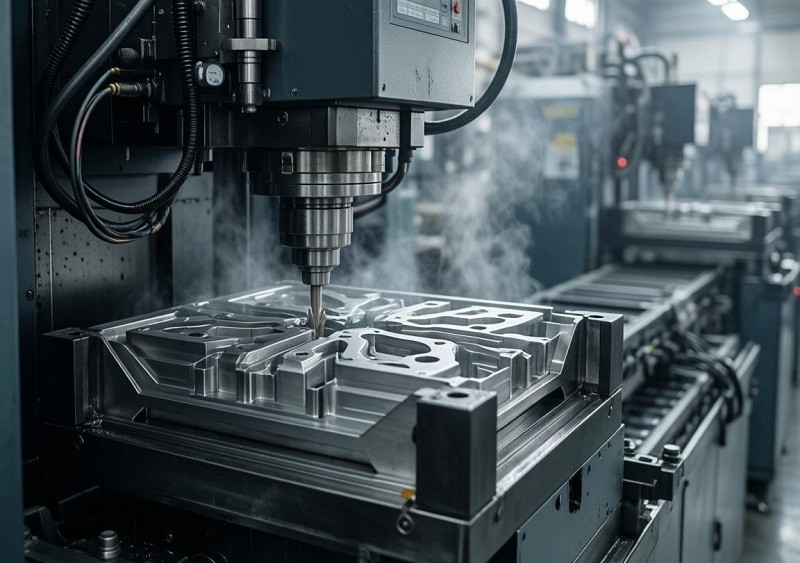
A manufacturer's equipment and technological capabilities directly impact part quality, efficiency, and the types of components they can produce. Modern, well-maintained equipment is a sign of a forward-thinking company committed to precision.
Key aspects to evaluate include:
- Machine Technology: Look for manufacturers who utilize modern injection molding machines with precise controls over injection pressure, speed, and temperature. Advanced features like real-time process monitoring and closed-loop control systems help reduce variability and improve part consistency.
- Specialized Processes: Does your part require more than standard injection molding? Ask about their experience with specialized techniques such as:
- Overmolding: Molding one plastic material over another.
- Insert Molding: Molding plastic around a non-plastic insert, such as a metal component.
- Multi-shot Molding: Injecting multiple materials into the same mold during a single cycle.
- High-Performance Polymers: Processing materials like PEEK or PEI requires specialized equipment and deep material knowledge to manage high processing temperatures and avoid defects.
- Mold Maintenance: Tooling is a significant investment. A good manufacturer will have a robust mold maintenance program to ensure tool longevity and consistent part quality over hundreds of thousands of cycles. This includes regular cleaning, inspection, and prompt repairs.
Ultimately, you are looking for a partner whose capabilities align with your project's technical demands and whose commitment to efficiency ensures your supply chain remains reliable and responsive.
Beyond Manufacturing: Value-Added Services and Communication from Your Injection Molding Parts Manufacturer
The best manufacturing partners do more than just make parts; they add significant value throughout the entire product development lifecycle. Their contributions can streamline your processes, reduce costs, improve quality, and accelerate your time to market. Equally important is the quality of communication and customer service. A responsive, transparent, and collaborative manufacturer is essential for navigating the complexities of production and building a resilient, long-term partnership.
Identifying Essential Value-Added Services
Value-added services are enhancements that go beyond the core manufacturing process. Having a single source that can handle both injection molding and subsequent operations saves time, money, and logistical headaches. These services can range from early-stage design analysis to final assembly and packaging, creating a more efficient and integrated supply chain.
Exploring Prototype Development and Mold Flow Analysis
Before committing to expensive and time-consuming production tooling, it is crucial to validate and refine your design. Value-added services in the early stages of development are invaluable for mitigating risk and ensuring a successful product launch.
- Prototype Development: Rapid prototyping in injection molding allows manufacturers to produce functional parts quickly using less expensive materials like aluminum for the molds. This process is ideal for creating parts in production-grade materials, which provides a much clearer picture of how the final product will perform compared to 3D-printed models. Using prototypes, you can test the fit, form, and function of your design, make necessary adjustments, and even conduct early market testing with significantly shorter lead times—often within a few weeks.
- Mold Flow Analysis (MFA): This powerful simulation software provides a virtual preview of how molten plastic will fill an injection mold. By simulating the process before any steel is cut, engineers can predict and prevent a wide range of potential defects, such as weld lines, air traps, sink marks, and warping. MFA helps optimize gate location, runner systems, and cooling channels, which can reduce cycle times and improve part quality. This analysis is a critical step that saves significant money and time by avoiding costly tooling rework.
Considering Design Advice and Rapid Response Manufacturing
A manufacturer's expertise should be leveraged early and often. Their input can dramatically improve the final product and the efficiency of its production.
- Design for Manufacturability (DFM): This is the practice of designing a product to be as easy and cost-effective to manufacture as possible without sacrificing quality. An experienced injection molder will provide DFM feedback to optimize your design by suggesting uniform wall thickness, proper draft angles, and simplified geometries. About 75% of a product's manufacturing cost is determined by early design decisions, making DFM a critical tool for cost reduction.
- Rapid Response Manufacturing: This refers to a manufacturer's ability to produce quality parts quickly, often using rapid tooling (also known as bridge tooling). This capability is essential for getting products to market faster, fulfilling initial small orders, or creating a "bridge" to high-volume production while permanent tooling is being made. It provides the flexibility to respond to market changes without the long lead times associated with traditional production molding.
The Importance of Effective Communication and Customer Service from an Injection Molding Parts Manufacturer
Excellent communication is the bedrock of any successful partnership, and this is especially true in manufacturing. Clear, consistent, and transparent communication prevents misunderstandings, ensures all parties are aligned on expectations, and helps resolve issues quickly. A great manufacturer doesn't just take orders; they engage in a continuous dialogue to ensure your project's success.
Seeking Responsiveness and Transparency
In a dynamic manufacturing environment, you need a partner who is responsive and honest.
- Responsiveness: How quickly and effectively does the manufacturer respond to inquiries, provide updates, and address concerns? The ability to respond promptly is a key differentiator between a simple supplier and a true partner.
- Transparency: A trustworthy partner is open about their processes, capabilities, and any challenges that may arise. This includes being upfront about lead times, potential risks, and performance metrics. Regular updates and a willingness to share information foster trust and prevent surprises.
Modern supply chains benefit from real-time information sharing, which allows both sides to track progress, share documents, and collaborate efficiently.
Building a Collaborative Partnership
The ultimate goal is to move beyond a transactional vendor-client relationship and build a strategic, collaborative partnership. This type of relationship is built on mutual trust, shared goals, and a vested interest in each other's success.
A collaborative partner will:
- Engage Early: Involve themselves in the project from the initial design phase to offer their expertise.
- Problem-Solve Proactively: Work with you to understand the root cause of any issues and find effective solutions.
- Foster Open Dialogue: Create an environment where both parties can share knowledge and provide constructive feedback.
- Demonstrate Flexibility: Adapt to changing needs and unexpected challenges, like supply chain disruptions, to keep your project on track.
By prioritizing these value-added services and qualities, you can find a manufacturer that not only produces high-quality components but also functions as an invaluable extension of your own team.
Navigating Pricing and Quotes with Your Potential Injection Molding Parts Manufacturer
Understanding the financial aspects of injection molding is crucial for budgeting your project and selecting a manufacturing partner. Pricing isn't arbitrary; it's a complex calculation based on a variety of factors. A transparent manufacturer will provide a detailed quote, but it's up to you to understand what you're looking at, ask the right questions, and evaluate the true value beyond the bottom-line price.
Understanding Cost Factors in Injection Molding
The cost of an injection molded part is influenced by several key variables. Being aware of these factors will help you design more cost-effective components and an informed partnership with your manufacturer. The primary cost drivers in any injection molding project include the tooling, materials, production volume, and operational costs.
Considering Production Volume, Mold Complexity, and Materials
These three factors are intricately linked and have the most significant impact on the overall price.
- Production Volume: Injection molding is a process that benefits greatly from economies of scale. High-volume production runs (often over 100,000 parts) allow the significant upfront cost of the mold to be spread across many units, dramatically lowering the per-part price. Low-volume runs, conversely, have a higher per-part cost because the tooling expense is amortized over fewer components.
- Mold (Tooling) Complexity: The mold itself is often the single greatest upfront investment. The complexity of the part design directly dictates the complexity and cost of the mold. Features like intricate geometries, undercuts, tight tolerances, and fine surface finishes require more sophisticated and durable molds, which increases tooling costs. The number of cavities in a mold also affects the price; a multi-cavity mold costs more to build but reduces the per-part price by producing more components per cycle.
- Materials: The choice of plastic resin is another major cost factor. Commodity plastics like Polypropylene (PP) and ABS are generally affordable, while high-performance engineering plastics such as PEEK or Polycarbonate (PC) come with a much higher price tag due to their specialized properties. Additives like colorants, UV stabilizers, or flame retardants also add to the material cost.
| Cost Factor | How It Affects Price | Example |
|---|---|---|
| Tooling Material | Durability vs. Upfront Cost. Aluminum is cheaper for prototypes; hardened steel is expensive but necessary for high-volume runs. | An aluminum mold for a few thousand parts might cost $5,000, while a hardened steel mold for over a million parts could cost $50,000 or more. |
| Part Complexity | Intricate designs with undercuts or threads require complex, more expensive molds. | Adding side-actions or lifters to a mold to create undercuts can increase its cost by 15-30%. |
| Production Volume | Higher volumes reduce the cost-per-part by spreading out fixed tooling costs. | A $20,000 mold producing 10,000 parts adds $2.00 to each part's cost, but at 100,000 parts, it only adds $0.20. |
| Plastic Resin | High-performance and engineering-grade resins are significantly more expensive than commodity plastics. | A standard ABS might cost $2.50/kg, whereas a high-performance material like PEEK could be over $80/kg. |
| Cycle Time | Longer cycle times mean more machine time per part, increasing labor and operational costs. | A complex part that requires a long cooling time can increase the production cost by taking up more machine a |
Requesting Detailed Quotes and Avoiding Hidden Fees
To accurately compare proposals from different manufacturers, you must ensure you are comparing "apples to apples." This starts with providing a comprehensive Request for Quote (RFQ) and carefully scrutinizing the quotes you receive for any potential hidden costs.
Providing a Complete Project Summary for Accurate Bids
To get an accurate and reliable quote, you need to provide potential suppliers with as much detailed information as possible. A vague or incomplete RFQ forces the molder to make assumptions, which can lead to inaccurate pricing and future complications. A thorough RFQ package should act as a clear roadmap for your project.
Key information to include in your RFQ:
- Part Designs: Provide detailed 3D CAD models and 2D drawings with all dimensions and tolerances clearly specified.
- Material Specifications: Name the specific plastic resin and grade required, including any colorants or additives. If you're unsure, describe the part's function and the environment it will be used in so the manufacturer can make a recommendation.
- Production Quantities: State your estimated annual usage (EAU) and the expected lifetime volume of the project. This helps the molder recommend the appropriate mold type and number of cavities.
- Quality and Finishing Requirements: Specify any cosmetic standards, surface finishes, or unique quality control expectations.
- Secondary Operations: List any post-molding needs, such as assembly, printing, or special packaging.
By providing a comprehensive RFQ, you empower manufacturers to give you a precise quote that reflects the true scope of your project.
Evaluating Multiple Quotes and the Value of Quality Over Lowest Price
When you receive quotes, resist the temptation to simply choose the lowest price. A suspiciously low bid can be a red flag for hidden costs, lower quality materials, or an incomplete scope of work. A cheap quote can quickly become expensive if it leads to mold rework, part defects, or production delays.
When comparing quotes, look beyond the price and evaluate the total value:
- Breakdown of Costs: Does the quote clearly separate tooling costs from the per-part price? Are material, setup, and secondary operation costs itemized?
- Mold Specifications: Verify that suppliers are quoting the same class of mold. A quote using lower-grade P20 steel will be cheaper than one using high-durability H13 steel, but the tool won't last as long. Always confirm who owns the mold once it's paid for.
- Assumptions Made: Check what assumptions the molder has made regarding cycle time, scrap rate, and lead time. Overly optimistic assumptions can lead to issues down the line.
- Included Services: Does the quote include valuable pre-production services like a Design for Manufacturability (DFM) analysis? This upfront analysis can prevent costly issues later.
Ultimately, the goal is to find a partner that offers the best long-term value, not just the lowest initial price. A quality mold from a reputable supplier is an investment that pays off through efficiency, consistency, and reliability over the life of your project.
Conclusion
Choosing the right injection molding parts manufacturer is a strategic decision that reverberates through your entire project, impacting everything from product quality and cost to your speed to market. It's a process that demands careful consideration, thorough research, and a clear understanding of your own needs. By carefully considering the factors discussed—from defining your project scope and evaluating a manufacturer's expertise to scrutinizing their quality processes and communication style—you can make an informed decision and partner with a manufacturer that truly meets your project's needs.
The journey to find the perfect manufacturing partner involves more than just comparing price lists. It's about finding a collaborator with the right technical capabilities, a commitment to quality demonstrated by certifications and robust internal processes, and a willingness to provide value-added services like DFM and mold flow analysis. A reliable On-Time Delivery record, the right equipment for your needs, and a transparent, communicative approach are all hallmarks of a superior supplier. My goal is for you to find an injection molding parts manufacturer who will be a reliable, high-quality partner for your plastic component production, enabling you to build a resilient supply chain and bring a successful product to market.
What has been your experience in selecting a manufacturing partner? Share this article with your network and let us know your thoughts or any additional tips you've found helpful in the comments below