How to Choose the Right 3D Printing Optional Materials for Your Project
Choosing the right 3D printing optional material is crucial for the success of any project. With a vast array of options available, selecting the perfect material ensures the desired quality, durability, and functionality. Each material possesses unique properties, making it suitable for specific applications, from rapid prototyping to creating robust end-use parts. This guide will help you understand the key factors to consider when making your selection.
The world of 3D printing offers incredible versatility, but this also means navigating a complex landscape of materials. Different 3D printing technologies and the 3D Printing Materials{:target="_blank"} they use offer distinct advantages and limitations. My goal is to simplify this process, providing you with the knowledge to make informed decisions and achieve optimal results for your 3D printing projects.
Understanding Your Project's Needs for 3D Printing Optional Materials
Before you can choose a material, you must first have a deep understanding of your project's specific requirements. Selecting the right material is one of the most critical decisions in the 3D printing process and can be the difference between a successful outcome and a costly failure. To make an informed choice, you need to clearly define what your part needs to do. Will it be a visual model or a working component? Will it face high temperatures, chemical exposure, or physical stress? Answering these fundamental questions will create a framework to guide your material selection.
Defining the Application and Purpose
The intended use of your 3D printed object is the primary factor that will dictate the best material. A simple visual model has vastly different needs than a functional mechanical part. By clearly defining the application, you can narrow down the vast field of material options to a manageable few.
Prototypes vs. Functional Parts
One of the first distinctions to make is whether you are creating a prototype or a functional, end-use part. Each has distinct material requirements.
- Prototypes: These are typically used to verify the look, feel, and dimensions of a design. Visual prototypes, often called form and fit prototypes, serve as models to give insight into geometries and aesthetics. For this purpose, cost-effective and easy-to-print materials like PLA are often a good choice, especially when multiple iterations are needed to finalize a design.
- Functional Parts: These parts are intended for real-world use and must meet specific performance criteria. Functional prototypes allow for testing the actual function of components and are often made from strong, durable materials that can emulate the final product's performance. When creating functional parts, you'll need to consider materials with superior mechanical properties like ABS for strength, Nylon for durability, or even metal for industrial applications. While 3D printed prototypes might not always be made from the exact same material as the final mass-produced product, they are invaluable for inspecting design and performance early in the development process. The transition from prototyping to production often means shifting from materials optimized for speed and cost to those optimized for strength, durability, and a long service life.
Aesthetic vs. Performance Requirements
Your project's priorities will also fall on a spectrum between aesthetics and performance. It's crucial to determine which is more important, as this will heavily influence your material choice.
- Aesthetic Requirements: If your part is a display model, a piece of jewelry, or a consumer-facing product, its appearance is paramount. Factors like surface finish, color, and transparency become a priority. Resin-based technologies like SLA are renowned for producing parts with the highest resolution, clearest details, and smoothest surface finishes, making them ideal for high-detail models. Materials like PLA also offer a good surface finish and come in a wide variety of colors.
- Performance Requirements: When a part must perform a specific function, especially under stress, its material properties are more critical than its looks. This includes needing high strength, impact resistance, flexibility, or resistance to heat and chemicals. For these applications, you would look toward engineering-grade thermoplastics like Polycarbonate (PC) for its toughness or PEEK for its exceptional chemical and thermal resistance. The choice is not always mutually exclusive; some materials like PC-ABS offer a balance of aesthetic appeal and robust performance.
Key Material Properties to Consider
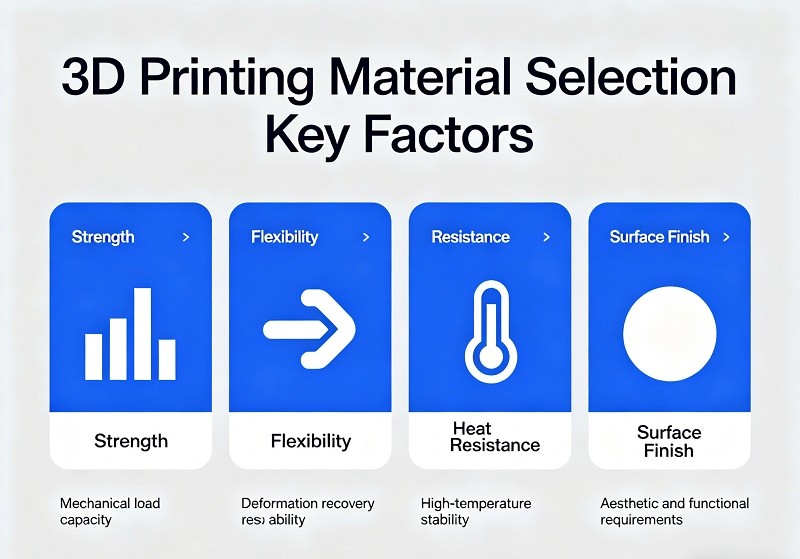
Once you understand your project’s application, the next step is to translate its performance needs into specific material properties. Qualities such as strength, durability, flexibility, and resistance to environmental factors are crucial metrics you'll find on a material's technical data sheet.
Strength and Durability: How Tough Do Your 3D Printing Optional Materials Need to Be?
Strength and durability describe how well a part can withstand forces without breaking or deforming. These are among the most important considerations for functional parts.
- Tensile Strength: This measures a material's resistance to being pulled apart. It's a critical property for structural or load-bearing components. Materials like Polycarbonate (PC) and PEI exhibit very high tensile strength, making them ideal for parts that must endure significant stress.
- Impact Resistance: This indicates how well a material can absorb a sudden shock or force without fracturing. This is vital for parts that might be dropped or subjected to impacts during use. ABS is well-known for being stiff and impact-resistant, while TPU offers high durability and shock absorption.
- Durability and Wear Resistance: This refers to a material's ability to withstand wear and tear over time, including friction and abrasion. Nylon is a prime example of a material with excellent wear resistance, making it suitable for gears, bearings, and other moving parts.
Flexibility and Elasticity: Exploring Bendable 3D Printing Optional Materials
For applications that require bending, stretching, or compressing, you'll need a flexible material. These materials are a class of polymers known as thermoplastic elastomers (TPEs), which blend the properties of hard plastic and soft rubber.
- Key Flexible Materials: The most common flexible filament is Thermoplastic Polyurethane (TPU). It is known for its rubber-like elasticity, high tear strength, and good shock absorption. Silicone rubber is another excellent option, valued for its flexibility, durability, and ability to withstand high temperatures.
- Measuring Flexibility: The flexibility of a material is often defined by its Shore hardness. The Shore A scale measures softer plastics from 0A (very soft) to 100A (hard), like the wheel of a shopping cart. A softer TPE might have a Shore hardness of 30A, similar to a running shoe sole, while a standard TPU is often around 95A.
- Applications: Flexible materials are perfect for creating items like phone cases, gaskets, seals, wearable devices, and parts that need to absorb vibrations.
Thermal and Chemical Resistance: Enduring Harsh Environments with Specific 3D Printing Optional Materials
If your part will be used outdoors, in an engine bay, or in a laboratory, its ability to withstand heat and chemicals is critical. Exposure to these elements can cause materials to warp, crack, soften, or degrade, compromising the part's functionality and safety.
- Heat Resistance: A material's resistance to heat is often measured by its Heat Deflection Temperature (HDT) or glass transition temperature. For example, standard PLA has low heat resistance, while ABS can withstand temperatures up to 100°C. For extreme environments, high-performance materials like PEEK and ULTEM (PEI) offer continuous use temperatures up to 250°C and excellent thermal stability.
- Chemical Resistance: This is a material's ability to resist degradation from contact with substances like oils, fuels, acids, and cleaning agents. For example, Nylon 12 has excellent resistance to oils and fuels, making it common in the automotive industry. High-performance polymers like PEEK, PPSU, and PVDF are engineered to maintain their integrity even when exposed to aggressive chemicals, making them suitable for aerospace, chemical processing, and medical applications.
- UV Resistance: For parts used outdoors, resistance to ultraviolet (UV) radiation from the sun is essential to prevent them from becoming brittle and discolored. ASA (Acrylonitrile Styrene Acrylate) is a prime choice for outdoor applications due to its superior UV resistance compared to ABS.
Surface Finish and Detail: Achieving the Right Look with Your 3D Printing Optional Materials
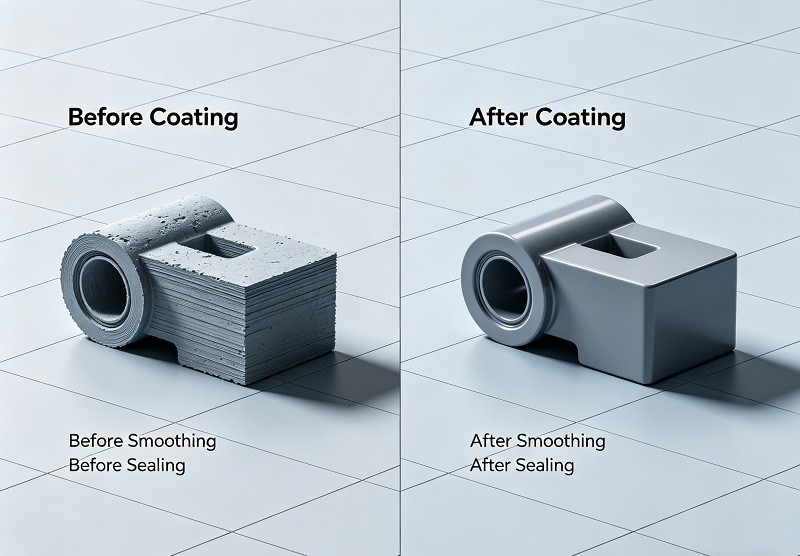
The final look of your part is often determined by the material and the printing technology used. A part straight out of the printer can have visible layer lines and a rough texture.
- Technology's Impact: Resin-based printing (SLA/DLP) is known for producing the smoothest surface finishes and the highest level of detail right out of the printer. Fused Deposition Modeling (FDM) parts typically have more visible layer lines, while Selective Laser Sintering (SLS) parts have a grainy, matte texture.
- Material's Role: Some materials inherently produce a better finish. For instance, PLA is known for creating prints with good detail and a relatively smooth finish.
- Post-Processing: To achieve a perfectly smooth or glossy surface, post-processing is almost always required. Techniques like sanding, vapor smoothing, media blasting, or applying an epoxy coating can dramatically improve a part's surface finish. For example, a raw metal 3D print can have a surface roughness of 250-400 µin Ra, which can be improved to just 63 µin Ra through CNC machining. Vapor smoothing with a solvent can melt the outer layer of a plastic part, creating a very smooth and sealed surface.
Exploring Common 3D Printing Optional Materials and Their Characteristics
The world of 3D printing is rich with diverse materials, each tailored for different technologies and applications. From the accessible thermoplastics used in FDM printers to the high-precision resins of SLA and the robust powders for SLS, understanding the landscape of available materials is key. This section will provide an overview of the most common materials, their unique properties, and their ideal use cases.
FDM 3D Printing Optional Materials: Versatility for Everyday Applications
Fused Deposition Modeling (FDM) is the most widespread 3D printing technology, known for its use of thermoplastic filaments. These materials are melted and extruded layer by layer to create an object. FDM offers a broad and affordable range of materials suitable for everything from visual prototypes to functional parts.
PLA: The User-Friendly Choice Among 3D Printing Optional Materials
Polylactic Acid (PLA) is one of the most popular 3D printing materials, especially for beginners. Derived from renewable resources like corn starch and sugarcane, it is biodegradable and considered more environmentally friendly than other plastics. PLA is known for its ease of use, as it prints at low temperatures (around 190-220°C) and doesn't require a heated print bed, minimizing issues like warping. It produces parts with excellent detail, good dimensional accuracy, and a quality surface finish, making it perfect for visual prototypes, hobbyist models, and low-stress applications. However, its main drawbacks are its brittleness and low heat resistance, with a glass transition temperature around 60°C, making it unsuitable for parts exposed to heat or sunlight.
ABS: Durable and Heat-Resistant 3D Printing Optional Materials
Acrylonitrile Butadiene Styrene (ABS) is a staple in the 3D printing world, valued for its strength, durability, and heat resistance. As an engineering-grade thermoplastic, it can withstand operating temperatures up to 85-100°C and has excellent impact resistance, making it ideal for functional parts that need to be tough, like automotive components, electronic enclosures, and tool handles. However, ABS is more challenging to print than PLA. It requires higher printing temperatures (220-250°C), a heated bed (90-110°C), and often a printer enclosure to prevent warping as it cools. It also emits fumes during printing, so a well-ventilated area is necessary.
PETG: A Balance of Strength and Ease in 3D Printing Optional Materials
PETG (Polyethylene Terephthalate Glycol) offers a compelling middle ground between PLA and ABS, combining many of the best qualities of both. It is stronger and more durable than PLA, with better impact and temperature resistance (up to about 80°C). Unlike ABS, it prints with minimal warping and doesn't produce strong odors, making it easier to work with. PETG is also known for its excellent layer adhesion and good chemical resistance. These balanced properties make PETG a popular choice for functional parts, mechanical components, and protective casings that require more durability than PLA can offer. Its main downside can be a tendency to "string" during printing, which may require some fine-tuning of printer settings to resolve.
TPU: Flexible and Resilient 3D Printing Optional Materials
Thermoplastic Polyurethane (TPU) is a flexible, rubber-like filament known for its elasticity, toughness, and high resistance to abrasion, oils, and chemicals. This material can be repeatedly stretched, bent, and compressed without breaking or losing its shape, making it perfect for printing objects that require shock absorption or flexibility. Applications include phone cases, gaskets, seals, and flexible joints. Printing with TPU can be tricky; it requires slow and consistent print speeds and often a direct-drive extruder to prevent the soft filament from jamming. TPU filaments come in various hardness levels, measured on the Shore scale, with 95A being a common variety that balances flexibility with printability.
Nylon: Tough and Wear-Resistant 3D Printing Optional Materials
Nylon, also known as Polyamide (PA), is an engineering thermoplastic renowned for its exceptional toughness, durability, and resistance to impact and abrasion. It has a low friction coefficient, making it an excellent choice for 3D printing functional moving parts like gears, bearings, hinges, and snap-fit joints. Nylon also offers good thermal resistance, with some grades able to withstand temperatures up to 120°C. However, Nylon is strongly hygroscopic, meaning it readily absorbs moisture from the air. This can lead to printing defects, so it must be kept dry before and during printing. It is also prone to warping, often requiring a heated bed and sometimes an enclosure for successful prints.
ASA: UV-Resistant 3D Printing Optional Materials for Outdoor Use
ASA (Acrylonitrile Styrene Acrylate) is a thermoplastic with properties very similar to ABS, but with one key advantage: exceptional UV and weather resistance. This makes ASA the ideal material for parts intended for long-term outdoor use, as it resists yellowing, cracking, and degradation from sunlight and environmental exposure. It shares the high strength, durability, and thermal stability of ABS, making it suitable for demanding applications like automotive exterior parts, outdoor enclosures, and garden equipment. Like ABS, ASA requires high printing temperatures and a heated bed to manage warping, and it’s best printed in an enclosed, well-ventilated space.
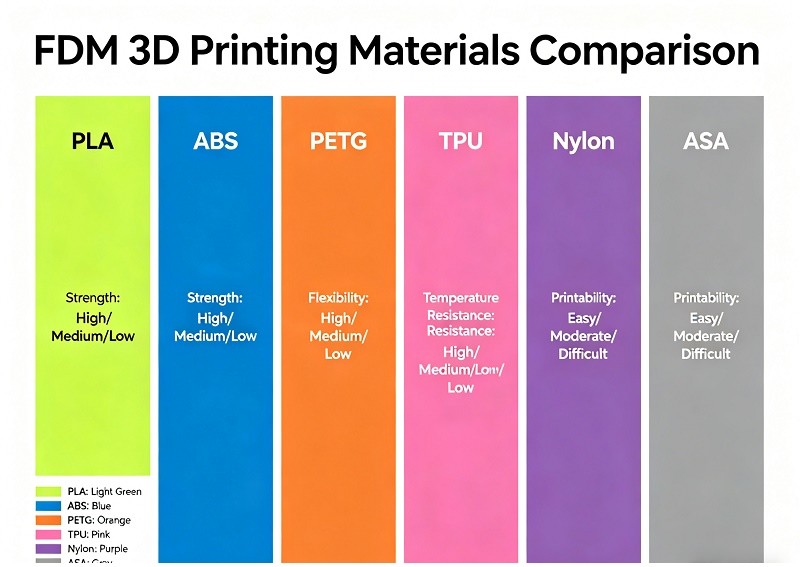
| Material | Key Properties | Common Uses | Ease of Printing | Heat Resistance |
|---|---|---|---|---|
| PLA | Easy to print, good detail, biodegradable, stiff but brittle. | Visual prototypes, models, low-stress parts. | Very Easy | Low (~60°C) |
| ABS | Strong, durable, impact-resistant, heat-resistant. | Functional parts, automotive components, enclosures. | Difficult | High (~100°C) |
| PETG | Stronger than PLA, good chemical resistance, low warping. | Mechanical parts, protective components, food-safe containers. | Medium | Medium (~80°C) |
| TPU | Highly flexible, rubber-like, high impact/abrasion resistance. | Phone cases, gaskets, flexible joints, wearables. | Difficult | Low |
| Nylon | Very tough, durable, excellent wear/impact resistance. | Gears, bearings, hinges, living hinges, tools. | Difficult | High (~120°C) |
| ASA | UV/weather resistant, strong, durable, similar to ABS. | Outdoor parts, automotive exteriors, signage. | Difficult | High (~90°C) |
SLA/DLP 3D Printing Optional Materials: Precision and Detail for Complex Designs
Stereolithography (SLA) and Digital Light Processing (DLP) are resin-based 3D printing technologies that use a light source (a laser for SLA, a projector for DLP) to cure liquid photopolymer resin layer by layer. These processes are known for producing parts with exceptionally high resolution, intricate detail, and a smooth surface finish.
Resins: Achieving High Accuracy and Smooth Finishes with These 3D Printing Optional Materials
The core of SLA/DLP printing is the liquid resin, a photopolymer that solidifies when exposed to UV light. Standard resins are excellent for creating detailed visual models, miniatures, and prototypes where aesthetic quality and precision are paramount. These resins are typically brittle and not suited for functional parts that will undergo mechanical stress. However, the versatility of resin chemistry allows for a wide range of formulations with different properties.
Specialized Resins: Expanding the Capabilities of 3D Printing Optional Materials
Beyond standard resins, there is a large and growing category of "engineering resins" designed to mimic the properties of traditional thermoplastics, enabling the creation of functional parts with SLA/DLP technology. These include:
- Tough and ABS-like Resins: Formulated for high strength, durability, and impact resistance, these resins are ideal for creating functional prototypes and enclosures that can withstand mechanical stress.
- Flexible and Elastic Resins: These resins have rubber-like qualities and are used for printing flexible parts such as gaskets, seals, and shock absorbers.
- High-Temperature Resins: Designed with a high heat deflection temperature (HDT), these resins can be used for applications involving heat exposure, such as molds or components near hot equipment.
- Clear Resins: These resins are formulated for high optical clarity, allowing for the creation of transparent parts like lenses or fluidic devices.
- Medical and Biocompatible Resins: Specifically created for healthcare applications, these resins meet strict regulatory standards and can be used for surgical guides, dental models, and other patient-contact devices.
SLS/MJF 3D Printing Optional Materials: Industrial Strength for Functional Parts
Selective Laser Sintering (SLS) and Multi Jet Fusion (MJF) are powder-based 3D printing technologies. SLS uses a high-powered laser to fuse particles of thermoplastic powder, while MJF uses a fusing agent and infrared energy. Both technologies are known for producing strong, functional parts with complex geometries without the need for support structures.
Nylon Powders: Robust and Functional 3D Printing Optional Materials
The most common material for both SLS and MJF is Nylon, particularly Nylon 11 and Nylon 12. These engineering thermoplastics produce parts with excellent mechanical properties, strength, and durability that resemble injection-molded parts. Nylon parts are lightweight yet strong, flexible, and stable against impact, chemicals, heat, and UV light. This makes Nylon powder an ideal choice for a wide range of functional applications, including end-use parts, functional prototypes, jigs, fixtures, and complex assemblies in industries from consumer goods to healthcare.
Metal 3D Printing Optional Materials: Unlocking High-Performance Applications
Metal 3D printing, also known as Direct Metal Laser Sintering (DMLS) or Selective Laser Melting (SLM), fuses fine metallic powder layer by layer with a high-powered laser. This technology unlocks the ability to create complex, lightweight, and high-performance metal parts that would be difficult or impossible to make with traditional manufacturing. The range of available metals is extensive and includes:
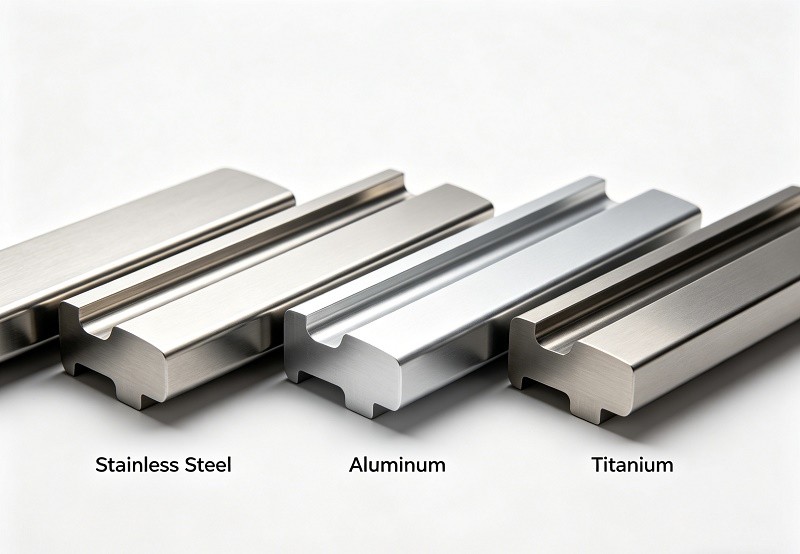
- Stainless Steel: As the most common metal used in 3D printing, stainless steel (like 316L and 17-4 PH) is a versatile and affordable choice, offering excellent strength and corrosion resistance.
- Aluminum: Lightweight, strong, and possessing good thermal properties, aluminum alloys are ideal for aerospace and automotive applications where weight reduction is critical.
- Titanium: Known for its exceptional strength-to-weight ratio and corrosion resistance, titanium is a top choice for high-performance applications in aerospace, medical implants, and race cars.
- Tool Steel: This material is extremely hard and wear-resistant, making it perfect for 3D printing custom tools, dies, and molds.
- Nickel-Based Superalloys (e.g., Inconel): These alloys are designed for extreme environments, offering superb strength, heat resistance, and corrosion resistance for parts in jet engines or chemical processing plants.
Optimizing Design and Post-Processing for Specific 3D Printing Optional Materials
Selecting the right material is only half the battle; how you design your part and treat it after printing are equally important for achieving the desired properties. Certain design choices and post-processing techniques are essential for enhancing features like water resistance, strength, and surface finish, turning a basic print into a high-performance component.
Design Considerations for Water Resistance and Watertightness with 3D Printing Optional Materials
Creating a watertight 3D print, especially with FDM technology, requires careful design and slicer setting optimization. FDM parts are built layer by layer, creating microscopic gaps that can allow water to seep through. While SLA technology generally produces watertight parts directly off the printer, FDM requires a more deliberate approach.
Wall Thickness and Geometry Optimization
The geometry of your part and the thickness of its walls are foundational to its ability to hold water.
- Wall Thickness: Thin walls are prone to leaks. A general rule is to design walls that are a multiple of your printer's nozzle diameter to avoid creating weak internal voids. For a standard 0.4mm nozzle, a minimum wall thickness of 0.8mm is required, but for watertight parts, a thickness of 1.2mm to 3.0mm is much more reliable. This typically translates to setting 3 to 5 perimeter walls (or shells) in your slicer software, creating multiple barriers against leaks.
- Simple Geometry: Complex designs with sharp corners and drastic overhangs are more likely to have printing imperfections that can lead to leaks. Keeping your design as simple as possible minimizes these risks. Circular or rounded shapes tend to be more structurally sound and less prone to bowing under the pressure of the water.
Layer Adhesion and Infill Density for FDM 3D Printing Optional Materials
For FDM prints, ensuring the layers fuse together perfectly is the most critical factor for watertightness. Optimizing your slicer settings can make a significant difference.
- Layer Adhesion: Poor layer adhesion is the most common cause of leaks in FDM prints. To improve it, you can:
- Increase Print Temperature: Printing at the higher end of the material's recommended temperature range helps the layers melt and bond together more effectively.
- Increase Flow Rate: Slightly over-extruding by setting the flow rate to 102-105% can help force extra plastic into the gaps between layers.
- Reduce Print Speed: Slower print speeds allow for better and more consistent heat transfer between layers, which improves bonding.
- Infill Density: While the walls provide the primary barrier, a high infill density adds structural support and can help the part withstand internal pressure without cracking. For watertight containers, an infill of 40-100% is often recommended.
Post-Processing Techniques to Enhance 3D Printing Optional Materials
Post-processing refers to any step taken after a part is printed to improve its appearance or functionality. These techniques can smooth surfaces, add strength, and seal parts to make them fully waterproof.
Protective Coatings and Sealants
Applying a coating is one of the most effective ways to make a 3D print waterproof and enhance its durability. This is especially useful for FDM prints, which are inherently porous.
- Epoxy Resin: Coating a print with a two-part epoxy resin, such as those specifically formulated for 3D prints like XTC-3D, is a highly effective method. The epoxy fills in microscopic gaps and layer lines, creating a smooth, glossy, and completely sealed surface. This not only makes the part watertight but also adds significant strength and chemical resistance.
- Paints and Sprays: Applying a waterproof acrylic spray or enamel paint can form a protective barrier over the print. For parts needing flexibility, a rubberized spray coating like Flex Seal can also be used to create a durable, waterproof layer.
- Wax: For a simpler method, dipping a print in melted wax can fill in any porous gaps, although this is a less durable solution compared to epoxy.
Solvent Smoothing for FDM 3D Printing Optional Materials
Solvent smoothing is a chemical post-processing technique primarily used for materials like ABS and ASA to eliminate layer lines and create a smooth, injection-molded appearance. This process also fuses the outer layers together, which can greatly enhance the watertightness of a part.
- Acetone Vapor Smoothing: This is the most common method, involving the exposure of an ABS or ASA print to acetone vapor in a sealed container. The vapor melts the surface of the plastic, causing the layer lines to dissolve and flow together. As the acetone evaporates, the surface hardens into a smooth, glossy shell. This process should be handled with extreme caution in a well-ventilated area, as acetone is flammable and its fumes are toxic. The result is a part that is not only aesthetically pleasing but also has its surface porosity sealed, making it effectively watertight.
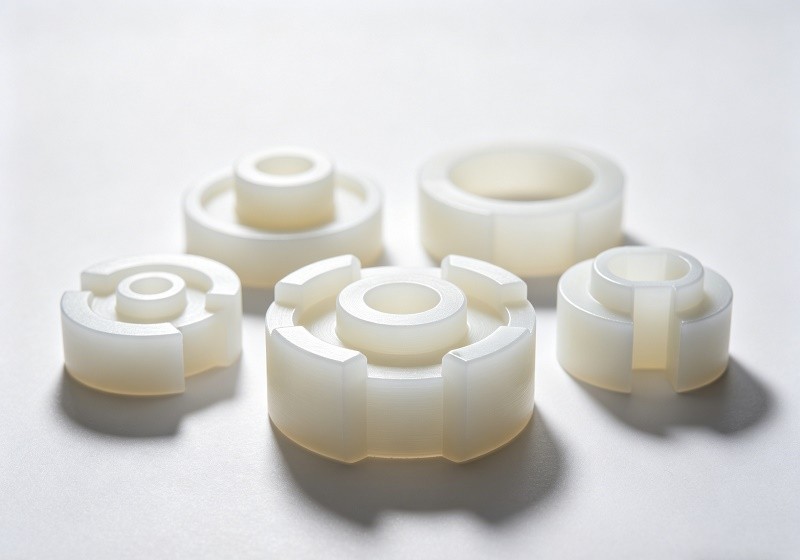
Validating and Testing Your 3D Printing Optional Materials
After selecting a material and printing your part, it's crucial to validate that it meets your project's technical requirements. This is especially important for functional components in demanding industries like aerospace or automotive.
- Mechanical Strength Tests: To measure a part's real-world strength, standardized tests can be performed. The most common is the tensile test, where a standardized "dog bone" shaped specimen is pulled apart until it breaks. This test determines key properties like ultimate tensile strength and elongation. Other tests, like impact tests (Charpy or Izod) and three-point bending tests, measure toughness and flexural strength, respectively.
- Environmental and Functional Testing: For parts that will face harsh conditions, it's important to simulate their operating environment. This can involve subjecting them to temperature cycles, chemical exposure, or vibration tests to check for degradation or failure. For watertight parts, the test is simple: fill the part with water and check for leaks over time.
- Iterative Process: Testing often reveals weaknesses in a design or material choice. This data is invaluable for making informed iterations. You might need to adjust print settings, change the part's orientation for better strength, or select a different material altogether to achieve the desired performance.
Factors Beyond Material Properties in Choosing 3D Printing Optional Materials
While mechanical, thermal, and chemical properties are the core of material selection, several practical considerations can significantly influence your final decision. Factors like cost, printer compatibility, and sustainability can be just as important as a material's tensile strength or heat resistance. Overlooking these aspects can lead to budget overruns, project delays, or an outcome that doesn't align with your broader goals.
Cost and Availability of 3D Printing Optional Materials
The cost of 3D printing materials varies dramatically, from affordable hobbyist filaments to expensive industrial-grade powders.
- Standard vs. Specialty Materials: Standard filaments like PLA and ABS are widely available and relatively inexpensive, often costing between $20 and $50 per kilogram. In contrast, specialty materials such as carbon fiber-reinforced composites, high-temperature PEEK, or metal powders can cost hundreds or even thousands of dollars per kilogram. For example, standard resin for SLA printers may cost around $50 per kg, while flexible or engineering resins can range from $60 to over $250 per kg.
- Budgeting for a Project: It's essential to balance your project's performance requirements with your budget. For early-stage prototypes, using a low-cost material like PLA is often sufficient. As you move toward functional testing or final production, investing in a more expensive material with the necessary properties becomes justified.
- Availability: While common materials are easy to source, some advanced or specialized polymers may only be available from select suppliers, potentially leading to longer lead times and shipping costs. Always check the availability of your chosen material before committing to it for a time-sensitive project.
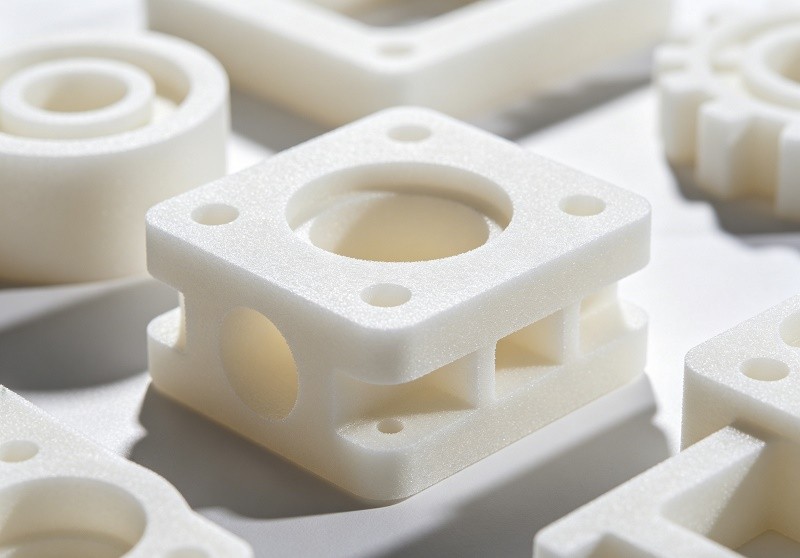
Compatibility with Your 3D Printing Technology
Not every material can be printed on every 3D printer. Material and printer compatibility is a fundamental constraint that you must consider from the start.
- Technology-Specific Materials: Different 3D printing technologies are designed for specific types of materials. FDM printers use thermoplastic filaments, SLA/DLP printers use liquid photopolymer resins, and SLS/MJF printers use thermoplastic powders. You cannot use a resin in an FDM printer or a filament in an SLS machine.
- Printer Hardware Limitations: Even within a single technology like FDM, not all printers can handle all filaments. For example:
- High-Temperature Materials: Printing with materials like ABS, Nylon, or PC requires a printer with a heated bed to prevent warping and an all-metal hot end capable of reaching high temperatures (250°C+). Printing these materials often necessitates an enclosed build chamber to maintain a stable ambient temperature.
- Flexible Filaments: Printing with soft, flexible materials like TPU often requires a direct-drive extruder, which provides better control over the filament path and reduces the chance of kinking or jamming.
- Abrasive Filaments: Composite materials infused with carbon fiber, glass, or metal particles are highly abrasive and will quickly wear down a standard brass nozzle. Printing these requires a hardened steel nozzle to prevent damage.
- Checking Specifications: Before purchasing a material, always check your 3D printer's specifications and consult manufacturer guides to ensure compatibility. This will prevent wasted material, failed prints, and potential damage to your equipment.
Environmental and Sustainability Considerations for 3D Printing Optional Materials
As 3D printing becomes more widespread, its environmental impact is an increasingly important consideration. While additive manufacturing is often more sustainable than traditional subtractive methods due to reduced material waste, the materials themselves play a significant role.
- Bio-Based and Biodegradable Plastics: Bioplastics, which are derived from renewable resources and/or are biodegradable, offer a more sustainable alternative to petroleum-based plastics.
- PLA (Polylactic Acid): As the most common bioplastic in 3D printing, PLA is derived from renewable sources like corn starch or sugarcane. It is biodegradable under industrial composting conditions, and its production generates fewer greenhouse gases.
- Other Bioplastics: Research is ongoing into other bio-based materials, including those derived from algae, which show promise for their sustainability.
- Recycling and Waste Management: 3D printing generates waste from supports, rafts, and failed prints. Managing this waste responsibly is key to sustainable printing.
- Recycled Filaments: Some companies produce filaments made from post-industrial waste streams, promoting a circular economy.
- Recycling Programs: While you generally can't put 3D printed waste in your municipal recycling bin, some specialized companies and programs accept sorted 3D printing waste (like PLA or PETG) to be recycled into new products or filament.
- Desktop Recyclers: For dedicated hobbyists and makerspaces, desktop machines are available that can shred plastic waste and extrude it into new, usable filament.
The Value of Expert Consultation for 3D Printing Optional Materials
Navigating the complex world of 3D printing materials, technologies, and settings can be daunting, especially for those new to additive manufacturing or those pushing the boundaries of an application. Seeking expert advice can save significant time, money, and frustration.
- When to Seek Help: If you are unsure which material best fits your application's unique requirements, are struggling to optimize print settings for a difficult material, or need to ensure a part meets strict industry standards, consulting an expert is highly valuable.
- What Experts Provide: 3D printing consulting services can offer tailored solutions for your specific needs. They can help with material selection, design optimization for additive manufacturing, printer recommendations, and developing a cost-effective workflow. Many services can review your CAD models and suggest changes to reduce material costs and print times or conduct site scans to identify opportunities for implementing 3D printing in your business.
- Accelerating Success: Leveraging the experience of professionals who work with these technologies daily can help you de-risk the adoption of additive manufacturing and accelerate your project from the initial concept to full-scale production.
Conclusion
Selecting the ideal 3D printing optional material is a multifaceted decision that directly impacts the success of your project. By carefully considering your application's requirements, understanding the properties of various materials, and accounting for technical and practical factors like cost and printer compatibility, you can make an informed choice. This strategic approach saves time, reduces costs, and ultimately yields superior 3D printed results. Whether your goal is a simple visual prototype or a high-performance, end-use functional part, the foundation of a great print lies in the material you choose.
With a clear understanding of the diverse range of 3D printing materials and their specific benefits, you are now equipped to navigate your next project with confidence. The insights provided in this guide should empower you to move beyond default choices and strategically select materials that align perfectly with your functional needs and aesthetic goals. Remember, the right material choice is a cornerstone of effective 3D printing, enabling you to bring your designs to life with precision and performance. We encourage you to share this guide with others and to continue exploring the ever-expanding possibilities of the 3D printing world.