How to Choose the Best CNC Turned Parts Manufacturer: A Comprehensive Buyer's Guide
As someone deeply involved in manufacturing, I've seen firsthand how the demand for precision-engineered components has grown. Getting the right parts is crucial, especially when it comes to CNC turned components, which directly impact the quality and performance of products across industries like automotive, aerospace, electronics, and medicine. So, choosing the best CNC turned parts manufacturer is a decision that significantly affects your project's success and your ability to bring innovative ideas to life.
This guide is designed to help you navigate the important choices when selecting a CNC turned parts manufacturer. I'll share insights on how to find a partner who can meet your specific needs, ensuring both quality and efficiency for your projects.
Understanding Your Project Needs: The First Step to Choosing Your Ideal CNC Turned Parts Manufacturer
Diving into a CNC machining project without a clear roadmap can lead to costly errors, delays, and less-than-optimal results. Before you can select the right manufacturing partner, you must first achieve a deep understanding of your own project's requirements. This initial planning phase is the foundation of a successful manufacturing journey, guiding every subsequent decision from material selection to final quality assurance. Defining your project needs with precision ensures that all stakeholders are aligned and that the final components will perform exactly as intended.
Why Precision CNC Turned Parts Are Essential
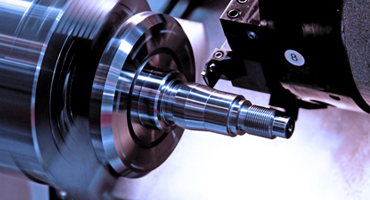
In modern manufacturing, precision is not just a desirable quality; it is a fundamental necessity. CNC (Computer Numerical Control) turning is a subtractive manufacturing process where a block of material is rotated on a lathe while a cutting tool removes material to create a final, specified shape. This computer-controlled method is essential for producing the highly accurate, reliable, and efficient components that modern industries demand.
Ensuring Product Quality and Performance
The primary benefit of precision CNC turning is its direct and profound impact on product quality and performance. In any mechanical system, the accuracy of each individual component determines the performance of the entire assembly. Even minor deviations from the specified dimensions can lead to malfunctions, reduced lifespan, or total system failure. For instance, in an automotive transmission, gears must mesh perfectly; a deviation of just a few microns can cause noise, vibration, and eventual failure.
Precision machining guarantees that parts fit together as designed, which is critical in industries like aerospace, medical devices, and automotive, where reliability is non-negotiable. This high level of accuracy, often achieving tolerances within thousandths of an inch, ensures that each component functions correctly, wears evenly over time, and delivers consistent performance throughout its lifecycle. Better fit and finish also improve a part's ability to resist wear, friction, and fatigue, ultimately extending the product's lifespan and reliability.
Minimizing Errors and Waste in Production
A significant advantage of the CNC turning process is its ability to drastically reduce errors and material waste. Traditional or manual machining methods are more susceptible to human error, which can lead to inconsistencies, defects, and a higher scrap rate. CNC machines, guided by precise digital instructions from a CAD (Computer-Aided Design) file, execute operations with unmatched repeatability. This automation ensures that each part, from the first to the ten-thousandth, is identical, eliminating the variability that leads to costly rework and rejects.
Furthermore, the precision of CNC machining optimizes material usage. By following highly calculated toolpaths, the process removes only the necessary material, minimizing waste. Advanced software can even simulate the machining process beforehand to identify potential issues and optimize material removal, further enhancing yield from raw stock. This reduction in scrap and rework not only leads to significant cost savings but also contributes to more sustainable and environmentally friendly manufacturing practices.
Defining Your Project's Requirements for a CNC Turned Parts Manufacturer
Clearly defining your project's scope is the most critical step before engaging with a potential manufacturer. A well-defined set of requirements acts as a universal language between you and your supplier, leaving no room for misinterpretation and ensuring the final product meets your exact needs. This involves detailing all technical specifications and logistical considerations.
Key Specifications: Materials, Tolerances, and Finishes
The "three pillars" of a technical specification sheet are materials, tolerances, and surface finishes. Getting these right is essential for functionality, performance, and cost-effectiveness.
Materials: The material you choose directly impacts the part's performance, cost, and manufacturability. CNC turning is compatible with a vast array of materials, from metals like aluminum, steel, and titanium to various engineering plastics. When selecting a material, consider its mechanical properties (strength, hardness, corrosion resistance), weight, and cost. Your manufacturer should have expertise in machining your chosen material to maintain its integrity.
| Material Group | Common Examples | Key Characteristics & Applications |
|---|---|---|
| Aluminum Alloys | 6061, 7075, 2024 | Lightweight, good strength-to-weight ratio, excellent corrosion resistance. Widely used in aerospace, automotive, and consumer electronics. |
| Steel Alloys | Carbon Steel (1018), Alloy Steel (4140) | Strong, durable, and versatile. Used for high-stress applications like shafts, gears, and structural components. |
| Stainless Steel | 303, 304, 316L | Excellent corrosion resistance, high strength, and can be sterilized. Ideal for medical devices, food processing equipment, and marine applications. |
| Brass & Copper | C360 Brass, C110 Copper | Good machinability, excellent electrical conductivity, and corrosion resistance. Used for electrical connectors, fittings, and decorative parts. |
| Titanium Alloys | Grade 2, Grade 5 (Ti-6Al-4V) | Extremely high strength-to-weight ratio, excellent corrosion resistance, and biocompatible. Used in aerospace, high-performance sports, and medical implants. |
| Engineering Plastics | PEEK, Delrin (Acetal), Nylon | Lightweight, chemical resistant, and often self-lubricating. Used for bearings, bushings, and insulating components. |
Tolerances: Tolerance refers to the permissible deviation from a specified dimension. Specifying the right tolerance is a balancing act; it must be tight enough to ensure functionality but not so tight that it unnecessarily drives up costs. Standard CNC turning tolerances are typically around ±0.005 inches (±0.127 mm), but for critical features, tolerances as tight as ±0.0005 inches (±0.013 mm) or better can be achieved. It's crucial to identify the critical dimensions on your part and apply tight tolerances only where necessary.
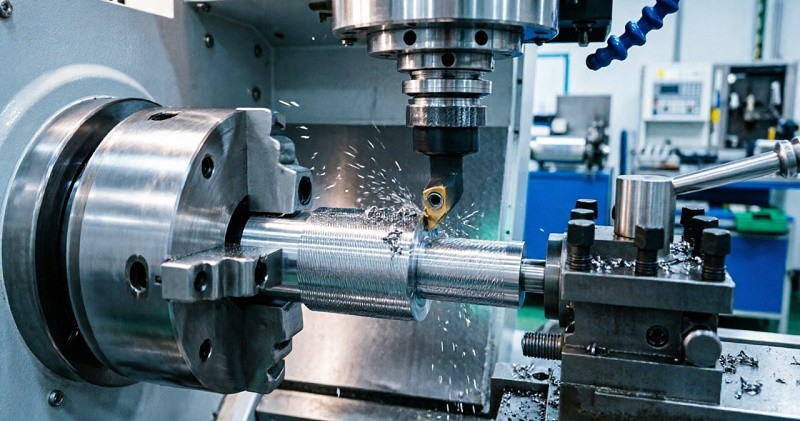
Surface Finishes: The surface finish of a part affects its appearance, friction, wear resistance, and sealing capabilities. The standard measure is Ra (Roughness Average). A standard machined finish is often around Ra 125 μin (3.2 μm). However, applications like bearing seats or sealing surfaces may require much smoother finishes (e.g., Ra 32 μin or better) to reduce friction and prevent leaks. Achieving a very fine finish may require additional steps like grinding or polishing, which will add to the cost and lead time.
Considering Order Volume and Lead Time
Your production needs will heavily influence your choice of manufacturer. Are you creating a one-off prototype, or do you need a high-volume production run of thousands of parts?
- Prototyping and Low-Volume Production: For initial prototypes or small batches (e.g., 1-1,000 pieces), flexibility and speed are key. Many CNC manufacturers specialize in rapid prototyping and can deliver custom parts quickly, which is invaluable for testing and design iteration. The setup costs associated with CNC machining are fixed, so the per-unit cost can be higher for very small quantities.
- High-Volume Production: For large-scale production, cost per unit and consistency become the primary drivers. A manufacturer geared for high-volume work will have optimized processes, automated systems, and potentially lower material costs due to bulk purchasing. Their expertise in process optimization can significantly reduce cycle times and overall project costs.
Lead Time: Lead time is the period from placing an order to receiving the finished parts. It's influenced by material availability, machine capacity, part complexity, and order volume. Always communicate your deadline clearly to potential suppliers. Some manufacturers offer expedited services for urgent needs, though this usually comes at a premium. Managing lead times effectively is a crucial part of project management, ensuring that your production line or project timeline isn't disrupted by delays.
Local vs. Online: Deciding on the Right CNC Turned Parts Manufacturer for Your Scale
One of the most significant decisions in sourcing CNC Turning Parts is whether to partner with a local machine shop or utilize an online manufacturing platform. The classic "CNC near me" search reflects a desire for convenience and control, but the modern manufacturing landscape offers powerful digital alternatives. Each approach has distinct advantages and is suited to different project needs. The right choice depends on your priorities, whether they are speed, cost, communication, or scalability.
The Advantages of a Local CNC Turned Parts Manufacturer
Working with a local supplier offers a tangible, high-touch relationship that can be invaluable for certain types of projects. The benefits of proximity are centered on communication and speed for immediate needs.
Quick Turnaround for Urgent and Simple Parts
One of the strongest arguments for a local shop is the potential for extremely fast turnarounds on urgent orders. When a machine breaks down on a factory floor and you need a single replacement part by the end of the day, a local manufacturer is often the only viable option. The ability to physically drive to the shop, discuss the problem, and pick up the finished part can save a project from costly downtime. Shipping times are virtually eliminated, making local shops ideal for emergency repairs and just-in-time production needs where inventory is kept to a minimum.
Direct Communication and On-site Visits
The value of face-to-face interaction cannot be overstated, especially for complex or sensitive projects. Working with a local manufacturer allows you to visit their facility, inspect their equipment, and build a personal relationship with the machinists and engineers. This direct line of communication can be crucial for resolving design issues, making real-time adjustments, and ensuring that your quality expectations are fully understood. If a problem arises, it can often be solved with a quick phone call or an on-site meeting, which is far more efficient than navigating time zone differences and a chain of emails. This level of collaboration is especially beneficial for projects that require a high degree of hands-on involvement or for teams new to the CNC sourcing process.
Considering an Online CNC Turned Parts Manufacturer for Efficiency and Cost-Effectiveness
While local shops excel at responsiveness and personal contact, online CNC manufacturing platforms have revolutionized the industry by offering unparalleled efficiency, scalability, and cost-effectiveness, particularly for prototyping and low-to-mid-volume production.
Cost Savings and Scalability for Prototypes to High-Volume
Online platforms often provide significant cost savings, sometimes 30-50% cheaper than local shops for prototypes and small batches. Local shops often have higher overhead costs and may be optimized for large, profitable production runs, making one-off prototypes economically challenging for them. In contrast, online services are built for high-mix, low-volume work. They leverage automation to streamline an otherwise manual quoting and setup process, allowing them to process thousands of unique, small orders efficiently.
This "on-demand" model also offers incredible scalability. You can order a single prototype to validate a design and then, using the same platform, scale up to hundreds or thousands of parts as your needs grow. This seamless transition from prototyping to production with consistent quality and pricing is a major advantage for growing businesses and evolving product lines.
Rapid Quoting and Automated Design Feedback
A standout feature of online CNC platforms is the instant or near-instant quoting process. Instead of emailing drawings to multiple shops and waiting days for a response, you can upload a 3D CAD file and receive an accurate quote in seconds or minutes. These platforms use AI and machine learning algorithms to analyze your part's geometry, material, and other specifications to calculate the price in real-time.
Beyond pricing, many platforms provide free, automated Design for Manufacturability (DFM) feedback. After uploading your file, the system will analyze your design and flag potential issues that could increase cost or complexity, such as sharp internal corners, thin walls, or features that require special tooling. This immediate feedback loop allows engineers to optimize their designs for manufacturing before placing an order, saving time and preventing costly mistakes.
Key Differences: Cost, Lead Times, and Communication with Your CNC Turned Parts Manufacturer
Choosing between a local and online manufacturer boils down to weighing their fundamental differences across three key areas. The best choice is not about distance but about which model best aligns with your project's specific risks and requirements.
| Feature | Local CNC Manufacturer | Online CNC Manufacturer |
|---|---|---|
| Cost | Generally higher, especially for prototypes and small volumes, due to manual quoting and higher overhead. | Often 30-50% lower for prototypes and low-to-mid volumes due to automation and economies of scale. |
| Lead Time | Can be extremely fast for emergencies (same-day). However, standard lead times can be long (2-3 weeks) if the shop is busy with larger jobs. | Very fast and predictable standard lead times (e.g., 3-7 days) due to optimized workflows, even including shipping. Slower for "same-day" emergencies due to shipping. |
| Communication | Direct, face-to-face interaction. Easy to visit the shop, discuss designs in person, and resolve issues quickly. | Primarily digital (email, platform messaging). Communication is efficient and documented but lacks personal interaction. Time zone differences can be a factor with global platforms. |
| Quoting Process | Manual process. Can take 3-5 days to get a price after sending drawings and making phone calls. | Automated and instant. Upload a CAD file and get a quote in seconds or minutes, often with free DFM feedback. |
| Scalability | May be limited by the shop's capacity. Transitioning from prototype to high volume may require finding a new supplier. | Highly scalable. Seamlessly move from a single prototype to production runs of 10,000+ units on the same platform. |
| Best For | - Ultra-urgent, same-day repairs. - Projects requiring in-person collaboration or high security. - Very large, heavy parts where shipping is prohibitive. |
- Prototyping and design iteration. - Low-to-mid volume production runs. - Projects where cost-effectiveness and speed are top priorities. |
Ultimately, experienced engineers often use a hybrid approach. They might rely on a trusted local shop for an emergency fix while leveraging the speed, cost, and scalability of an online platform for the bulk of their prototyping and production needs. The key is to choose the manufacturing partner based on the project's needs, not just on geographic proximity.
Evaluating the Technical Prowess and Quality Standards of a CNC Turned Parts Manufacturer
Once you have clearly defined your project requirements, the next crucial step is to rigorously evaluate the technical capabilities and quality management systems of potential manufacturing partners. A supplier's talk is one thing; their actual equipment, material expertise, and certified processes are what will ultimately determine the quality of your parts. A truly capable partner doesn't just make parts—they provide engineering solutions backed by robust systems.
Assessing Machinery and Capability
The type and quality of a manufacturer's machinery directly correlate to the precision, complexity, and efficiency they can deliver. Modern CNC turning is far more than a simple lathe operation; it involves sophisticated equipment capable of producing highly complex parts in a single setup.
Multi-Axis and Advanced Turning Centers
Traditional CNC lathes operate on two primary axes: the X-axis (radial movement) and the Z-axis (longitudinal movement). While effective for simple cylindrical parts, they are limited when it comes to more complex geometries. This is where multi-axis machining comes in.
- 3-Axis and 4-Axis Turning: These machines add a C-axis (controlled spindle rotation) and often "live tooling"—rotating cutters mounted in the turret. This allows for milling operations like drilling off-center holes, cutting slots, and creating flat surfaces on the part without moving it to a separate milling machine.
- 5-Axis and Multi-Axis Turning Centers: These are the pinnacle of CNC turning technology. By adding a Y-axis (vertical tool movement) and sometimes a B-axis (tilting tool head), these machines can perform turning, milling, drilling, and tapping operations on multiple faces of a part in a single clamping. Some advanced "turn-mill" centers feature dual spindles, allowing them to machine both the front and back of a part simultaneously, dramatically reducing cycle times and eliminating errors that can occur when a part is manually re-fixtured. The ability to complete a complex part in one setup ("done-in-one") is a massive advantage, ensuring higher accuracy, better concentricity, and faster production.
When evaluating a manufacturer, ask about their specific machine configurations to understand if they can handle your part's complexity efficiently.
Tolerance Capabilities (e.g., ±0.01mm)
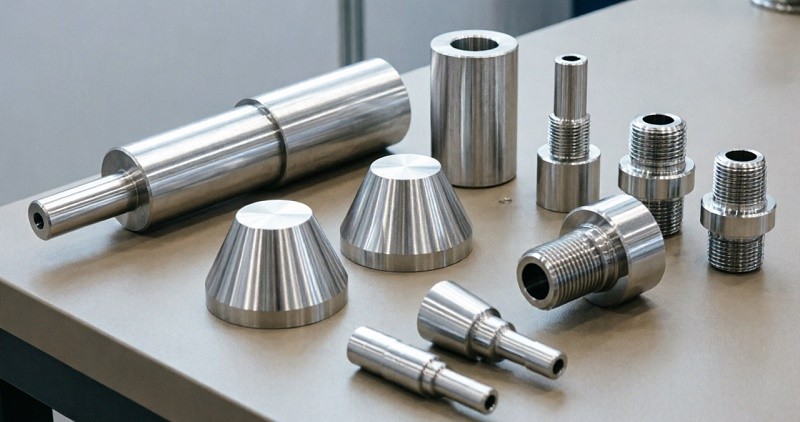
A manufacturer's ability to hold tight tolerances is a direct measure of their precision. While a standard tolerance for CNC machining is often around ±0.13 mm (±0.005 in), many critical applications demand much greater accuracy. For medical, aerospace, or high-performance automotive components, tolerances of ±0.025 mm (±0.001 in) or even ±0.005 mm (±0.0002 in) are common.
Inquire about a potential supplier's stated tolerance capabilities. More importantly, ask for evidence. Request sample parts or inspection reports from previous jobs with similar requirements. A capable shop will not only have high-precision machines but also a temperature-controlled environment to minimize thermal expansion and sophisticated metrology equipment (like CMMs - Coordinate Measuring Machines) to verify their work. Remember that achieving extremely tight tolerances requires more than just good equipment; it demands meticulous process control and expertise.
Material Versatility and Finishing Options from Your CNC Turned Parts Manufacturer
A manufacturer's expertise is not limited to their machines; it extends to the materials they can work with and the post-processing options they offer. A versatile partner can provide a complete solution, from raw material to a finished, ready-to-use part.
Material Expertise: A top-tier manufacturer should have extensive experience machining a wide variety of materials, from common aluminum and steel alloys to more challenging materials like titanium, Inconel, and engineering-grade plastics like PEEK. Each material has unique properties and requires different cutting tools, speeds, and techniques. A supplier with deep material knowledge can advise you on the best choice for your application and ensure the material's integrity is maintained during machining.
Finishing Options: The "as-machined" finish is rarely the final step. Surface finishes are critical for both aesthetics and function, providing corrosion resistance, wear resistance, and improved cosmetic appearance. A comprehensive supplier should offer a wide range of secondary finishing options, either in-house or through a network of trusted partners. Common options include:
- Bead Blasting: Creates a uniform, matte, or satin texture.
- Anodizing (Type II & Type III): An electrochemical process primarily for aluminum and titanium that creates a durable, corrosion-resistant, and often colored surface.
- Powder Coating: Applies a durable polymer finish in a vast range of colors and textures.
- Plating: Deposits a thin layer of another metal (e.g., nickel, chrome, zinc, gold) to improve conductivity, hardness, or corrosion resistance.
- Heat Treating: Processes like annealing or case hardening to alter the material's mechanical properties.
Having these services integrated with one supplier simplifies your supply chain, reduces lead times, and ensures a single point of accountability for the final quality of the part.
Certifications and Quality Assurance Processes
Certifications are not just pieces of paper; they are proof that a manufacturer has implemented and adheres to a robust, internationally recognized Quality Management System (QMS). They are a vital indicator of a supplier's commitment to quality, consistency, and continuous improvement.
ISO, IATF, and Industry-Specific Standards
- ISO 9001:2015: This is the foundational standard for quality management and is applicable to any industry. Certification demonstrates that a company has established processes for consistent quality, customer satisfaction, and continual improvement. It is often considered the minimum requirement for a serious manufacturing partner.
- IATF 16949: This is a crucial certification for any supplier serving the automotive industry. It builds upon ISO 9001 and includes stringent requirements for defect prevention, risk management, and the reduction of variation and waste in the supply chain. Choosing an IATF 16949-certified supplier is essential for automotive parts.
- AS9100: This is the equivalent standard for the aerospace, space, and defense industries. It adds specific requirements related to safety, reliability, traceability, and regulatory compliance that are critical in these high-stakes sectors. For any aerospace component, an AS9100-certified partner is non-negotiable.
Always ask for proof of certification and verify that it is current and from a reputable registrar.
Real-time Tracking and Traceability
In modern manufacturing, accountability is key. A sophisticated manufacturer should have systems in place for complete traceability, from raw material to finished product. This means being able to track every step of the part's journey through the production process. By assigning unique identifiers like lot or serial numbers, manufacturers can maintain a comprehensive record of which materials were used, which machines performed the operations, and what the inspection results were at each stage.
This end-to-end traceability is vital for quality control. If a defect is found, its source can be quickly identified and corrected. Furthermore, many modern suppliers offer real-time tracking through customer portals. This allows you to monitor the status of your order as it moves through production, providing transparency and helping you manage project timelines more effectively. This level of digital integration is a hallmark of a modern, customer-focused CNC turned parts manufacturer.
The Digital Edge: What Modern Online CNC Turned Parts Manufacturer Platforms Offer
Online manufacturing platforms have fundamentally transformed how engineers, designers, and procurement managers source custom parts. By leveraging technology, these platforms provide a digital edge that streamlines the entire process, from initial design to final delivery. This digital-first approach delivers unprecedented speed, transparency, and efficiency, making it a powerful alternative to traditional sourcing methods.
Streamlining the Quoting Process
Historically, getting a quote for a custom part was a slow and often frustrating process involving multiple phone calls, emails, and a lengthy wait. Modern online platforms have completely automated this initial step, providing critical information in minutes rather than days.
Preparing Your Designs for Instant Online Quotes
The gateway to an instant quote is your CAD file. To ensure a smooth and accurate quoting process, proper file preparation is key. Most online platforms accept universal 3D file formats like STEP, IGES, or Parasolid, as these formats preserve the complete solid geometry of the part. While some systems can generate a quote from just a 3D model, it's best practice to also include a 2D technical drawing (in PDF format). This drawing is essential for conveying information that a 3D model cannot, such as:
- Specific tolerances on critical dimensions
- Thread specifications (e.g., M6x1.0)
- Surface finish requirements for particular faces
- Material specifications and any required heat treatments
Before uploading, check your files for common errors like incorrect units (e.g., exporting an inch part in millimeters), multiple bodies in a single file, or sending mesh files like STL, which are designed for 3D printing and not ideal for CNC machining. A clean, complete file package ensures you get a fast, accurate quote without unnecessary back-and-forth communication.
Understanding Automated DFM Feedback
One of the most valuable features of modern online quoting platforms is automated Design for Manufacturability (DFM) feedback. As soon as you upload your CAD file, powerful AI-driven software analyzes your part's geometry and compares it against a vast database of manufacturing constraints and best practices. Within seconds, the platform can provide an interactive 3D view of your part with highlighted areas of concern.
This automated analysis flags potential issues that could make the part difficult, expensive, or even impossible to manufacture. Common DFM feedback includes:
- Sharp internal corners: Cutting tools have a radius, so they cannot create perfectly sharp internal corners. The DFM tool will suggest adding a fillet.
- Thin walls or features: Features that are too thin may be prone to breaking or warping during machining.
- Holes that are too deep: Very deep holes relative to their diameter can be difficult to drill and may require specialized tooling.
- Unmachinable geometry: Certain features, like undercuts in a 3-axis operation, may not be accessible to the cutting tool.
By providing this feedback instantly, DFM analysis allows designers to make crucial adjustments early in the process. This optimization reduces manufacturing costs, improves part quality, and accelerates the time-to-market by preventing costly redesigns and production delays.
Seamless Ordering and Project Management with a CNC Turned Parts Manufacturer
Beyond quoting, online platforms offer a centralized, user-friendly hub for managing the entire lifecycle of your order. This digital workflow simplifies administrative tasks and provides a level of transparency that traditional methods lack.
Easy Order Placement and Payment
Once you are satisfied with your quote and have reviewed any DFM feedback, placing an order is typically as simple as a few clicks. Online platforms are designed with a user-friendly interface where you can confirm your material selections, quantities, and desired lead time. Payment can be made directly through the platform using standard methods like credit cards, eliminating the need for purchase orders and wire transfers for smaller jobs.
This streamlined process centralizes all order information in one secure, accessible location. Your designs, order history, and invoices are stored in your account, making it easy to reorder identical parts in the future or manage multiple projects simultaneously.
Transparency Through Real-time Order Tracking
One of the biggest frustrations in manufacturing is not knowing the status of your order. Modern online manufacturers address this with real-time order tracking. From the moment you place your order, you can monitor its progress through a dedicated customer portal. These portals provide live updates as your parts move through production stages, such as:
- Order Confirmed
- In Production
- Quality Inspection
- Shipped
This real-time visibility gives you a clear overview of your manufacturing operations from anywhere, at any time. It allows you to anticipate delivery dates accurately, manage your project timelines, and address potential bottlenecks before they become major problems. This level of transparency enhances efficiency and builds trust by keeping you informed every step of the way.
Making Your Strategic Choice: Selecting the Best CNC Turned Parts Manufacturer for Long-Term Success
The decision between a local machine shop and an online manufacturing platform is not a simple binary choice. It is a strategic decision that should be based on a careful analysis of your project's specific needs, priorities, and long-term goals. Each model offers a distinct set of advantages, and understanding when to leverage each one is key to building a resilient and efficient supply chain.
When a Local CNC Turned Parts Manufacturer is Your Best Option
Despite the powerful allure of digital platforms, the traditional local machine shop remains an indispensable partner for specific scenarios where proximity and direct interaction are paramount.
For Ultra-Urgent Needs or Heavy, Complex Parts
A local manufacturer is often the undisputed champion for emergency situations. When you have a critical machine failure and need a replacement part within hours, the ability to drive to a shop, explain the problem face-to-face, and pick up the part the same day is invaluable. The near-zero shipping time makes local shops ideal for ultra-urgent, just-in-time repairs that keep production lines running.
Additionally, logistics play a significant role when dealing with heavy or oversized components. For parts that are several meters long or weigh multiple tons, the cost and complexity of shipping can become prohibitive. Local manufacturers equipped with heavy-duty CNC machines, such as large gantry mills or vertical turret lathes, can handle these massive workpieces without the logistical nightmare of long-distance freight. Keeping the production of these parts local minimizes transport costs and reduces the risk of damage during transit.
Projects Requiring On-Site Presence or Specific Security
Some projects demand a level of collaboration and security that can only be achieved through direct, in-person oversight. This is especially true for:
- Complex Assemblies and Iterative Development: If your project involves intricate assembly steps or a highly iterative design process where engineers need to work hands-on with the machinists, a local partner is far more practical. This collaborative environment allows for rapid problem-solving and immediate feedback, which can be critical for new product development.
- High-Security and Defense Projects: For companies in the aerospace and defense sectors, security is a primary concern. Many projects fall under regulations like the International Traffic in Arms Regulations (ITAR), which strictly control the manufacture and transfer of defense-related technology and technical data. ITAR compliance requires that only authorized U.S. persons can access sensitive information, making an onshore, registered machine shop a legal necessity. The ability to visit the facility, ensure secure data handling, and maintain a chain of custody for classified components makes local, ITAR-compliant partners the only choice for these critical applications.
When an Online CNC Turned Parts Manufacturer Excels
Online manufacturing platforms have carved out a dominant position by offering a powerful combination of cost-effectiveness, scalability, and access to a global pool of technology and talent. For a huge range of modern manufacturing needs, they are the superior strategic choice.
Optimizing for Cost, Scalability, and Global Sourcing
The primary advantages of online manufacturers revolve around efficiency and scale. By leveraging digital automation, they can offer highly competitive pricing, particularly for prototypes and low-to-mid-volume production runs. This makes them an ideal partner for startups and companies looking to optimize their budget without sacrificing quality.
The scalability offered by these platforms is a significant strategic benefit. A company can go from ordering a single prototype to a production run of 10,000 units on the same platform, ensuring consistency in quality and process. This ability to adapt to changing demand without having to find and vet new suppliers is crucial for growing businesses. Furthermore, these platforms provide access to global sourcing networks, connecting you with suppliers worldwide. This allows you to tap into specialized skills, advanced technologies, and more competitive labor and material costs from different regions, building a more resilient and cost-effective supply chain.
Accessing Advanced Capabilities and Technologies
No single local shop can own every piece of cutting-edge technology. Online platforms, however, consolidate the capabilities of a vast network of manufacturing partners. This gives you on-demand access to a massive range of advanced technologies that might be otherwise unavailable, including:
- The Latest Multi-Axis Machines: Access to state-of-the-art 5-axis, 9-axis, and turn-mill centers for highly complex geometries.
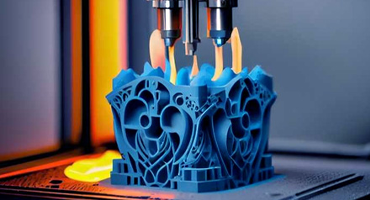
- Hybrid Manufacturing: Combining additive manufacturing (3D printing) with subtractive CNC machining in a single process to create parts with complex internal features and precisely machined surfaces.
- Artificial Intelligence and Automation: The future of CNC machining includes AI-driven process optimization, predictive maintenance, and fully autonomous production lines. Online platforms are at the forefront of integrating these technologies, offering smarter, faster, and more reliable manufacturing.
By partnering with an online CNC Turning Parts manufacturer, you are not just buying a part; you are tapping into a global ecosystem of advanced manufacturing capabilities, ensuring your designs are not limited by the technology of a single shop.
Conclusion
Choosing the right CNC turned parts manufacturer is a critical decision that profoundly impacts your project's outcome, from quality to cost and delivery time. My aim with this guide is to empower you with the knowledge to make an informed choice that aligns perfectly with your production goals.
By carefully evaluating your needs, considering the benefits of both local and online partners, and prioritizing factors like technical capabilities and quality assurance, you can forge a successful partnership with a CNC turned parts manufacturer that drives your innovation forward. Whether you need the hands-on collaboration of a local expert for a secure, complex project or the speed, scale, and advanced technology of an online platform, making a strategic choice will be the foundation of your success.
We encourage you to share this guide with your colleagues and network. What are your experiences with local versus online manufacturers? Share your thoughts in the comments below to help the community learn and grow together.