How Small Batch CNC Machining and 3D Printing Impact Automotive Part Suppliers
As automotive part suppliers, navigating the ever-evolving manufacturing landscape means constantly evaluating the best production methods. Two powerful technologies have emerged as game-changers: small batch CNC machining and 3D printing.
These methods offer unique advantages for creating everything from prototypes to end-use parts, especially when dealing with the increasing demand for customized components and faster product iterations in the automotive sector. This article explores how these technologies are reshaping the industry, offering a detailed guide for suppliers looking to innovate and stay competitive.
Understanding the Fundamentals: Small Batch CNC Machining and 3D Printing for Automotive Part Suppliers
To effectively leverage small batch CNC machining and 3D printing, it's essential for automotive part suppliers to grasp the core principles of each. While both are pivotal in modern manufacturing, they operate on fundamentally different concepts—one removing material and the other adding it. This distinction is the key to understanding их respective strengths, applications, and impact on the supply chain.
What is Small Batch CNC Machining?
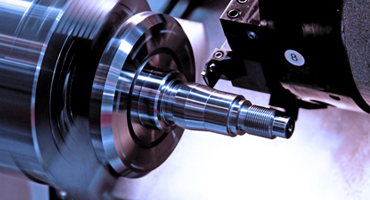
Small Batch Computer Numerical Control (CNC) Machining is a subtractive manufacturing process where pre-programmed computer software dictates the movement of factory tools and machinery. It uses automated, computer-controlled machines to remove material from a solid block (known as a workpiece or blank) to create a final part. This process can involve various operations, including milling, turning, drilling, and grinding.
The "small batch" or "low-volume" aspect refers to producing parts in limited quantities, typically ranging from a handful to a few thousand units. This approach is a crucial bridge between one-off prototyping and full-scale mass production. For automotive part suppliers, it is invaluable for several applications:
- Prototyping: Creating functional prototypes from production-grade materials for testing and design validation.
- Custom Parts: Manufacturing specialized components for custom vehicles, performance upgrades, or classic car restorations.
- Bridge Production: Fulfilling initial production orders while high-volume tooling (like injection molds) is being prepared.
- Aftermarket and Spare Parts: Producing discontinued or low-demand parts without the need for massive inventory storage.
The core advantage of small batch cnc machining is that it avoids the significant upfront costs and long lead times associated with creating dedicated tooling. This makes it a flexible and cost-effective solution for responding quickly to market demands and iterating on designs without incurring substantial financial losses.
What is 3D Printing (Additive Manufacturing)?
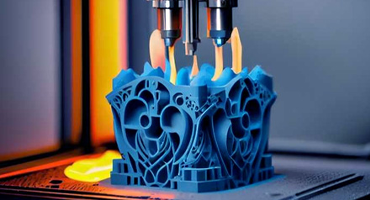
3D Printing, also known as Additive Manufacturing (AM), is a transformative production process that builds three-dimensional objects layer by layer from a digital file. Instead of subtracting material from a larger block, 3D printing adds material only where it is needed. A 3D printer reads a computer-aided design (CAD) file and deposits, fuses, or cures material—such as plastic filament, resin, or metal powder—in successive layers to construct the final part.
The automotive industry was one of the earliest adopters of 3D printing, initially using it for rapid prototyping. Today, its applications have expanded dramatically. There are several key 3D printing technologies used in the automotive sector:
- Fused Filament Fabrication (FFF/FDM): This is one of the most common technologies, where a thermoplastic filament is heated and extruded layer by layer. It is often used for creating non-structural prototypes, jigs, fixtures, and custom interior components.
- Stereolithography (SLA): This process uses an ultraviolet (UV) laser to cure liquid resin into hardened plastic, creating parts with high detail and a smooth surface finish. It's ideal for visual prototypes and complex designs.
- Selective Laser Sintering (SLS): An industrial process that uses a high-powered laser to fuse small particles of polymer powder. SLS is excellent for creating durable, functional parts with complex geometries.
- Direct Metal Laser Sintering (DMLS) / Selective Laser Melting (SLM): These technologies use a laser to melt and fuse metallic powders, creating strong, lightweight metal parts suitable for high-performance and end-use applications, such as engine components or custom brackets.
For automotive part suppliers, 3D printing unlocks new possibilities for innovation, customization, and supply chain efficiency.
Additive vs. Subtractive: The Core Difference for Automotive Part Suppliers
The fundamental difference between CNC machining and 3D printing lies in their manufacturing approach. Understanding this distinction is critical for automotive part suppliers to select the right process for a specific application.
- Subtractive Manufacturing (CNC Machining): This process starts with a solid block of material (a blank) and carves away unwanted portions with high-precision cutting tools to reveal the final part. It is analogous to a sculptor carving a statue from a block of marble.
- Additive Manufacturing (3D Printing): This process starts with nothing and builds the final part from the ground up, adding material one layer at a time based on a digital model. It is like constructing a building brick by brick.
This core difference leads to distinct advantages and limitations in areas like design complexity, material properties, waste generation, and cost structure. For an automotive supplier, one method is not inherently superior; the best choice depends entirely on the project's specific requirements.
Here is a comparative overview for automotive part suppliers:
| Feature | Small Batch CNC Machining (Subtractive) | 3D Printing (Additive) |
|---|---|---|
| Process | Material is removed from a solid block. | Material is added layer by layer. |
| Material Waste | Higher, as excess material is cut away as chips. | Minimal, as material is only added where needed. |
| Geometric Freedom | More constrained. Complex internal features, undercuts, and organic shapes can be difficult or impossible to produce. | Extremely high. Ideal for complex geometries, internal lattices, and consolidated assemblies that can't be made with traditional methods. |
| Material Properties | Excellent. Parts retain the full, isotropic (uniform in all directions) strength of the solid material block. | Can be very good but are often anisotropic (stronger in certain directions than others) due to the layer-by-layer build process. |
| Material Selection | Very broad, including a vast range of production-grade metals, alloys, and plastics. | More limited, though the range of high-performance polymers and metals is rapidly expanding. Works well with materials that are hard to machine. |
| Precision & Tolerance | Extremely high precision and tight tolerances are consistently achievable (e.g., ±0.001"). | Accuracy is improving but generally does not match the precision of CNC machining for critical tolerance features. |
| Surface Finish | Typically smooth and requires minimal post-processing for a high-quality finish. | Often shows layer lines and may require significant post-processing (sanding, polishing, etc.) to achieve a smooth surface. |
| Best For | Functional metal parts, high-stress components, tight tolerance requirements, superior surface finishes, and batches from ten to several thousand. | Rapid prototyping, highly complex and lightweight designs, mass customization, jigs and fixtures, and one-off or very small batches. |
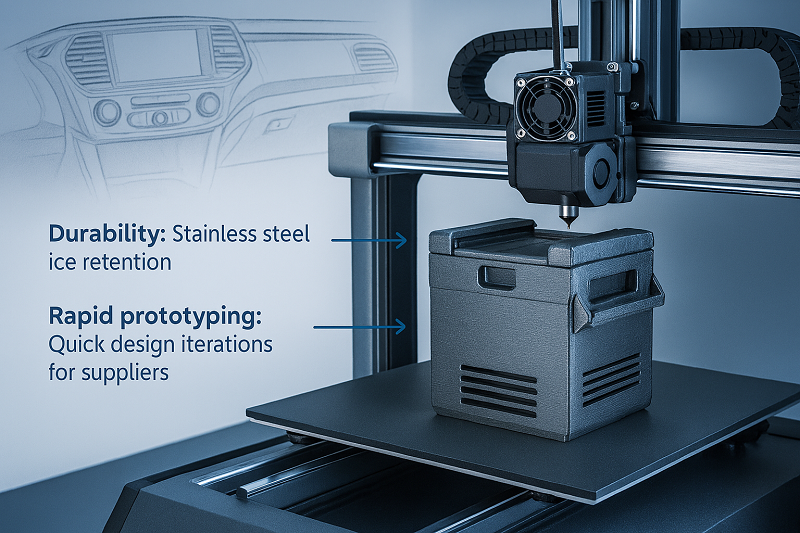
The Impact of Small Batch CNC Machining on Automotive Part Suppliers
Small batch CNC machining has become an indispensable tool for modern automotive part suppliers. Its ability to produce high-quality, functional parts without the need for expensive tooling provides a powerful blend of agility, precision, and cost-effectiveness. This technology allows suppliers to shorten development cycles, de-risk production, and cater to the growing demand for specialized and low-volume automotive components.
Precision and Accuracy: Meeting Automotive Standards with Small Batch CNC Machining
The automotive industry operates under some of the most stringent quality and safety standards in manufacturing. Components in engines, transmissions, braking systems, and suspensions must fit and perform with absolute reliability. Failure is not an option. CNC machining is uniquely capable of meeting these demands due to its exceptional precision and accuracy.
Modern CNC machines can achieve incredibly tight tolerances, which is the permissible variation in a part's physical dimensions. While standard tolerances are often around ±0.005 inches (0.127mm), high-precision CNC equipment can consistently hold tolerances as tight as ±0.001 inches (0.025mm) or even tighter for critical applications. This level of precision is vital for several reasons:
- Guaranteed Fit and Function: In complex assemblies like an engine or gearbox, dozens of components must integrate seamlessly. The high accuracy of CNC machined parts ensures perfect fitment, leading to smoother operation, reduced wear and tear, and a longer lifespan for the entire system.
- Enhanced Safety and Performance: Critical safety components, such as brake calipers or steering knuckles, demand the highest level of manufacturing precision. Any deviation can compromise performance and lead to catastrophic failure. CNC machining delivers the consistency needed to ensure these parts function exactly as designed, every single time.
- Compliance with Industry Standards: Automotive manufacturing is governed by strict quality management standards like ISO 9001 and IATF 16949. CNC machining provides the process control and repeatability required to document and verify that parts consistently meet these exacting specifications.
The computer-controlled nature of the process eliminates the potential for human error, ensuring that every part in a small batch is identical to the first. This repeatability is crucial for suppliers, as it guarantees that all components delivered to an OEM will meet the same high-quality standard, simplifying assembly and reducing rejection rates.
Rapid Prototyping and Lowered Risk for Small Batch Automotive Projects
Bringing a new automotive component to market is a high-stakes process. Design flaws discovered after committing to expensive mass-production tooling can lead to catastrophic financial losses and project delays. Small batch CNC machining offers a powerful strategy to mitigate these risks through rapid, functional prototyping.
The key advantage of CNC prototyping is the ability to create test parts out of the exact same materials intended for the final production run. A prototype for an aluminum suspension component can be machined from a solid block of the specified aluminum alloy. This allows engineers to conduct real-world tests for:
- Form and Fit: Verifying that the part integrates correctly with other components in the vehicle assembly.
- Functionality: Testing the part under operational loads, vibrations, and temperatures to ensure it performs as expected.
- Durability: Conducting fatigue and stress testing to validate the part's lifespan and identify potential weak points in the design.
While 3D printing is faster for initial concepts, CNC machining is unparalleled for creating high-quality, durable, and functional prototypes that behave almost identically to the mass-produced part. By validating a design with a CNC-machined prototype, suppliers can identify and correct flaws early in the development cycle. This iterative process—design, machine, test, and refine—dramatically lowers the risk of tooling rework, production line stoppages, and costly recalls. Committing to expensive forging dies or injection molds only after a design has been rigorously proven with a functional CNC prototype is a far more secure and financially sound approach.
Material Versatility and Durability for Automotive Applications
One of the most significant advantages of CNC machining for the automotive industry is its compatibility with an enormous range of production-grade materials. This allows suppliers to create parts that not only match the design intent but also possess the required mechanical properties for real-world performance—from heat resistance under the hood to the impact strength needed for chassis components.
Unlike some additive processes that are limited to specific polymers or proprietary metal powders, CNC machining can work with the same robust materials used in full-scale production. This ensures that a prototype or small batch of parts will have the strength, durability, and a predictable lifecycle.
Common materials used for CNC-machined automotive parts include:
- Aluminum Alloys (e.g., 6061-T6, 7075): Prized for their excellent strength-to-weight ratio, corrosion resistance, and thermal conductivity, aluminum alloys are a top choice. They are extensively used for parts like engine blocks, transmission housings, suspension components, and lightweight structural brackets. 6061 is a versatile and cost-effective option, while 7075 offers superior strength for more demanding applications.
- Stainless Steel (e.g., 304, 316): Known for its high strength, durability, and exceptional resistance to corrosion and heat, stainless steel is ideal for exhaust components, fasteners, and critical fluid system parts. It ensures longevity and reliability in harsh operating environments.
- Carbon Steel and Alloy Steels: These materials offer tremendous strength, hardness, and wear resistance at a lower cost than stainless steel, making them suitable for high-load components like gears, shafts, and brake rotors.
- Titanium: Although more expensive and difficult to machine, titanium provides an unparalleled combination of high strength and low density. It is typically reserved for high-performance racing applications or specialized components where weight reduction is paramount without any compromise in strength.
- Engineering Plastics (e.g., PEEK, aBS, Nylon): For non-structural or interior parts, CNC machining can effectively shape high-performance plastics. PEEK is used for its high-temperature resistance and strength, while ABS is common for housings and interior trim. Nylon is often chosen for its wear resistance in parts like gears and bushings.
This vast material library empowers automotive part suppliers to produce functional components that are not just dimensionally accurate but are also ready for rigorous real-world validation and end-use applications.
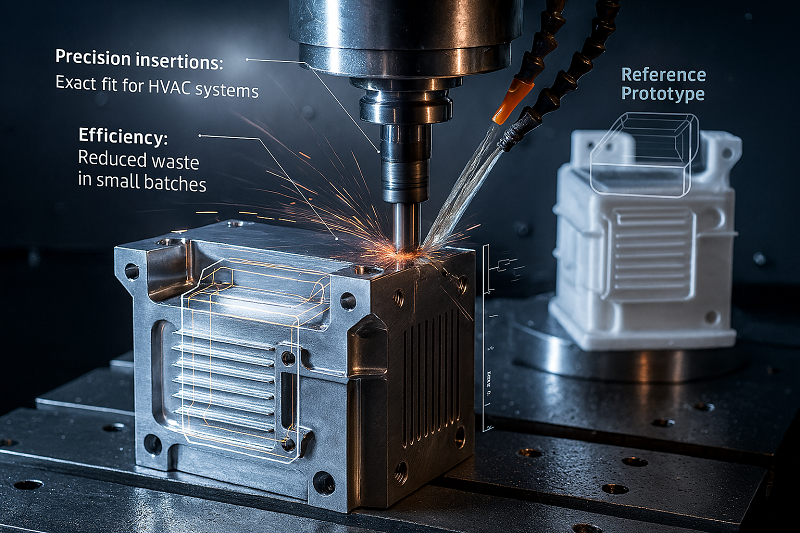
Cost-Effectiveness in Low-Volume Production for Automotive Part Suppliers
While the per-part cost of CNC machining may be higher than mass-production methods like casting or injection molding, its overall financial benefit for low-volume projects is significant. Traditional methods require a massive upfront investment in tooling—such as molds or dies—which can cost tens or even hundreds of thousands of dollars. This investment is only recouped over very large production runs.
Small batch CNC machining completely bypasses this barrier. Because it operates directly from a digital CAD file, there are virtually no tooling costs. This makes it exceptionally cost-effective for quantities ranging from a single prototype up to several thousand units. For an automotive supplier, the economic advantages are clear:
- No Tooling Investment: The biggest cost-saving factor is the elimination of expensive, dedicated tooling. This frees up capital and makes it financially viable to produce specialized or low-demand parts.
- Reduced Financial Risk: Without the need to amortize high tooling costs, there is less pressure to produce and sell a massive volume of parts. This allows suppliers to test a new product on the market with a small batch, gathering real-world feedback before committing to larger investments.
- "Just-in-Time" Production: Suppliers can machine parts on-demand, closely matching production to actual sales. This minimizes the costs associated with warehousing, inventory management, and the risk of being left with unsold stock if a part becomes obsolete.
- Quick Design Iterations: Changes to a part's design can be made by simply updating the CAD file. With CNC machining, a revised part can be produced quickly and inexpensively, whereas a change to a hard tool like an injection mold would be extremely costly and time-consuming.
For production volumes where mass-production tooling is not justifiable, small batch CNC machining provides an optimal balance of cost, quality, and flexibility, enabling suppliers to be more agile and responsive to the needs of the automotive market.
Enhanced Design Flexibility and Repeatability with Small Batch CNC Machining
Small batch CNC machining offers a powerful combination of design agility and manufacturing consistency, two factors that are paramount in the competitive automotive sector. This is driven by the seamless integration of Computer-Aided Design (CAD) and Computer-Aided Manufacturing (CAM) software, alongside the inherent nature of the machining process itself.
Design Flexibility: The process begins with a 3D CAD model. This digital blueprint can be modified with ease, allowing engineers to make rapid adjustments to a part’s geometry, test different structural concepts, or tweak features for better performance. Unlike processes that require hard tooling, a change in a CAD file is the only prerequisite to producing a new iteration of a part. This flexibility is invaluable during the prototyping and development stages, enabling suppliers to quickly respond to feedback from OEMs and refine designs without incurring massive costs or delays.
Unmatched Repeatability: Once a design is finalized and the CAM software has generated the machine toolpaths, CNC machining delivers exceptional repeatability. Repeatability is the machine's ability to produce identical parts across multiple cycles. Because the process is fully automated and computer-controlled, it eliminates the variations and inconsistencies that can arise from manual intervention.
- Consistency Across a Batch: Every cut, drill, and pass is executed exactly the same way for each part in a small batch. This ensures that the first component is dimensionally identical to the last, guaranteeing consistent quality.
- Reliability for Assembly: This high level of repeatability is crucial for downstream assembly operations. When every part meets the exact same tight tolerances, assembly is faster, more efficient, and free from fitment issues.
- Process Validation: The ability to consistently reproduce parts allows for a reliable manufacturing process that can be validated to meet the rigorous quality standards of the automotive industry.
For automotive part suppliers, this blend of flexibility in the design phase and rigid consistency in production makes small batch CNC machining a highly reliable and adaptable manufacturing solution.
How 3D Printing Transforms Automotive Part Supply Chains
Once viewed primarily as a tool for creating visual models, 3D printing has matured into a powerful manufacturing technology that is actively reshaping automotive supply chains. Its ability to create parts directly from digital files without tooling introduces unprecedented speed, flexibility, and efficiency. For automotive part suppliers, additive manufacturing opens up new business models, from on-demand production of spare parts to the creation of highly customized and performance-optimized components that were previously impossible to make.
Accelerated Prototyping and Design Iteration for Automotive Components
In the intensely competitive automotive industry, speed to market is a critical advantage. 3D printing has revolutionized the product development cycle by enabling unprecedented speed in prototyping and design iteration.
Traditionally, creating a prototype using methods like CNC machining or tooling could take days or even weeks. 3D printing collapses this timeline dramatically. An engineer can finalize a CAD design in the evening and have a physical, tangible part ready for evaluation the next morning. This capability has a profound impact on the development process:
- Rapid Iteration: Instead of waiting weeks to test a single design concept, teams can now print and evaluate multiple variations of a part within the same week. This "fail fast, learn faster" approach allows engineers to quickly identify flaws, test new ideas, and optimize designs for performance, fit, and manufacturability.
- Reduced Development Costs: The ability to produce prototypes in-house without tooling significantly cuts costs. The expense of iterating is limited to the cost of the material and the printer's run time, which is a fraction of what would be required for traditional prototype manufacturing.
- Enhanced Design Communication: Physical models facilitate clearer communication than digital renderings alone. A 3D printed prototype can be passed around a room, installed in a test vehicle, and evaluated by designers, engineers, and marketers simultaneously. This tangible feedback loop ensures everyone is aligned and helps identify potential issues early on.
- Faster Problem-Solving: If a prototype reveals a fitment issue or a functional flaw, the design can be immediately adjusted in CAD and a new version printed overnight. This agility dramatically shortens the problem-solving loop, accelerating the entire vehicle development timeline from months to days for certain components.
By leveraging 3D printing, automotive part suppliers can bring more innovative and refined products to market faster than ever before, giving them a crucial competitive edge.
Customization and Personalization: A 3D Printing Edge for Automotive Needs
The shift from mass production to mass customization is a defining trend in the modern automotive market. Consumers increasingly seek vehicles that reflect their personal style and meet specific functional needs. 3D printing is uniquely positioned to meet this demand, offering an economically viable way to produce one-off and low-volume custom parts.
Traditional manufacturing is designed for uniformity; creating a single custom part with methods like injection molding is prohibitively expensive due to tooling costs. 3D printing eliminates this barrier entirely. Since parts are built directly from a digital file, creating a unique component costs the same as creating a standard one. This capability unlocks a wide array of opportunities for automotive suppliers:
- Bespoke Interior and Exterior Components: Suppliers can offer personalized interior trims, custom dashboard elements, unique gear shift knobs, or even bespoke exterior badging and emblems. This allows for a level of personalization previously reserved for ultra-luxury or concept vehicles.
- Performance and Ergonomic Upgrades: For the aftermarket and motorsport sectors, 3D printing can be used to create performance-enhancing parts like custom air intake ducts or lightweight brackets. It can also produce ergonomic components, such as seats or control interfaces, tailored to an individual driver's physique and preferences.
- Classic and Vintage Car Restoration: Sourcing parts for older or rare vehicles is a significant challenge. 3D printing allows suppliers to recreate obsolete components by either working from original drawings or 3D scanning a broken part. This provides a vital lifeline for the restoration market.
- Adaptive and Special-Needs Vehicles: 3D printing is invaluable for creating custom fixtures, controls, and accessibility aids for vehicles modified for drivers with disabilities, offering tailored solutions that improve comfort and usability.
By leveraging 3D printing, automotive part suppliers can move beyond a one-size-fits-all approach and tap into the high-value market for personalized and specialized vehicle components, offering customers a new level of choice and individuality.
Digital Inventory and On-Demand Production for Spare Parts
One of the most profound impacts of 3D printing on the automotive industry is the revolution in inventory management. Traditionally, suppliers and OEMs have had to maintain enormous physical warehouses stocked with thousands of spare parts for every model, a practice that incurs massive storage costs and logistical complexity. 3D printing offers a paradigm shift towards a "digital inventory" or "virtual warehouse."
Instead of storing physical parts, companies can now store digital CAD files. When a specific spare part is needed, the file can be pulled from the digital library and printed on-demand at a location close to the point of need. This model has transformative benefits for the entire supply chain:
- Elimination of Physical Warehousing Costs: The need for vast, climate-controlled warehouses to store slow-moving inventory is drastically reduced. This frees up significant capital that would otherwise be tied up in real estate and unsold stock.
- On-Demand Production: Parts are produced only when they are ordered. This "just-in-time" approach minimizes waste and eliminates the financial risk of overproduction, especially for parts with unpredictable or low demand.
- Solution for Legacy and Obsolete Parts: Keeping classic and vintage cars on the road is often a struggle due to the scarcity of spare parts. For vehicles no longer in production, the original tooling may have been retired or lost. A trusted 3D Printing suppliercan reverse-engineer a broken component or use original schematics to create a digital file, allowing for the on-demand printing of otherwise unobtainable parts.
- Supply Chain Resilience and Localization: A digital inventory can be accessed globally. A part can be printed at a certified facility in North America, Europe, or Asia, depending on where the customer is. This decentralizes manufacturing, shortens lead times, reduces shipping costs and carbon footprint, and makes the supply chain more resilient to geopolitical or logistical disruptions.
This transition from physical to digital inventory represents a leaner, more agile, and economically efficient future for automotive spare part management, ensuring that any part, for any car, can be made available anytime, anywhere.
Complex Geometries and Lightweighting: Maximizing Performance
One of the most compelling advantages of 3D printing is its ability to produce parts with a level of geometric complexity that is difficult or impossible for traditional subtractive manufacturing. This capability is not just for aesthetics; it directly translates to higher performance and efficiency, key drivers in the automotive industry. This is especially true for lightweighting—the process of reducing a vehicle's weight to improve fuel economy, handling, and overall performance.
3D printing achieves this through several key methods:
- Generative Design: This is a design process where engineers input goals and constraints (e.g., material, load conditions, weight targets) into an AI-powered software. The software then generates hundreds or even thousands of design permutations that meet these criteria. The resulting designs are often highly organic and skeletal in appearance, using material only where it is structurally necessary. For example, General Motors used generative design and 3D printing to create a seat bracket that was 40% lighter and 20% stronger than the original eight-component assembly.
- Lattice Structures: 3D printing can create parts with complex internal lattice or honeycomb structures. These structures drastically reduce the amount of material used and, consequently, the part's weight, while maintaining a high degree of structural integrity and strength. This is ideal for automotive components where a high strength-to-weight ratio is critical.
- Part Consolidation: A single, complex assembly made of multiple nuts, bolts, and brackets can often be redesigned and 3D printed as a single, consolidated component. This reduces part count, simplifies the supply chain, speeds up assembly, and eliminates potential points of failure between joined components.
- Optimized Internal Channels: Additive manufacturing can create components with intricate internal channels for fluid flow or cooling. For example, brake calipers or motor housings can be designed with optimized cooling passages that are impossible to machine, leading to superior thermal management and improved performance under stress.
By breaking free from the constraints of traditional manufacturing, 3D printing allows automotive part suppliers to create a new generation of lighter, stronger, and more efficient components, driving innovation in vehicle performance and sustainability.
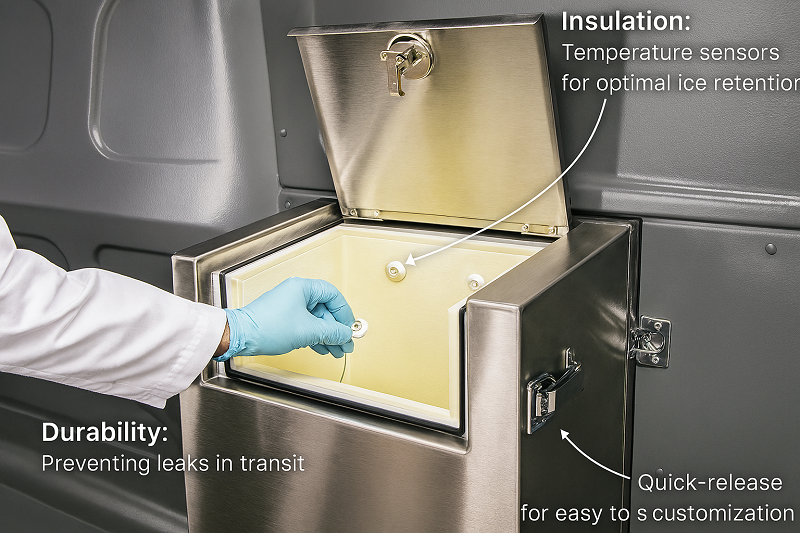
Cost Reduction in Specific Automotive 3D Printing Applications
While 3D printing is often associated with higher per-part costs than mass manufacturing, it delivers significant cost reductions in specific, high-value applications within the automotive sector. For automotive suppliers, understanding these niches is key to leveraging additive manufacturing for a stronger bottom line.
Tooling, Jigs, and Fixtures: One of the most impactful areas for cost savings is in the production of manufacturing aids like jigs, fixtures, and gauges. These tools are used on the assembly line to hold parts in place, guide operations, or check for quality.
- Traditional Method: Conventionally, these tools are machined from metal, a process that can be slow and expensive. A single, custom-machined fixture could cost thousands of dollars and take weeks to procure from an outside shop.
- 3D Printing Method: Using in-house 3D printers, manufacturers can design and print a custom fixture overnight for a fraction of the cost. Volkswagen Autoeuropa, for example, reported cost reductions of up to 98% and time savings of 89% by 3D printing its own tools. General Motors noted a case where a necessary alignment tool that would have cost $3,000 to outsource was 3D printed for just $3.
These savings are not just monetary. 3D printed tools are often lighter and more ergonomic, improving worker safety and efficiency. They can also be produced on-demand, minimizing production downtime if a tool breaks or needs to be modified.
Low-Volume and Custom End-Use Parts: For end-use parts, the cost-effectiveness of 3D printing is most apparent in low-volume or "one-off" scenarios.
- No Tooling Costs: As with CNC machining, 3D printing eliminates the need for expensive molds or dies. This makes it financially viable to produce limited runs of specialized parts, such as components for luxury-trim vehicles or aftermarket performance upgrades, where the volume doesn't justify a six-figure tooling investment.
- Reduced Material Waste: As an additive process, 3D printing uses only the material needed to build the part, generating significantly less waste than subtractive machining. Especially when working with expensive materials like titanium or high-performance polymers, this material efficiency can lead to substantial cost savings.
- Part Consolidation: The ability to combine multiple components into a single printed part saves not only on the cost of the individual parts but also on the labor and time required for assembly.
While 3D printing may not be the cheapest option for producing thousands of simple, identical parts, it provides undeniable economic benefits in strategic areas that demand customization, speed, and tooling-free production.
Choosing the Right Technology: Small Batch CNC Machining vs. 3D Printing for Automotive Suppliers
Selecting the optimal manufacturing process is a critical decision for automotive suppliers. Both small-batch CNC machining and 3D printing offer compelling advantages, but they excel in different areas. The choice is not about which technology is "better," but which is the right fit for the specific requirements of the part, including its material, complexity, production volume, and cost constraints. A thorough evaluation of these factors will ensure the final component meets performance standards while optimizing production efficiency.
Material Considerations: Matching Technology to Automotive Requirements
The material of an automotive part dictates its performance, durability, and safety. Therefore, material requirements are often the first and most critical factor in deciding between CNC machining and 3D printing. The two technologies offer vastly different material options and resulting properties.
CNC Machining: Strength and Versatility CNC machining excels when working with a wide array of production-grade materials, especially metals. Since the process carves from a solid block, the finished part retains the full, inherent strength and characteristics of the original material.
- Material Selection: Offers an extensive library of metals (aluminum, various steels, titanium, brass) and engineering plastics (PEEK, Delrin, Polycarbonate). These materials are well-documented and trusted in the automotive industry.
- Isotropic Properties: Machined parts are isotropic, meaning their strength is uniform in all directions. This is a crucial property for components that will be subjected to stress from multiple angles, such as engine mounts or suspension arms.
- Best Use Cases: CNC machining is the default choice for functional metal prototypes, high-stress structural components, parts requiring high heat or wear resistance, and any application where duplicating the exact properties of a mass-produced metal part is essential.
3D Printing: Polymers and Specialized Metals 3D printing offers a growing, but more specialized, selection of materials. While metal 3D printing is advancing rapidly, the technology is most commonly used with polymers.
- Material Selection: Primarily focused on thermoplastics (like ABS, Nylon) and thermoset resins (for SLA). High-performance polymers (like PEEK and carbon-fiber-filled Nylon) are increasingly common for functional applications. Metal 3D printing uses powdered forms of materials like aluminum, stainless steel, and titanium.
- Anisotropic Properties: Layer-based manufacturing can lead to anisotropic properties, where the part is stronger along its X-Y axes than it is along its Z-axis (perpendicular to the build layers). The bonds between layers can be a potential weak point. This must be considered during the design and orientation of parts that will undergo significant stress.
- Best Use Cases: 3D printing is ideal for form-and-fit prototypes where material strength is not the primary concern. It is also excellent for producing parts from materials that are difficult to machine, like flexible TPU, and for creating complex geometries where the specific engineering benefits of an advanced polymer are required.
| Aspect | Small Batch CNC Machining | 3D Printing |
|---|---|---|
| Primary Materials | Metals (Aluminum, Steel, Titanium), Engineering Plastics | Polymers (Plastics, Resins), some Metal Powders |
| Material Strength | Isotropic (Uniform strength in all directions) | Often Anisotropic (Strength varies by direction) |
| Material Range | Extremely broad and established | Growing but more limited than CNC |
| Decision Driver | Choose when you need parts with the proven, isotropic strength of production-grade metals and a wide material choice. | Choose for rapid polymer prototypes, flexible parts, or when leveraging the unique properties of advanced composite materials. |
Design Complexity and Geometric Freedom
The geometry of a part is a major deciding factor between CNC machining and 3D printing. Each technology has a distinct relationship with design complexity, offering different levels of "geometric freedom."
3D Printing: Unparalleled Geometric Freedom 3D printing is the clear winner when it comes to producing complex designs. Because it builds parts layer by layer from the bottom up, it can create shapes that are physically impossible to make with any other method.
- Key Advantages: It excels at producing parts with intricate internal channels, complex organic curves, hollow sections, and integrated lattice structures. Designs that would require multiple parts and assembly can often be consolidated into a single, complex 3D-printed component.
- Design-for-Performance: This freedom allows engineers to design for optimal performance without being constrained by manufacturing limitations. It enables advanced concepts like generative design and topology optimization to create the lightest, strongest parts possible.
- When to Choose: If your part features complex internal geometries, undercuts that a tool cannot reach, or organic, non-linear shapes, 3D printing is almost always the superior choice.
Small Batch CNC Machining: Precision with Constraints CNC machining, as a subtractive process, has inherent geometric limitations dictated by the physics of cutting tools. A rotating tool needs a clear path to access and remove material.
- Key Limitations:
- Tool Access: The machine tool must be able to physically reach every surface it needs to cut. Deep, narrow cavities can be difficult or impossible to machine because the tool cannot fit.
- Undercuts: Features that are "under" another feature are challenging. While specialized tooling and multi-axis machines can create some undercuts, they add significant complexity and cost.
- Internal Corners: Because CNC tools are cylindrical, they cannot create perfectly sharp internal corners; there will always be a corner radius that matches the tool's radius.
- Thin Walls: Extremely thin walls can be prone to vibration and deformation during machining, making it difficult to hold tight tolerances.
- When to Choose: CNC machining is best for parts with designs that can be produced with standard drilling and milling operations. While 5-axis CNC machines offer greater flexibility for complex shapes than traditional 3-axis machines, they are still fundamentally limited by tool access.
When making a decision, examine the part's geometry. If the design is relatively straightforward and can be created by removing material, CNC machining will offer superior precision. If the design contains complexity that cannot be carved from a block, 3D printing provides the freedom to bring it to life.
Production Volume and Speed for Automotive Part Manufacturing
The relationship between production speed and volume is a critical trade-off when choosing between CNC machining and 3D printing. The "faster" technology depends entirely on the quantity of parts being produced.
3D Printing: Speed in Singularity For producing a single part or a very small number of units (typically 1-10), 3D printing is almost always faster.
- Minimal Setup Time: The process begins almost immediately after a CAD file is loaded. There is no need for complex programming, fixture creation, or material setup that is common with CNC machining.
- Unattended Operation: Once a print starts, it can often run unattended, even overnight, freeing up operator time.
- Linear Time Scaling: The time to produce ten parts is roughly ten times the time to produce one part. The process speed does not scale well with volume, as each part is built individually from scratch.
CNC Machining: Speed in Batches While the initial setup for a CNC job can be time-consuming, the process becomes significantly faster and more efficient as the batch size increases.
- High Initial Time Investment: Setup involves programming the toolpaths (CAM), preparing and securing the material block, and mounting the correct cutting tools. This upfront work can take several hours before the first chip is cut.
- Rapid Per-Part Speed: Once the machine is running, the actual time to machine each part is very fast, often just a few minutes. The machine moves at high speeds with powerful cutters to remove material quickly.
- Economies of Scale: The initial setup time is amortized across the entire batch. Therefore, while the total time for one part is high, the average time per part drops dramatically as volume increases. For batches of 10 to several thousand, CNC is much faster overall than 3D printing.
The Break-Even Point There is a "break-even point" where CNC machining becomes the more time-efficient method. The exact point depends on the part's complexity and material, but a general guideline is:
- 1-10 Parts: 3D printing is typically faster due to its rapid, tooling-free setup.
- 10+ Parts: CNC machining becomes increasingly faster as the initial setup time is distributed over more units.
For an automotive supplier, if the need is for a single, quick-turnaround prototype for a design review, 3D printing is the answer. If the need is for a pre-production run of 50 functional components for vehicle testing, CNC machining will deliver the batch much more quickly.
Overall Cost Implications: Machines, Materials, and Labor for Small Batch Production
A comprehensive cost analysis for any manufacturing process must go beyond the price per part and consider the total cost of production. For small-batch manufacturing, the cost structures of CNC machining and 3D printing are fundamentally different, and a supplier's choice will depend on a breakdown of machine, material, and labor costs.
1. Machine and Initial Investment Costs
- CNC Machining: The upfront investment is high. Industrial-grade 3-axis or 5-axis CNC mills can cost from tens of thousands to hundreds of thousands of dollars. They are heavy, powerful machines that require a dedicated industrial space.
- 3D Printing: The barrier to entry is significantly lower. Professional desktop 3D printers can be purchased for a few thousand dollars, while industrial-grade machines for plastics or metals range from $5,000 to over $500,000. Many entry-level machines are suitable for office or workshop environments.
2. Material Costs
- CNC Machining: Raw material costs, such as a block of aluminum or steel, are relatively low per kilogram. However, because it is a subtractive process, a significant amount of this material is cut away as waste, which can increase the effective material cost per part.
- 3D Printing: The cost per kilogram of specialized 3D printing materials (filaments, resins, or powders) is often significantly higher than that of raw CNC materials. For example, a kilogram of ABS filament can cost much more than a kilogram of ABS pellets used in injection molding. However, the additive nature of the process means there is very little material waste, which can offset the higher initial price, especially for complex parts where CNC would generate a lot of scrap.
3. Labor Costs and Complexity
- CNC Machining: This process requires a highly skilled machinist. Labor costs include CAM programming, machine setup, tool changes, and overseeing the operation. While the cutting process is automated, the setup is labor-intensive. The cost of labor is a significant factor, especially for complex parts requiring multiple setups.
- 3D Printing: The labor required is generally less skilled and less intensive. Once the file is prepared and the print is started, the machine runs automatically with minimal supervision. The main labor costs are associated with post-processing, which can include support removal, sanding, or polishing.
Cost-Per-Part Breakdown
| Production Volume | CNC Machining Cost Structure | 3D Printing Cost Structure | Most Cost-Effective Choice |
|---|---|---|---|
| 1-10 Parts (Prototypes) | Very high cost per part due to setup labor being spread over few units. | Low cost per part. No setup or tooling costs to amortize. | 3D Printing |
| 10-200 Parts (Small Batch) | Moderate cost per part. Setup costs are amortized, making it more efficient. | Cost per part remains relatively high and scales linearly with quantity. | CNC Machining often becomes more competitive. The break-even point depends heavily on part complexity. |
| 200+ Parts (Low-Volume) | Lower cost per part. Economies of scale take full effect. | High total cost. Not suitable for this volume unless parts are extremely complex. | CNC Machining |
For automotive suppliers, 3D printing is the undisputed cost leader for one-off prototypes and very small quantities. As volume increases, the high setup costs of CNC machining are justified by faster production times and lower raw material prices, making it the more economical choice for most small to medium-sized batches.
Surface Finish and Post-Processing Needs for Automotive Parts
The final surface quality of a part is a critical consideration in the automotive industry, affecting everything from aerodynamics and fluid dynamics to aesthetics and perceived quality. CNC machining and 3D printing produce vastly different as-manufactured surface finishes, which in turn dictates the need for post-processing.
CNC Machining: Superior "As-Machined" Finish CNC machining is the benchmark for high-quality surface finishes directly from the machine.
- Surface Quality: By using precision cutting tools, CNC machining creates smooth, clean surfaces with minimal visible imperfections. The quality of the finish can be controlled by adjusting parameters like cutting speed, feed rate, and the depth of cut. Standard machined finishes are often sufficient for many functional parts without any extra steps.
- Minimal Post-Processing: For most applications, CNC machined parts require little to no post-processing to achieve their desired finish. If a higher grade of finish is required, established processes like grinding, polishing, or bead blasting are available to achieve mirror-like surfaces or specific textures with high repeatability.
- Best Use Cases: CNC machining is ideal for parts where a high-quality surface finish is critical for function (e.g., mating surfaces, bearing housings) or for A-class cosmetic parts where visual perfection is required.
3D Printing: Post-Processing is Often Essential The layer-by-layer nature of 3D printing inherently creates a different type of surface that almost always requires some form of post-processing to meet automotive standards.
- Surface Quality: As-printed parts, especially from Fused Deposition Modeling (FDM), have visible layer lines that create a ridged or "stair-stepped" texture. While technologies like Stereolithography (SLA) or Multi Jet Fusion (MJF) produce smoother initial surfaces, they still do not typically match the quality of a machined part.
- Extensive Post-Processing: Achieving a smooth, paint-ready surface on a 3D printed part is a multi-step, often labor-intensive, process. Common steps include:
- Support Removal: Breaking away or dissolving support structures used during the printing process.
- Sanding: Manually or automatically sanding the part, often through multiple grits from coarse to fine, to remove layer lines.
- Filling and Priming: Applying fillers or high-build primers to fill in any remaining imperfections, followed by more sanding.
- Vapor Smoothing: For some materials like ABS, exposing the part to a solvent vapor can melt the outer surface, resulting in a smooth, glossy finish.
- Painting and Coating: The final step to achieve a cosmetic-grade finish.
- Best Use Cases: 3D printing is suitable when the "as-printed" finish is acceptable for the application (e.g., non-visible internal brackets, jigs, and fixtures) or when the unique geometry of the part justifies the time and labor investment in post-processing.
For automotive suppliers, the decision often comes down to this trade-off: CNC machining provides a superior finish with less effort, while 3D printing offers geometric freedom at the cost of more intensive post-processing to achieve a comparable surface.
The Future is Hybrid: Combining Small Batch CNC Machining and 3D Printing for Automotive Excellence
The debate is not about one technology replacing the other. Instead, the future of advanced automotive manufacturing lies in a hybrid approach that strategically combines the strengths of both small-batch CNC machining and 3D printing. By understanding when and how to deploy each process—and even how to merge them within the production of a single part—automotive suppliers can achieve an unparalleled balance of speed, precision, complexity, and cost-effectiveness. This synergy allows for the creation of superior components that leverage the best of both the additive and subtractive worlds.
Leveraging Strengths: When to Use Each Technology
Strategically choosing between small batch CNC machining and 3D printing requires automotive suppliers to match the technology to the specific needs of the job. It's not a matter of which is universally better, but which is optimal for a given part's material, complexity, required precision, and production volume.
Here is a simplified decision-making guide:
Choose Small Batch CNC Machining when:
- Strength and Material are Critical: The part is a load-bearing or structural component that requires the full, isotropic strength of a production-grade metal like aluminum or steel.
- High Precision and Tight Tolerances are Non-Negotiable: The part must meet exacting dimensional standards (e.g., ±0.005” or tighter) to ensure proper fit and function in a larger assembly, such as an engine or transmission component.
- A Superior Surface Finish is Required from the Start: The part is a cosmetic component or requires a very smooth surface for functional reasons (e.g., to reduce friction), and extensive post-processing is not desirable.
- The Production Volume is a Small-to-Medium Batch: The need is for more than a few prototypes (e.g., 10 to 2,000 units), where the initial setup time for CNC is offset by its high-speed cutting for the batch.
- The Geometry is Relatively Simple: The design can be effectively produced through subtractive methods without complex internal features or inaccessible areas.
Choose 3D Printing when:
- Extreme Geometric Complexity is the Goal: The design involves intricate internal channels, organic shapes, lattice structures, or features that are impossible to create with cutting tools.
- Speed for a Single Prototype is a Priority: You need a physical model for a design review or a form-and-fit test as quickly as possible (e.g., overnight).
- Mass Customization is the Objective: You are producing one-of-a-kind or highly personalized parts where the cost of tooling would be prohibitive.
- Low-Volume or On-Demand Spare Parts are Needed: The requirement is for a very small number of parts, or you are producing legacy components from a digital inventory to avoid physical warehousing.
- You Are Creating Manufacturing Aids: You need a fast, low-cost way to produce custom jigs, fixtures, or ergonomic tools for the assembly line, where strength is secondary to custom shape and speed of creation.
By using this framework, automotive part suppliers can harness the distinct advantages of each technology, optimizing their manufacturing process for every unique challenge.
Hybrid Approaches in Automotive Part Manufacturing
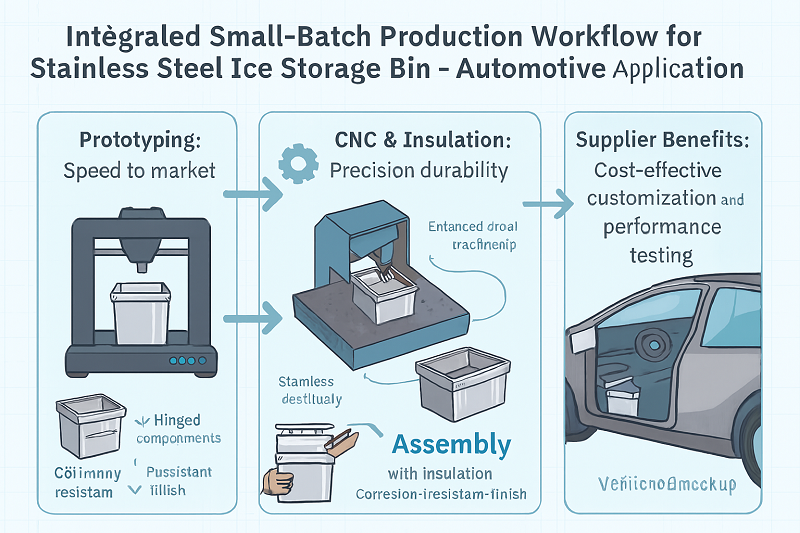
The most forward-thinking approach in modern automotive manufacturing is not to choose one technology over the other, but to integrate them into a cohesive, hybrid workflow. This strategy leverages the unique strengths of both additive and subtractive processes to create superior parts more efficiently than either method could alone.
The most common and effective hybrid approach involves using 3D printing to create a "near-net shape" part, which is then finished with CNC machining. Here’s how it works:
- Additive Step (3D Printing): A part is first 3D printed, often using metal additive manufacturing technologies like DMLS or Binder Jetting. This step is used to rapidly create the overall complex geometry of the component, including intricate internal structures, lightweight lattice infills, or consolidated features that would be impossible to machine. This creates a part that is very close to its final form but lacks the required surface finish and dimensional accuracy on critical surfaces.
- Subtractive Step (CNC Machining): The near-net shape part is then transferred to a CNC machine. The machining process does not need to create the entire part from a solid block, which saves immense time and reduces material waste. Instead, it is used strategically to finish only the critical features. This includes:
- Milling mating surfaces to achieve a perfectly flat and smooth finish.
- Drilling and tapping holes to exact thread specifications.
- Boring out bearing seats to precise diametrical tolerances.
- Polishing surfaces that require low friction or high aesthetic quality.
Benefits of the Hybrid Approach: This sequential workflow combines the best of both worlds:
- Geometric Freedom: It retains the ability of 3D printing to create highly complex and optimized designs.
- Precision and Surface Quality: It leverages the unparalleled accuracy of CNC machining to meet tight tolerances and produce high-quality surface finishes where they matter most.
- Reduced Material Waste: By printing the near-net shape, material waste is significantly lower compared to machining the entire part from a large, solid block. One study found that this can reduce material consumption by up to 97%.
- Faster Lead Times: Creating the bulk of the part with 3D printing is often faster than rough-machining it from a block, especially for complex designs. The finishing step on the CNC is quick because only a small amount of material is being removed.
- Cost Efficiency: The combination of reduced material waste, shorter machine run times, and faster overall production makes this a highly cost-effective method for complex, low-volume automotive parts.
Some advanced manufacturing centers even use integrated hybrid machines that can perform both additive and subtractive operations in a single setup, further streamlining the process and improving accuracy by eliminating the need to re-fixture the part between steps. For automotive suppliers, adopting a hybrid manufacturing strategy is a powerful way to push the boundaries of innovation while maintaining the highest standards of quality and precision.
Modular Tooling and Automation: Optimizing Small Batch Operations
Efficiency in small-batch production is not just about the individual speed of a machine; it's about optimizing the entire workflow. The synergy between 3D printing and CNC machining creates powerful opportunities for automation and modularity, particularly in the realm of tooling.
3D Printing for Agile Tooling (Jigs and Fixtures) One of the most effective ways to automate and speed up small-batch CNC operations is by using 3D printing to create custom jigs and fixtures.
- What are Jigs and Fixtures? A fixture is a work-holding device that secures a part to the CNC machine bed in a specific orientation. A jig is a device that guides a cutting tool to a specific location. Both are essential for ensuring accuracy and repeatability.
- The Traditional Bottleneck: Traditionally, fixtures are machined from metal—a process that is expensive, slow, and requires skilled labor. For a small batch of custom parts, the cost and time to create a dedicated fixture can be a major bottleneck.
- The 3D Printing Solution: Automotive suppliers can now 3D print these jigs and fixtures in-house using durable engineering polymers like Nylon or ABS reinforced with carbon fiber. Volkswagen, for example, achieved cost savings of up to 98% and reduced tool development time by 89% by 3D printing its own manufacturing aids.
Benefits of 3D Printed Modular Tooling:
- Drastic Cost and Time Reduction: A fixture that might cost several thousand dollars and take weeks to machine can be 3D printed overnight for a few hundred dollars or less.
- Enhanced Design Freedom and Ergonomics: 3D printing allows for the creation of lightweight, ergonomic tools that are custom-contoured to a specific part. This makes them easier and safer for operators to handle compared to heavy metal fixtures.
- On-Demand Production: If a fixture breaks or a design is updated, a new one can be printed on-demand with minimal production downtime. This eliminates the need to stock a physical inventory of expensive tools.
- Enabling Automation: In automated CNC cells, robots are used to load and unload parts. 3D printing can create custom "soft jaws" and grippers for these robots that perfectly match the contour of the part being handled. This allows a single robotic system to be quickly re-tasked for different small-batch jobs simply by printing a new set of grippers, making automation for high-mix, low-volume production financially viable.
By integrating 3D printing for modular tooling, automotive part suppliers can make their small-batch CNC operations faster, more flexible, and significantly more cost-effective. This hybrid approach streamlines the entire production workflow, from work-holding to final part, maximizing the efficiency of small-batch manufacturing.
Conclusion
Both small batch CNC machining and 3D printing offer distinct and powerful advantages for automotive part suppliers. CNC machining remains the undisputed champion for precision, material strength, and achieving high-quality surface finishes, making it the ideal choice for functional components that demand robustness and tight tolerances. In contrast, 3D printing excels in the areas of geometric complexity, ultra-fast prototyping, and on-demand customization, driving innovation and enabling cost-effective solutions for low-volume and bespoke production.
The true path to manufacturing excellence lies not in choosing one over the other, but in understanding the unique capabilities of each and integrating them into smart, hybrid strategies. By doing so, automotive suppliers can significantly shorten lead times, reduce financial risk, optimize their production processes, and ultimately deliver superior, more innovative products to a demanding market.
At SOMI Custom Parts, we are specialists in this hybrid future. As a dedicated manufacturer and supplier, we provide world-class production services in both small batch CNC machining and advanced 3D printing. We partner with automotive part suppliers globally, offering OEM customization and the engineering expertise needed to choose the right process for every component. Whether you need the strength of a machined metal part or the complexity of a 3D-printed prototype, we are equipped to bring your designs to life. Feel free to share this article with your network, and contact us to discuss how we can optimize your next project.