How Global CNC Machining Service Providers Optimize Manufacturing with Precision Solutions
As global CNC machining service providers, we understand that precision manufacturing is no longer a luxury but a fundamental necessity across industries, from aerospace to medical devices. The ability to create components with unmatched accuracy and consistency is what sets leading manufacturers apart. This capability is crucial for producing high-quality and reliable parts that meet stringent industry standards.
This blog post explores how global CNC machining service providers are at the forefront of optimizing manufacturing processes through sophisticated precision solutions. We will delve into the technologies, techniques, and strategies employed to ensure quality, efficiency, and innovation in a competitive global market. By leveraging advanced machinery and expert knowledge, these providers are pivotal in turning complex designs into tangible, high-performance products.
The Foundational Role of Global CNC Machining Service Providers in Precision Manufacturing
Global CNC machining service providers are the backbone of modern precision manufacturing. They offer the expertise, technology, and capacity necessary to produce intricate components for a wide array of industries. Their role extends beyond simple part production; they are strategic partners who provide solutions that enhance performance, reduce costs, and accelerate time-to-market. By mastering advanced manufacturing processes, they enable innovation and support the development of next-generation technologies.
What is CNC Machining and Why Does Precision Matter?
To appreciate the optimization that global providers bring to the table, it's essential to understand the core technology itself and the critical role that precision plays in the final output. CNC machining is not just a manufacturing method; it is a discipline where accuracy and consistency are paramount.
Defining CNC Machining: Computer Numerical Control
CNC (Computer Numerical Control) machining is an automated manufacturing process where pre-programmed computer software directs the movement of factory machinery and tools. It is a form of subtractive manufacturing, which means it starts with a solid block of material (a blank or workpiece) and removes excess material to achieve the desired final shape. This process is analogous to a sculptor carving a statue from a block of stone, but with computerized precision.
The entire operation is guided by a specific programming language, most commonly G-code and M-code.
- G-code (Geometric Code): This is the fundamental language that controls the machine's movements. It dictates the path, speed, and direction of the cutting tool, telling it where to move, how fast to go, and what path to follow, such as a straight line (G01) or a circular arc (G02/G03).
- M-code (Miscellaneous Function Code): This code manages the machine's non-movement functions. It handles auxiliary actions like turning the spindle on or off, activating the coolant systems, and executing tool changes.
Together, these codes translate a digital design from a CAD (Computer-Aided Design) file into physical instructions that a machine can execute with minimal human intervention. This automation allows for incredible repeatability and complexity that would be impossible to achieve through manual control.
The Imperative of Precision in Custom Parts
In manufacturing, "precision" is not just a goal; it's a measurable requirement defined by tolerances. A tolerance is the acceptable range of variation in a part's dimensions. While it's impossible to create a part with 100% accuracy every time, tolerances provide a necessary margin of error. The tighter the tolerance, the more accurate the part must be to the original design. These tight tolerances are essential for a number of reasons:
- Interchangeability and Fit: In complex assemblies, parts must fit together seamlessly. Precision machining ensures that components are interchangeable, which streamlines the assembly process and improves efficiency. This is especially critical for mating parts, where even a slight deviation can prevent them from functioning correctly.
- Performance and Reliability: In high-stakes industries like aerospace, automotive, and medical, the performance of a product is directly linked to the precision of its components. For example, engine components require tight tolerances to ensure optimal fuel efficiency, reduce emissions, and guarantee reliability. In aerospace, precision is a matter of safety, as even a minor flaw in a part like a turbine blade or landing gear component can lead to catastrophic failure.
- Quality and Consistency: Holding tight tolerances ensures a consistent product output, reducing the risk of defects like warping or cracking. This consistency is vital in fields such as medical device manufacturing, where every part must perform flawlessly to ensure patient safety.
- Cost and Efficiency: While achieving tight tolerances can be more demanding, it ultimately leads to greater efficiency. High-precision manufacturing minimizes the need for rework, reduces material scrap, and lowers the costs associated with warranty claims and product recalls. Inaccurate manufacturing, on the other hand, leads to wasted time, materials, and resources.
Ultimately, precision is the bedrock of quality. The failure to maintain specified tolerances can have cascading negative effects, including production delays, increased costs, and significant damage to a manufacturer's reputation.
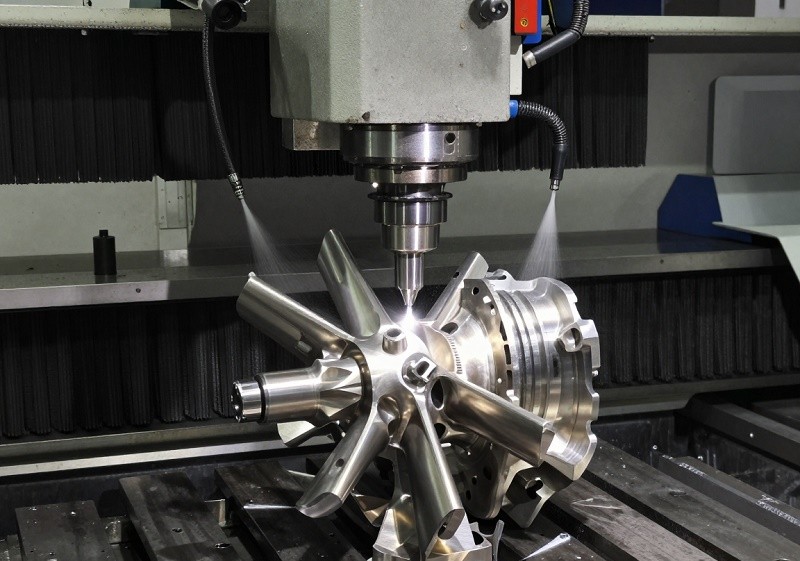
Evolution of CNC Technology: From Basic Control to Advanced Automation
The journey of CNC technology from its inception to its current state is a story of continuous innovation. What began as a method to automate basic machine movements has evolved into a highly sophisticated and intelligent manufacturing ecosystem.
Early Innovations and Digital Advancement
The origins of CNC technology can be traced back to the post-World War II era, born from a military need for highly accurate and repeatable manufacturing. In the late 1940s, John T. Parsons, often called the "Father of CNC," developed a method to create complex curved helicopter blades for the U.S. Air Force. His groundbreaking idea was to use numerical data to control a machine tool, laying the foundation for what would become Numerical Control (NC).
This work led to a partnership with the Massachusetts Institute of Technology (MIT) Servomechanisms Laboratory. In 1952, the team at MIT successfully demonstrated the first true NC milling machine, which used instructions fed via a punched tape to guide its movements. This early system, while rudimentary by today's standards, represented a monumental shift from imprecise craft to an exact science in manufacturing.
The transition from NC to CNC (Computer Numerical Control) occurred in the 1960s and 70s with the integration of digital computers. Instead of relying on physical punch tapes, instructions could be programmed directly into a computer, which offered far greater flexibility and control. This digital advancement, coupled with the development of Computer-Aided Design (CAD) and Computer-Aided Manufacturing (CAM) software, transformed the industry. Designers could now create complex 3D models and directly generate the machine code needed to produce them, streamlining the entire workflow from concept to creation.
Modern CNC Machines: AI, Automation, and Robotics
Today's CNC machining landscape is defined by the integration of Industry 4.0 principles, turning traditional factories into "smart factories." This new paradigm is driven by a fusion of artificial intelligence (AI), advanced automation, and robotics, which work together to create a self-optimizing manufacturing ecosystem.
Key advancements in modern CNC technology include:
- Artificial Intelligence (AI) and Machine Learning: AI is transforming CNC machining from a pre-programmed process into an intelligent one. AI algorithms analyze real-time data from sensors to optimize performance, predict maintenance needs, and improve quality control. For example, AI can detect subtle vibration patterns or temperature shifts to predict when a cutting tool will fail, allowing for its replacement before it can cause defects or damage the machine. This predictive maintenance capability dramatically reduces unplanned downtime and lowers operating costs. Machine learning models also learn from past production runs to refine toolpaths and cutting parameters, continuously improving efficiency and part quality.
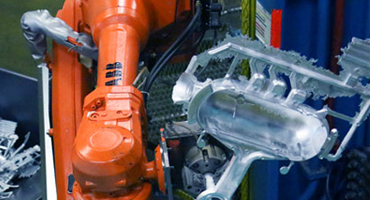
- Advanced Automation and Robotics: Automation in CNC machining now extends far beyond the machine itself. Robotic arms are commonly used for "machine tending"—the repetitive task of loading raw materials and unloading finished parts. This allows for 24/7 "lights-out" production with minimal human oversight, significantly increasing productivity. Collaborative robots, or "cobots," are designed to work safely alongside human operators, handling strenuous or repetitive tasks while humans focus on more complex, value-added work.
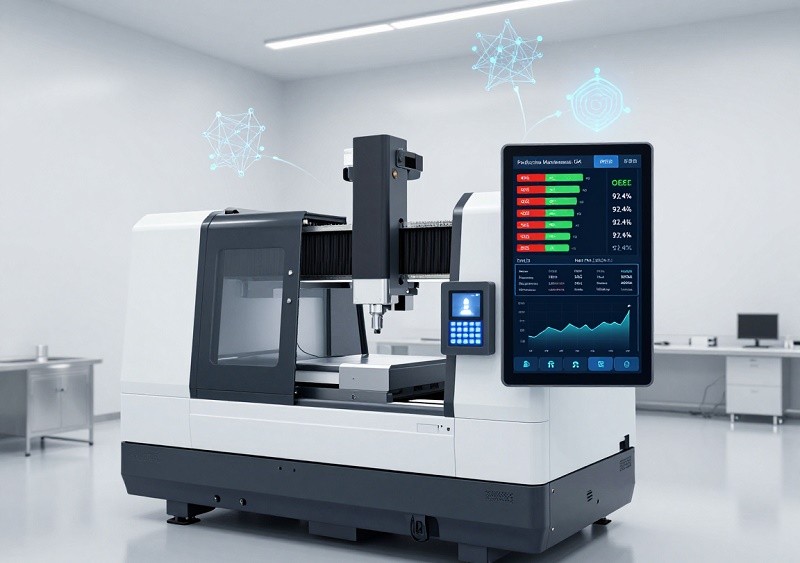
- The Internet of Things (IoT): The Industrial Internet of Things (IIoT) is the backbone of the smart factory, creating a network where machines, sensors, software, and people are all interconnected. This connectivity enables the seamless flow of data, allowing for real-time monitoring of every aspect of the production process. Managers can track machine status, Overall Equipment Effectiveness (OEE), and other key performance indicators from a central dashboard, enabling data-driven decisions that boost efficiency.
These technologies are not just theoretical concepts; they are actively being deployed by global CNC machining service providers to deliver higher quality parts, faster turnaround times, and more competitive pricing.
How Global CNC Machining Service Providers Leverage Advanced Techniques for Optimization
The world's leading CNC machining service providers differentiate themselves by mastering a diverse array of advanced techniques. This expertise allows them to tackle a wide spectrum of manufacturing challenges, from crafting simple components in high volumes to producing highly complex, one-of-a-kind parts. By strategically applying different machining methods, they optimize for precision, speed, and cost-effectiveness, ensuring they can meet the specific needs of any industry.
Diverse CNC Machining Methods for Varied Industrial Needs
No single CNC machining process is suitable for every application. A skilled service provider maintains a versatile toolkit of methods, each with unique strengths. This diversity is crucial for manufacturing everything from the large structural components of an aircraft to the microscopic parts of a medical implant.
CNC Milling: Crafting with Rotational Tools
CNC milling is a subtractive manufacturing process where a rotating, multi-point cutting tool removes material from a stationary workpiece. The process begins with a solid block of material, such as metal, plastic, or wood, which is fixed to the machine's bed. The computer-controlled spindle, holding the cutting tool, then moves along multiple axes to cut, drill, and shape the workpiece according to the digital design.
Milling machines are categorized by their number of axes of movement, which determines their capability and the complexity of the parts they can produce:
- 3-Axis Milling: This is the most common form of CNC milling. The cutting tool can move along three linear axes: X (left-right), Y (forward-backward), and Z (up-down). It is ideal for creating parts with relatively simple geometries, such as flat surfaces, pockets, and holes.
- 4-Axis Milling: This process adds a rotational axis (the A-axis) to the standard three. This allows the workpiece to be rotated around the X-axis, enabling the machining of features on the sides of a part without needing to manually re-fixture it. This saves time and improves accuracy.
- 5-Axis Milling: The most advanced form, 5-axis milling includes two rotational axes in addition to the three linear axes. This allows the cutting tool to approach the workpiece from virtually any angle, making it possible to create extremely complex geometries, such as those found in turbine blades and medical implants, in a single setup.
CNC milling is incredibly versatile and is used across nearly every industry, including aerospace (engine components, structural frames), automotive (engine blocks), and electronics (housings, heatsinks).
CNC Turning: Mastering Cylindrical Components
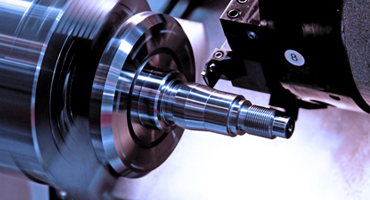
In contrast to milling, CNC turning involves rotating a workpiece at high speed while a stationary cutting tool removes material. This process is performed on a CNC lathe or turning center and is ideal for creating parts with cylindrical or conical profiles. The workpiece is held in a chuck and spun by a spindle, and the cutting tool is mounted on a turret that moves linearly along the rotating workpiece to achieve the desired shape.
Key aspects of CNC turning include:
- CNC Lathes vs. Turning Centers: While the terms are often used interchangeably, a basic CNC lathe typically operates on two axes (X and Z) and is used for turning, facing, and threading operations. A more advanced CNC turning center can have 3, 4, or 5 axes and may include "live tooling" capabilities. Live tools are rotating cutting tools (like mills or drills) mounted on the turret, allowing the machine to perform milling, drilling, and tapping operations on the part without needing to move it to a separate machine. This integration of capabilities is a hallmark of modern turning centers.
- High Efficiency for Round Parts: Turning is exceptionally efficient for producing symmetrical, cylindrical components. The continuous cutting action allows for rapid material removal and excellent surface finishes. This makes it the preferred method for parts like shafts, pins, bushings, nozzles, and custom fittings.
- Diverse Applications: CNC turning is critical in numerous sectors. The automotive industry uses it for crankshafts and brake rotors; the aerospace industry for landing gear components and hydraulic fittings; and the oil and gas industry for precision pistons and rods. In medicine, CNC turning is essential for manufacturing biocompatible implants and surgical tools that require smooth surfaces and exacting dimensions.
By mastering CNC turning, global service providers can produce high volumes of cylindrical parts with exceptional consistency and speed, making it a cornerstone of precision manufacturing.
Specialized Techniques: Grinding, Lapping, and Swiss Machining
Beyond standard milling and turning, top-tier service providers employ specialized techniques to achieve ultra-high precision, superior surface finishes, and efficiently produce complex, small-scale parts.
CNC Grinding: CNC grinding is a finishing process that uses a rotating abrasive wheel to remove minute amounts of material from a workpiece. Unlike milling or turning, which cut material, grinding wears it away, making it ideal for shaping very hard materials like hardened steel or ceramics that are difficult to machine with traditional tools. The process can achieve exceptionally tight tolerances and extremely smooth surface finishes, which is critical for components like gears, bearings, and aerospace turbine parts that require high surface integrity.
Lapping: Lapping is a precision finishing process used to achieve an extreme level of flatness and surface smoothness. It involves rubbing a workpiece against a "lap" plate with a fine abrasive slurry in between. This gentle, averaging action removes microscopic high points from the surface, resulting in a dull, non-reflective finish with incredibly tight dimensional accuracy. Lapping is essential for creating sealing surfaces, optical lenses, and high-quality reflecting mirrors where even the smallest imperfections are unacceptable.
Swiss Machining: Also known as Swiss-type turning, this method is designed specifically for producing small, long, and intricate parts with outstanding precision. In a Swiss machine, the bar stock is fed through a guide bushing, which provides rigid support very close to the cutting tool. This unique setup minimizes deflection and vibration, even on very slender parts. As a result, Swiss machining excels at producing complex medical implants, electronic connectors, and components for the watchmaking industry, often completing all operations in a single setup.
The Strategic Impact of Multi-Axis Machining and Turning Services
The adoption of multi-axis machining represents one of the most significant strategic advancements in modern manufacturing. By moving beyond the limitations of traditional 3-axis machines, providers can unlock new levels of efficiency, accuracy, and design freedom, enabling them to tackle manufacturing challenges that were once considered impossible.
Enhancing Accuracy and Efficiency with Multi-Axis Capabilities
The move from 3-axis to multi-axis (4- and 5-axis) machining provides a leap in both part quality and operational efficiency. These advanced capabilities directly address the core goals of precision manufacturing by enhancing accuracy and reducing production time.
The key benefits include:
- Single-Setup Machining: With a traditional 3-axis machine, a complex part often requires multiple setups. The operator must manually unclamp, rotate, and re-clamp the workpiece to machine different faces. Each setup introduces the potential for human error and slight misalignments, which compromises the final accuracy of the part. Multi-axis machines eliminate this issue by allowing the cutting tool or the workpiece to be rotated and tilted automatically. This "single-setup" or "done-in-one" approach ensures that all features are machined in relation to the same starting point, dramatically improving feature-to-feature accuracy.
- Reduced Lead Times: By eliminating the time-consuming process of multiple setups, multi-axis machines can complete complex parts in a fraction of the time. This reduction in cycle time translates directly to shorter lead times and faster delivery for customers. Automation allows for more efficient toolpaths, and the ability to orient the tool optimally to the workpiece surface can increase material removal rates, further speeding up the process.
- Improved Surface Finish: Multi-axis capabilities allow the cutting tool to maintain a tangential orientation to the part's surface. This constant engagement results in a smoother, more uniform surface finish. Additionally, because the machine can position the part closer to the cutting tool, shorter and more rigid tools can be used. Shorter tools are less susceptible to vibration, which is a major cause of poor surface quality or "chatter". The result is a higher quality part straight off the machine, reducing the need for secondary polishing or finishing operations.
In essence, multi-axis machining streamlines the production workflow, minimizes the risk of human error, and empowers manufacturers to produce higher quality parts faster than ever before.
Solving Complex Manufacturing Challenges
Multi-axis CNC machines are purpose-built to produce parts with complex geometries that would be difficult, if not impossible, to create using traditional 3-axis methods. The ability to move a part and/or a tool along five or more axes simultaneously unlocks unparalleled design freedom.
This capability is particularly vital in industries with demanding design requirements:
- Aerospace Industry: Modern aircraft rely on lightweight, strong, and aerodynamically optimized components. 5-axis machining is essential for manufacturing parts like monolithic structures (machined from a single block of metal), impellers, turbine blades, and complex engine casings. The machine's ability to create smooth, contoured surfaces and intricate internal features in a single setup is critical for performance and safety.
- Medical Device Industry: The human body is not made of straight lines and simple angles. Multi-axis CNC machining is used to create custom, patient-specific orthopedic implants, such as hip and knee replacements, that perfectly match a patient's unique anatomy. This level of personalization leads to better surgical outcomes and faster recovery times. It is also used to produce complex surgical instruments that are ergonomic and highly effective.
- Energy Sector: In the energy industry, 5-axis machining is used to produce complex components for turbines and other power generation equipment. The precision and surface finishes achievable are crucial for maximizing efficiency and reliability in these demanding applications.
By overcoming the geometric limitations of older technologies, multi-axis machining empowers engineers and designers to innovate without being constrained by manufacturing capabilities. It enables the creation of lighter, stronger, and more efficient parts, driving progress across a wide range of high-tech fields.
From Prototyping to High-Volume Production: A Seamless Transition
A key advantage of partnering with a global CNC machining service provider is the ability to support the entire product lifecycle, from initial concept to mass production. CNC machining is uniquely suited to facilitate a smooth and efficient transition between these stages, ensuring that the final product retains the precision and quality established during prototyping.
Rapid Prototyping and Cost-Effective Iterations
During the early stages of product development, speed and adaptability are paramount. CNC machining is an ideal technology for rapid prototyping because it allows designers and engineers to turn digital models into physical parts quickly and accurately. This accelerates the iterative design process, where prototypes are tested, evaluated, and refined.
Key advantages of CNC machining for prototyping include:
- Speed and No Tooling Costs: Unlike processes like injection molding that require expensive and time-consuming custom molds, CNC machining is a "tooling-free" process. A prototype can be machined directly from a CAD file in a matter of hours, allowing for rapid design iterations. If a modification is needed, the digital file is simply updated, and a new version can be produced just as quickly.
- High Precision and Functional Testing: While 3D printing is also used for rapid prototyping, it often lacks the dimensional accuracy and material strength needed for rigorous functional testing. CNC machining, by contrast, creates prototypes with tight tolerances from production-grade materials like aluminum, steel, and engineering plastics. This allows engineers to build functional prototypes that look, feel, and perform exactly like the final product, ensuring that any design flaws are caught early.
- Material Versatility: CNC machining can work with a vast range of solid materials. This gives product developers the flexibility to test prototypes made from the actual material intended for the final production run, providing invaluable insights into the part's durability, weight, and performance characteristics.
By leveraging CNC for prototyping, companies can significantly shorten their development cycles, reduce the risk of costly design errors downstream, and get their products to market faster.
Scaling Precision: The CNC Advantage in Large-Scale Manufacturing
Once a prototype has been validated and the design is finalized, the next challenge is scaling up to full production. CNC machining is exceptionally well-suited for this transition, ensuring that the precision and quality established during prototyping are maintained at any volume. This capability allows providers to deliver a vast range of high-quality CNC Machining Parts{:target='_blank'} consistently.
The advantages of CNC for large-scale manufacturing include:
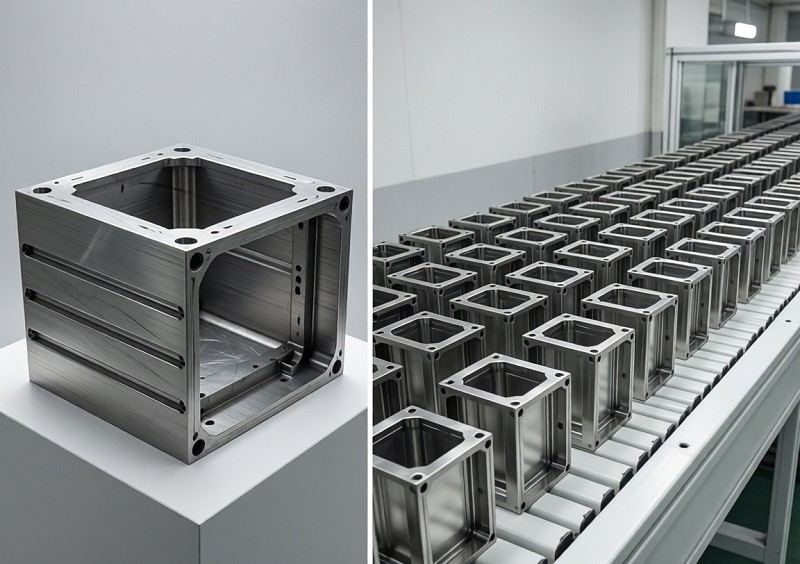
- Consistency and Repeatability: The core strength of CNC machining is its ability to produce identical parts with extreme consistency. Once a program is perfected, a CNC machine can run it thousands of times with minimal deviation, ensuring that every part in a large production run meets the exact same specifications. This level of repeatability is crucial for maintaining quality and reliability in mass-produced goods.
- 24/7 Automated Production: Modern CNC machines, especially when paired with robotic loading/unloading systems, can operate around the clock with minimal human supervision. This continuous, automated production capability allows for massive throughput, enabling manufacturers to meet tight deadlines and large order volumes efficiently.
- Scalable Precision: Unlike some manufacturing methods where quality can degrade as production scales, CNC maintains its precision regardless of volume. The same tight tolerances and superior surface finishes achieved on a single prototype can be replicated across thousands or even millions of parts. This makes it the ideal technology for industries like automotive and aerospace, where large quantities of high-precision components are required.
- Cost-Effectiveness at Scale: While the initial setup for a CNC job involves programming and fixture design, these are one-time costs. In high-volume production, these costs are amortized over thousands of units, making the per-part cost highly competitive. Furthermore, the efficiency of CNC machining minimizes material waste and reduces labor costs, contributing to overall cost-effectiveness.
By providing a direct and scalable path from prototype to production, CNC machining bridges the gap between design and mass manufacturing, offering a reliable, precise, and efficient solution for bringing products to market.
Innovation and Sustainability Driven by Global CNC Machining Service Providers
Leading global CNC machining service providers are not just manufacturers; they are innovators and key contributors to a more sustainable industrial future. They push the boundaries of what is possible by pioneering new materials, integrating smart technologies to optimize performance, and committing to environmentally responsible manufacturing practices. This forward-thinking approach ensures they remain at the cutting edge of the industry.
Pioneering Material Science and Application
The expertise of a global CNC machining provider is not just in how they cut, but what they can cut. The advancement of material science is constantly introducing new alloys, composites, and plastics with superior properties. Effectively machining these materials requires deep knowledge and specialized techniques.
- Machining Exotic Alloys: High-performance industries like aerospace and energy rely on "exotic" superalloys such as Inconel, Titanium, and Hastelloy. These materials offer incredible strength and resistance to heat and corrosion, but they are notoriously difficult to machine. They generate extreme heat during cutting and have a tendency to "work harden," making them progressively tougher to cut. Expert service providers overcome these challenges by using specialized tooling (such as carbide or ceramic-coated tools), optimizing cutting speeds and feeds to manage heat, and employing advanced toolpath strategies.
- High-Performance Plastics and Composites: Beyond metals, CNC machining is increasingly used for high-performance polymers and composites. Materials like PEEK, Ultem, and carbon fiber-reinforced plastics offer exceptional strength-to-weight ratios and are used to replace metal components, leading to significant weight savings in aerospace and automotive applications. However, machining these materials presents unique challenges. Plastics can melt or warp from the heat of cutting, while composites are abrasive and can cause delamination (separation of layers). Success requires a deep understanding of each material's thermal properties and the use of specialized, sharp tooling and specific machining parameters to achieve a clean cut without damaging the material's integrity.
By mastering the art and science of machining these advanced materials, global CNC providers enable the creation of next-generation products that are lighter, stronger, and more durable.
Integrating IoT for Optimized Performance
The integration of the Internet of Things (IoT) is a cornerstone of Industry 4.0, transforming CNC machining from a series of isolated operations into a connected, data-driven ecosystem. By embedding sensors into CNC machines, service providers can collect, share, and analyze vast amounts of real-time data to unlock new levels of performance and efficiency.
Key benefits of IoT integration in CNC machining include:
- Real-Time Monitoring and Control: IoT sensors continuously gather data on critical machine parameters such as temperature, vibration, spindle speed, and coolant levels. This data is streamed to a central dashboard, giving operators and managers a live, transparent view of the entire production floor. This allows for immediate intervention if any anomalies are detected, preventing minor issues from escalating into major problems.
- Predictive Maintenance: One of the most powerful applications of IoT is predictive maintenance. Instead of performing maintenance on a fixed schedule, IoT data allows machines to predict when a component is likely to fail. By analyzing trends in vibration or temperature, the system can alert technicians to an impending issue, enabling them to schedule repairs before a breakdown occurs. This proactive approach minimizes unplanned downtime, reduces maintenance costs, and extends the lifespan of the equipment.
- Data-Driven Optimization: The data collected by IoT sensors provides invaluable insights into the manufacturing process. By analyzing historical and real-time data, manufacturers can identify bottlenecks, optimize toolpaths, and refine cutting parameters to improve cycle times and reduce waste. This data-driven approach to decision-making leads to continuous process improvement, higher productivity, and ultimately, a more competitive operation.
By harnessing the power of IoT, global CNC service providers are creating smarter, more resilient, and highly optimized manufacturing environments.
Commitment to Sustainable Manufacturing Practices
As global industries face increasing pressure to adopt more environmentally friendly operations, leading CNC machining providers are taking a proactive role in promoting sustainability. This commitment is not only an ethical responsibility but also a strategic business advantage, as efficiency and waste reduction often lead to lower costs.
Key sustainable practices in CNC machining include:
- Waste Reduction and Material Recycling: The subtractive nature of CNC machining inherently produces scrap material in the form of metal chips (swarf). Forward-thinking shops implement robust recycling programs for these materials. Aluminum, steel, and other metal scraps are collected, separated, and sent to be melted down and reused, reducing the demand for new raw materials. Advanced software also helps optimize cutting paths to maximize the use of the initial workpiece, minimizing the amount of scrap generated in the first place. Some facilities even employ closed-loop systems where waste is processed and reintroduced directly back into the production cycle.
- Energy-Efficient Machinery and Processes: Traditional manufacturing can be energy-intensive. Modern CNC machines are designed with energy efficiency in mind, incorporating features like optimized servo motors that consume less power and intelligent standby modes that automatically power down components when not in use. Additionally, IoT sensors can monitor and adjust energy consumption in real time, further enhancing efficiency.
- Eco-Friendly Coolants and Lubricants: Coolants and lubricants are essential for reducing heat and friction during machining, but traditional petroleum-based fluids can be harmful to the environment. Sustainable manufacturers are increasingly switching to biodegradable, vegetable oil-based coolants that are less toxic and easier to dispose of. Furthermore, advanced techniques like Minimum Quantity Lubrication (MQL) or even "dry machining" (where no coolant is used) are being adopted where possible to eliminate fluid waste entirely.
Through these and other initiatives, CNC service providers are demonstrating that high-precision manufacturing and environmental responsibility can—and should—go hand in hand.
The Future Landscape: Challenges and Opportunities for Global CNC Machining Service Providers
The global manufacturing landscape is in a constant state of flux, driven by technological advancements, evolving market demands, and geopolitical shifts. For global CNC machining service providers, this dynamic environment presents both significant challenges and exciting opportunities. Navigating this future successfully will require adaptability, a commitment to workforce development, and a forward-looking approach to embracing emerging technologies.
Addressing Industry Challenges: Supply Chain and Workforce Development
Even the most technologically advanced service providers are not immune to macro-level industry challenges. Two of the most pressing issues facing the CNC machining sector today are the increasing volatility of global supply chains and a persistent shortage of skilled labor.
Global Supply Chain Volatility: Recent global events have exposed the fragility of complex, just-in-time supply chains. Disruptions, whether caused by geopolitical tensions, natural disasters, or pandemics, can lead to significant delays and rising costs. For CNC machining providers, this manifests as:
- Material Shortages and Price Hikes: A disruption in the supply of raw materials can halt production lines. When demand outstrips supply for key metals or plastics, prices can increase dramatically, squeezing profit margins.
- Extended Lead Times: Logistical bottlenecks and shipping delays mean that even if a part is produced on time, getting it to the customer can take longer than expected, impacting project timelines.
To mitigate these risks, forward-thinking providers are diversifying their supplier base, investing in smart inventory management systems, and exploring local or regional sourcing to reduce dependency on overseas suppliers.
Workforce Development and the Skills Gap: The CNC machining industry is facing a significant "skills gap". This refers to the growing discrepancy between the advanced skills required to operate modern CNC equipment and the skills possessed by the available workforce.
- An Aging Workforce: Many highly experienced machinists are nearing retirement, taking decades of invaluable knowledge with them.
- A Lack of New Talent: There is a concerning shortage of new, skilled workers entering the trade. This is partly due to outdated perceptions of manufacturing and a mismatch between educational curricula and the evolving needs of high-tech machine shops.
This skills shortage leads to production bottlenecks, stretches existing staff thin, and can slow the adoption of new technologies. Successful CNC service providers are tackling this challenge head-on by investing in robust in-house training programs, partnering with technical schools and universities, and actively promoting the reality of modern manufacturing as a high-tech, rewarding career path. By fostering the next generation of talent, they are ensuring the long-term health and competitiveness of their operations.
Embracing Emerging Technologies: Electric Propulsion and Urban Air Mobility
As technology evolves, so do the industries that rely on precision manufacturing. Forward-looking CNC service providers are positioning themselves at the forefront of two transformative sectors: electric propulsion and Urban Air Mobility (UAM). These emerging fields present immense opportunities for growth and innovation.
Electric Propulsion Systems: The global shift toward electric vehicles (EVs) is revolutionizing the automotive industry. However, the demand for precision components extends far beyond personal cars to include electric aircraft, boats, and industrial machinery. CNC machining is a vital enabler of this transition.
- Key Components: The performance, efficiency, and safety of an electric propulsion system depend on the precision of its components. CNC machining is used to manufacture critical parts such as lightweight battery enclosures, complex motor housings, high-conductivity copper busbars and connectors, and durable powertrain components.
- Precision for Performance: Even minute imperfections in parts like a battery cooling plate or a rotor shaft can lead to significant drops in efficiency or even catastrophic failure. CNC machining delivers the tight tolerances and superior surface finishes required to ensure these systems operate reliably and at peak performance. For example, perfectly balanced, vibration-free components are crucial in high-RPM electric motors to ensure a quiet ride and long-term durability.
Urban Air Mobility (UAM): UAM, the concept of using small, automated aircraft for on-demand transportation in and around cities, is moving rapidly from science fiction to reality. This nascent industry will rely heavily on advanced manufacturing to produce the lightweight, high-strength components needed for these electric vertical takeoff and landing (eVTOL) aircraft.
- Lightweighting and Strength: UAM vehicles must be both incredibly lightweight to maximize flight time and exceptionally strong to ensure safety. This necessitates the use of advanced materials like aerospace-grade aluminum, titanium, and carbon fiber composites.
- A Critical Manufacturing Partner: CNC machining, particularly multi-axis machining, is perfectly suited to produce the complex, high-tolerance structural components, engine parts, and landing gear systems that these innovative aircraft will require. As the UAM market is forecasted to involve hundreds of thousands of vehicles in the coming decades, CNC service providers who can meet the stringent quality and material demands of this sector will be indispensable partners.
By actively engaging with and developing expertise in these burgeoning fields, global CNC machining service providers are not just adapting to the future—they are helping to build it.
Conclusion
As global CNC machining service providers, we are not just manufacturing parts; we are shaping the future of various industries, enabling unprecedented levels of precision, efficiency, and innovation. From the foundational principles of subtractive manufacturing to the cutting-edge integration of AI and multi-axis robotics, the capabilities of CNC machining are continuously expanding. This evolution allows us to meet the increasingly complex demands of sectors like aerospace, medical, and the emerging fields of electric mobility.
By continuously adopting advanced technologies, pioneering new material applications, and committing to sustainable practices, global CNC machining service providers remain indispensable partners in optimizing manufacturing worldwide. We ensure that the components we produce not only meet the stringent demands of today's landscape but are also ready for the technological challenges of tomorrow. We encourage you to share this article and join the conversation about the future of precision manufacturing.