How Automated Panel Bending Enhances Sheet Metal Cutting Solutions
In the rapidly evolving world of manufacturing, staying competitive means constantly seeking out efficiencies and innovations. For us, a critical area of focus has been how automated panel bending enhances sheet metal cutting solutions, offering remarkable improvements over traditional methods. We’ve seen firsthand how integrating advanced technology optimizes the entire Sheet Metal Fabricationprocess.
Sheet metal fabrication, a cornerstone of many industries from automotive to aerospace, involves a precise blend of cutting, bending, forming, and assembly to create everything from simple parts to complex structures. The introduction of automation to sheet metal cutting and bending processes has revolutionized our capabilities, delivering higher quality products at faster turnaround times and reduced operational costs.
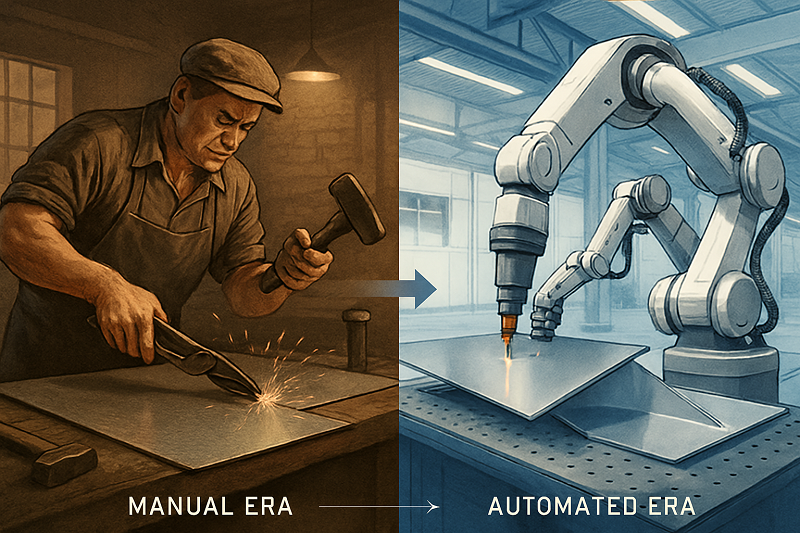
The Evolution of Sheet Metal Cutting and Bending: From Manual to Automated
The journey of sheet metal fabrication is a story of craft transforming into science. What began with hammers, anvils, and the skilled hands of artisans has evolved into a high-tech, automated process driven by sophisticated software and robotics. Understanding this evolution is key to appreciating the quantum leap that modern automated solutions represent. From the laborious and time-consuming manual methods to the speed and precision of today's technology, the industry has undergone a radical transformation.
This progression wasn't just about making things faster; it was about making them better, more consistent, and more complex. It addressed fundamental challenges that had limited the scope and scale of sheet metal applications for centuries.
Traditional Sheet Metal Fabrication Challenges
Before the widespread adoption of automation, sheet metal fabrication was fraught with challenges that impacted efficiency, quality, and cost. These traditional methods, while effective for their time, created inherent limitations that modern manufacturing has sought to overcome. The reliance on manual skill and the physical nature of the work often led to significant hurdles in production environments.
Labor-Intensive and Skill-Dependent Processes
Traditionally, shaping sheet metal was more of an art than a manufacturing process. It relied heavily on the profound knowledge and physical skill of expert artisans. These metalworkers used a variety of hand tools like hammers and anvils, along with manually operated machines, to cut, bend, and form parts. The process was incredibly labor-intensive and required a long apprenticeship to master. A craftsperson needed a deep understanding of metallurgy to know how different materials would behave under stress, how to prevent cracking, and how to achieve the desired shape without compromising the metal's integrity.
This dependence on manual skill had several drawbacks:
- High Labor Costs: Skilled metalworkers are valuable and command higher wages, significantly increasing the cost of production.
- Long Training Periods: Becoming a proficient artisan takes years of practice, creating a scarcity of qualified labor.
- Physical Strain: The manual bending of sheet metal is physically demanding, leading to fatigue and potential for injury. It involves high labor intensity, especially for thicker materials.
- Limited Complexity: While artisans can create beautiful and intricate pieces, highly complex or repetitive geometries were extremely difficult and time-consuming to produce manually.
Inconsistencies and Production Bottlenecks
Human involvement is inherently variable. Even the most skilled operator cannot replicate actions with the perfect consistency of a machine. This leads to several significant challenges in a traditional production environment:
- Quality and Consistency Issues: Manual processes are susceptible to human error. Minor variations in force, angle, or positioning during bending can result in parts that are not within tolerance. This inconsistency can be caused by something as simple as fatigue over a long shift, a misreading of a measurement, or unclear work instructions. The result is a higher rate of defects, scrap, and rework, which directly translates to wasted material and increased costs. Factors like springback—the tendency of metal to return to its original shape after bending—are particularly difficult to compensate for manually, leading to inaccurate bend angles.
- Production Bottlenecks: In any manufacturing line, the overall speed is determined by its slowest step. Manual processes, being slower and more variable than automated ones, often become production bottlenecks. This is especially true for bending and material handling operations. A recent survey of over 500 metal fabricators revealed that 85% identified material handling and bending as primary sources of production gridlock. These bottlenecks lead to longer lead times, lower overall productivity, and worker downtime, making it difficult to scale production to meet rising demand.
- Safety Risks: Handling large, heavy, and often sharp sheets of metal carries inherent safety risks. Manual bending operations expose workers to potential cuts, crush injuries, and other physical harm. Reducing manual intervention is a key driver for improving workplace safety.
The Rise of Automated Sheet Metal Cutting and Bending
The limitations of traditional fabrication methods created a clear need for innovation. The answer came in the form of automation, which began to take root with the introduction of computer numerical control (CNC) technology. This marked the beginning of a new era in sheet metal manufacturing, one defined by precision, speed, and repeatability.
CNC Machines for Precision and Speed
CNC technology fundamentally changed the game by translating digital designs into precise machine movements. It's a technology that automates the control of machine tools using a computer, which sends precise numerical codes to dictate the machine's actions. This marriage of computer-aided design (CAD) and computer-aided manufacturing (CAM) software with physical machinery brought unprecedented levels of precision and speed.
Key CNC applications in sheet metal include:
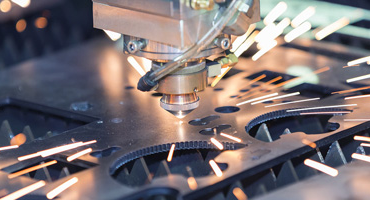
- CNC Laser Cutting: This process uses a high-powered, focused laser beam to melt, burn, or vaporize material, creating exceptionally clean and precise cuts. It is significantly faster than traditional cutting methods, can create intricate shapes with tight tolerances (often ±0.1 mm), and reduces material waste. Because it's a non-contact process, there's no tool wear, ensuring consistent quality over large production runs.
- CNC Punching: A CNC turret punch uses a variety of punches and dies to create holes and forms in a sheet of metal with high speed and accuracy. It is ideal for parts with many holes or standard forms.
- CNC Press Brakes: These machines automate the bending process. An operator places the sheet metal on the die, and a CNC-controlled punch descends to a precise depth to form the bend. The integration of computer control allows for exact management of the machine’s movements, ensuring each bend is made with pinpoint accuracy. Advanced CNC press brakes feature multi-axis backgauges for precise material positioning, real-time angle measurement sensors, and automatic crowning systems to compensate for machine deflection, all of which contribute to superior bend accuracy.
Automated Panel Bending: A Game Changer in Sheet Metal
While CNC press brakes represented a major leap forward, the evolution of automation didn't stop there. The next frontier came with the development of the automated panel bender—a "robotic master of sheet metal forming." This technology represents a paradigm shift, moving from a process where the part is moved to the tool, to one where the part remains stationary while automated tools perform the work.
An automated panel bender is a highly sophisticated machine designed for fast, precise, and efficient forming of sheet metal panels. Unlike a press brake, where an operator manually manipulates the sheet for each bend, a panel bender automates almost the entire process. Here’s a breakdown of how it works:
- Loading and Positioning: The flat metal sheet is loaded onto the machine's worktable, often by a robotic arm. A manipulator then precisely positions the sheet for the first bend.
- Clamping: A blank holder descends to securely clamp the sheet in place, preventing any movement during the bending process.
- Bending: Universal upper and lower bending blades swing up or down to form the bend. Because the blades can move in both directions, the machine can create both positive and negative bends without the need to flip the heavy and awkward workpiece.
- Repositioning and Repeat: After a bend is complete, the manipulator automatically repositions the sheet for the next bend in the sequence. This cycle repeats until all bends on the part are completed.
- Unloading: The finished, complex part is unloaded, often automatically, clearing the way for the next sheet.
The core principle is to "move the blade, not the sheet." This fundamental difference is what unlocks a new level of efficiency and precision, making the panel bender a true game-changer, especially for parts with multiple bends, such as enclosures, panels, and cabinets.
Unlocking Efficiency: How Automated Panel Bending Transforms Sheet Metal Cutting and Bending Workflows
The adoption of automated panel bending isn't merely an incremental improvement; it's a transformative one that redefines what's possible in terms of speed, precision, and complexity. By integrating this technology, manufacturers can overcome the traditional challenges of sheet metal fabrication and unlock significant competitive advantages. The impact is felt across the entire production workflow, from initial setup to the final quality of the finished part.
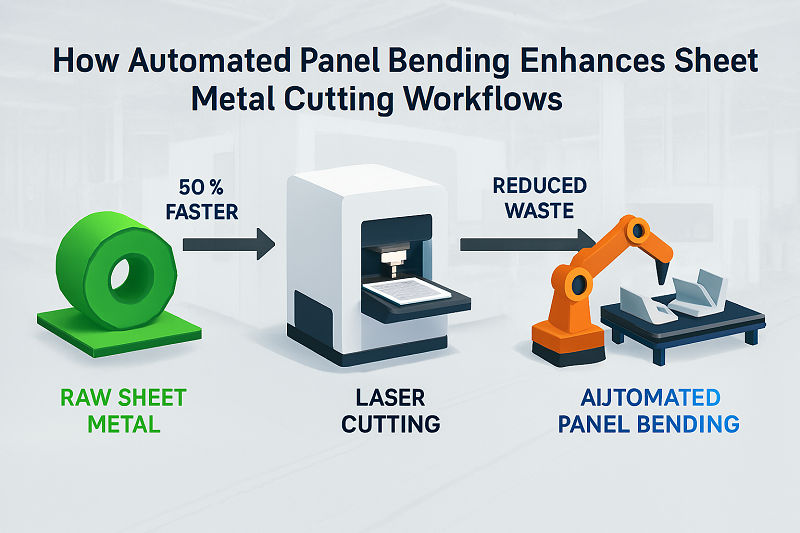
Accelerated Production Cycles and Improved Throughput
One of the most significant advantages of automated panel bending is the dramatic reduction in production cycle times. The combination of several key features leads to a level of throughput that is unattainable with manual or even standard CNC press brake operations.
Key factors contributing to accelerated production include:
- Minimal Setup Time: Panel benders use universal tooling that can adapt to various material thicknesses and bend geometries. This eliminates the lengthy and labor-intensive process of changing punches and dies between jobs, which can take hours on a traditional press brake. With a panel bender, a new job can be set up in minutes, maximizing machine uptime.
- High Bending Speed: The bending cycle itself is incredibly fast. Panel benders can perform multiple bends, on average, two to three times faster than a press brake. Some machines can complete an average of 17 bends per minute. This speed is achieved because the machine, not an operator, is handling the material positioning.
- Automated Handling: On a press brake, an operator (or two for large parts) must manually lift, rotate, and reposition the metal sheet for each bend. This is slow, physically demanding, and a major source of bottlenecks. A panel bender's integrated manipulator automates this entire process, moving the sheet with speed and precision that humans simply cannot match. This automation allows for continuous, uninterrupted production.
- Bidirectional Bending: The ability to bend both upward and downward without flipping the part is a massive time-saver. Consider a complex enclosure with both internal and external flanges. On a press brake, this would require the operator to flip the large, cumbersome part multiple times. A panel bender accomplishes this through the movement of its upper and lower blades, slashing the cycle count and handling time.
The cumulative effect of these features is a radical increase in throughput. Manufacturers report production speed increases of 30-50% and cycle time reductions of up to 70% after implementing automated panel benders. This allows for faster order fulfillment, increased capacity, and the possibility of "lights-out" manufacturing, where the machine runs unattended for extended periods.
Unmatched Precision and Repeatability in Sheet Metal Cutting and Bending
While speed is a major benefit, the true power of automated panel bending lies in its ability to produce parts with exceptional precision and perfect repeatability. Automation eliminates the single greatest source of variability in traditional fabrication: human error. This leads to a level of quality and consistency that is critical for industries from aerospace to electronics.
Here’s how automated panel benders achieve superior precision:
- Elimination of Manual Variability: By automating the positioning, clamping, and bending processes, the machine removes inconsistencies that arise from operator fatigue, skill differences, or minor misjudgments. Every part in a batch is produced using the exact same sequence and parameters, ensuring uniformity. Panel bending is a reliable and precise production method that drastically reduces the chance of human error.
- High-Precision Control Systems: Modern panel benders are equipped with advanced CNC control systems that can achieve incredible accuracy. These systems can have a minimum control unit of 0.001mm and a repeat positioning accuracy of ±0.005mm. This level of precision is essential for parts with tight tolerances that must fit perfectly during final assembly.
- Real-Time Feedback and Correction: Many automated benders incorporate sophisticated sensor technology for closed-loop control. These can include:
- Angle Measurement Systems: Laser-based sensors measure the bend angle in real-time and instruct the machine to make micro-adjustments to compensate for springback, ensuring the final angle is perfect.
- Material Property Identification: Some systems can automatically detect variations in material thickness and hardness and adjust bending force accordingly, ensuring consistent results even when the raw material isn't perfectly uniform.
- Secure Clamping: The workpiece is firmly held in place by a blank holder during the entire bending sequence. This prevents any slipping or shifting, which is a common cause of dimensional inaccuracies in manual or press brake operations where the part is constantly being moved.
The result is a "zero-defect" manufacturing environment where part quality is not left to chance. This unmatched repeatability reduces scrap rates, minimizes costly rework, and ensures that every component meets the exact design specifications. For applications requiring a high degree of precision and consistency, such as producing enclosures or steel furniture, automated panel benders are the ideal solution.
Reduced Labor Costs and Skill Requirements
The manufacturing industry is facing a significant shortage of skilled labor. Finding and retaining experienced press brake operators, who require years of training, is a major challenge for many companies. Automated panel bending directly addresses this issue by fundamentally changing the role of the human operator and reducing overall labor costs.
Impact on Labor and Skills:
- Reduced Labor Requirements: A traditional press brake often requires one or two operators to handle the machine and the material, especially for large parts. In contrast, an automated panel bender can often be managed by a single operator, and fully automated systems can run with minimal supervision ("lights out"). This not only decreases labor time by an estimated 30% to 50% but also frees up valuable human resources for other tasks.
- Lower Skill Threshold: Operating a manual or even a CNC press brake effectively requires deep knowledge of tooling, material properties, and bending sequences. It is a skill honed over many years. Panel benders, with their intuitive graphical interfaces and intelligent software, encapsulate much of this complexity. The operator's role shifts from a highly skilled manual artisan to a system manager who loads programs, oversees the automated process, and performs quality checks. This dramatically lowers the barrier to entry, making it easier to train new employees.
- Improved Workplace Safety and Ergonomics: Manually handling large, heavy sheets of metal is physically demanding and poses risks of musculoskeletal injuries. Automation eliminates this strenuous and repetitive work, as the machine handles all material manipulation. This creates a safer and healthier work environment, which can improve employee satisfaction and retention.
- Upskilling Opportunities: By automating repetitive manual tasks, companies can upskill their workforce. Employees can be trained to focus on higher-value activities such as CNC programming, quality control analysis, machine maintenance, and process optimization. This shift helps cultivate a more technologically advanced and versatile workforce.
By reducing the dependency on a dwindling pool of highly skilled artisans and lowering the direct labor input per part, automated panel bending offers a sustainable solution to the labor challenges facing the manufacturing industry today.
Versatility for Complex Geometries in Sheet Metal Cutting and Bending
While traditional press brakes are versatile, they often struggle with highly complex part geometries or require multiple setups and special tooling, which adds time and cost. Automated panel benders excel in this area, offering unparalleled flexibility and the ability to produce intricate parts that are difficult, if not impossible, to make efficiently by other means.
The versatility of panel benders stems from several key features:
- Universal Tooling: Unlike press brakes that require specific punch-and-die sets for different angles and radii, panel benders use a universal toolset. A single set of upper and lower bending blades can produce a wide variety of bend angles (both positive and negative), radii, and hems. This allows for the creation of complex parts with multiple different bend types in a single, continuous operation without any tool changes.
- Multi-Axis Control and Bending: Panel benders operate with multiple axes of control, allowing the bending blades and material manipulator to work in perfect synchronization. This enables the machine to perform complex sequences, such as:
- Positive and Negative Bends: The ability to bend both up and down without flipping the part is fundamental to creating complex profiles like Z-bends or boxed sections efficiently.
- Radius Bends: By performing a sequence of small, incremental bends (a technique called multi-bend), the machine can create large, smooth radii.
- Hemming: Creating 180° folds to create a safe, smooth edge is easily accomplished.
- Offset and Irregular Bends: Advanced software and flexible tooling allow for the creation of unusual fold patterns and asymmetrical parts.
- Software-Driven Complexity: The machine's capabilities are driven by sophisticated CAD/CAM software. An operator can import a 3D model, and the software will automatically determine the optimal bending sequence, including tool movements and material positioning. This allows designers to create parts with a high degree of geometric complexity, knowing that the machine can produce them accurately. The CNC system acts as the machine's brain, translating complex designs into precise movements.
- Efficient Multi-Bend Part Production: Panel benders are particularly advantageous for parts that require many bends, such as electrical cabinets, enclosures, or shelving units. Where a press brake would require constant manual repositioning, a panel bender automates the entire sequence, forming all four sides of a box and more in one setup. This makes them ideal for producing complex shapes with high repeatability.
This combination of flexible tooling, advanced software, and automated handling empowers designers and engineers to think beyond the constraints of traditional manufacturing, enabling more innovative, integrated, and functional part designs.
Key Technologies Driving Enhanced Sheet Metal Cutting and Bending Solutions
The remarkable advancements in automated sheet metal fabrication are not the result of a single innovation but rather the convergence of several key technologies. From the cutting source itself to the intelligent software that controls the process and the robotic systems that handle the material, each component plays a vital role. Together, these technologies create a synergistic system that delivers the speed, precision, and efficiency that define modern manufacturing.
Fiber Laser Technology for Superior Sheet Metal Cutting
Before bending can occur, a flat sheet of metal must be cut to the correct blank size. The precision of this initial step is critical to the accuracy of the final bent part. While various cutting methods exist, fiber laser technology has emerged as the superior choice for modern sheet metal fabrication, offering a powerful combination of speed, efficiency, and quality that older technologies like CO2 lasers or plasma cutting cannot match.
Fiber lasers burst onto the scene and revolutionized the industry with their power and speed. They generate a laser beam within an optical fiber, resulting in a much shorter wavelength (around 1.06 microns) compared to CO2 lasers (10.6 microns). This shorter wavelength is more readily absorbed by metals, especially reflective ones like aluminum, copper, and brass, making the cutting process far more efficient.
The advantages of using fiber laser technology in sheet metal cutting are numerous:
- Exceptional Speed: Fiber lasers cut thin to medium-thickness metals at astonishing speeds, often three to five times faster than a comparable CO2 laser. For example, where a 4kW CO2 laser might cut 16-gauge mild steel at 260 inches per minute (IPM), a 4kW fiber laser can achieve speeds of over 1,400 IPM. This dramatic increase in speed significantly boosts throughput and shortens production cycles.
- Superior Energy Efficiency: Fiber lasers are far more energy-efficient than their CO2 counterparts. They have a much higher electrical-to-beam power conversion ratio, consuming up to 50% less power to produce the same output. This not only reduces operating costs but also contributes to a more sustainable, environmentally friendly manufacturing process.
- Minimal Maintenance and Higher Reliability: The solid-state design of fiber lasers eliminates the need for mirrors, lenses, bellows, and laser gas mixtures that are required in CO2 systems. With fewer moving parts and no delicate optics to align or clean, fiber lasers are more robust, require significantly less maintenance, and experience less downtime.
- Unmatched Precision and Quality: The highly focused beam of a fiber laser creates an extremely narrow cut (kerf) and a minimal heat-affected zone (HAZ). This results in exceptionally clean, burr-free edges that often require no secondary finishing processes. The precision is also crucial for cutting intricate patterns and fine details with tight tolerances.
- Versatility with Reflective Metals: Traditional CO2 lasers struggle with reflective materials like aluminum, brass, and copper because the reflected beam can travel back into the machine and damage the optics. The high absorption rate of the fiber laser's wavelength makes it the ideal and safer choice for efficiently processing these metals.
In summary, fiber laser cutting provides the perfect first step in an automated fabrication process. It delivers a precisely cut blank quickly and efficiently, setting the stage for the automated bending operations that follow.
Intelligent Software and Control Systems for Automated Sheet metal bending
The sophisticated mechanical hardware of an automated panel bender is only half the story. The "brain" behind the operation is its intelligent software and control system. This seamless integration of Computer-Aided Design (CAD) and Computer-Aided Manufacturing (CAM) is what translates a digital concept into a perfectly formed physical part, revolutionizing the entire workflow from design to production.
Key aspects of these intelligent systems include:
- CAD/CAM Integration: The process starts with a 3D CAD model of the part. This digital file is imported into the machine's CAM software, which acts as the bridge between design and manufacturing. This integration eliminates the need for manual data entry, which is a common source of errors. When a design is updated in the CAD file, the changes can be automatically reflected in the manufacturing program, ensuring the production floor is always working with the latest version.
- Automatic Bend Sequencing: One of the most powerful features of modern bending software is its ability to automatically determine the most efficient and collision-free bending sequence. The software analyzes the part's geometry and the machine's tooling to calculate the optimal order of bends. This complex calculation, which would take a human expert significant time and effort, is performed in seconds.
- 3D Bending Simulation and Collision Detection: Before any metal is bent, the software runs a complete 3D simulation of the entire process. This virtual run-through shows exactly how the material manipulator will position the sheet and how the bending blades will move. Crucially, it performs full collision checking to identify any potential crashes between the part, the tooling, and the machine itself. This "right first time" approach prevents costly errors, protects expensive equipment from damage, and eliminates the need for physical prototypes to test the bending sequence.
- Offline Programming (OLP): A significant advantage is the ability to program the machine offline while it is still in operation. Instead of stopping production to program a new part directly on the machine's control panel, an engineer can create, simulate, and finalize the program on a separate computer. Once ready, the program is sent to the machine, minimizing downtime and maximizing the machine's utilization rate. This approach has become standard practice for high-mix, low-volume production environments.
- Intuitive User Interfaces: Despite the complexity of the underlying technology, manufacturers have prioritized user-friendly interfaces. Modern control systems often feature large touchscreens with graphical representations of the part and the bending process. This makes it easier for operators, even those with less experience, to run the machine, monitor its progress, and make any necessary adjustments.
This intelligent software ecosystem is the core of what makes automated panel bending so powerful. It orchestrates the machine's precise movements, optimizes the workflow for maximum efficiency, and catches errors before they happen, ensuring a streamlined and highly reliable production process.
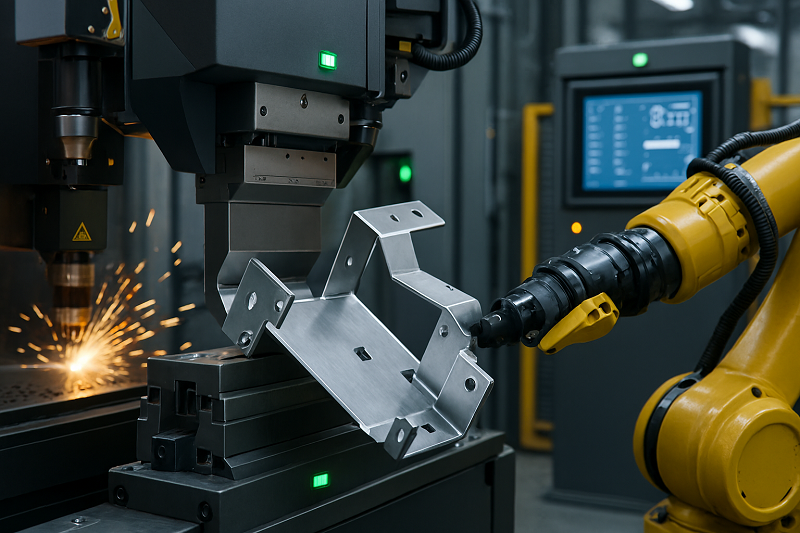
Automated Material Handling and Tool Changers in Sheet Metal Cutting and Bending
To achieve true "lights-out" manufacturing and maximize throughput, the automation cannot stop at the cutting and bending processes themselves. The movement of material between stations and the setup of tooling are often major sources of downtime and labor cost. This is where automated material handling and tool changers create a fully integrated, seamless production line.
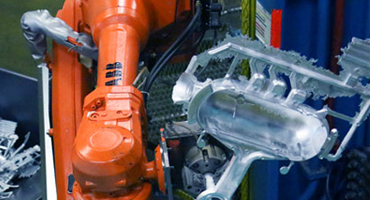
Automated Material Handling: Manually moving large, heavy, and often sharp sheets of metal is slow, inefficient, and a significant safety hazard. Automated handling systems use robotics to manage the entire flow of material.
- Loading: Robotic arms or gantry systems can pick raw sheets from a storage tower or pallet and precisely place them onto the cutting machine. These systems can include devices to measure sheet thickness and ensure only a single sheet is picked up at a time.
- Transfer: Once cutting is complete, another robotic system or an automated guided vehicle (AGV) can transfer the cut blank from the laser cutter to the panel bender. This direct link between processes eliminates intermediate staging and waiting times.
- Unloading and Stacking: After the panel bender has finished, a robot unloads the complex, three-dimensional part and stacks it neatly on a pallet, ready for the next stage like welding or assembly. This robotic handling is often more delicate than manual methods, reducing scratches and damage to the finished part.
By automating these repetitive tasks, manufacturers can run their machines continuously, often 24/7, with minimal human supervision. This dramatically increases productivity and reduces the risk of workplace injuries. One system can often replace 2-3 operators per shift.
Automatic Tool Changers (ATC): Tool setup is another major bottleneck, particularly on press brakes. Changing the punches and dies for a new job is a manual process that can take a significant amount of time, during which the machine is idle.
- On Press Brakes: ATC systems for press brakes are a major evolution. A robotic system automatically removes the existing tooling from the press brake and replaces it with the required punches and dies for the next job, storing them in a magazine. This can reduce a setup process that takes hours down to just a few minutes.
- On Panel Benders: While panel benders inherently use "universal" tooling, more advanced systems feature automatic blankholder adjustment (ABA) or even fully automatic tool changers (ATC) for their specialized blade segments. This allows the machine to automatically configure itself for different part geometries or material thicknesses with zero setup time, enabling true "batch size one" manufacturing where every part can be different without stopping production for a manual changeover.
The integration of automated material handling and tool changers closes the loop on automation. It transforms a series of standalone machines into a cohesive, intelligent manufacturing cell that operates with maximum efficiency, consistency, and safety.
Optimizing Your Sheet Metal Cutting and Bending Projects for Success
Investing in advanced technology like automated panel bending is a significant step toward manufacturing excellence. However, technology alone is not a silver bullet. To truly harness the full potential of these systems and ensure the success of your projects, a holistic approach is required. This involves optimizing your designs for the manufacturing process, choosing the right fabrication partner, and streamlining your internal workflows to eliminate waste and reduce lead times.
Design for Manufacturability (DFM) in Sheet Metal Cutting and Bending
The principle of "garbage in, garbage out" applies perfectly to manufacturing. Even the most advanced automated bending equipment cannot fix a poorly designed part. Design for Manufacturability (DFM) is a proactive engineering approach that involves designing parts to be as easy and cost-effective to manufacture as possible, without compromising functionality. Applying DFM principles is crucial for bridging the gap between a CAD model and a high-quality finished product.
Collaborating with your fabrication partner early in the design process can identify and resolve potential issues before they cause production delays or cost overruns. Here are some key DFM guidelines for sheet metal parts destined for automated cutting and bending:
Optimize Bend Radii:
- Rule of Thumb: A common mistake is specifying a bend radius that is too tight. This concentrates stress and can cause cracking, especially in harder materials. A safe rule of thumb is to design an inside bend radius that is at least equal to the material's thickness (R ≥ T). For harder materials like stainless steel, a radius of 1.5 to 2 times the material thickness is even better.
- Maintain Consistency: Whenever possible, use a consistent bend radius across all bends in a part. This simplifies the manufacturing process, as it may avoid the need for tool changes or different setups, which reduces both time and cost.
Hole and Feature Placement:
- Keep Features Away from Bends: Placing holes, slots, or other features too close to a bend line will cause them to deform during the bending process. The material stretches and compresses in the bend zone, which can turn a round hole into an oval.
- The 3T + R Rule: To prevent distortion, a feature should be placed at a distance of at least three times the material thickness plus the bend radius (3T + R) from the start of the bend.
- Hole Diameter: Punched holes should have a diameter at least equal to the material thickness to avoid punch breakage.
Consider Flange Length and Height:
- Minimum Flange Length: For a material to be bent properly in a press brake, its flange must be long enough to sit securely across the V-die. A good rule is to ensure the flange length is at least four times the material thickness. While panel benders have different constraints, this is still a good guideline to follow for general manufacturability.
- Tall Features: Very tall flanges or sides can sometimes cause collision issues with the bending machine itself. Designing parts that can be bent efficiently without interference is critical.
Utilize Bend Relief:
- When a bend is made close to an edge, stress can concentrate and cause the material to tear. A bend relief is a small cutout made at the end of a bend line to prevent this tearing and allow for a cleaner bend. The width of the relief should be at least the material thickness, and its length should be greater than the bend radius.
Simplify and Consolidate Parts: One of the great advantages of advanced bending technology is the ability to create complex parts in one piece. Consider if multiple simple parts that need to be welded or fastened together can be redesigned as a single, more complex bent component. This reduces part count, eliminates secondary assembly operations, and often results in a stronger, more cost-effective final product.
By applying these DFM principles, you can design parts that are inherently optimized for automated fabrication, resulting in lower costs, faster production, and higher quality.
Strategic Supplier Selection for Efficient Sheet Metal Cutting and Bending
The capabilities of your fabrication supplier are just as important as the design of your part. Partnering with the right manufacturer is a strategic decision that directly impacts the quality, cost, and lead time of your projects. In an era of advanced automation, simply choosing the cheapest or closest supplier is no longer sufficient. You need a partner whose technological capabilities and expertise align with your project's demands.
When evaluating a potential sheet metal fabrication supplier, consider the following criteria:
1. Technological Capabilities and Equipment:
- Level of Automation: Does the supplier invest in modern automation? Look for fabricators who utilize technologies like fiber laser cutters, automated panel benders, and robotic welding. A partner with this equipment is better positioned to deliver the speed, precision, and consistency your parts require.
- Equipment Range and Condition: Assess their full range of equipment. Do they have the right machines for your specific needs, including material type and thickness? A well-maintained, state-of-the-art facility is a strong indicator of a commitment to quality.
- Software and Integration: Inquire about their CAD/CAM software capabilities. Can they work directly with your 3D models? Do they use offline programming and simulation to ensure a "right first time" approach?
2. Experience and Expertise:
- Industry-Specific Experience: A supplier with a proven track record in your industry will already be familiar with its standards, common challenges, and material requirements. Ask to see case studies or examples of similar projects they have completed.
- Technical Competence: The team's expertise is crucial. A skilled team can provide valuable DFM feedback to optimize your design, troubleshoot issues, and ensure the final product meets your exact specifications. This includes expertise across multiple disciplines, not just cutting and bending.
- Material Knowledge: Ensure the supplier has experience working with the specific type, grade, and gauge of metal your project requires. Different materials, like aluminum and stainless steel, behave differently during fabrication and require specific expertise.
3. Quality and Reliability:
- Quality Management System: Look for certifications like ISO 9001, which demonstrate a formal commitment to quality control processes. Ask about their inspection procedures, from incoming material checks to final part verification.
- On-Time Delivery Record: Speed is important, but reliability is paramount. A good supplier will be honest about lead times and have a track record of hitting their delivery commitments. Delays can disrupt your entire production schedule.
- Reputation and References: Check online reviews and ask for customer testimonials or references. Hearing about other clients' experiences can provide valuable insight into the supplier's reliability, communication, and overall performance.
4. Communication and Collaboration:
- Responsiveness: A strong manufacturing partner should be responsive, easy to communicate with, and transparent. They should keep you informed throughout the production process.
- Collaborative Approach: The best suppliers act as an extension of your own team. They should be willing to collaborate with you on design improvements and offer solutions, not just fabricate what's sent to them.
Making a strategic choice in your fabrication partner is an investment in the success of your project. A supplier with the right combination of advanced automation, deep expertise, and a commitment to quality will help you achieve superior results efficiently and cost-effectively.
Streamlining Internal Workflows for Sheet Metal Cutting and Bending Lead Time Reduction
While investing in advanced machinery and partnering with capable suppliers are external strategies, optimizing your own internal processes is equally crucial for reducing lead times and ensuring project success. Inefficient internal workflows can create bottlenecks that even the most advanced technology cannot overcome. Streamlining your operations from design to delivery is key.
Strategies for streamlining internal workflows include:
Improve Communication Between Design and Production: A disconnect between the engineering team and the shop floor is a classic source of delays and errors.
- Establish Clear Channels: Create structured and regular communication between designers and fabricators. This ensures that designers understand the real-world capabilities and limitations of the machinery, and fabricators understand the critical functional requirements of the design.
- Involve Fabricators Early: Bring production experts into the design process early on. Their input can help identify potential manufacturing challenges before they become costly problems, leading to a more robust and manufacturable design from the start.
- Use Integrated Software: Leveraging integrated software platforms like Product Lifecycle Management (PLM) systems can create a single source of truth for all project data, from CAD models to production schedules, ensuring everyone is working with the most up-to-date information.
Adopt Lean Manufacturing Principles:
- Value Stream Mapping: This is a lean-management method for analyzing the current state and designing a future state for the series of events that take a product or service from its beginning through to the customer. It helps identify and eliminate "waste" in the workflow—steps that don't add value, such as waiting times, unnecessary material movement, and rework.
- Just-in-Time (JIT) Production: A JIT approach aims to reduce inventory costs by producing parts only as they are needed for the next stage of production or for delivery to the customer. This requires careful planning and a highly reliable supply chain.
- Kanban Systems: Using visual scheduling tools like Kanban boards can provide a clear, real-time representation of the manufacturing workflow. This helps track progress, identify bottlenecks, and facilitate better communication and collaboration among team members.
Standardize Where Possible:
- Standard Components: Using standard fastener sizes, material thicknesses, and bend radii across multiple products can significantly reduce lead times. It minimizes the need for custom tooling or special material orders.
- Standard Processes: Establishing and documenting standardized operating procedures (SOPs) for tasks ensures consistency and quality, regardless of which operator is performing the work. It also simplifies training for new employees.
Provide Clear and Complete Information:
- When submitting a project to a fabricator, providing comprehensive and "shop-ready" documentation is essential for reducing lead times. This includes clean 3D CAD models, detailed engineering drawings specifying tolerances and finishes, and clearly stated delivery requirements. Incomplete or ambiguous information leads to back-and-forth communication, which inevitably causes delays.
By focusing on these internal improvements, you create a more agile, efficient, and responsive manufacturing ecosystem that can fully leverage the power of automated fabrication technology.
Conclusion
The integration of automated panel bending machines marks a significant advancement in how we approach sheet metal cutting and bending. We understand that embracing these innovative technologies is not just an option, but a necessity for achieving higher precision, increased efficiency, and ultimately, greater success in today's demanding manufacturing landscape. It allows us to consistently deliver high-quality products while significantly reducing costs and lead times.
As a leading global provider of custom component manufacturing, SOMI Custom Parts is dedicated to offering efficient, precise, and innovative sheet metal fabrication solutions. Leveraging our robust manufacturing network, we can swiftly respond to your needs, ensuring high-quality and timely delivery for both prototyping and large-scale production runs. Our expert team, with extensive experience in various sheet metal processes including cutting, stamping, bending, and welding, is well-equipped to handle even the most complex design challenges. By choosing SOMI Custom Parts, you will receive not only top-tier sheet metal components but also an exceptional custom manufacturing experience. Let us partner with you to bring your ideas to life and achieve new possibilities together. We encourage you to share this article with your network and join the conversation about the future of manufacturing.