From Prototype to Mass Production: Scaling Up Your CNC Parts Successfully
From Prototype to Mass Production: Scaling Up Your CNC Parts Successfully
The jump from a working prototype to repeatable production fails more often than it should — because scaling is not "more of the same." Learn the DFM review, material validation, fixturing, and pilot-batch steps that keep precision intact at volume.
Introduction: Escaping the Prototype Trap
It is a familiar story: a design works flawlessly in a prototype run of five pieces, but when scaled to 5,000 units, costs spike, tolerances drift, and quality becomes inconsistent. This is the "prototype trap" — a concept that proves viable at low volume but fails under the realities of production.
Prototype machining prioritizes speed and flexibility. Production machining requires repeatability, documentation, controlled setups, statistical inspection, and a stable supply chain. Understanding what actually changes between these two worlds is the first step to a smooth scale-up.
What Actually Changes When You Scale
| Dimension | Prototype | Production |
|---|---|---|
| Setups | Manual, flexible | Documented, repeatable, quick-change |
| Tooling | General purpose | Optimized geometry, preset tools |
| Inspection | Spot checks | SPC, probing, traceable data |
| Documentation | Minimal | Setup sheets, revisioned programs |
| Throughput | Not critical | Key cost driver |
| Materials | Best available | Approved vendors, certifications |
Scaling is fundamentally about engineering out variability. Every manual decision that worked for one part must become a controlled, repeatable step for thousands.
DFM Review Before Release
Before a print goes to production, run a design-for-manufacturability (DFM) triage. The biggest cost driver in CNC machining is over-specification:
- Limit tight tolerances to functional surfaces — bearing journals, seal lands, and datum features. Relax non-critical dimensions.
- Standardize what you can — threads, groove widths, hole sizes, and diameters that match standard tooling cost less to produce.
- Simplify geometry — deep pockets with small tools, excessive setups, and tight tolerances on cosmetic surfaces all add cost at volume.
- Consolidate features and parts — combining features and standardizing hole sizes reduces tool changes.
Many production-focused DFM changes pay for themselves within the first few hundred pieces. Involve your machining partner early so cost feedback reaches the design before the design is frozen.
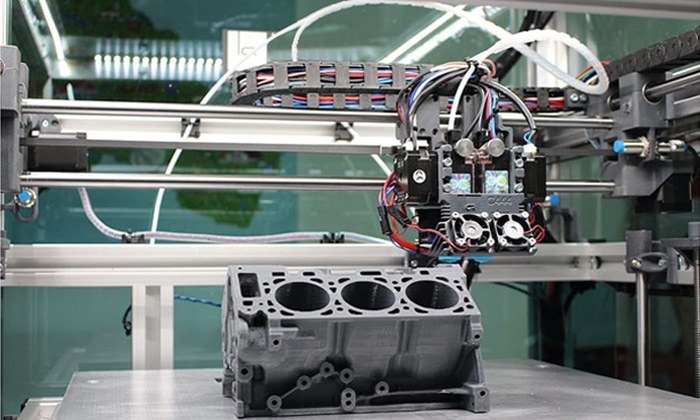
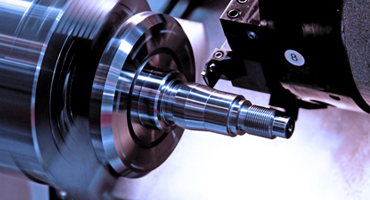
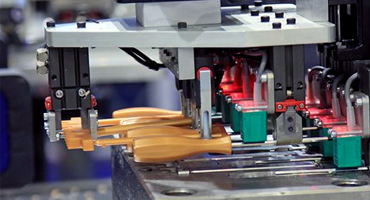
Production lines run repeatable setups — a step change from flexible, manual prototype machining.
Validate Materials and Vendors Early
Material behaves differently at scale. Bar stock can vary in surface condition, straightness, hardness, and chemistry between batches — and even a small hardness bump can move a bore by a few thousandths under identical toolpaths.
- Source production material from an approved vendor with certifications.
- Cut a pre-production "mini-lot" using the actual production vendor before full release.
- Spot-check hardness and chemistry on incoming lots.
- For precision turned parts, specify bar straightness and surface quality (cold-drawn or ground bar preferred).
If the prototype was made from a specialty alloy but production economics favor a standard grade, validate the substitute before committing — never assume the material change is neutral.
Fixturing and Process Control for Repeatability
Prototype workholding is about flexibility; production workholding is about repeatability. As volumes grow:
- Design quick-change fixtures tied to the drawing datums, with asymmetric locating to prevent loading mistakes.
- Target load/unload under 30 seconds for production parts.
- Build serviceable wear points — pads and bushings — to retain repeatability over thousands of cycles.
- Add probing and tool setters, then run first-article inspection (FAI) and measurement system analysis (MSA).
- Start statistical process control (SPC) on critical dimensions instead of open inspection.
A useful rule of thumb: if a fixture removes at least one minute per part or 30 minutes per setup per lot, it likely pays back within a single mid-size run.
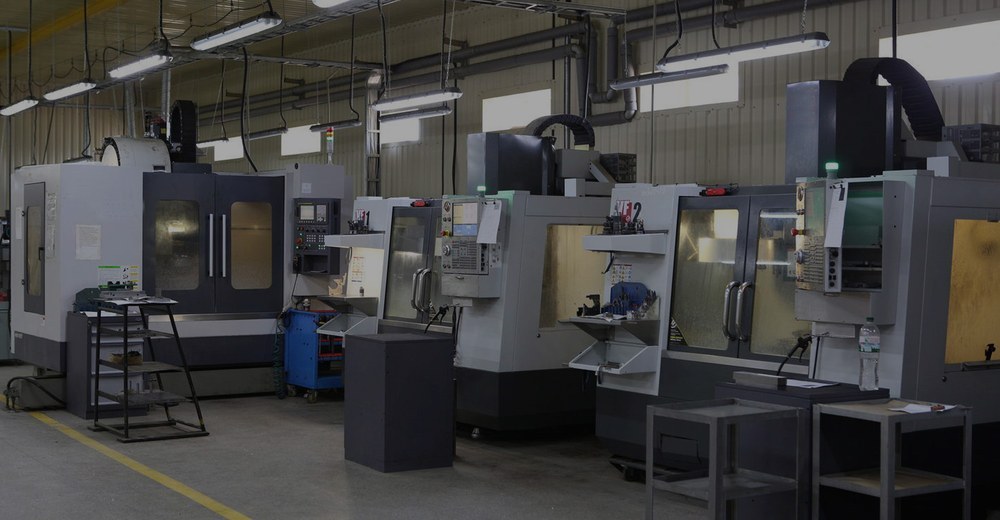
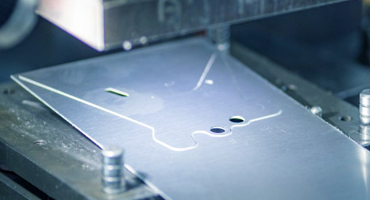
A controlled manufacturing environment converts one-off precision into thousands of identical parts.
Bridge with a Pilot Batch
Before committing to full production volumes, run a low-volume initial production (LVIP) batch using near-production methods. This bridge phase is a final validation of tooling, process, and inspection before you make the full financial commitment.
- It reveals setup and quality issues while changes are still inexpensive.
- It validates the production CAM program and versioning separately from prototype code.
- It trains operators and confirms quality benchmarks on real hardware.
Think of the pilot batch as the last affordable place to fail.
Understanding Cost at Scale
Cost structure shifts as volumes grow. Prototype cost is dominated by programming and setup. Production cost is dominated by cycle time, scrap, and material utilization.
A practical per-part model:
Piece Cost ≈ Cycle Time × Machine Rate + Tooling per Part + Finishing per Part + Setup per Lot + Freight per Lot
Then compute against starts, not delivered quantity: Starts = Delivered Quantity / Yield. If a production process yields 95%, you must start 5% more parts than you ship — and every downstream cost scales accordingly.
The main cost levers at volume are cycle time reduction, scrap reduction, finishing consolidation, setup reduction, and freight consolidation.
How SOMI Custom Parts Can Help
A smooth prototype-to-production transition is easier when one partner supports the whole journey. At SOMI Custom Parts, we help customers scale from a single machined sample to repeatable low- and medium-volume production runs.
- CNC machining of prototypes and production quantities under one roof
- DFM feedback that keeps your design both functional and scalable
- Documented processes, material certifications, and inspection records
- Honest guidance on when volumes justify investment in dedicated tooling or alternative processes
Bring us your prototype and your volume target — request a quote and we will map the most economical path to production.
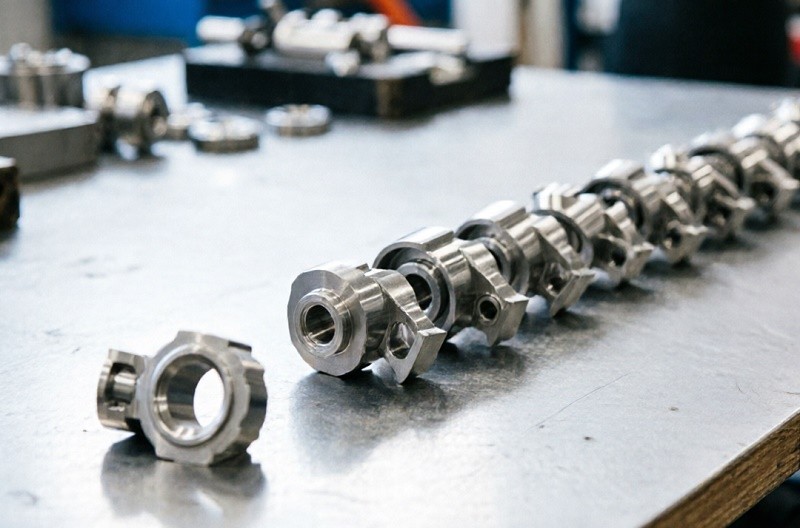
From first article to repeatable production, SOMI Custom Parts supports the full CNC scaling journey.
Frequently Asked Questions
Why do costs spike when my prototype goes into production?
Prototype pricing reflects programming and one-off setups; production pricing reflects cycle time, yield, and repeatability investments. Features that were trivial at one piece — tight tolerances on cosmetic surfaces, deep pockets, many setups — become expensive across thousands of parts. A DFM review before release usually closes most of this gap.
How many units justify moving from CNC to another process?
There is no universal number. As a rough guide, CNC machining stays economical for many parts through the low thousands of units per year. When volumes grow far beyond that, casting, forging, stamping, or molding may beat CNC on per-piece cost — but only if geometry, material, and lead time allow it.
What is a pilot batch and why do I need one?
A pilot batch (low-volume initial production) runs your parts using near-production methods before full commitment. It validates tooling, programs, inspection, and supplier readiness — catching problems when changes are still cheap.
Should my production partner be the same as my prototype partner?
Not necessarily, but it helps. A partner who machined your prototype understands the design intent, tolerances, and history — which reduces the risk of miscommunication during scale-up and keeps production considerations in the design from the start.
Conclusion
Scaling from prototype to mass production is a deliberate process, not a hope. Apply DFM before release, validate production-grade materials and vendors, invest in repeatable fixturing and process control, bridge with a pilot batch, and model cost on starts rather than shipped parts. Done well, scaling keeps the precision of your prototype and adds the consistency of production.
Planning to scale a CNC part and not sure where to start? Contact SOMI Custom Parts — we will review your design and help you build a production roadmap that protects quality and cost.