Digital Twin Technology in CNC Machining: Simulate Before You Cut
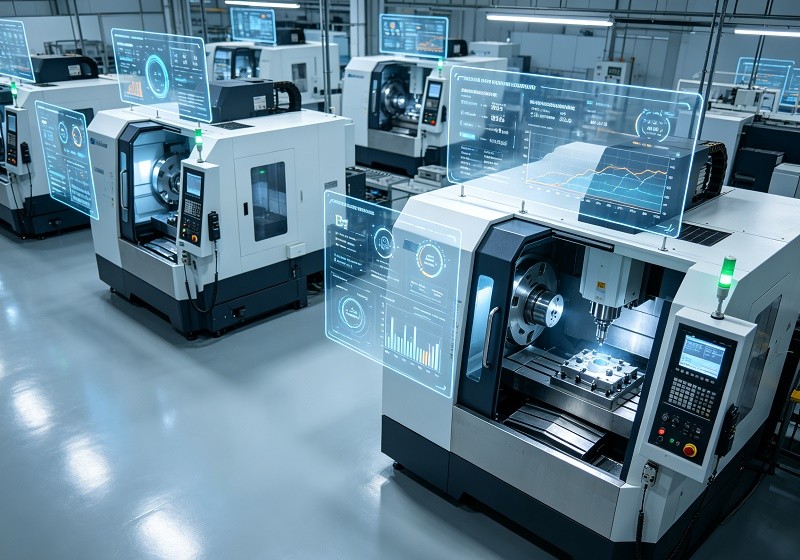
In 2026, the most competitive CNC machining shops are no longer competing solely on spindle speed or axis count. They are competing on data intelligence. At the heart of this transformation is Digital Twin Technology — a high-fidelity virtual representation of machines, processes, and production environments that evolves alongside the real system. For manufacturers of custom non-standard precision parts, the digital twin has become an indispensable tool for eliminating guesswork, reducing lead times, and achieving first-time-right quality. The global digital twin market reached USD 24.48 billion in 2025 and is projected to grow at a CAGR of 35.4% to USD 384.79 billion by 2034, according to Fortune Business Insights. Within manufacturing, the digital twin for manufacturing segment alone was valued at USD 12.4 billion in 2025 and is expected to exceed USD 178 billion by 2034 (MarketIntelo, 2026). For precision CNC machining, this technology is not a luxury — it is becoming the baseline for delivering complex, customized parts with uncompromising quality. A digital twin in CNC machining is far more than a static 3D CAD model. It is a dynamic, data-driven virtual ecosystem that mirrors the entire machining process — including machine kinematics, tool behavior, thermal effects, vibration patterns, and material responses — in real time. Unlike traditional CAM simulation, which visualizes toolpaths in isolation, a modern CNC digital twin integrates: As described by Siemens' 2026 whitepaper on CNC digital twins, this creates a "digital native" architecture that covers the entire machine lifecycle — from design and commissioning through to manufacturing and maintenance — enabling a closed-loop feedback system where real machining data continuously refines the simulation model. The adoption of digital twin technology delivers measurable improvements across the entire CNC manufacturing workflow. Here are the most significant benefits confirmed by industry data in 2026: Virtual commissioning allows manufacturers to simulate the complete machining process — including toolpath execution, machine kinematics, fixture interactions, and collision detection — before any physical cutting begins. ACI Industries reports that virtual commissioning can reduce trial-cutting time by over 40%, significantly improving machine utilization and accelerating time-to-production. For complex 5-axis machining operations where a single collision can cost thousands of dollars in damage, this capability is invaluable. Data from HMaking's aerospace customer program shows that implementing a digital twin workflow improved the first-article pass rate from 78% to 94%. In one documented case, the digital twin detected a potential collision between the rotary table and workholding fixture that static CAM simulation had missed, because the twin incorporated actual thermal expansion data from previous runs — data that conventional simulation does not account for. Recent research published in 2026 demonstrates that a digital-twin-driven adaptive control system, combining real-time sensing from cutting force, vibration, and temperature monitors with predictive LSTM-based modeling, can reduce mean dimensional error by 39–61% compared to traditional PID control, while holding cycle time variation within ±2.5%. This means tighter tolerances, more consistent quality, and less scrap on every production run. By continuously analyzing machine data — particularly vibration signatures, spindle load patterns, and temperature profiles — AI models within the digital twin can identify early indicators of wear or failure. Predictive maintenance strategies enabled by digital twins can reduce unplanned downtime by up to 25%, extending equipment lifespan and reducing maintenance costs. As experienced machinists retire, the digital twin gives new team members a risk-free virtual environment to learn and practice. They can study machine behavior, test machining scenarios, and build confidence without tying up real production equipment. Combined with mixed-reality tools, this creates an accelerated training pathway that addresses one of the industry's most pressing challenges — the skilled labor shortage. Digital twin technology is being deployed across multiple dimensions of CNC manufacturing. Here are the most impactful applications in 2026: Before any material is loaded onto the machine, the digital twin validates every aspect of the NC program. Every axis limit, tool change, and kinematic movement is checked in advance. This eliminates the risk of collisions, overtravel, and inefficient motion paths. For manufacturers of custom non-standard parts, where each order may involve unique geometries and materials, this capability dramatically reduces the cost and risk of prototyping. During live machining, sensors embedded within CNC machines monitor spindle load, vibration, temperature fluctuations, and tool wear indicators. This data feeds into AI-driven algorithms that adjust feeds, speeds, and toolpaths on the fly. If excessive vibration is detected during a high-speed operation, the system can automatically reduce feed rates or modify tool engagement to maintain stability and surface finish quality. By integrating in-process measurement data with the digital twin model, manufacturers can predict final part dimensions before the part is even complete. This enables real-time quality assurance rather than post-process inspection, allowing corrective actions to be taken immediately when deviations are detected. The result is fewer rejected parts and higher overall yield. One of the most powerful aspects of digital twins is their ability to learn across production cycles. The data generated during each machining operation is fed back into the model, refining future simulations and process plans. Over time, this creates a self-improving system that becomes increasingly accurate and efficient with every production run — a capability that directly benefits manufacturers who produce recurring custom parts. The adoption of digital twin technology in manufacturing is accelerating rapidly. According to Fortune Business Insights (2026): In the CNC machining sector specifically, the CNC Simulator Software market reached USD 570.24 million in 2025 and is projected to grow at a CAGR of 9.21% to over USD 1.06 billion by 2032 (PW Consulting, 2026). Regional adoption insights: In 2026, over 38% of new high-end CNC equipment is equipped with digital twin interfaces, and more than 70% of newly constructed smart factories incorporate digital twin as a standard process component. At SOMI Custom Parts, we have integrated digital twin simulation into our custom CNC machining workflow to ensure that every CNC machined part meets the highest standards of precision and quality. Our engineering team uses virtual commissioning to validate NC programs and optimize toolpaths before any material is cut, resulting in: Whether you need additive manufacturing prototypes, production-grade injection molds, or precision sheet metal components, our digital twin-enabled workflow ensures your custom parts are manufactured right the first time. Traditional CAM simulation visualizes toolpaths in isolation, typically without accounting for real machine behavior, thermal effects, or historical data. A digital twin, by contrast, integrates real-time sensor data, machine kinematics, and historical production insights into a continuously updated model that mirrors actual machining conditions. Costs vary widely depending on the scope. For small to medium CNC shops, cloud-based digital twin platforms now offer subscription models starting at several hundred dollars per month, making the technology accessible to a broader range of manufacturers. The ROI is typically realized within 6–12 months through reduced scrap, fewer trial cuts, and improved machine utilization. Yes. While newer machines come with built-in sensors and digital twin interfaces, older machines can be retrofitted with IoT sensors (vibration, temperature, load monitoring) and connected to digital twin platforms. The key requirement is the ability to capture real-time data from the machine and feed it into the simulation model. Digital twin systems used in precision manufacturing typically support compliance with ISO 9001:2015, AS9100D (aerospace), and ISO 13485 (medical devices). The traceability provided by digital twin documentation also supports ITAR compliance for defense-related manufacturing. By simulating the complete machining process before production, a digital twin can identify design features that may be problematic to manufacture — such as deep pockets with poor tool access, thin walls prone to vibration, or features requiring non-standard tooling. This enables design teams to make data-driven DFM decisions early, reducing costs and lead times. Digital twin technology is fundamentally reshaping custom CNC machining. In 2026, it has moved beyond a buzzword to become the operational backbone of modern precision manufacturing shops. For buyers of custom non-standard parts, working with a digital twin-enabled manufacturer means: At SOMI Custom Parts, we are committed to staying at the forefront of CNC machining technology. If you have a custom part that demands precision, quality, and speed, contact our engineering team today to discuss how our digital twin-enabled manufacturing process can bring your design to life — right the first time.Introduction: The Rise of Digital Twin Technology in CNC Machining
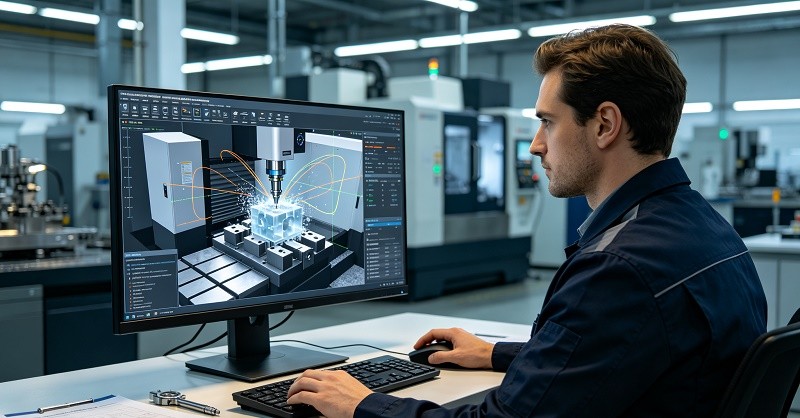
What Is a Digital Twin in CNC Machining?
Key Benefits of Digital Twin Technology for CNC Machining
1. Virtual Commissioning Eliminates Trial Cuts
2. First-Article Pass Rate Improvement
3. Adaptive Control Through AI Feedback Loops
4. Predictive Maintenance Reduces Downtime
5. Bridging the Skills Gap
Metric
Without Digital Twin
With Digital Twin
Improvement
First-article pass rate
78%
94%
+16%
Trial-cut time reduction
Baseline
-40%
40% faster
Mean dimensional error
Baseline (PID)
39-61% lower
Tighter tolerances
Unplanned downtime
Baseline
-25%
25% reduction
Key Applications of Digital Twins in Precision CNC Manufacturing
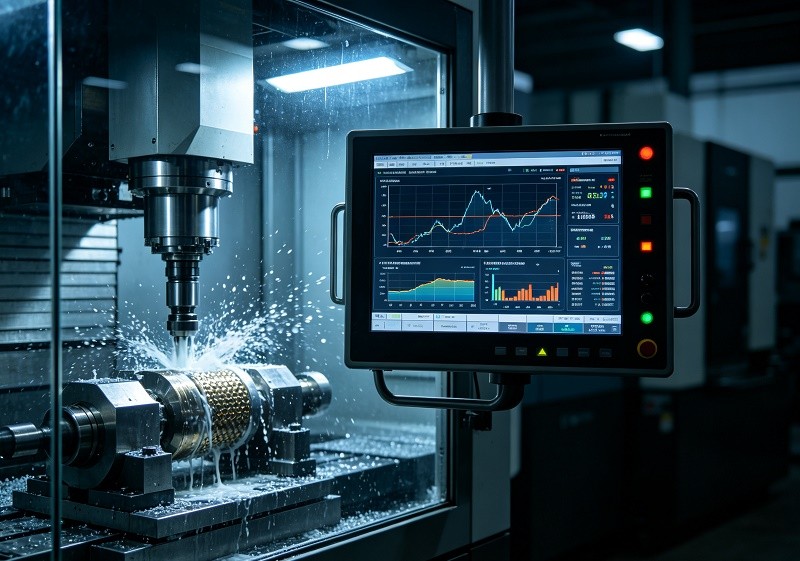
Pre-Production Simulation and NC Program Validation
In-Process Adaptive Machining
Quality Prediction and Dimensional Assurance
Process Optimization Across Production Runs
Digital Twin Market Growth and Industry Adoption
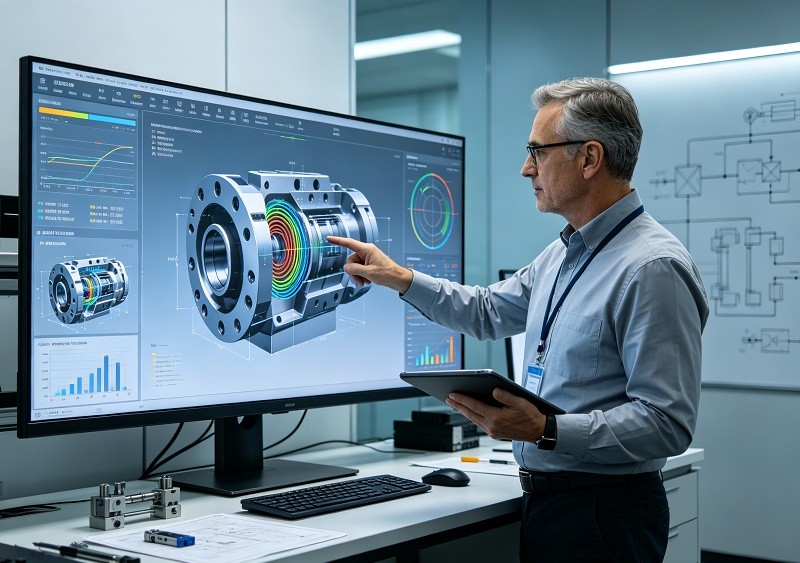
How SOMI Custom Parts Leverages Digital Twin Technology
Frequently Asked Questions About Digital Twin in CNC Machining
What is the difference between CAM simulation and a digital twin?
How much does a digital twin system cost to implement?
Can digital twin technology work with older CNC machines?
What certifications are relevant for digital twin quality assurance?
How does a digital twin improve DFM (Design for Manufacturing)?
Conclusion: Why Digital Twin Is the Future of Custom CNC Machining