Custom Silicone Rubber Keypad Manufacturer: Your Guide to Conductive Connectors and Thermal Pads
As an expert custom silicone rubber keypad manufacturer, I'm here to guide you through the exciting world of silicone rubber keyboards, conductive connectors, and thermal pads. These components are vital in numerous industries, from consumer electronics to automotive products. Understanding the specifications and nuances of these products is crucial for success, especially when aiming for durable, versatile, and high-performing human-machine interface solutions.
What is a Custom Silicone Rubber Keypad Manufacturer and Why Does it Matter?
Choosing to partner with a specialized custom silicone rubber keypad manufacturer is a critical decision that impacts a product's final quality, durability, and user experience. These manufacturers are not mere suppliers; they are expert collaborators who bring a deep understanding of material science, engineering, and advanced production techniques to the table. They translate a client's vision into a tangible, functional, and reliable human-machine interface (HMI). This partnership is pivotal because the keypad is often the primary point of interaction between a user and a device, and its performance directly reflects on the perceived quality of the entire product.
The Evolution and Excellence of Silicone Rubber Keypads
The journey of silicone rubber keypads from a niche component to a ubiquitous HMI solution is a testament to their incredible adaptability and performance. Initially gaining traction in demanding industrial and telecommunications applications, their unique combination of features has led to widespread adoption across nearly every market sector.
Silicone rubber keyboards, known for their resilience, versatility, and cost-effectiveness, have become a go-to solution for human-machine interfaces across various fields, including medical devices and industrial controls.
Silicone rubber keypads are prized for their unique combination of durability and tactile flexibility. This synthetic elastomer is formed by a chain of alternating silicon and oxygen atoms, giving it inherent stability and resistance to extreme conditions. In the realm of medical devices, this is particularly crucial. Keypads used on monitoring equipment, infusion pumps, and diagnostic tools must withstand repeated sterilization with harsh chemical cleaners without degrading. Their sealed design also prevents the ingress of bodily fluids and contaminants, ensuring patient safety and device longevity. Similarly, in industrial control environments, these keypads endure exposure to oils, solvents, dust, and high levels of vibration, out-performing less robust alternatives like membrane switches in many applications. Their cost-effectiveness, especially for custom designs in medium to high volumes, makes them an economically sound choice for manufacturers.
Not all silicone rubber keypads are created equal; understanding their manufacturing process and specifications is key to their performance and longevity.
The quality of a silicone rubber keypad is directly tied to the precision of its manufacturing process and the grade of materials used. The most common method, compression molding, involves placing a pre-measured amount of high-consistency silicone rubber (HCR) into a heated mold cavity. A press then applies immense pressure, forcing the material to fill the intricate details of the mold, including key shapes and webbing, while heat cures the silicone into its final, solid form. The expertise of a custom silicone rubber keypad manufacturer is evident in their control over this process. Factors like mold temperature, pressure, and curing time are meticulously managed to ensure consistency and eliminate defects. Furthermore, the selection of the base silicone material, which can be tailored for specific properties like hardness (durometer), chemical resistance, or temperature range, is a critical step that defines the keypad's ultimate performance and lifespan.
Key Features and Benefits from a Custom Silicone Rubber Keypad Manufacturer
Working with an experienced manufacturer unlocks a host of features that can be engineered to meet precise application requirements. These benefits go far beyond a simple button, contributing to a superior and more reliable end product.
These keypads offer comfort, durability, and often boast waterproof and dustproof finishes, making them ideal for harsh industrial environments.
The inherent elasticity of silicone rubber provides a comfortable and tactile feel that reduces user fatigue during prolonged operation. This property, combined with its exceptional durability, allows for keypads that can withstand millions of actuation cycles without failure. A key advantage is the ability to create a one-piece, sealed design. By molding the keys and base mat as a single unit that wraps around a printed circuit board (PCB), manufacturers can achieve high Ingress Protection (IP) ratings, such as IP67 or IP68. An IP67 rating, for instance, certifies that the keypad is completely protected against dust and can be submerged in water up to 1 meter for 30 minutes. This makes silicone keypads the perfect choice for outdoor equipment, marine electronics, and factory floor controls where exposure to the elements is a certainty.
They excel in extreme temperatures (-55°C to 250°C), offer low noise operation, and resist wear even in high humidity.
Silicone rubber's molecular structure gives it one of the widest operating temperature ranges of any elastomer. Standard silicone keypads can function flawlessly in freezing conditions as low as -55°C and in high-heat environments up to 250°C, a range that would cause other plastics to become brittle or melt. This makes them suitable for everything from freezer controls to engine bay components in automotive applications. Unlike the loud "click" of mechanical switches, the natural dampening properties of silicone result in quiet, low-noise operation, which is highly desirable in medical facilities or office environments. The material is also hydrophobic, meaning it repels water, which prevents moisture absorption and performance degradation in humid or wet conditions. This inherent resistance to environmental factors ensures long-term, stable performance.
Custom Silicone Rubber Keypad Manufacturer's Guide to Design Options and Customization
The "custom" aspect is where a specialized manufacturer truly shines. The design possibilities are virtually limitless, allowing for a keypad that is perfectly tailored to the product's functional needs and brand identity.
Infinite Design Possibilities with Your Custom Silicone Rubber Keypad Manufacturer
From the fundamental layout to the intricate details of each key, every element can be customized. This design freedom ensures that the final product is not only functional but also aesthetically pleasing and intuitive for the end-user.
As a custom silicone rubber keypad manufacturer, we offer extensive design flexibility, allowing for customization of key size, height, shape, color, legends, and layout.
The design process begins with the keypad's overall geometry. The manufacturer can produce keypads in virtually any shape to fit the contours of a product's housing. Individual keys can be round, square, oval, or a completely custom shape. Key height and travel distance can be adjusted to create a specific tactile response. Color customization is achieved using the Pantone Matching System (PMS), allowing for precise brand color replication. Legends (the text and symbols on the keys) can be applied in various ways, including durable screen printing or laser etching for backlighting effects, offering complete control over the visual interface.
Options like plastic bezels, sealed contacts, dual durometer keycaps, and integrated injection molded keycaps are available.
Advanced customization options allow for enhanced functionality and a premium feel. For example:
- Plastic Bezels: A plastic frame can be integrated around the silicone keypad to provide a rigid mounting structure and a clean, finished appearance.
- Sealed Contacts: As previously mentioned, the one-piece design naturally seals the underlying electronics from environmental hazards.
- Dual Durometer Keycaps: This technique involves molding two different silicone materials together in one key. A harder durometer can be used for the key top to create a firm, positive feel, while a softer durometer is used for the flexible webbing to reduce actuation force.
- Integrated Injection Molded Keycaps: For the ultimate in durability and feel, hard plastic (e.g., ABS, PC) keycaps can be co-molded or bonded onto the silicone base, combining the hard-wearing feel of plastic with the reliable sealing and spring-back of silicone.
Tailoring Your Product: Conductive and Non-Conductive Solutions from a Custom Silicone Rubber Keypad Manufacturer
A fundamental design choice is determining how the keypad will register a keypress. This is divided into two main categories: conductive and non-conductive keypad designs.
Silicone rubber keypads come in both conductive and non-conductive types.
The choice between these two styles depends entirely on the design of the underlying electronic circuit and the desired switching mechanism. A conductive keypad is an all-in-one solution that includes the switching element, while a non-conductive keypad acts purely as a mechanical actuator for a separate switch.
Conductive keypads utilize semiconductive materials and carbon particles, often with conductive pills beneath the keys for activation.
In a conductive keypad, the underside of each key features a small, black disc known as a "carbon pill" or "conductive pill." These pills are typically made of silicone mixed with carbon or other conductive materials. When a key is pressed, this pill travels down and physically bridges a set of exposed, interlaced gold or carbon contacts on a printed circuit board (PCB) below it. This connection completes the circuit, registering the keypress. This method is extremely reliable, cost-effective, and provides a good tactile response.
Non-conductive keypads rely on a switch mechanism and can be sealed to minimize contamination.
A non-conductive keypad has no integrated electrical function. It is simply a molded array of actuators. Beneath each key, instead of a conductive pill, there is just solid silicone. This key is designed to press down on a separate switch element located on the PCB. This could be a metal dome switch, a polydome switch on a membrane circuit, or a small tactile switch. The primary advantage of this approach is that the switching technology can be chosen independently, and the one-piece silicone keypad can provide a superior environmental seal over the top of the entire assembly, protecting the sensitive dome switches from dust and moisture.
Manufacturing and Customization Offered by a Custom Silicone Rubber Keypad Manufacturer
The manufacturing process for silicone keypads is highly adaptable, allowing for a vast range of customization options that go beyond simple shape and color to affect feel, longevity, and performance.
The manufacturing process for silicone keypads is adaptable, similar to plastic molding, allowing for specific hardness, color, and transparency.
As mentioned, compression molding is the primary manufacturing method. The tooling for this process is more cost-effective than for plastic injection molding, making it ideal for custom projects. During the material mixing stage, pigments can be added to match any desired color. The hardness of the silicone, measured on the Shore A durometer scale, can be precisely specified, typically ranging from 30A (very soft) to 80A (very firm). This allows a designer to fine-tune the actuation force of the keys. Furthermore, the silicone base can be molded from translucent material, which is essential for creating backlit keypads.
Customization extends to conductive options (carbon, polyester, silver pills), surface markings (silk screening, laser etching), and coatings (Dura Coat, Parylene for extreme environments).
To meet various performance and cost targets, a manufacturer can offer a range of options:
| Customization Area | Options and Description |
|---|---|
| Conductive Pills | Carbon (Standard): Most common, cost-effective, and reliable for over a million cycles. Silver: Lower resistance, suitable for specific low-voltage applications. |
| Surface Markings | Screen Printing: A durable ink is applied to the key surface and cured. Multiple colors are possible. Laser Etching: A layer of colored ink is sprayed onto a translucent keypad, and a laser then precisely ablates the ink to create backlit legends. |
| Protective Coatings | Polyurethane (PU) Coating: A sprayed-on clear coat that significantly increases abrasion resistance for printed legends and provides a smooth, matte finish. Parylene Coating: A vacuum-deposited conformal coating that offers superior protection against chemicals and moisture, often used in military and medical applications. |
Enhanced User Experience with a Custom Silicone Rubber Keypad Manufacturer
A great keypad doesn't just work—it feels right. A key focus for a premier manufacturer is engineering the subtle characteristics that contribute to a positive and intuitive user experience.
Optimizing Performance and Durability with Your Custom Silicone Rubber Keypad Manufacturer
The collaboration between the product designer and the keypad manufacturer is key to balancing aesthetic goals with mechanical performance, resulting in a keypad that is both beautiful and robust.
A custom silicone rubber keypad manufacturer focuses on balancing functionality and style, ensuring top-tier keypads improve user experience significantly.
This balance is achieved through careful design of the key's "webbing"—the flexible, angled wall that connects the key top to the keypad base. The geometry of this webbing is the single most important factor in determining the keypad's tactile feel. By adjusting the webbing's thickness, angle, and radius, an engineer can control the force required to press the key and the crispness of the "snap" feedback felt by the user. An expert manufacturer uses simulation software and prototyping to perfect this design before committing to mass production.
We offer keypads designed for specific travel ratios and tactile feedback, ensuring responsive and satisfying user interaction.
Two key technical terms define the tactile feel: "actuation force" and "snap ratio."
- Actuation Force: This is the peak force (measured in grams) required to collapse the key's webbing. It can be designed to be low (e.g., 50g) for a light touch or high (e.g., 300g+) for deliberate, firm activation.
- Snap Ratio: This is the ratio of the drop in force after the key collapses. A high snap ratio (40-60%) results in a crisp, tactile "click" sensation, which provides positive confirmation to the user that the key has been pressed. A low snap ratio (<30%) results in a softer, more linear feel. A skilled manufacturer can precisely engineer the keypad's webbing geometry to hit a target snap ratio.
Advanced Features from a Custom Silicone Rubber Keypad Manufacturer
Beyond the basics, a host of advanced features can be integrated to meet complex design requirements, from nighttime visibility to a premium hard-key feel.
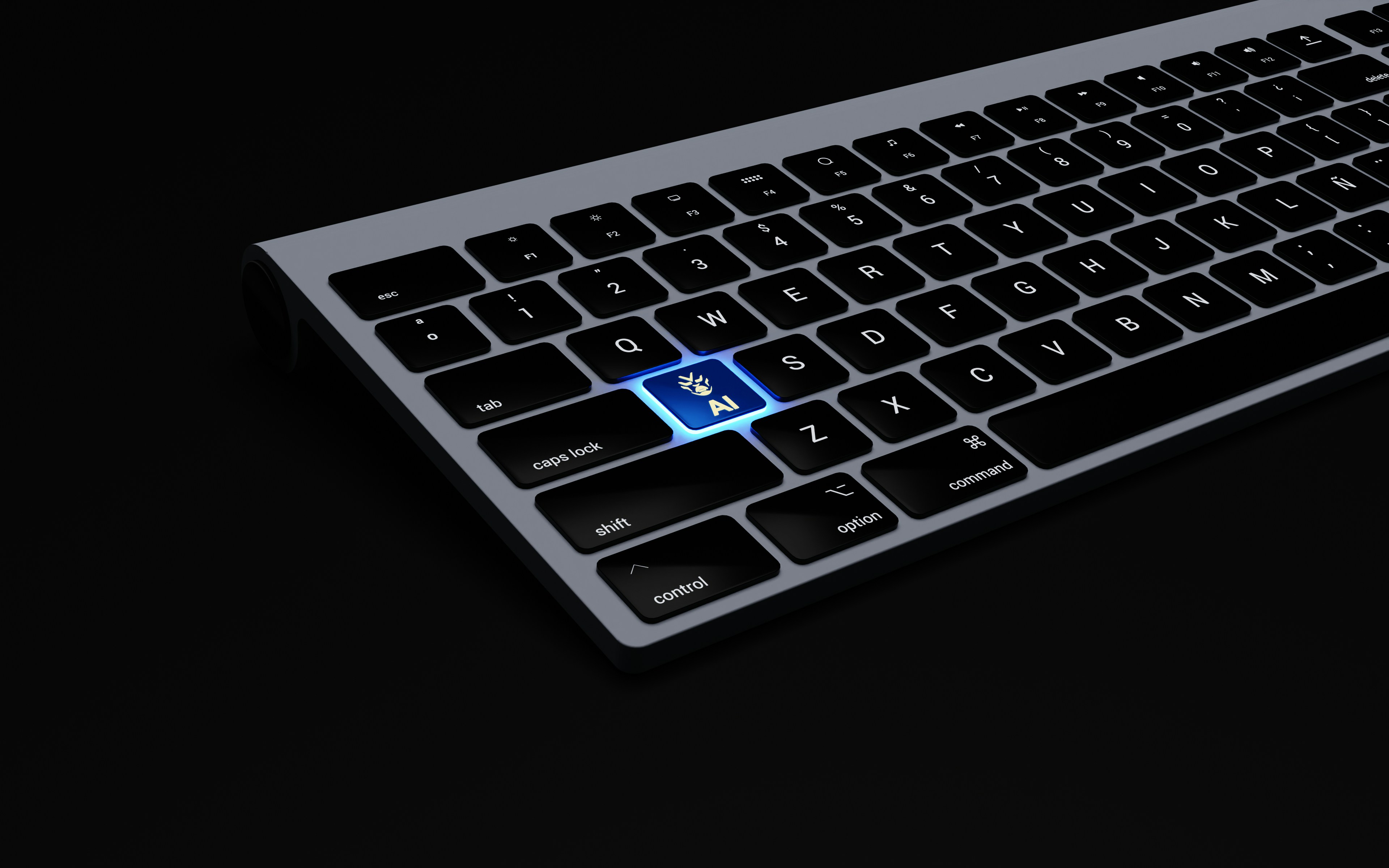
Backlighting options, including full keyboard and text illumination, are available, with translucent silicone ideal for this feature.
Backlighting is essential for devices used in low-light conditions. As a custom silicone rubber keypad manufacturer, we can implement this in several ways. The most common method involves using a translucent silicone base and applying an opaque topcoat. A laser then etches away the coating to form the legends, allowing light from underlying LEDs to shine through only the text and symbols. For more uniform illumination, light guide films or molded-in "light pipes" can be placed under the keypad to distribute light evenly from a few side-mounted LEDs across the entire interface.
Additional features like gold-plated contacts for high current capacity and epoxy keycaps for a plastic feel (without plastic molds) can be integrated by a custom silicone rubber keypad manufacturer.
For specialized applications, a manufacturer can offer further enhancements. Gold-plated contacts on the PCB are preferred over carbon ink when extremely low contact resistance or corrosion resistance is paramount. While carbon pills are sufficient for most digital signals, gold contacts are a more robust solution. For designers who want the hard, glossy feel of a plastic key without the cost and complexity of a two-shot molding process, a drop of clear epoxy can be applied to the top of a silicone key. This epoxy cures to form a hard, durable lens on the key top, providing a premium feel and protecting the underlying legend.
Navigating Specifications with a Custom Silicone Rubber Keypad Manufacturer
Understanding the technical datasheet for a custom keypad is crucial for ensuring it meets the product's requirements. A good manufacturer provides clear, comprehensive specifications for their products.
Understanding the Technical Details from Your Custom Silicone Rubber Keypad Manufacturer
These specifications define the electrical and mechanical performance characteristics of the keypad, providing a quantitative measure of its quality and reliability.
It's important to differentiate between conductive and non-conductive keypads regarding travel distance, rebound time, and operating force.
While both keypad types have a defined operating force and travel distance, the electrical characteristics are only relevant for conductive designs. For non-conductive keypads, the electrical performance is determined by the separate dome or tactile switch being used, not the silicone actuator itself.
Key specifications include contact resistance of less than 200 ohms, operating forces typically around 100 +/- 25 grams, and a cycle life of 1,000,000 actuations.
Here is a table of typical specifications a product designer should expect to see from a custom silicone rubber keypad manufacturer for a standard conductive keypad:
| Specification | Typical Value | Description |
|---|---|---|
| Operating Force | 50g - 350g (e.g., 100 +/- 25g) | The force required to actuate the key. Highly customizable. |
| Key Travel | 0.5mm - 4.0mm | The distance the key moves from rest to full depression. |
| Snap Ratio | 40% - 60% | Defines the "crispness" of the tactile feedback. |
| Contact Resistance | < 200 Ohms | The electrical resistance when the key is pressed. Crucial for signal integrity. |
| Insulation Resistance | > 100 MOhms @ 250V DC | The resistance between non-connected traces, preventing short circuits. |
| Cycle Life | 1,000,000+ actuations | The number of keypresses the keypad can endure before failure. |
| Contact Bounce | < 10 milliseconds | The time it takes for the contact to stabilize after a press. |
Environmental Considerations by a Custom Silicone Rubber Keypad Manufacturer
A key reason for choosing silicone is its outstanding resilience. These specifications quantify its ability to survive in demanding real-world environments.
Operating temperatures range from -40°C to +150°C, and storage temperatures from -50°C to +150°C, highlighting the robustness of these keypads.
This wide temperature tolerance ensures reliability in products intended for outdoor, automotive, or industrial use. Unlike many plastics that become brittle in the cold or soft in the heat, silicone maintains its mechanical properties across this vast range. Specialized formulations can even extend this range further for extreme applications.
Coating options from a custom silicone rubber keypad manufacturer enhance durability, chemical resistance, and environmental protection.
While silicone itself is very durable, protective topcoats are often recommended to enhance performance in specific areas. A polyurethane (PU) coat is excellent for improving abrasion resistance, ensuring that printed legends on high-use keys do not wear away. For medical devices that must be sterilized with aggressive chemicals or military equipment exposed to fuel, a Parylene conformal coating offers the ultimate in chemical and moisture protection, creating a truly impenetrable barrier on the keypad's surface. This ability to layer protections allows a manufacturer to create a keypad that will not only function but thrive in its intended environment for years to come.
Choosing the right custom silicone rubber keypad manufacturer is paramount for project success, ensuring reliable and high-quality products from design to manufacturing. A dedicated partner provides the expertise needed to navigate the vast array of design options, material choices, and technical specifications, ultimately delivering a human-machine interface that is durable, intuitive, and perfectly aligned with your product's goals.
At SOMI CUSTOM PARTS, we are a custom silicone rubber keypad manufacturer and supplier of OEM and ODM parts to customers worldwide, providing superior human-machine interface solutions. We pride ourselves on our engineering expertise and collaborative approach, working with you to create a keypad that elevates your product and delights your users.